Search

Super Library Marketing: Practical Tips and Ideas for Library Promotion

Category

library marketing ideas

Small but Mighty: The 6-Step Plan To Promote Your Library When You Have a Tiny Staff

Photo courtesy Public Library of Cincinnati and Hamilton County

The house I grew up in was surrounded by cornfields.

The nearest town was four miles away. It featured a grain elevator, a tiny country store, a barber shop, and a post office. A traffic light was installed after a tractor damaged the bridge from the town to the surrounding area.
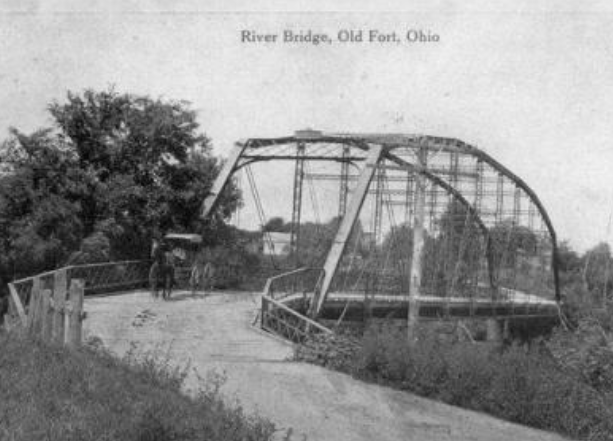
Photo of the old bridge, courtesy BridgeHunter

Iโ€™m a product of small-town America. So small towns fascinate me. So do small libraries.

According to the Institute of Museum and Library Services’ annual Public Library Survey,  57 percent of libraries in the United States have five or fewer staff members. 27 percent have one or fewer full-time employees!

If you are working in a small library, you are doing everything, from working with readers to cleaning the bathrooms. Promoting your library is likely just one more thing on your to-do list, something youโ€™ll get to if you get time.

But of course, we want people in our community to use our library. We need them to use it. So how do you market your library when you are pressed for time or staff resources?

Marketing is really not a job for one person. But that’s the reality for so many of my readers.

So here are the very focused, strategic steps you should take to consistently and effectively promote your library if you are working alone or with a tiny staff.

Set one, SMART goal.

You will need to be hyper-focused in your promotional efforts. Pick one thing you want to work on. Then set a Specific, Measurable, Attainable, Relevant, and Time-bound goal for that work.

The village of Wayne, Ohio has a population of about 900 people. It is very much like the small town I grew up in, with one notable exception: it has a library!

Driving through town a few weeks ago, I noticed the library has purchased an outdoor locker so patrons can pick up holds when the library isnโ€™t open. They want people to use the locker, of course. So, they’ll want to promote it.

I don’t know anyone on the 7-person staff of the Wayne Library. But, if I were working with them, I would encourage them to set a SMART goal like this:

We will get 30 people a month to request their holds pickup via the outdoor locker. Weโ€™ll do this by promoting the locker on our website and by specifically asking patrons if theyโ€™d prefer to pick up their holds via the locker when we place holds for them. This goal is important because it will prove the value of this investment and will increase circulation. Weโ€™ll track and record the total the number of locker users at the end of each month.

You can see this goal contains specific numbers. It sets the context for why this promotion is important. And it lays out how the staff will measure success.

A SMART goal will help you organize your promotions and keep you accountable. It will give you a sense of direction for your work.

Focus on tactics that work best to reach small communities.

Make a list of all the ways you can promote your library: your website, email lists, social media, in-person interactions, print, partners, signsโ€ฆ etc. Then take a highlighter and pick the 2-3 things that work best for your community. Those are the tactics you should use to reach your SMART goal.

Every library community is different. And small libraries often find promotional success in places that are different from their larger counterparts.

For example, if your library is located by a major road, use outdoor signage to attract the attention of passing motorists. If your school is a significant community hub, ask teachers to send home promotional bookmarks and fliers in kidsโ€™ backpacks. If your town has a little restaurant where residents come for breakfast every Saturday, ask the restaurant owners to give out a promotional print piece like a bookmark or flier with the check.
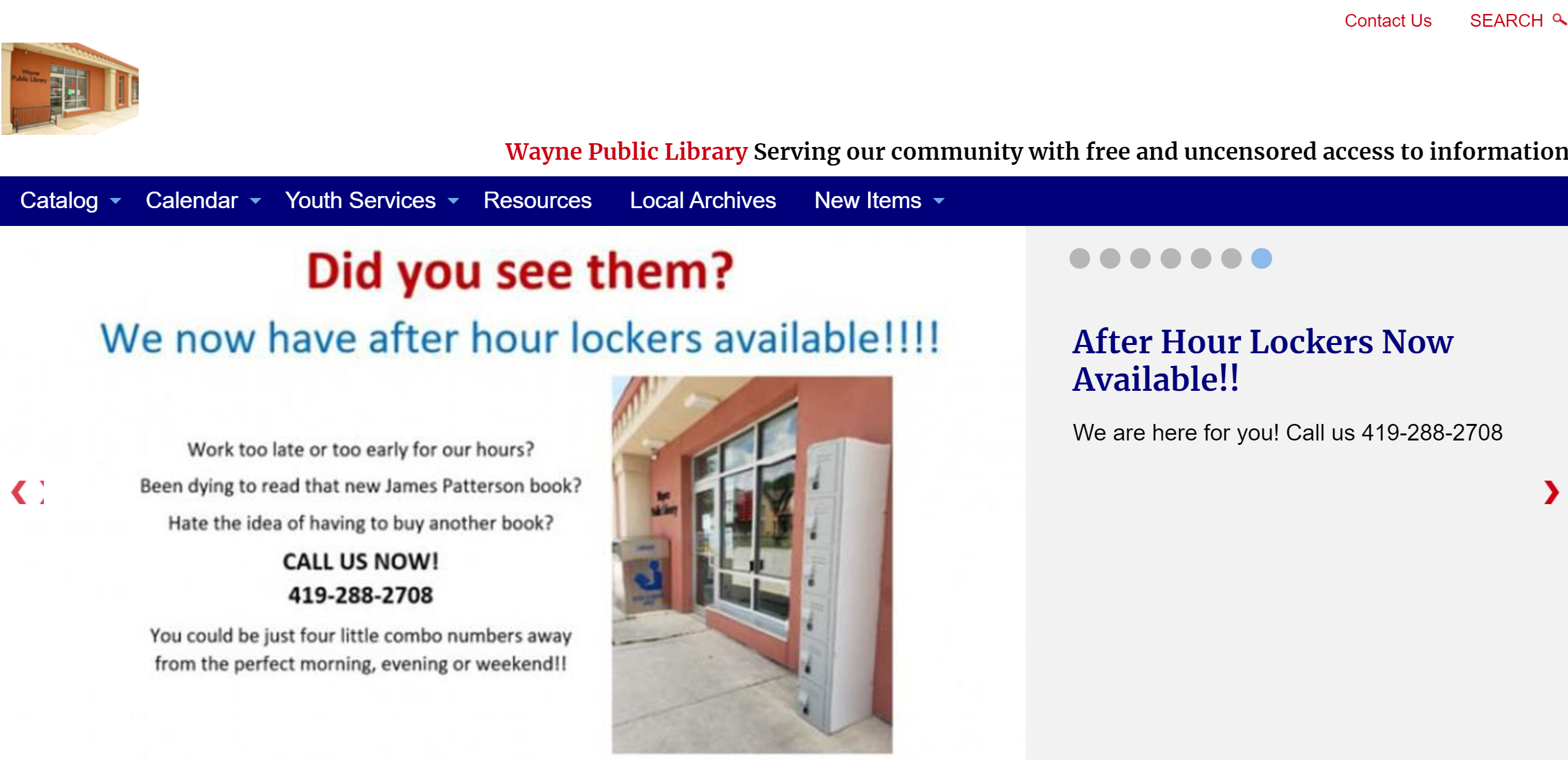
Wayne Public Library uses its website to promote its lockers.

Live and die by an editorial calendar.

An editorial calendar will help you decide what, where, and when to publish. After those decisions are made, the editorial calendar will help you assign tasks and keep up to date on deadlines.

First, youโ€™ll create your calendar. Then youโ€™ll decide how to populate it with content that will ensure you reach your promotional goals.

Repurpose content.

When your staff is small, youโ€™ll need to work smarter, not harder. A smart way to maximize your time and efforts is by repurposing content.

Repurposing content is the act of finding new ways to recycle your existing content. Itโ€™s basically taking one piece of content, say an email newsletter, and re-formatting it for different mediums like social media, a blog post, and an email

You can do this with any piece of content, from your website graphics to your annual report. Break the content down into pieces and spread them across all your available platforms. In this way, you can make sure everyone in your community sees your message. You also can make sure the work you are doing right now will have maximum impact.

Here’s an example of how to do it.

Schedule ahead as much as you can.

Technology can be your best friend if you are working on promotion all by yourself. Schedule your emails, blog posts, and social media posts as far in advance as possible.

There are several great social media schedulers that have free plans. This post is an excellent list of each of those options.

For blogs, I recommend WordPress. You can get a free account and you can schedule posts to go out whenever you like. Plus, patrons who follow your blog will get an automatic email every time you post. That means you donโ€™t have to create an email to let them know youโ€™ve published new content.

You will have to invest in an email platform. But once you do, you can create and schedule emails to go out to your patrons as far in advance as you like.

Learn from larger libraries but don’t compare your success.

The success or failure of a library’s marketing has nothing to do with the size of its staff. In fact, I would argue it might be easier for a small library to create successful library promotions.

Small libraries have more freedom to experiment. Their staff tends to be personally connected with patrons. They have a deeper understanding of what their community wants and needs from their library.

So, follow those large library systems on social media. Sign up for their emails. Look at their websites. Visit large libraries when you travel. Make a list of ideas that you want to try at your smaller library.

But remember, the key to success is a library’s ability to connect with its own community. Any library can do that, no matter how large or small the staff.

I was recently the guest on a new podcast called Library Marketing for Library Marketers. Listen to that episode here.


More Advice

Is Your Small Library Competing with a Bigger, Neighboring Library? This Episode is For You!

Plan for Library Marketing Success! How To Create an Effective Marketing Plan No Matter the Size of Your Library (Plus a Free Downloadable Template!)

Subscribe to this blog and youโ€™ll receive an email every time I post. To do that, enter your email address and click on the โ€œFollowโ€ button in the lower left-hand corner of the page.
Plan for Library Marketing Success! How To Create an Effective Marketing Plan No Matter the Size of Your Library (Plus a Free Downloadable Template!)

Photo Courtesy Public Library of Cincinnati and Hamilton County

The first time I went to a conference, I made a plan.

I decided which sessions I would attend weeks before the conference began. I studied the floor map of the convention center so I could plot the best way to get from room to room. I made a list of local restaurants and tourist attractions within walking distance of my hotel so that I could make the most of my free time.

Am I bonkers? Nope. I am a planner.

A plan provides a guide for action. It ensures goals are met and time and resources are used wisely.

There are times when spontaneity is called for. But library marketing is not one of them. A marketing plan is key for the success of any type of library promotion.

What exactly is a library marketing plan?

A library marketing plan is a tool you use to help to achieve your library’s overall goals. It lays out the steps involved in getting a promotion out into the world. It helps you decide how and when promotional work will be done for a pre-determined time in a specific way.

A library marketing plan also ensures everyone knows the end goal of your marketing efforts. It sets deadlines. It keeps people accountable. And it clarifies how you will measure your results.

You don’t need a plan for everything you promote at your library. You do need a plan if you are creating a campaign that lasts for more than several weeks.

How to put your marketing plan together

Scroll down to the bottom of this post for a list of free project planning websites. They will help you with the execution of your plan. At the bottom of this post, you’ll also find a customizable template to download. It’s based off the library marketing plan spreadsheet I used for years.

Know the thing you are promoting inside and out.

Be sure you can answer every single question about the thing you are promoting. You must become an expert on the event, service, or item you will promote.

Ask yourself, what problem will this solve for my patrons? How easy is it to use? What are the features that canโ€™t be found at any of my competitors?

Clearly define your end goal.

Use the SMART goal framework to ensure you and your co-workers know exactly what you are aiming to achieve. SMART goals are specific, measurable, attainable, relevant, and timely.

So, if you are looking to increase brand awareness, set an actual, measurable end goal like: “Within the next 6 months, we want 50 percent of residents living within a 30-mile radius of our Main Library to know that we have renovated the building and to be able to name at least one new service available at the library.”

Determine your target audience.

Many library marketers say their target audience is “our cardholders.” Be more specific.

Ask yourself:

  • Which cardholders?
  • How old are they?
  • How often do they use the library?

Fill out your picture of your target audience with as many demographic characteristics as you can. This gives you and everyone working on the plan a picture of who you are trying to reach.

Analyze your competitors.

Research anyone providing a similar program, service, or product. Ask:

  • What are they doing well?
  • What are they doing poorly?
  • What are the things that differentiate your library from their business?

These are your marketing advantages. You can use this information to create messaging that tells your target audience why they should use your library service, instead of a competitor.

Create the message.

Get the message or elevator pitch for your promotion set. It’s the most important part of your plan. You need it to create all the tactics you will use to promote your library.

Choose your tactics.

Go through all the available channels at your disposal for marketing and decide which ones will work best to reach your end goals.

You do not have to use everything that’s available to you. Sometimes, a video will work well and sometimes an email will do a better job. Not every promotion needs print materials, a press release, or a digital sign.

You know best how your target audience reacts to each tactic and which will bring you the best results. If you have a budget, decide how you’ll spend it during this step.

Set the schedule.

Every library has a different approach to its promotional schedule. I am a fan of tiered distribution of marketing. The approach takes advantage of a consumer cycle of excitement. Here’s how it works:

  • Release one or two promotional tactics at the beginning of your promotional cycle, like a social media post and a press release. The promotion gets some play, and excitement builds in the consumer base. It gets shared and people talk about itโ€ฆ and then the excitement dies out.
  • Release the second tactic, like an email, and the people who see the email get excited and start talking about it and sharing it, and then their excitement dies out.
  • Release a video, and that builds excitement and gets shared, and the excitement then dies out. And so on!

When you use the tiered distribution approach, you get a longer promotional thread. Your promotions will be more successful because the excitement around them builds over time, not in one big burst.

It is also easier on the person running the marketing! It gives you a small break in between each tactic and creates time for you to measure the success of each tactic individually.

Assign tasks.

Delegate jobs and deadlines for appropriate staff. If you need help from another library department, assign their deadline now so they have plenty of time to get you the information you need.

Measure results.

Don’t forget to measure and record the reaction to each piece of your marketing plan. Analyze what worked and what did not, so you can put that knowledge to use next time.

Free or cheap project management solutions

Clickup: the free plan will work for small libraries. The unlimited plan is very affordable and would work well for medium to large libraries.

SmartSheet: their lowest plan tier is a little more expensive than ClickUp but has more integrations.

Asana: this is what my employer NoveList uses. It makes is easy to assign tasks and deadlines.

Marketing plan template

I’ve created a customizable marketing plan spreadsheet. It includes my suggestions for the timing of promotional tactics for an event or service promotion.

You can delete or add columns based on the tactics available to your library and the size of your library. Download it here.


Related Advice

What the Heck Is the Difference Between Library Statistics and Marketing Metrics? Hereโ€™s the Full Explanation and Why They Are BOTH Important!

Planning for Magic! How To Keep Your Eyes (and Your Schedule) Open for Unexpected Library Promotional Opportunities

Subscribe to this blog and youโ€™ll receive an email every time I post. To do that, enter your email address and click on the โ€œFollowโ€ button in the lower left-hand corner of the page.
Passport to Success: How One Intrepid Library Marketer Hatched a Plan To Bring People Back to the Library

Photo courtesy Cincinnati and Hamilton County Public Library

There’s nothing wrong with tooting your own horn.

A few months ago, I received an email from a library marketer nominating her library system for recognition in the “Kudos” segment on The Library Marketing Show. This particular project was so good, that it deserves an entire post.

Rebecca Kilde is the communication and marketing coordinator for IFLS Library System in western Wisconsin. Sheโ€™s been with the system for five years and has a background in graphic design.

IFLS Library System covers ten counties with 53 libraries, mostly small, rural libraries. The libraries she served were facing a problem.

โ€œMy librarians were telling me that their visits werenโ€™t bouncing back up to pre-pandemic levels,โ€ recalled Rebecca. โ€œThere was some general confusion about whether libraries were even open.”

Rebecca Kilde, IFLS Library System

“Our libraries were open during almost all the last two and a half years and were important resources for some people in our communities. We didnโ€™t want anyone to miss out on getting support from the library. We wanted our funding bodies to get that message as well.โ€

In the fall of 2021, Rebecca and her colleagues decided to explore a passport program system-wide. This program’s goal was to get people back into the library after the pandemic as well as educate people about the scope of their consortium services and benefits. 

The idea was simple. All the libraries in the system had to have passports and entry forms available and a staff person to stamp passports and collect entry forms.

Setting a goal for any type of promotion is incredibly important to success. Rebecca had three things she wanted to accomplish.

First, Rebecca wanted patrons to experience the benefits of a library card firsthand. โ€œWe wanted to show how easy it is to check out and return items throughout our system,โ€ she said. โ€œWe also wanted to send a clear message: Libraries are open, and libraries are fun!โ€

โ€œOur app is new and includes navigation to all our locations in one handy spot, so this was a good opportunity to promote that. For our libraries, we wanted to increase circulation and engagement. A significant factor in support for library funding is having interacted with a librarian, so we built that in. We wanted people to engage with one of our wonderful librarians.โ€

Rebecca put her background in graphic design to work, creating a logo, a public-facing landing page on the system website, the passport, and marketing collateral.

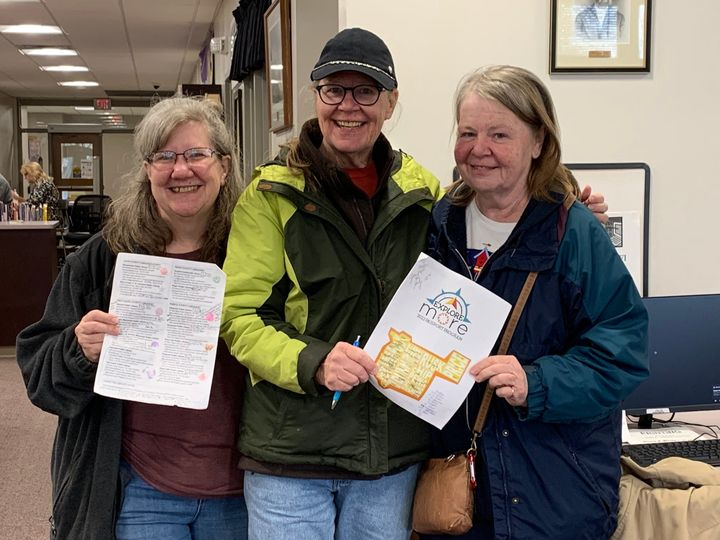
โ€œWe printed enough for each library to get 25 passports,โ€ explained Rebecca. โ€œ(We) sent them through courier as a kit that included a little rubber stamp, a stamp pad, signage, and a master sheet to make entry forms.โ€

Rebecca worked diligently to provide direction, content, and encouragement to her libraries. Each month, she emailed a marketing toolkit to all the participating libraries. The toolkit contained everything the libraries needed: a focused message; four social media posts with suggested messaging; updated posters; ideas from libraries, and comments from participants.

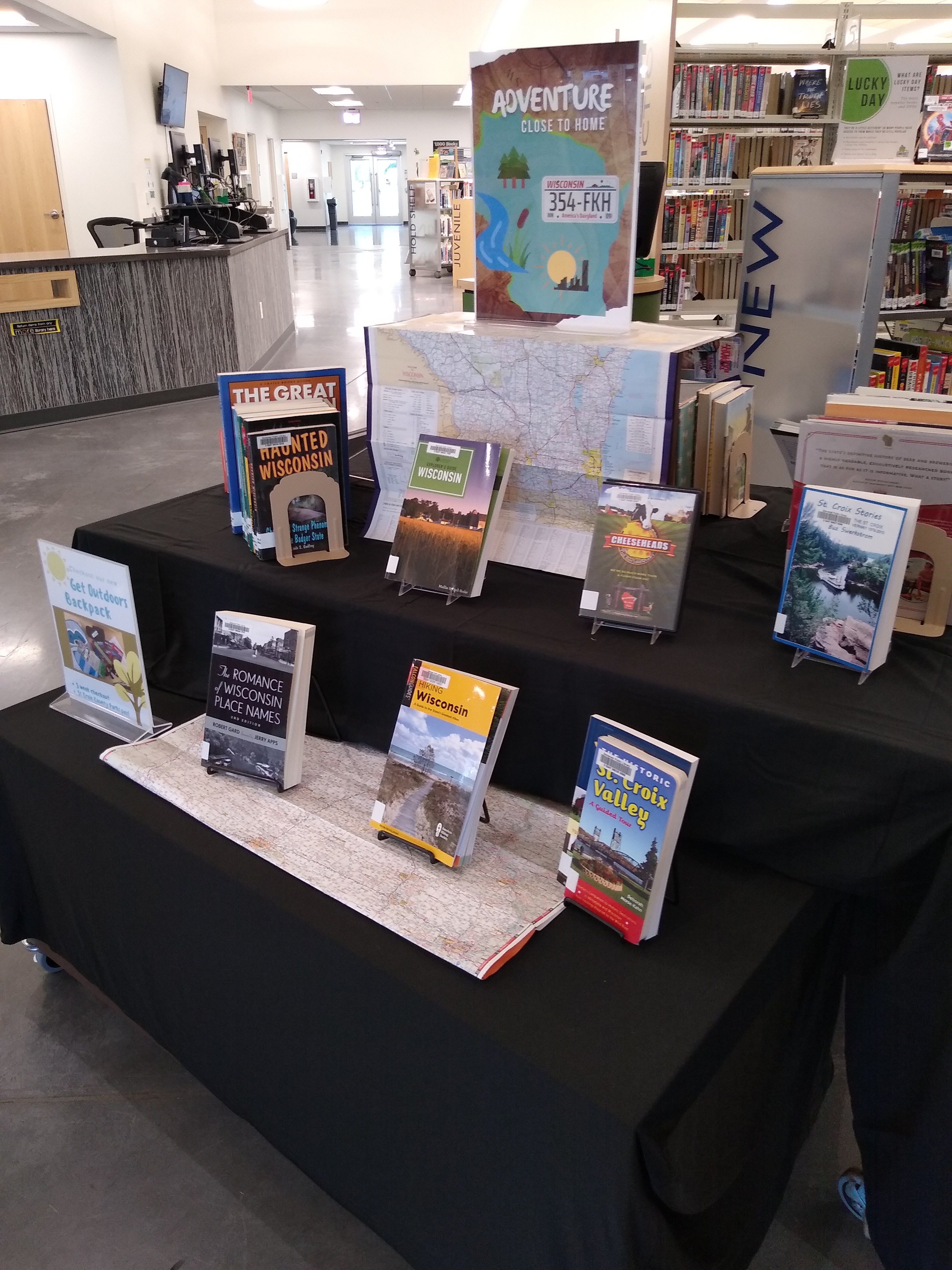
Some of the libraries took the passport program idea and ran with it. โ€œEllsworth handed out a water bottle with a bag of fun things that included a goat-milk soap sample from a local producer,โ€ said Rebecca. โ€œClear Lake created prizes and a drawing of their own for their cardholders; Somerset ran out of their fun swag bags. Lots of libraries created great displays.โ€

The program was an outstanding success. Rebecca told me that over the course of the program, which ran from April 4 to July 15, participating libraries handed out more than 1500 passports and recorded more than 2800 stamps. Each of those stamps counts as one visit to the library. Nine people visited all 52 libraries!

Participating libraries saw robust circulation of travel-related items featured in library displays.ย Most libraries invited passport visitors to participate in other activities, like a scavenger hunt for kids in River Falls or library bingo in Menomonie.ย And they were able to identify some library super fans, who may become influencers in a future campaign.

Rebecca credits several factors for the success of the program, including timing and collaboration. โ€œPeople were ready to go out and explore,โ€ she explained. โ€œAnd this was NOT a top-down promotion. It was library-driven the whole way.โ€

Rebecca has one final piece of advice for libraries looking to put together a successful program. Simplicity is key, she said. โ€œWeโ€™re looking for ways to expand what the program offers without requiring a lot of extra work.โ€


You May Also Want to Read These Posts

Promoting Library Programs on Social Media: How Far in Advance Should You Start Posting?

How To Write Great Program Descriptions To Drive Attendance for Your Library!


Subscribe to this blog and youโ€™ll receive an email every time I post. To do that, enter your email address and click on the โ€œFollowโ€ button in the lower left-hand corner of the page.
There’s a NEW Social Media Platform for Senior Citizens… and It’s a Big Opportunity for Libraries!

Watch the Episode Now

The Library Marketingโ€‹โ€‹โ€‹โ€‹โ€‹โ€‹โ€‹โ€‹ Show, Episode 151: In this episode, I’ll introduce you to a new social media platform launched by the AARP called Senior Planet Community.

This is an excellent promotional opportunity for libraries. I’ll share what I’ve learned about this new site.

Kudos in this episode go to the Racine Public Library. Find out why they’re being recognized.

Do you have a suggestion for a topic for a future episode? Want to nominate someone for kudos? Let me know in the comments. And subscribe to this series to get a new weekly video tip for libraries.

Thanks for watching!


Subscribe to this blog and youโ€™ll receive an email every time I post. To do that, enter your email address and click on the โ€œFollowโ€ button in the lower left-hand corner of the page.
Marketing Your Library to Senior Citizens: How to Circumvent Stereotypes and Authentically Connect With Older Patrons


Photo courtesy Cincinnati and Hamilton County Public Library

A few weeks ago, I learned that, as a 50-year-old, I can technically join the American Association of Retired Persons (AARP).

I have NO INTENTION of retiring for many, many more years (maybe never?!). But in learning about my newfound status, I start to think about how libraries market to senior citizens.

More than 54 million adults ages 65 and older live in the United States, according to the U.S. Census Bureau. That accounts for about 16.5 percent of the nationโ€™s total population. And seniors are expected to outnumber children in the United States by 2035.

Goals focused on seniors require marketing target to seniors

Depending on your library’s overall goals, it may be critical for your organization to focus on attracting and retaining a larger percentage of your community’s older residents.

For example, the Queens Library’s strategic plan specifically says, “The borough is growing older, with its elderly population projected to increase by more than 30% by 2040.” The plan then lists among its goals, a provision for providing a more robust large print collection, as well as a goal to connect the older residents intentionally and strategically with library services.

Todayโ€™s senior citizen is not your stereotypical grandma

If your mental picture of an older person is frail, technologically challenged, and dependent on others, you couldnโ€™t be more wrong.

Older patrons are Interested in keeping healthy so they can stay independent at home. And theyโ€™re active on social media. More than 70 percent have a Facebook account, and more than 40 percent are on Instagram. And The Guardian recently published statistics that show the number of older people on TikTok is growing significantly.

Particularly during the pandemic, seniors learned to embrace technology. They readily engage with video chats and content on mobile devices. In fact, three out of every four seniors say they depend on technology to help them manage their lives and to stay in touch with family and friends.

More than half of older adults still work at least part-time. Theyโ€™re more likely to volunteer their time. And the poverty rate is high among this group. 10.5 percent of white Americans over age 65 live in poverty and rates are three times higher for Hispanic and Black Americans.

Getting to know your older patrons

Of course, the older patrons in your service area may have different wants and needs. You’ll need to do is your own market research. A strategic survey targeted at this age group will help your library get concrete data on the makeup and needs of your older population.

You can also consult data provided by the US Census Bureau to build an accurate picture of your older patrons. Finally, conduct focus groups in partnership with senior community centers. You’ll have the chance to get direct feedback on the ways your library can connect with, and serve, your older residents.

Based on what you learn, you should develop a marketing persona to specifically address segments of your older population. And you may find you need more than one persona to capture the essence of your older patrons.

For example, you may find that you have three key groups of older residents: those approaching retirement, those who are retired and active, and those who require assistance from caregivers. These three groups will all have distinct library service needs. They’ll respond differently to your library promotions.

Highlight the things they value

Older folks love to bargain hunt and save money. This is where price comparison and other promotions that highlight the savings provided by a library card can be advantageous for your library.

For example, if you check out kitchen tools in your library of things, a “try before you buy” message drives home the value of the library. Your marketing piece should include the price of one or two kitchen tools, purchased new, to help your older patrons see they can potentially save money by trying the gadgets out first.

Seniors are looking for advanced tech help. Surveys show that people ages 50 and older want to learn how to manage smart-home technology, stream entertainment from sites like Hulu or Netflix, and video chat with friends and family. Programs at your library should address this need.

Focus on communicating the mission, vision, and values of your library. Seniors are more likely to vote and more likely to believe in investments in institutions.

Have a plan to target your older population with value-oriented messages. Build empathy through storytelling and show how your library provides value. You will be rewarded with the support of your older population.

In-person outreach is critical to targeting your older population. This demographic values personal, face-to-face interaction. Partner with faith-based organizations, meals on wheels, senior clubs, and community centers to distribute promotional material and get a chance for those in-person opportunities with your older community members.

Include testimonials and storytelling as part of your marketing strategy aimed at seniors. Older patrons aren’t influenced by sweeping claims or generalizations. They value personal experience, especially from people they can relate to.

More tips to create effective marketing targeted at seniors

Older people love print marketing materials. Seniors grew up receiving advertisements and physical catalogs in the mail. Print is familiar and even nostalgic to this group. They prefer something tangible they can hold in their hands.

Make digital communications accessible and mobile responsive. The Marketing Rule of 7 applies to this demographic. And they do love to sign up for email newsletters and visit websites. So make sure your digital marketing material is accessible to meet the various physical needs of this age group. Use as little text as possible, surrounded by white space and generous margins. Make fonts on your website, emails, and in print material 16 pt. or larger. Increase the size of your website and email buttons for messages aimed at this demographic.

Facebook posts are especially effective for targeting seniors. Regular readers know I’m not a fan of Facebook for marketing. The exception is this. Senior patrons are still heavy users of Facebook. I would recommend experimenting with a focused Facebook strategy aimed exclusively at connecting with your older population.

Examples of great library marketing aimed at seniors

Montgomery County Public Libraries

Milwaukee Public Libraries

Has your library created marketing targeted at older community members? Add your examples in the comments!


Read These Articles Too!

Re-purposing Content Saves You Time and Reaches Your Whole Audience. Hereโ€™s How to Do It Right.

An Academic Library Increased Their Instagram Reach by 1149% in a Year! Learn Their Secrets for Success

Subscribe to this blog and youโ€™ll receive an email every time I post. To do that, enter your email address and click on the โ€œFollowโ€ button in the lower left-hand corner of the page.

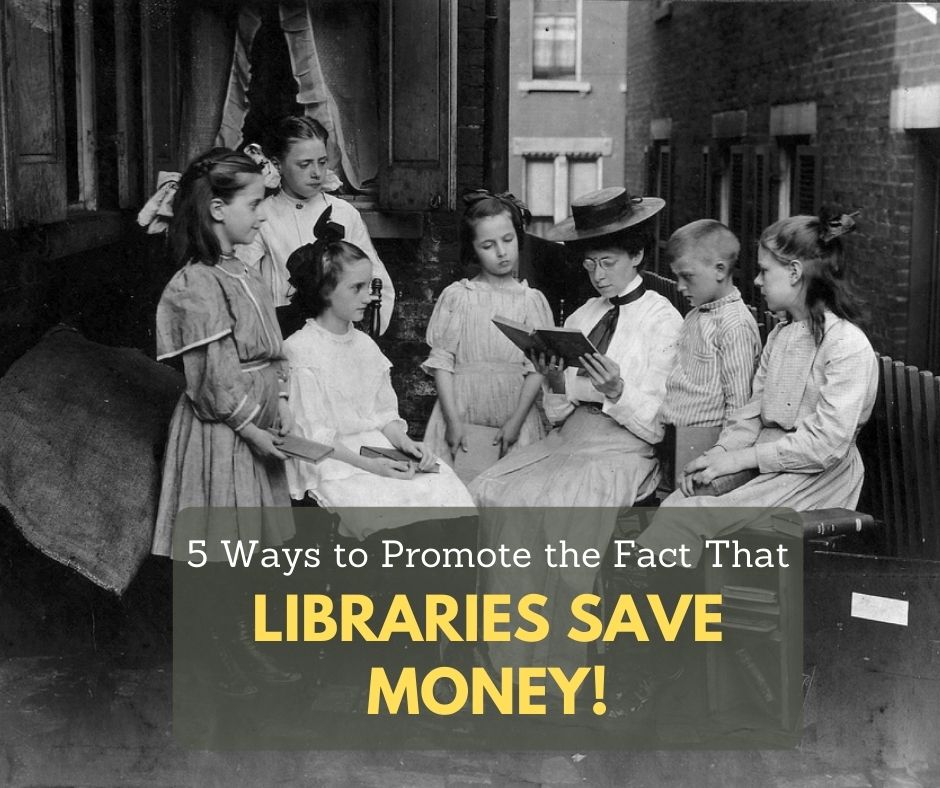
Save Money at the Library! 5 Ideas For Promoting the Cost-Saving Benefits of Your Library

Photo courtesy Public Library of Cincinnati and Hamilton County

My favorite bedtime snack is cereal. Thereโ€™s something comforting about climbing into bed to watch TikTok while munching on Cheerios or Rice Krispies or, God forgive me, Cookie Crisp.

But it costs a lot more now to indulge in my favorite nighttime ritual. The average price of a gallon of milk rose by $1.23 between 2020 and 2022. The price of an average box of dry cereal rose by $1 between 2020 and 2022, according to my research.

Everything is getting more expensive, and not just in the United States. According to the Organization for Economic Cooperation and Development, consumer prices are up 9.2 percent in 2022. Some countries like Turkey and Estonia are seeing double-digit inflation rates.

Your patrons are struggling, as Iโ€™m sure you know. Thatโ€™s why now is the moment to start promoting your library as a money-saving opportunity for your community.

This isnโ€™t a new idea. During the recession of 2008, libraries marketed themselves as a place for free books, DVDs, education, and entertainment. Weโ€™ve expanded our services since then, and we can show our community the value of using their library card to save money.

This approach has benefits for the library too. It will help reconnect community members who may have stopped coming to the library during the pandemic. That will drive circulation, visitors, and attendance.

Specificity is key.

Libraries, in our well-intentioned effort to appeal to everyone, often appeal to no one. So instead of saying, โ€œThe library saves you money,โ€ be specific.

Think about the audiences you have on the platforms where you promote your library. Your Facebook followers have a specific demographic makeup. So do your Instagram followers. Your email newsletter subscribers react positively to certain promotions.

Think about those specific audiences. Write down what you know about them. For example:

Our libraryโ€™s Instagram audience is women between the ages of 25 and 34. We get the most likes, shares, and comments for posts featuring historic photos of our library and book recommendations.

Next, do some research about the financial state of your area. Census statistics from 2020 are a great place to start. You can also search local news articles for more recent reports from your city or county about the state of the economy in your service area. If I were to do this for the city where I live (Cincinnati, Ohio), I would write:

The average household income according to the 2020 census is $65,000 and the poverty rate is 24 percent. Our population is majority white (50 percent) and black (41 percent). Cincinnati was ranked by the Bureau of Labor Statistics in the bottom ten urban areas for job growth. The homeownership rate is only 39 percent. Most households consist of three people. Most residents have at least a high school diploma.

Armed with just those few statistics, I can make a list of the needs my service community has.

  • Finding a job
  • Career growth for better-paying jobs
  • Adult education advancement and the money to pay for higher education
  • Family activities that are cheap or free
  • Entertainment that is cheap or free

Now I can identify the specific library services that fall into those categories. Then, I can make plans to promote each of those library offerings as cost savings to my community.

Here are five ideas for specific promotions. Scroll down to the bottom of the post for examples of libraries that are promoting their services to save money.

Include a price comparison.

How much does a subscription to Netflix, Spotify, Hulu, or Audible cost compared with your library’s free streaming movies and music? How much does it cost to rent a workspace compared to using the library as a remote workspace? How much does it cost to buy a folding table versus checking one out from your library of things? Make the comparison so community members can see how much money they can save.

Always start with your collection.

Books are your library’s brand. In your print collection, focus on bestselling fiction and nonfiction, cookbooks, DIY, and childrenโ€™s books. If youโ€™re worried about growing the holds list, be sure to promote these books in all formats, including digital and audio, to give your patrons access faster.

You should also promote your libraryโ€™s digital magazines and online newspapers. Remember to do a price comparison to show people how much they can save by using your library.

Remember, donโ€™t promote the entirety of your collection. Be specific. Pick one to three titles that match a specific target audience. Your promotions will be more effective.

For example, when I worked at the Cincinnati Library, I promoted Reminisce Magazine to baby boomers on Facebook. Before our promotion, we had only a few downloads of this magazine each month. Afterward, downloads rose by more than 100 percent! Our community also really loved Cincinnati Magazine and whenever I marketed it by itself, downloads spiked. Specificity is the key.

Consumer reports database

This is a huge money saver for your community. Show your fans how they can research the best products and save time and money.

Homework help

Tutoring isnโ€™t cheap. Many libraries offer help for kids struggling with schoolwork, either in person or online. If your homework help is in-person, introduce people to the faces their kids will see at the library. The Cincinnati Library did this in a blog post. You can also make a short video or a series of slides on Instagram or Facebook stores.

Other library services that save money

  • Library of things
  • Free Wi-Fi hotspots
  • Video games
  • Free or cheap classes and testing preparation.
  • The library as a workspace

Real-life examples of libraries promoting their cost-savings

Alma College blog post The Library Can Save You Time and Money–Here’s How

Jefferson Public Library’s Borrow, Donโ€™t Buy Facebook promotion

Bridges Library System talking about money savings on Sorta Green Podcast

Crab Orchard Public Library’s savings comparison Facebook post

Riverhead Free Library’s money savings meme

Bryan Public Library’s money savings receipt post on Instagram

Monmouth County Library’s money savings Instagram post

Jackson Madison County Public Library’s price comparison series on Facebook

Now it’s your turn! Has your library done a money savings promotion? Let me know in the comments.


Read These Articles Too!

How Do We Get People To Come Back to the Library? Four Ideas That Can Help You Rebuild Use of Your Library

Your Library Can Reach Teens With Programming and Marketing! A Look Inside the Lives and Minds of the Elusive Generation Z

Latest Book Reviews

Pack up the Moon by Kristan Higgins

The Virgin’s Lover by Philippa Gregory

Subscribe to this blog and youโ€™ll receive an email every time I post. To do that, enter your email address and click on the โ€œFollowโ€ button in the lower left-hand corner of the page.

Promoting Library Programs on Social Media: How Far in Advance Should You Start Posting?

Watch the Video Now

The Library Marketingโ€‹โ€‹โ€‹โ€‹โ€‹โ€‹โ€‹โ€‹ Show, Episode 146: In this episode, weโ€™ll answer a question from a viewer.

They want to know how far in advance to start promoting their library programs on social media. I’ll share some tips to help you find the “sweet spot” for your library audience.

Kudos in this episode go to the Ann Arbor Public Library. Watch the video to see why they’re being recognized.

Do you have a suggestion for a topic for a future episode? Want to nominate someone for kudos? Let me know in the comments. And subscribe to this series to get a new video tip for libraries each week.

Thanks for watching!


Subscribe to this blog and youโ€™ll receive an email every time I post. To do that, enter your email address and click on the โ€œFollowโ€ button in the lower left-hand corner of the page.
Your Library Has a Chat Service–Now, How Do You Get People to Use It? Here Are 6 Promotional Tips! [VIDEO]

Watch The Video Now

The Library Marketingโ€‹โ€‹โ€‹โ€‹โ€‹โ€‹โ€‹โ€‹ Show, Episode 143: In this episode, we’ll answer a viewer’s question.

Sara of the Washington State Library asked for help promoting library chat services. I have six suggestions that will work for any size library.

Kudos in this episode go to the Greenwich Library. Watch the video to find out why they’re being recognized.

Do you have a suggestion for a topic for a future episode? Want to nominate someone for kudos? Let me know in the comments. And subscribe to this series to get a new video tip for libraries each week.

Thanks for watching!


Subscribe to this blog and youโ€™ll receive an email every time I post. To do that, enter your email address and click on the โ€œFollowโ€ button in the lower left-hand corner of the page.
3 Promotional Goals to Re-engage Inactive Cardholders and Get Them to Use the Library MORE Than Before the Pandemic!

Photo courtesy Cincinnati and Hamilton County Public Library

Libraries spend a lot of time focused on getting people to sign up for a library card–particularly during summer. That’s a worthy promotional goal. Imagine how great the world would be if everyone had a library card!

But we often take our current cardholders for granted. We assume that once a person has gone through the trouble of signing up for a library card, they’ll use it.

The first reports on the exact statistical impact of the pandemic on library use will come out this fall. But I’m not willing to wait that long to address this issue. Every single library I work with tells me circulation, database use, program attendance, and overall visits are down.

Many libraries are trying to build our use and circulation stats back to their pre-pandemic levels. But I think we can do better. We can get more people to use the library now than before the pandemic.

How do we do that? With a focused plan to re-engage our current cardholders.

Re-engaging our disconnected users makes strategic and business sense for libraries. Our friends in the retail business have a secret: They know it costs five times as much money to obtain a new customer than to convince a current customer to buy more.

For libraries, this means it takes us five times more energy and resources to build our cardholder base than it does to get our current cardholders to use the library more often.

Summer reading is the perfect time to re-engage cardholders. It is your libraryโ€™s biggest opportunity to build momentum that lasts throughout the year.

Here are three promotional goals that every library should have this summer to reconnect with current cardholders and get them to use the library more.

Goal #1: Get an email address from every single cardholder.

Did you know that 99 percent of people check their email at least once a day? How many times have you said, โ€œI wish we had one way to reach our community.โ€ Emails are how you do it! They are the absolute most effective way to promote your library.

People expect to be marketed to by your organization. You are not spamming anyone. You are informing, educating, and entertaining the community. And you are making certain they remember they have access to your resources, which they pay for with their tax dollars.

How do you go about getting emails from current cardholders? Ask. Every time someone checks out, look to see if theyโ€™ve included an email address in their cardholder profile. If not, ask for one!

Check cardholder profiles before you put books on the holds shelf or pull together items for curbside. If the cardholder doesnโ€™t have an email on file, slip a bookmark into their holds asking them to share their email address using an online form or by calling the reference desk.

Your library can also use social media to gather email addresses. Schedule regular posts with a link for an online form or an opt-in page on your website. Youโ€™ll want to make it as easy as possible for your community members. That’s the best way to build your subscriber list.

Goal #2: Onboard current library cardholders.

Normally, onboarding is the process of introducing your new cardholders to the resources available at your library. But it is also an effective tool for re-engaging cardholders. This is especially true as we rebuild after two years of COVID separation from our community. 

The most effective way to onboard an existing cardholder is through email. Your library should create a series of emails sent to cardholders once a week for four weeks. Those emails will re-introduce your cardholders to the best features of your library. It will inspire them to use their cards again.

To create your onboarding campaign, youโ€™ll make two lists. The first will be for the most popular resources at your library. This could include things like your Makerspace, popular storytimes, laptop terminals, or your extensive e-book collection.

Next, make a list of your libraryโ€™s hidden treasures. These may be items or services that you know will solve problems for your community. This list should include things that are unique to your library, like online Homework Help, your small business resources, your vast historical resources, or your โ€œlibrary of things.โ€

Finally, look at the two lists youโ€™ve created and narrow your focus. You want to highlight the best and most helpful things at your library without overwhelming your recipients. Choose to promote one resource from your list of popular items and one from your list of hidden library treasures for each of the onboarding emails you send.

Goal #3: Upsell at every opportunity.

Whenever possible, your library staff should suggest other services, collection items, and programs to the people they encounter.

Teach staff to pay attention to context clues. Then upsell another collection item, service, or program based on what the staff observes.

For example, is the patron standing at the checkout a young father with two small children and an armload of picture books? Pull a take and make craft kit off the shelf and suggest that that dad subscribes to your YouTube channel, where you have videos explaining how to finish the crafts.

If a community member asks for help finding a resource for her small business, make sure she knows about your co-working spaces, your entrepreneur book club, and your LinkedIn profile.

When a patron registers for a cooking class, hand them a bookmark with a list of recommended cookbooks and show them how to access the Cooking Fundamentals series on Kanopy.

To help your staff spot opportunities for upselling, it may help to create a flow chart or graphic to illustrate the connections between everything your library offers. You can even make a game to encourage participation by staff members.

Ask staff to keep track of the number of times they upsell to a patron. You might even use a log, like your summer reading log, to help with tracking. The top upsellers win a prize at the end of the summer. And your library wins by increasing awareness of services and use.


Read These Articles Too!

Your Summer Reading Challenge: How Your Library Can Use Big Events To Gather Compelling Content for Promotions During the Rest of the Year

Rebuild Your Summer Reading Program! Here Are Ten Tips To Boost Participation This Year

Subscribe to this blog and youโ€™ll receive an email every time I post. To do that, enter your email address and click on the โ€œFollowโ€ button in the lower left-hand corner of the page.

A WordPress.com Website.

Up ↑