Search

Super Library Marketing: Practical Tips and Ideas for Library Promotion

Category

library marketing

Make #GivingTuesday Work and Raise Big Money for Your Library!

Boy, library marketers sure have a lot of responsibilities. We’re expected to drive attendance to programs, increase circulation, plan big events, provide outreach support, and make sure everyone in our community knows about all the services we provide. In addition, most of us are also expected to help market fundraising efforts for our library friends or foundation groups. Our libraries need money. That fact arguably makes this directive the most important of all our jobs.

The fundraising portion of library marketing has always been difficult for me, if I’m being honest. I think most of us feel queasy about asking people for money, even for something as important as the work of the library. I get the same feeling in the pit of my stomach when it comes time to market my church’s stewardship campaign. It’s hard to put into words why it feels weird to me to ask people to give to either organization, though both are incredibly worthy.

But worldwide giving campaigns like #GivingTuesday help. This global movement happens every year on the Tuesday after the American Thanksgiving holiday. It’s meant to motivate people to donate after the excess of spending that happens when the traditional Christmas shopping season kicks off.

The website for the movement has all kinds of ideas for fundraising organizations. The “holiday” is a prime opportunity to reach your library’s fundraising goals. According to NonProfit Pro, in 2017, #GivingTuesday campaigns raised over $300 million online for charities with an average gift exceeding $120. That’s a 64 percent increase in the amount of money raised in 2016. And NonProfit Pro also says that nonprofits raise 14 times more in their end-of-year campaigns when they take part in #GivingTuesday. And if that doesn’t convince you, the most recent study of #GivingTuesday donations conducted by DataKind shows that educational causes received nearly 40 percent of all donations made. Cultural organizations saw the greatest increase in donations, in some cases receiving nearly 20 percent of their annual donations from this single day. Libraries can be considered both education and cultural organizations. We’ve got so much to gain!

My library started doing campaigns around #GivingTuesday about three years ago. We’ve seen trends in giving that match NonProfit Pro’s numbers. Even better, we grow our donor lists. That gives us a new audience to market to throughout the entire calendar year.

Your library should participate, and you should plan your promotions ahead of time. Don’t just send out an email and put up a couple of social media posts on #GivingTuesday.  Start promoting #GivingTuesday with content marketing at least a week ahead of the actual holiday, sooner if you are able. You’ve got to prove your library’s worth and get the idea of giving into your potential donor’s head space before the event. I start about three weeks before the “holiday” with motivational content like quotes from customers, brand-awareness videos, and motivational photos with clear donation calls to action. I like to tell our cardholders and community that #GivingTuesday is part of a busy time of year and I work to get them to donate early. This method increases the chance that our campaign is successful.

Of course, incentives always help with donations, and it doesn’t have to be something that costs your organization. This year, we’ll be emailing a graphic to anyone who donates early. Donors can use it on their social media profiles to show that they’ve given to the library. They can have the pride of saying they’ve participated when the day arrives and use their influence to encourage others to do the same. Early promotion creates momentum.

Of course, we use email as part of our campaign along with social media and our website. Here’s the message we sent last year about a week before #GivingTuesday. It’s clear and easy to understand.

We did a similar message to members of the Friends organization. The audience for that group is different. But you’ll see we integrated the heart from our Foundation message into this message, to draw a subconscious message to our audiences about their love for the library. This one also has a clear call-to-action.


You can increase the effectiveness by extending the fundraising campaign through the end of the year. We create campaigns that run every two weeks beginning in November through the end of the year. Appealing to the tax deduction incentive is a major point of the campaign as we near the end of the calendar year. This is the email we sent last year about mid-December. Again, it’s clear, it concise, and it has a major call-to-action.


I’d love to hear about your successful library marketing fundraising efforts and campaigns. Please let me know what you’ve done right (and wrong!) in the comment box. We can all learn from each other. When one library is strong, it makes the whole industry stronger.

Subscribe to this blog and you’ll receive an email every time I post. To do that, click on “Follow” button in the bottom left-hand corner of the page. Connect with me on Twitter, Snapchat, and LinkedIn. I talk about library marketing on all those platforms!
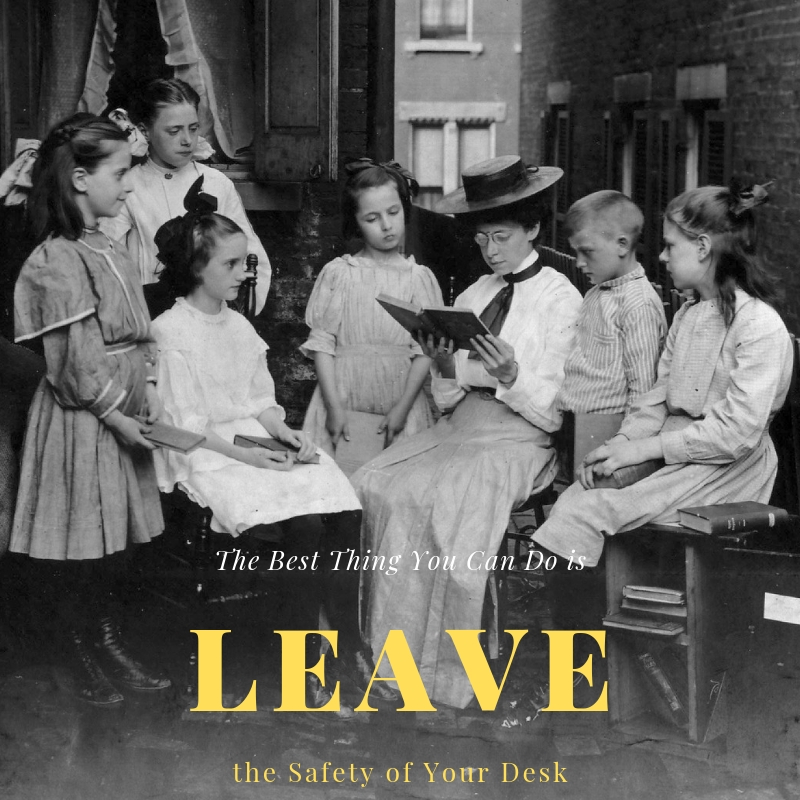


The Best Thing You Can Do is Leave the Safety of Your Desk

I had an amazingly and scary experience this week.

My library is in the very first stages of comprehensive facilities plan. With money from a levy passed by our county voters in May, we’re going to renovate or rebuild ALL 41 library locations.

I’m trying hard not to not have a panic attack reading that sentence back to myself.

When complete, these projects will likely change the course of our library forever. As a first step in that massive undertaking, our board of trustees hired an architectural consulting firm to gather ideas and insight from our cardholders. As part of this opinion-gathering process, our library is holding community forums and structured question-and-answer meetings at each branch over the course of the next year. If you’re counting, that’s 80 plus chances for us to interact with the public and ask them directly what they want their library to be. MY GOSH, what a gift. Am I right? It’s a huge task but it’s also a huge opportunity!

I volunteered to work the forum boards during the first of our community meetings, and to help with logistics at the second one. Both opportunities gave me the chance to get out of my basement office and actually talk face to face with the people who receive, consume, and respond to my marketing messages. And it was amazing.

I’m serious. I learned all kinds of interesting stuff just from talking to people. I found out what they think about the layout of libraries, the frequency of email messages, the reasons they got a library card, their favorite parts of the collection, their impression of our staff, and their dreams for the services they want us to provide. It was gold mine of information.

Honestly, I’ve never actually done drugs, but I felt high was I left my first shift. I ran into one of my good friends who works as front-line staff and I gushed to her about how amazing it was to actually talk to people. She said, “Hey, you should just come hang out at the desk with me. People will tell you exactly what they think of our marketing if you ask them, and you’ll learn so much about our cardholders.”

And I realized in that moment, for all the research and thinking and strategic planning and data analysis that I do, I might be missing one of the most important aspects of library marketing–my cardholders. I *think* I know what they want and need. I’ve got survey results and conversion data and social media engagement statistics that tell me about the people our library serves. But, before last week, I cannot remember the last time I actually talked to a customer about the library.

That changes now.

I don’t really have to worry about forcing myself outside my comfort zone over the next year. All I must do is sign up to be a part of each of those community forums as they are scheduled. But after that, I’m going to have to make sure that I get out and talk to people. I have learned that direct interaction with customers is exceedingly valuable.

I hope you are better at this than I have been. Maybe you’re reading this and saying, “Duh, Angela.” If so, my hat goes off to you. I’m learning this lesson late. But I thought it was important to share it with you.

Don’t be a dummy like me and stay locked in your basement office, separated from your cardholders. Get out of your comfort zone and talk to your cardholders. Set up a regular calendar reminder and spend an hour with your front-line staff. You could just observe. Or you could ask questions. You’ll learn so much. You’ll make the cardholders feel valued. And you’ll be demonstrating your commitment to customers to your fellow staff members. You can’t be any more engaged than that!

Subscribe to this blog and you’ll receive an email every time I post. To do that, click on “Follow” button in the bottom left-hand corner of the page. Connect with me on Twitter, Snapchat, and LinkedIn. I talk about library marketing on all those platforms!

Five Insider Tricks To Improve Your Library’s Voice Search Ranking

One of my most vivid class memories from college happened during my freshman year. A woman visited our communications class to talk about this new thing sweeping the nation: the internet. She said that someday companies would be able to send us information on any product or service we could ever want or need, based on our previous purchases or on search.

Was she psychic? Nope. She was forward-thinking. The internet, and later the introduction of smartphones, caused a huge shift in the way libraries interact with cardholders. And now, we’re about to enter another era of technology change. We’ll need to re-evaluate how we interact with cardholders. Because voice search is going to change everything.

My library is now dabbling in this technology. We created an Alexa skill that allows cardholders to do some very basic things: find out what’s going on at a branch or ask about our hours of operation. But that’s only the tip of the iceberg when it comes to voice search.

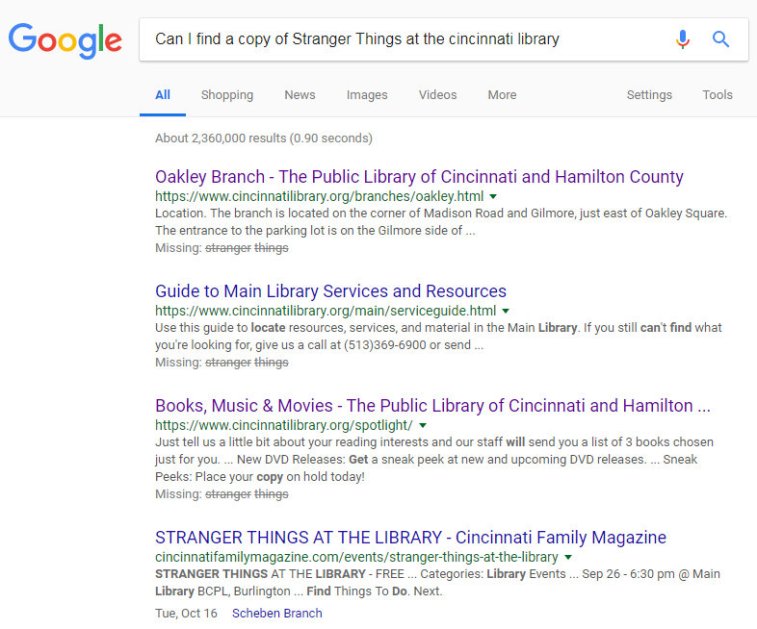
At Content Marketing World 2018, I attended a session led by Courtney Cox, who is manager of Digital Marketing at Children’s Health. She talked with us about the Google Search box. You’re probably familiar with it. It looks like this:

The answer box is text-based but it’s an important key to getting your library information in front of cardholders doing keyboard-based search inquires AND those using voice search options like Alexa or Suri. How is the answer box connected to voice search? Cox explains that voice search technology reads whatever answer appears first in the Google search. So, if you’re in the answer box, you are in first position and you get read by the voice search technology. That means if you live in the second or third results on Google, you won’t get read out. EVERYTHING ELSE underneath the answer box is ignored. There’s no glory in second place.

Wow. That’s depressing.

Comscore estimates that by 2020, half of all web browsing sessions will be done without a screen. So, what’s a library to do? Here are five steps to take now to move your library into the first position on Google search. These tips will increase the chances that your library will appear in the answer box and connect with more users.

Keyword research: Cox says you need to do real-world keyword research. That means you can use online tools like those I talked about in this post. But you must also talk to customers, face-to-face. Talk to front-line staff. Talk to the call center staff. Find out what customers are saying when they ask questions. What specific words or phrases do they use? Then start incorporating that language into your web content, social content, and all your marketing messages.

Competitor research: Cox suggests you do periodic searches for competing services offered by Amazon, your local bookstore, and online databases. What phrases and words do they use? How long, in words and characters, are their answers? Do they use bulleted lists, tables, or graphics to convey information to their customers?  What aren’t they doing well? All of these questions will inform you as you write searchable text for your website. You should feel free to copy what others are doing well. You can improve on what your competitors are doing poorly! You don’t need a big budget to write more searchable content.

Stop dictating your own content. Cox says we all need to stop brainstorming internally about what you want to write about. Start focusing on what your customers want. We must be answering the questions our customers have.

Create a FAQ page on your library website. Make the page easy to find and promote it throughout the web with blog posts, social media, emails… every marketing method at your disposal. The more people who go to the FAQ page, the higher the search ranking for that page will be, and the more quickly you’ll get into the answer box.

Re-purpose your content–with a purpose. Many libraries are creating videos for marketing purposes (HOORAY!). Now it’s time to take those videos and make them work to improve your search position. Take each of your videos and turn it into text. Post the text on your library blog and promote it in other ways. The more eyes that read the content in its written form, the more likely it is that the content will make its way into the answer box!

We’ve got our work laid out for us. After the conference, I started doing random searches to see where my library shows up in the answer box–and when it doesn’t. In some ways, we’re doing okay.

And in some ways, we have a lot of work to do.

So I’ll be looking for ways to make these five pieces of advice work in my content. And I’ll be paying more attention to the words we use on the website, making them local and specific. I’ll start thinking about what people will say when they use voice search to ask questions about my library. I’ll check these searches again in a few months to see how I’m doing. I urge you to do the same!

Subscribe to this blog and you’ll receive an email every time I post. To do that, click on “Follow” button in the bottom left-hand corner of the page. Connect with me on Twitter, Snapchat, and LinkedIn. I talk about library marketing on all those platforms!

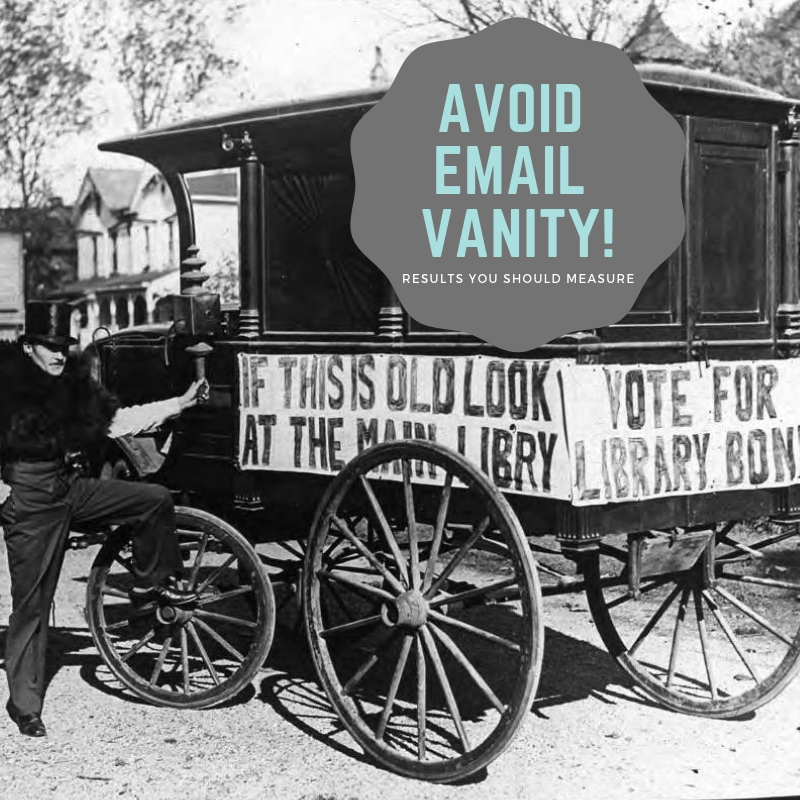
Avoid Email Vanity! Here Are the Results You Should Measure

I love email marketing. It’s one of the most effective tools in the modern library marketer’s toolbox. Emails are a direct way to interact with your cardholders and your community. They are easy to create. You can share stories, collection items, explain new services, and promote events directly with your audience. And library cardholders love getting emails from us. We don’t have to worry about unsubscribe rates the way other industries do.

Many libraries are now emailing their cardholders. And they’re reporting success with those campaigns. I’m so happy! But I’m also worried about something I hear often in conversation with other library marketers. I’m worried that we’re focused on the wrong measure of success–open rates. I’ve attended two events with other library marketers this summer. At both, there were deep and interesting discussions about success in email marketing. But at both events, the conversation about success centered on how to raise open rates.

Now, I have a confession to make. When I started targeted email marketing back in January of 2015, I was obsessed with my email open rates. And so were thousands of marketers in industries across the world. During my first trip to Content Marketing World, I attended several sessions on email marketing and every speaker mentioned open rates as a measure of success.

Open rates do mean something. They are a sign of customer loyalty. A high open rate means that your cardholders are eager to see what you’ve sent them. And that’s good. But it’s kind of like buying a house because it’s got a beautiful exterior. You may sign all the paperwork, open the front door and find all the walls are unfinished! Open rate is a vanity metric. It makes you feel good. But it’s what happens AFTER your cardholders open your email that counts.

I’m not suggesting you ignore open rates. They do give you information you can use to improve your emails. If your open rates are high, and your click-thru rates are low, you can be certain that you are writing compelling email subject lines (Good job, you!). You have a loyal and eager audience. But the content you are sending to your cardholders isn’t what they want. Now you can fix that problem!

Keep tabs on your open rate. But you should focus on two other valuable ways to really measure the success of your emails.

Click-through rates: The higher this number is, the more excited I get. It means that my cardholders opened an email, saw something they liked, and took an action! Most of the time, my library emails direct cardholders to do one of two things: click a link for a specific item in our collection or go to the event calendar where they can register or put an upcoming event on their calendar. Convincing a cardholder to take one of those actions is a huge victory. It also gives me data about what that particular cardholder is interested in. And I can use that information to craft future emails that are also compelling for that cardholder.

Conversion rates: A conversion rate is the most accurate way to measure email effectiveness. It is the percentage of people who take an action after clicking through an email. For example, let’s say 100 people click-through to look at a book I’ve promoted by email. If 50 of those 100 people put the book on hold, my conversion rate is 50 percent. Once I know what my average conversion rate is for a certain type of email, I can set goals to raise that conversion rate. I can  accurately compare my emails to one another.  I might see a high conversion rate for a certain genre of book and look for similar books to market to that cardholder. I might notice a spike in registration rates for a particular kind of program coming from an email and look for similar kinds of programs to market to my cardholders. Conversion rate is the most accurate measurement for determining the likes and dislikes of your cardholders.

For more on tracking the success of your email marketing, you can also read this article. And if you want to learn more about targeted email marketing and get more secrets for library email success, don’t forget the free webinar 

Subscribe to this blog and you’ll receive an email every time I post. To do that, click on “Follow” button in the bottom left-hand corner of the page. Connect with me on Twitter, Snapchat, and LinkedIn. I talk about library marketing on all those platforms!

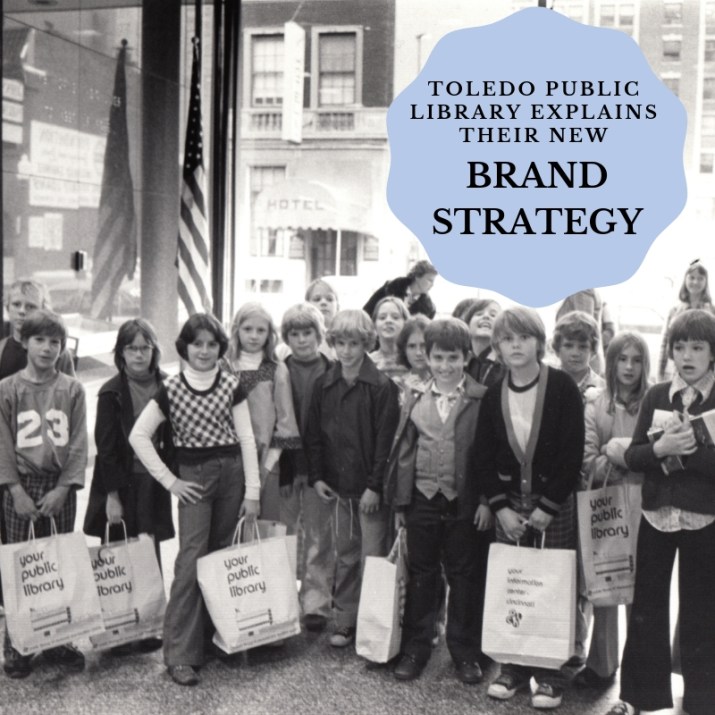
Call It What It Is: Toledo Public Library Explains Their New Brand Strategy

A couple of weeks ago, a Tweet from the deputy director of the Toledo Public Library caught my eye.

Our marketing manager here at the library is leading a charge to “call things what they are” to reduce confusion for customers. We should be doing more of this in libraries and resist the urge for cutesy branding.

https://platform.twitter.com/widgets.js

Jason went on to explain, “When I joined the library three plus years ago, we had just launched a kind of umbrella branding for all of our making activities at the library. We called it Make U. It was clever, had a nice logo, and generally served a purpose… for us. Three years later, it’s still a confusing ‘second brand’ for our library (one of many tertiary brands, actually). Terri Carroll (our marketing manager) is working really hard to make the library’s brand the key identifier for all things library. Every time we roll out a new program or service, we have the urge to give it cute or clever branding. It’s just more education we have to do with our customers. So rather than trying to constantly educate people about our new brands, services, and programs, we focus on the library’s brand: a welcoming and accessible space where anyone has access to resources they need to make their lives, their communities, and their futures better. Now we call Make U what it is…tech tools. I’ve learned a tremendous amount from Terri in the short time she’s been with us about how we cut through a very noisy marketplace to reach people where they are when they need us.”

This is a major hurdle for my team and library marketer’s across the country! At my Library, I’ve counted no less than TEN branded services. And each one requires education for the staff and public. The names are cute but their meaning is obtuse.

Library marketers struggle with branding. We need to do a better job of defining who we are. We must create a consistent emotional connection with our cardholders if we’re going to compete with the likes of Amazon, Barnes and Noble, Netflix, and Google.

Jason’s co-worker, Toledo Public Library Marketing Manager Terri Carroll, graciously agreed to share her insights on the process.

So many libraries have a set of tertiary brands for their various programs and services. Why is that a problem? Each day, our current and potential customers are bombarded with media messages from well-funded and sophisticated retail, fast food, snack food, entertainment, sports, news, and service companies. While these organizations aren’t competing with us to provide library services, they are competing with libraries for people’s time and attention. If libraries hope to have people notice our message in a noisy marketplace, it is imperative we have one clear brand that makes it easy for people to know who we are and what value we provide. Tertiary brands dilute our message and make it more challenging to connect with customers.

Before the redesign, the Toledo Public Library struggled to bring a host of tertiary brands together to create one cohesive brand.

What prompted you to decide to focus less on giving everything a cutesy name and instead develop and nurture an umbrella brand? I started working at the Library in November and was struck by the fact that each program had its own look and message. The emphasis was on program names and unique graphics, rather than the Library as a whole. For example, a great deal of energy was spent on “logos” for programs such as Kindergarten Kickstart, Ready to Read, and Make U instead of thinking about messaging that clearly connects a valuable service (early literacy or access to technology) with the Library. This approach puts the burden of connecting the dots about the Library’s value and relevance on our customers. It also keeps the Marketing team from thinking strategically as they instead spend energy making everything look different. This is an unfortunate use of resources. Having things look similar within a brand compliance strategy makes it easier for customers to identify Library materials and messaging.

Terri laid out brand elements to create a clear and consistent message that can be understood by staff and library cardholders.

Have you seen positive results from this type of strategy yet?  We’ve been working on implementing this strategy since December, so it is tough to extrapolate data yet. For now, positive anecdotal comments to Library staff and leadership such as, “The Library is doing so much,” (when in fact we are doing a similar amount of work) and increased earned media attention are indicators of success. Ultimately, we should realize increases in circulation, door count, and program attendance as well as community and regional stakeholder invitations to be at the table on important issues, speaking opportunities, organizational partnership creations, and election results.

How can other library marketers make the case to their stakeholders, like their board of trustees, the senior leaders, and their staff, that developing a strong brand sense is more productive than creating brands individually as services are unveiled? Stakeholders repeatedly express interest in making sure the community knows about everything the Library does. I have invested a lot of time meeting with all of our internal stakeholders to show them how strong brand management is necessary to meet that goal.

My staff and I also work to keep a focus on making sure all materials and messages are customer-focused. We ask ourselves and our colleagues if our materials and messaging are giving customers all the information they need to engage with the Library. Focusing on how customers understand our Marketing keeps everyone externally (brand) focused and not internally (tertiary brand) focused.

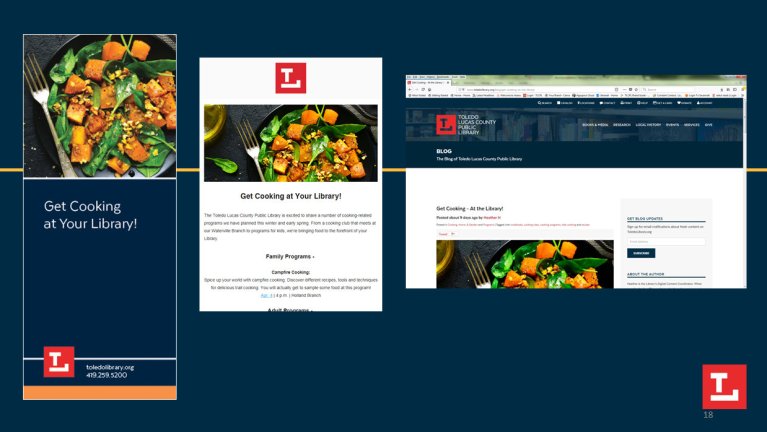
A clear, consistent look helps Toledo Public Library create a connection and makes it easier for their cardholders to recognize their messages.

Do you have any other advice for library marketers looking to strengthen their own brands? It is essential to have senior leadership support for strong brand management. If people are used to the tertiary brands and have enjoyed the creative process (either working with Marketing and/or doing their own design work at the department or branch level), moving to brand compliance can be painful. If those concerns/complaints are taken to senior leadership and exceptions are granted, then the entire brand strategy is compromised.

It is also important to expect some resistance and be willing to talk with people about their questions and concerns. In these conversations, something that seems to really resonate is when I say that we don’t want to re-educate people every time they see something from the Library. We want people to immediately identify a Library program or service. And while staff sees all the materials and, may in fact get a bit tired of the same colors and fonts, this easy identification and brand recognition is essential for customers who are wading through a marketplace of messages and materials.

Subscribe to this blog and you’ll receive an email every time I post. To do that, click on “Follow” button in the bottom left-hand corner of the page. Connect with me on Twitter, Snapchat, and LinkedIn. I talk about library marketing on all those platforms!

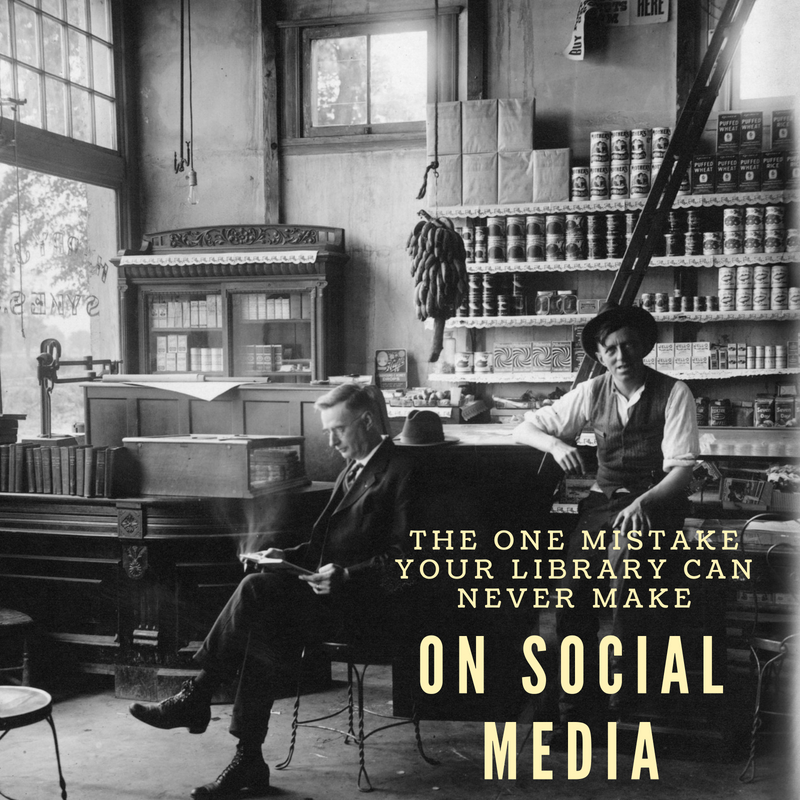
The One Mistake Your Library Can Never Make On Social Media

I was riding furiously on my parent’s elliptical machine, trying to distract myself from the fact that I absolutely HATE exercise by scrolling through Facebook, when I came across a post that nearly made me fall off the machine.

It was on a politically charged page dedicated to libraries. And it advocated the use of clickbait for driving engagement. I won’t post the example this person used here. It was a provocative post but it wasn’t well-constructed. There was no image and no link for action. It was also posted by a librarian, not a library. I suspect he was just trying out the line on the fly to gauge the reaction. It doesn’t really matter what his motivation was or how it played with his audience. And to be fair, the post technically was not clickbait. Clickbait is the act of writing a headline or a post that over-promises, oversensationalizes or misrepresents whatever content you are linking to. The easiest clickbait headlines to spot are the ones that contain the words “You’ll never believe” or “What happened next will shock/embarrass/outrage you.”

What matters to me is the assertion that libraries need to resort to clickbait to get followers to like, comment, and share their posts. You absolutely do not. And in fact, you should avoid clickbait at all costs.

Listen, we’ve all fallen for clickbait headlines before. I am a sucker for those slideshow galleries of photographs that promise to show me something shocking or new about historical events.  But once you’ve scrolled through a gallery of 45 shots and realized you haven’t seen anything new or shocking, you leave mad and vow never to visit that particular website again. We do not want to cause anger, disappointment, and distrust in our users. Using clickbait in posts could do serious damage to your library’s reputation. As an arbiter and protector of truth in an era of attacks on facts, we need to hold ourselves and our social media accounts to a higher standard. Clickbait headlines might get you more initial clicks, but they won’t deepen the relationship your cardholders have with your library.

We’re all fighting to get noticed in each of social media platforms. Algorithm changes mean we have to craft every post to match the demands of that particular platform. It’s exhausting. The temptation to use a clickbait headline to get more engagement is real, and I understand why it might seem like a good option. But it is not. We are better than that.

Your cardholders are smart. Treat them as such. Speak conversationally and openly, but don’t be sensational. You’ll be rewarded by your fans in trust, loyalty, and respect. And those three things are way more valuable than any engagement numbers you might garner in the short-term thanks to clickbait.

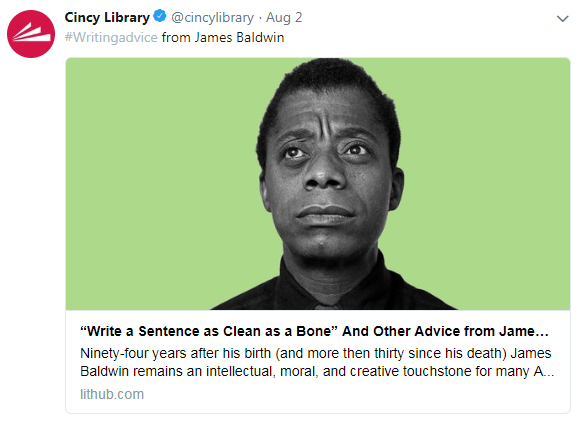
Instead, follow these guidelines for creating headlines with examples from my library’s social media platforms. Kudos to my library’s social media team for their amazing work: Danielle, Lisa, Veronica, and Andrea!

  • Be inspirational

  • Use keywords

  • Answer questions

  • Promote facts and figures

Incorporate numbers when possible

Subscribe to this blog and you’ll receive an email every time I post. To do that, click on “Follow” button in the bottom left-hand corner of the page. Connect with me on Twitter, Snapchat, and LinkedIn. I talk about library marketing on all those platforms! 
 

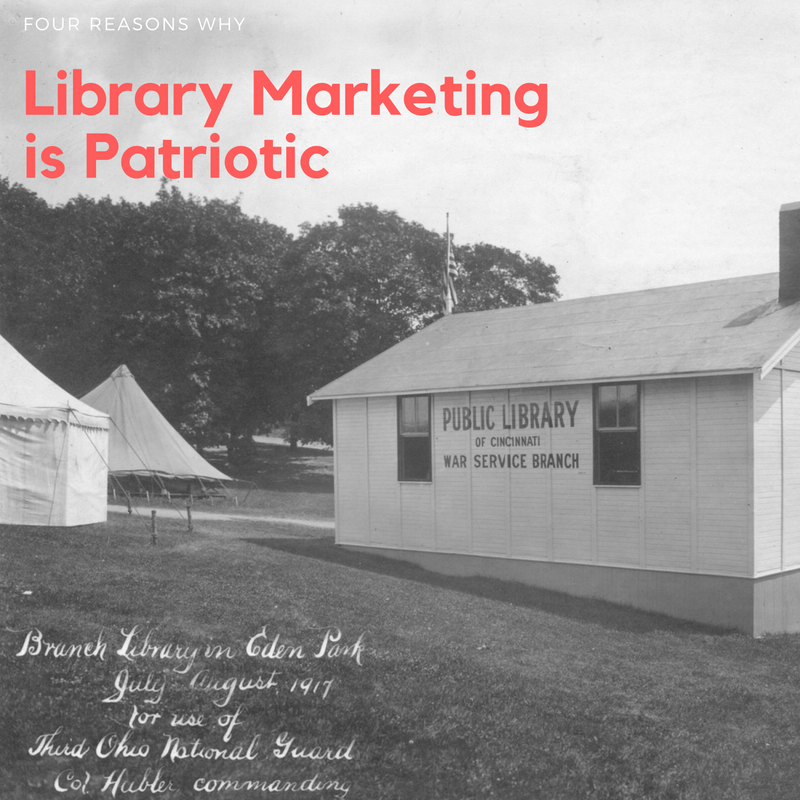
Four Reasons Why Library Marketing Is the Most Patriotic Profession

Here in the United States, we’re celebrating the birth of our country this week. July 4th is a big deal in America. We hold parades. We eat a lot of food. We set off fireworks. We wave the flag, wear the flag, and sing about the flag. We generally make fools of ourselves as we declare our love of the U.S. and list all the things that make America the best country ever.

But you may have noticed, even if you don’t live in the United States, that there’s been a bit of a shift in the collective patriotic mindset over the past 18 months. We are in a bit of a rough patch politically, ideologically, and culturally, you might say. There are some days when I find myself wondering if it was even worth celebrating the 4th of July this year.

Whenever I feel like my country is not living up to its ideals, it helps to think about my work. I work in a public library, with some of the most giving and noble people in existence. They do patriotic work every day. Libraries are the home of civility, which receives so much discussion of late. They are important public institutions. And no matter what country you call home, your work in library marketing is a patriotic duty. Here are four reasons why that is true.

Good Library Marketing keeps the building open. Good library marketing compels people to come to programs, check out items, and give to your library. Without fulfilling those three objectives, your library would fail to thrive. Cuts would be made to hours and staff. Services would be eliminated. A cut in any of those areas would mean the people in your community who need the library the most would suffer. When you do your job well, you are helping to raise up the underprivileged. You put much-needed services into their hands.

Good Library Marketing creates jobs. When you do a good job of keeping the collection in circulation or getting people into your buildings, you are creating employment opportunities for your fellow staff members and beyond. Publishing houses stay open. Authors have monetary incentive to keep writing. Program presenters get a paycheck for sharing their knowledge with your community. You help sustain employment for hundreds of thousands of workers outside of your community, including custodians, security staff, computer and technology service workers, and so much more.

Good Library Marketing connects people to their communities. When you do a good job of marketing your library to your public, you make people feel connected to each other. You give people a vested interest in their fellow human. When you help young children to learn to read, you improve the lives of everyone. A good library marketer can make that case, even to people who don’t have young children. They can make people care about one another. A well-publicized book club brings together a group of people who may not have otherwise met each other. Those people can talk to one another about subjects that never would come up in unregulated conversation. They learn about each other. They learn to disagree respectfully! Sometimes, a discussion that begins in a library can lead to social change. You help to make that happen!

Good Library Marketing supports the arts. I’ll bet your library hosts art exhibitions, musical and theater performances, and other arts-related programming and services throughout the year. When you do a good job of marketing those programs, you are supporting the arts in your community. You are enriching the lives of the people you serve. Many of them may not have the money to attend ticketed events. You are bringing beauty, philosophy, and creativity into their lives.

Subscribe to this blog and you’ll receive an email every time I post. To do that, click on “Follow” button in the bottom left-hand corner of the page. Connect with me on Twitter, Snapchat, and LinkedIn. I talk about library marketing on all those platforms! 

How to Get Over Fear and Other Big Challenges to Library Marketing

When I was in first grade, I wanted to be famous. My big break arrived in the form of a school contest. The winner got to read a public service announcement about education on the radio. “IT HAS TO BE ME!!!” I exclaimed to my bewildered mother when I learned of the contest. She gently explained that I couldn’t win. She knew I faced a huge obstacle. I did not know (yet) how to read! The time between the contest announcement and the audition was short. How would I ever learn to read well enough to do it on the air? My mother is a very practical person. This was an insurmountable obstacle in her eyes.

I proved my mother wrong through sheer determination, and with a little help from the “Dick and Jane” series. I learned to read and won the contest! That was likely the first time I realized this powerful fact: there really isn’t any problem out there that can’t be solved.

20 years later, I found myself in a similar situation at my job as TV producer. The station suffered a huge power failure. The generators died. We had no way to get on the air. But failure was not an option and with airtime fast approaching, we came up with a plan. We would broadcast live from the parking lot using our live truck. It worked. We felt like heroes. Once again, I realized there was no problem that could not be solved.

We all face obstacles every day. Library marketing is not an easy job. You deal with deadlines, staffing issues, tiny budgets, and bureaucracy. Despite these obstacles, you make it work, day after day.  Your attitude plays a huge role in determining whether you overcome obstacles. Many of our problems are unique to this industry. Do. Not. Fear. You can find ways around anything. Here are some ideas to help.

The obstacle: there is never enough time. The library year is like the “lazy river” at my local YMCA; a constant, swirling flow of events that keeps pushing us forward. It takes some force to break free. When you’re under pressure to promote each big event, you may feel like you never have enough time to do anything well. All the emphasis is on the result and most people don’t give too much thought to the process.

The solution: Create a marketing strategy and STICK TO IT. The strategy must be clear, with expectations and goals set in writing. Get it approved by your supervisor and administrators. Explain it to staff. A strategy will help you stay laser-focused. Your marketing can be consistent. Library users will start to recognize the strategy of your organization without reading the mission statement. You’ll be able to accurately measure results. And, most important, you’ll be able to say “no” to promotions that don’t serve to drive your library’s overall strategic mission.

The obstacle: there is never enough money.  Budgets are a pain. Nothing can make you feel like you can’t reach your goals like facing the cold, hard reality of zero cash flow.

The solution: start small and partner up. Ask your administration for money to fund social media advertising. It’s cheaper than traditional ad buys. Your administrators might not realize how effective targeted social media ads can be. You can easily prove that you can make a good return on their investment. Look for partnership opportunities to promote more than the big programs. Create a standard agreement for media sponsorships of major programs, listing the action items your potential sponsors will fulfill and what benefits you can offer them in return. For every big program or marketing push, brainstorm partnership opportunities. For instance, my library uses partnerships for author events and to promote our collection.

The obstacle: too much work, too few people. Trying to take on a concerted, strategic marketing initiative can be overwhelming when you work alone. It’s a struggle just to keep up with the day-to-day stresses of social media, press, and meetings.

The solution: Ask for more help. You’ll find librarians who have an interest and skill in social media, writing, video, and design. Ask around and recruit those staff members to help you create content, with their supervisor’s permission of course. Ask for permission to engage an intern or two. Every organization has people with hidden talents!

The obstacle: There is never enough data about customers. This one sounds like the most difficult of the problems to solve but it’s actually one of the easiest. If your library isn’t already collecting data about your current customers, it should. I know libraries have a long and proud tradition of protecting the data and privacy of users and I respect that. I think there is a balance that can be struck. We can’t serve our cardholders well and point them in the direction of the items and services they need and want unless we know something about them. Collecting data on their card use preferences isn’t intrusive and I bet if you ask your cardholders, they’d confirm my assertion as long as we don’t share the data or lose it.

The solution: Ask, ask, and ask again. When people come to programs, hand them a three-question survey: How did you find out about this program? Do you have a library card already? What other kinds of things would you like to see at this library?  Create a new cardholder survey to gauge the interests of people just entering your library system. A yearly satisfaction survey for all cardholders is also necessary, particularly when you can take the results and split them into your different persona groups.

There are a number of software companies that can help you sort through cardholder use while masking the names of the actual items checked out by your cardholders, like Savannah by Orangeboy. From there, you can map your customer’s journey: When they get a card, how long does it take them to use it? Are they checking out books or using your digital collection or computers? Do they simply let it languish? Do you have some customers who got a card years ago, used it a specific way, and then stopped altogether? Do you have some customers who are making the transition from print items to digital materials? Do you have some customers who are only interested in one particular kind of item–DVDs, audio books, or computers? Break your customers into groups based on what they do with the card. Start creating pieces of content that target those groups.

The obstacle: fear. After five years of sharing library marketing information, this is still the biggest problem we face. Libraries are afraid of change AND afraid of failure. How many times have you heard someone in your library say, “But that’s the way we’ve always done it!” It’s the phrase I dread. It takes an enormous amount of effort and energy to change the minds of our fellow library staff members and our administration. It seems like it would just be easier to stay the course.

The solution: no one will die if you try something and it doesn’t work. It’s just marketing. Try stuff. Just try!  We have to remember our main goal–to get customers to move through the cardholder journey and engage with the library. Without that engagement, the people who argue that libraries are obsolete will win! We can’t have that. Do not be afraid. Marketing works best when you start small. Think of it like a staircase. On the bottom step, you make a small argument and you try a new thing. You see results. You report the results and chances are you’ll get to climb to the next step. If you fail, it’s just failure. No one dies. You stay on that step and you try something else! You’ll never get to the top of the stairs unless you try.

Subscribe to this blog and you’ll receive an email every time I post. To do that, click on “Follow” button in the bottom left-hand corner of the page. Connect with me on Twitter, Snapchat, and LinkedIn. I talk about library marketing on all those platforms! 
Six Shrewd Ways to Spot Trends For Your Library Marketing

Contrary to popular belief, librarians are trendy! I’m not just talking about the physical sporting of tattoos, body piercings, and colored hair. I’m talking about the more important stuff. Most librarians know how to work all kinds of advanced technological equipment like 3D printers. They are well-versed in the latest studies about public space, childhood literacy, mental illness, and poverty. Because they interact with all ages of the public all the time, they often see issues like the opioid epidemic, emerging before anyone else. They have inside knowledge about how trends affect the lives of their cardholders.

It’s important to library marketing pros to spot trends too. We have to make decisions about whether to react. So how do you keep an eye on the things that matter to your cardholders? Here are six easy tools for keeping up-to-date on trends of all sorts.

Facebook Topics and Trends ReportThis annual report is worth your time. It’s a yearly summary of the most popular conversations happening on the platform. This report covers everything from culture to technology to food. It’s useful for planning your marketing calendar. You can take any of these topics and apply it to items and services available at the library, then work those into your marketing plan. Use keywords and suggestions in this report to boost the engagement of your posts on Facebook, Instagram, and beyond.

Google Trends. This tool is a lot of fun! Type in a keyword and get a picture of what people are talking about related to that word. It will even drill down on data, showing you specific searches, timelines, and places where that term is searched. I often use this tool to search book titles or authors, seasonal keywords, or pop culture references to get a more accurate feel for how many people are talking about them.

What is trending on social media platforms? Most of the major social platforms now have an area where you can check keywords or trending topics. Do so regularly. Then use those trending topics to curate posts from reliable sources. Pick content that is appealing and relevant to your audience. Even if you don’t immediately find a way to use the ideas you find on these social channels, checking them keeps you connected to the things that matter to your users. Twitter is a great place to discover the topics used in social conversation specific to your geographic area. The Pinterest trending section is a feast for the eyes but can also show you the kinds of Pins that are getting engagement so you can mimic that success or share them with your followers. There is ALWAYS a booklist in the Pinterest trending feed that you can repin, as well as tons of fun craft and program ideas for your librarians! Snapchat’s Discover section will help you keep up to date on pop culture so you can market your items and services, like streaming music and downloads, and appeal to that coveted younger audience. Ditto with Instagram’s trending section.

What is trending in the podcast world? Every month or so, I open my podcast player and check the trending podcast list. Why? Podcasts are a commitment. If the public is taking the time to listen to 20 minutes of talk about a particular topic, then it might be something we want to pay attention to!

Ted Talks. The nonprofit is dedicated to spreading ideas that are worth talking about. New talks appear several times a week. If you don’t have time to actually listen to all the talks, a quick check of the topics will give you a sense of the kinds of technology, humanitarian, and educational ideas flowing into mainstream thought.

What questions are your librarians getting? Every once in a while, I’ll email the manager of our Virtual Information Center. That’s the department in my library that takes all the calls and chats from the public. I ask for the top ten questions they’re getting from people and then I use that list to create content to answer those questions. It’s easy and it directly impacts your users (and your staff!).

Subscribe to this blog and you’ll receive an email every time I post. To do that, click on “Follow” button in the bottom left-hand corner of the page. Connect with me on Twitter, Snapchat, and LinkedIn. I talk about library marketing on all those platforms! 
A WordPress.com Website.

Up ↑