Search

Super Library Marketing: Practical Tips and Ideas for Library Promotion

Category

library marketing

Five Excellent Ways To Improve Every Sign in Your Library

I have a love/hate relationship with library signage.

Part of my job as a marketing professional in a major metropolitan public library is to conduct signage evaluations and to make changes or improvements to the signs in our 41 locations. As a customer, I know how helpful the right kind of signage can be, and my perspective as a customer helps me to understand the importance of the task. But to be honest, it’s probably one of my least favorite job requirements. That’s because I’ve found that signs seem like a simple thing but are, in truth, very complicated. My coworkers and my cardholders have passionate feelings about them.

Good signage serves as a silent employee to draw cardholders to your location, direct traffic inside your building, and answer basic customer questions. Signs can actually be a part of your library’s overall strategy and should certainly be worked into your marketing strategy each year. Ask yourself: What are your library’s overall goals, and how can signs help to meet those goals?

The task of tackling your library’s signage is much easier when you have brand specifications documented. The color, size, and language should be consistent throughout the building and multiple locations. Once you have that document created and have decided how signage will help you to execute your library’s goals, here are five tips to keep in mind as you work on signage for each building.

Tip #1: Less is more. Too many signs in a branch, particularly in a small location, can create clutter and can actually cause confusion. And too much signage can actually annoy your cardholders, particularly if most of your signs are bombarding them with marketing messages. Just as white space works to create breadth and depth for a website or a graphic, well-spaced signage in a branch creates flow. About 75 percent of the signs in your library locations should be wayfaring only–directing cardholders to important service points in the building. The other 25 percent can be selective marketing–promoting services and items that are of interest to your cardholders or that might be of interest to them, based on their patterns of checkout.

Tip #2: Match the signage display to the user of each physical space. Make sure that in your children’s area, the signs, shelves, and computers are all lowered to be a child’s level. Create larger signs for the section that holds your large print items. Place teen signs where the teens hang out, like near charging stations or computers. Use a combination of large and small signs to blend with the space requirements in your library and to keep your signage from becoming monotonous, without being overpowering.  Use a bold font and keep colors and designs simple.

Tip #3: Your library materials make the best displays. Use them instead of signs. Think about how your local bookstore will display books. They often turn them front-facing. Why? Book covers are a visual cue and publishers spend thousands of dollars creating beautiful and eye-catching covers. Use these designs to create a visually pleasing display instead of a sign. A good display will not even need a sign–it should be obvious to the cardholder what you are trying to market to them.

Tip #4: Use customer-friendly, positive language. Cardholders prefer conversational language in all our marketing, so it makes sense to incorporate that into your signage. Some examples are:

Replace self-check or circulation with checkout.

Replace reference with information.

Replace periodicals with magazines.

Replace juvenile with children’s and teens.

I know this is controversial but I’m saying it anyway. Drop the Dewey decimal system from your end panels and arrange your fiction and nonfiction items alphabetically. And incorporate positive language into your signs. Don’t tell customers what they can’t do. Rather, tell them what they can do or how they can enjoy a particular space or item in the collection.

Tip #5: Don’t forget the signs on the outside of your building. Your main sign should say LIBRARY in large letters. Save the actual name of the building, particularly if it’s a long name, for smaller letters by the door. Make sure your open and close times are large and clear and in an easy to spot location. The same goes for the signage for any outdoor services like book drops or drive-thru windows. Make sure the signs are as large as is allowed by your local government.

Bonus tips: Don’t rely on signs to convey everything you want to tell the customer. Hire staff who are willing to speak with customers and show customers where items are located with patience and kindness. And set a schedule for re-evaluating and refreshing your signage–once a year, if you can handle it.

Subscribe to this blog and you’ll receive an email every time I post. To do that, click on “Follow” button on the bottom left-hand corner of the page. Connect with me on Twitter and Snapchat–it’s where I talk about library marketing! I’m @Webmastergirl. I’m also on LinkedIn, Instagram and Pinterest. Views in this post are my own and do not represent those of my employer.

Facebook Does It Again! What the New Algorithm Changes Mean for Your Library

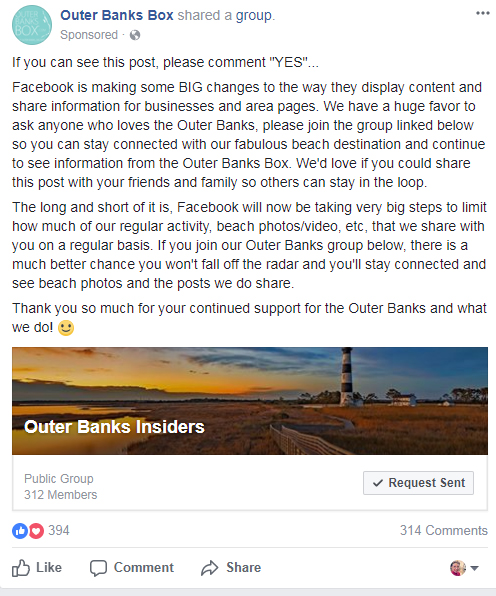
This week, Facebook announced it is making another change in the way the social media platform chooses to show content to its users. The big shift, as you likely know by now, is that Facebook will prioritize posts from friends and family in its news feed over public content from pages, like that of your library. In particular, the Facebook team will give top priority to posts that drive conversation between friends and family.

The announcement is causing consternation for many libraries, which rely heavily on organic, unpaid traffic for their promotional efforts. I honestly don’t know what the end effect will be. I have the same worries as most of my library colleagues. We’ve adjusted well since the last major algorithm change in 2015. So will we have to start over? In the wake of this announcement, I’ve wondered if the chicken comes before the egg. In other words, do our well-performing posts get more interaction because, prior to this week, Facebook has shown them to people in anticipation of interaction… or do they perform well because people are interacting with them? (Deep thoughts!!)

In the Facebook group, Libraries and Social Media, I asked social media marketers at libraries to comment on the change. Caleb Sheaffer of Shreve Memorial Library in Shreveport, LA said, “I never know what to expect until it actually happens. Right now, all the posts that perform well for our library are ones that have the most interaction anyway.”

Jennifer Redford from Boise, Idaho added, “I think that we’ll just need to focus more on writing and sharing great content. We’ve also started using events more and I wonder how that will be affected by the change.”

Finally, Molly Wetta, manager of the Santa Barbara Public Library, told me, “These announcements are pushing me to move forward more quickly with an idea I’ve had for a while. We’re experimenting with linked groups – I started one for youth services specific content, and we may also try one for smaller communities and branches within our system if this one is successful. The goals are to work more to create community connections in addition to marketing our events/services. I do love the events feature, and the notifications will hopefully be helpful but not intrusive. We’ll be sharing book recommendations and answering book-related questions, sharing early literacy tips and activities, and hopefully answering questions.”

The bottom line is that your library’s page may see your overall statistics drop. Your reach and referral traffic, your shares, and your comments may drop. MAY is the key word there. My overall impression of this change is that it will force library marketers to work smarter when using Facebook. All of the pointers in this recent article on Facebook still apply.

And now, more than ever, you must make sure your posts are really good. Share content from other sources related to books and literature–don’t just promote your own stuff, particularly on posts. Use events to promote your events. Ask questions. Create polls. And most importantly, shoot video. As we know, Facebook users respond in a big way to video. Facebook says live videos often lead to discussion among viewers and live videos get six times as many interactions as regular videos. So video marketing must be part of your plan.

You can also explain to your followers what is happening and ask them to choose to see your posts. People who want to see more posts from your library page can select See First in News Feed Preferences. You can also do what Molly’s library is doing and experiment with groups. One of my favorite Facebook pages did that this weekend and they put a little money behind it to make sure all their followers know about the move.

Finally, don’t bait people to interact with your posts. In this week’s announcement, Facebook made it very clear that they will penalize pages which use engagement bait, like. Use real questions and conversation starters. Read this article to see how to avoid engagement bait.

Here’s the thing to remember: posting content on Facebook is like building your house on rented land. It doesn’t belong to you and as much as it pains your library system when changes are made, there is little we can do about it. The big lesson is that we need to start relying on our own platforms and websites for promoting our programs and services. That means we should be building our own audience with blogs, podcasts, and other content delivery systems. We should be developing email subscriber lists so we can target and market to our specific library cardholders and give them the content they really want.

Facebook is great, but they’re not the only way to reach customers. Let’s make a concerted effort to start moving to other content delivery platforms where we have more control. Our fans are loyal and they’ll respond when we deliver content specifically targeted to them.

Subscribe to this blog and you’ll receive an email every time I post. To do that, click on “Follow” button on the bottom left-hand corner of the page. Connect with me on Twitter and Snapchat–it’s where I talk about library marketing! I’m @Webmastergirl. I’m also on LinkedIn, Instagram and Pinterest. Views in this post are my own and do not represent those of my employer.

Library Marketing Secrets You Can Steal From General Electric

The woman who manages marketing at one of the biggest companies in the United States–and perhaps the world–made a huge impression on me at Content Marketing World. Linda Boff is Chief Marketing Officer at General Electric. You might think a huge brand like GE would be mired in traditional marketing practices and have nothing to teach us about agility and experimentation. You would be wrong.

Boff has led the company into a new realm of marketing, using tactics that libraries have access to, like podcasts and Facebook Live. Her focus is storytelling–finding the stories within your company and sharing them with your audience. She insists you don’t need a big budget to do what she’s doing. She’s a dynamic speaker and her presentation was one of the more memorable moments in the two-day conference because I ended up coming away with so many ideas for my library marketing. I left the room excited and energized!

Boff says there are five reasons to tell your library’s story: To sell (library translation: improve circulation, visits, and attendance), to inspire, to explain strategy, to reach audiences, and to educate. She told the audience that the success of GE with storytelling relies on a simple formula: Be first on platforms + activate unlikely audiences + find the human in the digital times. She laid out exactly what she means in her main brand storytelling tips.

Know who you are. GE embraces its nerd identity. The company produced a series of videos showcasing its nerd employees. They are professionally produced but you can do the same thing using your iPhone. Remember, it’s the story that’s important–not the production value of your video. In fact, our library produced a similar series of videos back in April for National Library Workers Week. We shot everything on a DSLR camera and edited it using free software available on the internet. Our fans–and our employees–loved the videos.

Identify your secret sauce. What is your tone? How do you come to life? Every brand has to figure out what this means to them. This next part is going to sound really familiar. GE has had to fight to be relevant, contemporary, relatable, and modern. Everyone knows who GE was in the company’s past. Everyone is familiar with GE’s legacy. Boff said one of her marketing goals is to teach people what GE is in the present.  To do this, Boff recommends you need to “show up as a person”–in other words, use real and personal stories about your workers to put a face to your company’s name. GE went to its employee’s children to ask them what their parents do. They told stories and drew pictures explaining their parent’s work. Then GE took those pieces and used them internally and externally. You can see some of those stories here.

 Find unexpected audiences. At South by Southwest, GE created a BBQ incubation area. They set up a BBQ smoker and had data scientists on hand to smoke the meat with exact precision so it came out right every time. They also had their scientists use data to make BBQ sauce, and they let people taste the sauce while hooked up to a scanner so they could see what their brain responded to via scan. Then took the super smoker to college campuses, so instead of the tent and handouts, they had this cool interactive centerpiece. I think that idea could translate for libraries too. Instead of just having a table at events, let’s bring MakerSpace equipment and traveling library collections so people can interact with our “products.”

Experiment early, experiment often. When a new social media platform or technology emerges, don’t hesitate–jump on board quickly and learn all you can about it, says Boff. The cost barrier to entry is always very low at the beginning of any new trend and the audience has no expectations about what you can or should produce. Boff says it’s important to be on the playing field and really skin your knees; you can’t just read about new trends. I really took this point to heart. We now have permission to move forward on new trends–let’s embrace it!

Good content speaks for itself. Boff and her team created GE Podcast Theater. They create long-form, lightly branded podcasts that are full content marketing platforms. GE’s “The Message” podcast was named as one of the New York Times 11 Fiction Podcasts Worth Listening To and was in the #1 spot on iTunes after its release.  Boff says if you are putting great stories out into the world, they’ll do their own marketing with their amazing content.

Stories are right under your nose: The hardest thing is finding stories to tell. GE works had to find stories reach customers, investors, thought leaders, media, AND employees. I’ve talked about finding stories in the library on this blog before in this article and this article. We should always be looking to connect with narratives that inspire all of those audiences. I really loved how Boff emphasized storytelling as a way to grow employee pride. At GE they do this through a YouTube series called In the Wild. It’s entertaining and engaging. Libraries could imitate that on a smaller scale. In fact, my library did that using a GoPro camera! We did time-lapse videos of various jobs and departments in the library and posted them on our YouTube channel. Those videos had more than a thousand views total and continue to draw new people to our YouTube content.

Subscribe to this blog and you’ll receive an email every time I post. To do that, click on “Follow” button on the bottom left-hand corner of the page. Connect with me on Twitter and Snapchat–it’s where I talk about library marketing! I’m @Webmastergirl. I’m also on LinkedIn, Instagram and Pinterest. Views in this post are my own and do not represent those of my employer.

Three Marketing Lessons Learned at the Jane Austen Festival

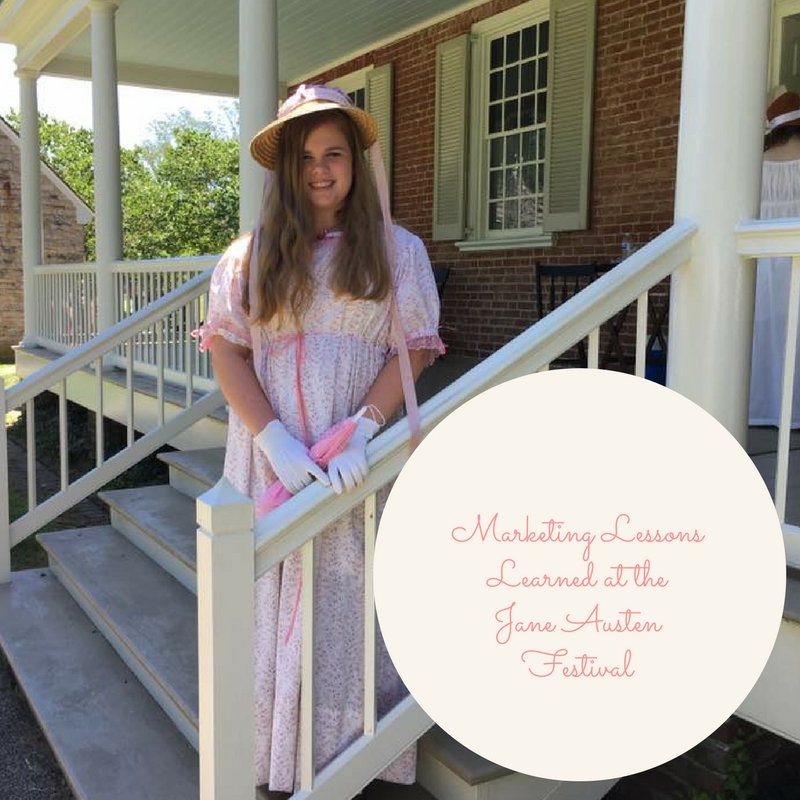
I am a fan of Jane Austen. I don’t have to extol the virtues of the Regency-era authoress to you–you work in a library. But I do want to share an experience I had this weekend and the marketing lessons I learned from it.

For the fourth year, my daughter and I attended the Jane Austen Festival in Louisville, Kentucky. This is the largest Jane Austen festival in North America and it is amazing for many reasons. The dresses, the food, and the vendors are all amazing and period-authentic. But this year, I found that I was hyper-aware of the marketing aspects of the festival. This is the 9th year for the festival and they are doing everything right, in my opinion. Here are the three big marketing lessons I learned.

Build your fan base over time and don’t discount the wonderful ways they can market for you. They might not be “influencers” in the traditional marketing sense, but your loyal, adamant, and devoted fans are a powerful marketing tool. A group of people who love you and your products will do more free marketing for you than any ad you can ever buy.

The Jane Austen festival boasts thousands of attendees every year and although they do some promotional media on local newspapers, TV, and radio stations, I haven’t ever seen a single ad buy. They don’t need to. The event grew quickly through word-of-mouth. Jane fans tell other Jane fans, in person and online. At the afternoon tea, I spent half an hour giving a new attendee from Indiana the lowdown on what to see, which vendor tents to visit, and where to get a Regency-style outfit for next year. No one paid me! There’s just an excitement that’s contagious and that loyal fans want to share.

The Jane Austen Society of Louisville has a Facebook page with more than 1200 members, including myself. Only about 10 percent of those members belong to the society but everyone who likes the page will share news about the festival with friends across the world. And fans will share recommendations for costumers, tea merchants, and other vendors, providing business even after the three-day festival has ended.

In addition, festival organizers give a place online for fans to talk and post photos and videos after the event. The festival organizers and the smart vendors like and comment on those photos, making festival goers feel valued and special.

Creating an immersive experience leaves a lasting impression. From the moment you step onto the grounds of Locust Grove, you feel like you’ve been transported to Jane’s era. Many attendees dress in authentic Regency wear. People bring picnic baskets and full tea sets and eat on the lawn using authentic place settings and utensils–no plastic sandwich bags or paper napkins here. In a sea of brightly colored frocks, parasols, fichus, and top hats, you can’t help but feel like you’re part of Jane’s world and that leaves a lasting impression.

The festival organizers go out of their way to complete the immersive experience by handing out programs and putting up signs in hand drawn authentic regency font. I know it’s just a font but it sure does a lot to capture the mood! All the vendors set up their wares inside beautiful white tents and many will use signs that say “Bills of Credit Accepted” instead of the more modern credit card signs. It may sound insignificant but it’s those little touches that extend the mood of the festival and make it an enjoyable and memorable experience for all.

Content marketing works. The entire customer journey for the Jane Austen festival only lasts a month. Tickets don’t go on sale until about 45 days before the event. But the society spends the whole of the year prepping Jane fans by posting articles about Jane, talking about Austen spin-off books, sharing photos and videos about Jane Austen and the Regency era, and holding smaller events with the Jane Austen theme. All this Jane talk serves to educate potential festival goers about the era and the author and builds excitement for the main event.

Subscribe to this blog and you’ll receive an email every time I post. To do that, click on “Follow” button on the bottom left-hand corner of the page. Connect with me on Twitter and Snapchat–it’s where I talk about library marketing! I’m @Webmastergirl. I’m also on LinkedIn, Slideshare, Instagram and Pinterest. Views in this post are my own and do not represent those of my employer.

Libraries Need to be Bolder, Braver: Lessons from a Writer

I’m a fan of Ann Handley… that’s not really a secret.

Handley is an inspiration because her approach to marketing centers on creative writing. I spoke to her last year and she was kind enough to do an interview for this blog.

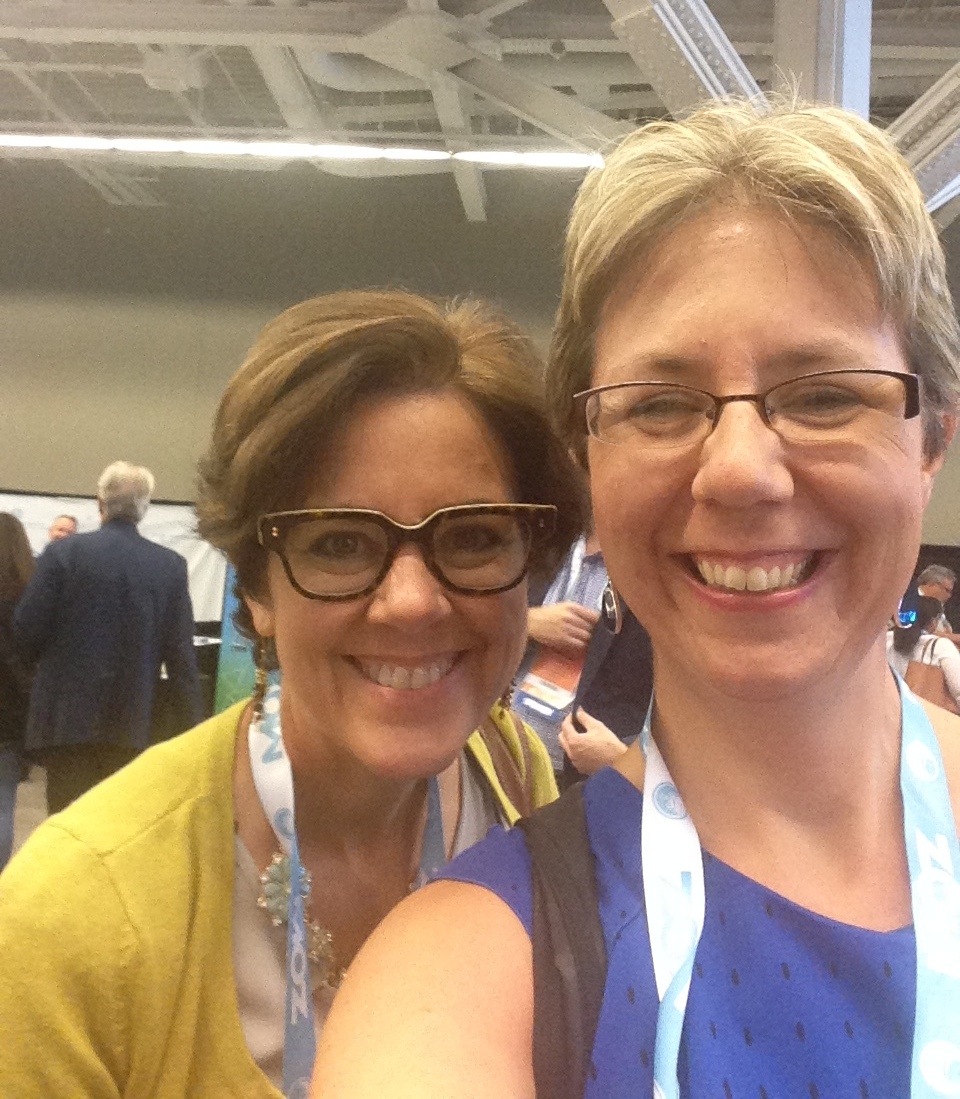
I saw Handley speak at Content Marketing World this year. Her message was full of great advice and there’s one point she made which bounced around in my head ever since it rolled off her tongue.

If the label fell off your product, would your audience still know it belongs to you?

I have looked at everything we do here at my library through new eyes in light of that question. And the honest answer is… no. I think that’s probably the case for most libraries and for most brands, quite frankly.

How do we make sure our writing and our content is truly ours? We’ve all heard experts tell us to “find and use your brand voice” but what does that really mean?

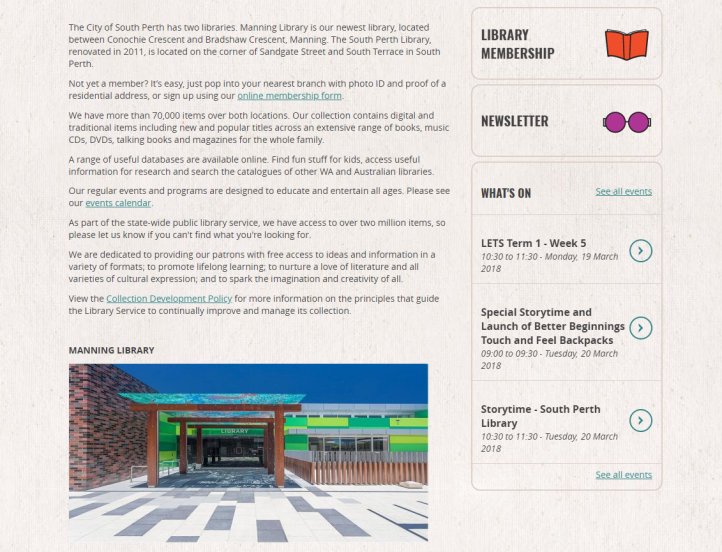
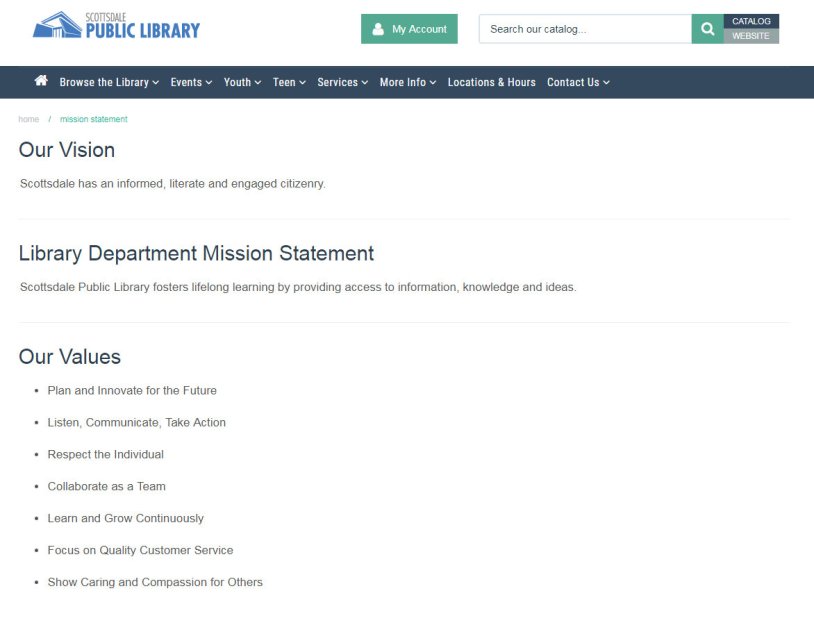
I think it’s particularly hard for a library. Marketing experts warn brands not to try to be all things to all people–to find a niche audience. But that all-inclusiveness is at the core of every public library’s mission statement. We were built by everyone in the community and we serve everyone.

That doesn’t mean your institution can’t find and use its own unique voice. Your voice is about who you are as a library, why you do what you do, and what your customers experience as they deal with your services and staff. Your voice reflects your culture and amplifies your story. It creates empathy in your cardholders and shows you care about them. Here are some tips from Handley’s talk.

handleyang

Don’t play it safe. Now, don’t get scared right off the bat. I know you are likely taxpayer-funded. You’re conscientious about everything, from how you spend your money to how you word your phrases. Handley isn’t asking you to be racy or provocative. She’s encouraging you to move away from “library lingo”… to speak conversationally, using words that real people use and understand. She’s asking you to stop assuming your cardholders know about all the services your library offers, how to use them, and where to find help. She’s saying you should look for stories from inside your library and from your cardholders and share those stories.

You don’t have to spend a ton of money to create engaging content. Handley says compelling content is more about brains, hearts, and guts than budget.  Handley told us the story of a family member and his quest for the perfect coozy. It led him to the company Freaker USA, which makes unique coozies. Check out their “about” page. No fancy talk, no lingo. I also love their FAQ page. It uses humor to gain interest for a drink insulator. You have to admit that’s genius.  And there’s no reason libraries can use that same approach to make their information more accessible.

Deep value makes your customers smart. Consider how your library is leading your community. How do you make the world a better place? Through questions like this, you’ll find stories that you can tell through heartfelt, engaging writing. Those stories nearly write themselves. And that’s the stuff your cardholders really want to hear about.

Finally, Handley encourages you to disrupt your industry fairy tales. What is it that people think of when they think about your library? What stories and stereotypes has your organization perpetuated? When I tell people I work in a library, they ask me if I work in a Carnegie-designed building full of women wearing glasses and sensible shoes who are constantly telling people to be quiet. That’s so far from the truth! Today’s libraries are noisy, creative, modern places. Let’s start telling those stories and bust those myths.

Subscribe to this blog and you’ll receive an email every time I post. To do that, click on “Follow” button on the bottom left-hand corner of the page. Connect with me on Twitter and Snapchat–it’s where I talk about library marketing! I’m @Webmastergirl. I’m also on LinkedIn, Slideshare,  Instagram and Pinterest. Views in this post are my own and do not represent those of my employer.
A WordPress.com Website.

Up ↑