Search

Super Library Marketing: Practical Tips and Ideas for Library Promotion

Category

Marketing Basics

The Best Thing You Can Do is Leave the Safety of Your Desk

I had an amazingly and scary experience this week.

My library is in the very first stages of comprehensive facilities plan. With money from a levy passed by our county voters in May, we’re going to renovate or rebuild ALL 41 library locations.

I’m trying hard not to not have a panic attack reading that sentence back to myself.

When complete, these projects will likely change the course of our library forever. As a first step in that massive undertaking, our board of trustees hired an architectural consulting firm to gather ideas and insight from our cardholders. As part of this opinion-gathering process, our library is holding community forums and structured question-and-answer meetings at each branch over the course of the next year. If you’re counting, that’s 80 plus chances for us to interact with the public and ask them directly what they want their library to be. MY GOSH, what a gift. Am I right? It’s a huge task but it’s also a huge opportunity!

I volunteered to work the forum boards during the first of our community meetings, and to help with logistics at the second one. Both opportunities gave me the chance to get out of my basement office and actually talk face to face with the people who receive, consume, and respond to my marketing messages. And it was amazing.

I’m serious. I learned all kinds of interesting stuff just from talking to people. I found out what they think about the layout of libraries, the frequency of email messages, the reasons they got a library card, their favorite parts of the collection, their impression of our staff, and their dreams for the services they want us to provide. It was gold mine of information.

Honestly, I’ve never actually done drugs, but I felt high was I left my first shift. I ran into one of my good friends who works as front-line staff and I gushed to her about how amazing it was to actually talk to people. She said, “Hey, you should just come hang out at the desk with me. People will tell you exactly what they think of our marketing if you ask them, and you’ll learn so much about our cardholders.”

And I realized in that moment, for all the research and thinking and strategic planning and data analysis that I do, I might be missing one of the most important aspects of library marketing–my cardholders. I *think* I know what they want and need. I’ve got survey results and conversion data and social media engagement statistics that tell me about the people our library serves. But, before last week, I cannot remember the last time I actually talked to a customer about the library.

That changes now.

I don’t really have to worry about forcing myself outside my comfort zone over the next year. All I must do is sign up to be a part of each of those community forums as they are scheduled. But after that, I’m going to have to make sure that I get out and talk to people. I have learned that direct interaction with customers is exceedingly valuable.

I hope you are better at this than I have been. Maybe you’re reading this and saying, “Duh, Angela.” If so, my hat goes off to you. I’m learning this lesson late. But I thought it was important to share it with you.

Don’t be a dummy like me and stay locked in your basement office, separated from your cardholders. Get out of your comfort zone and talk to your cardholders. Set up a regular calendar reminder and spend an hour with your front-line staff. You could just observe. Or you could ask questions. You’ll learn so much. You’ll make the cardholders feel valued. And you’ll be demonstrating your commitment to customers to your fellow staff members. You can’t be any more engaged than that!

Subscribe to this blog and you’ll receive an email every time I post. To do that, click on “Follow” button in the bottom left-hand corner of the page. Connect with me on Twitter, Snapchat, and LinkedIn. I talk about library marketing on all those platforms!
Avoid Email Vanity! Here Are the Results You Should Measure

I love email marketing. It’s one of the most effective tools in the modern library marketer’s toolbox. Emails are a direct way to interact with your cardholders and your community. They are easy to create. You can share stories, collection items, explain new services, and promote events directly with your audience. And library cardholders love getting emails from us. We don’t have to worry about unsubscribe rates the way other industries do.

Many libraries are now emailing their cardholders. And they’re reporting success with those campaigns. I’m so happy! But I’m also worried about something I hear often in conversation with other library marketers. I’m worried that we’re focused on the wrong measure of success–open rates. I’ve attended two events with other library marketers this summer. At both, there were deep and interesting discussions about success in email marketing. But at both events, the conversation about success centered on how to raise open rates.

Now, I have a confession to make. When I started targeted email marketing back in January of 2015, I was obsessed with my email open rates. And so were thousands of marketers in industries across the world. During my first trip to Content Marketing World, I attended several sessions on email marketing and every speaker mentioned open rates as a measure of success.

Open rates do mean something. They are a sign of customer loyalty. A high open rate means that your cardholders are eager to see what you’ve sent them. And that’s good. But it’s kind of like buying a house because it’s got a beautiful exterior. You may sign all the paperwork, open the front door and find all the walls are unfinished! Open rate is a vanity metric. It makes you feel good. But it’s what happens AFTER your cardholders open your email that counts.

I’m not suggesting you ignore open rates. They do give you information you can use to improve your emails. If your open rates are high, and your click-thru rates are low, you can be certain that you are writing compelling email subject lines (Good job, you!). You have a loyal and eager audience. But the content you are sending to your cardholders isn’t what they want. Now you can fix that problem!

Keep tabs on your open rate. But you should focus on two other valuable ways to really measure the success of your emails.

Click-through rates: The higher this number is, the more excited I get. It means that my cardholders opened an email, saw something they liked, and took an action! Most of the time, my library emails direct cardholders to do one of two things: click a link for a specific item in our collection or go to the event calendar where they can register or put an upcoming event on their calendar. Convincing a cardholder to take one of those actions is a huge victory. It also gives me data about what that particular cardholder is interested in. And I can use that information to craft future emails that are also compelling for that cardholder.

Conversion rates: A conversion rate is the most accurate way to measure email effectiveness. It is the percentage of people who take an action after clicking through an email. For example, let’s say 100 people click-through to look at a book I’ve promoted by email. If 50 of those 100 people put the book on hold, my conversion rate is 50 percent. Once I know what my average conversion rate is for a certain type of email, I can set goals to raise that conversion rate. I can  accurately compare my emails to one another.  I might see a high conversion rate for a certain genre of book and look for similar books to market to that cardholder. I might notice a spike in registration rates for a particular kind of program coming from an email and look for similar kinds of programs to market to my cardholders. Conversion rate is the most accurate measurement for determining the likes and dislikes of your cardholders.

For more on tracking the success of your email marketing, you can also read this article. And if you want to learn more about targeted email marketing and get more secrets for library email success, don’t forget the free webinar 

Subscribe to this blog and you’ll receive an email every time I post. To do that, click on “Follow” button in the bottom left-hand corner of the page. Connect with me on Twitter, Snapchat, and LinkedIn. I talk about library marketing on all those platforms!
Call It What It Is: Toledo Public Library Explains Their New Brand Strategy

A couple of weeks ago, a Tweet from the deputy director of the Toledo Public Library caught my eye.

Our marketing manager here at the library is leading a charge to “call things what they are” to reduce confusion for customers. We should be doing more of this in libraries and resist the urge for cutesy branding.

https://platform.twitter.com/widgets.js

Jason went on to explain, “When I joined the library three plus years ago, we had just launched a kind of umbrella branding for all of our making activities at the library. We called it Make U. It was clever, had a nice logo, and generally served a purpose… for us. Three years later, it’s still a confusing ‘second brand’ for our library (one of many tertiary brands, actually). Terri Carroll (our marketing manager) is working really hard to make the library’s brand the key identifier for all things library. Every time we roll out a new program or service, we have the urge to give it cute or clever branding. It’s just more education we have to do with our customers. So rather than trying to constantly educate people about our new brands, services, and programs, we focus on the library’s brand: a welcoming and accessible space where anyone has access to resources they need to make their lives, their communities, and their futures better. Now we call Make U what it is…tech tools. I’ve learned a tremendous amount from Terri in the short time she’s been with us about how we cut through a very noisy marketplace to reach people where they are when they need us.”

This is a major hurdle for my team and library marketer’s across the country! At my Library, I’ve counted no less than TEN branded services. And each one requires education for the staff and public. The names are cute but their meaning is obtuse.

Library marketers struggle with branding. We need to do a better job of defining who we are. We must create a consistent emotional connection with our cardholders if we’re going to compete with the likes of Amazon, Barnes and Noble, Netflix, and Google.

Jason’s co-worker, Toledo Public Library Marketing Manager Terri Carroll, graciously agreed to share her insights on the process.

So many libraries have a set of tertiary brands for their various programs and services. Why is that a problem? Each day, our current and potential customers are bombarded with media messages from well-funded and sophisticated retail, fast food, snack food, entertainment, sports, news, and service companies. While these organizations aren’t competing with us to provide library services, they are competing with libraries for people’s time and attention. If libraries hope to have people notice our message in a noisy marketplace, it is imperative we have one clear brand that makes it easy for people to know who we are and what value we provide. Tertiary brands dilute our message and make it more challenging to connect with customers.

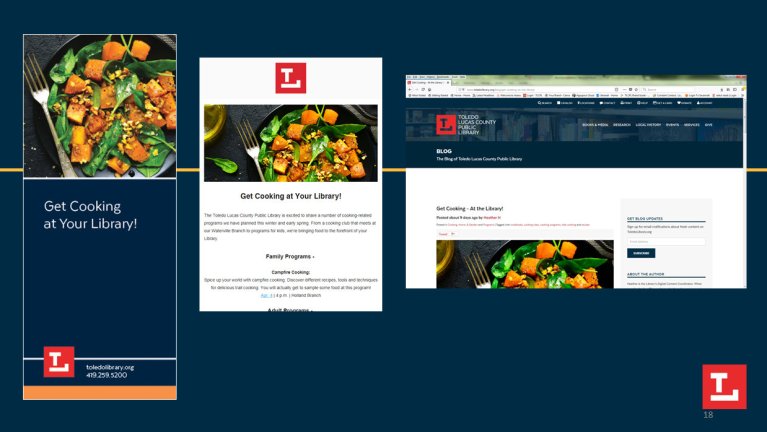
Before the redesign, the Toledo Public Library struggled to bring a host of tertiary brands together to create one cohesive brand.

What prompted you to decide to focus less on giving everything a cutesy name and instead develop and nurture an umbrella brand? I started working at the Library in November and was struck by the fact that each program had its own look and message. The emphasis was on program names and unique graphics, rather than the Library as a whole. For example, a great deal of energy was spent on “logos” for programs such as Kindergarten Kickstart, Ready to Read, and Make U instead of thinking about messaging that clearly connects a valuable service (early literacy or access to technology) with the Library. This approach puts the burden of connecting the dots about the Library’s value and relevance on our customers. It also keeps the Marketing team from thinking strategically as they instead spend energy making everything look different. This is an unfortunate use of resources. Having things look similar within a brand compliance strategy makes it easier for customers to identify Library materials and messaging.

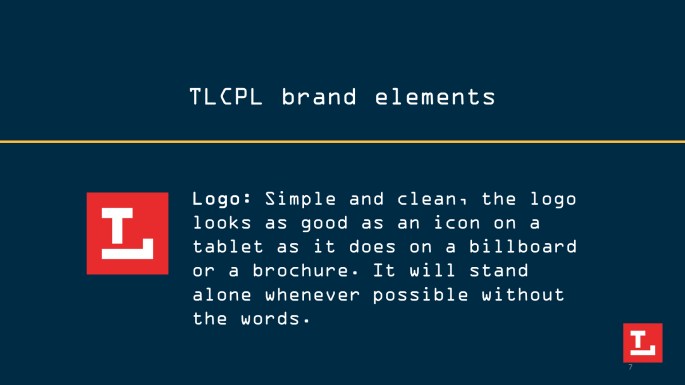
Terri laid out brand elements to create a clear and consistent message that can be understood by staff and library cardholders.

Have you seen positive results from this type of strategy yet?  We’ve been working on implementing this strategy since December, so it is tough to extrapolate data yet. For now, positive anecdotal comments to Library staff and leadership such as, “The Library is doing so much,” (when in fact we are doing a similar amount of work) and increased earned media attention are indicators of success. Ultimately, we should realize increases in circulation, door count, and program attendance as well as community and regional stakeholder invitations to be at the table on important issues, speaking opportunities, organizational partnership creations, and election results.

How can other library marketers make the case to their stakeholders, like their board of trustees, the senior leaders, and their staff, that developing a strong brand sense is more productive than creating brands individually as services are unveiled? Stakeholders repeatedly express interest in making sure the community knows about everything the Library does. I have invested a lot of time meeting with all of our internal stakeholders to show them how strong brand management is necessary to meet that goal.

My staff and I also work to keep a focus on making sure all materials and messages are customer-focused. We ask ourselves and our colleagues if our materials and messaging are giving customers all the information they need to engage with the Library. Focusing on how customers understand our Marketing keeps everyone externally (brand) focused and not internally (tertiary brand) focused.

A clear, consistent look helps Toledo Public Library create a connection and makes it easier for their cardholders to recognize their messages.

Do you have any other advice for library marketers looking to strengthen their own brands? It is essential to have senior leadership support for strong brand management. If people are used to the tertiary brands and have enjoyed the creative process (either working with Marketing and/or doing their own design work at the department or branch level), moving to brand compliance can be painful. If those concerns/complaints are taken to senior leadership and exceptions are granted, then the entire brand strategy is compromised.

It is also important to expect some resistance and be willing to talk with people about their questions and concerns. In these conversations, something that seems to really resonate is when I say that we don’t want to re-educate people every time they see something from the Library. We want people to immediately identify a Library program or service. And while staff sees all the materials and, may in fact get a bit tired of the same colors and fonts, this easy identification and brand recognition is essential for customers who are wading through a marketplace of messages and materials.

Subscribe to this blog and you’ll receive an email every time I post. To do that, click on “Follow” button in the bottom left-hand corner of the page. Connect with me on Twitter, Snapchat, and LinkedIn. I talk about library marketing on all those platforms!

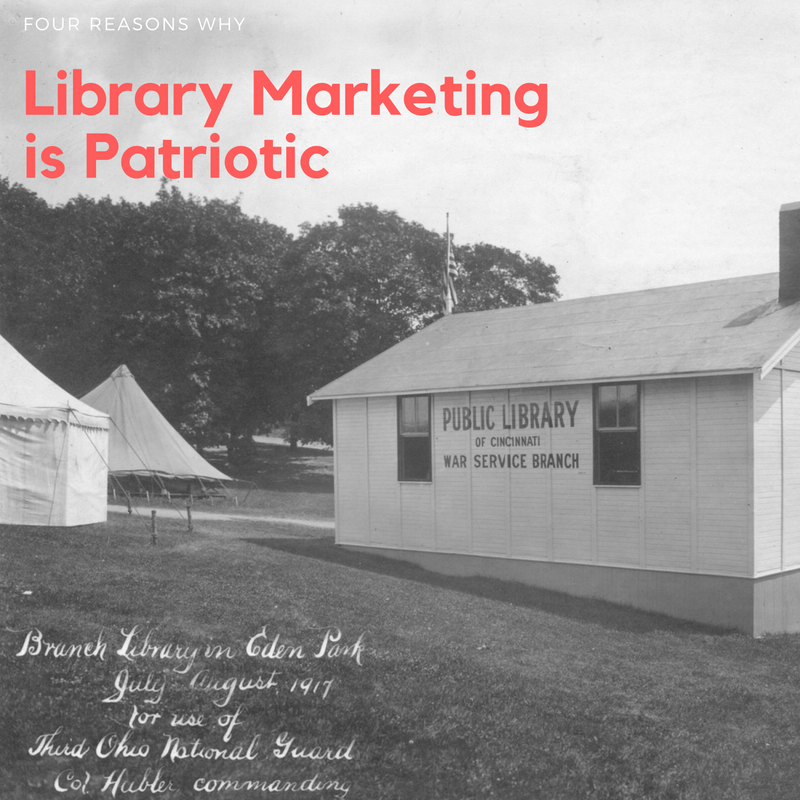
Four Reasons Why Library Marketing Is the Most Patriotic Profession

Here in the United States, we’re celebrating the birth of our country this week. July 4th is a big deal in America. We hold parades. We eat a lot of food. We set off fireworks. We wave the flag, wear the flag, and sing about the flag. We generally make fools of ourselves as we declare our love of the U.S. and list all the things that make America the best country ever.

But you may have noticed, even if you don’t live in the United States, that there’s been a bit of a shift in the collective patriotic mindset over the past 18 months. We are in a bit of a rough patch politically, ideologically, and culturally, you might say. There are some days when I find myself wondering if it was even worth celebrating the 4th of July this year.

Whenever I feel like my country is not living up to its ideals, it helps to think about my work. I work in a public library, with some of the most giving and noble people in existence. They do patriotic work every day. Libraries are the home of civility, which receives so much discussion of late. They are important public institutions. And no matter what country you call home, your work in library marketing is a patriotic duty. Here are four reasons why that is true.

Good Library Marketing keeps the building open. Good library marketing compels people to come to programs, check out items, and give to your library. Without fulfilling those three objectives, your library would fail to thrive. Cuts would be made to hours and staff. Services would be eliminated. A cut in any of those areas would mean the people in your community who need the library the most would suffer. When you do your job well, you are helping to raise up the underprivileged. You put much-needed services into their hands.

Good Library Marketing creates jobs. When you do a good job of keeping the collection in circulation or getting people into your buildings, you are creating employment opportunities for your fellow staff members and beyond. Publishing houses stay open. Authors have monetary incentive to keep writing. Program presenters get a paycheck for sharing their knowledge with your community. You help sustain employment for hundreds of thousands of workers outside of your community, including custodians, security staff, computer and technology service workers, and so much more.

Good Library Marketing connects people to their communities. When you do a good job of marketing your library to your public, you make people feel connected to each other. You give people a vested interest in their fellow human. When you help young children to learn to read, you improve the lives of everyone. A good library marketer can make that case, even to people who don’t have young children. They can make people care about one another. A well-publicized book club brings together a group of people who may not have otherwise met each other. Those people can talk to one another about subjects that never would come up in unregulated conversation. They learn about each other. They learn to disagree respectfully! Sometimes, a discussion that begins in a library can lead to social change. You help to make that happen!

Good Library Marketing supports the arts. I’ll bet your library hosts art exhibitions, musical and theater performances, and other arts-related programming and services throughout the year. When you do a good job of marketing those programs, you are supporting the arts in your community. You are enriching the lives of the people you serve. Many of them may not have the money to attend ticketed events. You are bringing beauty, philosophy, and creativity into their lives.

Subscribe to this blog and you’ll receive an email every time I post. To do that, click on “Follow” button in the bottom left-hand corner of the page. Connect with me on Twitter, Snapchat, and LinkedIn. I talk about library marketing on all those platforms! 
Introducing the Nine Blogs That Will Make You a Better Library Marketer

(Read time: 2 minutes, 28 seconds)

I am a fan of blogs. God bless the internet, it’s the best way to keep up to date on everything–food, fashion, the news, and the changes in library marketing. And, as much as I am also a fan of books of all kinds, I am not a fan of marketing books! The landscape of this profession changes fast. Unless it’s a philosophical take on marketing, most marketing books feel out of date within a year or two of publication.

Instead, I get my advice from blogs. So I’ve listed the nine blogs I recommend you read to stay on abreast of all the news in marketing. For the best use of your time, sign up for the email newsletters offered by these sites. Most will let you choose which topics you like to hear about and will send you content at the frequency that’s best for you. Set aside time on your calendar every day to read the content shared by these blogs. It’ll be time well spent. I’ve listed them in alphabetical order.

The Content Strategist

This blog features interesting articles broken into categories like storytelling, strategy, and ROI. They also post inspirational articles, which I love to save and read on days when I feel like my work is not having the impact it could or should.

Content Marketing Institute

At first glance, you might be intimidated. This blog is aimed at C-Suite or executive level marketers. But it’s good to read this advice even when you’re a little guy! There are always pieces of their strategy and bits of advice you can pick up and mold to work for your library. And the writers of this blog always seem to see the trends in consumer and business marketing before any other experts. Also, when you sign up for this newsletter you’ll get notifications about CMI’s free webinars. They have the most helpful webinars of any company in the marketing space.

Coschedule

I found this blog after using their online tool for writing better headlines. It’s among my favorites. Coschedule creates a lot of useful templates and writes easy-to-read, concise instructions on how to use them and how to improve your marketing.

The Daily Carnage

I read this one for laughs, good advice, and a lesson on how to write with humor and still be taken seriously.

Hubspot

Hubspot also gives away a lot of free templates and online courses that have tremendous value. Their blog posts cover a range of topics and are fun and insightful.

Mashable Marketing

One of my favorites by far. Their content is easy to read and interesting. They cover topics from social media to graphic elements to equipment to how pop culture affects marketing. It’s also written very, very well. This website is daily appointment reading for me!

PR Daily

If you sign up or bookmark just one blog from this post, this should be it. It’s essential for library marketing. This blog contains everything you need to know about public relations and the media. You have my permission to stop reading and subscribe to this one now. Then come back. Please.

Social Media Examiner

When I interview candidates for a social media position, I asked them where they get their news about social media. If they name this blog, they get a big A+ from me. Read it AND listen to Michael Stelzner’s podcast to get the best advice on social media from the industry’s best minds.

Spin Sucks

This blog offers a lot of helpful PR advice with a mix of fun posts designed to stretch your creative brain and general marketing advice. I really look forward to their daily email newsletter. I always learn something!

What is your favorite marketing blog? Please share the name in the comments so I can read it too!

Subscribe to this blog and you’ll receive an email every time I post. To do that, click on “Follow” button on the bottom left-hand corner of the page. Connect with me on Twitter and Snapchat–it’s where I talk about library marketing! I’m @Webmastergirl. I’m also on LinkedInInstagram and Pinterest. Views in this post are my own and do not represent those of my employer.


The Big Challenge That Taught Me All About Library Marketing

The biggest holiday of the year in my city of Cincinnati is, without question, the opening day of the Cincinnati Reds baseball season.

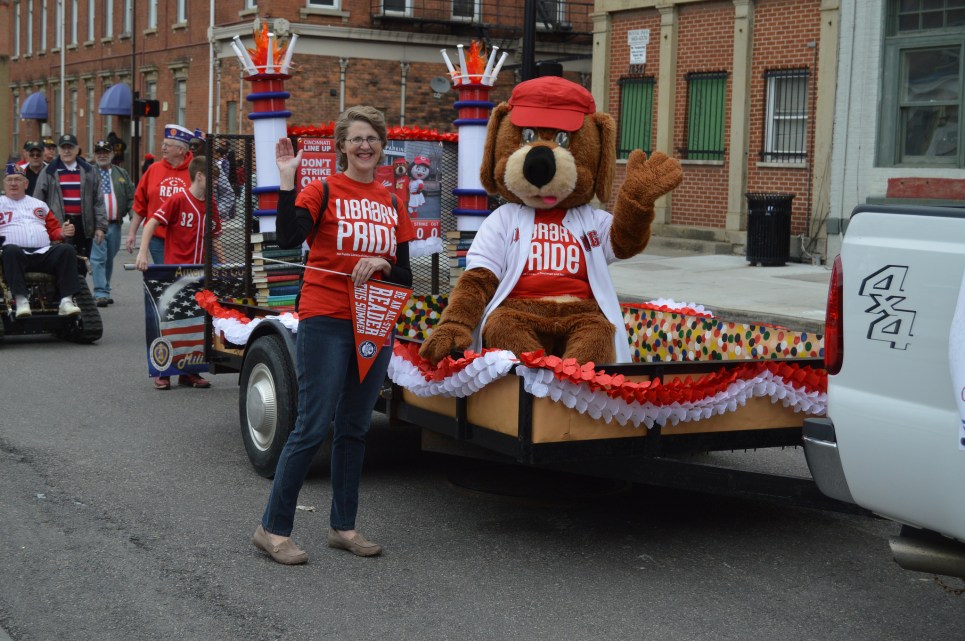
Yes, you read that correctly. Half a million people turn out to line the streets of our city for a wild parade that lasts two hours and contains nearly 200 entries. Then they all stream down to the riverfront for street parties and concerts that lead up to the opening pitch of the day. Everywhere you go, you see people dressed in red and white, screaming from balconies, waving handmade signs… it’s a day-long pep rally. People dress up their dogs and kids and paint their faces and wear beads. It’s the Mardi Gras of Cincinnati. This has been going on for decades.

Our library has participated in this tradition since before I came to the organization. Every year, we march in the parade. I learned I would be responsible for our entry just a few months after I had joined. I had never organized a parade entry before. I had only ever covered the Reds parade in my time in news and had no idea what it was like on the participation side! But five years later, I’ve got the process down pat. And, I’ve thought a lot lately about how that experience mirrors many other projects in library marketing. Here’s what I’ve learned.

If you decide to partner with another organization, choose wisely. When I learned that I would be organizing my first parade entry, I set out to ask for advice. A co-worker told me that I was expected to partner with a local organization that helps disadvantaged children. So I reached out to them and called a meeting. It was a painful experience. They did not offer as much help as I needed. They barely contributed to the cost and labor of creating the entry. I completed all the paperwork and recruited all the volunteers and staff. On the day of the parade, I worried that we would lose one of their young clients, as they apparently thought I should also supervise the kids they had recruited to be in the parade. This was not the first time I’d been involved in a one-sided partnership project. We’re all been there. The next year, I decided to go it alone. It was actually less work and less stress.

Partnering with the right organization can bring you more resources and can help with the workload. Joining up with the wrong group can make the experience more stressful. That’s true with any library marketing project. Do your homework and choose your partners wisely. Approach with a series of questions in mind: What do you hope to accomplish in this partnership? How much time and money can you contribute to help us reach our goals? How will the work be divided among us? How will approvals and major decisions be handled?

Sometimes simple is best. My first parade float attempt a disaster. I had never created a parade entry by myself before and I am not an artist. I had no idea was I was doing. It was a hot mess of ideas and it looked muddled.

The second year was a little better. I had hired a graphic artist who was enthusiastic about the project. She recreated the Reds ballpark, complete with smokestacks made of discarded books. It was amazing–and it took a ton of time and was difficult to manage, given our low-budget. It looked great but it was very stressful.

The third year, I decided we would simply drive our delivery truck, which we had recently re-wrapped in a beautiful branded design created by another of my graphic artists. The difference in the stress level I felt in the weeks leading up to the parade was amazing. And the entry connected with the crowd better than any handmade float because it was a branded, recognizable vehicle.

You may be tempted to be complex in your library marketing projects. After all, complexity feels more productive. More work equals better work, right? Not necessarily. If you can approach each project in its simplest terms and break it down to the points that have real meaning, then work on reaching that goal, you’ll be more successful than if you try to reach a dozen goals in a multi-pronged approach. Your messages to the customer should also be simplified. Speak clearly, say what you mean, don’t use library jargon, and you’ll do a better job of connecting with your audience. Your graphics should be simple. Your services should be simple. Simple makes it easier for people to use your library and that will lead to increases in circulation, program attendance, and overall satisfaction.

Get your staff excited. The most important critical moment of parade planning is the moment I decide to start recruiting staff members to march with our entry. I have to make sure my pitch to them includes incentives for participating and emphasizes the excitement of the moment and the value to our cardholders. I also have to make sure members of senior leadership participate because staff members notice and feel neglected if there isn’t a member of administration marching with them through the cold or rain or heat (April weather in Ohio is completely unpredictable!). Likewise, in library marketing, you need to get your staff excited about your projects. Take the time to explain why you are doing the work you do and why it will help them in their interactions with cardholders.

Subscribe to this blog and you’ll receive an email every time I post. To do that, click on “Follow” button on the bottom left-hand corner of the page. Connect with me on Twitter and Snapchat–it’s where I talk about library marketing! I’m @Webmastergirl. I’m also on LinkedInInstagram and Pinterest. Views in this post are my own and do not represent those of my employer.

Five Excellent Ways To Improve Every Sign in Your Library

I have a love/hate relationship with library signage.

Part of my job as a marketing professional in a major metropolitan public library is to conduct signage evaluations and to make changes or improvements to the signs in our 41 locations. As a customer, I know how helpful the right kind of signage can be, and my perspective as a customer helps me to understand the importance of the task. But to be honest, it’s probably one of my least favorite job requirements. That’s because I’ve found that signs seem like a simple thing but are, in truth, very complicated. My coworkers and my cardholders have passionate feelings about them.

Good signage serves as a silent employee to draw cardholders to your location, direct traffic inside your building, and answer basic customer questions. Signs can actually be a part of your library’s overall strategy and should certainly be worked into your marketing strategy each year. Ask yourself: What are your library’s overall goals, and how can signs help to meet those goals?

The task of tackling your library’s signage is much easier when you have brand specifications documented. The color, size, and language should be consistent throughout the building and multiple locations. Once you have that document created and have decided how signage will help you to execute your library’s goals, here are five tips to keep in mind as you work on signage for each building.

Tip #1: Less is more. Too many signs in a branch, particularly in a small location, can create clutter and can actually cause confusion. And too much signage can actually annoy your cardholders, particularly if most of your signs are bombarding them with marketing messages. Just as white space works to create breadth and depth for a website or a graphic, well-spaced signage in a branch creates flow. About 75 percent of the signs in your library locations should be wayfaring only–directing cardholders to important service points in the building. The other 25 percent can be selective marketing–promoting services and items that are of interest to your cardholders or that might be of interest to them, based on their patterns of checkout.

Tip #2: Match the signage display to the user of each physical space. Make sure that in your children’s area, the signs, shelves, and computers are all lowered to be a child’s level. Create larger signs for the section that holds your large print items. Place teen signs where the teens hang out, like near charging stations or computers. Use a combination of large and small signs to blend with the space requirements in your library and to keep your signage from becoming monotonous, without being overpowering.  Use a bold font and keep colors and designs simple.

Tip #3: Your library materials make the best displays. Use them instead of signs. Think about how your local bookstore will display books. They often turn them front-facing. Why? Book covers are a visual cue and publishers spend thousands of dollars creating beautiful and eye-catching covers. Use these designs to create a visually pleasing display instead of a sign. A good display will not even need a sign–it should be obvious to the cardholder what you are trying to market to them.

Tip #4: Use customer-friendly, positive language. Cardholders prefer conversational language in all our marketing, so it makes sense to incorporate that into your signage. Some examples are:

Replace self-check or circulation with checkout.

Replace reference with information.

Replace periodicals with magazines.

Replace juvenile with children’s and teens.

I know this is controversial but I’m saying it anyway. Drop the Dewey decimal system from your end panels and arrange your fiction and nonfiction items alphabetically. And incorporate positive language into your signs. Don’t tell customers what they can’t do. Rather, tell them what they can do or how they can enjoy a particular space or item in the collection.

Tip #5: Don’t forget the signs on the outside of your building. Your main sign should say LIBRARY in large letters. Save the actual name of the building, particularly if it’s a long name, for smaller letters by the door. Make sure your open and close times are large and clear and in an easy to spot location. The same goes for the signage for any outdoor services like book drops or drive-thru windows. Make sure the signs are as large as is allowed by your local government.

Bonus tips: Don’t rely on signs to convey everything you want to tell the customer. Hire staff who are willing to speak with customers and show customers where items are located with patience and kindness. And set a schedule for re-evaluating and refreshing your signage–once a year, if you can handle it.

Subscribe to this blog and you’ll receive an email every time I post. To do that, click on “Follow” button on the bottom left-hand corner of the page. Connect with me on Twitter and Snapchat–it’s where I talk about library marketing! I’m @Webmastergirl. I’m also on LinkedInInstagram and Pinterest. Views in this post are my own and do not represent those of my employer.

The Best Library Customer Service Advice from an Expert

There is an undeniable connection between customer service and successful marketing and to ignore the role that a personal, caring interaction with a customer can have for your library is dangerous. Don’t take your customers for granted. Help them solve their problems–even when the problem is your library–and keep them loyal for a lifetime.

I started to really think about the role customer service plays in my library when I stumbled across a podcast a few years ago called Focus on Customer Service. Host Dan Gingiss interviewed marketers from brands which are known for outstanding customer service in the social media area. Those conversations are enlightening and, although the podcast is no longer in production, I would suggest you go back and listen to the archives. They’re really worth your time.

Meanwhile, Dan has gone on to write a new book, Winning at Social Customer Care: How Top Brands Create Engaging Experiences on Social Media. It is the best marketing book I’ve read recently. I reached out to Dan to ask him some specific advice about libraries and customer service and he was kind enough to give his advice.

Dan’s 20-year career has consistently focused on delighting customers, spanning multiple disciplines including social media, customer service, marketing, and digital customer experience. Dan has hands-on experience as an executive at multiple Fortune 300 companies, including as the Senior Director of Global Social Media at McDonald’s Corporation, the Head of Digital Marketing at Humana and the Head of Digital Customer Experience & Social Media at Discover Card. A frequent conference speaker, Dan holds a B.A. in psychology and communications from the University of Pennsylvania, and an M.B.A. in marketing and strategy from the Kellogg School of Management at Northwestern University. You can find him on Twitter at @dgingiss.

Libraries often do things by committees and many have a long and bureaucratic approvals process for everything, including responses to customer service issues. Can you tell us why libraries should consider empowering their employees to surprise and delight customers by resolving issues in a more expedient way?

What libraries — and all organizations — need to remember is that customers are comparing you to every other customer experience they have with companies. You’re not being compared to another library; rather, you are being compared with Amazon, Wendy’s, Zappo’s, and any other brand with which the customer has engaged recently. Customer expectations are higher than ever, and a speedy response has become table stakes to competing with other superior experiences.

Libraries have such meager budgets, and many focus solely on getting the most product (books) to customers as possible. They don’t want to spend any money on providing good customer service. There are a lot of products out there that can make it easier for libraries to enhance their customer service. If you had to pick one thing that libraries should spend money on to improve their customer service, what would it be (software? More agents? )

Self-service capabilities. Most customers are willing to pursue self-service solutions if they are available, and many even prefer it. In the case of libraries, this could be used both in person at computer terminals and online, where like other industries much of the customer interaction is now taking place. Considering that libraries are still physical structures and much of the experience is still enjoyed in person, it’s also critical that they hire friendly and helpful staff who are willing and able to help readers who have no idea how to navigate the archaic Dewey Decimal System, for example. (Think about how people search for things today; it certainly does not involve decimals!)

Training for customer care, particularly in social media, is not always a strong suit for libraries. They train mostly for front-line customer service. Can you explain the difference between training for front-line interactions with customers and online customer care, and why there is a value in providing specific training for online care?

First of all, it’s critical to remember that social media is still the “front line”. It’s just another channel in which your customers have chosen to engage. So just as you wouldn’t leave a Help Desk unattended or let the phone ring and ring, you also shouldn’t make people wait for answers on social media either. That said, there are some key training differences (explained in Chapter 7 of my book) between online and offline Customer Service agents. The two most notable are writing ability and social media platform knowledge. Agents must have good spelling and grammar, as mistakes cast a poor light on the organization, and they must have at least a working knowledge of each individual social media platform so they understand the culture, norms, and limitations.

I think community building is a good strategy for libraries to engage with cardholders and offer customer care. Based on your book, I assume you agree. Can you explain how building an online community might benefit an organization like a library which is looking to improve customer service?

Online communities are especially helpful in answering questions that are likely to recur over time. For example, I recently learned that libraries often have passes to local museums but that they are reserved quickly. I wanted to know the process of obtaining such a pass from my local library. While calling the library worked just fine, an online community could have provided the same answer without leveraging paid library staff. In addition, I’d point out that books, by their very nature, are community-building in that people love talking about their similar interests and experiences. So I think an online community hosted by a library could be very successful on several fronts.

What do you think the future looks like for customer service? Is there anything libraries should be considering as they plan for the future, so they can stay competitive with bookstores and offer excellent service to cardholders?

Libraries have a huge advantage over bookstores because they provide the product for free! If they were also to provide a consistently superior customer experience, the discussion in the media might not be about Amazon undercutting brick-and-mortar bookstores, but about how libraries are experiencing a great resurgence at the expense of Amazon! Like any industry, libraries must adapt to changing technology and customer expectations. In some ways, they have, like the availability of e-books, but I’ve never found those to be either marketed effectively or easy to use. Libraries should learn from for-profit businesses to become better marketers of what is already a competitive product, to draw in new card members but also to remind existing ones why they signed up in the first place.

Bonus Secret: Go to www.winningatsocial.com/discount, click on “Buy Now”, then enter the code “Winning” to get a signed copy of Dan’s book for the best available price.

Subscribe to this blog and you’ll receive an email every time I post. To do that, click on “Follow” button on the bottom left-hand corner of the page. Connect with me on Twitter and Snapchat–it’s where I talk about library marketing! I’m @Webmastergirl. I’m also on LinkedInInstagram and Pinterest. Views in this post are my own and do not represent those of my employer.

Three Marketing Lessons Learned at the Jane Austen Festival

I am a fan of Jane Austen. I don’t have to extol the virtues of the Regency-era authoress to you–you work in a library. But I do want to share an experience I had this weekend and the marketing lessons I learned from it.

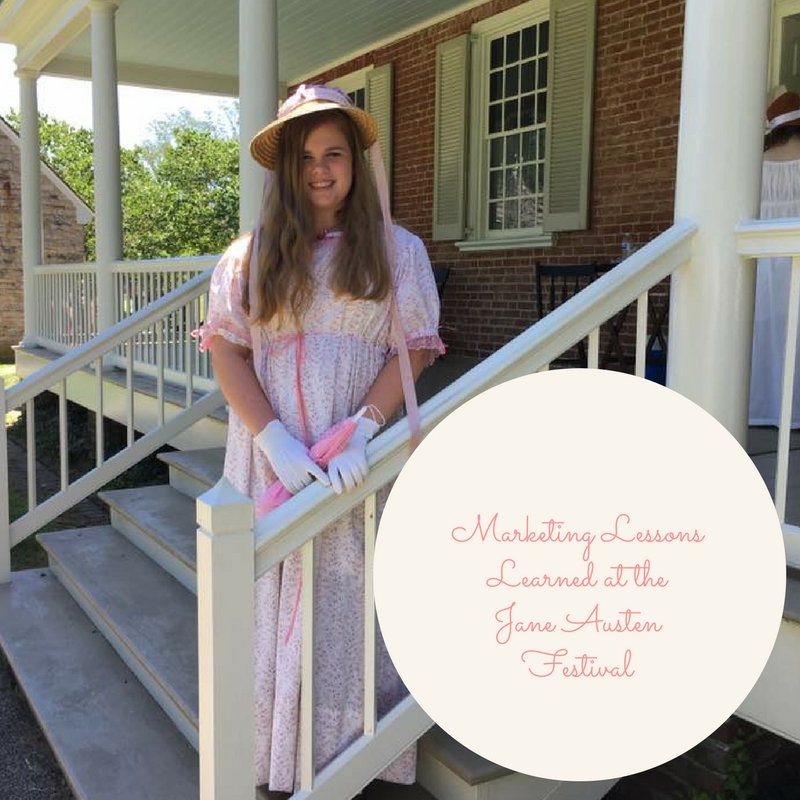
For the fourth year, my daughter and I attended the Jane Austen Festival in Louisville, Kentucky. This is the largest Jane Austen festival in North America and it is amazing for many reasons. The dresses, the food, and the vendors are all amazing and period-authentic. But this year, I found that I was hyper-aware of the marketing aspects of the festival. This is the 9th year for the festival and they are doing everything right, in my opinion. Here are the three big marketing lessons I learned.

Build your fan base over time and don’t discount the wonderful ways they can market for you. They might not be “influencers” in the traditional marketing sense, but your loyal, adamant, and devoted fans are a powerful marketing tool. A group of people who love you and your products will do more free marketing for you than any ad you can ever buy.

The Jane Austen festival boasts thousands of attendees every year and although they do some promotional media on local newspapers, TV, and radio stations, I haven’t ever seen a single ad buy. They don’t need to. The event grew quickly through word-of-mouth. Jane fans tell other Jane fans, in person and online. At the afternoon tea, I spent half an hour giving a new attendee from Indiana the lowdown on what to see, which vendor tents to visit, and where to get a Regency-style outfit for next year. No one paid me! There’s just an excitement that’s contagious and that loyal fans want to share.

The Jane Austen Society of Louisville has a Facebook page with more than 1200 members, including myself. Only about 10 percent of those members belong to the society but everyone who likes the page will share news about the festival with friends across the world. And fans will share recommendations for costumers, tea merchants, and other vendors, providing business even after the three-day festival has ended.

In addition, festival organizers give a place online for fans to talk and post photos and videos after the event. The festival organizers and the smart vendors like and comment on those photos, making festival goers feel valued and special.

Creating an immersive experience leaves a lasting impression. From the moment you step onto the grounds of Locust Grove, you feel like you’ve been transported to Jane’s era. Many attendees dress in authentic Regency wear. People bring picnic baskets and full tea sets and eat on the lawn using authentic place settings and utensils–no plastic sandwich bags or paper napkins here. In a sea of brightly colored frocks, parasols, fichus, and top hats, you can’t help but feel like you’re part of Jane’s world and that leaves a lasting impression.

The festival organizers go out of their way to complete the immersive experience by handing out programs and putting up signs in hand drawn authentic regency font. I know it’s just a font but it sure does a lot to capture the mood! All the vendors set up their wares inside beautiful white tents and many will use signs that say “Bills of Credit Accepted” instead of the more modern credit card signs. It may sound insignificant but it’s those little touches that extend the mood of the festival and make it an enjoyable and memorable experience for all.

Content marketing works. The entire customer journey for the Jane Austen festival only lasts a month. Tickets don’t go on sale until about 45 days before the event. But the society spends the whole of the year prepping Jane fans by posting articles about Jane, talking about Austen spin-off books, sharing photos and videos about Jane Austen and the Regency era, and holding smaller events with the Jane Austen theme. All this Jane talk serves to educate potential festival goers about the era and the author and builds excitement for the main event.

Subscribe to this blog and you’ll receive an email every time I post. To do that, click on “Follow” button on the bottom left-hand corner of the page. Connect with me on Twitter and Snapchat–it’s where I talk about library marketing! I’m @Webmastergirl. I’m also on LinkedIn, Slideshare, Instagram and Pinterest. Views in this post are my own and do not represent those of my employer.

A WordPress.com Website.

Up ↑