Search

Super Library Marketing: Practical Tips and Ideas for Library Promotion

Category

Outreach

Ditch the Formal Document! How One Library Turned Their Ordinary Annual Report Into a Storytelling Masterpiece That Connected With Their Community

Image courtesy Cincinnati and Hamilton County Public Library

Here is a question that has been the source of many an existential crisis for library staff. What is the value of your work?

That proposition is at the heart of a major project every library undertakes once a year–the creation of the annual report. In its most basic form, the annual report summarizes the work conducted by a library during the preceding year.

But what if the annual report was more than a formal document? What if it truly told the story of the impact a library had on its community, beyond numbers and statistics?

Thatโ€™s what Explore York Libraries and Archives in the United Kingdom, led by Barbara Swinn who is Head of Strategy and Engagement, set out to do this year with their annual report.

Explore York provides library service for a city founded in 71 AD by the Romans. The flagship library sits within Roman-era medieval walls and has the remains of St Leonards, the largest hospital in medieval Europe, within its grounds.

The library serves more than 211,000 residents. It is an affluent city but there is also need in the community. 13 percent of children in York live in low-income families.

Putting together an annual report that connects with a varied audience and also demonstrates the vast but important work of Explore York is daunting. Barbara has a small team at her disposal: herself, a co-worker, and an outsourced graphic designer. But these three visionaries wanted to do more than report facts and figures. So, they took a storytelling approach to their annual report.

โ€œNot everyone who reads our Annual Review will necessarily be a library user. This is our chance to intrigue, delight, and create that โ€˜wow, I didnโ€™t know my library did thatโ€™ moment.โ€     

Barbara Swinn

Barbara begins work on her next annual report as soon as sheโ€™s released the latest version. โ€œWe already produce quarterly reports for our Board of Directors, and for the City Council,โ€ explains Barbara. โ€œHowever, these reports are focused on fairly ‘dry’ information โ€“ statistics, evidence that we have met contract requirements, etc. We recognized that our Annual Review needed to be more than a reiteration of the yearโ€™s quarterly reviews. We knew, at the end of an extraordinary year, that our pandemic story made a powerful case for the enduring value of public libraries not only in our city but everywhere.โ€

So Barbara and her team decided to take a different approach. โ€œTo start off our planning we read Angelaโ€™s article on โ€œThe Dreaded Annual Library reportโ€ (!) and used it as a basis for our approach,โ€ Barbara recalled. โ€œWe read the example Reviews cited in the article, we chose our favorites, and decided which bits we were going to steal from them! We also looked at the Reviews some of our local cultural organizations had produced. We shared our thoughts with our graphic designer early on too, so she could start to think about how some of our preferred visual elements could be incorporated using our branding and style.โ€

Next, Barbara and her team set goals for their annual review. They had to connect with a variety of audiences, from politicians to donors to volunteers to library users. โ€œWe kept in our mind what we wanted our audiences to think, feel, and do as they read our Review,โ€ remembers Barbara. โ€œWe wanted them to understand the breadth and depth of what we had provided, feel reassured and proud of their libraries, and to support us in future years whether financially or through advocacy or practical support such as volunteering.โ€

“We wanted it to be a powerful advocacy tool and something that would tell our story through its imagery and design as well as through words and numbers.”

With all that in mind, Barbara and her team began to plan and gather content for each section. But she recalls that, with so much worthy and valuable work happening at her library, the focus was tricky. โ€œOur aim was to hold up some diamonds from our daily work and from our special projects, so they could shed light over all the work we do day by day, in every library and Reading Cafรฉ across the City of York,โ€ explained Barbara.

The team did a lot of groundwork gathering feedback and testimonials from the community. โ€œSome of the feedback we had gathered specifically with documenting our pandemic story, some arrived through the ordinary feedback channels and through conversations with our library staff,โ€ said Barbara. โ€œWe gave equal weight to facts and figures, quotations from people, and imagery. We edited and edited to keep the words brief and to the point.โ€

โ€œTelling the story was key for us,โ€ continued Barbara. โ€œWe wanted to create a connection with the reader and us, to demonstrate our values that would hopefully resonate with the reader and encourage them to find out more, to become more involved perhaps as a volunteer or potential funder. Angela described this as a call to action for readers, that by the end of the review they would know what help we need for the following year.โ€

The final product is extraordinary. Read it here.

Barbara has some advice for libraries in putting together their annual report or review. โ€œRemember we are all about stories, we hear them every day and we see the impact we have on the lives of people in our communities every day,” she explains. “Use that rich resource to shine a light on the value of our community activities, programs, and events to stir emotion and build a connection to our organization. Inspire future donors and volunteers to be involved, to want to be part of our story.โ€

Barbara Swinn joined Explore in 2015 as manager of the city centre flagship library York Explore and has worked in the libraries sector for 40 years. She’s been awarded the British Empire Medal in The Queenโ€™s Birthday Honours for her work with the library. She is a passionate advocate for public libraries and a gifted leader. Committed to improving the customer experience, Barbara is skilled at creating spaces and environments where people can learn and grow, connect with others, and contribute to their community. In particular, her work with the award-winning Explore Labs project shows Barbaraโ€™s exceptional talent for development and innovation. Her work and encouragement have helped Explore grow and develop as a cultural business, and she is always looking at new ways for people to engage with the riches of Yorkโ€™s libraries and archives.


You May Also Want to Read These Articles

Help Your Community Understand a Crisis: 3 Tips To Thoughtfully Address World Events With Library Promotions

Does Your Community Feel Welcome At Your Library? Why Inclusive Language Is a Critical Part of Your Promotions.

Latest Book Review

To Sir, with Love by Lauren Layne

Subscribe to this blog and youโ€™ll receive an email every time I post. To do that, enter your email address and click on the โ€œFollowโ€ button in the lower left-hand corner of the page.

Library Conferences Need More Marketing Sessions! 5 PLA Attendees Explain Why a Focus on Promotions is Critical Right Now [ARTICLE]

Photo courtesy the Cincinnati and Hamilton County Public Library

Iโ€™ve spent days trying to land on the right words to describe the amazing week Iโ€™ve just had.

I attended my first Public Library Association conference this past week in Portland, Oregon. It was glorious, wonderful, exhilarating, inspiring, transformative… and about 100 other adjectives.

Honestly, I felt like a kid attending her first week at a new school.

The sessions at PLA were mainly focused on equity, diversity, and inclusion practices. We also heard from experts about fighting censorship and first amendment challenges.

These are incredibly important and urgent problems facing the library industry. But there was a huge piece of the puzzle missing from the session offerings at PLA, and other library conferences Iโ€™m planning to attend this year.

Marketing and promotion are a critical part of all the work we do to be inclusive and to protect intellectual freedom. We need more library conference sessions that provide tips and inspiration for library promotion.

Megan Bratton, Marketing and PR manager for Natrona County Library, agrees. โ€œIt would be more valuable than most people realize,โ€ she told me in between sessions at PLA. โ€œLibraries do so much across so many spectrums and for so many demographics. It touches literally everyone in the community.โ€

We must make sure people know that our spaces, programs, and collections are open to all. We must share the message that we support EDI practices in our hiring process, collection development, and creation of services.

And to protect our libraries in the fight against censorship, we must do promotions to clearly explain the policies we put in place to ensure intellectual freedom is secure.

Marketing is an essential part of this work. Itโ€™s the job of everyone working at the library. And every library conference needs a marketing track.

The new friends I made a PLA agree with me. They shared a list of marketing struggles theyโ€™re facing that could be addressed through promotional-based sessions at library conferences.

Amy Cantley, assistant branch manager at Seminole County Public Library says she struggles to get information about her libraryโ€™s services to people outside of her buildingโ€™s wall. โ€œWe do social media promotion,โ€ she explained. โ€œHowever, we donโ€™t do any outside promotion beyond that. So, unless youโ€™re on our website on our social media channels youโ€™re not hearing about it.โ€

Lisa Plath of Collierville Burch Library says her library does a great job of marketing her collection to current cardholders. So, this year, sheโ€™s focusing on expanding her libraryโ€™s message.

Lisa says she is working on โ€œโ€ฆ getting the word out to people who donโ€™t use the library so that they know all the good we have to offer. The people who do use the library, knowing what we offer besides the books they come in to check out.โ€

Megan Maurer of Scenic Regional Library faces a similar challenge. She struggles with โ€œ… promoting things that people traditionally think about the library, but we donโ€™t necessarily do a good job of reminding people we have. We donโ€™t promote our collections or our databases.โ€

Katie Rothley of Northville District Library has seen the effectiveness of good storytelling in the for-profit marketing sector. She wants to replicate that for her library.

โ€œI really want to tell a story about each service, but I want it to be a story of the person (who)โ€ฆ was able to solve the problem by using a library resource,โ€ Katie said. โ€œConnecting with people with stories is the most effective way to spread awareness and increase empathy and prove effectiveness so I want to figure out a concise formula so I can do that. I want to connect with people emotionally and feel empowered in their own life.โ€

As for Megan of Natrona County Library, she says she would like to see more library conference sessions on creating messages and convincing everyone on her library staff to share them. โ€œEveryone in your organization should be sharing the same story,โ€ she observed. โ€œLibraries are very narrative-driven, and everyone needs to be speaking the same language. But people donโ€™t understand the value of marketing until the marketing doesnโ€™t do something they want it to… like their program doesnโ€™t get enough attendees.โ€

There is a demand for answers to these big marketing hurdles libraries are facing today. Library conferences need to add more sessions focused on promotion to their agenda. A marketing track should be part of every library conference.

Marketing courses are typically not included in most library degree programs. Library staff needs help with marketing. Itโ€™s critical to our industryโ€™s strength and survival.

So, I hope library conference organizers will take note and actively seek out more promotional-based sessions to add to their agendas. There are a lot of libraries of all sizes and shapes doing great promotions. Iโ€™d love to see more of these folks sharing their advice and stories at library conferences.

Do you agree? What is your favorite library conference? Share your thoughts in the comments.


You May Also Want to Read These Posts

I Went to My First In-Person Conference in 19 Months: Here Are the 7 Most Relevant Marketing Lessons I Learned and What They Mean for Libraries

5 Surprisingly Easy Ways to Write Email Subject Lines That People Actually WANT toย Read

Latest Book Review

All the Feels by Olivia Dade

Subscribe to this blog and youโ€™ll receive an email every time I post. To do that, enter your email address and click on the โ€œFollowโ€ button in the lower left-hand corner of the page.

Help Your Community Understand a Crisis: 3 Tips To Thoughtfully Address World Events With Library Promotions [VIDEO]

Watch Now

The Library Marketingโ€‹โ€‹โ€‹โ€‹โ€‹โ€‹โ€‹โ€‹ Show, Episode 134: This episode was born out of a desire to help libraries address the war in Ukraine and other major world events.

There are 3 ways your library can provide context, resources, and support when a crisis breaks out at home or abroad. I’ll outline those tips.

Do you have a suggestion for a topic for a future episode? Want to nominate someone for kudos? Let me know in the comments. And subscribe to this series to get a new video tip for libraries each week.

Thanks for watching!


Subscribe to this blog and youโ€™ll receive an email every time I post. To do that, enter your email address and click on the โ€œFollowโ€ button in the lower left-hand corner of the page.

Two Key Areas of Marketing Focus That Will Deepen Your Communityโ€™s Loyalty to Your Library and Create the Truly Engaged Library User

Photo courtesy Public Library of Cincinnati and Hamilton County.
Photo courtesy Public Library of Cincinnati and Hamilton County. Click on the image to visit their digital library.

For most libraries, the end of the fiscal year is here. I think this is the perfect time to implement two new areas of focus for library promotions.

As discussed last week, libraries are at a critical moment. As we emerge into the post-pandemic world, we should not go back to doing things the way we were doing them before the crisis. That includes the way we do marketing and promotions.

Libraries need to start thinking beyond simply churning out flyers, posters, emails, and social media posts. We must devote time and energy to two primary areas of marketing focus: customer service and content marketing.

Here’s why.

Excellent customer service as marketing

We can create the truly engaged library cardholder by offering consistent, personal support.

Customer serviceย is anย extension of marketingย because nothing compares to the first-hand experience of a real person having a great experience with your library, and then sharing that experience with their friends and family.

Customers are comparing you to every other customer experience they have. Expectations are high.

A library with frontline staff who are friendly, courteous, and dedicated to personalized assistance will hold the key to customer retention. You want to retain cardholders because it’s less expensive and takes less resources to retain engaged and active patrons than it takes to get new cardholders.

The good news is that most libraries excel at customer service. There are two ways to take those excellent, basic skills to the next level so you can create those loyal customers.

Respond as quickly as possible to patrons, wherever they interact with your library

Customer service consultant STELLAService released a report a few months ago that found that 62 percent of companies ignore customer service emails. The average wait time for a customer service email is 12 hours! And only 20 percent of companies follow up to see if their original answer was satisfactory for the customer.

This is an area where libraries can do better than for-profit brands.

  • Make it a priority at your library to answer every email, phone call, and chat request in a timely manner.
  • Institute a policy to send a follow-up email or make a follow-up phone call to ensure that the original answers you gave to the patron are satisfactory.

For instance, if a parent requests a book bundle for their child, be sure to send them an email or call them a few days after they’ve picked up their hold to see if their child is enjoying the books you provided. Keep a spreadsheet where you can make notes about what the patron liked and disliked.

The next time that person calls the library for help, your front-line staff can consult that database and provide more valuable help to that patron.

That kind of deeply personal customer service is the best kind of marketing you can do because it builds a relationship with the patron that is meaningful and shows that you are deeply committed to creating the best library customer experience possible.

Listen to your community

To provide the most meaningful services, collection, and programs, we need to know exactly who is using the library and how they are using it. We must also anticipate our community needs.

You can do this by enlisting front line staff to ask three simple questions during every patron interaction for a three-week period.

  • How could the library better help you this year?
  • What services do you love?
  • What services do you need?

The answers will give you valuable insight into the services your library can provide that will truly create an engaged community.

If you notice a service that isn’t mentioned by patrons in these interactions, consider dropping that service, even if it’s been something you’ve been doing for a long while. You want to provide what your community wants and needs.

You can also survey patrons by email. If you’ve never created a survey before, this post will help you.

Content marketing deepens community relations

Content marketing is promoting your library, not through advertisements or push promotions, but through education.

By providing answers to your community’s main questions, your library builds trust and loyalty. People will come to see your institution as a valuable resource with services that can’t be replicated by other institutions.

Content marketing breaks through the noise and the clutter by providing compelling, useful information for your cardholder. It addresses whatever pain points your cardholders have. It positions your library as the go-to place for information. It builds trust.

And through content marketing, your library gets a better and deeper understanding of your cardholders. You can use that understanding to do an even better job of addressing your cardholders needs. Itโ€™s a constant circle of giving. It carries more weight for a longer periodย than a flier or a poster.

You donโ€™t have to be a trained marketer to understand how content marketing works. In fact, my contention is this: since more library marketing departments are run by trained librarians, youโ€™ll do better at implementing a content marketing strategy at your library than most people with a marketing degree.

You tell stories. You read stories. You review stories. You love stories. Youโ€™re the perfect person to tell stories about your library, its staff, and its users.

Stories stick. A good story will stay in your brain longer than a good ad. And once youโ€™ve told a great story, your cardholders will remember your brand. Stories build a connection which leads to customer loyalty, which leads to customer action.

Next week: Content marketing basics for libraries: easy ideas about how and where to tell stories about your library to deepen community loyalty.


Subscribe to this blog and youโ€™ll receive an email every time I post. To do that, click on the โ€œFollowโ€ button in the bottom left-hand corner of the page.


You may also like these articles

How Do We Get People To Come Back to the Library? Four Ideas That Can Help You Rebuild Use of Your Library

Listen To This! How To Use Social Listening To Gain New Insight and Catch Promotional Opportunities for Your Library

Angelaโ€™s latest book reviews

Beach Read by Emily Henry

Take Your Library Email Newsletter to the Next Level with These Eight New Topic Ideas!

Photo courtesy Public Library of Cincinnati and Hamilton County

This week, I heard a truism about email marketing.

Marketing expert Ann Handley said, โ€œEmail is the only place where people, not algorithms, are in control.โ€

When the pandemic struck, email became the only reliable way libraries had to communicate with their patrons. More libraries are sending email newsletters. And theyโ€™ve gotten good at the basics.

So, itโ€™s time to take the power of email newsletters to the next level.

Focus less on the news, more on the letter

Handley has one of the best newsletters Iโ€™ve ever seen. It stands out because she focuses less on the news partโ€ฆ and more on the letter. Sign up, and you’ll see what I mean.

What I’ve learned from Handley is that your newsletter is your opportunity to directly connect with cardholders in their inbox. What does your community need? What can you provide for them? And most importantly, how can your library demonstrate the way it is different than any other organization?

Ann recommends you lose the marketing voice for your newsletter. Instead, write as you would if you were trying to convince a friend or family member to use the library. Be personable and relatable. Your authentic voice will connect to your readers.

New topic ideas for your library email newsletter

Your library newsletter can and should contain more than book recommendations and announcements about programs and services. Here is a list of ideas that go beyond the typical library information.

Send simple how-to instructions for using your library.

There are all kinds of opportunities to share instructions. Write simple steps for using one of your services. Or share instructions on how to complete a task outside of your library, like fill out an absentee ballot form or make a COVID-19 vaccination appointment.

Step-by-by-step instructions shared in your newsletter will help you build a relationship and form trust with your community. It demonstrates your libraryโ€™s ability to find solutions to your communityโ€™s most pressing problems.

Answer frequently asked questions.

Ask your front line staff, your chat service operator, or the person who handles your library’s main email inbox to share the questions they get most frequently from the public. Then, answer them in your newsletter!

Your email audience will learn new things about your library. Youโ€™ll make your library more accessible. And you’ll build trust with your community by proving your library is a place where answers are found.

Promote blog posts.

Use your newsletter to promote your blog and get more views.

Take the first few lines of your post and use them to tease your newsletter audience. Include a photo or graphic from the post to tie your newsletter into your blog. If you send one newsletter a month but post several blogs, tease each post and include a link. 

Your newsletter audience will be introduced to a new way to interact with and get news from your library. It will also give you valuable information about which blog posts your newsletter audience is interested in.

For instance, if you see that your newsletter audience always click on links for blog posts about genealogy and history, then youโ€™ll know to write more posts on that topic and include them your next newsletter.

Promote your videos.

If your library is creating and posting videos on YouTube, Facebook, Vimeo, or another platform, your newsletter is the perfect place to give those videos an extra boost. As with the blog posts, share a sentence or two to entice your audience to click on a link to the video.

One note: Include a link to the video on the original platform to which you published. Donโ€™t embed the video in your newsletter. Many email services view embedded video code as suspicious, and will mark your email as spam.

Create lists.

Thereโ€™s a reason Buzzfeed articles are so popularโ€ฆ they contain listicles, which are articles that feature a numbered list (Hey, this post is a listicle of sorts!) A list is easy for your audience to digest and remember.

Create a top ten list of anything: your staffโ€™s book picks, the ten things a patron can create in your Makerspace, the best albums to download from the libraryโ€ฆ the possibilities are endless. Your email readers will love it. You can even ask your readers to suggest a topic for a list in your next email newsletter!

Share social media content in your newsletter.

If you library had a popular social media post, you can replicate it by adding it to your newsletter.

For instance, if your library posted a book review that got a lot of comments, likes, and shares, put that post into your newsletter, along with a link so your patrons can visit the social media platform, see the original post, and interact with it.

Likewise, when your library gets a great piece of user-generated content, share it in your newsletter as well as on your social media audience. 

Share testimonials and reviews.

We know that trust is built between your community and your library through social proof: namely, other community members talking about how theyโ€™ve used and loved your library. So, when you get those reviews and testimonials, insert them into your newsletter.

You should also ask your email readers to share reviews and testimonials of your library. Include an easy way for them to send you feedback on what they love about your library. Then share those in your next newsletter and on social media.

Advocate your library.

As a library staffer, you likely know about all the good work your library is doing. But your community has a very limited understanding of the value of your work.

Your newsletter is a great way to begin to share examples and stories of how your library works to make your community a better place. Share short tidbits or an infographic to explain your library’s value.

You Might Also Like These Posts

There is NO SUCH THING as Too Many Library Marketing Emails! Why Libraries are the Exception to the Rule.

Are My Library Email Metrics Goodโ€ฆ. or Bad?! Here Are the Latest Stats to Help You Figure It Out.

Latest Book Reviews

The Kitchen Front by Jennifer Ryan

The Wife Upstairs by Rachel Hawkins

Subscribe to this blog and youโ€™ll receive an email every time I post. To do that, click on the โ€œFollowโ€ button in the bottom left-hand corner of the page. Connect with me on YouTubeTwitter, InstagramGoodreadsand LinkedIn.

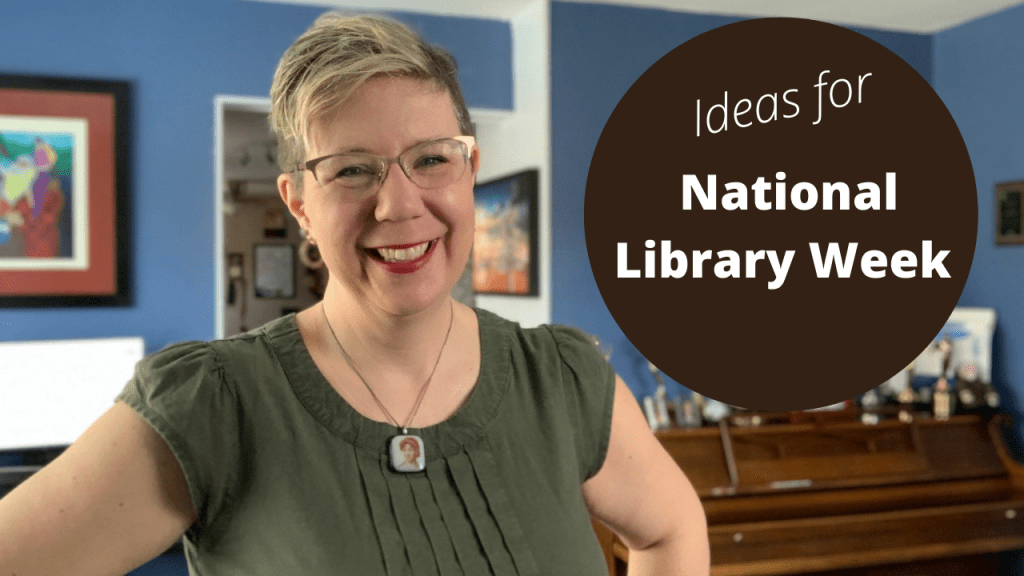
How to Celebrate and Promote National Library Week….in a Pandemic!

Watch Now

The Library Marketing Show, Episode 86

In this episode, I’ll share some ideas for promoting the work of your library during National Library Week (April 4-10). These are suggestions you can use even though we’re in the middle of a pandemic.

Kudos in this episode go to the Jackson County Library System for their new animated series, “Lost in a Book.”

Do you have a suggestion for a topic for a future episode? Want to nominate someone for kudos? Let me know in the comments. And subscribe to this series to get a new video tip for libraries each week.

Thanks for watching!

COME BACK TO THE LIBRARY! Ideas for How to Re-engage Inactive Cardholders.

Watch Now

The Library Marketing Show, Episode 77

In this episode, I’ll share some ideas for getting inactive cardholders to come back and use the library again. Thank you to Jackie from the Union County Library System for submitting this question. Do you have further suggestions for Jackie? Share it in the comments!

Kudos in this episode go to the Washoe County Libraries for a great adult program they’ve created: Zoom Tea Time. This is a lovely way to combat isolation for patrons who need social interaction in the pandemic.

Do you have a suggestion for a topic for a future episode? Want to nominate someone for kudos? Let me know in the comments. And subscribe to this series to get a new video tip for libraries each week!

Thanks for watching.

Why Libraries Lost HUGE Parts of Their Patron Base During the Pandemic and How to Fix It

WATCH NOW

The Library Marketing Show, Episode 53.

Angela issues a call to action to libraries to join in the movement to create a new utility… one that will ensure everyone in your community truly has access to library.

Also Kudos to the Nashville Public Library for their incredibly creative curbside video. You just have to watch it! ย Nominate someone to receive kudos by commenting below or on SuperLibraryMarketing.com.

What did you think of this episode? Are you struggling with marketing and promotion right now? Do you have an episode suggestion? Let me know in the comments.

And subscribe to this series on YouTube to get a new video tip for libraries each week! Thanks for watching.

Seven Cheap and Clever Ways to Bridge the Digital Divide and Promote Your Library to People Who Don’t Have Internet Access

ย 

If I had a nickel for every time I was asked, how do we promote our library to people who don’t have internet access or who choose to live offline?, I’d be a rich woman.

This problem has always plagued libraries. By nature, our services are needed most by those who struggle with economic disadvantage. And it’s a huge concern of many librarians right now. Some libraries in the United States are reopening their physical buildings and returning to services involving in-person interaction with patrons, like curbside pickup or drive-thru windows. But there seems to be no way to make sure our offline community members know we have returned to service.

I’ve always been a fan of digital marketing because it’s targeted, effective, and easy. The problem of reaching people who don’t have access to Wi-Fi and will never see those messages has always bothered me.

What’s a library to do?

I decided to stop letting it bother me. It’s time to solve the problem.ย 

Prepping for promotion

First, concentrate on your core message. If you only had 10 seconds to tell someone about your library’s reopening, what would you say? Boil your message down to the most important points. Then create a few, highly focused and easy-to-deliver print pieces to carry that message. Good choices are a bookmark, a quarter-sheet flier, and a postcard. These will be your library’s main promotional vehicles for non-digital marketing efforts.

Second, adopt an outreach attitude. Many libraries are hesitant to market themselves. They worry they are intruding. They don’t want to seem pushy or salesy. They are convinced their promotional efforts will be viewed as “spam”.

You are not spam. You are not intruding. You are not selling a product. You are promoting a service that is free and necessary.ย 

Your community is already paying for library services in some form or fashion. They need to know what they’re paying for. They need to know how you can help them. They are grateful to learn how to access the services they are funding.

It’s more important than ever to promote your library. We need to make sure, at the very least, that our community understands what we do and why our work is important. So, make a commitment to banish humility! Don’t be timid!

Now, here are seven relatively cheap, yet clever ideas for promoting your library. And they all have nothing to do with the internet.

Non-digital promotional tactics

Mail your postcard. If you have the budget, now is a good time to try mailing your postcard to people in your community. Start with your patrons. And if you have leftover money, a mailing house can help your library secure addresses for people who are not patrons.

In some U.S. states, your library can request a list of voter addresses from the Board of Elections for free. You can reach people who aren’t library patrons but who are registered voters, legally and cheaply.ย ย 

Canvass. Adapt this political campaign strategy for library awareness! Distribute your printed piece door-to-door.

Now, I know it’s time-consuming but it’s also effective. In my former job at a large metropolitan library, our outreach librarians went to apartment complexes and hung door hangers with information about the library. Door hangers are relatively cheap. If you can’t spring for them,ย  slip your postcard into screen doors. This is a great job for libraries looking for ways to keep their staff busy. And, of course, you will reach people who have forgotten the library or who have never interacted with the library.

Buy a print ad. Many newspapers will give your library a discount on ad space. Try to use your limited space to the full advantage. Use a catchy graphic to draw the eye.

Put your partnerships with local businesses and other non-profit organizations to use. Ask partner organizations to distribute a bookmark or some other kind of small print promotional piece to their visitors. Ask local businesses, like restaurants, to include a small promotional piece in their takeout bags. Ask local realtors and rental agencies to give your promotional piece to prospective homeowners or new renters. Give some of your print pieces to day care providers, teachers, summer camps, and recreational centers. Seek the help of any business or organization with a physical location that is open in some capacity and ask them to distribute your material to people who use their services.

Place signs outside your building. A banner in your front yard or a sidewalk sign can help spread the word to people in the neighborhood. There are lots of online stores that will sell you weather-proof signage for a reasonably cheap price.

Pitch to the media. Despite what you may see on the news right now, journalists are always looking for good news stories. And your library offering services is good news. Try pitching to individual reporters. Keep THEIR audience in mind and make sure you point out how a story about your library will be beneficial to their audience.

And be helpful. If they need photos but can’t make it over to your branch, offer to provide some. Have staff members who are comfortable on camera at the ready to deliver soundbites to local TV news crews. You might even offer to write a piece for your community paper. Free press is a great form of marketing.

Call patrons. I spoke to some librarians this week who called people to let them know that their library had reopened. They clearly identified themselves at the beginning of the call and asked permission to proceed with the call. If the receiver said “yes”, the library staffer proceeded to relay the information about their library’s new hours and service requirements and asked the receiver if they had any questions. Like canvassing, this is a time-consuming tactic, but it may be necessary in a community without internet access.

Related Help

Email vs. Social Media: Which is Better for #LibraryMarketing Right Now?โš”๏ธ

Marketing is Not a Dirty Word! Why Libraries Need to Promote Themselves Now, More Than Ever

Latest Book Reviews

You Don’t Look Your Age and Other Fairy Tales by Sheila Nevins.

Postscript by Cecelia Ahern.

The Familiars by Stacey Halls.

Find more 60-second Book Reviews here.

Subscribe to this blog and youโ€™ll receive an email every time I post. To do that, click on the โ€œFollowโ€ button in the bottom left-hand corner of the page. Connect with me on YouTube, Twitter,ย Instagram, and LinkedIn.ย ย 

A WordPress.com Website.

Up ↑