Search

Super Library Marketing: Practical Tips and Ideas for Library Promotion

Building Advocates and Allies: How One Library Marketer Used Storytelling To Improve Promotions and Unify His Library

Photo courtesy Cincinnati and Hamilton County Public Library

Effective internal communication is incredibly important to the success of any library.ย But it’s hard to do successfully.

Last week, I shared advice from libraries that have had success communicating with staff and stakeholders using tactics like email. But a friend of mine went about it in a slightly different way.

He used his storytelling skills to improve communication between his marketing team and other library staff members. And in doing that, he built support and unified his library around common promotional goals.

Chris Boivin is the Assistant Director of Community Relations and Marketing at the Jacksonville Public Library in Florida. Heโ€™s been there for six years. Heโ€™s also the host of The Library Marketing Book Club on Facebook (Not a member yet? Weโ€™d love to have you!)

Jacksonville is a large library, with a main location and 20 branches. Chrisโ€™s team manages all the marketing for the system, including the website, social media, podcast, graphics, and volunteers.

โ€œOur work is governed by three things,โ€ explains Chris. โ€œRequests for marketing assistance from other departments (Public Services, Learning Servicesโ€”centralized programming, and others), an annual promotional calendar that we create with input from Library Leadership and Library staff, and the needs of the Library Director to meet the libraryโ€™s strategic and operational goals.โ€

Like many libraries, the marketing department at Jacksonville Public Library operated on an order-taking model. Library staff would request flyers, posters, bookmarks, social media mentions, or digital slides for an event or service they wanted to promote.

Those requests were often not what the audience would respond to. And Chris and his staff were left to talk their co-workers into finding a way to reach their target audiences.

โ€œThis built up a lot of conflict between marketing and the rest of the library,โ€ remembers Chris. โ€œPeople felt like we enjoyed declining their requests and were either finding ways to do less work or doing just the things we liked doing.โ€

Chris says his department realized the form that library staff was using to make requests was part of the problem.

โ€œThey were looking at it like an order sheet (because thatโ€™s what we gave them) and focused on the stuff, not what they were trying to actually achieve,โ€ explains Chris. โ€œSo, we created a new process where instead of the order form, they fill out a questionnaire that asks:

  • What problem is this solving for the customer that wants this?
  • What does success look like for this thing?
  • Who is the target (and it canโ€™t be everyone)?

This new focus helped the marketing department improve things, but Chris says the change wasnโ€™t easy for everyone on the library staff.

โ€œMany of the folks we work with had been doing the other request process for so long that it was very hard for them to give it up,โ€ he recalls.

Then Chris had an idea. He asked for some time at the monthly managerโ€™s meeting to review the process, ask about pain points and gaps, and share marketingโ€™s vision for how promotions could improve at Jacksonville Public Library. There were also some misconceptions about marketingโ€™s role that needed to be addressed.

โ€œThere was a long list of things,โ€ says Chris. โ€œThere was a clear lack of trust with our internal clients. It needed to be addressed head-on.โ€

So, Chris carefully crafted a presentation that would give his coworkers a clear understanding of how his department worked to support them and the library. When the day arrived, he was a mix of emotions.

โ€œI was worried that they werenโ€™t going to receive what I had to say well,โ€ recalls Chris. โ€œBut (I was) also excited because I was confident that I was going to show them lots of things they probably didnโ€™t even realize we were doing to promote things, and I had data and results to back up the methods we use.โ€

โ€œI used some of the tactics that Dr. JJ Peterson from Storybrand talks about in this podcast about speaking,โ€ said Chris. โ€œI started by saying that this is how they might feel when they are trying to get messages to customers โ€“ theyโ€™re shouting and shouting but getting no reaction.

“I said that we in Community Relations & Marketing often feel that way too, and Iโ€™m going to tell them what things we do to make that better. I also acknowledged that they might feel this way when working with us.โ€

โ€œNext I set the situation: where we are, where we need to get to and how we can help each other meet these goals will follow. I talked about how important email is to get the right messages to the people who have the problem that we can help them solve.โ€

Chris used examples to explain how email marketing is working for his library, emphasizing the importance of collecting addresses to build their subscriber list. He also explained how the library and marketing can work together to solve problems for their community. And he positioned marketing tactics, like bookmarks, the website, blog, and flyers as ways to provide an exceptional customer experience.

โ€œI saw a lot of head nodding, got a few laughs, a few looks of ‘oh, I get it now!’ recalls Chris. โ€œI felt like this was making sense, especially the opening where I talked about their frustration with customers and with the marketing department. That frankness really seemed to help disarm everyone and set up a good conversation.”

Itโ€™s been a few months since his presentation, and Chris says heโ€™s seen a positive impact. โ€œResistance to complete the new request forms has gone down, and my team is reporting more cooperation and less tension than before,โ€ reports Chris. โ€œItโ€™s a long road but the more we keep delivering this message, the better.โ€

And now Chrisโ€™s presentation is part of his libraryโ€™s new employee orientation. Heโ€™s also looking for chances to recognize library staff to foster a sense of community amongst workers and encourage them to find positive solutions together.

Chris has some great advice for libraries that want to make sure all staff understand and value the role of marketing. โ€œUse every opportunity you can to inject your messages whenever talking with staff and leadership and try not to get hung up when people arenโ€™t getting it,โ€ advises Chris.

โ€œRemember that in this scenario YOU are the guide, not the hero. Your staff are the heroes using the strategy and plan to find their success in helping customers. Celebrate every win even if itโ€™s just a fist pump to yourself.โ€

โ€œLastly, when you find those staff members who get it, keep them in the loop and ask them for their advice and feedback. Youโ€™ll build wonderful allies and advocates.โ€

He also encourages you to connect with other library marketing staff members in the wider library world. โ€œThere is a wonderful community of support out there for those who market libraries,โ€ explains Chris. โ€œYou will find that we are all experiencing the same frustrations and will be thrilled to learn of any breakthroughs no matter how small you might think they are.”

“Itโ€™s easy to feel like youโ€™re all alone because youโ€™re operating in a sea of people who largely share the same skills, experiences, and goals as each other (but different from you). They may seem like the enemy sometimes, but you can help them reduce wasted time and effort and really make a difference in your customersโ€™ lives.โ€

โ€œReach out to Angela, me, and other library marketers and library marketing enthusiasts anytime you feel unsure, frustrated, or just want someone to share in your success. You got this. Seriously.โ€

Chris was also recently featured on the new podcast, “Library Marketing for Library Marketers“, hosted by Katie Rothley. Listen to his episode.


You May Also Want to Read These Posts

Effective Library Internal Communication Is Not Impossible! Libraries Share Tips for Keeping Staff Up to Date, Engaged, and Happy

The Most Frustrating Part of Library Promotions: Real Advice on How To Manage Approvals

Subscribe to this blog and youโ€™ll receive an email every time I post. To do that, enter your email address and click on the โ€œFollowโ€ button in the lower left-hand corner of the page.

๐Ÿ“ฑHow to Properly (and Legally!) Share Creative Content on Your Library’s Social Media Channels

In this episode of The Library Marketing Show, I’ll answer a question from the viewer about sharing original content from other creators on social media.

This viewer asked for clarification on the correct online etiquette for sharing content, specifically cartoons or memes, from another page. I have two tips that worked for me when I worked in a library plus advice from experts.

Kudos in this episode go to Saul Hernandez of the Charlotte Mecklenburg Public Library.

Do you have a suggestion for a topic for a future episode? Want to nominate someone for kudos? Let me know in the comments.

And subscribe to this series to get a new weekly video tip for libraries.

Thanks for watching!


Subscribe to this blog and youโ€™ll receive an email whenever I post. To do that, enter your email address and click on the โ€œFollowโ€ button in the lower left-hand corner of the page.
Effective Library Internal Communication Is Not Impossible! Libraries Share Tips for Keeping Staff Up to Date, Engaged, and Happy

Photo courtesy Public Library of Cincinnati and Hamilton County

The library I worked for when I started this blog had an annual tradition. Every year, our staff would march in the Cincinnati Reds Opening Day parade.

Now, you must understand that Opening Day in Cincinnati is a holiday. Legitimately. And people look forward to the parade as much as they do the game. So, marching in it is incredibly exciting.

It was my job to organize the libraryโ€™s entry every year. That involved getting library staff members to sign up to march in attire and carrying props that matched our summer reading theme.

Youโ€™d think that would be easy.

It was not.

Every year, Iโ€™d panic because I had too few staff members signed up to march. Then, staff would start calling me days before the parade, asking why they hadnโ€™t heard about our libraryโ€™s entry.

This happened because we had a messy, unorganized internal communications strategy. And that was dangerous.

If we were having problems getting information to staff about a fun event, we were really in trouble when it came to communicating the information they needed to do their work properly.

Internal communications: marketingโ€™s forgotten stepchild

On this blog, we focus mainly on marketing and promotions aimed to reach your library community. But for the next two weeks, weโ€™re going to turn our attention to a different audience: your staff.

Effective internal communication is incredibly important to the success of any library. Without it, staff feels disconnected from the library, their community, and each other. Morale can drop. Initiatives may not be successful when workers donโ€™t feel like they understand the context and their role in the work.

And when library staff feel frustrated, they quit. Turnover is bad for your library. It costs you money and productivity.

But the people who really suffer in this equation are your community members.

That’s why every library, however big or small, needs an intentional internal communications plan.

Setting a realistic course of action

First, let me tell you from experience that an internal communications plan wonโ€™t magically transform the staff experience overnight. These things take time. But, if you create a solid plan and are consistent in your communications, you will see improvement.

You should approach this work just as you would for a customer-facing marketing campaign. First, youโ€™ll want to answer some questions about the state of your libraryโ€™s internal communications.

Ask:

  • Do you have a strategy? How effective is it?
  • What are your biggest strengths and weaknesses?
  • Who is currently involved in shaping and executing your current internal communications?
  • Who needs to be involved in improving those communications?

Next, youโ€™ll want to determine your goals. Use the SMART goals framework to set your library up for success.

Your goals should be:

  • Specific: Define what you want to accomplish in clear, simple terms that everyone on your library staff, from front-line workers to senior leaders, can understand.
  • Measurable: Create milestones and targets that can help you see your progress toward each aspect of your goal.
  • Attainable: Set goals that are manageable and realistic.
  • Relevant: Create goals that develop your library staff members, serve your community, and connect to your libraryโ€™s overall strategic plan.
  • Time-based: Create a specific timeframe for reaching your goals. This timeframe will ensure you are accountable to the staff. It will also prompt you to reflect on how your plan is progressing, and change direction if you encounter any issues.

Finally, youโ€™ll want to decide how youโ€™ll measure the success of your internal communications. You may want to measure:

  • Decrease in employee turnover  
  • Increase in candidates applying for new jobs  
  • Increase in staff workplace satisfaction
  • Increase in staff performance review ratings

Library staff is an audience

The next task is to uncover the best way to connect with your audience: the staff. What do they need to know? When do they need to know it? And how do they want that information delivered?

Jill Fuller is a Marketing and Communications Librarian for Bridges Library System. Her job involves a lot of communication with staff at various libraries in the system. And she uses surveys, like this one, to figure out what her audience wants to see in her staff emails.

โ€œThey have excellent open and click rates,โ€ she explained, โ€œbut I wanted to get quantitative data too. I asked them questions about how helpful they were, whether they were relevant to their jobs, which topics they wanted me to focus on, the frequency and length of the emails, and more.”

โ€œI never knew how much the emails were appreciated! With the data I gathered, I have been able to focus more on the topics the library staffs were most interested in and scaled the frequency down to every other week.โ€

Use Jillโ€™s advice and create a survey to gauge the needs and preferences of your staff. Jill suggests you ask:

  • Their preferences for getting information
  • How they share system information with their staff or colleagues
  • Whether they feel they receive enough communication
  • Whether they feel the communication is accurate
  • How comfortable they feel contacting your library with questions.

Make the survey easy to fill out, and as short as possible. Let the staff know that the survey is their best way to share their thoughts about the direction your library should take with internal communications.

And give staff time to fill it out. It should be available for at least two weeks. You want a participation percentage of 80 percent or higher. Reminders in email, delivered by managers, and in signage in staff areas will help.

Even better, ask managers to set a meeting appointment on staff calendars for filling out the survey.   

The benefit of a newsletter for internal library communications

If you have a lot of information to share, as Jill does, consider creating an internal library newsletter. Newsletters take what could have been multiple emails and condense them into a simple, easy-to-read format.

Cindy Starks is the Communications Coordinator for Coal City Public Library District, a small library southwest of Chicago, Illinois. They serve a population of 11,000 residents and have 22 employees. 

After each monthly department heads meeting, itโ€™s Cindyโ€™s job to prepare a summary in a newsletter to staff called the Staff FYI Newsletter.

โ€œThe newsletter can be a lot of information to retain for staff,โ€ admitted Cindy, โ€œbut by having it emailed they can refer to it at any time when they donโ€™t remember something.โ€

Tips for a staff newsletter

  • Provide the right news and information. Carefully consider the kind of information your employees need. Try not to send too much information in one email, or too many emails.
  • Remember your calls to action. Encourage staff to take the next step, such as sharing information on social media, filling out a survey, or signing up for training or new initiatives.
  • Strengthen your subject lines. You want staff to open your emails, so consider your subject line just as you do for any email communication to patrons. Use emojis or power words to catch the attention of your staff.

Advice from a library

Grace Riario and Anita Baumann of Ramapo Catskill Public Library System send a newsletter six times per year to all library trustees serving on the Boards of their 47 member libraries. 

Theyโ€™ve got three pieces of advice for internal communications.

โ€œKeep the text short and positive,โ€ says Grace. โ€œPictures representing the topics are a must.โ€

โ€œLists, such as the three best things about being a library director, ensure that people will read that piece in your newsletter,โ€ continued Grace.  

โ€œA third ‘strategy’ we employ is consistency in formatting and color palette,โ€ shared Grace โ€œProminent display of the organization’s logo, as well as a uniform look and subject line in the email when it’s distributed help readers to recognize the material when it hits their inbox.โ€  

Staff communication beyond emails

My library ended up adding an internal communications position to our ranks. That person attended meetings, created talking points for managers to explain new initiatives, and organized our internal staff website. She discovered our staff liked to hear the news directly from senior staff, so she started a weekly video series where senior leaders appeared in short videos to share information.

If your library cannot add a staff member specifically tasked with internal communications, there are still things you can do. Libraries can be very siloed and bureaucratic organizations. But the libraries that open those siloes and promote productive and meaningful conversations have success in internal communications.

This can be done by leaving space for question-and-answer sessions at the end of all-staff meetings. You can also add a Q and A board to your internal website. Encourage staff to ask questions and share information with each other.


You May Also Want to Read These Posts

Building Advocates and Allies: How One Library Marketer Used Storytelling To Improve Promotions and Unify Hisย Library

An Academic Library Increased Their Instagram Reach by 1149% in a Year! Learn Their Secrets for Success

Subscribe to this blog and youโ€™ll receive an email every time I post. To do that, enter your email address and click on the โ€œFollowโ€ button in the lower left-hand corner of the page.
๐Ÿ˜คThe Most Frustrating Part of Library Promotions: Real Advice on How To Manage Approvals

In this episode of The Library Marketing Show, we talk about one of the most frustrating parts of library promotions: getting approval for your work from your supervisors.

In my recent survey of readers and viewers of SuperLibraryMarketing.com, this was a common complaint: how do we create great work that passes inspection by supervisors? I’ll share tips that have worked for me!

Kudos in this episode go to the West End Library in Pennsylvania. Watch the video to see why they’re being recognized.

Do you have a suggestion for a topic for a future episode? Want to nominate someone for kudos? Let me know in the comments.

And subscribe to this series to get a new weekly video tip for libraries.

Thanks for watching!


Subscribe to this blog and youโ€™ll receive an email whenever I post. To do that, enter your email address and click on the โ€œFollowโ€ button in the lower left-hand corner of the page.

Passport to Success: How One Intrepid Library Marketer Hatched a Plan To Bring People Back to the Library

Photo courtesy Cincinnati and Hamilton County Public Library

There’s nothing wrong with tooting your own horn.

A few months ago, I received an email from a library marketer nominating her library system for recognition in the “Kudos” segment on The Library Marketing Show. This particular project was so good, that it deserves an entire post.

Rebecca Kilde is the communication and marketing coordinator for IFLS Library System in western Wisconsin. Sheโ€™s been with the system for five years and has a background in graphic design.

IFLS Library System covers ten counties with 53 libraries, mostly small, rural libraries. The libraries she served were facing a problem.

โ€œMy librarians were telling me that their visits werenโ€™t bouncing back up to pre-pandemic levels,โ€ recalled Rebecca. โ€œThere was some general confusion about whether libraries were even open.”

Rebecca Kilde, IFLS Library System

“Our libraries were open during almost all the last two and a half years and were important resources for some people in our communities. We didnโ€™t want anyone to miss out on getting support from the library. We wanted our funding bodies to get that message as well.โ€

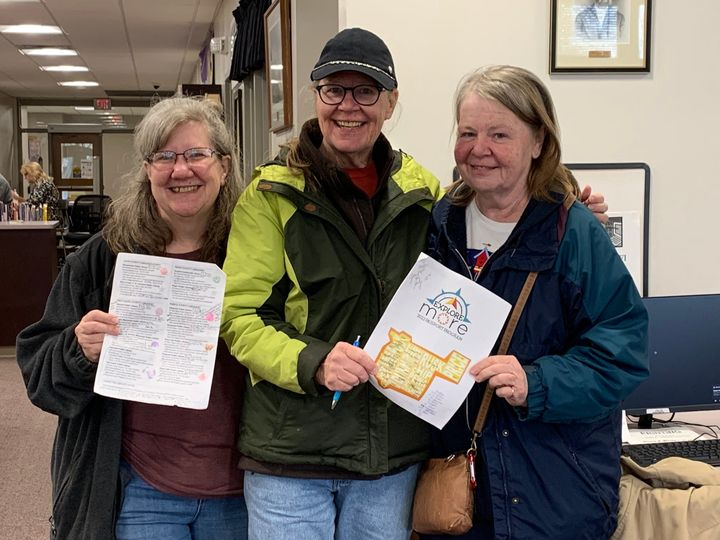
In the fall of 2021, Rebecca and her colleagues decided to explore a passport program system-wide. This program’s goal was to get people back into the library after the pandemic as well as educate people about the scope of their consortium services and benefits. 

The idea was simple. All the libraries in the system had to have passports and entry forms available and a staff person to stamp passports and collect entry forms.

Setting a goal for any type of promotion is incredibly important to success. Rebecca had three things she wanted to accomplish.

First, Rebecca wanted patrons to experience the benefits of a library card firsthand. โ€œWe wanted to show how easy it is to check out and return items throughout our system,โ€ she said. โ€œWe also wanted to send a clear message: Libraries are open, and libraries are fun!โ€

โ€œOur app is new and includes navigation to all our locations in one handy spot, so this was a good opportunity to promote that. For our libraries, we wanted to increase circulation and engagement. A significant factor in support for library funding is having interacted with a librarian, so we built that in. We wanted people to engage with one of our wonderful librarians.โ€

Rebecca put her background in graphic design to work, creating a logo, a public-facing landing page on the system website, the passport, and marketing collateral.

โ€œWe printed enough for each library to get 25 passports,โ€ explained Rebecca. โ€œ(We) sent them through courier as a kit that included a little rubber stamp, a stamp pad, signage, and a master sheet to make entry forms.โ€

Rebecca worked diligently to provide direction, content, and encouragement to her libraries. Each month, she emailed a marketing toolkit to all the participating libraries. The toolkit contained everything the libraries needed: a focused message; four social media posts with suggested messaging; updated posters; ideas from libraries, and comments from participants.

Some of the libraries took the passport program idea and ran with it. โ€œEllsworth handed out a water bottle with a bag of fun things that included a goat-milk soap sample from a local producer,โ€ said Rebecca. โ€œClear Lake created prizes and a drawing of their own for their cardholders; Somerset ran out of their fun swag bags. Lots of libraries created great displays.โ€

The program was an outstanding success. Rebecca told me that over the course of the program, which ran from April 4 to July 15, participating libraries handed out more than 1500 passports and recorded more than 2800 stamps. Each of those stamps counts as one visit to the library. Nine people visited all 52 libraries!

Participating libraries saw robust circulation of travel-related items featured in library displays.ย Most libraries invited passport visitors to participate in other activities, like a scavenger hunt for kids in River Falls or library bingo in Menomonie.ย And they were able to identify some library super fans, who may become influencers in a future campaign.

Rebecca credits several factors for the success of the program, including timing and collaboration. โ€œPeople were ready to go out and explore,โ€ she explained. โ€œAnd this was NOT a top-down promotion. It was library-driven the whole way.โ€

Rebecca has one final piece of advice for libraries looking to put together a successful program. Simplicity is key, she said. โ€œWeโ€™re looking for ways to expand what the program offers without requiring a lot of extra work.โ€


You May Also Want to Read These Posts

Promoting Library Programs on Social Media: How Far in Advance Should You Start Posting?

How To Write Great Program Descriptions To Drive Attendance for Your Library!


Subscribe to this blog and youโ€™ll receive an email every time I post. To do that, enter your email address and click on the โ€œFollowโ€ button in the lower left-hand corner of the page.

Perfection Fatigue Is Good News for Your Library! What Millennial & Gen Z Patrons Really Want โฌ‡๏ธ

The Library Marketingโ€‹โ€‹โ€‹โ€‹โ€‹โ€‹โ€‹โ€‹ Show, Episode 157

In this episode, I want to share some good news for libraries about something called Perfection Fatigue.

This is the idea that people don’t want to see your library in its most perfect form. They’re looking for something much more authentic. And that’s good news for libraries! I’ll explain why.

Kudos in this episode go to Escanaba Public Library. Watch the video to see why they’re being recognized.

Do you have a suggestion for a topic for a future episode? Want to nominate someone for kudos? Let me know in the comments.

Subscribe to this series to get a new weekly video tip for libraries.

Thanks for watching!


Subscribe to this blog and youโ€™ll receive an email whenever I post. To do that, enter your email address and click on the โ€œFollowโ€ button in the lower left-hand corner of the page.

TikTok Tests a New Feed Option and It Could Have Major POSITIVE Implications for Your Library Social Media Promotions…Plus More News From Instagram and Google

Watch the Video Now

The Library Marketingโ€‹โ€‹โ€‹โ€‹โ€‹โ€‹โ€‹โ€‹ Show, Episode 156

In this episode, I will share four major social media headlines for libraries. These pieces of news apply to any library using TikTok or Instagram, and they could have major implications for your library’s promotions–in a positive way!

Kudos in this episode go to Berkley Library. Watch the video to see why they’re being recognized.

Do you have a suggestion for a topic for a future episode? Want to nominate someone for kudos? Let me know in the comments.

And subscribe to this series to get a new weekly video tip for libraries.

Thanks for watching!


Subscribe to this blog and youโ€™ll receive an email every time I post. To do that, enter your email address and click on the โ€œFollowโ€ button in the lower left-hand corner of the page.

Was It a Fluke? What a Viral Instagram Video Can Teach You About Library Social Media Promotions

Photo courtesy Cincinnati and Hamilton County Public Library

In my many years of personal and professional social media use, Iโ€™ve never gone viral.

Until two weeks ago.

My brief moment in the sun came out of nowhere. And it was so crazy that I wanted to dissect it, to see if there was any lesson I could share with my library friends.

Experimenting with Instagram Reels

For the past few months, Iโ€™ve been experimenting with Reels so that I can give the best advice possible to libraries.

I started by creating my own original Reels. I shared recipes, book reviews, and homages to my co-worker. The results were nothing to write home about. I got a couple hundred views and a few likes for each video.

Then I changed focus. I decided to share my favorite genre of TikTok videos. These videos feature lots of home organization gadgets and cleaning products in action. Theyโ€™re soothing to watch and usually contain some oddball element, like a fake plastic spider in the rice container!

I screen-record these videos. Then, I re-upload them on Instagram with my own narration, pointing out the things I love. I use similar captions and hashtags for every video. Sometimes I add emojis to the caption. I also add close-captioning to all the videos, using Instagram’s in-app creator tool.

Hitting the jackpot

On Sunday, August 14, at 3:30 p.m., I uploaded one such Reel.

This was the fourth Reel in my experiment. The most popular of the last three Reels got 4500 views and 26 likes.

But for some reason, this Reel was magic.

It received 1800 views in the first 20 minutes and a constant stream of likes. It was so wild that I took a screen recording of the notification stream.

Then I looked again at the views 40 minutes after I posted the video, and my jaw dropped.

22,000 views.

For a brief moment, I felt like that most popular girl at the dance.

But it was over as quickly as it started. 60 minutes after I posted my Reel, the notifications abruptly stopped. And the view count halted.

Understanding the Instagram Reels algorithm

The first step in the journey to dissect the success of this Reel is to understand the Instagram algorithm.

The main goal of Instagram Reels is to entertain. As a result, many of the videos that show up in a followerโ€™s feed are from accounts they donโ€™t follow.

And thatโ€™s certainly true with my Reel. Nearly all the likes I received from my Reel were from non-followers. Instagram was showing my Reel to those people because the algorithm predicted that my content would entertain them enough that they would watch all the way through and like or comment on the video.

These predictions are called ranking signals. They are part of every social media platformโ€™s algorithm. The ranking signals for Instagram Reels are:

  • Recent user activity: Instagram predicts which Reels its users will find engaging by comparing new content with the kind of Reel a user has most recently liked, shared, or commented on.
  • Interaction history: If an Instagram user interacts with an account, Instagram will continue to show them content from that account, even if they arenโ€™t a follower of that account.
  • Reel information: Signals about the content elements in a Reel, including the audio, hashtags, and keywords in the caption, help Instagram decide who to serve the Reel to.
  • Information about the poster: Instagram serves Reels from accounts that post consistent, entertaining videos.

Other factors that can impact the engagement of your library’s Reels

There are a number of things your library can do to try and boost the reach of your Instagram Reels.

Post at the right time

Since interactions are a strong ranking factor in the Instagram algorithm, you need to get as many likes and comments as possible within the first few seconds of posting your content. Thatโ€™s why itโ€™s important to catch your followers when theyโ€™re the most active on the platform.

The perfect timing will be different for every library. Check your Instagram insights to see when your audience is most likely to be using Instagram.

Carefully consider your caption

Write captions that give context or tell a story about your Reel. Consider a longer caption to boost the time people spend interacting with your posts as they read your caption.

Add one or two hashtags to your caption. Hashtags are an important ranking signal as they help the algorithm to understand what content is contained in your Reel.

Finally, add emojis to capture the attention of scrollers.

Interesting content outweighs expert advice on length

Experts say the optimum length of an Instagram Reel is 7 to 15 seconds. However, my viral Reel was much longer, at several minutes.

Iโ€™ve been experimenting with Instagram Reels length. Iโ€™ve found that length really doesnโ€™t matter, so long as your video is interesting.

Really, it was just plain dumb luck

Itโ€™s most likely that my experience had nothing to do with my skill on Instagram. In fact, Iโ€™m sure of it.

Going viral on social media is like winning the lottery. You can plan and strategize and spend lots of time creating great content. And you may never go viral. Thatโ€™s okay!

Going viral will bring you fame and brand recognition in markets outside of your service area. But that wonโ€™t increase your circulation or program attendance.

Your library’s goal should not be to go viral. Rather, create engaging content that speaks to YOUR audience and aligns with your libraryโ€™s overall goals.

Final results and what I learned

In the two weeks since I posted my Reel, itโ€™s received nearly 23,000 views and 609 likes. I got about 15 new followers from the Reel.

I have not seen a substantial increase in the number of visits to my blog. And Iโ€™ve got no website traffic or purchases for my day job at NoveList.

So, while it was exciting and interesting, my viral Reel did nothing to help me reach my strategic goals.

And thatโ€™s the most important thing to remember about social media. You canโ€™t control who sees your library’s content. But you can create engaging posts aligned with your library’s goals.

Want to learn how to transcend algorithms and get the best results for your library’s social media promotions? I’ve created a self-paced course to help you reach your goals.


Related Posts

Promoting Library Programs on Social Media: How Far in Advance Should You Start Posting?

Is It Ever Okay to Hide Negative Comments on My Libraryโ€™s Social Media Pages? How to Handle Trolls!

Subscribe to this blog and youโ€™ll receive an email every time I post. To do that, enter your email address and click on the โ€œFollowโ€ button in the lower left-hand corner of the page.

What the Heck Is the Difference Between Library Statistics and Marketing Metrics? Hereโ€™s the Full Explanation and Why They Are BOTH Important!

Watch the Video Now

The Library Marketingโ€‹โ€‹โ€‹โ€‹โ€‹โ€‹โ€‹โ€‹ Show, Episode 156: In this episode, we’ll explain the difference between library statistics and library metrics.

We use the terms interchangeably. But the exact definition is really important to the success of your library marketing.

Kudos in this episode go to the Prince George’s County Memorial Library System.

Do you have a suggestion for a topic for a future episode? Want to nominate someone for kudos? Let me know in the comments.

And subscribe to this series to get a new weekly video tip for libraries.

Thanks for watching!


Subscribe to this blog and youโ€™ll receive an email every time I post. To do that, enter your email address and click on the โ€œFollowโ€ button in the lower left-hand corner of the page.

A WordPress.com Website.

Up ↑