Search

Super Library Marketing: Practical Tips and Ideas for Library Promotion

Tag

emotional marketing

What Iโ€™ve Learned in 13 Years of Library Marketing: People Support What Makes Them Feel Something

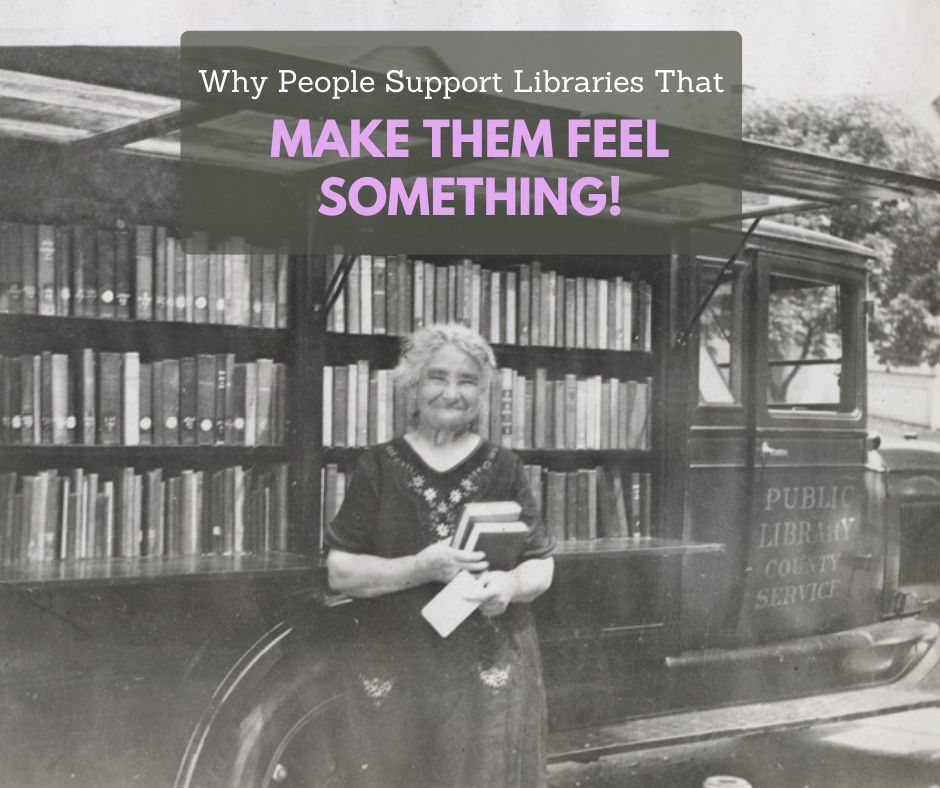
Black-and-white historical photo of a smiling woman standing in front of a mobile library vehicle filled with books. Overlay text at the top reads: โ€œWhy People Support Libraries That MAKE THEM FEEL SOMETHING!โ€ with โ€œMAKE THEM FEEL SOMETHING!โ€ in large purple letters.
Photo courtesy Cincinnati and Hamilton County Public Library

In this post, you will learn:

  1. Emotion drives action. People are more likely to act on your library marketing if it makes them feel something.
  2. Real stories on video don’t need to be polished. Authentic patron and staff experiences are some of the most effective marketing tools libraries have, and all you need is a cell phone!
  3. Emotional marketing is not manipulation. When done ethically, storytelling helps communities understand the real impact of library services.

A few years ago, a library patron accused my library marketing team of โ€œmanipulating emotions.โ€

Honestly? She wasnโ€™t wrong. We absolutely wanted people to feel something!

At the time, my library was building support for a facilities plan. Several of our historic Carnegie branches were not accessible to people with disabilities, and we knew we needed the community to understand why modernization mattered.

So we told a real story. We interviewed a veteran who physically could not enter the branch library in his own neighborhood.

We shared his experience in a short video campaign designed to help our community see the problem through a human lens instead of through budget spreadsheets and building reports.

After we published the video, one viewer messaged us: โ€œHow dare you manipulate my emotions and try to make me feel sorry for this guy?โ€

My response then โ€” and now โ€” is this:

Libraries should never apologize for telling meaningful stories.

Why Emotional Marketing Works for Libraries

One of the biggest mistakes libraries make in marketing is assuming facts alone will persuade people. We think that if we simply explain our services clearly enough, people will understand our value.

But audiences donโ€™t make decisions based purely on logic. They make decisions based on emotion and then use facts to justify those feelings later. Thatโ€™s especially true on social media, where algorithms reward content that sparks reactions, conversations, shares, and engagement.

People engage with content when it makes them feel:

  • Hopeful
  • Inspired
  • Seen
  • Empathy for someone else
  • Proud of their community
  • Connected to something bigger than themselves

That emotional response is what moves someone from passive scrolling to active engagement. And here is more good news.

Libraries Already Have Powerful Stories

You do not need a massive budget or a professional production crew to create emotional marketing. You already have the raw material.

Every library has:

  • A teen who found belonging through programs
  • A job seeker who got help building a resume
  • A parent who found support during a difficult season
  • A senior who depends on library staff for connection
  • A child who discovered a love of reading
  • A staff member who went above and beyond for someone

These stories are your most effective marketing!

Too often, libraries default to promotional language like:

  • โ€œRegister now!โ€
  • โ€œCheck out our new database!โ€
  • โ€œJoin us Tuesday!โ€

But audiences connect more deeply with:

  • โ€œThis program helped me make friends after moving here.โ€
  • โ€œThe library gave me confidence during my job search.โ€
  • โ€œI didnโ€™t feel alone anymore.โ€

Thatโ€™s the difference between information and impact.

Emotional Marketing Is Ethical When Itโ€™s Honest

Thereโ€™s an important distinction between emotional storytelling and emotional manipulation.

  • Manipulation relies on exaggeration, fear tactics, or dishonesty.
  • Ethical emotional marketing tells true stories that help audiences better understand real community needs and real library impact.

Libraries are uniquely positioned to do this well because our work genuinely changes lives every day. If your library helped someone succeed, feel safer, feel connected, or solve a problem, sharing that story is not exploitation. Itโ€™s advocacy.

The Best Way to Capture Emotion: Video

Video remains one of the most effective formats for emotional storytelling because audiences can hear tone, see facial expressions, and connect with people “face to face.”

But hereโ€™s the good news: your videos do not need to look cinematic! Some of the most effective library videos are filmed on a phone. What counts is not the production. It’s the authentic conversations.

If you want to start gathering emotional stories, try interviewing:

  • Loyal patrons
  • Volunteers
  • Staff members
  • Program attendees
  • Community partners

Ask open-ended questions like:

  • Whatโ€™s your favorite memory involving the library?
  • How has the library impacted your life?
  • What would your community lose if the library disappeared tomorrow?
  • Tell me about a moment when the library helped you unexpectedly.
  • Why does this library matter to you personally?

Then stop talking and let them tell the story.

Donโ€™t Forget Your Staff Stories

Library staff are often an untapped source of emotional content.

Staff members witness transformation every day:

  • helping someone apply for benefits,
  • finding the perfect book for a struggling reader,
  • assisting someone through a difficult life transition,
  • or creating a welcoming space for people who need connection.

Those stories matter.

Some of the best questions to ask staff include:

  • Tell me about a patron interaction youโ€™ll never forget.
  • What moment made you proud to work at the library?
  • What keeps you motivated in this work?
  • Whatโ€™s something the public doesnโ€™t always see about library service?

These interviews can become:

  • Short social videos
  • Newsletter features
  • Website testimonials
  • Annual report stories
  • Posters and digital signage
  • Advocacy campaign content

One good story can fuel months of marketing content.

The Hidden Benefit of Emotional Marketing

Something interesting happens when libraries start telling emotional stories consistently: More stories start showing up.

When we launched our own customer impact video series years ago, staff and patrons immediately began sharing additional experiences with us.

People wanted to participate because they felt recognized and connected.

Thatโ€™s one of the most powerful outcomes of storytelling: It builds community identity. People stop seeing the library as just a building or service provider and start seeing it as something deeply personal and valuable.

Final Thoughts

Libraries are emotional spaces. They represent hope, opportunity, safety, curiosity, nostalgia, belonging, education, and community.

Trying to market libraries without emotion is like trying to market music without sound.

So no, libraries should not feel guilty for creating marketing that makes people โ€œfeel all the feels.โ€

That emotional connection is often exactly what inspires people to support, advocate for, fund, and engage with the library in the first place.


Want more help?

How Libraries Can Use Storytelling to Build Community Support (4 Practicalย Tips)

Subscribe to this blog, and youโ€™ll receive an email whenever I post. To do that, enter your email address and click on the โ€œFollowโ€ button in the lower left-hand corner of the page. You can also follow me on the following social media platforms:
 

How Libraries Can Use Storytelling to Build Community Support (4 Practical Tips)

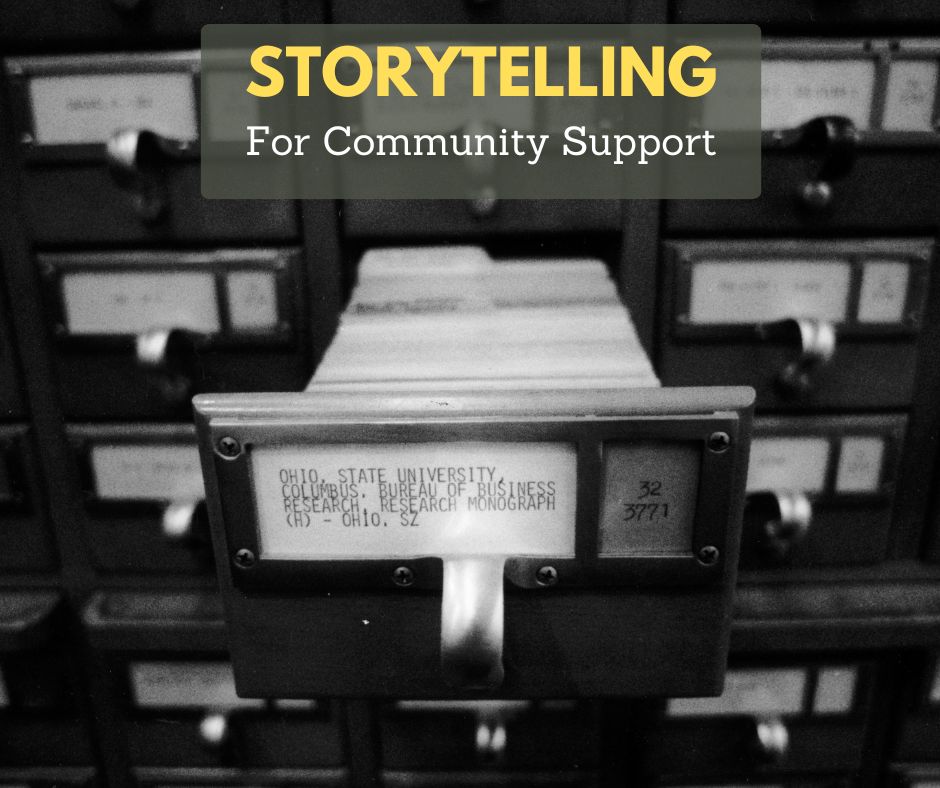
Black-and-white photo of a vintage library card catalog drawer pulled open, with rows of labeled drawers in the background. A translucent banner at the top reads โ€œSTORYTELLINGโ€ in yellow and โ€œFor Community Supportโ€ in white text.

My high school history teacher never assigned a textbook for class. Instead, every day, Mr. David Ulmer would pace back and forth in front of a room of students, explaining the events of the world in vivid detail as a story.

He would wildly gesticulate when the action got heated or dangerous, use voices to bring historical figures to life, and punctuate points with hilarious statements written on the chalkboard.

My classmates and I sat in rapt attention. We tried to take notes. But frankly, it was hard to tear your eyes away from Mr. Ulmer. We didnโ€™t want to miss a single detail.

No one failed tests in Mr. Ulmerโ€™s class. Thatโ€™s because his teaching method was storytelling. Rather than pushing a bunch of facts, figures, and details at us, he made historical events personal, vivid, and memorable. Everyone remembered the details.

Your library will have the same impact by including storytelling in your promotional strategy. ย 

โ€œPeople are looking for a connection.โ€ โ€”John Michael Morgan, Business Leadership Coach

Here are the four things you need to know to start incorporating storytelling into your library promotions.  

#1: You donโ€™t have to do all the work.

When a cardholder talks about the way your libraryโ€™s collection, programs, and services have impacted their lives, people will listen. Let your community share their story about their experience at the library.

One year during my time at the Cincinnati and Hamilton County Library, we sent an email to a target group of library users. We asked them to tell us why they loved the library. I thought maybe 25 people would respond. I was so very wrong.

We got more than 400 responses! Some people wrote a few sentences, and some wrote paragraphs. That one โ€œaskโ€ was a gold mine of storytelling for more than a year.

We contacted many of the responders later to ask them to elaborate on their stories on camera. We used those interviews for fundraising, blogs, and newsletter blurbs. We pulled some of their quotes and had our librarians read them on camera, which we shared during Library Workers Week and other big events.

We used some of those stories to lay the groundwork for a levy, which eventually passed. And we used stories on social media. That drove our organic engagement rates higher and made our other organic posts more effective.

Your community is eager to share testimonials with you. All you have to do is ask.

#2: You can gather stories every day.

Make it a practice at your library for front-line staff to be on the lookout for stories as they work โ€” not in a forced or formal way, but simply by noticing when a patron has a meaningful moment.

When those moments happen, give staff an easy way to jot down a sentence or two about what happened. And if they feel comfortable asking the patron directly, they can use simple language like, โ€œIโ€™m so glad we could help! Would you mind if we shared a little about this interaction? It helps other people discover what the library offers.โ€ Most patrons appreciate being asked

If you frame this work as optional and low-pressure, staff donโ€™t have to feel like theyโ€™re intruding. When I worked at the Cincinnati Library, I asked front-line staff to call me if they had an interaction with a patron that they thought would make a good story. One day, I got a call from a branch manager who said she just worked with a 12-year-old boy and his father, and they were willing to talk about their experience. That interaction led to this incredible video.

You can also ask volunteers, board members, and library friends groups to share their stories, as Deschutes Public Library did. These folks are often really passionate about their love for the library, and their stories will inspire others to volunteer, donate, and use the library.

#3: Stories donโ€™t have to be long or complicated.

Your library stories can be a few sentences, a few paragraphs, or a few pages. Thereโ€™s no formula for length. If youโ€™re not a confident writer, or your patron feels uncomfortable sharing in detail, you can still find a great story within a few sentences.

Jacksonville Public Library shared the story of a father who got his high school diploma with the help of the library. It’s less than 400 words, but it’s powerful.

#4: Your library can share stories everywhere you do promotions.

Start by including one story in each of the places where you normally promote your library.

For instance, if you send a monthly library newsletter, include a story. You donโ€™t have to delete any of the other things you normally promote in your newsletter. But slip a story into the mix.

Tease the story in your subject line to increase your open rates. A story will appeal to a wider audience. Once the subscriber opens your email and reads the story, they’ll be responsive to other promotional content in the email.

If your library has a blog, include at least one cardholder story on your blog every month, like Oak Park Library did with this extraordinarily moving piece. Your blog will grow in traffic and subscribers, which is good news for the other content you post.

One of the best places to share content marketing is in a video. And your subject doesnโ€™t even have to be human, as youโ€™ll see from this video by Broward County Library.

You can create a newsletter filled with stories. You can create a landing page on your website. You can share stories on your blog, on social media, in your videos, and in your print pieces.

โ€œIn a time of rapidly compounding technology generations, the most successful businesses will consistently deliver high touch to customer with one of our oldest traitsโ€”the telling of a story.โ€ โ€”Jim Blasingame, Small Business Advocate, Radio Show Host, Storyteller

One final note

As I was writing this blog, I came across this article by Martin Oโ€™Connor of University College Cork Library that I encourage you to read. Itโ€™s full of great tips on sharing the story of your library!

I also teach a course on library storytelling that is available as part of a Learn with NoveList Plus subscription or as a live or virtual session at library staff development days. You can contact me for more details.


PS: Want more help?

How Storytelling Is Revolutionizing One Libraryโ€™s Video Strategy

Subscribe to this blog, and youโ€™ll receive an email whenever I post. You can also follow me on the following social media platforms:

A WordPress.com Website.

Up ↑