
A war is being waged 10 feet from my office window.
I love watching birds feed and listening to them chirp, squawk, and sing. I have a feeder that I’ve positioned so I can see the birdies enjoying their meal as I work.
But something is ruining my relationship with my feathered friends.
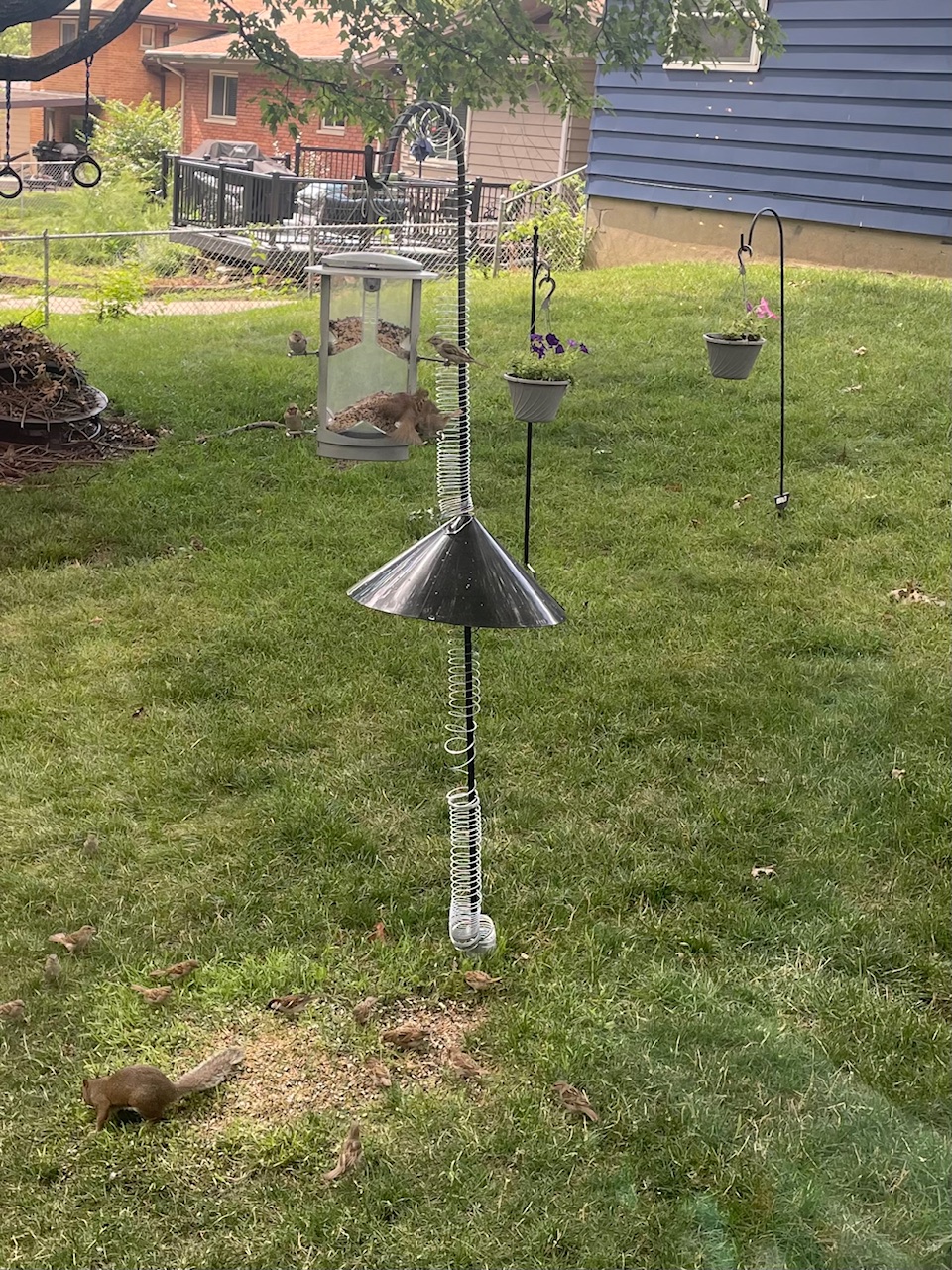
Some mornings, I come outside to find my oversized bird feeder, which I always fill the night before, COMPLETELY EMPTY. The seed is scattered all over the ground. And a scurry of squirrels are gorging themselves on the spoils.
The first time this happened, I did what anyone does in this modern era. I turned to the internet for help.
I typed “how to keep squirrels off my bird feeder” into Google. Suddenly I found myself down a rabbit hole (pun intended) with all the squirrel battle content you could ever want.
Repellant. Special bird feeders. Tips for installing slinkies on the pole to prevent climbing. SPIKES. Videos, advice, and products galore.
Why is it so hard to find tips on fighting squirrels?
The internet is a giant swirling vortex of content. According to Master Blogging, there are 7.5 million blog posts published every single day. (Thanks for reading this one!)
When you factor in social media posts, videos, website content, emails, etc., it’s no wonder your library has a hard time breaking through the noise. A search by anyone for anything is likely to turn up hundreds of results.
So how do you make sure your library content reaches the people who need it most?
Keywords are the key
When a community member is online, trying to find the source that will help them write a research paper, add branches to their family tree, or make a decision about whether to purchase a car, they need us to speak their language.
That’s where keywords come into play.
Keywords help search engines and social media algorithms understand what your content is about. They use those keywords to categorize your content and then match your content to people who are searching for it.
The right keywords make it more likely that the content you write will end up on the computer or mobile phone screen of the person who needs it most.
But you don’t have to guess at what keywords to use! There are tools to help find keywords to weave into your content. Here are my five favorites. They’re reliable, efficient, and free. I’ve made a video tutorial for each to show you exactly how to use them.
Spyfu
This website has a robust, free keyword research tool. You can use it without setting up an account or handing over your email.
Google Search Bar
The Google search bar allows you to see what content is rising to the top of Google’s algorithm. You can work keywords or phrases from those top-performing content pieces into your promotions.
Don’t forget to scroll to the bottom to see “people also search for,” which I find to be extremely valuable as a source of more keywords.
Google Keyword Planner
You can also use Google’s more robust Keyword Planner to search for keywords. The Keyword Planner is intended as a tool for buying Google ads but I find it to be an insightful way to find keywords for my website and social media.
Here’s a quick video to show you how both the regular Google search bar and the Google Keyword Planner work for sourcing keywords for library promotions.
Wordstream
This free tool gives you 25 keywords… more if you’re willing to provide them with your email. They’ll also show you the search volume for the phrase and the level at which you’ll compete with other content for attention. Type in your opening phrase and choose “All industries” for the best results.
Moz
This free keyword tool shows top suggestions, monthly volume, organic click-to-open rate, and difficulty ranking for any key phrase you search. You can get more robust suggestions if you hand over your email.
Whatever tool you use, the keywords you uncover should be placed in your blog headlines, in the text on your website, and in your social media posts.
But Angela, did you defeat the squirrels?
Yes, I did with the help of three slinkies, a 7-foot pole, and a baffle, which is a cone-shaped device that stops the squirrel from climbing up your pole to your feeder. I knew of the existence of baffles, but I had no idea that’s what it was called. But thanks to keyword research and placement by the vendor, I found it. Now my birds can eat in peace.
P.S. You might also find this helpful
Finding the Perfect Name for a Library Program: A Checklist and Tips for Using AI
Subscribe to this blog and you’ll receive an email whenever I post. To do that, enter your email address and click on the “Follow” button in the lower left-hand corner of the page. You can also follow me on the following social media platforms:
 Super Library Marketing: Practical Tips and Ideas for Library Promotion