The Library Marketing Show, Episode 145: In this episode, we’ll answer a question from Leica. She says, “I am a one-gal, part-time show here. I can set my priorities easily, but I’d like to hear your thoughts on working with NO goals or strategic plans? I know it sounds crazy, but I’m not given anything to work TOWARD. So, as much as I *think* I do well, I don’t really have any measurable way to verify.”
Kudos in this episode go to the Garland County Library. Watch the video to see why they’re being recognized.
Do you have a suggestion for a topic for a future episode? Want to nominate someone for kudos? Let me know in the comments. And subscribe to this series to get a new video tip for libraries each week.
Thanks for watching!
Subscribe to this blog and you’ll receive an email every time I post. To do that, enter your email address and click on the “Follow” button in the lower left-hand corner of the page.
The Library Marketing Show, Episode 144: In this episode, we’ve got our monthly social media headlines, and this month, we’re going to focus exclusively on Instagram. The platform is testing some new features and they could have significant implications for library marketing on the app.
Kudos in this episode go to the Coos Bay Library. Watch the video to find out why they’ve been recognized.
Do you have a suggestion for a topic for a future episode? Want to nominate someone for kudos? Let me know in the comments. And subscribe to this series to get a new video tip for libraries each week.
Thanks for watching!
Subscribe to this blog and you’ll receive an email every time I post. To do that, enter your email address and click on the “Follow” button in the lower left-hand corner of the page.
The Library Marketing Show, Episode 143: In this episode, we’ll answer a viewer’s question.
Sara of the Washington State Library asked for help promoting library chat services. I have six suggestions that will work for any size library.
Kudos in this episode go to the Greenwich Library. Watch the video to find out why they’re being recognized.
Do you have a suggestion for a topic for a future episode? Want to nominate someone for kudos? Let me know in the comments. And subscribe to this series to get a new video tip for libraries each week.
Thanks for watching!
Subscribe to this blog and you’ll receive an email every time I post. To do that, enter your email address and click on the “Follow” button in the lower left-hand corner of the page.
Photo courtesy Cincinnati and Hamilton County Public Library
Every time I see a misaligned pink square on top of blue and white plaid, my heart skips a beat.
I realize that may be the weirdest sentence I’ve ever posted to this blog but hear me out.
I am a die-hard fan of Bath and Body Works.
The bath gels, the body lotions, the candles, the hand soap. There is a scent for every season, every mood, every situation.
No, they did not pay me to say this. (But if anyone from Bath and Body Works ever reads this blog, I am willing to work as an influencer.😊)
Bath and Body Works has a strong, recognizable brand. They don’t want you to just buy their products one time. They want you to come back, again and again. They know a strong brand style that is recognizable across all platforms is key to creating a relationship with their customers.
You want that for your library. You want your community to recognize the promotional materials you make. When someone sees a sign or a social media post or a video, you want them to know that it comes from your library without having to see your library’s name or logo anywhere in the brand.
Building a library brand takes consistency. And to remain consistent when multiple departments and staff members create graphics, social media posts, posters, and other promotional materials, your library needs to create a brand style guide.
A brand style guide will clearly define the look and tone of marketing materials. It saves staff time. It will be used by staff when creating graphics and writing text. Most importantly, it will ensure your library’s marketing is recognizable.
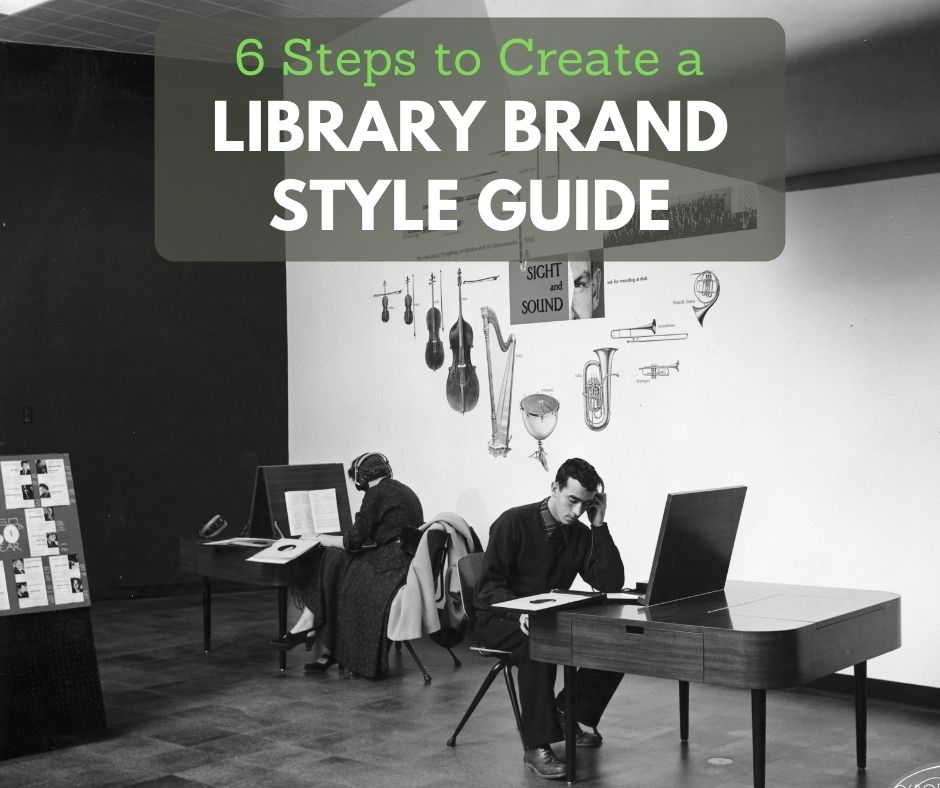
Here’s a step-by-step guide for creating your library’s brand style guide. Scroll to the bottom of this post for examples of library brand style guidelines.
Grounding statements
Begin your document by centering your library’s brand on the guiding principles of your organization. Remind your staff of your core mission. You want to explain the importance of this work and create buy-in for your style guide.
Set the tone with your mission, vision, and values statement.
Include a sentence or two that positions your library’s strategy, personality, and customer service principles.
Define your library’s personality. Do you want people to think of you as authoritative and resilient? Whimsical and conversation? Warm and welcoming?
List the perceptions your library is trying to avoid, like boring, traditional, formal, or pretentious.
Logo use
Emphasize the proper use of your logo across all platforms, including print and digital.
Define space rules, including the use of white space in relation to the logo.
Set the acceptable color variations for your logo.
List the minimum logo sizes, including pixels, print proportions, and aspect ratios.
Colors
Your color palette is the tangible component of your brand that people notice first. Color increases brand recognition up to 80 percent. Your colors also play a significant role in how your library’s brand is perceived.
Include the RGB, CMYK, Hex Code, and Pantone versions of your color palette.
List the shades of your color palette which are acceptable for use, including those variations required for accessibility on digital screens.
Include color contrast requirements for print and digital screens, keeping accessibility in mind.
Typography
Like color, the fonts your library chooses are a visual cue about your brand. Your fonts should tie all communications together, from your website to print promotions. It’s important to set clear guidelines for the use of fonts.
List the styles, sizes, and weights that can be used. Be sure to include instructions on acceptable fonts for headers, copy, and footers or fine print.
Include acceptable variations on fonts, if the font is unavailable in a particular piece of creative software.
Set guidelines concerning spacing to maintain a consistent style when font size changes.
Tone and text
This section is important to maintain a consistent brand through all the text written for your library promotions. These guidelines will ensure people recognize the copy is coming from your library, no matter who is doing the writing.
Outline your preferred word and sentence length. Shorter words and sentences are easier to read and will speed up the tempo of your message. Longer words and sentences will require your audience to do more in-depth thinking but may also be more nuanced.
List the jargon or library terms that staff members should use. This includes terminology for how you will refer to patrons, non-cardholders, staff, branches, and your branded names for services.
Determine the acceptable terminology for equity, diversity, and inclusion. Set guidelines for the use of gendered pronouns, ability, and references to racial and ethnic groups within your community.
Set your grammar guidelines. Will you use contractions? Will you allow prepositions? What grammar rules will you keep sacred, and which can be broken?
Images
In this section, you’ll give anyone creating promotional materials for your library the rules they need to find graphics, photos, and artwork that represent your library.
Set standards for the proper size, style, and composition of images for social media, email, digital signs, print, video, and your library’s website.
List approved image sources, including a list of websites that provide free stock photos and images. Here are ten websites to help build out your list.
Include clear guidelines on diversity representation to ensure staff use images that accurately represent your community.
Incorporate guidance on the use of graphics, GIFs, and memes.
Subscribe to this blog and you’ll receive an email every time I post. To do that, enter your email address and click on the “Follow” button in the lower left-hand corner of the page.
The Library Marketing Show, Episode 142: In this episode, we’ll answer a viewer’s question.
Jennifer says her library has some followers that regularly comment on their posts, but never say anything positive. She wants to know how to handle those repeated negative commenters.
Do you have a suggestion for a topic for a future episode? Want to nominate someone for kudos? Let me know in the comments. And subscribe to this series to get a new video tip for libraries each week.
Thanks for watching!
Subscribe to this blog and you’ll receive an email every time I post. To do that, enter your email address and click on the “Follow” button in the lower left-hand corner of the page.
Photo courtesy Cincinnati and Hamilton County Public Library
Libraries spend a lot of time focused on getting people to sign up for a library card–particularly during summer. That’s a worthy promotional goal. Imagine how great the world would be if everyone had a library card!
But we often take our current cardholders for granted. We assume that once a person has gone through the trouble of signing up for a library card, they’ll use it.
The first reports on the exact statistical impact of the pandemic on library use will come out this fall. But I’m not willing to wait that long to address this issue. Every single library I work with tells me circulation, database use, program attendance, and overall visits are down.
Many libraries are trying to build our use and circulation stats back to their pre-pandemic levels. But I think we can do better. We can get more people to use the library now than before the pandemic.
How do we do that? With a focused plan to re-engage our current cardholders.
Re-engaging our disconnected users makes strategic and business sense for libraries. Our friends in the retail business have a secret: They know it costs five times as much money to obtain a new customer than to convince a current customer to buy more.
For libraries, this means it takes us five times more energy and resources to build our cardholder base than it does to get our current cardholders to use the library more often.
Summer reading is the perfect time to re-engage cardholders. It is your library’s biggest opportunity to build momentum that lasts throughout the year.
Here are three promotional goals that every library should have this summer to reconnect with current cardholders and get them to use the library more.
Goal #1: Get an email address from every single cardholder.
Did you know that 99 percent of people check their email at least once a day? How many times have you said, “I wish we had one way to reach our community.” Emails are how you do it! They are the absolute most effective way to promote your library.
People expect to be marketed to by your organization. You are not spamming anyone. You are informing, educating, and entertaining the community. And you are making certain they remember they have access to your resources, which they pay for with their tax dollars.
How do you go about getting emails from current cardholders? Ask. Every time someone checks out, look to see if they’ve included an email address in their cardholder profile. If not, ask for one!
Check cardholder profiles before you put books on the holds shelf or pull together items for curbside. If the cardholder doesn’t have an email on file, slip a bookmark into their holds asking them to share their email address using an online form or by calling the reference desk.
Your library can also use social media to gather email addresses. Schedule regular posts with a link for an online form or an opt-in page on your website. You’ll want to make it as easy as possible for your community members. That’s the best way to build your subscriber list.
Goal #2:Onboard current library cardholders.
Normally, onboarding is the process of introducing your new cardholders to the resources available at your library. But it is also an effective tool for re-engaging cardholders. This is especially true as we rebuild after two years of COVID separation from our community.
The most effective way to onboard an existing cardholder is through email. Your library should create a series of emails sent to cardholders once a week for four weeks. Those emails will re-introduce your cardholders to the best features of your library. It will inspire them to use their cards again.
To create your onboarding campaign, you’ll make two lists. The first will be for the most popular resources at your library. This could include things like your Makerspace, popular storytimes, laptop terminals, or your extensive e-book collection.
Next, make a list of your library’s hidden treasures. These may be items or services that you know will solve problems for your community. This list should include things that are unique to your library, like online Homework Help, your small business resources, your vast historical resources, or your “library of things.”
Finally, look at the two lists you’ve created and narrow your focus. You want to highlight the best and most helpful things at your library without overwhelming your recipients. Choose to promote one resource from your list of popular items and one from your list of hidden library treasures for each of the onboarding emails you send.
Goal #3:Upsell at every opportunity.
Whenever possible, your library staff should suggest other services, collection items, and programs to the people they encounter.
Teach staff to pay attention to context clues. Then upsell another collection item, service, or program based on what the staff observes.
For example, is the patron standing at the checkout a young father with two small children and an armload of picture books? Pull a take and make craft kit off the shelf and suggest that that dad subscribes to your YouTube channel, where you have videos explaining how to finish the crafts.
If a community member asks for help finding a resource for her small business, make sure she knows about your co-working spaces, your entrepreneur book club, and your LinkedIn profile.
When a patron registers for a cooking class, hand them a bookmark with a list of recommended cookbooks and show them how to access the Cooking Fundamentals series on Kanopy.
To help your staff spot opportunities for upselling, it may help to create a flow chart or graphic to illustrate the connections between everything your library offers. You can even make a game to encourage participation by staff members.
Ask staff to keep track of the number of times they upsell to a patron. You might even use a log, like your summer reading log, to help with tracking. The top upsellers win a prize at the end of the summer. And your library wins by increasing awareness of services and use.
Subscribe to this blog and you’ll receive an email every time I post. To do that, enter your email address and click on the “Follow” button in the lower left-hand corner of the page.
Photo courtesy Cincinnati and Hamilton County Public Library digital collection
At nearly every conference I attend, there is a session on podcasting for libraries. And no wonder, as podcasting has the cost of producing episodes has declined while listenership has skyrocketed.
57 percent of Americans have listened to a podcast, according to a study conducted by Edison Research and Triton Digital. That same study found that the number of people who listen to a podcast has grown nearly 30 percent since 2018.
Dylan Posa works for the Lebanon Public Library in Ohio, which is located about 29 miles to the northeast of my home. We met at the Southwest Ohio and Neighboring Libraries Summer Planning Conference in January, where Dylan was presenting a session on podcasting.
The idea for LPLCast was born in the first days of the pandemic. “When our library shut down in March of 2020, the Director tasked each member of the staff to find ways that we could continue to reach our patrons and community while the doors were closed,” recalls Dylan. “My wife had recently turned me on to podcasts, so she suggested that the library create one. I immediately knew who I would choose for a co-host, as we had an easy rapport at work already.”
Dylan’s co-host is Barb Leitschuh, a Circulation Desk Supervisor at the library. Barb has been working at the library for more than 22 years and is a longtime resident of Lebanon. “She knows everyone on a first-name basis, and has a very snarky sense of humor, which makes our conversations that much more fun,” says Dylan.
The next step for Dylan and Barb was to set some goals for the podcast. Dylan knew that the work he was doing needed to align with his library’s overall strategic goals. “Our overall strategic goals have always been focused on community,” said Dylan. “For instance, we have never installed self-checkout stations because we feel it’s important to have contact with all our patrons whenever possible. Our goal for the podcast is to create a fun and informative environment where we can highlight library services while supporting our community.”
The first episode was published on September 20, 2020. Dylan and Barb keep to an ambitious publishing schedule, releasing new 30-minute episodes every week. “We feel like this is a decent amount of time to invest, from a listener’s point of view,” said Dylan. “The type of podcast we were creating wasn’t going to be serialized, and we didn’t want to inundate listeners with lots of detail and data. I think people would be surprised at how fast 30 minutes goes by when the talk is light and breezy!”
Dylan, a musician, and home recording enthusiast used his own equipment to produce the few episodes. Eventually, his library saw the value of the podcast and agreed to invest about $250 in equipment. “The first cost was the hosting site, “said Dylan. “I looked into several options, and the one I signed up for costs $15 per month.”
“The library had microphones and cables, so I got a 4-channel USB mixing desk that all inputs can go through,” continues Dylan. “Then I decided to use a free piece of software called Audacity that enables me to record, edit, and upload files to the hosting site. I use Garageband to create the ‘bumper’ music for each segment of our episodes; bonus points for also being free! You also need a piece of promotional. I used a free site called Adobe Spark to design something eye-catching.”
Barb oversees finding guests. In the beginning, she would just call patrons who she was already friends with and ask if they wanted to be on the podcast. But this task has gotten easier since Barb and Dylan have moved to a new format, which isn’t dependent on having a guest in every episode. “We started to open up our programming a bit, and we wanted to integrate more of the other departments into the podcast,” says Dylan.
“The first segment is an overview of what the library has going on over the next week – programs both passive and active, events, displays, etc.,” explains Dylan. “The second segment is now open for guests but is also a chance to talk to employees about whatever they want to talk about.” Each episode ends with book recommendations.
During the pandemic, Dylan would bring the equipment to Barb’s living room. But lately, they’ve been recording in their library’s training room. “We record about 35-45 minutes of material, and I edit it down to get rid of any weird noises or digressions,” says Dylan.” Sometimes a guest will ask to re-do a section, or I will have to get creative to work around some technical glitch.”
“It usually takes me about 30-45 minutes to get the episode published,” continues Dylan. “Between editing, exporting to a smaller file format, uploading onto the hosting site, creating the metadata, and double-checking to make sure I posted the right file.”
The next step is marketing each episode. Dylan says his library relies on bookmarks, which he says is… “the best marketing tool a library has! We also make sure to let people know when they check out books, and every week we post a link to the newest episode on Facebook and Instagram. We also rely on our guests to promote their own appearances to widen our exposure.”
So far, listener feedback is positive. “They have told us how fun we are to listen to,” Dylan said. “It definitely helps to have two people who like to talk to each other!”
Dylan has some advice for libraries thinking of starting a podcast. He says it’s crucial to figure out who your community is and create content that caters to their wants and needs.
Dylan also says there are lots of options for library staff to create a podcast even if they don’t have a budget or Dylan’s technical expertise. “I want to emphasize that a lot of this information is simply what works for us and our library – for instance, I definitely over-engineer our recording,” says Dylan. “There are a number of options for recording podcasts that exist as apps for phones and tablets.”
Dylan Posa is the head of the Lebanon Public Library’s reference desk and is also the manager of Acquisitions. Dylan uses his outside experience in the music business and retail industry to create new and interesting program ideas for his library.
Subscribe to this blog and you’ll receive an email every time I post. To do that, enter your email address and click on the “Follow” button in the lower left-hand corner of the page.
The Library Marketing Show, Episode 139: In this episode, I’ll answer a question I hear frequently at conferences and events. There are thousands of small and rural libraries across the world that depend on a very small staff to deliver services and create promotions. How do you effectively market your library when you’re working alone? I’ll share my top four tips.
Kudos in this episode go to the Niles-Maine District Library. Be sure to watch the video to see why they’re being recognized.
Do you have a suggestion for a topic for a future episode? Want to nominate someone for kudos? Let me know in the comments. And subscribe to this series to get a new video tip for libraries each week.
Thanks for watching!
Subscribe to this blog and you’ll receive an email every time I post. To do that, enter your email address and click on the “Follow” button in the lower left-hand corner of the page.
Image courtesy Cincinnati and Hamilton County Public Library
Here is a question that has been the source of many an existential crisis for library staff. What is the value of your work?
That proposition is at the heart of a major project every library undertakes once a year–the creation of the annual report. In its most basic form, the annual report summarizes the work conducted by a library during the preceding year.
But what if the annual report was more than a formal document? What if it truly told the story of the impact a library had on its community, beyond numbers and statistics?
Explore York provides library service for a city founded in 71 AD by the Romans. The flagship library sits within Roman-era medieval walls and has the remains of St Leonards, the largest hospital in medieval Europe, within its grounds.
The library serves more than 211,000 residents. It is an affluent city but there is also need in the community. 13 percent of children in York live in low-income families.
Putting together an annual report that connects with a varied audience and also demonstrates the vast but important work of Explore York is daunting. Barbara has a small team at her disposal: herself, a co-worker, and an outsourced graphic designer. But these three visionaries wanted to do more than report facts and figures. So, they took a storytelling approach to their annual report.
“Not everyone who reads our Annual Review will necessarily be a library user. This is our chance to intrigue, delight, and create that ‘wow, I didn’t know my library did that’ moment.”
Barbara Swinn
Barbara begins work on her next annual report as soon as she’s released the latest version. “We already produce quarterly reports for our Board of Directors, and for the City Council,” explains Barbara. “However, these reports are focused on fairly ‘dry’ information – statistics, evidence that we have met contract requirements, etc. We recognized that our Annual Review needed to be more than a reiteration of the year’s quarterly reviews. We knew, at the end of an extraordinary year, that our pandemic story made a powerful case for the enduring value of public libraries not only in our city but everywhere.”
So Barbara and her team decided to take a different approach. “To start off our planning we read Angela’s article on “The Dreaded Annual Library report” (!) and used it as a basis for our approach,” Barbara recalled. “We read the example Reviews cited in the article, we chose our favorites, and decided which bits we were going to steal from them! We also looked at the Reviews some of our local cultural organizations had produced. We shared our thoughts with our graphic designer early on too, so she could start to think about how some of our preferred visual elements could be incorporated using our branding and style.”
Next, Barbara and her team set goals for their annual review. They had to connect with a variety of audiences, from politicians to donors to volunteers to library users. “We kept in our mind what we wanted our audiences to think, feel, and do as they read our Review,” remembers Barbara. “We wanted them to understand the breadth and depth of what we had provided, feel reassured and proud of their libraries, and to support us in future years whether financially or through advocacy or practical support such as volunteering.”
“We wanted it to be a powerful advocacy tool and something that would tell our story through its imagery and design as well as through words and numbers.”
With all that in mind, Barbara and her team began to plan and gather content for each section. But she recalls that, with so much worthy and valuable work happening at her library, the focus was tricky. “Our aim was to hold up some diamonds from our daily work and from our special projects, so they could shed light over all the work we do day by day, in every library and Reading Café across the City of York,” explained Barbara.
The team did a lot of groundwork gathering feedback and testimonials from the community. “Some of the feedback we had gathered specifically with documenting our pandemic story, some arrived through the ordinary feedback channels and through conversations with our library staff,” said Barbara. “We gave equal weight to facts and figures, quotations from people, and imagery. We edited and edited to keep the words brief and to the point.”
“Telling the story was key for us,” continued Barbara. “We wanted to create a connection with the reader and us, to demonstrate our values that would hopefully resonate with the reader and encourage them to find out more, to become more involved perhaps as a volunteer or potential funder. Angela described this as a call to action for readers, that by the end of the review they would know what help we need for the following year.”
Barbara has some advice for libraries in putting together their annual report or review. “Remember we are all about stories, we hear them every day and we see the impact we have on the lives of people in our communities every day,” she explains. “Use that rich resource to shine a light on the value of our community activities, programs, and events to stir emotion and build a connection to our organization. Inspire future donors and volunteers to be involved, to want to be part of our story.”
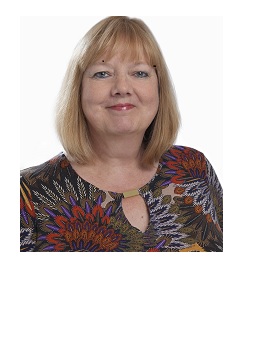
Barbara Swinn joined Explore in 2015 as manager of the city centre flagship library York Explore and has worked in the libraries sector for 40 years. She’s been awarded the British Empire Medal in The Queen’s Birthday Honours for her work with the library. She is a passionate advocate for public libraries and a gifted leader. Committed to improving the customer experience, Barbara is skilled at creating spaces and environments where people can learn and grow, connect with others, and contribute to their community. In particular, her work with the award-winning Explore Labs project shows Barbara’s exceptional talent for development and innovation. Her work and encouragement have helped Explore grow and develop as a cultural business, and she is always looking at new ways for people to engage with the riches of York’s libraries and archives.
Subscribe to this blog and you’ll receive an email every time I post. To do that, enter your email address and click on the “Follow” button in the lower left-hand corner of the page.






 Super Library Marketing: Practical Tips and Ideas for Library Promotion
Is It Ever Okay to Hide Negative Comments on My Library’s Social Media Pages? How to Handle Trolls!
Watch Now
The Library Marketing Show, Episode 142: In this episode, we’ll answer a viewer’s question.
Jennifer says her library has some followers that regularly comment on their posts, but never say anything positive. She wants to know how to handle those repeated negative commenters.
Kudos in this episode go to the Fremont Area District Library. Watch to see why they are being recognized.
Do you have a suggestion for a topic for a future episode? Want to nominate someone for kudos? Let me know in the comments. And subscribe to this series to get a new video tip for libraries each week.
Thanks for watching!
Subscribe to this blog and you’ll receive an email every time I post. To do that, enter your email address and click on the “Follow” button in the lower left-hand corner of the page.
Share this: