Search

Super Library Marketing: Practical Tips and Ideas for Library Promotion

Tag

library marketing

Inspiring Advice from Library Marketers Who Love Their Work

Every two years, my library holds staff development days. It’s a conference of sorts that lasts all day. The training focuses on one issue that generally affects our public library customers, like addiction, poverty, homelessness, and mental illness. I always learn something, even though I’m not a member of frontline staff. But this year, I was actually inspired while listening to the speakers. Their talks made me think about how the work of my marketing team affects the lives of our cardholders. During the closing session, I found myself writing part of this blog post on the back of a worksheet. It was a bit of advice and inspiration for myself… but then I got to thinking that I should share it here.

If you work in a public library, I bet you are as exhausted as I am after the long season of promotion leading up to summer reading. If you work in academia, the month or two before exams can feel like a marathon. Some elementary and secondary librarians are struggling just to make it to summer vacation. Six months into the year, we all feel a little worn down, don’t we? We need a reminder that our work is important. Here’s what I want you to know about the work you do.

Library marketing professionals are committed to cardholders. Every single marketer I’ve ever met in this space is thinking about the good of the cardholder over the good of anything else. I’m so proud of this profession!

The work you do feels small… but it’s a movement. We tend to think our work is not important. But we are part of a large social movement to make a real difference in the world. It feels normal and insignificant because we’ve done it for so long. It’s not normal or insignificant. You are heroes. You are amazing. Keep it up!

To recharge your batteries further, I asked for some advice from some fellow library marketing professionals. Here’s what they want you to think about as you head into the next six months

Amanda L. Goodman, Publicity Manager at Darien Library in Darien, Connecticut:  “Stay organized. Teach project management skills to colleagues that you work closely with. When you’re working on a big project with tight deadlines, it’s helpful when you’re all pulling together to get tasks accomplished on time. Schedule more time than you think you will need. Something else will always come up.”

Athens Miguel Moreno, Technology Manager at Glencoe Public Library in Glencoe, Illinois: “Organize your photos, whether on your phone or computer, make it easier on yourself to never have to hunt around for a good picture.”

Tanya Milligan, Project Librarian at Falkirk Library in the United Kingdom: “Always think of the needs, interests and wants of your users in everything you do. If you aren’t sure about their needs, interests and wants, then ask!”

Lori Juhlin, Library Director at Hawarden Public Library in Hawarden, Iowa: “Your frontline staff are your best marketers, because if someone receives great service, they may tell others, but even more so if they have a bad experience.”

Kristin Lauri Readel, Director, Frost Free Library in Marlborough, New Hampshire: “Double check dates & times with the correct calendar. Use Canva!”

Carol Eyman, Outreach Coordinator of the Nashua Public Library in Nashua, New Hampshire: “Find out what publicity is working and what’s not by adding a question in your online registration forms, how did you hear about this program?”

And a few more from yours truly: Make an effort to talk to staff. Ask the librarians about their jobs. Learn about the problems they deal with. Talk to customers! Strive to be a little uncomfortable in your work.  Push yourself a little. Make time to rest and be creative.

Subscribe to this blog and you’ll receive an email every time I post. To do that, click on “Follow” button on the bottom left-hand corner of the page. Connect with me on Twitter and Snapchat–it’s where I talk about library marketing! I’m @Webmastergirl. I’m also on LinkedInInstagram and Pinterest. Views in this post are my own and do not represent those of my employer.

Introducing the Nine Blogs That Will Make You a Better Library Marketer

(Read time: 2 minutes, 28 seconds)

I am a fan of blogs. God bless the internet, it’s the best way to keep up to date on everything–food, fashion, the news, and the changes in library marketing. And, as much as I am also a fan of books of all kinds, I am not a fan of marketing books! The landscape of this profession changes fast. Unless it’s a philosophical take on marketing, most marketing books feel out of date within a year or two of publication.

Instead, I get my advice from blogs. So I’ve listed the nine blogs I recommend you read to stay on abreast of all the news in marketing. For the best use of your time, sign up for the email newsletters offered by these sites. Most will let you choose which topics you like to hear about and will send you content at the frequency that’s best for you. Set aside time on your calendar every day to read the content shared by these blogs. It’ll be time well spent. I’ve listed them in alphabetical order.

The Content Strategist

This blog features interesting articles broken into categories like storytelling, strategy, and ROI. They also post inspirational articles, which I love to save and read on days when I feel like my work is not having the impact it could or should.

Content Marketing Institute

At first glance, you might be intimidated. This blog is aimed at C-Suite or executive level marketers. But it’s good to read this advice even when you’re a little guy! There are always pieces of their strategy and bits of advice you can pick up and mold to work for your library. And the writers of this blog always seem to see the trends in consumer and business marketing before any other experts. Also, when you sign up for this newsletter you’ll get notifications about CMI’s free webinars. They have the most helpful webinars of any company in the marketing space.

Coschedule

I found this blog after using their online tool for writing better headlines. It’s among my favorites. Coschedule creates a lot of useful templates and writes easy-to-read, concise instructions on how to use them and how to improve your marketing.

The Daily Carnage

I read this one for laughs, good advice, and a lesson on how to write with humor and still be taken seriously.

Hubspot

Hubspot also gives away a lot of free templates and online courses that have tremendous value. Their blog posts cover a range of topics and are fun and insightful.

Mashable Marketing

One of my favorites by far. Their content is easy to read and interesting. They cover topics from social media to graphic elements to equipment to how pop culture affects marketing. It’s also written very, very well. This website is daily appointment reading for me!

PR Daily

If you sign up or bookmark just one blog from this post, this should be it. It’s essential for library marketing. This blog contains everything you need to know about public relations and the media. You have my permission to stop reading and subscribe to this one now. Then come back. Please.

Social Media Examiner

When I interview candidates for a social media position, I asked them where they get their news about social media. If they name this blog, they get a big A+ from me. Read it AND listen to Michael Stelzner’s podcast to get the best advice on social media from the industry’s best minds.

Spin Sucks

This blog offers a lot of helpful PR advice with a mix of fun posts designed to stretch your creative brain and general marketing advice. I really look forward to their daily email newsletter. I always learn something!

What is your favorite marketing blog? Please share the name in the comments so I can read it too!

Subscribe to this blog and you’ll receive an email every time I post. To do that, click on “Follow” button on the bottom left-hand corner of the page. Connect with me on Twitter and Snapchat–it’s where I talk about library marketing! I’m @Webmastergirl. I’m also on LinkedInInstagram and Pinterest. Views in this post are my own and do not represent those of my employer.


The Big Challenge That Taught Me All About Library Marketing

The biggest holiday of the year in my city of Cincinnati is, without question, the opening day of the Cincinnati Reds baseball season.

Yes, you read that correctly. Half a million people turn out to line the streets of our city for a wild parade that lasts two hours and contains nearly 200 entries. Then they all stream down to the riverfront for street parties and concerts that lead up to the opening pitch of the day. Everywhere you go, you see people dressed in red and white, screaming from balconies, waving handmade signs… it’s a day-long pep rally. People dress up their dogs and kids and paint their faces and wear beads. It’s the Mardi Gras of Cincinnati. This has been going on for decades.

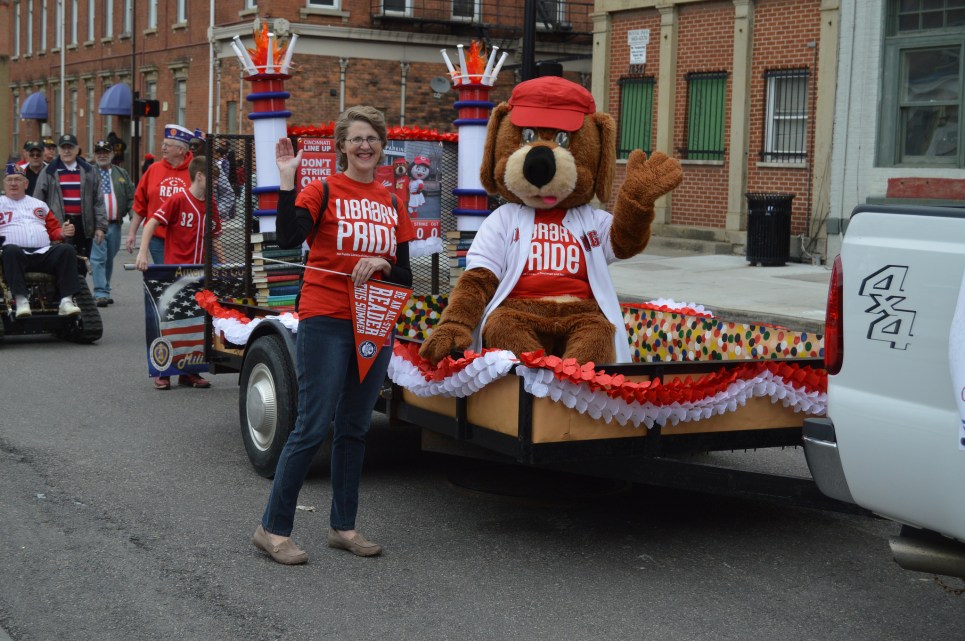
Our library has participated in this tradition since before I came to the organization. Every year, we march in the parade. I learned I would be responsible for our entry just a few months after I had joined. I had never organized a parade entry before. I had only ever covered the Reds parade in my time in news and had no idea what it was like on the participation side! But five years later, I’ve got the process down pat. And, I’ve thought a lot lately about how that experience mirrors many other projects in library marketing. Here’s what I’ve learned.

If you decide to partner with another organization, choose wisely. When I learned that I would be organizing my first parade entry, I set out to ask for advice. A co-worker told me that I was expected to partner with a local organization that helps disadvantaged children. So I reached out to them and called a meeting. It was a painful experience. They did not offer as much help as I needed. They barely contributed to the cost and labor of creating the entry. I completed all the paperwork and recruited all the volunteers and staff. On the day of the parade, I worried that we would lose one of their young clients, as they apparently thought I should also supervise the kids they had recruited to be in the parade. This was not the first time I’d been involved in a one-sided partnership project. We’re all been there. The next year, I decided to go it alone. It was actually less work and less stress.

Partnering with the right organization can bring you more resources and can help with the workload. Joining up with the wrong group can make the experience more stressful. That’s true with any library marketing project. Do your homework and choose your partners wisely. Approach with a series of questions in mind: What do you hope to accomplish in this partnership? How much time and money can you contribute to help us reach our goals? How will the work be divided among us? How will approvals and major decisions be handled?

Sometimes simple is best. My first parade float attempt a disaster. I had never created a parade entry by myself before and I am not an artist. I had no idea was I was doing. It was a hot mess of ideas and it looked muddled.

The second year was a little better. I had hired a graphic artist who was enthusiastic about the project. She recreated the Reds ballpark, complete with smokestacks made of discarded books. It was amazing–and it took a ton of time and was difficult to manage, given our low-budget. It looked great but it was very stressful.

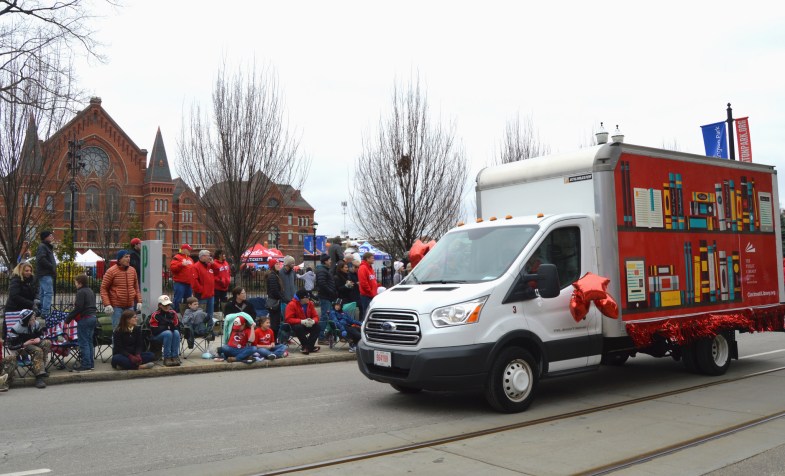
The third year, I decided we would simply drive our delivery truck, which we had recently re-wrapped in a beautiful branded design created by another of my graphic artists. The difference in the stress level I felt in the weeks leading up to the parade was amazing. And the entry connected with the crowd better than any handmade float because it was a branded, recognizable vehicle.

You may be tempted to be complex in your library marketing projects. After all, complexity feels more productive. More work equals better work, right? Not necessarily. If you can approach each project in its simplest terms and break it down to the points that have real meaning, then work on reaching that goal, you’ll be more successful than if you try to reach a dozen goals in a multi-pronged approach. Your messages to the customer should also be simplified. Speak clearly, say what you mean, don’t use library jargon, and you’ll do a better job of connecting with your audience. Your graphics should be simple. Your services should be simple. Simple makes it easier for people to use your library and that will lead to increases in circulation, program attendance, and overall satisfaction.

Get your staff excited. The most important critical moment of parade planning is the moment I decide to start recruiting staff members to march with our entry. I have to make sure my pitch to them includes incentives for participating and emphasizes the excitement of the moment and the value to our cardholders. I also have to make sure members of senior leadership participate because staff members notice and feel neglected if there isn’t a member of administration marching with them through the cold or rain or heat (April weather in Ohio is completely unpredictable!). Likewise, in library marketing, you need to get your staff excited about your projects. Take the time to explain why you are doing the work you do and why it will help them in their interactions with cardholders.

Subscribe to this blog and you’ll receive an email every time I post. To do that, click on “Follow” button on the bottom left-hand corner of the page. Connect with me on Twitter and Snapchat–it’s where I talk about library marketing! I’m @Webmastergirl. I’m also on LinkedInInstagram and Pinterest. Views in this post are my own and do not represent those of my employer.

Four Instant Ways to Improve the Most Valuable Page on Your Library Website

I find lately that I’m obsessed of late with library web pages. I’ve set aside time every week to look at how different libraries around the world set up their websites. What do library’s feature or highlight their homepage? How robust is their search engine? What’s in their drop-down menu? How is their library staff set up?

That last question usually ends with me scrolling through a library’s “About Us” page. And it’s there that I really get a sense of that organization, how it views itself, and how it views its relationship to its cardholders. This research brought me recently to this conclusion: Most libraries, including mine, need to update their About Us page.

Your library’s About Us page can be a gateway to all kinds of traffic to your website. Perhaps your analytics show that you aren’t getting any visits to that section of your website and therefore, you might think you don’t need to mess with it. But if you want to increase your market penetration or if you are considering any campaigns or direct marketing messages to increase the number of cardholders you serve, you’re going to want a kick a** About Us page. Likewise, if your library is in the midst of a levy campaign or waging any kind of battle with your city or county over funding, hours, or locations, your About Us page could help you in that battle. And that page will need to look inspire to win new users and funding.

The concept of a revolutionary change in the way About Us web pages are written and formatted is something that gets a lot of discussion in marketing circles for major brands. I hear it all the time at Content Marketing World. Many big companies have moved away from a traditional approach–a long and wordy mission statement in non-conversational language that usually includes goals which have no meaning to the customer. They’re writing in a conversational tone, including specific calls to action for customers, and striving for full transparency. They’re using their About Us page to connect with potential customers, build trust, and communicate what their brand stands for and what the customer can expect from a relationship with that brand. And I think it’s about time for the library world to get on board.

Chicago Public Library’s page is minimalist with clear language and an easy-to-navigate menu.

We should transform our About Us pages into something that really has meaning to our community. This is the web page where decisions are made by all of your stakeholders. You want the page to make potential cardholders feel “at home” and community leaders understand what it is that your library does and why it’s vital.

Here are four ways to transform your About Us page from an abstract section of your website into an amazing marketing tool.

Focus on the cardholder. Here’s a thought that many libraries have a hard time grasping: your About Us page isn’t actually about you. It’s about your cardholders. What is it that your library can do for the cardholder? Take your mission, vision, and values statement, which is likely written in lofty language, and rewrite it in a conversational tone. Or drop it from the page altogether! I know that’s a controversial standpoint but if your mission, vision, values statement is written with a bureaucratic bent, it won’t have any meaning to anyone outside your organization. Instead, think of your About Us page as a conversation between you and a non-library user. How would you, in normal conversation, tell someone about all the things your organization does? That’s what your About Us page should say. You might also take the opportunity to answer the most frequent questions your library gets from new cardholders.

I love how the Columbus Public Library answers the #1 most frequent question right on their About Us page.

Tell your Library’s story. Whether your library has been around for decades or is newly formed, there’s a fantastic story about its birth and its longevity. Tell it on your About Us page, in a paragraph, with inspiring and optimistic language. Keep your bragging to a minimum. If your library has won many awards, you can mention them briefly and put them into the context of how that award translates to better service for your cardholders.

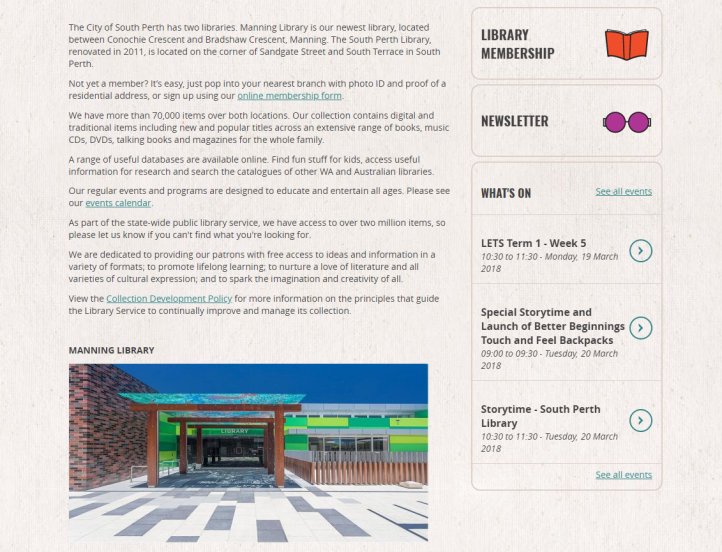
The Perth, Australia library’s About Us page includes all the essentials-how to get a card, sign up for a newsletter, and what is happening today at the library.

Less is more. Many libraries, including mine, have a long list of accomplishments and sub-headers on their About Us page. My library has 19 clickable sub-links!  Pare it down. White space is good. Pick the five most important things you’d want people to know and move the rest to another section of your website. Remember, your About Us page isn’t really about you… it’s about your cardholder. What are the five things a person would need to know to convince them to get a library card or to give you more money?

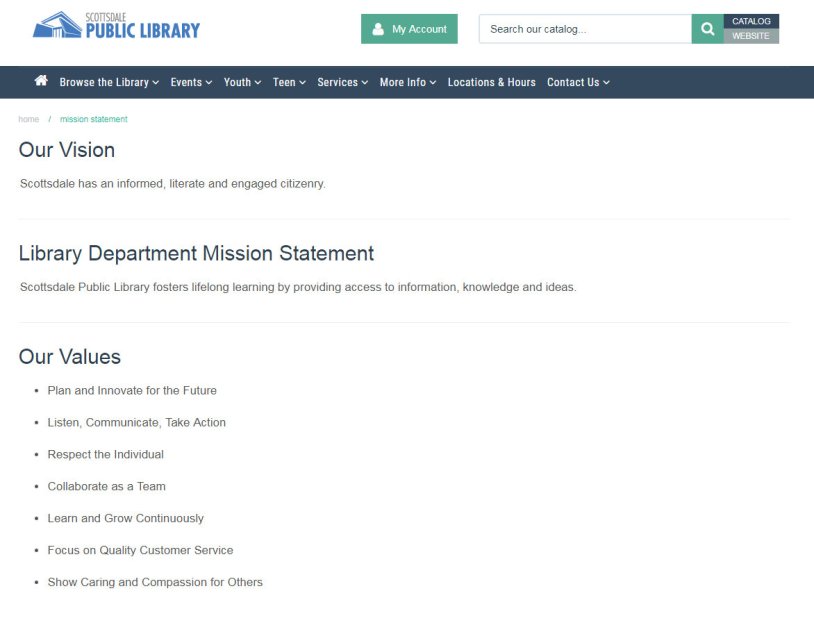
The Scottsdale, Arizona library takes a minimalist approach and it works!

Visuals are key.  Great, high-resolution photos that show people using your library and the workers who man the buildings are essential. Photos of faces are scientifically proven to be a more effective communication tool that text. Bold, easy to read fonts and primary colors work best for communicating ideas and drawing the eye to the page. Keep text to a minimum and pare down to five concepts that will tell your story.

I like how the Toledo Public Library’s page is heavy on visuals and includes easy-to-navigate sub links written in plain language.

Subscribe to this blog and you’ll receive an email every time I post. To do that, click on “Follow” button on the bottom left-hand corner of the page. Connect with me on Twitter and Snapchat–it’s where I talk about library marketing! I’m @Webmastergirl. I’m also on LinkedInInstagram and Pinterest. Views in this post are my own and do not represent those of my employer.
Five Excellent Ways To Improve Every Sign in Your Library

I have a love/hate relationship with library signage.

Part of my job as a marketing professional in a major metropolitan public library is to conduct signage evaluations and to make changes or improvements to the signs in our 41 locations. As a customer, I know how helpful the right kind of signage can be, and my perspective as a customer helps me to understand the importance of the task. But to be honest, it’s probably one of my least favorite job requirements. That’s because I’ve found that signs seem like a simple thing but are, in truth, very complicated. My coworkers and my cardholders have passionate feelings about them.

Good signage serves as a silent employee to draw cardholders to your location, direct traffic inside your building, and answer basic customer questions. Signs can actually be a part of your library’s overall strategy and should certainly be worked into your marketing strategy each year. Ask yourself: What are your library’s overall goals, and how can signs help to meet those goals?

The task of tackling your library’s signage is much easier when you have brand specifications documented. The color, size, and language should be consistent throughout the building and multiple locations. Once you have that document created and have decided how signage will help you to execute your library’s goals, here are five tips to keep in mind as you work on signage for each building.

Tip #1: Less is more. Too many signs in a branch, particularly in a small location, can create clutter and can actually cause confusion. And too much signage can actually annoy your cardholders, particularly if most of your signs are bombarding them with marketing messages. Just as white space works to create breadth and depth for a website or a graphic, well-spaced signage in a branch creates flow. About 75 percent of the signs in your library locations should be wayfaring only–directing cardholders to important service points in the building. The other 25 percent can be selective marketing–promoting services and items that are of interest to your cardholders or that might be of interest to them, based on their patterns of checkout.

Tip #2: Match the signage display to the user of each physical space. Make sure that in your children’s area, the signs, shelves, and computers are all lowered to be a child’s level. Create larger signs for the section that holds your large print items. Place teen signs where the teens hang out, like near charging stations or computers. Use a combination of large and small signs to blend with the space requirements in your library and to keep your signage from becoming monotonous, without being overpowering.  Use a bold font and keep colors and designs simple.

Tip #3: Your library materials make the best displays. Use them instead of signs. Think about how your local bookstore will display books. They often turn them front-facing. Why? Book covers are a visual cue and publishers spend thousands of dollars creating beautiful and eye-catching covers. Use these designs to create a visually pleasing display instead of a sign. A good display will not even need a sign–it should be obvious to the cardholder what you are trying to market to them.

Tip #4: Use customer-friendly, positive language. Cardholders prefer conversational language in all our marketing, so it makes sense to incorporate that into your signage. Some examples are:

Replace self-check or circulation with checkout.

Replace reference with information.

Replace periodicals with magazines.

Replace juvenile with children’s and teens.

I know this is controversial but I’m saying it anyway. Drop the Dewey decimal system from your end panels and arrange your fiction and nonfiction items alphabetically. And incorporate positive language into your signs. Don’t tell customers what they can’t do. Rather, tell them what they can do or how they can enjoy a particular space or item in the collection.

Tip #5: Don’t forget the signs on the outside of your building. Your main sign should say LIBRARY in large letters. Save the actual name of the building, particularly if it’s a long name, for smaller letters by the door. Make sure your open and close times are large and clear and in an easy to spot location. The same goes for the signage for any outdoor services like book drops or drive-thru windows. Make sure the signs are as large as is allowed by your local government.

Bonus tips: Don’t rely on signs to convey everything you want to tell the customer. Hire staff who are willing to speak with customers and show customers where items are located with patience and kindness. And set a schedule for re-evaluating and refreshing your signage–once a year, if you can handle it.

Subscribe to this blog and you’ll receive an email every time I post. To do that, click on “Follow” button on the bottom left-hand corner of the page. Connect with me on Twitter and Snapchat–it’s where I talk about library marketing! I’m @Webmastergirl. I’m also on LinkedInInstagram and Pinterest. Views in this post are my own and do not represent those of my employer.
What a Firecracker and a Watermelon Have to Do with Library Video Marketing

I am so excited that the focus of marketing in the current era is video. I’m positively giddy at the prospect of how this medium will help us transform the popular view of libraries. The power of video is mind-blowing. It’s easier than ever to create a video. The hard part is compelling your viewers to watch it and to keep coming back for more.

I want to encourage you by sharing tips I learned from an extraordinary marketing expert.  Andrew Davis is CEO of Monumental Shift and author of the book Brandscaping. He is a former journalist and producer for The Muppets and Charles Kuralt. He’s a brilliant storyteller and a gifted speaker. He spoke at Content Marketing World this year about the power of video marketing and how to make sure your videos are working at their fullest potential–engaging viewers, building compelling stories, and getting your whole message through to your target audience. His talk was energizing and I want to spread some of his enthusiasm around!

Davis says we need to change the way we think about engagement. Most libraries declare engagement victory when we get a certain amount of views, impressions, shares, or likes. But the social media landscape is so saturated that those numbers really have no meaning anymore. We need to shift our definition of engagement to audience retention.

Audience retention is, simply put, the amount of time our cardholders spend viewing our content. This translates to watch time on YouTube and Facebook and page time on Google Analytics. A compelling video will persuade people returning to those platforms to view your content over and over. Davis says we must stop blaming our viewers for having the attention span of a goldfish. It isn’t that our viewers can’t pay attention to what we are saying. The problem is that what we are saying is boring.

Create videos that your cardholders really want to watch. To do this, you’ll need to get inside the mind of your viewer. Start by creating a series of “how to” videos, which have high audience retention. How-to videos are low-hanging fruit for a library. Your librarians can be your guide–ask them to name the questions they are asked most often by cardholders and then help you create a simple video to explain the answers. To prove the power of the how-to video, Davis played this video, which is one of the most watched how-to videos on YouTube.

Davis says your next video marketing challenge is to create suspense by raising the stakes. The best way to explain this concept is with this video from the Slo-Mo guys.They inserted a firecracker into a watermelon. It takes 18 seconds from start to finish for it to blow up. I admit it’s kind of exciting.  But it’s over in less than half a minute–not the greatest way to create audience retention!

Davis says there is a better way to do that video–and the example comes from Buzzfeed. They did a Facebook live where they burst a watermelon with rubber bands. It took forever to make the watermelon explode but tons of people were watching when it finally blew up. At the 20 minute mark, they had 375,000 viewers. By 40 minutes, they had 800,000 viewers. In all, more than 11 million watched it on demand after the fact. So the lesson is… DON’T INSERT A FIRECRACKER INTO A WATERMELON.

Next, Davis says, teach your audience to chase answers. The pursuit of the answers builds momentum. Your videos need to occupy your audience’s desire to know more over time. Davis says you need to stop worrying about how long a video is. Rather, ask yourself if your entire video worth watching. When someone says your video is too long, what they’re really saying is “I have no more questions.” Make sure there are questions that need answering and keep the audience constantly asking what’s next.

Remember that building suspense isn’t just part of the story line of your video. The title and the thumbnail you choose is part of the equation–don’t give it all away in those two elements. To demonstrate, Davis shared this video from the ancestry research company 23 and Me. Honestly, if you just read the title and look at the thumbnail, you will already know what’s going to happen. There’s no suspense and that translates into no real reason to watch.

A more compelling example of building suspense through the title and use of video is this Dove Choose Beautiful spot.

Finally, Davis says when you are creating drama with your videos, it is important to remember to pay it off. Make sure you deliver a catharsis or an emotional release our audience craves. If you don’t, you risk alienating your viewers. For example, Billy Gene The Wolf of Advertising made the following video. Watch it and see if you can guess why it was widely criticized.

There is no resolution! You must resolve every question you raise by the end of the video. Be sure to provide answers to all the questions in your video, so you avoid frustrating your audience. A frustrated audience will not come back to watch more of your content.

Subscribe to this blog and you’ll receive an email every time I post. To do that, click on “Follow” button on the bottom left-hand corner of the page. Connect with me on Twitter and Snapchat–it’s where I talk about library marketing! I’m @Webmastergirl. I’m also on LinkedInInstagram and Pinterest. Views in this post are my own and do not represent those of my employer.

Manipulating Cardholder Feelings to Get Results

A cardholder recently leveled an accusation against my marketing department for making her feel all the feels.

Here’s the brief story: our library is trying to raise money for a facilities plan. We have several Carnegie-era branches that are not yet accessible to those with disabilities. So we’ve started a content marketing campaign to educate our cardholders and the residents of our service area about the problem, as we will be asking them for money to fund the facilities plan. In our first video portion of the campaign, we interviewed a veteran who cannot get into the library branch in his neighborhood.

When we released the video, one of the viewers sent us a message. She said, “How dare you  manipulate my emotions and try to make me feel sorry for this guy.” I think this person was trying to make us feel guilty for marketing to her.

Sorry, not sorry.

Emotional marketing is effective. We have seen it work time and again for our library and other libraries. You may remember the story of the Leeds Library campaign, which used story-driven emotional marketing to change that community’s perception of the modern library and its value. Leeds won an award for their campaign, and one judge commented, “We loved the application of real-life, personal journeys to draw on the emotions, capture the imagination and change the perceptions of the audience.”

Effective marketing appeals to emotions, not logic, reason, or even facts. This is particularly effective in the world now, where social media algorithms are cutting into our organic reach. If we want better unpaid reach, we need to constantly engage our audience. To constantly engage our audience, we need them to take an action on every post. To get them to take action, we need to motivate them through emotion.

Research from the Institute of Neuroscience and Psychology at the University of Glasgow, published in Current Biology, says humans really feel just four basic emotions: happy, sad, afraid/surprised, and angry/disgusted. The kind of messages that get us engagement are all based on these basic emotions. When you feel happy or angry, you want to share that emotion with others in your social network. When you feel sad, you empathize with the subject your sadness and feel a motivation to help ease their suffering. When you are afraid, you want to take action to ease your fear.

Your most loyal cardholders are likely already emotionally connected to your brand, particularly if you work in a school or public library. The people who already use your library on a regular basis know it’s value. I bet you have superfans, and you know who they are. So what do you do with all that emotion? How do you make it work in your library’s marketing?

Ask loyal customers to share their stories with you. Conduct interviews with those passionate customers by email or on video and use those answers in many ways. Video marketing is the best way to capture emotion. There is no substitute for talking to someone on camera, for hearing their voice and seeing their facial expressions as they talk about your library. You don’t need fancy equipment. Pull out your cell phone, have them stand facing a window or head outside for a few minutes to take advantage of the natural light, and then ask them some emotionally charged questions about their library experience.

What is your favorite library memory?

Tell me about how the library has changed your life.

How would you feel if the library suddenly closed tomorrow?

If a  neighbor asked you to describe how you feel about the library, what would you say?

Ask your staff to share their stories with you. The next time you’re at an all-managers meeting, visiting another branch, or enjoying lunch with a fellow employee, ask them about life in their branch. Ask them to describe their customers. Inevitably, they’ll have one or two specific examples of people who have an unbridled enthusiasm for their location, or whom the branch staff has helped with a specific problem. Once again, pull out your phone, find some good lighting, and ask open-ended questions like:

How did that request by that cardholder make you feel?

Tell me how the situation was resolved.

Did you worry about how you would handle that request?

What is your relationship with the customer now?

And for good measure, I always ask, What compelled you to look for work in a library?

You can post these emotional marketing videos as a whole edited piece or in sections. You can turn the quotes into a printed piece for your newsletter or email list. You can create digital slides or posters in your branches using the quotes. My library used this tactic last year for a series of videos we called Customer Impact stories. We posted them on YouTube and on Facebook and is was one of our first pieces of video content marketing. The audience and our staff LOVED them. We broke them down and used them in our Library Links publication and in other ways, and they prompted more customers and staff to come forward with more amazing stories. It wasn’t hard and it didn’t take a long time to put together. It was effective. Score!

Adding emotional marketing to your regular promotional schedule keeps your cardholders engaged and feeling all the feels whenever they think of your library. It’s not something to apologize for. It’s something to be proud of.

Subscribe to this blog and you’ll receive an email every time I post. To do that, click on “Follow” button on the bottom left-hand corner of the page. Connect with me on Twitter and Snapchat–it’s where I talk about library marketing! I’m @Webmastergirl. I’m also on LinkedInInstagram and Pinterest. Views in this post are my own and do not represent those of my employer.


Inspiring Advice From An Expert Blogger

A few months ago, I asked readers whether their library had a blog. 61 percent of respondents said no. I have to include myself in that statistic. And the more I think about it, the more that bothers me.

Blog-less libraries are missing a HUGE opportunity. A blog has a number of promotional advantages that simply cannot be replicated with any other type of tactic. And to make my case, I am going to share insights with you from a session at Content Marketing World–one that I haven’t been able to stop thinking about in the months since the conference.

Amanda Todorovich is the Director of Content Marketing at the Cleveland Clinic. She’s the 2016 winner of the Content Marketer of the Year from the Content Marketing Institute and she runs the most visited hospital blog in the United States, Health Essentials. Her session was all about the Cleveland Clinic blog and its success. And her story made me want a blog for my library.

Amanda says a blog is the best promotional tool because it creates brand awareness and relationships with current and potential customers. The goal of the Cleveland Clinic blog is to create a space in which the hospital is top of mind all the time with people looking for health information. Think about this: the hospital cannot create demand for their services. So they aim to provide credible health information at all times so that, in the unfortunate moment when someone is sick or injured, the first place they think of is the Cleveland Clinic.

That principle applies to libraries as well. There are times when a library cardholder may not need their library, but we want to stay top of mind with them so that they’ll turn to us when they do need books, or help with a struggling reader in their home, a passport, a voter registration form, help to create a resume, or whatever problem they might have. Libraries are not just about programs and books and there is a lot of value to offer your cardholders beyond those two basic services.

But Amanda also says in order for your blog to work, you have to stand strong. Your blog cannot be all things to all people. You’ll have to decide on your mission, write it down, and stick to it. This doesn’t mean that you are ignoring certain cardholders. It means that your blog has one focus, one mission and that everything you write–no matter the audience–drives at completing that mission. For example, Health Essentials mission is to engage users in daily conversation using health, wellness and clinical content that is unique to Cleveland Clinic. They’re not ignoring anyone. Rather, they are focusing all their energy on delivering on that mission to all of their potential patients and patient families. See the difference?

Blogs have a value beyond pure promotion. Using the right keywords and paying attention to metadata, tags, and links will help boost your position in search traffic. That means people will be able to find you first during a search. Some big brands pay big money for great search results placement. Can you imagine what would happen if; every time someone searches Google for a book, a DVD, or information that they land on your library’s blog? The impact would be mind-blowing.

Some library marketers are already taking this advice to heart, including Brook Savoie, who works for Lafourche Public Library in Thibodaux, Louisiana. She told me, “Our librarians take turns writing a post weekly. The purpose is to just bring more awareness to things that we do! It works well for me for social media, because I can share these blog posts weekly with our audiences without having to create any content myself.”

So, step one is convincing you, your staff, and your administration, to launch a blog. It’s worth it. You can do it. Here are Amanda’s other tips for blog success.

Focus on creating better posts, not more posts. You don’t have to post every day. Just pick a CONSISTENT schedule. Create a list of topics and then write. That’s what I do with this blog. I spend roughly three hours a week on this blog and that’s really only because I am my own editor. If I could just write and revise a draft and then hand it off to another person to edit, it wouldn’t take much time at all. I spend about ten minutes crafting and testing headlines. I spend about ten minutes making the graphic. I spend about ten minutes scheduling all the distribution. I write on the weekend and it feels like it doesn’t take much time at all.

Be willing to say no. Amanda says she doesn’t have a lot of friends outside her team because she says no to a lot of requests by other departments for blog posts. The hospital blog is focused on the needs of their readers, not on the needs of the organization and that’s why it works. When your customers are the center of your universe, you are providing them with value and they’ll keep coming back to you. You are beholden to your cardholders, and they should be your only concern.

Measure and test and test again. Never be content with the results, even when they seem good. Ask “what if” all the time–it could lead you to an extraordinary idea that takes your blog to the next level. Testing actually keeps blog writing interesting and keeps life exciting (I AGREE).

Subscribe to this blog and you’ll receive an email every time I post. To do that, click on “Follow” button on the bottom left-hand corner of the page. Connect with me on Twitter and Snapchat–it’s where I talk about library marketing! I’m @Webmastergirl. I’m also on LinkedInInstagram and Pinterest. Views in this post are my own and do not represent those of my employer.


Facebook Does It Again! What the New Algorithm Changes Mean for Your Library

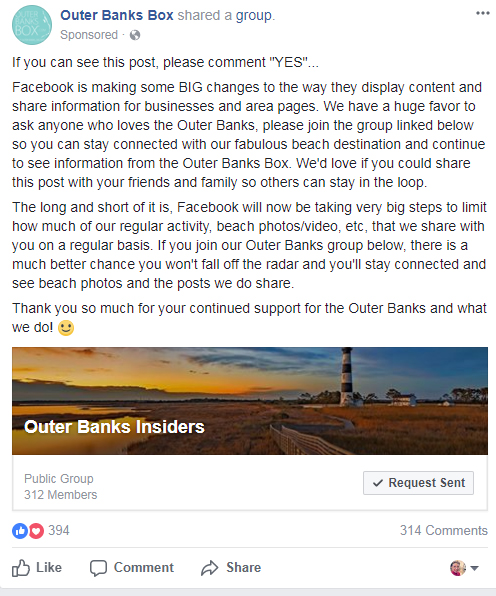
This week, Facebook announced it is making another change in the way the social media platform chooses to show content to its users. The big shift, as you likely know by now, is that Facebook will prioritize posts from friends and family in its news feed over public content from pages, like that of your library. In particular, the Facebook team will give top priority to posts that drive conversation between friends and family.

The announcement is causing consternation for many libraries, which rely heavily on organic, unpaid traffic for their promotional efforts. I honestly don’t know what the end effect will be. I have the same worries as most of my library colleagues. We’ve adjusted well since the last major algorithm change in 2015. So will we have to start over? In the wake of this announcement, I’ve wondered if the chicken comes before the egg. In other words, do our well-performing posts get more interaction because, prior to this week, Facebook has shown them to people in anticipation of interaction… or do they perform well because people are interacting with them? (Deep thoughts!!)

In the Facebook group, Libraries and Social Media, I asked social media marketers at libraries to comment on the change. Caleb Sheaffer of Shreve Memorial Library in Shreveport, LA said, “I never know what to expect until it actually happens. Right now, all the posts that perform well for our library are ones that have the most interaction anyway.”

Jennifer Redford from Boise, Idaho added, “I think that we’ll just need to focus more on writing and sharing great content. We’ve also started using events more and I wonder how that will be affected by the change.”

Finally, Molly Wetta, manager of the Santa Barbara Public Library, told me, “These announcements are pushing me to move forward more quickly with an idea I’ve had for a while. We’re experimenting with linked groups – I started one for youth services specific content, and we may also try one for smaller communities and branches within our system if this one is successful. The goals are to work more to create community connections in addition to marketing our events/services. I do love the events feature, and the notifications will hopefully be helpful but not intrusive. We’ll be sharing book recommendations and answering book-related questions, sharing early literacy tips and activities, and hopefully answering questions.”

The bottom line is that your library’s page may see your overall statistics drop. Your reach and referral traffic, your shares, and your comments may drop. MAY is the key word there. My overall impression of this change is that it will force library marketers to work smarter when using Facebook. All of the pointers in this recent article on Facebook still apply.

And now, more than ever, you must make sure your posts are really good. Share content from other sources related to books and literature–don’t just promote your own stuff, particularly on posts. Use events to promote your events. Ask questions. Create polls. And most importantly, shoot video. As we know, Facebook users respond in a big way to video. Facebook says live videos often lead to discussion among viewers and live videos get six times as many interactions as regular videos. So video marketing must be part of your plan.

You can also explain to your followers what is happening and ask them to choose to see your posts. People who want to see more posts from your library page can select See First in News Feed Preferences. You can also do what Molly’s library is doing and experiment with groups. One of my favorite Facebook pages did that this weekend and they put a little money behind it to make sure all their followers know about the move.

Finally, don’t bait people to interact with your posts. In this week’s announcement, Facebook made it very clear that they will penalize pages which use engagement bait, like. Use real questions and conversation starters. Read this article to see how to avoid engagement bait.

Here’s the thing to remember: posting content on Facebook is like building your house on rented land. It doesn’t belong to you and as much as it pains your library system when changes are made, there is little we can do about it. The big lesson is that we need to start relying on our own platforms and websites for promoting our programs and services. That means we should be building our own audience with blogs, podcasts, and other content delivery systems. We should be developing email subscriber lists so we can target and market to our specific library cardholders and give them the content they really want.

Facebook is great, but they’re not the only way to reach customers. Let’s make a concerted effort to start moving to other content delivery platforms where we have more control. Our fans are loyal and they’ll respond when we deliver content specifically targeted to them.

Subscribe to this blog and you’ll receive an email every time I post. To do that, click on “Follow” button on the bottom left-hand corner of the page. Connect with me on Twitter and Snapchat–it’s where I talk about library marketing! I’m @Webmastergirl. I’m also on LinkedInInstagram and Pinterest. Views in this post are my own and do not represent those of my employer.
A WordPress.com Website.

Up ↑