Search

Super Library Marketing: Practical Tips and Ideas for Library Promotion

Tag

library stories

What Iโ€™ve Learned in 13 Years of Library Marketing: People Support What Makes Them Feel Something

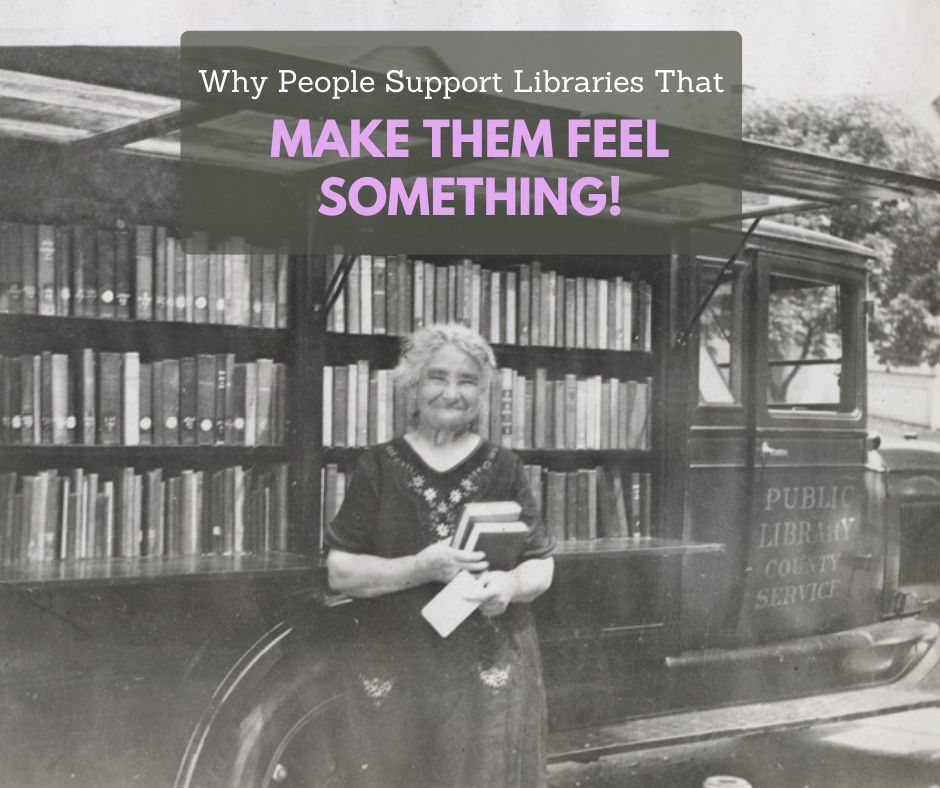
Black-and-white historical photo of a smiling woman standing in front of a mobile library vehicle filled with books. Overlay text at the top reads: โ€œWhy People Support Libraries That MAKE THEM FEEL SOMETHING!โ€ with โ€œMAKE THEM FEEL SOMETHING!โ€ in large purple letters.
Photo courtesy Cincinnati and Hamilton County Public Library

In this post, you will learn:

  1. Emotion drives action. People are more likely to act on your library marketing if it makes them feel something.
  2. Real stories on video don’t need to be polished. Authentic patron and staff experiences are some of the most effective marketing tools libraries have, and all you need is a cell phone!
  3. Emotional marketing is not manipulation. When done ethically, storytelling helps communities understand the real impact of library services.

A few years ago, a library patron accused my library marketing team of โ€œmanipulating emotions.โ€

Honestly? She wasnโ€™t wrong. We absolutely wanted people to feel something!

At the time, my library was building support for a facilities plan. Several of our historic Carnegie branches were not accessible to people with disabilities, and we knew we needed the community to understand why modernization mattered.

So we told a real story. We interviewed a veteran who physically could not enter the branch library in his own neighborhood.

We shared his experience in a short video campaign designed to help our community see the problem through a human lens instead of through budget spreadsheets and building reports.

After we published the video, one viewer messaged us: โ€œHow dare you manipulate my emotions and try to make me feel sorry for this guy?โ€

My response then โ€” and now โ€” is this:

Libraries should never apologize for telling meaningful stories.

Why Emotional Marketing Works for Libraries

One of the biggest mistakes libraries make in marketing is assuming facts alone will persuade people. We think that if we simply explain our services clearly enough, people will understand our value.

But audiences donโ€™t make decisions based purely on logic. They make decisions based on emotion and then use facts to justify those feelings later. Thatโ€™s especially true on social media, where algorithms reward content that sparks reactions, conversations, shares, and engagement.

People engage with content when it makes them feel:

  • Hopeful
  • Inspired
  • Seen
  • Empathy for someone else
  • Proud of their community
  • Connected to something bigger than themselves

That emotional response is what moves someone from passive scrolling to active engagement. And here is more good news.

Libraries Already Have Powerful Stories

You do not need a massive budget or a professional production crew to create emotional marketing. You already have the raw material.

Every library has:

  • A teen who found belonging through programs
  • A job seeker who got help building a resume
  • A parent who found support during a difficult season
  • A senior who depends on library staff for connection
  • A child who discovered a love of reading
  • A staff member who went above and beyond for someone

These stories are your most effective marketing!

Too often, libraries default to promotional language like:

  • โ€œRegister now!โ€
  • โ€œCheck out our new database!โ€
  • โ€œJoin us Tuesday!โ€

But audiences connect more deeply with:

  • โ€œThis program helped me make friends after moving here.โ€
  • โ€œThe library gave me confidence during my job search.โ€
  • โ€œI didnโ€™t feel alone anymore.โ€

Thatโ€™s the difference between information and impact.

Emotional Marketing Is Ethical When Itโ€™s Honest

Thereโ€™s an important distinction between emotional storytelling and emotional manipulation.

  • Manipulation relies on exaggeration, fear tactics, or dishonesty.
  • Ethical emotional marketing tells true stories that help audiences better understand real community needs and real library impact.

Libraries are uniquely positioned to do this well because our work genuinely changes lives every day. If your library helped someone succeed, feel safer, feel connected, or solve a problem, sharing that story is not exploitation. Itโ€™s advocacy.

The Best Way to Capture Emotion: Video

Video remains one of the most effective formats for emotional storytelling because audiences can hear tone, see facial expressions, and connect with people “face to face.”

But hereโ€™s the good news: your videos do not need to look cinematic! Some of the most effective library videos are filmed on a phone. What counts is not the production. It’s the authentic conversations.

If you want to start gathering emotional stories, try interviewing:

  • Loyal patrons
  • Volunteers
  • Staff members
  • Program attendees
  • Community partners

Ask open-ended questions like:

  • Whatโ€™s your favorite memory involving the library?
  • How has the library impacted your life?
  • What would your community lose if the library disappeared tomorrow?
  • Tell me about a moment when the library helped you unexpectedly.
  • Why does this library matter to you personally?

Then stop talking and let them tell the story.

Donโ€™t Forget Your Staff Stories

Library staff are often an untapped source of emotional content.

Staff members witness transformation every day:

  • helping someone apply for benefits,
  • finding the perfect book for a struggling reader,
  • assisting someone through a difficult life transition,
  • or creating a welcoming space for people who need connection.

Those stories matter.

Some of the best questions to ask staff include:

  • Tell me about a patron interaction youโ€™ll never forget.
  • What moment made you proud to work at the library?
  • What keeps you motivated in this work?
  • Whatโ€™s something the public doesnโ€™t always see about library service?

These interviews can become:

  • Short social videos
  • Newsletter features
  • Website testimonials
  • Annual report stories
  • Posters and digital signage
  • Advocacy campaign content

One good story can fuel months of marketing content.

The Hidden Benefit of Emotional Marketing

Something interesting happens when libraries start telling emotional stories consistently: More stories start showing up.

When we launched our own customer impact video series years ago, staff and patrons immediately began sharing additional experiences with us.

People wanted to participate because they felt recognized and connected.

Thatโ€™s one of the most powerful outcomes of storytelling: It builds community identity. People stop seeing the library as just a building or service provider and start seeing it as something deeply personal and valuable.

Final Thoughts

Libraries are emotional spaces. They represent hope, opportunity, safety, curiosity, nostalgia, belonging, education, and community.

Trying to market libraries without emotion is like trying to market music without sound.

So no, libraries should not feel guilty for creating marketing that makes people โ€œfeel all the feels.โ€

That emotional connection is often exactly what inspires people to support, advocate for, fund, and engage with the library in the first place.


Want more help?

How Libraries Can Use Storytelling to Build Community Support (4 Practicalย Tips)

Subscribe to this blog, and youโ€™ll receive an email whenever I post. To do that, enter your email address and click on the โ€œFollowโ€ button in the lower left-hand corner of the page. You can also follow me on the following social media platforms:
 

Your Summer Reading Challenge: How Your Library Can Use Big Events To Gather Compelling Content for Promotions During the Rest of the Year

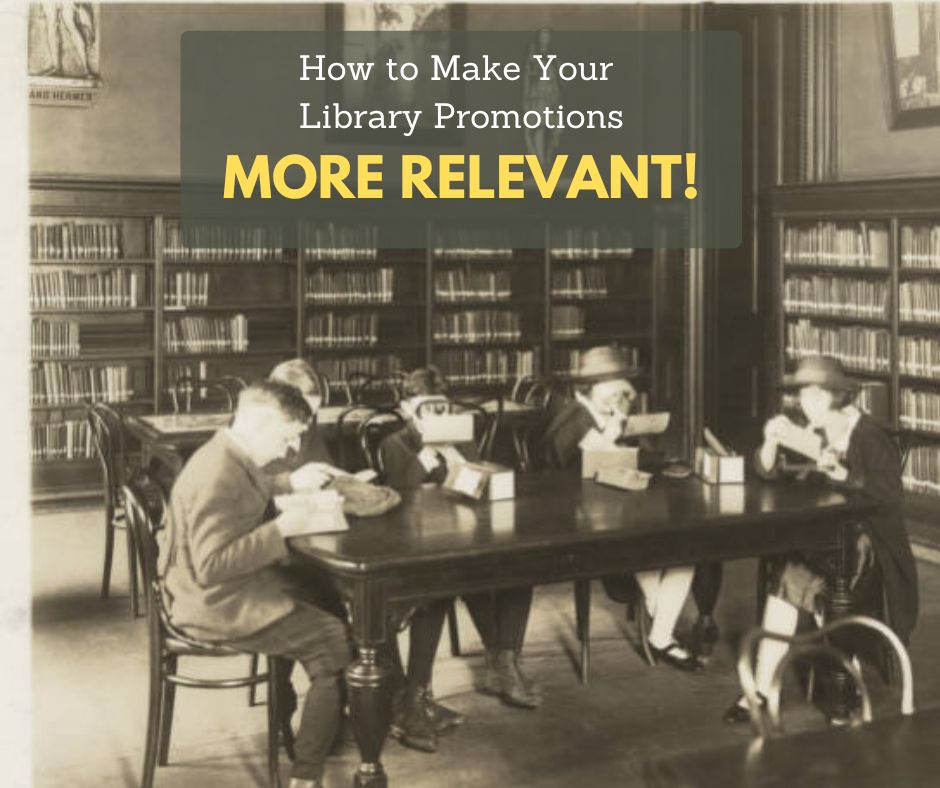
Group of women at the Public Library of Cincinnati and Hamilton County, circa 1947. Photo courtesy Public Library of Cincinnati and Hamilton County.

โ€œThe only way we can differentiate ourselves is in how we communicate.โ€

I heard this quote at a conference six years ago and it’s never left me. I can’t remember who said it, but I remember that it changed the entire way I thought about library marketing.

We do a lot of push promotions in the library world. We try to inform our communities about what our library has to offer. We tell them why they should support the library.

Honestly, we do a lot of talking at people. And we end up sounding like every other advertiser.

When is the last time you asked yourself: how can I differentiate my library from the crowd of competitors?

Content marketing is a good place to start. It is, according to Content Marketing Institute founder Joe Pulizzi, โ€œa strategic approach focused on creating and distributing valuable, relevant, and consistent content to attract and retain a clearly defined audienceโ€“ultimately, to drive profitable consumer action.โ€

But what does that mean for a library?

It means we canโ€™t rely on disruptive marketing to capture the attention of our cardholders. If we want to attract and retain people who will use the library and support the library and convince others of the value of the library, we have to be more strategic.

Think about how you go about interacting with signs, ads, and social media. Do you give every message your full attention… or half of your attention… or even a glance?

Unless something is seriously compelling, you filter it out. So do our cardholders.

Content marketing sticks with your audience because it’s not an ad. It doesn’t push.

It is stories about your library, your staff, or your community. Your cardholders will remember these kinds of promotions because stories make us feel emotions. And emotions are memorable.

Summer Reading, or any large library event or initiative, is the best time to be purposeful about using content marketing to promote your library. It’s also the best time to gather stories for promotion later in the year.

Here’s what I want you to do.

  • Gather stories about how cardholders are using the library. How is your library improving their lives? How is your library helping people get back on their feet or back to normal in this phase of the pandemic? Ask your library workers to be on the lookout for great story ideas.
  • Gather stories about your staffโ€“who are they? What do they like to do in their spare time? What do they love about interacting with cardholders? How their approach to work changed during the pandemic?
  • Gather information about your cardholders. Survey your users or use social listening to create a list of the problems they are facing. Ask your cardholders specific questions like “Tell us about a time when your library helped you find some information you thought you’d never be able to uncover.” Or “Tell us your favorite library memory from your childhood.”
  • Set up a form on your website and solicit cardholder stories on social media, in your email, and printed newsletters. That list will be the basis for further content marketing your library can create down the road that answers those problems.

And then, tell those stories using the platforms you have available. Write them up for your blog. Create social media posts. Add them to your newsletters. Start a landing page on your website. Make videos.

There are three key pieces to look for in a good content marketing library story.

Emotion. The joy of finding a book, the fear of not getting a job, the frustration of another night of homework without any helpโ€ฆ these are all emotions felt by our libraryโ€™s customers. Other people can relate to these experiences and empathize.

A good emotional story activates many portions of the brain, including sensory, memory, and empathy sectors. The more active the brain is while reading, the more likely it is that the listener/reader will remember the story.

Emotion is the most important criteria of a good story. If it makes you feel something, itโ€™s worth pursuing.

Conflict and a resolution. A good story includes some conflict, whether minor or major, and a problem or situation that is resolved.  Without conflict, a story is flat and unmemorable.

Look for stories with a beginning, middle, and end including a story arc that leads to a resolution.

Simplicity. A story thatโ€™s direct, with less adjectives and more heartfelt and straightforward language is more likely to be remembered by the listener than a complex story with a long, winding narrative and lots of details and unnecessary description.

When writing content for marketing purposes, draw a straight line from beginning, middle, and end. Keep the story moving forward with clear language.

Content marketing gives you a chance to tell your library’s story without making a direct pitch. It increases brand awareness and affinity and improves your library’s image. And stories are fun to tell!

We cannot rely on this old disruptive marketing policy to be the driving force behind our library marketing efforts anymore. Weโ€™re better than that.

We work with stories every day. Letโ€™s start telling them.


Do you use content marketing in your library promotions? Do you have some great stories that you’ve gathered about your library and cardholders? Do you have questions about storytelling and how it works for libraries? Share your thoughts and questions in the comments below!

You Might Also Like These Posts

The Biggest Threat to Your Libraryโ€™s Content Marketing

Five Content Marketing Lessons Learned at the Construction Site

Angela’s Latest Book Review

Broken (in the best possible way) by Jenny Lawson

Subscribe to this blog and youโ€™ll receive an email every time I post. To do that, click on the โ€œFollowโ€ button in the bottom left-hand corner of the page. Connect with me on YouTubeTwitter, InstagramGoodreadsand LinkedIn.

A WordPress.com Website.

Up ↑