Search

Super Library Marketing: Practical Tips and Ideas for Library Promotion

Tag

staff

How One Library Marketer Advocated for (and Got) an Additional Promotional Staff Member

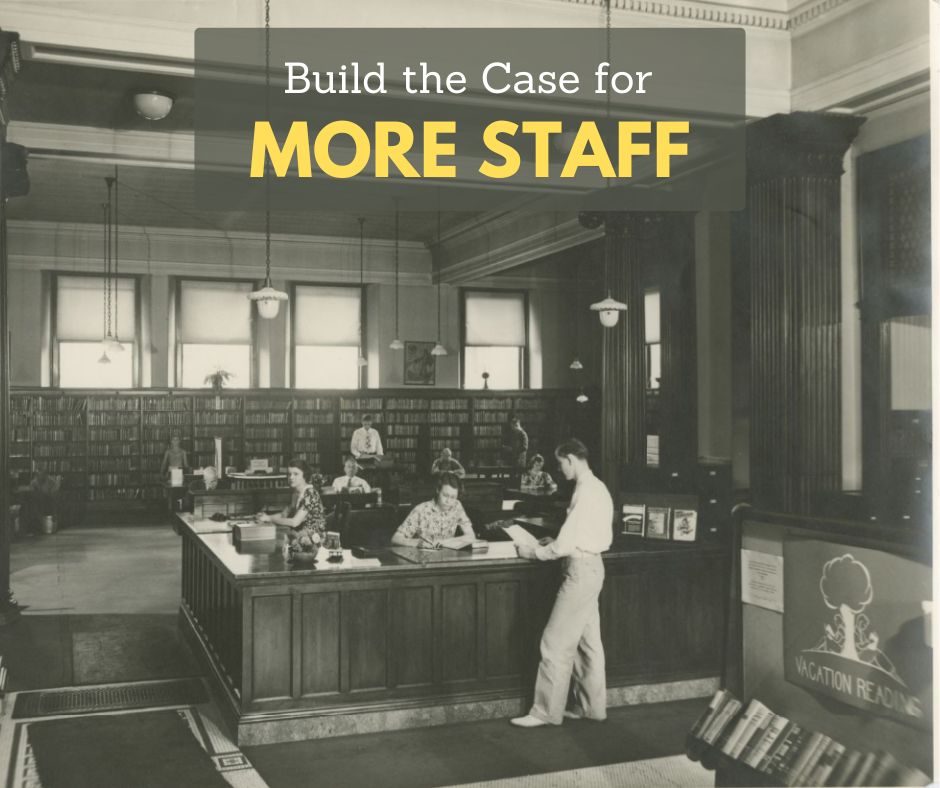
Photo courtesy Cincinnati and Hamilton County Public Library

Have you ever wondered what you could do for your library if you had more people working on promotions?

Staffing up in library marketing is very uncommon. I believe this is a huge mistake that many libraries make. Leaders and board members donโ€™t understand the essential connection between smart, strategic library marketing and the organization’s success.

So when I learned that Nicole Fowles of the Delaware County District Library successfully advocated for and got an extra library marketing staff member, I had to ask her how she did it! Nicole grew up in New Philadelphia, Ohio, and was a regular visitor to the Tuscarawas County Public Library Main Branch.

โ€œI have fond memories of storytime with Mrs. Pittman,” remembers Nicole. “Weโ€™re Going on a Bear Hunt was a classic! But even more special was bringing my own children back to that library when we visited the grandparents for them to get to enjoy a storytime.โ€

Nicole is now the Communications Coordinator for the Delaware County District Library, a five-branch system with a bookmobile and other outreach services. DCDL serves a population of nearly 166,000 people.

Nicole came to the library in 2012. She had one Communication Specialist but was certain she needed more help.

โ€œAs the Library grew, the strain on our department of two grew, as well,โ€ explains Nicole. โ€œIn 2018, the Library passed a levy with the promise to build a new branch. Feelings of overwhelm were setting in, and we knew it was time to really look at what jobs we accomplished for the system, what was being asked of us, and what we could realistically provide to the best of our abilities.โ€

โ€œThe first thing I did was sit down with my Communications Specialist and perform a job task audit. We each took a stack of colored Post-it notes and in about 30 minutes wrote down every job that we do or anticipate doing with the construction of the new branch.”

Nicole says it became clear their job responsibilities were unbalanced and not always aligned with the libraryโ€™s priorities. So, she decided to use a graphing technique she had learned from business books.

She created a chart. At the top, she put two columns: Library needs and Library doesnโ€™t need. Then, on the side, Nicole made two rows, one labeled I like, and one labeled I donโ€™t like.

โ€œTake your tasks and put them into those squares,โ€ directs Nicole. โ€œWhat do you like doing, but the library doesnโ€™t need? What do you not like doing but the library needs? This gives a clear, hard-truth picture of tasks that might need to be eliminated or that could be given to a different person.”

โ€œWe took the Post-its that remained and looked at the common themes. Much of the work that was overwhelming me had to do with maintaining the website and managing email communications. I liked those tasks, and the library needed those, but I was doing both jobs poorly because I was not giving them the time or investment of education they deserved.โ€

โ€œI knew the potential we could reach with email segmentation, but I had no desire to even begin to creep into that world because I was already overwhelmed with the basics of simple bulletin communications.”

“Our patrons were not being served in the best way that they could be. We knew a second Communications Specialist was needed to focus on the website and email communications.โ€

-Nicole Fowles

Nicole says the next step was to approach her director. But before that meeting, she did some additional prep work.

โ€œI looked at the job description and had to decide if weโ€™d keep the same job description or if it would need to be a new title,โ€ remembers Nicole. โ€œWe decided to keep it the same, as this person would still have much cross-over with general communications duties. Weโ€™d post it with clarity that we were focusing on digital comms. I also needed to be sure that the organizationโ€™s pay scale for the title was appropriate for the job we wanted to accomplish.โ€

โ€œWhen I had title, job description, and overall benefits and pay impact figured out, I listed the things I wanted to do and the cost if I simply contracted them out. I got various quotes for full-scale website management from other companies. I also got quotes for contract email support or PR for-hire agencies.โ€

โ€œIn the end, the benefit of hiring someone who would do the work of those two contracts (web and PR agency), in addition to being a DCDL employee and helping as needed with other Communications Department duties (campaigns, community events, etc.) outweighed the cost of hiring external contract help.โ€

Armed with that pitch, Nicole was ready to make her case to the director.

“The Director was sympathetic to our anecdotal evidence,โ€ recalls Nicole. โ€œHe was also receptive to the financial analysis of what those things would cost if we used outside contractors as opposed to an internal employee.โ€

Nicole had to get approval for the potential staff memberโ€™s salary and benefits from the Board of Trustees. She knew the board liked to be on track or ahead of similar libraries, so she made sure to provide that information.

โ€œTake a close look at your Board of Trustees and attend a Board meeting, if you arenโ€™t already,โ€ advises Nicole. โ€œItโ€™s wise to know where they dig in and where they relinquish control to their Directors.”

“I had already learned after many years of attending Board meetings that they were big on the numbers side and slightly competitive, and those would be the angles Iโ€™d need to use to approach them.โ€

-Nicole Fowles

As you know from the title of this post, Nicole was granted an extra staff member! That meant her original Communications Specialist could focus on print communications and social media. Nicole says the work she put into advocating for a second Communications Specialist focused on digital marketing was well worth it.

โ€œOur website was not showing up on Google searches well, but she cleaned up our Search Engine Optimization,โ€ says Nicole. โ€œWe did not have a great place to utilize news. We now effectively have a blog. A widget that I constantly broke but desperately wanted to use was something she took and ran with and used on several other pages that needed it! Our website needed a drastic facelift, specifically regarding organizational hierarchy; she led the charge.โ€

And Nicoleโ€™s second staff member also took the library from sporadic monthly emails to email marketing success.

โ€œOur new employee was able to build many segments and help us reach our cardholders more appropriately for targeted messages,โ€ shares Nicole. โ€œShe helped create a brand-new Mature Reader newsletter that specifically reaches our 55+ community, a Pre-K newsletter utilizing our mascot, and an A-Z newsletter specifically for children going into kindergarten. Our reach has grown leaps and bounds.โ€

Whatโ€™s next for Nicole and her staff? Sheโ€™s now building the case for an internal communications specialist after seeing an inspiring presentation by the Spokane Public Library at the 2024 Library Marketing and Communications Conference.

Nicole has one final piece of advice for her fellow library marketers.

โ€œRead the business books!” she implores. “Most of what inspired me to do our task analysis came from a book called Do More Great Work by Michael Bungay Stanier. There are many more out there!โ€

One way to get more business books into your TBR is to join The Library Marketing Book Club! Iโ€™m now the co-host of the club with Anna Lowry of the Central Rappahannock Regional Library. Want to join? Contact me here.


Need more help?

How One Library Got All the Stock Photos It Needed for Promotions in Just One Day!

Subscribe to this blog, and youโ€™ll receive an email whenever I post. To do that, enter your email address and click on the โ€œFollowโ€ button in the lower left-hand corner of the page. You can also follow me on the following social media platforms:

You Are Not a Miracle Worker! 5 Ways to Level Set Your Co-Workers’ Library Marketing Expectations

Watch this video

Tell me if this sounds familiar: your library staff wants you to promote their events and programs, but they don’t give you the information that you need to create those marketing messages in a timely manner.

How do you set up a system where your fellow staff members help you help them? I’ll share some tips I learned on the job at my former library to make effective library promotions.

Plus we give away kudos. Watch the video to find out which library is being recognized.

Do you have a suggestion for a topic for a future episode? Want to nominate someone for kudos? Let me know in the comments.

Thanks for watching!


Subscribe to this blog and youโ€™ll receive an email whenever I post. To do that, enter your email address and click on the โ€œFollowโ€ button in the lower left-hand corner of the page. You can also follow me on the following social media platforms:

Effective Library Internal Communication Is Not Impossible! Libraries Share Tips for Keeping Staff Up to Date, Engaged, and Happy

Photo courtesy Public Library of Cincinnati and Hamilton County

The library I worked for when I started this blog had an annual tradition. Every year, our staff would march in the Cincinnati Reds Opening Day parade.

Now, you must understand that Opening Day in Cincinnati is a holiday. Legitimately. And people look forward to the parade as much as they do the game. So, marching in it is incredibly exciting.

It was my job to organize the libraryโ€™s entry every year. That involved getting library staff members to sign up to march in attire and carrying props that matched our summer reading theme.

Youโ€™d think that would be easy.

It was not.

Every year, Iโ€™d panic because I had too few staff members signed up to march. Then, staff would start calling me days before the parade, asking why they hadnโ€™t heard about our libraryโ€™s entry.

This happened because we had a messy, unorganized internal communications strategy. And that was dangerous.

If we were having problems getting information to staff about a fun event, we were really in trouble when it came to communicating the information they needed to do their work properly.

Internal communications: marketingโ€™s forgotten stepchild

On this blog, we focus mainly on marketing and promotions aimed to reach your library community. But for the next two weeks, weโ€™re going to turn our attention to a different audience: your staff.

Effective internal communication is incredibly important to the success of any library. Without it, staff feels disconnected from the library, their community, and each other. Morale can drop. Initiatives may not be successful when workers donโ€™t feel like they understand the context and their role in the work.

And when library staff feel frustrated, they quit. Turnover is bad for your library. It costs you money and productivity.

But the people who really suffer in this equation are your community members.

That’s why every library, however big or small, needs an intentional internal communications plan.

Setting a realistic course of action

First, let me tell you from experience that an internal communications plan wonโ€™t magically transform the staff experience overnight. These things take time. But, if you create a solid plan and are consistent in your communications, you will see improvement.

You should approach this work just as you would for a customer-facing marketing campaign. First, youโ€™ll want to answer some questions about the state of your libraryโ€™s internal communications.

Ask:

  • Do you have a strategy? How effective is it?
  • What are your biggest strengths and weaknesses?
  • Who is currently involved in shaping and executing your current internal communications?
  • Who needs to be involved in improving those communications?

Next, youโ€™ll want to determine your goals. Use the SMART goals framework to set your library up for success.

Your goals should be:

  • Specific: Define what you want to accomplish in clear, simple terms that everyone on your library staff, from front-line workers to senior leaders, can understand.
  • Measurable: Create milestones and targets that can help you see your progress toward each aspect of your goal.
  • Attainable: Set goals that are manageable and realistic.
  • Relevant: Create goals that develop your library staff members, serve your community, and connect to your libraryโ€™s overall strategic plan.
  • Time-based: Create a specific timeframe for reaching your goals. This timeframe will ensure you are accountable to the staff. It will also prompt you to reflect on how your plan is progressing, and change direction if you encounter any issues.

Finally, youโ€™ll want to decide how youโ€™ll measure the success of your internal communications. You may want to measure:

  • Decrease in employee turnover  
  • Increase in candidates applying for new jobs  
  • Increase in staff workplace satisfaction
  • Increase in staff performance review ratings

Library staff is an audience

The next task is to uncover the best way to connect with your audience: the staff. What do they need to know? When do they need to know it? And how do they want that information delivered?

Jill Fuller is a Marketing and Communications Librarian for Bridges Library System. Her job involves a lot of communication with staff at various libraries in the system. And she uses surveys, like this one, to figure out what her audience wants to see in her staff emails.

โ€œThey have excellent open and click rates,โ€ she explained, โ€œbut I wanted to get quantitative data too. I asked them questions about how helpful they were, whether they were relevant to their jobs, which topics they wanted me to focus on, the frequency and length of the emails, and more.”

โ€œI never knew how much the emails were appreciated! With the data I gathered, I have been able to focus more on the topics the library staffs were most interested in and scaled the frequency down to every other week.โ€

Use Jillโ€™s advice and create a survey to gauge the needs and preferences of your staff. Jill suggests you ask:

  • Their preferences for getting information
  • How they share system information with their staff or colleagues
  • Whether they feel they receive enough communication
  • Whether they feel the communication is accurate
  • How comfortable they feel contacting your library with questions.

Make the survey easy to fill out, and as short as possible. Let the staff know that the survey is their best way to share their thoughts about the direction your library should take with internal communications.

And give staff time to fill it out. It should be available for at least two weeks. You want a participation percentage of 80 percent or higher. Reminders in email, delivered by managers, and in signage in staff areas will help.

Even better, ask managers to set a meeting appointment on staff calendars for filling out the survey.   

The benefit of a newsletter for internal library communications

If you have a lot of information to share, as Jill does, consider creating an internal library newsletter. Newsletters take what could have been multiple emails and condense them into a simple, easy-to-read format.

Cindy Starks is the Communications Coordinator for Coal City Public Library District, a small library southwest of Chicago, Illinois. They serve a population of 11,000 residents and have 22 employees. 

After each monthly department heads meeting, itโ€™s Cindyโ€™s job to prepare a summary in a newsletter to staff called the Staff FYI Newsletter.

โ€œThe newsletter can be a lot of information to retain for staff,โ€ admitted Cindy, โ€œbut by having it emailed they can refer to it at any time when they donโ€™t remember something.โ€

Tips for a staff newsletter

  • Provide the right news and information. Carefully consider the kind of information your employees need. Try not to send too much information in one email, or too many emails.
  • Remember your calls to action. Encourage staff to take the next step, such as sharing information on social media, filling out a survey, or signing up for training or new initiatives.
  • Strengthen your subject lines. You want staff to open your emails, so consider your subject line just as you do for any email communication to patrons. Use emojis or power words to catch the attention of your staff.

Advice from a library

Grace Riario and Anita Baumann of Ramapo Catskill Public Library System send a newsletter six times per year to all library trustees serving on the Boards of their 47 member libraries. 

Theyโ€™ve got three pieces of advice for internal communications.

โ€œKeep the text short and positive,โ€ says Grace. โ€œPictures representing the topics are a must.โ€

โ€œLists, such as the three best things about being a library director, ensure that people will read that piece in your newsletter,โ€ continued Grace.  

โ€œA third ‘strategy’ we employ is consistency in formatting and color palette,โ€ shared Grace โ€œProminent display of the organization’s logo, as well as a uniform look and subject line in the email when it’s distributed help readers to recognize the material when it hits their inbox.โ€  

Staff communication beyond emails

My library ended up adding an internal communications position to our ranks. That person attended meetings, created talking points for managers to explain new initiatives, and organized our internal staff website. She discovered our staff liked to hear the news directly from senior staff, so she started a weekly video series where senior leaders appeared in short videos to share information.

If your library cannot add a staff member specifically tasked with internal communications, there are still things you can do. Libraries can be very siloed and bureaucratic organizations. But the libraries that open those siloes and promote productive and meaningful conversations have success in internal communications.

This can be done by leaving space for question-and-answer sessions at the end of all-staff meetings. You can also add a Q and A board to your internal website. Encourage staff to ask questions and share information with each other.


You May Also Want to Read These Posts

Building Advocates and Allies: How One Library Marketer Used Storytelling To Improve Promotions and Unify Hisย Library

An Academic Library Increased Their Instagram Reach by 1149% in a Year! Learn Their Secrets for Success

Subscribe to this blog and youโ€™ll receive an email every time I post. To do that, enter your email address and click on the โ€œFollowโ€ button in the lower left-hand corner of the page.

COVID-19 is STRESSFUL for Library Workers. Here Are Tips to Help You Feel Better.

Watch Now

The Library Marketing Show, Episode 52

Angela talks about the stress that many library staff feel because of the pandemic. The worries in our personal and professional lives are causing us to feel overwhelmed. It’s okay. You are not alone. Here is a great study about how stress affects your brain.ย Angela shares her personal tips for coping with stress in this unique time.

Do you have tips or coping mechanisms? Please share them in the comments.

Also Kudos to Rutherford County Library System IT Administrator, Kevin Robertson, for creating this great โ€œbounce backโ€ page of resources for patrons. Kevin was nominated by Carol Ghattas of Linebaugh Public Library. Nominate someone to receive kudos by commenting on this post.

What did you think of this episode? Do you have an episode suggestion? Let me know in the comments. And subscribe to this series to get a new video tip for libraries each week!ย ย 

A WordPress.com Website.

Up ↑