Library friends, we did it! We made it through 2025. We faced numerous issues and threats to libraries, yet we celebrated many triumphs. I’m proud of you. I’m proud of this community. And if no one has told you this lately, GOOD JOB YOU!
And now, we look forward to a new year and new chances to grow the connection between your library and your community.
Want to make 2026 your best year yet? Let’s start by learning from the content your fellow library marketers found most helpful this year.
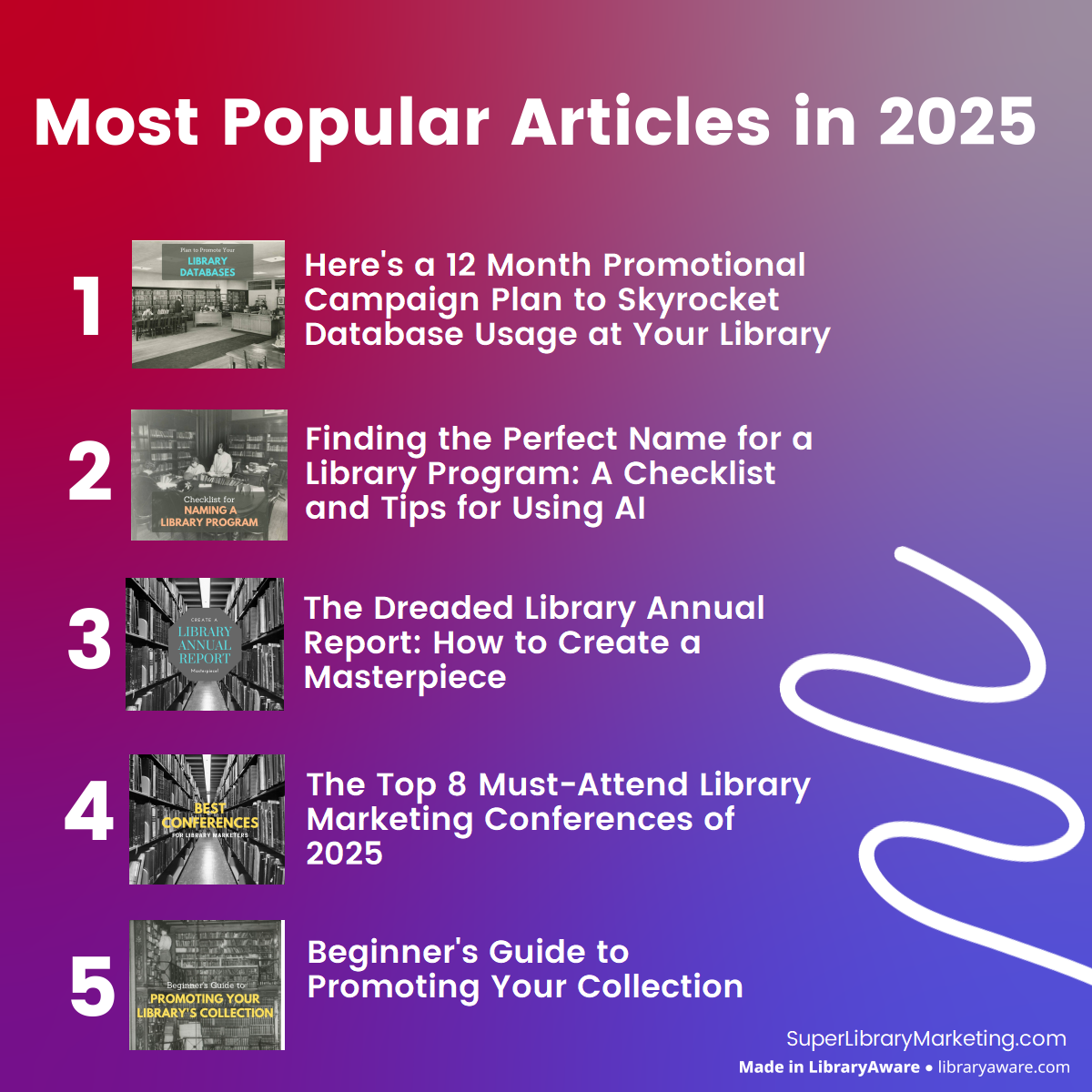
Most Popular Super Library Marketing Articles of 2025
I hope you are looking forward to 2026 as much as I am. My next post will be on Monday, January 5, when I’ll unveil the State of Library Marketing. I’ve got a calendar full of posts and videos featuring tips to make your work easier, as well as profiles of libraries to inspire you. Happy holidays!
Photo courtesy Cincinnati and Hamilton County Public Library
We are now firmly in the second half of the calendar year. I don’t know about you, but when I worked in a library, this was the time I usually started to “drag” a little. I was tired and uninspired. (Hey, that rhymes!) I needed a little boost… someone to remind me to focus on what was important.
I’m here for you. These are the eight things I want you to focus on as you move into the next six months. This is also a great post to share with new hires who work on library promotions. The eight principles listed below are the most valuable tips I can offer to help you center your work and find direction.
And I’m curious… do you think I missed anything in this list? Add your guiding principles to the comments!
8 Tips to Focus Your Library Promotions
1. Plan ahead — don’t just react.
This is my number one tenet because so many of the library staff members I work with say they feel like order takers! They are asked by different departments and branches to promote the things that are important to those people, which allows no time to create a strategic library marketing calendar or campaign that supports the library’s overall goals.
Effective marketing is proactive, not reactive. You want your promotions to be holistic, covering all the channels where your target audience is located (see item #4). List the goals you want to achieve over the next six months, and create holistic campaigns. Before you know it, you’ll have a full editorial calendar.
And I know this might sound scary, but be transparent. Share your calendar with the rest of your coworkers. Inform them of the overall goals and provide them with regular updates on the content you share and the results you are achieving. At the end of the year, let everyone know how you did.
This will help educate your coworkers about marketing! Many of them probably think marketing is reactive. They don’t know how much planning and coordination go into an effective campaign.
2. Promote the benefits, not the features.
Listen, I know this one is hard. But your community is looking for a solution to their problems.
So instead of saying, “Use our personalized reader recommendation service”, highlight how your service solves real problems, like helping readers to find the right books for them (because, let’s be honest, there are SO many good books out there!), or helping readers who feel like they’re stuck in a rut, reading the same things over and over again.
You want your readers to think of the library, not Google or Goodreads, as the best place to find a book.
3. Tell more stories of how the library impacts lives.
User-centered storytelling, like Loyola Marymount’s Library Fans video series, connects emotionally with users and shows the library’s impact on real lives. These stories are more memorable than stats or service lists.
Storytelling helps your community to see how others are using the library and imagine how they might use the library too!
4. Meet your audience where they are.
Use the channels your patrons prefer. And remember, you don’t have to be on every channel. You just need to be on the right ones.
The channels you choose should match the preferences of your primary audience segments.
Teens and college students? Think TikTok and YouTube Shorts.
Parents and caregivers? Facebook groups and email are the best way to reach this audience.
Adults over age 65? In-person outreach and local newspapers or printed newsletters can be most effective.
Most importantly, don’t try to build an audience on the channels your patrons don’t use. How do you know which channels your audience prefers? Use metrics (see #8) and surveys to pinpoint where your energy will be best spent.
5. Consistency builds brand recognition and affinity.
At the Fourth of July parade two weeks ago, I instantly recognized the library’s entry coming down the street, even without my glasses. How? The color scheme of their banner and vehicle! (As an aside, I was sitting right in front of one of the branches, and the cheering that rose from the crowd when the library drove by warmed my heart.)
You can have the same impact. Use your brand logos, color palettes, and tone across channels. Patrons should instantly recognize your library’s content, whether it’s on a digital sign, flyer, or Instagram Story.
I know this seems like a constraint to some of my more creative readers, but the discipline pays off with instant brand recognition.
Beyond your brand colors and logo, remember to name your services clearly and tie all services to your library (e.g., “Consumer Reports from Maple Tree Library”).
6. Empower your advocates.
Your best marketing tool might be your most loyal library users. Feature them in campaigns and encourage user-generated content. When your superfans talk about how much they love the library and how it impacts their lives, people will listen!
Encourage staff to promote programs on their own social media (with branded templates or messaging prompts).
And provide your Friends group or foundation with a marketing kit: shareable graphics, key talking points, and event blurbs.
7. Always be repurposing.
Library marketers are asked to create a lot of content! Just like you may do in your home, you can reuse and recycle some of that content to help ease your workload and ensure your best content is seen on multiple channels. You can do that by:
Repurposing blog posts, newsletters, and program guides into social media snippets, videos, or infographics. Share this content with local media and community partners.
Turning book displays into short videos for social media by adding trending audio and creative elements like stickers.
Clipping moments from author talks or storytimes for Instagram Stories, YouTube Shorts, or TikTok videos.
Breaking down long blog posts into carousel posts or pull quotes for your homepage, digital signs, or social media posts.
8. Measure what matters.
Your metrics are key to guiding your marketing strategy. And listen, I’m the first person to admit I can easily go down the rabbit hole of data and measure everything.
But my boss coaches me to only spend time measuring the things I need to help make the decisions that will guide my future library marketing actions. That means I don’t obsess over likes and followers.
Instead, I track engagement metrics like watch time on videos, shares of social media posts, and read time on blog articles. I also urge you to use UTM codes like Bit.ly and Google Analytics to track campaign sources, so you know which channels are driving traffic to your library and which pieces of content resonate most with your community.
Subscribe to this blog, and you’ll receive an email whenever I post. To do that, enter your email address and click on the “Follow” button in the lower left-hand corner of the page. You can also follow me on the following social media platforms:
This holiday week, I wanted to ensure you are set up for success in promoting your library in 2025. These are the most popular Super Library Marketing posts from the past year that you may have missed. (We’re all so busy!)
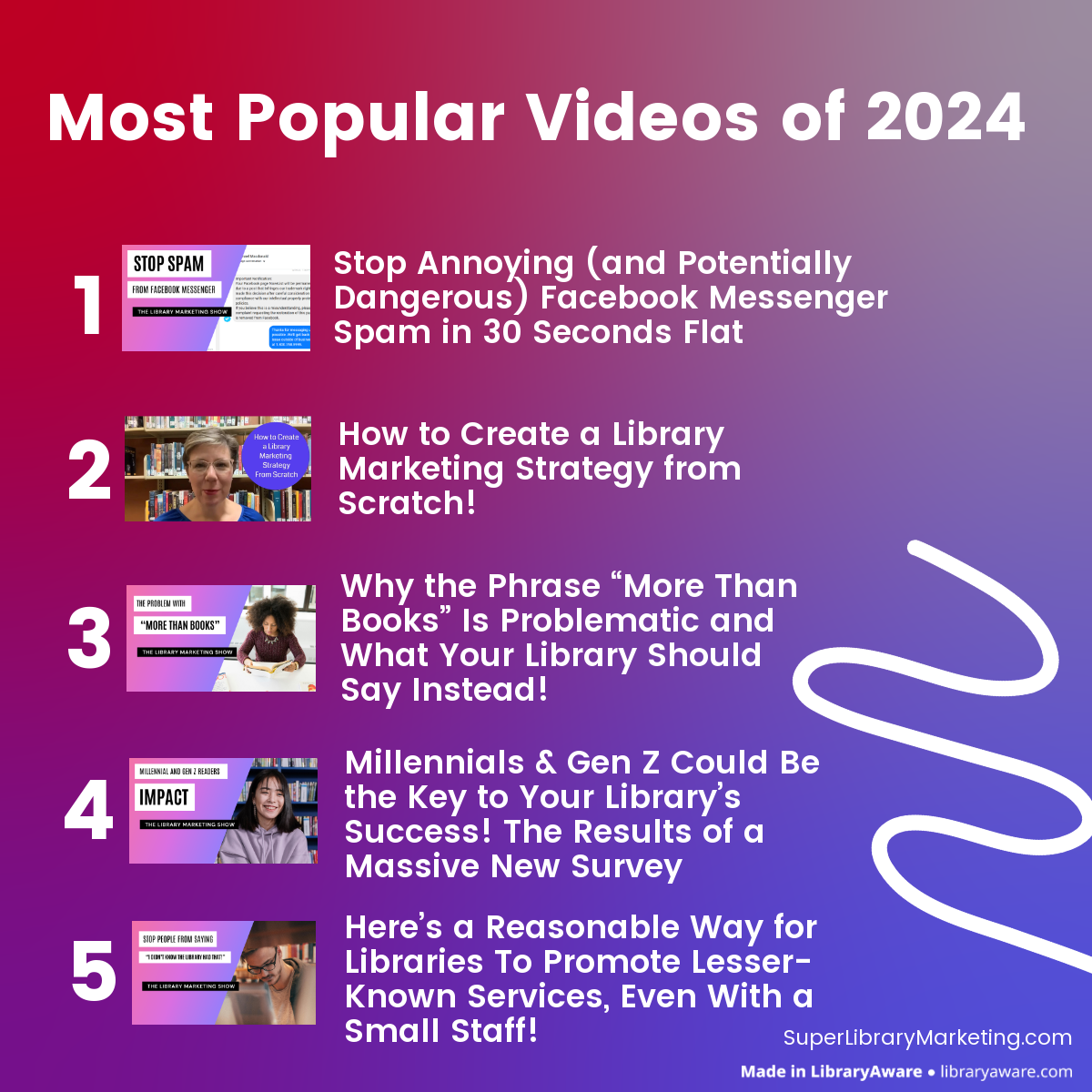
Most Popular Super Library Marketing Articles of 2024
I hope you are looking forward to 2025 as much as I am. We’ll be tackling new library marketing and promotion subjects. Plus I have lots of library profiles on the calendar. You’ll be hearing advice from libraries just like yours. As always, I welcome your suggestions about topics you want to cover. Happy New Year!!
Subscribe to this blog and you’ll receive an email whenever I post. To do that, enter your email address and click on the “Follow” button in the lower left-hand corner of the page. You can also follow me on the following social media platforms:
Photo courtesy Public Library of Cincinnati and Hamilton County
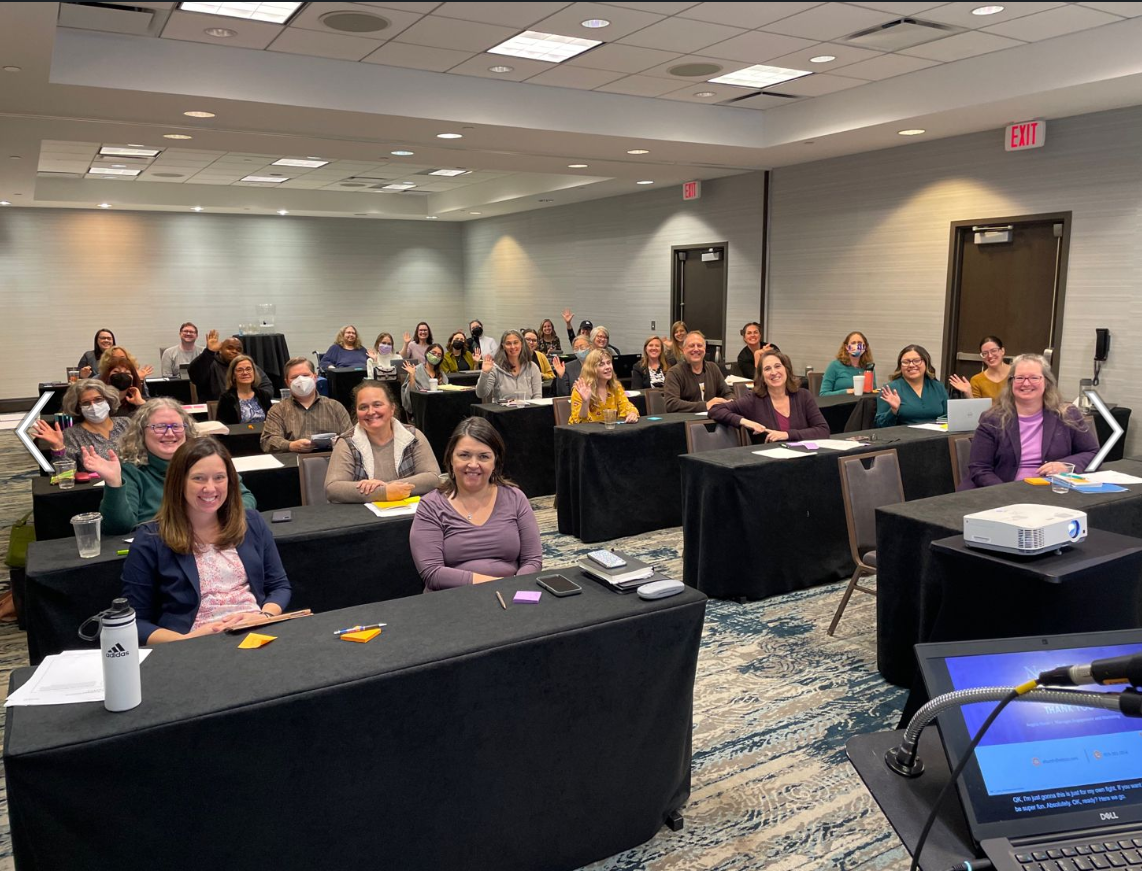
This past week, I spent three-plus hours in a room with 38 library marketers.
We worked together on all those pieces of library marketing that we don’t normally have time for.
We identified our libraries’ strengths and weaknesses. (My weakness: spelling).
We named our libraries opportunities and threats. We set SMART goals.
We identified our target audiences (hint: your audience is not everyone!). And we talked about measuring promotions to replicate success.
These are the fundamentals of library marketing. These are the building blocks that ensure your marketing will be successful.
This was the first-ever pre-conference workshop for the Library Marketing and Communications Conference, which returned in all its in-person glory. Shoutout to the dozens of readers who took the time to say hello to me!
I told the group that I knew, without a doubt, that I would learn something from them. And I did.
My 38 new best friends
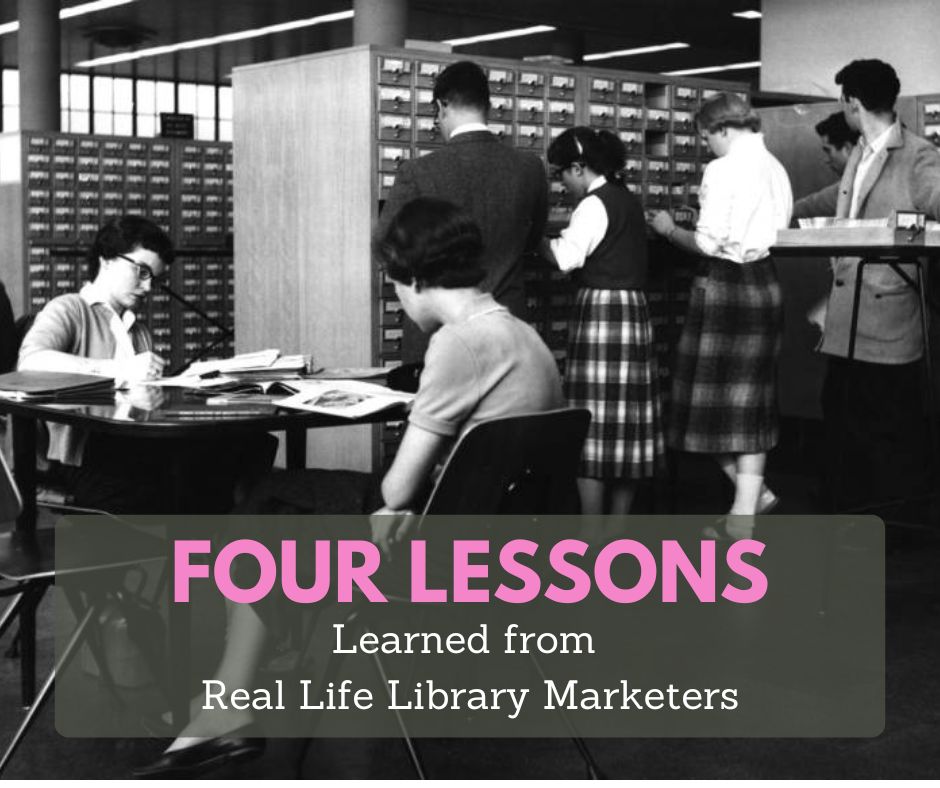
Here are the four things I learned from this fantastic, dedicated, intelligent, creative, and curious set of library marketers.
Library marketers need time to think.
We are all doing too much.
We must make print collateral, send emails, schedule social media posts, attend meetings, make press releases, do outreach events, and then attend more meetings.
I asked almost everyone I met at LMCC how things are going at their library. And I lost track of the number of times the response was, “It’s been a little nuts.”
The idea of setting aside time to consider what is to be done, how it will be done, who will do it, and how it can be more effective, is an entirely foreign concept to most libraries.
We don’t give our employees the time to work through strategic planning. There is no rest. At many libraries, the marketing is done by librarians who also have other duties. There’s never any time to breathe.
And then we wonder why it’s so difficult to create successful library marketing and communications.
That happens because we never take the time to do all the fundamental work that is necessary to ensure our marketing is effective. We’re building houses without foundations.
So, the workshop gave these library marketers permission to ignore email, text messages, chats, and outside distractions. They got three hours to focus solely on building the foundations for strong library marketing.
It’s important to create that space for yourself as a library marketer. I know it’s difficult. If you can’t attend a workshop, you can set aside time on your calendar, like you would for a meeting, to do this important background work.
Put your phone in a locked drawer. Turn off your chat program. You can even leave your physical workspace if you need to. When I worked at the Cincinnati Library, I would hide in the stacks when I needed to do this work.😉
Library marketers face the same struggles.
We did a SWOT analysis exercise, where each library marketer identified their library’s strengths and weaknesses, opportunities, and threats. And then we shared as a group.
How many of these do you recognize as your library’s weaknesses and threats?
A marketing team made up of one person, trying to do ALL the promotions
Difficulty getting people to take an action, like place a hold or register for a program after they engage with marketing
Having too much to do
Having no identifiable library branding
The approvals process
Threats to funding
The list goes on.
During this exercise, the library marketers in the room began to realize that they are not working alone on an island. There are thousands of library staffers out there who understand their struggles because they face those same difficulties. They felt truly seen.
Library marketers have a lot to celebrate.
As much as we struggle to do effective library marketing, we also have many, many, many wins to celebrate. We should be proud of:
Our social media engagement
Our impactful partnerships
The fact that people open and read our emails more than they do for any other industry!
We have so much great content to promote.
We don’t do enough celebrations in library marketing. That’s one of the reasons I started giving out Kudos in The Library Marketing Show and began recognizing libraries via #LibraryoftheDay.
You can help. When you see a library doing great marketing work, give them a shoutout on social media. Better yet, email them to let them know you noticed their amazing promotion. You can also nominate a library for Kudos on The Library Marketing Show.
A little bit of celebration goes a long way to boosting morale for library marketing. We can be each other’s cheerleaders!
Library marketers thrive when they have a friend.
Most of the attendees of the pre-conference session told me they are introverts. But when I asked this room full of strangers to pair up, the room got super noisy!
There were smiles. There was laughter. There were conspiratorial looks and nods of understanding. It was magical.
And it occurred to me… sometimes we just need someone who understands our work.
Or you can message me on LinkedIn. Tell me a little about yourself and I’ll introduce you to a library marketing buddy.
Let’s support and encourage each other. When we work together, we strengthen the library industry and, most importantly, do a better job of providing service to our communities.
Subscribe to this blog and you’ll receive an email every time I post. To do that, enter your email address and click on the “Follow” button in the lower left-hand corner of the page.
Photo courtesy Cincinnati and Hamilton County Public Library
When I was a child, my first pet was a goldfish.
I named it Goldie. Totally original, I know.
Goldie lived in a glass bowl decorated with neon-colored rocks and a tiny treasure chest that opened and closed to release bubbles. I’m sure when I brought her home from the pet store, she thought she’d landed in some kind of 1980s pirate hell.
I liked to watch Goldie swim around her bowl. And she liked to watch me.
When I did my homework or practiced my instrument or danced around my room to Phil Collins, she swam to the side of her bowl and stared at me. She could do this for hours. It would have been creepy had she not been a fish.
The statistic that some say ruined marketing
In 2015, large news organizations, including Time,The New York Times, and The Telegraph reported a single, mind-blowing finding from a new study by Microsoft.
The average human being’s attention span has shrunk to just eight seconds, about the same as a goldfish.
By the way, in researching this post, I found this great blog post from the University of Melbourne about the intelligence of goldfish. Their attention span is way longer than eight seconds.
The reports were grossly inaccurate
It turns out that the news organizations were not actually quoting the results of the Microsoft study. A BBC reporter investigated the origin of the goldfish statistic in 2017.
“All those references lead back to a 2015 report by the Consumer Insights team of Microsoft Canada, who surveyed 2,000 Canadians and also studied the brain activity of 112 people as they carried out various tasks. However, the figure that everyone picked up on – about our shrinking attention spans – did not actually come from Microsoft’s research. It appears in the report, but with a citation for another source called Statistic Brain.”
Simon Maybin, BBC World Service
The goldfish comparison has since been removed from Statistic Brain. And the original study from Microsoft is no longer listed on their website.
But it was too late. The damage was done.
Marketers were told to create short, scannable promotions, use clickbait titles, and make sure our blogs and videos were “snackable.” Promotions began to all look the same.
Nothing stood out. Everything we created lacked depth and interest. And people actually paid less attention to us.
A better way to promote your library
It’s true that humans have difficulty dealing with distractions. But it’s also true that when we are consuming quality content, we can focus.
There are two kinds of attention. Transient attention is a short-term response to a stimulus that temporarily attracts us or distracts our attention. It comes into play when you read a billboard or a sign, or watch a TikTok video.
Then there is sustained attention. This describes your ability to focus on something for an extended period.
We use sustained attention when we binge-watch an entire season of Stranger Things in a single day, read a good book cover to cover in one sitting, or attend a concert, play, or sporting event.
Sustained attention is where great experiences are found. It is also the basis for information processing and cognitive development. It is where real connections are made.
That means that if you can engage your cardholders’ sustained attention, your marketing will be memorable. And memorable marketing is more effective.
How do we do this exactly?
There are circumstances in which you will need to create short promotions that appeal to transient attention. Social media is a perfect example. So are printed signs. A few, well-written but interesting sentences, and an eye-catching design are required for those formats.
But many of your library promotions should aim for the sustained attention of your cardholders. Blog posts and videos are perfect examples.
These pieces of content should be as long as they need to be to tell a good story. That means you can create a video that runs 8 minutes or write a blog post that is more than 1000 words, as long as they are interesting and compelling. They must also contain two key features.
Emotion: The joy of finding a book, the fear of not getting a job, the frustration of another night of homework without any help… these are all emotions felt by our library’s customers. Other people can relate to these experiences and empathize. Emotion activates many portions of the brain, including the sensory, memory, and empathy sectors. The more active the brain is while consuming content, the more likely it is that the listener or reader will remember the story.
Conflict and a resolution. Your sustained attention marketing must include some conflict and a problem or situation that is resolved. Without conflict, your story risks being flat and unmemorable.
How to get started
Pick one tactic to focus on. Your print or online newsletter is a perfect place to start. Take six months and watch as your audience transforms.
I’m speaking from experience here. In my former library job, I turned our print program calendar into a magazine filled with stories.
It took our community members about 10 to 15 minutes to read the magazine. That’s time they spent thinking about the library, empathizing with the patrons and staff in our stories, and committing our stories to memory.
And guess what happened? Our circulation increased. Database usage grew. Our brand awareness grew. We passed a levy to fund renovations to old libraries.
Podcasts are also a perfect example of long-form library content that holds attention. Most episodes last between 20 to 30 minutes. That’s an invaluable time in which you are talking directly to your community!
Your cardholders aren’t goldfish. They are real people with attention spans that can be used to our advantage. You can help them to make a lasting and meaningful connection to the library with longer, interesting, memorable content.
Subscribe to this blog and you’ll receive an email every time I post. To do that, enter your email address and click on the “Follow” button in the lower left-hand corner of the page.
There is a romantic notion attached to wandering the stacks of the library, aimlessly lost in a sea of books for hours on end.
But for a portion of our community, efficiency is the name of the game. They’re hoping to pop into your branch, find what they need, and get out as quickly as possible.
This is especially true in the Next Normal. Some community members just don’t feel comfortable spending a lot of time inside our buildings.
That’s where wayfaring signage comes into play.
Wayfaring signs help direct human traffic, making it easy for people to navigate our buildings. But the signs can do more than move bodies.
Wayfaring signage is a key marketing opportunity for libraries. An efficient and well-planned system of directional signs will make it easier for visitors to discover new or underused portions of your collection or services.
Unfortunately, for many libraries, wayfaring signage is an afterthought. Creating the best signage seems intimidating.
But now, when library buildings are just reopening for full service, we have an opportune time to reimagine and reshape the way the public moves through and uses our physical libraries. And this work doesn’t have to be complicated.
Here are six tips to help you create the traffic flow that is best for your community, your staff, and your library statistics.
Start with a signage audit.
Your first step will be to go through your library and make a list of all the wayfaring signs you currently have. Take photos to go with your list so that you can have an accurate record of your current signage situation.
Next, study how people are using your space. Pick an hour each day for three days and sketch a “heat map” of people entering and exiting your library. You’ll use a blueprint or map of your library. Watch how people enter the building, move through the space, and exit. As they move, trace a line on your map to indicate where they’ve been.
Using your heat map, you’ll be able to see how your current signage is affecting the way people move through your branch. This will help you identify which parts of the building are underused. You can start to imagine how to configure your new signage to move people into those key areas.
For instance, if you have a heat map that shows people are drawn to your computers and your holds shelf but are missing your Makerspace or your fiction collection, you’ll want to consider how you can use wayfaring signage to change the traffic pattern and draw people to those underused spaces.
Less is more.
It seems counterintuitive, but you don’t want to label every single shelf in every single section of your library. Too many signs are a distraction–the eye doesn’t know where to look and the brain gets overloaded.
Use your signs to point customers to underused areas. And consider leaving the other spaces blank. If a space is already popular and your customers know how to reach it, it likely doesn’t need any wayfaring signage.
Rely on a simple, consistent design.
Your library’s brand is your starting point for great wayfaring signage. Your logo use, color selection, font style, and wording should all be within brand guidelines.
Next, decide whether you’ll incorporate symbols, arrows, words, or a mix of all three. Moderation is key, but a well-placed arrow can help ease confusion and build confidence in your timid customers.
If your library has more than one branch, standardize wayfaring signs and signage terminology for all locations. Your customers will know exactly what to look for, no matter which branch they visit.
If your library doesn’t have clear branding, remember this: good signage isn’t fancy. It’s functional. Use a simple, accessible font in a neutral color like white or black with a plain background to make the sign pop. A clean, simple design will also add longevity to your signs and keep them from looking outdated.
You’ll also want to ask yourself whether your signs convey friendliness and helpfulness. Exclamation points, capitalized letters, and red font or a red background may come off as angry or unfriendly.
Ditch the library jargon.
In 2012, a reference librarian at the University of Berkley reviewed more than fifty library usability studies to pinpoint library terms that are generally not understood by the customer. His review uncovered problems with terms like “database”, “e-journals”, “periodical”, “serial”, and “reference.”
Whenever possible, we should be clear when we create our wayfaring signs. Instead of saying “reference”, you can use the word “research.” Instead of “periodicals”, say “magazines.”
Change the sign above your reference desk to say, “Ask us a question here!” The sign at your circulation might read “Check out your books here!”
Train staff to help with wayfaring.
Staff who know to look for signs of confusion in a community member are providing good customer service.
If an employee spots a customer who walks around directionless for a long time or who keeps looking around, staff can delight and surprise the cardholder by gently approaching them and offering to help find what they need.
It sounds simple but there is such an emphasis in our society on self-sufficiency that we often forget, sometimes our customers just need a little extra help.
Be flexible.
Good signage is always a work in progress. Wayfaring signage can be updated, taken down, or added to as your community needs change.
Re-evaluate your signage every 2-3 years. If you find that you need to make some changes, and you began with a simple, consistent design, it will be easy to correct any issues and create new traffic patterns that benefit your library and your community.
Subscribe to this blog and you’ll receive an email every time I post. To do that, enter your email address and click on the “Follow” button in the lower left-hand corner of the page.
It’s sometimes insanely hard to get any new marketing ideas to pass approval in a library.
If there is a silver lining to the COVID-19 pandemic, it’s that the crisis helped libraries to see that there are new ways to market and promote their library. It’s opened the door for experimentation.
Even so, presenting a new marketing or promotional idea is sometimes challenging and intimidating for library staff. I know this because every time I talk with librarians at conferences or in one-on-one consultations, they ask, “How do I get buy-in for this great promotional idea with my supervisors and co-workers?”
Here are the four things you can do to gather support and approval for your great new marketing and promotional ideas.
Tell me about a time you had to pitch a library promotional idea. What was the idea? Did you get a yes or no? What did you learn from the experience? Share your thoughts in the comments.
Thoroughly research and prepare your pitch.
Before you pitch a new idea, do your research. You’ll want to present a clear, concise, and strategic case for your idea. Include the following information in your pitch:
How the work benefits your community and cardholders.
How the work ties into your library’s overall strategy and goals.
How the work will get done by staff.
The timeline for implementation.
What the success measures will be.
What the long-term goals of your promotional idea will be.
How you will handle problems that may arise.
The data to back up your claims.
Here’s an example pitch that includes these points.
You’ve determined that Facebook is not giving you the results you want when you promote individual programs. Registration and attendance at programs have been unchanged or decreasing in the last six months, despite the many posts you create. Instead of using social media, you want to start a targeted e-newsletter sent to the people who frequent each branch in your system. You believe these targeted emails will be more effective because they will reach the audiences most likely to attend these programs.
Your pitch will begin by explaining the problem using data. Include registration, attendance figures, and Facebook engagement figures especially clicks on your registration or event information links. Show how the Facebook posts are getting very little engagement and lead to no increase in registration or attendance.
Next, explain how the move to branch-specific e-newsletters will be better for your community and cardholders because it will offer information about events happening in their neighborhood that are specific to their wants and needs. Look for wording in your library’s strategic plan that will make it clear to senior leaders that you are working to fulfill the strategic goals by offering community-based access to information.
Next, make the case that e-newsletters are a more efficient use of your time because they will be more effective and targeted. Again, be specific when you talk about how long it takes to create a Facebook post versus an e-newsletter.
Now, talk about the ways you’ll measure success for your new e-newsletters: increases in registration and attendance, plus open and click rates on the emails. Be specific and use numbers. This will show that you are confident that your new idea will work.
Spend a few moments talking about your long-term goals: how many new subscribers do you want to get in the first six months or year? How much would you like to see registration and attendance grow? What other library services can you imagine promoting using your e-newsletters?
Layout a timeline: when do you think you can launch your first e-newsletter? How long will it take to grow your subscription list? How often will you send these e-newsletters?
Finally, talk briefly about problems you may encounter and how you’ll handle them. What program will you use to send the e-newsletters? Who will create them if you’re sick or on vacation?
Review and rehearse.
Review your plan several times. It’s a good idea to leave a few days in between each review of the plan, to let your ideas marinate. You may think of new benefits or pitfalls during those breaks. You’ll want to be fully prepared to answer any questions and defend your idea with confidence.
Next, practice presenting your idea to a friend at your organization. Choose someone you trust to give you honest feedback about your idea and your presentation.
You might also consider recording your pitch on Zoom or another video recording program. Check to make sure you are speaking slowly and clearly. Evaluate your tone of voice, eye contact, and body language during your practice pitch.
Pitch strategically.
Find a time when your supervisor won’t be rushed. They’re more likely to listen to you when they have time to truly consider your idea.
Pick the right day of the week for your pitch. For example, Mondays are often busy and stressful for bosses. Your supervisor may be more negative at the beginning of the week and it’s likely not the best day for your pitch.
When you pitch, be mindful of your body language. If you are sitting in a chair, don’t pivot back and forth nervously or jiggle your legs. Sit still, but upright, and with confidence.
If you are standing, try separating your legs about shoulder-width apart. This is a “power” pose that will help you maintain good posture and will subconsciously give the impression that you know what you are doing… even if you don’t feel that confident!
If the answer is no, don’t necessarily give up.
A “no” doesn’t have to mean the end of an idea, especially if you think it’s beneficial to your library and customers. There are no bad ideas–just ideas whose time has not yet come.
Write yourself a note in your work calendar to revisit the idea in six months. Keep your eyes open for new opportunities to present your ideas in a different format.
Subscribe to this blog and you’ll receive an email every time I post. To do that, click on the “Follow” button in the bottom left-hand corner of the page.





 Super Library Marketing: Practical Tips and Ideas for Library Promotion