Search

Super Library Marketing: Practical Tips and Ideas for Library Promotion

Tag

Uncategorized

How to Get Stuff Done Without Losing Your Mind: My Top 6 Time Management Tips for the Busy Library Marketer

Photo courtesy Public Library of Cincinnati and Hamilton County

You are pressed for time.

I know it. I have the receipts.

Every time I lead a Learn with NoveList course, I ask a question of my audience. What’s the hardest part of library marketing?

And in every single class, the answer is always the same: Finding the time to do the work.

And yet, you’re expected to crank out library promotion after library promotion. You are asked to increase visitors, program attendance, circulation, and donations to your library. And you are often doing this promotional work while doing other things like answering reference questions, shelving books, filling holds, and cleaning the bathroom.

It’s exhausting. And sometimes, it seems downright impossible.

Time management is hard. But the benefits are well worth it. Time management helps you achieve bigger goals, reduces procrastination, and increases productivity.

I was fortunate, early in my library career, to have a mentor who helped me get control of my schedule and learn how to prioritize my work. It’s now my turn to pass on the six most effective tips for managing your time without losing your mind.

Tip #1: Schedule everything.

My calendar is more than a place to keep track of meetings. It serves as the hub for all my work tasks.

If you need time to focus, research, or think about something, schedule it in your calendar. Schedule the time you’ll be spending at the front desk. Schedule the time it takes you to work on holds or shelve books. Schedule the programs you’ll lead. Schedule time to read your email. Schedule everything.
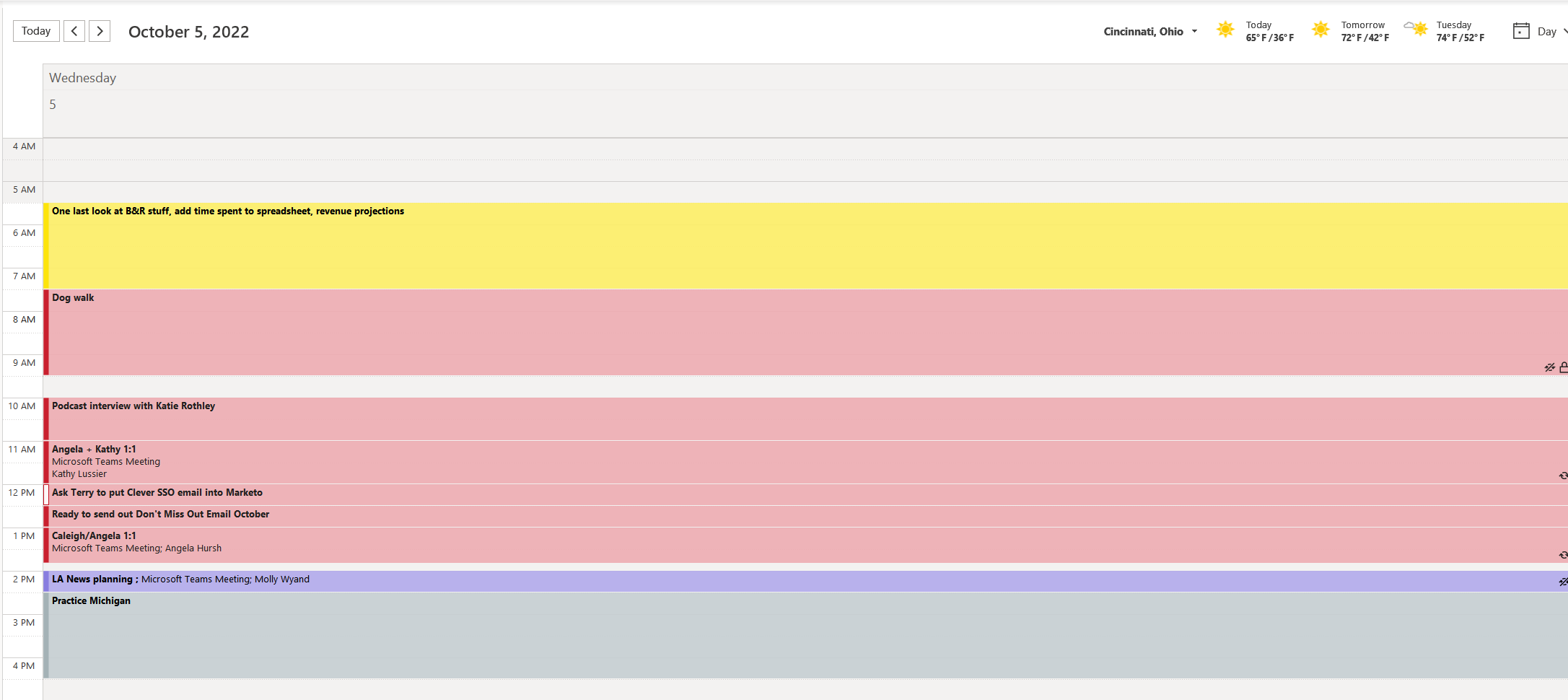
Here is a screenshot of my calendar. I use color coding to help me keep track of important, ongoing projects. Notice I even schedule my daily walk!

This method makes it clear what you’ll be working on each day. It also keeps you from forgetting tasks. When I’m given an action item from a meeting, I immediately go to my calendar and schedule time to do that work.

I also enter recurring tasks in my calendar, so I can be reminded to add those tasks to my wish list (see tip #6) when the time to do them arrives. This leaves me more time to focus on tasks for today, and not worry that I’ve forgotten to do something important.

Tip #2: Arrange your daily tasks in order of difficulty.

The most difficult or important thing on your to-do list should be the first thing you get done every day. This method creates momentum and frees up the rest of your day so you can do easier tasks or tasks you enjoy more.

Tip #3: Block out distractions.

If you need to concentrate, do whatever you have to do to get focused. A study at the University of California, Irvine found that, once you get distracted, it takes 23 minutes to regain focus. That’s a lot of time.

When you need to remove distractions, you should:

  • Shut down your email.
  • Shut down Microsoft Teams, Skype, or whatever program your library uses for internal messaging.
  • Close your website browser.
  • Turn your phone over so you can’t see the screen and put the ringer on vibrate.
  • Go to another location. This is especially important if your workspace is in a shared office or near patron areas of your library. It is okay to create physical barriers between you and your distractions!

Tip #4: Say “no” to be more efficient.

If you’re asked to add to your library promotional schedule but the addition does not drive the overall strategy of the library or falls outside the boundaries of your documented marketing strategy, say no. Saying no gives you time to really concentrate on the pieces that will help your library the most. Your work will be better the LESS you do.

I understand this is extremely difficult to do. I encourage you to bookmark this short but powerful essay on the power of saying no in marketing from Joe Pulizzi. I re-read this piece when I need a little help saying no!

Tip #5: Take creative breaks.

No one can churn out tasks, one right after the other, all day long. Creative breaks will give your mind a rest and help you focus when you need to. Walk the stacks or go for a walk around the block. Get away from your desk for five minutes to stretch your legs and gather your thoughts.

Tip #6: At the end of every day, celebrate what you got done and make a wish list for tomorrow. 

Many, many years ago, I heard singer Wynonna Judd say something that I think about almost every day. She was discussing her schedule, and how easy it is to get to the end of the day and to feel like a failure. That’s because many of us focus on what we didn’t manage to get done, instead of celebrating what we did accomplish.

I took that to heart. At the end of the day, I spend a few minutes paying homage to the work I did, even if I didn’t make it to all the tasks I intended to do.

Then, I make a “wish list” of tasks for the next day. Notice I don’t call it a “to-do list.” That’s because library staff must be flexible and deal with unexpected work.

As you make out your “wish list,” include every task: meetings, lunches, phone calls, calculations, reports, writing assignments–the whole deal. At the end of today, go through your wish list and highlight three things that absolutely must get done. Those will be the first three things you tackle the next day.

Be protective about your wish list. If someone emails you with a task and it isn’t urgent, put it on tomorrow’s list.

And finally, do not beat yourself up if you don’t finish every task on your list. Move uncompleted items to the wish list for the next day.


More Advice

14 Completely Random and Free Tools You Need in Your Life To Make Your Library Promotional Work Easier

Four Important Project Management Lessons Youโ€™ll Need to Survive the Next Year of Library Work

Subscribe to this blog and youโ€™ll receive an email every time I post. To do that, enter your email address and click on the โ€œFollowโ€ button in the lower left-hand corner of the page.
Your Website is the MOST Important Gateway to Your Library Right Now. Here Are Eleven Quick Design Tweaks to Make It Amazing.

Photo courtesy Public Library of Cincinnati and Hamilton County

Your library website is getting quite the workout right now. In fact, during this pandemic, your website is the most important connection between your patrons and your services.ย It’s your digital doorway. It’s your news center. It’s a promotional tool. So, it needs to be welcoming and easy to navigate.

When the pandemic is finally over, your website will still be your most valuable digital asset. In fact, the design and layout of your library website is critical to your library’s ongoing success. Bad web design will make your library look outdated and inefficient. Good web design will keep people coming back. (Scroll down to see some examples of great library websites.)

You don’t have to completely overhaul your website to improve the user experience. There are 11 easy ways to improve your website.

First, you need to enlist the help of people who actually use your website.

Get input from patrons

Create a small focus group. You can do this remotely. Ask for patrons to join your focus group by email or on social media. Set up an email box where they can submit their request to join. Ask them to include their age, their comfort level with technology, and their need for accessible website features. This will ensure you have a well-rounded sample of patrons from different age and ability groups. Choose a larger sample than you will need, keeping in mind that there will be people who will want to join the focus group but won’t complete your feedback survey.

Once you have decided which patrons will be part of your focus group, create your feedback survey using a free platform like Survey Monkey or using a Google Form. Ask your focus group to take a close look at your website and answer these six questions:

  • What is the first thing your eye is drawn to?
  • How easy was it to find the items you want most at the library?
  • Does our current color scheme to draw attention to important services or detract from your experience?
  • Do the images we use cause you to feel any certain emotions? Do they make you want to use our services?
  • Do our web pages feel crowded or do they contain the right amount of information?
  • Can you easily read the text on our website?

Once you compile their feedback, you’ll have a clear picture of what changes you’ll need to make to ensure people keep using your website. And you’ll be ready to make your first six tweaks.

Create a focal point. Identify your library’s number one priority. Make that the first thing people notice when they log onto your site.

Identify the landing pages your patrons most frequently visit on your site. Put links to those pages in the header navigation bar or in a layout that makes it easy for your patrons to find.

Adjust colors to make sure patrons can find what they need. Make sure your website color palette is in line with your brand.

Adjust the images on your website. Do a diversity audit to make sure the images you use accurately represent your community. Look for images that evoke positive emotions like joy or surprise.

Reduce the amount of text, particularly on your homepage. If a service requires a longer explanation, direct patrons to a service landing page with more information.

Increase the font size on your homepage and make sure the font and the colors are accessible. I use this website to check color contrast for Web Content Accessibility Guidelines. And here is the Bureau of Internet Accessibility’s guide to picking an accessible web font.

Five more ways to optimize your library website

Prominently feature your e-newsletter opt-in and social network icons. Email and social media play a critical role in engaging your library patrons. Make sure your community can easily find how to connect with you.

Use easy language. Are you using a lot of library jargon or professional terms on your website? One word can make a huge difference. For example, a simple change from “periodicals” to “magazines” may help many people to find your downloadable magazine collection, which will increase circulation and engagement. So take the time to evaluate what you call things on your website.

Make a landing page for each of your services.ย  Many visitors will not see your home page. They’ll come to your website straight from a Google search or a link you provide on social media or in an e-newsletter. So group your services and create landing pages for each category, like workforce development or educational help.

If you do a good job with your landing pages, you’ll increase the chances that your library will be found in Google search. You’ll also increase the chances that a patron searching for services will find exactly what they need quickly. That’s good customer service! And as you create those landing pages, consider this next step.

Have a domain strategy. A good URL structure is short and includes a target phrase. For example, my former employer, the Public Library of Cincinnati and Hamilton County,ย  created a page for their summer reading program, CincinnatiLibrary.org/Summer. This URL makes promotion easy (people can remember that URL when they see it on print materials or digital signs) and ensures the site is search engine friendly.

Get rid of all your dead-end pages. Make sure that every page leads to an action that takes a cardholder to another page. This increases the chances that someone will spend more time and take more actions on your website.

Great examples of library websites

Saint Paul Public Library: The colorful, clear images and simple text make navigation easy. Notice they’ve placed the things most library lovers search for–catalog, events, and the calendar-right at the top. I love that their FAQs are right on the homepage.

Clinton Macomb Public Library: A great example of how to position your social media icons in a prominent location on your homepage.

Prince George’s County Memorial Library: Icons draw the eye to key areas. Their most important service areas are filed like cards on the homepage, making it easy for users to find exactly what they need.

Ann Arbor District Library: A modern design with friendly, casual language and easy-to-spot newsletter signups and social media icons.

Kalamazoo Public Library: Their community clearly values the collection, and Kalamazoo has put the best titles in all formats front and center on their website.

Qatar National Library: This library’s website reminds me of Pinterest, with their top features displayed in easy-to-navigate squares. Their use of images is top-notch.

You might also find these posts helpful

How Your Library Can Use Google Ad Grants to Supercharge Your Website and Reach a Huge Untapped Audience

Four Instant Ways to Improve the Most Valuable Page on Your Library Website

Latest Book Reviews

How to Be an Antiracist by Ibram X. Kendi.

Rodham by Curtis Sittenfeld.

Find more 60-second Book Reviews here.

Subscribe to this blog and youโ€™ll receive an email every time I post. To do that, click on the โ€œFollowโ€ button in the bottom left-hand corner of the page. Connect with me on YouTube, Twitter,ย Instagram, and LinkedIn.ย 

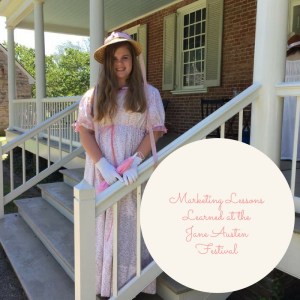
Three Marketing Lessons Learned at the Jane Austen Festival

I am a fan of Jane Austen. I don’t have to extol the virtues of the Regency-era authoress to you–you work in a library. But I do want to share an experience I had this weekend and the marketing lessons I learned from it.

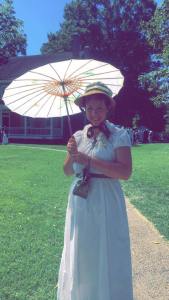
For the fourth year, my daughter and I attended the Jane Austen Festival in Louisville, Kentucky. This is the largest Jane Austen festival in North America and it is amazing for many reasons. The dresses, the food, and the vendors are all amazing and period-authentic. But this year, I found that I was hyper-aware of the marketing aspects of the festival. This is the 9th year for the festival and they are doing everything right, in my opinion. Here are the three big marketing lessons I learned.

Build your fan base over time and don’t discount the wonderful ways they can market for you. They might not be “influencers” in the traditional marketing sense, but your loyal, adamant, and devoted fans are a powerful marketing tool. A group of people who love you and your products will do more free marketing for you than any ad you can ever buy.

The Jane Austen festival boasts thousands of attendees every year and although they do some promotional media on local newspapers, TV, and radio stations, I haven’t ever seen a single ad buy. They don’t need to. The event grew quickly through word-of-mouth. Jane fans tell other Jane fans, in person and online. At the afternoon tea, I spent half an hour giving a new attendee from Indiana the lowdown on what to see, which vendor tents to visit, and where to get a Regency-style outfit for next year. No one paid me! There’s just an excitement that’s contagious and that loyal fans want to share.

The Jane Austen Society of Louisville has a Facebook page with more than 1200 members, including myself. Only about 10 percent of those members belong to the society but everyone who likes the page will share news about the festival with friends across the world. And fans will share recommendations for costumers, tea merchants, and other vendors, providing business even after the three-day festival has ended.

In addition, festival organizers give a place online for fans to talk and post photos and videos after the event.ย The festival organizers and the smart vendors like and comment on those photos, making festival goers feel valued and special.

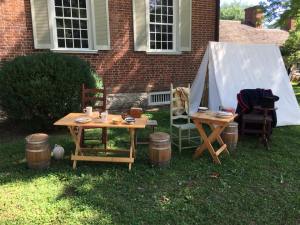
Creating an immersive experience leaves a lasting impression. From the moment you step onto the grounds of Locust Grove, you feel like you’ve been transported to Jane’s era. Many attendees dress in authentic Regency wear. People bring picnic baskets and full tea sets and eat on the lawn using authentic place settings and utensils–no plastic sandwich bags or paper napkins here. In a sea of brightly colored frocks, parasols, fichus, and top hats, you can’t help but feel like you’re part of Jane’s world and that leaves a lasting impression.

The festival organizers go out of their way to complete the immersive experience by handing out programs and putting up signs in hand drawn authentic regency font. I know it’s just a font but it sure does a lot to capture the mood! All the vendors set up their wares inside beautiful white tents and many will use signs that say “Bills of Credit Accepted” instead of the more modern credit card signs. It may sound insignificant but it’s those little touches that extend the mood of the festival and make it an enjoyable and memorable experience for all.

Content marketing works. The entire customer journey for the Jane Austen festival only lasts a month. Tickets don’t go on sale until about 45 days before the event. But the society spends the whole of the year prepping Jane fans by posting articles about Jane, talking about Austen spin-off books, sharing photos and videos about Jane Austen and the Regency era, and holding smaller events with the Jane Austen theme. All this Jane talk serves to educate potential festival goers about the era and the author and builds excitement for the main event.

Subscribe to this blog and you’llย receiveย an emailย every time I post. To do that, click on “Follow” button on the bottom left-hand corner of the page. Connect with me on Twitter and Snapchat–it’s where I talk about library marketing! Iโ€™m @Webmastergirl.ย Iโ€™m also on LinkedIn, Slideshare, Instagramย and Pinterest.ย Views in this post are my own and do not represent those of my employer.

Why Libraries and Content Marketing Make the Perfect Couple: A Content Marketing Institute Interview

A crazy thing happened to me this week. Content Marketing Institute published a profile I did a few weeks ago with them. Each week, they highlight attendees of their big, fabulous Content Marketing World conference and I was lucky enough to be in the spotlight this year.ย Libraries and content marketing are the perfect combination!

You can read the interview here.ย Thanks CMI!

angelahurshmedal

Subscribe to this blog and you’llย receiveย an emailย every time I post. To do that, click on “Follow” button on the bottom left-hand corner of the page. Connect with me on Twitter and Snapchat–it’s where I talk about library marketing! Iโ€™m @Webmastergirl.ย Iโ€™m also on LinkedIn, Slideshare, ย Instagramย and Pinterest.ย Views in this post are my own and do not represent those of my employer.

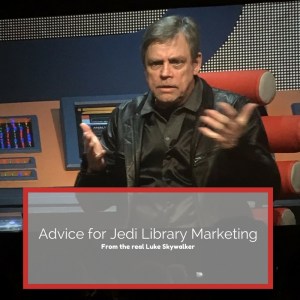
Advice for Jedi Library Marketing from Luke Skywalker

hello-there

I was in the same room as Luke Skywalker.

When I heard Mark Hamill was keynoting Content Marketing World, I may or may not have squealed out loud. Repeatedly.

When he walked onto the stage, the energy in the room went up by about 1000 megawatts. 4000 marketers got to their feet and cheered. I could not post anything on social media for 20 minutes, there was such a drag on the WiFi from everyone else!

What the heck was Luke Skywalker doing at a marketing conference? Show business is all about marketing and actors are more than men and womenย who stand up in front of a camera and read lines. They have to know how to appeal to audiences through unique storytelling and emotional engagement. That’s the oldest and purest form of marketing.

Hamill is every bit as gracious as you would imagine. Andย he had five great insights that apply to library marketing.

Love your job or don’t do it.ย Mark Hamill loves making and marketing films. He told us about how he enjoyed coming to the publicity department to watch the studioย create marketing materials to promote the Star Wars series. During the latest movie, he thought of new ways to market the movie on Twitter, including a funny incident where he promised to unveil the trailer for Star Wars: Episode VIII on a certain day. When the day arrived, he shared a video of his trailer… his dressing room trailer. “How they thought we’d have a trailer ready for a movie we hadn’t even begun to shoot yet, I don’t know,” said Hamill. ย Hamill said he was fascinated by the creative process involved in marketing a movie series with super fans who salivate, analyze, memorize, and deconstruct every single line. He says that energy made the work he had to do on camera more exciting. When you love your job and you are passionate about it, your library will benefit. If you have the privilege of hiring staff, make sure they’re passionate and energetic too.

Don’t be afraid of change or learning new things. ย George Lucas told Hamill, “The thing is, in show business, nobody knows anything. The business isย always changing and evolving.” That’s true for libraries too and Hamill says thatโ€™s a confidence booster for all of us. You need tenacity inย anyย business, including library marketing. Said Hamill, “Sometimes I think tenacity is more important as talent, or at least as important. Can you survive all the failures?” In the end, Hamill says you must believe in yourself, work hard, never give up, and you can do anything.

If you hit a creative wall, take a break from it. You don’t have to have all the answers all the time. The answers will come to you when you arenโ€™t thinking about it.ย Try to imagine what people want, keeping in mind that those wants may be very different from what your library is planning to promote. ย Your marketing should create an emotional response in yourย cardholders. If it isn’t doing that, go back to the drawing board and keep thinking! Hamill says he also always tries to find aย way to re-purpose old ideas withย hisย own lens. Everyone comes at things with a different perspective. Follow your instincts. Trust yourself.

Understand the different facets that go into your library’s operation and function. If you’ve never worked on the front line with staff, take a few hours to job shadow someone at a branch. When you have a chance to sit down with a senior leader, ask questions about their job, the concerns, their hopes, and the direction they want to see the library take. Hamill wants us to remember that what we do is composite art. Marketing isn’t a disconnected endeavor. It supports and is supported by countlessย other people within the library system. You’ll do your best work when you know how all the pieces fit together.

Know that you’ll never be satisfied. Justย aim to be less dissatisfied.ย Your work will never be perfect. The best you can hope for is to improve with each promotion. You never know what great thing is waiting for you around the corner. Hamill left us with this parting thought: “I never expected to be in a galaxy far, far away as I rocket toward Social Security, thatโ€™s for sure.”

Subscribe to this blog and you’llย receiveย an emailย every time I post. To do that, click on “Follow” button on the bottom left-hand corner of the page. Connect with me on Twitter and Snapchat–it’s where I talk about library marketing! Iโ€™m @Webmastergirl.ย Iโ€™m also on LinkedIn, Slideshare, ย Instagramย and Pinterest.ย Views in this post are my own and do not represent those of my employer.

A WordPress.com Website.

Up ↑