Angela Hursh leads an outstanding team of marketing and training professionals at NoveList, a company dedicated to helping libraries reach readers. A 2023 Library Journal Mover & Shaker, she has also created courses on LearnwithNoveList.com designed to help library staff learn how to create effective marketing. Before her job at NoveList, Angela led the content marketing team for the Public Library of Cincinnati and Hamilton County. She also has more than 20 years of experience as an Emmy-award-winning broadcast TV journalist.
In this episode, we’ll go through the three big new stories on social media that impact your library work. This includes new Pew Research on social media use, YouTube’s overview on how it recommends videos to viewers, and a new feature for Facebook posts.
Kudos in this episode go to the Siouxland Libraries for their new library card designs.
Do you have a suggestion for a topic for a future episode? Want to nominate someone for kudos? Let me know in the comments. And subscribe to this series to get a new video tip for libraries each week.
Every night before bed, I watch TikTok for about 20 minutes. The videos in my “For You” feed consist of funny animals doing hilarious things, fashion and makeup (I really miss dressing up!) and books.
I’m outside of the platform’s average demographic in terms of age, but I love the original and creative content. I find it inspiring.
I have only created a few TikToks to share. It takes a lot of effort and time. And that is why I usually hesitate when I am asked if libraries should be posting on TikTok.
Consuming TikTok content is easy. Making it is harder.
But in the past year, TikTok has really taken off. As of March 2021, the app has 689 million active users worldwide. By comparison, Facebook has 2.8 billion users and Twitter has 192 million active daily users (Twitter doesn’t report monthly use).
TikTok says it’s users are roughly 60 percent female and 40 percent male. Most of the global users are under the age of 34 years.
But here’s the kicker. The average user spends about 52 minutes a day on TikTok. By comparison, the average user spends 53 minutes a day on Instagram, 33 minutes a day on Facebook, and six minutes a day on Twitter.
It took Twitter and Facebook years to get to the same level of use that TikTok enjoys now, so clearly people love TikTok. But does that mean that your library should spent time and energy posting to TikTok? And if you do, will you see any measurable marketing results?
Here are some things to consider as you make that decision.
The TikTok algorithm is kinder to libraries.
TikTok’s algorithm offers more organic growth potential than any other major social platform.
TikTok shows a new post to a small group of people (both followers and non-followers) who are likely to be interested in the content. It shows up on a user’s “For You” page. If that content gets a lot of engagement on the “For You” page, TikTok will then expose the post to more people. As the content continues to drive engagement, the algorithm keeps adjusting to show it to a wider and wider audience.
By contrast, other platforms like Facebook and Instagram filter content in feeds. Facebook and Instagram have lots of rules in place that make it unlikely that your content will ever be seen by all your followers. And getting Facebook and Instagram posts in front of non-followers is nearly impossible unless your library is willing to pay to boost a post or buy an ad.
There isn’t as much content about libraries and reading.
Although TikTok has a lot of users, the competition levels in the feed for the kind of content your library would likely create is very low. There are really only a handful of libraries posting to the platform right now.
That means your content has more of an opportunity to catch attention and gain popularity on TikTok than on other platforms.
TikTok only lets you add links in your bio.
As is the case with Instagram, you can’t embed a directly clickable link in your TikToks. If you have a call to action that requires a link, you’ll have to add it to your bio.
Great content on TikTok doesn’t equal effective marketing.
The TikTok algorithm does not take the location of your library into account when it shows your content to followers. That means many of your most engaged followers may live outside your service area. Your library may have a huge, highly engaged TikTok following without any measurable marketing results.
It takes time to learn to create TikTok content.
I found creating my own TikToks to be time-consuming and a little confusing. And I think I’m adept at social media, plus I have video editing experience!
That said, if you have staff who are driven to post on TikTok, there are lots of great tutorials on YouTube about how to use the various creative tools. Some of the best are this one by Katie Steckly and this one from Social Media Examiner.
You can get super creative on TikTok.
TikTok has more tools to create unique videos than most other social platforms.
For example, the duet feature lets you make reaction videos in response to what other users post. You can also add music and special effects to posts.
Each of these tools adds a layer of difficulty and a measure of time in creating content. But they also increase the chances that your TikToks will be engaging and impact more people.
Advertising on TikTok is expensive.
Right now, the cost of buying an ad on TikTok is $10 per 1000 views, which doesn’t seem like much. But the platform requires you to spend a minimum of $500 per campaign, which immediately prices it out of the range of most libraries.
What to do if you decide to try TikTok
Set an experimental period of one to two months.
Decide on a consistent posting pattern, like once a week or every Monday and Friday. Then stick to it for the entirety of your experimental period.
Keep a record so you can track how your posts are doing. Start a spreadsheet and record the type of post you create, when you post it, how long your video is, what affects you use, and how much engagement you get. If you are using your videos to drive attendance at an event or drive circulation, be sure to track that.
At the end of your experimental period, you’ll have enough data to determine if it’s worth your library to continue to post on TikTok.
I also suggest you read this article by Kelsey Bogan, a library media specialist at Great Valley High School, for the perspective of a library staffer who is using TikTok. Scroll to the bottom for a great list of libraries and book accounts to follow on TikTok for inspiration.
What to do if you decide NOT to try TikTok
Get on the platform and claim you library’s name anyway, in case you change your mind later. This is especially important if you use the same handle for all of your library’s social media accounts. Save the name and password you create.
Libraries, librarians, and book-related accounts to follow on TikTok.
Subscribe to this blog and you’ll receive an email every time I post. To do that, click on the “Follow” button in the bottom left-hand corner of the page. Connect with me on YouTube, Twitter, Instagram, Goodreads, andLinkedIn.
In this episode, I take a question from an author, who asked about how she can work with libraries to promote her appearances and book talks at the library.
Kudos in this episode go to the Vancouver Island Regional Library for their innovative e-sports competition.
Do you have a suggestion for a topic for a future episode? Want to nominate someone for kudos? Let me know in the comments. And subscribe to this series to get a new video tip for libraries each week.
This week, I heard a truism about email marketing.
Marketing expert Ann Handley said, “Email is the only place where people, not algorithms, are in control.”
When the pandemic struck, email became the only reliable way libraries had to communicate with their patrons. More libraries are sending email newsletters. And they’ve gotten good at the basics.
So, it’s time to take the power of email newsletters to the next level.
Focus less on the news, more on the letter
Handley has one of the best newsletters I’ve ever seen. It stands out because she focuses less on the news part… and more on the letter. Sign up, and you’ll see what I mean.
What I’ve learned from Handley is that your newsletter is your opportunity to directly connect with cardholders in their inbox. What does your community need? What can you provide for them? And most importantly, how can your library demonstrate the way it is different than any other organization?
Ann recommends you lose the marketing voice for your newsletter. Instead, write as you would if you were trying to convince a friend or family member to use the library. Be personable and relatable. Your authentic voice will connect to your readers.
New topic ideas for your library email newsletter
Your library newsletter can and should contain more than book recommendations and announcements about programs and services. Here is a list of ideas that go beyond the typical library information.
Send simple how-to instructions for using your library.
There are all kinds of opportunities to share instructions. Write simple steps for using one of your services. Or share instructions on how to complete a task outside of your library, like fill out an absentee ballot form or make a COVID-19 vaccination appointment.
Step-by-by-step instructions shared in your newsletter will help you build a relationship and form trust with your community. It demonstrates your library’s ability to find solutions to your community’s most pressing problems.
Answer frequently asked questions.
Ask your front line staff, your chat service operator, or the person who handles your library’s main email inbox to share the questions they get most frequently from the public. Then, answer them in your newsletter!
Your email audience will learn new things about your library. You’ll make your library more accessible. And you’ll build trust with your community by proving your library is a place where answers are found.
Promote blog posts.
Use your newsletter to promote your blog and get more views.
Take the first few lines of your post and use them to tease your newsletter audience. Include a photo or graphic from the post to tie your newsletter into your blog. If you send one newsletter a month but post several blogs, tease each post and include a link.
Your newsletter audience will be introduced to a new way to interact with and get news from your library. It will also give you valuable information about which blog posts your newsletter audience is interested in.
For instance, if you see that your newsletter audience always click on links for blog posts about genealogy and history, then you’ll know to write more posts on that topic and include them your next newsletter.
Promote your videos.
If your library is creating and posting videos on YouTube, Facebook, Vimeo, or another platform, your newsletter is the perfect place to give those videos an extra boost. As with the blog posts, share a sentence or two to entice your audience to click on a link to the video.
One note: Include a link to the video on the original platform to which you published. Don’t embed the video in your newsletter. Many email services view embedded video code as suspicious, and will mark your email as spam.
Create lists.
There’s a reason Buzzfeed articles are so popular… they contain listicles, which are articles that feature a numbered list (Hey, this post is a listicle of sorts!) A list is easy for your audience to digest and remember.
Create a top ten list of anything: your staff’s book picks, the ten things a patron can create in your Makerspace, the best albums to download from the library… the possibilities are endless. Your email readers will love it. You can even ask your readers to suggest a topic for a list in your next email newsletter!
Share social media content in your newsletter.
If you library had a popular social media post, you can replicate it by adding it to your newsletter.
For instance, if your library posted a book review that got a lot of comments, likes, and shares, put that post into your newsletter, along with a link so your patrons can visit the social media platform, see the original post, and interact with it.
Likewise, when your library gets a great piece of user-generated content, share it in your newsletter as well as on your social media audience.
Share testimonials and reviews.
We know that trust is built between your community and your library through social proof: namely, other community members talking about how they’ve used and loved your library. So, when you get those reviews and testimonials, insert them into your newsletter.
You should also ask your email readers to share reviews and testimonials of your library. Include an easy way for them to send you feedback on what they love about your library. Then share those in your next newsletter and on social media.
Advocate your library.
As a library staffer, you likely know about all the good work your library is doing. But your community has a very limited understanding of the value of your work.
Your newsletter is a great way to begin to share examples and stories of how your library works to make your community a better place. Share short tidbits or an infographic to explain your library’s value.
Subscribe to this blog and you’ll receive an email every time I post. To do that, click on the “Follow” button in the bottom left-hand corner of the page. Connect with me on YouTube, Twitter, Instagram, Goodreads, andLinkedIn.
In this episode, I talk about a crazy story of monkeys on the loose in Cincinnati and introduce the concept of newsjacking. I share the four questions you should ask yourself before you use newsjacking to promote your library.
Kudos in this episode go to Patchogue-Medford Library for their baby chick cam!
Do you have a suggestion for a topic for a future episode? Want to nominate someone for kudos? Let me know in the comments. And subscribe to this series to get a new video tip for libraries each week.
During quarantine, my 20-year-old daughter asked me to watch a reality series with her. It features her favorite Korean boy band, Stray Kids.
I was touched that she wanted to spend time together. I couldn’t say no, especially when I know she’ll be moving out of our house soon.
So during those dreary days of lockdown, I had something to look forward to: the point in the evening when she and I would make tea and snacks, and crawl into her bed to watch the members of Stray Kids compete to see who could sled down a hill holding a pitcher of water without spilling it or who could catch the most fish.
I became a fan of their music. And because I work in marketing, I started taking note of the way the promotion for Stray Kids, and other Korean musical groups, is coordinated.
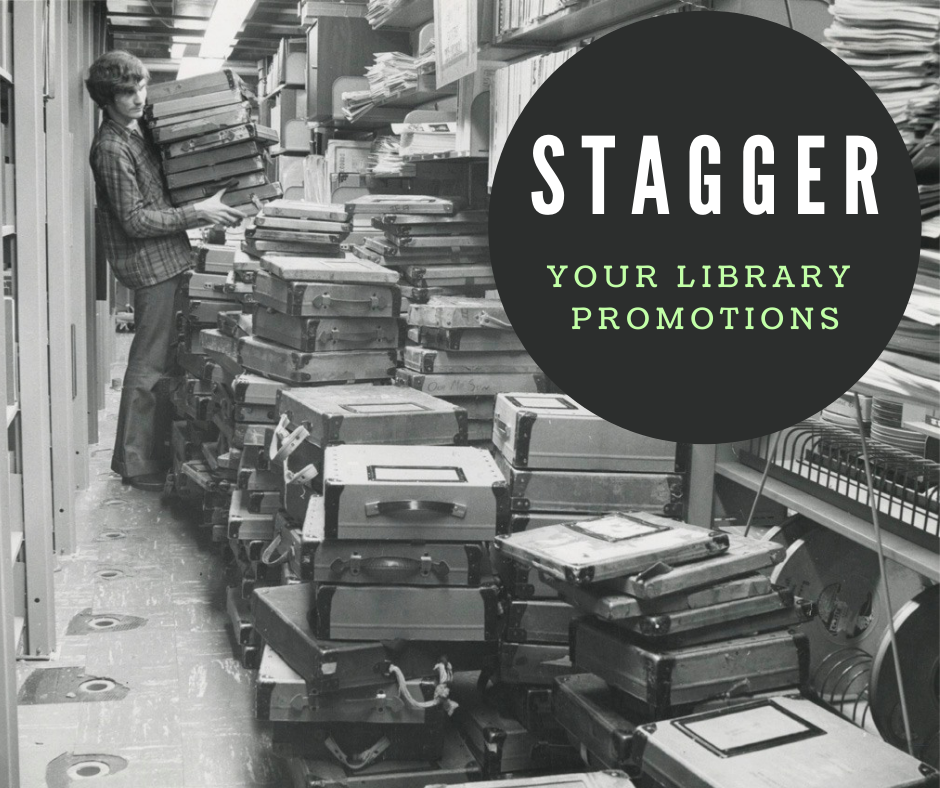
Right now, six big K-pop groups are competing in a music variety reality show called Kingdom. It’s a master class in promotion. The marketing team builds excitement in the fan base by staggering promotional content over a specific period of time before each episode airs. Fans are seeing content at different times and days as they move across various platforms.
Libraries can learn something from K-pop.
Creating a compelling message, picking images, and deciding which tactics you will use to promote your library is important. But, deciding when you’ll release those promotions is just as critical.
When I started work in library marketing, I would create a marketing campaign and intentionally release all the promotions on all channels in the same day.
On the appointed day, my team sent an email and a press release. We added a homepage graphic and posted on all our social media platforms. We changed out the digital signage in our branches and put up posters.
And it was never very effective.
Then I heard marketing expert named Andrew Davis talk about staggered distribution. The approach takes advantage of the consumer cycle of excitement to expand your reach.
When you use staggered distribution, you release one or two promotional tactics at the beginning of your promotional cycle. Maybe you put up posters and send an email to your community.
Your promotion gets some play, and excitement builds in your community. People start talking about it. They might even share your promotion with their family and friends.
When the excitement dies out, you release your promotion on a second channel. The cycle of excitement and sharing begins again.
When that ends, you release your promotion on a third channel. You cycle through your promotion like this until you’ve used all the tactics planned.
When you use the staggered approach, you get a longer promotional thread. Your promotions will be more successful because the excitement around them builds over time, not in one big burst. Everyone in your audience sees the promotions. And more people take the action you want them to take!
For decades, my library used a traditional, all-at-once promotional approach to our Summer Reading program, which ran from June 1 through July 31. We released promotions using all our available tactics on May 1. And our registration numbers and check-in numbers were never as high as we wanted.
By the time we got to June 1, our audience was already tired of hearing about Summer Adventure. We used up all their excitement before we even got to the event!
So, we switched to a staggered approach.
We released promotions on our website on May 1 and installed yard signs. On May 15, we sent an email. On May 20, we put up all the signs around the inside of the library and started promotions on social media. From May 21 until June 1, we’d post once a day on one of our social media platforms. We started our ads on May 25. We sent a second email on June 1.
Throughout the course of our summer reading program, we would stagger promotions around all channels, so the message reached everyone in our audience, wherever they were consuming our content. We kept our audience excited, engaged, and interested.
And most importantly, it was effective. The first year we tried this staggered approach to distribution, we saw an 18 percent increase in registrations and a 67 percent increase in weekly check-ins.
This approach will work for your audience for any large-scale promotion. Stagger the elements of your promotion across various channels over time. More people will see your marketing and your efforts will be more effective.
Subscribe to this blog and you’ll receive an email every time I post. To do that, click on the “Follow” button in the bottom left-hand corner of the page. Connect with me on YouTube, Twitter, Instagram, Goodreads, andLinkedIn.
Kudos in this episode go to Richmond Public Library for their Binge Bundles Bags. They were nominated by Chris Boivin of the Jacksonville Public Library.
Do you have a suggestion for a topic for a future episode? Want to nominate someone for kudos? Let me know in the comments. And subscribe to this series to get a new video tip for libraries each week.
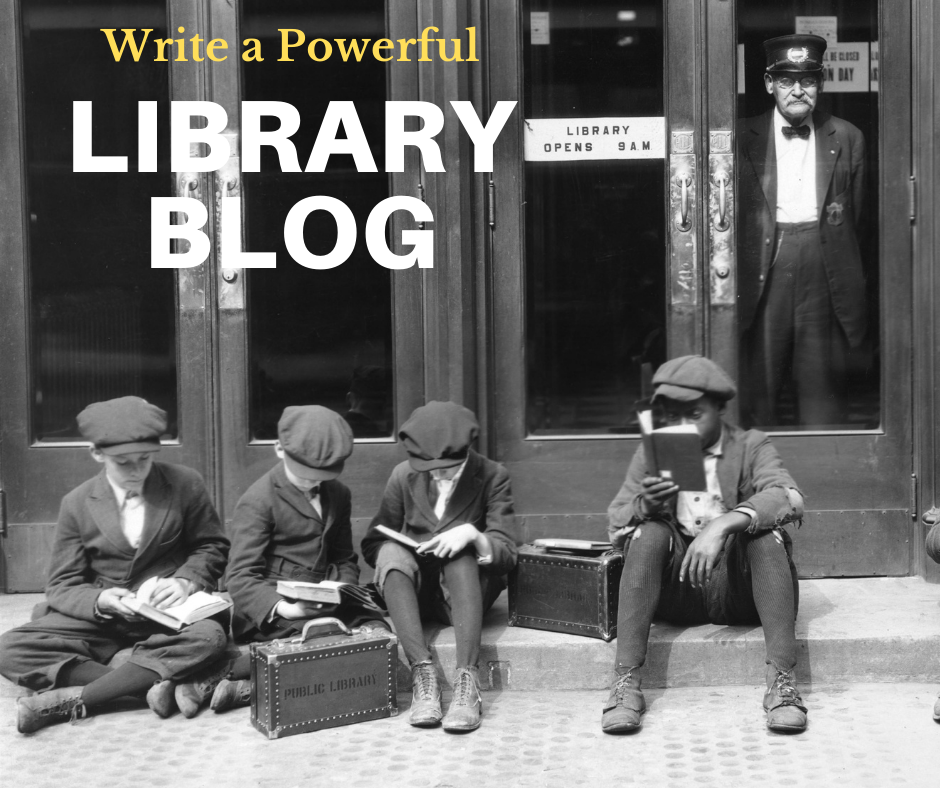
One of the hardest and most rewarding things I ever did while working for the Public Library of Cincinnati and Hamilton County was to start a blog. It took me five years to get it off the ground. I wrote about that experience in this blog post.
I worked hard to get a library blog because I knew it would be a transformative and powerful communication asset.
A blog allows your library to tell your own story, create brand awareness, and promote your library to your own audience for free, without having to deal with the rules of someone else’s platform.
If your library has a blog, you will want to make sure you are doing everything in your power to grow your audience. In this post, I want to share the best practices I’ve learned from years of blogging.
A calendar will let you see all the promotions your library is doing in one glance. It will help you schedule posts that amplify your other marketing messages.
You can use your calendar to formulate due dates and publication dates for blog posts. You can also plan the promotion of your library blog posts on other channels, like your email newsletters and social media platforms.
The three main genres of library blog posts
The best blogs are a mix of these three types of blog posts.
Promotional posts: Most library blog posts are promotional. They focus on telling readers about an event, service, or collection item available at the library.
Promotional posts tend to be shorter. They also need to be frequently updated as services and collection items change.
Example: Jacksonville Public Library uses their blog to help their community find information on their website without having to create special landing pages for events and services.
Opinion posts: These posts demonstrate what the library stands for. They center on questions people have about libraries but are afraid to ask. Opinion posts also celebrate the strengths of libraries and the opportunities for improvement.
Opinion posts are compelling and allow your library to cement your voice and your position in a way that your readers and cardholders will remember. It’s great when a library takes a stand. People will respect you for it.
Example: The Stark Library CEO and Executive Director took a clear stand against racism in this recent blog post.
Authoritative posts: These posts demonstrate your library’s expertise in a subject. For instance, a post that highlights your library’s award-winning family history department is an authoritative post.
If you’ve been asked to write a post on your library’s blog, your journey begins with what my favorite marketer Ann Handley calls The Ugly First Draft (UFD).
Your first job is to get all your ideas down in whatever format they escape from your brain. Write your draft without worrying about spelling, grammar, punctuation, or phrasing.
Open a Word document and try to keep typing until you can’t think of anything else to say on a subject. If you are a skilled typist, look away from the screen so you’re not tempted to focus on spelling or grammatical errors.
Revise to create the perfect library blog post
Write short paragraphs, not short posts. It’s a myth that short blog posts will attract more readers. If your blog post is long but compelling, you’ll have no problem holding the attention of your readers. A longer post that is well written and contains keywords will do better in Google search than a shorter post.
However, you should break up your blog post into shorter paragraphs. Short paragraphs are easier to read and understand. They open white space on your blog, which makes your post more inviting.
Writing experts recommend paragraphs of no more than 150 words. I started writing shorter paragraphs about two years ago and saw a big boost in my metrics.
Be deliberate with your keywords. In the blog text, you need to include keywords for search.
You’ll notice I use the phrase “library marketing” and “library promotion” frequently in this blog. That’s because people searching for help with library marketing use those two phrases most often. Try Keywordtool.io. It does an amazing job of helping you to narrow your target phrase.
Put your keyword phrase in title, header, and body of blog post at least two times but more often if it makes sense.
Include images. Images can help you craft your message and tell your story. They also help to break up the text of your blog posts.
Use images to explain concepts or enforce the emotion you are trying to create.
Link to other content from your library. Your blog post can funnel your readers into engaging with your library. If you are talking about a specific service or a part of your library’s collection, include links embedded in your text to help readers find more information.
Make sure your links open in a new tab. There’s nothing more annoying that clicking on an embedded blog post link in the middle of a post and then having to tab backwards to read the rest of a blog post.
Create engagement opportunities for your reader. Use your blog posts to start a conversation with your readers. Ask a question and invite readers to post their answers in the comment.
Your library can also embed a social media post in your blog so readers can post a key point to their social media. This gives your post the potential to reach new readers.
Spend a lot of time on your headline. A good headline should give your readers a hint at the copy that lies ahead without giving away the whole story. It should trigger an emotional response that includes an irresistible urge to read more.
Incorporate several rounds of edits for spelling, grammatical, and punctuation errors. Run your blog posts through an online editor to catch errors. Ask your co-workers to edit your blog as well.
Print your blog post out and read through it, word for word, out loud. Doing this will force your brain to pay attention to the extra attention to what you’ve written. Your brain will often fill in or gloss over errors when you silently read. But if you read your post out loud, those errors become obvious and can be fixed before publication.
Four more tips for library blog success
Use your blog as a networking tool. Ask community leaders to write guest posts. Reach out to school administrators, policy makers, influencers, and other nonprofit organizations. Or use your blog to interview someone.
Once you publish, send a link to the contributors or interviewees. Ask them to share your post with their audience. This will amplify your message and expose your blog to a new audience of readers.
Example: The National Library of Australia interviewed fashion designer Nicky Zimmermann in this blog post that led to lots of media exposure for the library.
Post consistently. The best way to maintain web traffic to your blog is to make sure people are always waiting for an article to go live.
Decide how many posts you can create a week and which days you’ll post on. Then stick to your schedule.
Promote your blog posts on other platforms. Most of your readers will not just stumble upon your post by accident. You need to make sure they know that your library has published a post.
Promote your posts on your social media platforms, in your emails, and in patron interactions.
Your blog can also be used instead of a press release to pitch a story to a member of the media.
Evaluate your post metrics. Check in once a month and enter your metrics on a spreadsheet so you can track results over time.
Compare views, watch time, and bounce rate for your posts. You can also compare post length.
Your metrics will help you to continue to improve and update your blog based on your audience’s needs and wants.
Does your library have a blog? I’d love to see it!Share a link in the comments!
Subscribe to this blog and you’ll receive an email every time I post. To do that, click on the “Follow” button in the bottom left-hand corner of the page. Connect with me on YouTube, Twitter, Instagram, Goodreads, andLinkedIn.
It’s time for our social media updates for Library Marketing! In this episode, find out about updates to Instagram Stories, YouTube shorts, and Facebook.
Kudos in this episode go to Illinois Prairie District Library for their purchase of a Short Story Cube.
Do you have a suggestion for a topic for a future episode? Want to nominate someone for kudos? Let me know in the comments. And subscribe to this series to get a new video tip for libraries each week.




 Super Library Marketing: Practical Tips and Ideas for Library Promotion