Search

Super Library Marketing: Practical Tips and Ideas for Library Promotion

Author

Angela Hursh, Library Marketing Expert

Angela Hursh leads an outstanding team of marketing and training professionals at NoveList, a company dedicated to helping libraries reach readers. A 2023 Library Journal Mover & Shaker, she has also created courses on LearnwithNoveList.com designed to help library staff learn how to create effective marketing. Before her job at NoveList, Angela led the content marketing team for the Public Library of Cincinnati and Hamilton County. She also has more than 20 years of experience as an Emmy-award-winning broadcast TV journalist.

Five Relevant Library Marketing Lessons Learned at the American Library Association Annual Conference (#ALAVirtual20)

Photo Courtesy Public Library of Cincinnati and Hamilton County

At my former job at a large metropolitan public library, there was an unspoken rule when it came to library conferences. Librarians got first dibs on training money to attend. I thought that was totally fair. But I also found myself suffering from a serious case of envy every time I saw my coworkers headed to the airport for the American Library Association Annual (ALA) Conference, the Public Library Association (PLA) Conference, or our state library convention.

When I took my new job at NoveList earlier this year, one of the perks was knowing I would see my library friends again at these conferences. I would finally get to attend. I’d be one of the crowd! I’d be in on the action!

Alas, it was not meant to be (thanks, Coronavirus). So, my first ALA Annual turned out to be virtual. That had some advantages. On-demand video meant I could jam more sessions into a day. I could pause sessions to get a drink or take a bathroom break. I could leave sessions if I wanted to without worrying about embarrassing the panelists. And I could attend in my outdoor workspace.

It had some disadvantages too. I got more exhausted than normal. And boy, did I miss the personal interaction with librarians and library staff.

I did end up learning a lot. Here are my key library marketing takeaways from three days of sessions.

Good internal communication reduces workload and duplication of work.

We could all do with a little more internal communication and a less work. In the session Happy Together: Collaboration and Communication between IT and Technical Services, staff from the University of Washington Libraries shared the ways in which a concentrated effort on improving staff communications made their workday easier.

Good internal communication helped them to be less reactionary and more proactive. They were able to put the focus back on the customer, rather than always thinking about how the work was affecting staff.  They found it easier to remember why they wanted to work in a library and to stay excited and positive about their jobs. They felt more empathy for each other, which improved relationships between departments.

The panelists encouraged attendees to focus on their library’s strategic plan to find common ground with coworkers in different departments. They designated a “gatekeeper” or “key contact” for each department, so everyone would know who to go to if they had a question or suggestion.

Key quote: “Remember we are all on the same team even with different deadlines and project objectives.” 

Smart libraries use messaging to advocate for more funding.

Most library staff are under the presumption that the public knows their library is essential. They do not. And past perceptions of the library are a real hurdle. People imagine the library as it was 20 or 30 years ago and have no concept of how much it has changed. 

In the session, Advocating for your Library: The E’s of Libraries and Collecting Stories, Alan Fisher told attendees to use messaging to address those hurdles. He encouraged us to message around activities your supporters will want to fund like story times, meals for kids, and literacy programs. He also told attendees to be intentional about using common language so supporters can understand your message. Finally, he says libraries must make their message memorable.

Key quote: “Use messaging that affectively addresses the hurdles so people can understand that we are essential. Don’t say everything you want to say… say what THEY need to hear.”  

Libraries must share the monetary value of author events with publishers. 

Author events at libraries drive book sales. But publishers have no idea that we are helping them make money.

In the session, How to Measure the Value of Library Marketing on Book Sales and Discovery, Guy Gonzalez said most libraries work with authors, not publishers, to schedule events. As a result,  publishers are often unaware of library event’s positive impact on sales. The people who attend author events at their library are library borrowers who often also become book buyers. So, events are a unique marketing opportunity for the publisher.

Gonzalez encouraged libraries to track, measure, and communicate their full impact on book sales back to publishers. He encouraged attendees to develop a media kit that defines the audience of the event, and the actual monetary value of promotional platforms like email, social media, and press coverage. Once the event is over, send that data to the publisher directly. 

Key quote: “Author events are hyper-targeted with deep engagement. Don’t undervalue how much you provide.”

Library marketing must elevate ideas that can improve our society, not around ideology, but around purpose.

In the Presidential program, politician and author Stacey Abrams gave a remarkable and inspiring interview that covered voter suppression, the census, and the role of libraries in helping disenfranchised communities.

Abrams urged the audience to remember that libraries are essential because they are a trusted source of information. She said that libraries are a microcosm of America and are perfectly positioned to address the inequities that persist in the rest of society.

She also asked libraries to be intentional about placing themselves in the same space and in communion with those who need them the most. Finally, Abrams called on the library industry to name the barriers to diversity, to call them out, and to build strategies to overcome them.

The daughter of a librarian, Abrams slept in the stacks of the college library where her mother worked and often got in trouble with the librarians for checking out too many books! She shared the books she’s currently reading: Evicted by Matthew Desmond and Black Leopard, Red Wolf by Marlon James.

Key quote: “Advertise yourself. We take libraries for granted. We know they exist, but we rarely think about them.” 

Virtual story times may or may not violate copyright laws.

I attended the session, Trouble in Paradise: Are you violating copyright by using social media read alouds? hoping for clarification for my library clients. What I got was more confused, at no fault of the presenters. They did an excellent job laying out the many intepretations of copyright law.

Many publishers gave libraries permission to read their titles aloud at the beginning of the pandemic. That grace period ends tomorrow, June 30.

To help you decide what to do once that deadline passes, I suggest reading these two articles recommended by the session presenters: Online Story Time & Coronavirus: It’s Fair Use, Folks and Do Online Storytimes Violate Copyright?

The presenters suggested you post your virtual story time on YouTube but make the recording private. Your library can send a link to view the video to patrons, making it more a “classroom-type” setting which is not in violation of copyright. They also suggested adding a graphic to your virtual story times to warn viewers not to share or download and store your virtual story time.

Finally, the presenters asked attendees to remember that authors make their living from publishing books. Broadcasting the reading of a book, especially a picture book, is essentially giving the book away.

Key quote: “Fair use is not used to try and get around something. It’s in the law and it’s a right of users.”

You Might Also Find These Articles Helpful

Worries in the Library World: Here are Answers to Your Four Biggest Library Marketing Concerns Right Now!

How to Tackle Library Signage in a Pandemic and Make Visitors Feel Comfortable With Your New Rules

Latest Book Reviews

Year of Wonders by Geraldine Brooks

You Never Forget Your First: A Biography of George Washington by Alexis Coe

Find more 60-second Book Reviews here.

Subscribe to this blog and you’ll receive an email every time I post. To do that, click on the “Follow” button in the bottom left-hand corner of the page. Connect with me on YouTube, Twitter, Instagram, and LinkedIn. 

Google’s New Social Media Platform and What it Means for Library Marketing!

Watch Now

The Library Marketing Show, Episode 51

Angela talks about Google’s new Keen app, which appears to be a competitor for Pinterest. What does this new development mean? Does your library need to jump onboard?

Check it out here.

Also Kudos to Kelly Passek, a school librarian in VA. She is delivering books to the kids in her district by drone.  

What did you think of this episode? Are you struggling with marketing and promotion right now? Do you have a nominee for the Kudos segment? Drop a comment below!

And subscribe to this series to get a new video tip for libraries each week! Thanks for watching.

You might also like these videos

Should You Post Non-Library Content on Your Library’s Social Media Accounts? The Answer is…

Email vs. Social Media: Which is Better for #LibraryMarketing Right Now?⚔️

Worries in the Library World: Here are Answers to Your Four Biggest Library Marketing Concerns Right Now!

Photo Courtesy Public Library of Cincinnati and Hamilton County

A few weeks ago, a good number of you were kind enough to respond to this question, “What is your biggest library marketing concern right now?” As you can imagine, many of those worries are not all marketing related. In fact, as the responses came in, I realized they all fell into one of four categories: delivering a clear message about reopening and new safety precautions, keeping everyone safe, dealing with angry patrons, and communicating the library’s value.

I decided to research resources to help library staff tackle each of these concerns. I also mixed in a little of my own advice, gathered from my experience as a former public library staff member and my current work consulting with library staff.

I’d also love to hear your tips for dealing with these four concerns. If you have advice to add for your fellow library staffers, please share it in the post comments.

Clear messaging 

Libraries are struggling to make sure everyone understands the new expectations for library service. Many libraries have fragmented social media accounts, with different branches or departments running their own Facebook pages and Instagram feeds. That makes the job twice as difficult.

Messaging is the most important job for libraries right now. Before anyone posts anything on social media, you must do one thing: Create a core set of talking points. Commit to repeating them on every promotional platform. 

Write posts word-for-word and send them to any staff handling social media accounts. Tell them to copy and paste the message into their pages to maintain consistent wording and calls to action. 

You’ll also want to use your core messages on signage, in emails, and in your videos. If you do live virtual events, ask staff to repeat the message before they go into their main program.

It’s going to seem redundant to staff. But a consistently repeated messaging campaign works. Remember, research tells us that people need to hear a message seven times in order to remember it and take action. 

And a consistent and clear message now will have long-range benefits for your library. It will reduce frustration and anger from patrons. And it will position your library as a strong yet calm institution with a plan to provide the best library service possible while keeping everyone safe. People will remember the way your library handled this crisis when it comes time to ask for funding later.

Keeping everyone safe

Health and library organizations have worked tirelessly to create guides for reopening. Some of my favorites are The Safe Work Playbook from the Toledo Lucas County Public Library, the Reopening and Working Safely Guide from the Idaho Commission for Libraries, and the Service Recovery Checklist from the Australian Library and Information Association. There is also guidance available in this article from Library Journal. 

If your managers haven’t communicated their plans for keeping you safe, now is the time to ask. If it’s your job to figure out the new protocols, first check your local health authorities for their mandates. Your library will need to follow those rules. Next, check with you state library association for guidelines. Many library consortiums are also putting together suggestions and holding virtual meetups to talk about the best practices for library reopening and safety. 

Dealing with angry patrons

This may be the most frequently expressed fear among library staff. A recent episode of the Library Marketing Show centered on this topic: Tips for Dealing With Angry Patrons When Your Library Reopens. I also recommend this webinar from RAILS (Reaching Across Illinois Library System) and this recent article from American Libraries magazine. Scroll down to the second half, which is all about libraries are dealing with staff anxiety.

Proving the library’s value

While you are knee-deep in reopening plans, there is another messaging mission your library must now champion with fervor. You must make sure the public and local lawmakers realize how valuable you are.

The pandemic has taken a toll on the economy. We may not be able to grasp the full extent of it now, but it will surely affect libraries, to the detriment of our communities. Messaging that emphasizes the value of the library is vital to our survival as an industry.

You must make sure the public knows how hard your staff was working while the building was closed. Did you help people file for unemployment? Did you help parents with remote learning? Did you help small business secure PPP loans to pay their workers?  Did you provide comfort and distraction to communities on lockdown?

Tell people what you did. Emphasize the ways your library helped with the economic recovery and the mental well-being of your community. Talk about how quickly you pivoted to online services and how your audience responded.

We must start letting people know about all the fantastic things we do when we are physically reopened. We must work a value-oriented message into everything we put out into the world. We must repeat these messages, over and over again, to drive home the point.

Libraries are too humble about their work. It’s a virtue that may lead to our downfall.

For more inspiration, read this post: Marketing is Not a Dirty Word! Why Libraries Need to Promote Themselves Now, More Than Ever

Latest Book Reviews

The Ballad of Songbirds and Snakes by Suzanne Collins

Conjure Women by Afia Atakora

Find more 60-second Book Reviews here.

Subscribe to this blog and you’ll receive an email every time I post. To do that, click on the “Follow” button in the bottom left-hand corner of the page. Connect with me on YouTube, Twitter, Instagram, and LinkedIn.  
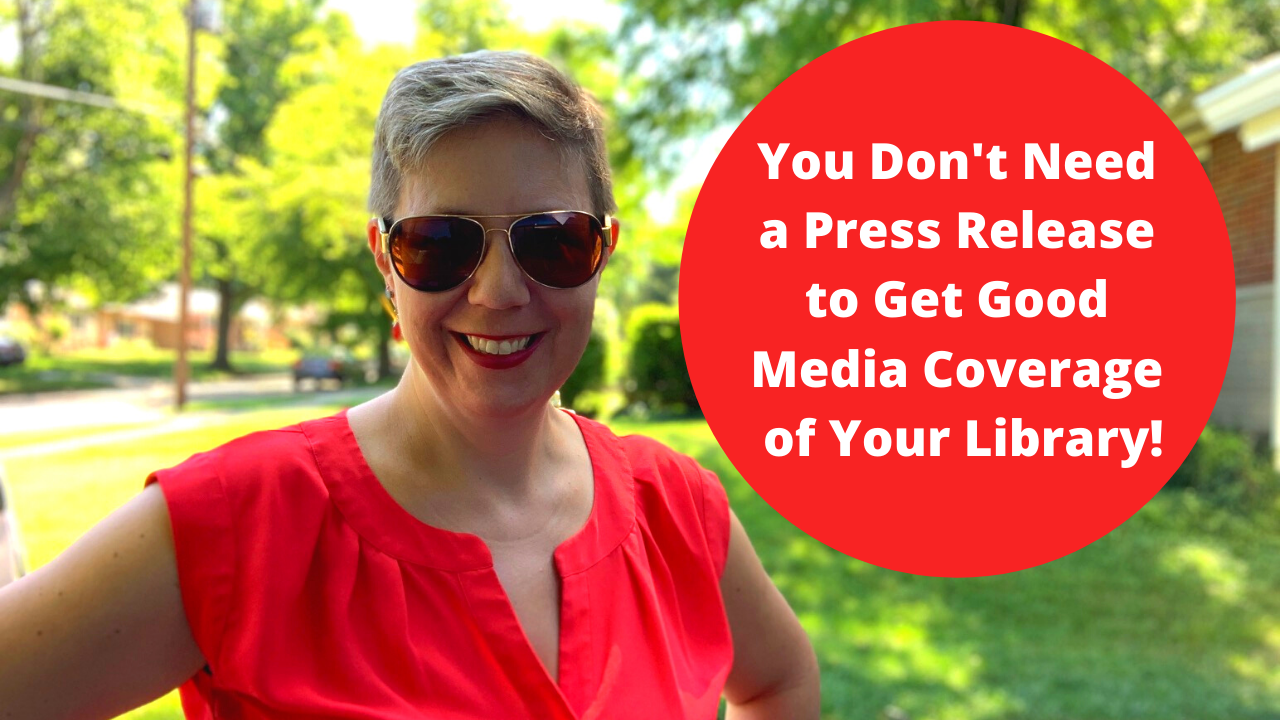


Should You Post Non-Library Content on Your Library’s Social Media Accounts? The Answer is…


Watch Now

The Library Marketing Show, Episode 50

Angela answers a viewer question from a viewer who asked, “Is it okay to post non-library content on your library’s social media accounts?”

Also Kudos to Starkville Public Library in Starkville, Mississippi. See why Angela loves their storytime videos.

What did you think of this episode? Are you struggling with marketing and promotion right now? Do you have a nominee for the Kudos segment? Drop a comment below!

And subscribe to this series to get a new video tip for libraries each week! Thanks for watching.

How to Tackle Library Signage in a Pandemic and Make Visitors Feel Comfortable With Your New Rules

Photo Courtesy Public Library of Cincinnati and Hamilton County

Has your library physically reopened?

I am collecting the reopening experiences of library staff members of all levels. Whether your library is now doing curbside or drive-thru service, books by mail or in-person interactions, how are you, your coworkers, your supervisors, and your patrons handling new reopening restrictions? All comments are anonymous. I may use your comments in a future episode of the Library Marketing Show or a future blog post. Thank you in advance.

← Back

Thank you for your response. ✨

When the pandemic forced libraries around the world to close their physical buildings, there was one major library marketing tactic that instantly became obsolete… signage. Suddenly, all the effort we put into the size of the sign, its design, and its placement vanished.

In my days working at a public library, signage was the most common marketing request from my fellow library staffers. It was a big deal. Everyone wanted a sign or a poster for their program. They wanted to put their sign in as many locations as possible.

When COVID-19 forced libraries to close, library marketing abruptly shifted to digital tactics. But now, as libraries move toward reopening, the debate over signage has returned to professional groups and library staff discussions. Signage is now crucial for communicating new rules about mask-wearing, social distancing, and time limits within physical library spaces.

In the old days, I would have encouraged staff to use less signage and do more talking with patrons. That’s not possible right now.

But we can still think strategically about how we place our signage, how it is designed, and how much of it we use. Here are some tips for planning your signage as your library moves toward reopening physical spaces.

Place the most important signs at the entrance, along with a staff member. My favorite neighborhood grocery store is small, like many library branches. I’ve been studying their signage and customer service model during the pandemic, and I think it is easily transferable to the library world.

The grocery store has a sign at the entrance informing patrons they must wear a mask and maintain social distance. They also have one masked staff member who stands six feet from the door, rain, or shine. This staff member points out the sign and ask the customer if they have any questions.

It’s incredibly simple but effective. It gives customers a chance to ask questions in a safer location–the exterior, where there is better ventilation and where it is easier to practice social distancing. It reduces staff interaction inside the store. Libraries might consider following this model to ensure that everyone entering the branch understands the expectations.

Map out your visitor’s journey through your branch. You’ll want to make it easy for people to understand how to get to your key service points while following the new social distancing rules. To do that, draw a bird’s eye view of your space. Then map out how you want people to move.

Walk the path yourself several times, noting where you need to put signs to maintain traffic flow. At each sign location, note how much space you have to work with and the color of the surface background. Do you need posters? Do you need laminated signs? Will you need plexiglass holders? Will you need double-sided tape? Then gather your supplies, make your signs, and place signage to facilitate a smooth flow of traffic.

Keep the map and the signage plan in a location where all staff can access it, so anyone can replace a sign when needed.

Create signs to make first-time visitors feel more at ease. Though the new rules may seem clear to you, or even to regular patrons, don’t underestimate the confusion your first-time visitors may experience. Some people will be unfamiliar with where to go or what to do when they arrive at your branch. Simple instructions such as, “Check out this way” or “Return Books Here” can make the difference between smooth traffic flow and potential bottlenecks.

Use color coding. Maybe you already have a color-coding system that your customers are familiar with. Use those colors as part of your new reopening signage to make your visitors feel at home in your library. Color coding of signage can be especially helpful in libraries with many departments and several floors of service.

If you don’t use color coding, pick a universally familiar scheme like red, yellow, and green to create a sense of direction within your branch. Use consistent color-coded signage from the entrance of your branch right through to the checkout to keep the flow of patrons going and minimize questions.

Use icons. Icons are common symbols that everyone can understand. Use icons with your text-based signage to make the new rules easy to interpret for everyone.

Use your digital signage. Libraries often use their digital signs to promote programs and collections. But you can also use those displays to communicate your new reopening restrictions.

Digital signage might also be used to encourage people to use an alternative service method like a drive-thru at a nearby branch. Post your new open and closing hours or updated information about the wait time to use a computer on your digital signage.

Don’t forget to use digital signage to help visitors understand the value of your library. A slide that demonstrates the online services your library provided during the pandemic will help your visitors to understand that your library staff was working even when your building was closed.

Be flexible. You may have done all your homework and put together an amazing signage plan. But it’s hard to predict every situation. None of us know exactly how people will interpret your signage until they enter your branch. Be ready to make changes to your plan to solve customer flow problems.

Related Help

Tips for Dealing With Angry Patrons When Your Library Reopens

Seven Cheap and Clever Ways to Bridge the Digital Divide and Promote Your Library to People Who Don’t Have Internet Access

Latest Book Reviews

The Argonauts by Maggie Nelson.

Westering Women by Sandra Dallas

Find more 60-second Book Reviews here.

Have a topic suggestion for Super Library Marketing?

← Back

Thank you for your response. ✨

Subscribe to this blog and you’ll receive an email every time I post. To do that, click on the “Follow” button in the bottom left-hand corner of the page. Connect with me on YouTube, Twitter, Instagram, and LinkedIn.  

 

Tips for Dealing With Angry Patrons When Your Library Reopens

Watch Now

The Library Marketing Show, Episode 49

Angela addresses a serious subject. As libraries reopen their physical buildings, library staff members are worried about dealing with patrons who are upset. Angela offers some tips for dealing with patrons who are having trouble accepting the new rules and regulations. She also has a special message for library managers-PLEASE WATCH!

Do you have more tips to share with your fellow library staffers? Please add your suggestions in the comments.

Also Kudos to Poudre River Public Library District. They have a fun and innovated curbside service for kids called Bag ‘O Books. 

What did you think of this episode? Are you struggling with marketing and promotion right now? Do you have a nominee for the Kudos segment? Drop a comment below!

And subscribe to this series to get a new video tip for libraries each week! Thanks for watching.

Seven Cheap and Clever Ways to Bridge the Digital Divide and Promote Your Library to People Who Don’t Have Internet Access


If I had a nickel for every time I was asked, how do we promote our library to people who don’t have internet access or who choose to live offline?, I’d be a rich woman.

This problem has always plagued libraries. By nature, our services are needed most by those who struggle with economic disadvantage. And it’s a huge concern of many librarians right now. Some libraries in the United States are reopening their physical buildings and returning to services involving in-person interaction with patrons, like curbside pickup or drive-thru windows. But there seems to be no way to make sure our offline community members know we have returned to service.

I’ve always been a fan of digital marketing because it’s targeted, effective, and easy. The problem of reaching people who don’t have access to Wi-Fi and will never see those messages has always bothered me.

What’s a library to do?

I decided to stop letting it bother me. It’s time to solve the problem. 

Prepping for promotion

First, concentrate on your core message. If you only had 10 seconds to tell someone about your library’s reopening, what would you say? Boil your message down to the most important points. Then create a few, highly focused and easy-to-deliver print pieces to carry that message. Good choices are a bookmark, a quarter-sheet flier, and a postcard. These will be your library’s main promotional vehicles for non-digital marketing efforts.

Second, adopt an outreach attitude. Many libraries are hesitant to market themselves. They worry they are intruding. They don’t want to seem pushy or salesy. They are convinced their promotional efforts will be viewed as “spam”.

You are not spam. You are not intruding. You are not selling a product. You are promoting a service that is free and necessary. 

Your community is already paying for library services in some form or fashion. They need to know what they’re paying for. They need to know how you can help them. They are grateful to learn how to access the services they are funding.

It’s more important than ever to promote your library. We need to make sure, at the very least, that our community understands what we do and why our work is important. So, make a commitment to banish humility! Don’t be timid!

Now, here are seven relatively cheap, yet clever ideas for promoting your library. And they all have nothing to do with the internet.

Non-digital promotional tactics

Mail your postcard. If you have the budget, now is a good time to try mailing your postcard to people in your community. Start with your patrons. And if you have leftover money, a mailing house can help your library secure addresses for people who are not patrons.

In some U.S. states, your library can request a list of voter addresses from the Board of Elections for free. You can reach people who aren’t library patrons but who are registered voters, legally and cheaply.  

Canvass. Adapt this political campaign strategy for library awareness! Distribute your printed piece door-to-door.

Now, I know it’s time-consuming but it’s also effective. In my former job at a large metropolitan library, our outreach librarians went to apartment complexes and hung door hangers with information about the library. Door hangers are relatively cheap. If you can’t spring for them,  slip your postcard into screen doors. This is a great job for libraries looking for ways to keep their staff busy. And, of course, you will reach people who have forgotten the library or who have never interacted with the library.

Buy a print ad. Many newspapers will give your library a discount on ad space. Try to use your limited space to the full advantage. Use a catchy graphic to draw the eye.

Put your partnerships with local businesses and other non-profit organizations to use. Ask partner organizations to distribute a bookmark or some other kind of small print promotional piece to their visitors. Ask local businesses, like restaurants, to include a small promotional piece in their takeout bags. Ask local realtors and rental agencies to give your promotional piece to prospective homeowners or new renters. Give some of your print pieces to day care providers, teachers, summer camps, and recreational centers. Seek the help of any business or organization with a physical location that is open in some capacity and ask them to distribute your material to people who use their services.

Place signs outside your building. A banner in your front yard or a sidewalk sign can help spread the word to people in the neighborhood. There are lots of online stores that will sell you weather-proof signage for a reasonably cheap price.

Pitch to the media. Despite what you may see on the news right now, journalists are always looking for good news stories. And your library offering services is good news. Try pitching to individual reporters. Keep THEIR audience in mind and make sure you point out how a story about your library will be beneficial to their audience.

And be helpful. If they need photos but can’t make it over to your branch, offer to provide some. Have staff members who are comfortable on camera at the ready to deliver soundbites to local TV news crews. You might even offer to write a piece for your community paper. Free press is a great form of marketing.

Call patrons. I spoke to some librarians this week who called people to let them know that their library had reopened. They clearly identified themselves at the beginning of the call and asked permission to proceed with the call. If the receiver said “yes”, the library staffer proceeded to relay the information about their library’s new hours and service requirements and asked the receiver if they had any questions. Like canvassing, this is a time-consuming tactic, but it may be necessary in a community without internet access.

Related Help

Email vs. Social Media: Which is Better for #LibraryMarketing Right Now?⚔️

Marketing is Not a Dirty Word! Why Libraries Need to Promote Themselves Now, More Than Ever

Latest Book Reviews

You Don’t Look Your Age and Other Fairy Tales by Sheila Nevins.

Postscript by Cecelia Ahern.

The Familiars by Stacey Halls.

Find more 60-second Book Reviews here.

Subscribe to this blog and you’ll receive an email every time I post. To do that, click on the “Follow” button in the bottom left-hand corner of the page. Connect with me on YouTube, Twitter, Instagram, and LinkedIn.  

Email vs. Social Media: Which is Better for #LibraryMarketing Right Now?⚔️

Watch Now

The Library Marketing Show, Episode 48

Angela is back in her outdoor work tent and this week, she’s sharing her opinion about the best way for your library communicate wth cardholders. Is it email? Is it social media? Can you guess? Listen and then join the conversation–let her know what works best for your community in the comments.

Also Kudos to the Toledo-Lucas County Public Library for their Safe Work Playbook. This is the best physical library building reopening document I’ve come across.  

What did you think of this episode? Do you love a specific library’s Facebook work? Are you struggling with marketing and promotion right now? Do you have a nominee for the Kudos segment? Drop a comment below. And subscribe to this series to get a new video tip for libraries each week! Thanks for watching.

Want to Make the World a Better Place? Tools and Tips For Libraries to Combat Racial Inequity in Their Communities

Photo Courtesy Public Library of Cincinnati and Hamilton County

In the United States, a week of riots and violence protesting racial inequities was enough to send me in paralysis of inaction. It was soul-crushing. Like many of you, I sat at my computer or scrolled through my phone. I felt anger and despair. I felt hopeless and helpless.

I’m just a library marketer. What can I do to help?

Equality, inclusion, and diversity are social justice issues. Social justice aligns with the core values of library work. Equal access, educational equality, free service, and safe spaces are all essential and valuable library missions.

Many of the librarians I work with have hearts bent for social justice. They may not be aware of it. But their empathy, compassion, and drive to pass on information and ideas make the world a better place.

Every time a library staffer teaches someone to read or feeds someone or helps someone to get a job or offers a space for a group to meet in safety and peace, they are doing social justice work. Every time a library staffer recommends a diverse book or helps someone fax an unemployment claim to job services or helps a minority-owned business owner secure a grant or a patent or a trademark, they are doing social justice work.

If you feel that the problems of the world are too numerous or too difficult, that your job is too small, that no one cares about what you do or say, YOU ARE WRONG. You do make a difference working in a library. And you have the power to change lives.

This week, I want to share a list of resources and ideas to respond to racial inequity. I believe that libraries can help our communities to be more equal, inclusive, and diverse. Here is advice I’ve learned from experts, and tools to help you make changes in your collection, your marketing, and ultimately, your community.

What is your #1 library marketing worry or concern right now?

← Back

Thank you for your response. ✨

Be aware of your own bias. I was raised to be prejudiced. I must consciously work on my own mind. And so should you. We must all make a habit of constantly questioning our own beliefs and reactions.

It’s not easy. It’s work we must do every single day. It starts with educating yourself. I’ve found several resources to help me with this. The best is this fantastic list of anti-racism resources for white people. There is also this great list of resourcesto help with racial division and the ongoing COVID crisis on the Facebook page Libraries Step Up (in times of crisis).

I also turn to friends like Kim Crowder. Kim is a former library marketer who now runs her own consulting firm aimed at helping organizations like libraries to make sure they are diverse, equal, and inclusive in their marketing, workforce, and services. She’s written for this blog on diversity in library marketing.

Kim is offering an anti-racism course on how to live an inclusive life. Inclusive leaders and professionals live diverse lives. She says, “Anti-racism and silence cannot inhabit the same space. Find out tools you can take with you and ways to grow and influence those around you. Let’s get comfortable with being uncomfortable. Humanity must lead.”  Sign up for her newsletter now for more details.

Recommend diverse books. One of a librarian’s main jobs is to recommend books to readers. This is your chance to create empathy in your community.

There are SO MANY resources to help you find diverse titles, including the website for the social movement We Need Diverse Books and The Children’s Book Council. My friends at the Public Library of Cincinnati and Hamilton County responded this week by quickly pulling together a list of books about race and anti-racism, which they displayed at the top of their Overdrive page. Your library can replicate that.

You can also turn to the Own Voices movement to find diverse books. Own Voices is an adjective that describes a book about diverse characters written by authors from that same diverse group.

If you aren’t familiar with diverse titles, there are two great places to find these books. The first is NoveList. (Note: I work for NoveList.) I have found many library staffers have no idea that their library is a subscriber. Check your library’s website. If you have NoveList, you can use it to find diverse and Own Voices books to recommend.

The other place is Pinterest. Searching “diverse books” and “Own Voices” on Pinterest will lead you to a host of booklists created by librarians, publishers, and other book industry websites.

Lift up diverse voices on your platforms. If you have a blog or a newsletter, ask patrons and community leaders from diverse backgrounds to write for you about their experiences at the library and beyond in the wider world. The library is built on stories. Those stories can be a way to affect change in the world. There is no more powerful way to do this than to amplify diverse voices.

Be intentional about adding diversity to story time and programs. Children’s librarians, you have the power to influence the next generation of readers. Read diverse books and share songs and crafts from diverse cultures at your story time. My favorite example is happening on the DC Library Facebook page, where they’ve posted bi-lingual story time videos.

The DC Library is also leading the way with diverse presenters for their programs. Be intentional about including presenters and experts from a variety of backgrounds, abilities, and perspectives. Your library is a safe space where ideas and information are shared. Let’s make sure we include all voices in discussions about all subjects, large and small.

Use diverse images in all your marketing. Representation matters. The library is a place where everyone in your community feels welcomed and included. Studies show that younger library users are more likely to respond to marketing that includes visual representations of diversity.

It is difficult, but not impossible, to find free diverse stock photos. Some good choices are Pexels diversity photo collection, Nappy, Women in Tech, and Unsplash.

Use social media for good. I know your social media feeds feel like a cesspool of hell. It doesn’t have to be that way. Libraries can help by curating content on diversity, equity, and inclusion.

You should, of course, share library resources to help your community learn about diversity and inclusion. But also look outside the library for content to share. Share posts by readers and people in your community from diverse backgrounds. Start a conversation with your followers about diversity. You can even do this live on Facebook or Instagram. And share posts from local organizations about events or educational opportunities tied to diversity and inclusion.

Do you have more ideas for how libraries can help their communities deal with racial inequalities and promote diversity? Please leave a comment below. Thank you for reading this.

Subscribe to this blog and you’ll receive an email every time I post. To do that, click on the “Follow” button in the bottom left-hand corner of the page. Connect with me on YouTube, Twitter, Instagram, and LinkedIn.  


A WordPress.com Website.

Up ↑