Search

Super Library Marketing: Practical Tips and Ideas for Library Promotion

Category

Advertising Your Library

The Behind-the-Scenes Story of How Two Neighboring Libraries Teamed Up To Create a Fake Rivalry Video for Promotional Success

Photo courtesy Cincinnati and Hamilton County Public Library

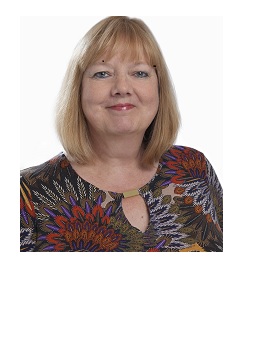
Tamara Murray moved around a lot as a kid. But her family settled in Westerville, Ohio when she was 11 years old. Sheโ€™s lived there ever since and now works for the library she used as a youngster.

โ€œThe Westerville Public Library was the first place I went after getting my driverโ€™s license to return my (ahem, overdue) library books and pick up the newest Steven King novel,โ€ recalled Tamara. โ€œI still remember the glorious sense of freedom I had on that warm spring day, driving down the road towards the library.โ€

Tamara graduated in 2001 from Miami University (Ohio) with a degree in Creative Writing.  While struggling to find a full-time job, a friend suggested she look into librarianship.

โ€œI kind of hated the idea at first,โ€ admitted Tamara. โ€œI was worried it would be boring. But I took her advice to apply as a volunteer, just to get a sense of what it was like. And when an opening came up in the Outreach Department where I was volunteering, I was encouraged to apply.โ€

โ€œFrom there, I earned my MLIS from Kent State University and have now held numerous positions at the Westerville Public Library – Outreach Associate, Adult Services Librarian, Web Content Librarian, and now as Marketing Manager.โ€ 

The Westerville Library marketing staff consists of Tamara and two staff members. Theyโ€™re extremely agile. Projects, services, and other initiatives are often conceived of and implemented on short timelines. They are always experimenting with new things.

One day, Tamara spotted a Columbus Metropolitan Library (CML) digital billboard while driving. It was positioned on the border of where CML and Westervilleโ€™s library district meet. Tamara mentioned it to her Executive Director, Erin Francoeur.

The two hatched a plan to create a friendly rivalry piece about CML encroaching on Westervilleโ€™s โ€œhome turfโ€. They approached CML to brainstorm the idea.

โ€œOur initial thoughts were that we could pretend to hack or graffiti the CML billboard,โ€ recalled Tamara. โ€œThen we also considered filming a guard whose job it is to โ€˜patrolโ€™ the border between our two districts and creating a fictional history around that idea.โ€ 

โ€œAfter we realized that the billboard was only scheduled to be live for a short time, we brainstormed other ways we could represent a rivalry using our current spaces. It occurred to me that a simple โ€˜apples to applesโ€™ comparison would allow us to highlight our differences and similarities in a way that would be a win-win for both libraries.โ€

The group decided to create a video using library cards as the main characters, fighting over which library was cooler. They added googly eyes to the library cards to give them personality and made them seem more like real characters in the story.ย 

โ€œThe hardest part was figuring out how to add the googly eyes to the library cards in a way that wouldnโ€™t look messy,โ€ laughed Tamara. โ€œIโ€™m always thankful for the ingenuity of our childrenโ€™s librarians who suggested sticky tack.โ€ 

The actual filming took less than an hour. Connor Dunwoodie, Digital Storyteller Specialist at CML, visited each highlighted location and filmed clips with a helper to model the library cards.ย 

โ€œConnor previously worked as a news reporter and anchor and has a gift for visualizing the space and getting the shot on the first try,โ€ said Tamara. โ€œConnor then took the video footage, edited it together, added sound and text, and made it live within 48 hours.โ€ 

Tamara and her counterparts at CML were hoping the promotion would spark engagement from those who already know and love both libraries. They also wanted to reach new potential patrons who live near the border of the two districts, an area that both systems refer to as a โ€œlibrary desert.โ€   

โ€œAs a single branch medium-sized suburban library, we donโ€™t think of ourselves as direct competition with the 22-branch Columbus metropolitan system,โ€ explained Tamara. โ€œWe both are amazing in very similar and very different ways. In Ohio, we are lucky to share state funding for public libraries, which creates some built-in camaraderie since weโ€™re not competing with each other for basic funding.โ€  

Tamara and her team continue to do great work, creating fun promotions and highlighting how the library helps patrons (more on that in a future post!). Tamara says she finds inspiration for her library marketing campaigns nearly everywhere she looks.

โ€œWeโ€™re marketed to almost everywhere we go, and I try to take note of what marketing is effective with me personally, as well as whatโ€™s effective with my friends and family members,โ€ she shared.

โ€œI ask a lot of questions. โ€˜Where did you hear about that?โ€™ โ€˜Why did you buy this product instead of this product?โ€™ It helps to understand what channels, graphics, and calls to action are the most effective.โ€   


More Advice

Thereโ€™s New Advice for Libraries About Posting to Social Media butโ€ฆ Should You Actually Take It?

โ€œPure Chaosโ€: A Library Marketer Reveals How She Turned a Scavenger Hunt for Six Baby Dinosaurs Into a Promotional Win

Subscribe to this blog and youโ€™ll receive an email whenever I post. To do that, enter your email address and click on the โ€œFollowโ€ button in the lower left-hand corner of the page. You can also follow me on the following social media platforms:

Libraries Have a Huge Competitive Advantage: Customer Service! Here Are 3 Promotional Tips To Drive Home That Message

Photo courtesy Cincinnati and Hamilton County Public Library

The best customer service experience I ever had was with a cell phone provider. No kidding.

I was having issues getting my contacts to transfer to a new phone. The providerโ€™s website offered no solutions. So, with great trepidation, I called the customer service line.

The woman who answered was a delight to work with. She welcomed me in a friendly manner and assured me she wouldnโ€™t hang up until sheโ€™d solved my problem. She was patient with me as I explained my issue. She was friendly, asking me questions about my day as she worked. And she thanked me with sincerity when our call is over.

A successful and delightful customer service interaction is rare. And itโ€™s increasingly difficult for people to contact a human customer service agent. Earlier this year, Vox published a story about the death of customer service lines. Companies like Frontier Airlines, Facebook, and Amazon are cutting costs by eliminating their phone-based customer service lines in favor of email forms and chatbots.

When I read that, I thought, โ€œThatโ€™s a huge opportunity for libraries!โ€

Our community is our customers. And our unique value proposition is that we offer personalized service provided by a real-life person, always.

Library staff is not chatbots. Weโ€™re not email forms.

We listen, and we help solve problems. In fact, weโ€™re proud of our problem-solving skills.

So why donโ€™t we spend more time marketing our unique, valuable customer service experience?  

Good customer service is a competitive edge for libraries. We can build a reputation as a warm and inviting space. When was the last time you heard Amazon or Best Buy described in those terms?

Building your library’s reputation for customer service will increase visits and use of your library. And for many of you, that can be valuable in budget and funding discussions.

And delighted community members are more likely to spread the word to their friends and family about our system and the services we provide. They are compelled to talk about us positively on social media, give us great reviews on Google Business, and support our work through donations or volunteerism.  

Here are 3 ways to use your libraryโ€™s customer service as a marketing tool. Scroll to the bottom of the post for a great real-world example of customer service guidelines for staff from the University of Illinois.

Make it incredibly easy for people to contact you.

Your libraryโ€™s address, phone number, and email address should be easy to find on our website. Iโ€™d recommend adding it to your pageโ€™s footer, as well as your โ€œaboutโ€ section. You might also add a โ€œContact usโ€ page to your website.

Itโ€™s okay to have your contact information in more than one location! Don’t make your community members jump through hurdles to reach you. Remember, your competitive advantage is the ease of using the library.

You must also keep your libraryโ€™s information updated on Google. And add your contact information to your bio or โ€œaboutโ€ page on all your social media accounts.

Finally, consider sharing your contact information at the top of your email newsletters, at the beginning of each video you produce, and even at the beginning of each program you hold. A simple statement like, “Our library is here to help you! Ask us any question, anytime by calling 555-5555 or emailing us at questions@mylibrary.org” is sufficient.

And if you do this anytime you interact with a group of community members, over time your concerted and consistent effort to share your contact information will convey the message that your library is a place where community members can seek help.

Promote your library as a place that helps people solve problems.

In your marketing, emphasize that your library is on the communityโ€™s side.  

Your promotions should drive the following messages:

  • That your staff works collaboratively with users.
  • That you take your time to listen to problems and find the best solutions.
  • That your community members’ problems are your problems!
  • That you care about the outcome of your interactions. 

One way to do this is to collect stories of the library solving patron problems. You might have to get out of your comfort zone to ask after a casual conversation but itโ€™s worth it. Most people will be more than happy to allow you to use their feedback as a jumping-off point for a story. People love to talk about themselves. Use that to your advantage! 

Youโ€™ll likely need to train your staff on how to do this. It sounds complicated, but here is an easy framework for staff to keep in mind.

If you think there is an opportunity for a patron to share a story with you, donโ€™t wait until the end of your interaction to ask. Ask questions when the moment presents itself, even if thatโ€™s toward the beginning of your interaction. Listen for the community member to say something like, “Oh that was helpful!” That’s your cue to ask permission from the community member to share the story of your interaction.

Avoid broad questions that can be answered with a simple yes or no, like โ€œWould you recommend the library to friends and family?โ€ or โ€œDid you benefit from our work together?โ€

Instead, ask the patron specific questions that require a bit of engaging explanation.

  • โ€œWhat are some reasons youโ€™d recommend the library to your friends and family?”
  • โ€œHow is your life different now that youโ€™ve received help from the library?โ€

When you ask these more specific questions, youโ€™re setting up your patron to offer a bit of narrative and a back story. Remember that hearing more about another personโ€™s journey can help a potential library user visualize the difference their life could have if came to the library for help. 

Look for stories everywhereโ€ฆ in emails to your library, in social media comments or messages, and of course, in person. When you actively look for stories, it will get easier and become second nature.  

Finally, create a story bank. Collected stories have little value if they canโ€™t be molded into something you can. Use whatever technology your budget will allow.

You can keep track of all the major details with a simple spreadsheet in Excel or Google Docs. Some libraries even use Trello, which is free, to gather and share patron stories. 

Promote your staff as problem solvers

Other companies have employees. Libraries have experts who truly care about the work they are doing and the impact they have on the community.

Thatโ€™s why your staff is one of your most valuable resources. They are what makes your library stand out from your competitors. ย Augusta Public Library did this in a fantastic Facebook post.

And when you highlight specific staff, your community members will begin to feel as if they know the employees. They’ll be more comfortable coming into your physical buildings because they’ll recognize the face at the desk or in the stacks. They’ll feel more open about asking you for help!

Bonus: Here is a great set of customer service guidelines for staff from the University of Illinois.


More Advice

You Donโ€™t Have to Choose Between Print and Digital Books: How to Promote Your Collection to Patrons Who Use BOTHย Formats

6 Simple Steps to Create the Most Important Asset in Your Library Promotional Arsenal: A Powerful Library Brand Style Guideย 

Subscribe to this blog and youโ€™ll receive an email whenever I post. To do that, enter your email address and click on the โ€œFollowโ€ button in the lower left-hand corner of the page. You can also follow me on the following social media platforms:

Paid Partnership for the Win! How a Library System Turned a Holiday Tradition Into an Opportunity To Reach New Library Marketing Goals

Photo courtesy Cincinnati and Hamilton County Public Library

Trenton Smileyโ€™s job in a library is what you might call a full-circle moment.

At the age of 21, Trenton went to the library with his future wife to research careers. While inside the library, he decided to study communications in college.

Years later, he is working in communications for a library, specifically as Director of Marketing and Communications for Capital Area District Libraries (CADL). Located in Lansing, Michigan area, the library encompasses a service area of approximately 230,000 residents.

Every year, CADL does something extraordinary to reach new audiences. Beginning in 2020, the library launched a Christmas Eve Radio Storytime in partnership with 99.1 WFMK, one of the top radio stations in the Lansing market, especially among female listeners. During the holiday season, the station switches to an all-Christmas Music format, which provides a nice fit for storytime.

โ€œWe decided to read Clement Mooreโ€™s 1837 poem โ€˜Twas the night before Christmas because it was part of the public domain,โ€ said Trenton. โ€œEach year, we select one of our youth librarians to read the poem over a wonderfully produced music bed (done by the radio station) that also included special sound effects.โ€

โ€œA holiday greeting from our executive director Scott Duimstra is always included along with a message from a special guest. Michigan Governor Gretchen Whitmer appeared in 2020 and 2022, while a cast member of Disneyโ€™s Broadway Show Frozen appeared in 2021 to promote the show, which was coming to our community a couple of weeks after the storytime aired.โ€

The radio storytime, which is about six minutes in length, aired twice on Christmas Eve. Listeners could also hear the storytime on sister station 1240 WJIM every hour until midnight. To become more inclusive, CADL launched a Spanish version of the storytime which airs on two NPR radio stations and a Spanish podcast owned by WKAR.

The cost is about $500 to air the storytime, but the station helps promote the special through free commercials and placement on the website and social media.

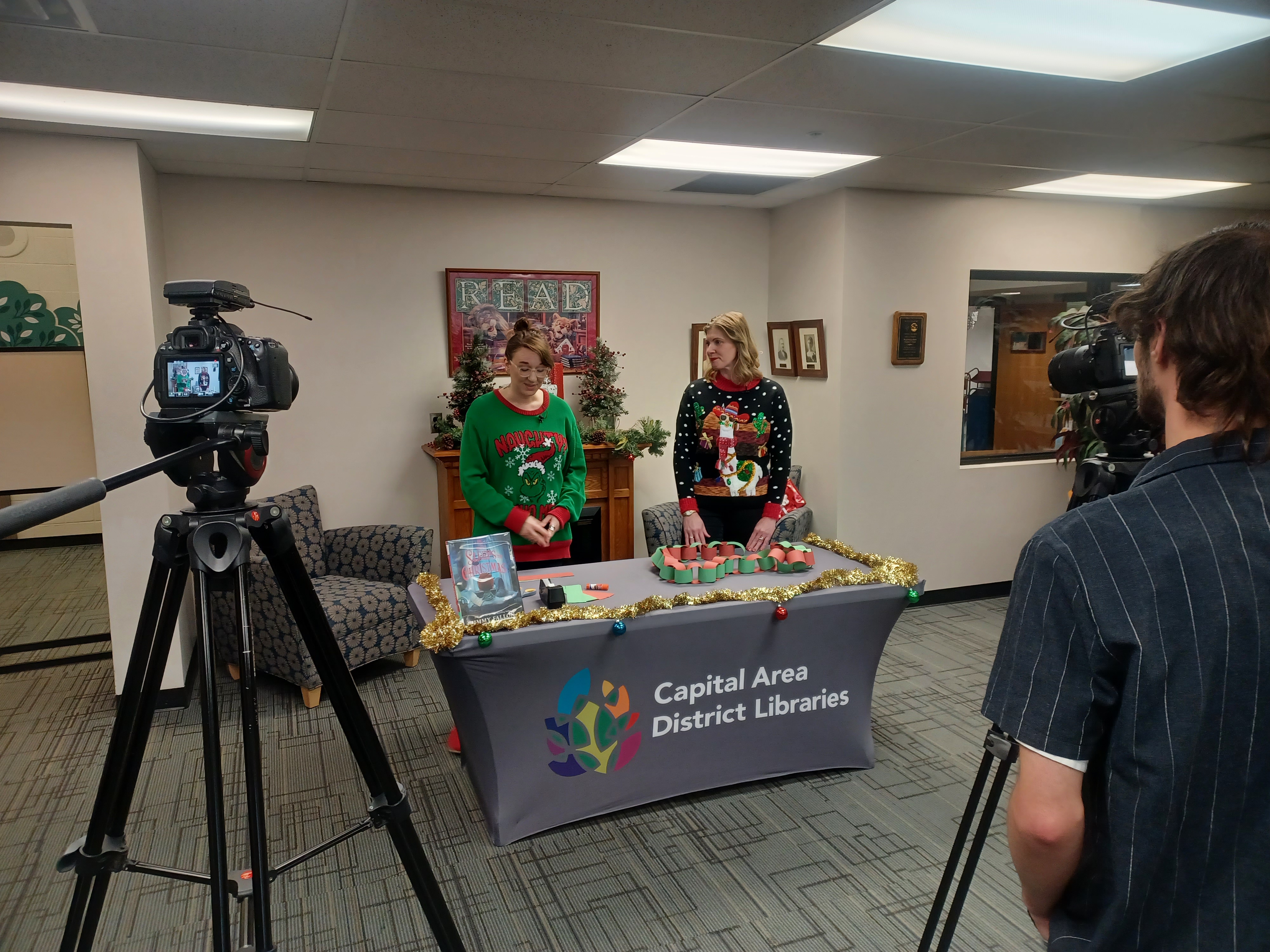
In addition to promotion on the radio, CADL began working with a local TV station WILX TV-10 to promote their reindeer visits and other holiday events.

โ€œIn addition to on-air ads, we also run homepage takeovers of WILX.com,โ€ said Trenton. โ€œA homepage takeover allows us to have 100 percent share of voice by using all available ad positions for a 24-hour period. We use this practice often to generate a great deal of web traffic over a short period of time.โ€

The library has taken that one step further by sponsoring the stationโ€™s broadcast of How the Grinch Stole Christmas and 5 More Sleeps Til Christmas. Itโ€™s a fantastic opportunity to reach people who never interact with the library.

โ€œThe idea to sponsor the holiday block of specials is really based on the homepage takeover concept,โ€ explained Trenton. โ€œWe would secure all the available local ad positions during the hour block of holiday specials, which translated to two minutes. We would use this ad time to air 2, one-minute segments featuring a duo of librarians demonstrating a craft that was related to one of the holiday specials.โ€

It only took one day for the library to receive clearance from station management. The station also offered to help produce the library segments and promotional ads, as well as help create awareness of this special program the week leading up to the air date. It took another hour to shoot the segments and promos for the event.

Trenton said his library had specific goals for this paid partnership: to find ways to share the library experience. Specifically, Trenton had three main goals.

  • Increase marketing reach and frequency. โ€œWe focus on a more outward approach to our marketing. The larger pool of people we can engage with the greater chance we have to convert them to users of the library. The same is true of how they are seeing and hearing our messages and content. โ€œ
  • Strengthen brand awareness. โ€œThese programs provide us with an opportunity to highlight our expertise, create awareness of CADL, and position the library differently in the minds of the viewers and listeners.โ€
  • Expand promotional inventory. โ€œCreation of programs like these provide CADL with content in which to promote other services and generate sponsorships.โ€

โ€œSince the specials aired during primetime on Friday evening, December 23, we were confident that there would be a large viewing audience and worthy of the $800 price tag,โ€ shared Trenton. โ€œThe total planning time on our part was about an hour.โ€

The television and radio events were marketed via email, social media, branch digital signage, press releases, a holiday guide, and promos on radio and television stations. โ€œAll the tactics helped spread the word about the specials,โ€ said Trenton. โ€œBut I favor the digital ones because they provide real-time reporting on engagement.โ€

And, the partnership was indeed a success. โ€œBased on the audience sizes of both our television and radio programs, we were able to accomplish our goal of increased marketing reach,โ€ shared Trenton.

โ€œThrough the partnerships with both the television station and three radio stations, we received free promotional ads which helped with our goals of increased frequency, strengthened brand awareness, and more content in which to use to cross-promote services and use for sponsorships. Discussions have also begun about expanding the number of radio stations airing our special storytime.โ€

Trenton says his library marketing inspiration comes from the for-profit world including Disney and retail outlets.

He has advice for library marketers looking to leverage events to promote their libraries.โ€œNegotiate from a position of strength,โ€ he said. โ€œLibraries have so much they can leverage including their expertise, content, goodwill, footprint (digital & physical), and customer base.โ€  


More advice

The One Question Your Library Staff Should Ask Every Single Guest To Unlock Promotional Success!

Building Advocates and Allies: How One Library Marketer Used Storytelling To Improve Promotions and Unify His Library

Subscribe to this blog and youโ€™ll receive an email every time I post. To do that, enter your email address and click on the โ€œFollowโ€ button in the lower left-hand corner of the page.

Is Your Small Library Competing with a Bigger, Neighboring Library? This Episode is For You!

Watch the Video Now

The Library Marketingโ€‹โ€‹โ€‹โ€‹โ€‹โ€‹โ€‹โ€‹ Show, Episode 149: In this episode, we will answer a viewer’s question. “I am wondering if you have any marketing advice for a small-town library surrounded by much bigger libraries.”

“Some of our own town residents prefer going to these larger libraries. How do we stand out? It’s difficult for us because as a small-town library, we have a tiny staff that ranges from 5-7 people, so we’re all already stretched thin!”

I have three ideas for small libraries in competition with larger surrounding libraries.

Kudos in this episode go to 44 different libraries! Watch the video to see why all are being recognized.

Do you have a suggestion for a topic for a future episode? Want to nominate someone for kudos? Let me know in the comments. And subscribe to this series to get a new video tip for libraries each week.

Thanks for watching!


Subscribe to this blog and youโ€™ll receive an email every time I post. To do that, enter your email address and click on the โ€œFollowโ€ button in the lower left-hand corner of the page.

Your Library Has a Chat Service–Now, How Do You Get People to Use It? Here Are 6 Promotional Tips! [VIDEO]

Watch The Video Now

The Library Marketingโ€‹โ€‹โ€‹โ€‹โ€‹โ€‹โ€‹โ€‹ Show, Episode 143: In this episode, we’ll answer a viewer’s question.

Sara of the Washington State Library asked for help promoting library chat services. I have six suggestions that will work for any size library.

Kudos in this episode go to the Greenwich Library. Watch the video to find out why they’re being recognized.

Do you have a suggestion for a topic for a future episode? Want to nominate someone for kudos? Let me know in the comments. And subscribe to this series to get a new video tip for libraries each week.

Thanks for watching!


Subscribe to this blog and youโ€™ll receive an email every time I post. To do that, enter your email address and click on the โ€œFollowโ€ button in the lower left-hand corner of the page.

6 Simple Steps to Create the Most Important Asset in Your Library Promotional Arsenal: A Powerful Library Brand Style Guide [ARTICLE]

Photo courtesy Cincinnati and Hamilton County Public Library

Every time I see a misaligned pink square on top of blue and white plaid, my heart skips a beat.

I realize that may be the weirdest sentence I’ve ever posted to this blog but hear me out.

I am a die-hard fan of Bath and Body Works.

The bath gels, the body lotions, the candles, the hand soap. There is a scent for every season, every mood, every situation.

No, they did not pay me to say this. (But if anyone from Bath and Body Works ever reads this blog, I am willing to work as an influencer.๐Ÿ˜Š)

Bath and Body Works has a strong, recognizable brand. They don’t want you to just buy their products one time. They want you to come back, again and again. They know a strong brand style that is recognizable across all platforms is key to creating a relationship with their customers.

You want that for your library. You want your community to recognize the promotional materials you make. When someone sees a sign or a social media post or a video, you want them to know that it comes from your library without having to see your libraryโ€™s name or logo anywhere in the brand.

Building a library brand takes consistency. And to remain consistent when multiple departments and staff members create graphics, social media posts, posters, and other promotional materials, your library needs to create a brand style guide.

A brand style guide will clearly define the look and tone of marketing materials. It saves staff time. It will be used by staff when creating graphics and writing text. Most importantly, it will ensure your libraryโ€™s marketing is recognizable.

Hereโ€™s a step-by-step guide for creating your library’s brand style guide. Scroll to the bottom of this post for examples of library brand style guidelines.

Grounding statements

Begin your document by centering your libraryโ€™s brand on the guiding principles of your organization. Remind your staff of your core mission. You want to explain the importance of this work and create buy-in for your style guide.

  • Set the tone with your mission, vision, and values statement.
  • Include a sentence or two that positions your libraryโ€™s strategy, personality, and customer service principles.
  • Define your libraryโ€™s personality. Do you want people to think of you as authoritative and resilient? Whimsical and conversation? Warm and welcoming?
  • List the perceptions your library is trying to avoid, like boring, traditional, formal, or pretentious.

Logo use

Emphasize the proper use of your logo across all platforms, including print and digital.

  • Define space rules, including the use of white space in relation to the logo.
  • Set the acceptable color variations for your logo.
  • List the minimum logo sizes, including pixels, print proportions, and aspect ratios.

Colors

Your color palette is the tangible component of your brand that people notice first. Color increases brand recognition up to 80 percent. Your colors also play a significant role in how your library’s brand is perceived.

  • Include the RGB, CMYK, Hex Code, and Pantone versions of your color palette.
  • List the shades of your color palette which are acceptable for use, including those variations required for accessibility on digital screens.
  • Include color contrast requirements for print and digital screens, keeping accessibility in mind.

Typography

Like color, the fonts your library chooses are a visual cue about your brand. Your fonts should tie all communications together, from your website to print promotions. It’s important to set clear guidelines for the use of fonts.

  • List the styles, sizes, and weights that can be used. Be sure to include instructions on acceptable fonts for headers, copy, and footers or fine print.
  • Include acceptable variations on fonts, if the font is unavailable in a particular piece of creative software.
  • Set guidelines concerning spacing to maintain a consistent style when font size changes.

Tone and text

This section is important to maintain a consistent brand through all the text written for your library promotions. These guidelines will ensure people recognize the copy is coming from your library, no matter who is doing the writing.

  • Outline your preferred word and sentence length. Shorter words and sentences are easier to read and will speed up the tempo of your message. Longer words and sentences will require your audience to do more in-depth thinking but may also be more nuanced.
  • List the jargon or library terms that staff members should use. This includes terminology for how you will refer to patrons, non-cardholders, staff, branches, and your branded names for services.
  • Determine the acceptable terminology for equity, diversity, and inclusion. Set guidelines for the use of gendered pronouns, ability, and references to racial and ethnic groups within your community.
  • Set your grammar guidelines. Will you use contractions? Will you allow prepositions? What grammar rules will you keep sacred, and which can be broken?

Images

In this section, youโ€™ll give anyone creating promotional materials for your library the rules they need to find graphics, photos, and artwork that represent your library.

  • Set standards for the proper size, style, and composition of images for social media, email, digital signs, print, video, and your libraryโ€™s website.
  • List approved image sources, including a list of websites that provide free stock photos and images. Here are ten websites to help build out your list.
  • Include clear guidelines on diversity representation to ensure staff use images that accurately represent your community.
  • Incorporate guidance on the use of graphics, GIFs, and memes.

Library Brand Style Guide Examples

Does your library have a brand style guide that you’re willing to share? Email ahursh@ebsco.com and I’ll add yours to the list.


Read These Articles Too!

Call It What It Is: Toledo Public Library Explains Their New Brand Strategy

How to Pick Amazing Library Marketing Swag That People Will Love AND Build Brand Awareness and Loyalty For Your Library!

Latest Book Review

The 1619 Project by Nikole Hannah-Jones

Subscribe to this blog and youโ€™ll receive an email every time I post. To do that, enter your email address and click on the โ€œFollowโ€ button in the lower left-hand corner of the page.

A Library Staffer Reveals the Secret Formula for Connecting With and Entertaining Patrons. (Spoiler Alert: Itโ€™s a Podcast!) [ARTICLE]

Photo courtesy Cincinnati and Hamilton County Public Library digital collection

At nearly every conference I attend, there is a session on podcasting for libraries. And no wonder, as podcasting has the cost of producing episodes has declined while listenership has skyrocketed.

57 percent of Americans have listened to a podcast, according to a study conducted by Edison Research and Triton Digital. That same study found that the number of people who listen to a podcast has grown nearly 30 percent since 2018.

Dylan Posa works for the Lebanon Public Library in Ohio, which is located about 29 miles to the northeast of my home. We met at the Southwest Ohio and Neighboring Libraries Summer Planning Conference in January, where Dylan was presenting a session on podcasting.

The idea for LPLCast was born in the first days of the pandemic. โ€œWhen our library shut down in March of 2020, the Director tasked each member of the staff to find ways that we could continue to reach our patrons and community while the doors were closed,โ€ recalls Dylan. โ€œMy wife had recently turned me on to podcasts, so she suggested that the library create one. I immediately knew who I would choose for a co-host, as we had an easy rapport at work already.โ€

Dylanโ€™s co-host is Barb Leitschuh, a Circulation Desk Supervisor at the library. Barb has been working at the library for more than 22 years and is a longtime resident of Lebanon. โ€œShe knows everyone on a first-name basis, and has a very snarky sense of humor, which makes our conversations that much more fun,โ€ says Dylan.

The next step for Dylan and Barb was to set some goals for the podcast. Dylan knew that the work he was doing needed to align with his libraryโ€™s overall strategic goals. โ€œOur overall strategic goals have always been focused on community,โ€ said Dylan. โ€œFor instance, we have never installed self-checkout stations because we feel itโ€™s important to have contact with all our patrons whenever possible. Our goal for the podcast is to create a fun and informative environment where we can highlight library services while supporting our community.โ€

The first episode was published on September 20, 2020. Dylan and Barb keep to an ambitious publishing schedule, releasing new 30-minute episodes every week. โ€œWe feel like this is a decent amount of time to invest, from a listenerโ€™s point of view,โ€ said Dylan. โ€œThe type of podcast we were creating wasnโ€™t going to be serialized, and we didnโ€™t want to inundate listeners with lots of detail and data. I think people would be surprised at how fast 30 minutes goes by when the talk is light and breezy!โ€

Dylan, a musician, and home recording enthusiast used his own equipment to produce the few episodes. Eventually, his library saw the value of the podcast and agreed to invest about $250 in equipment. โ€œThe first cost was the hosting site, โ€œsaid Dylan. โ€œI looked into several options, and the one I signed up for costs $15 per month.โ€

โ€œThe library had microphones and cables, so I got a 4-channel USB mixing desk that all inputs can go through,” continues Dylan. “Then I decided to use a free piece of software called Audacity that enables me to record, edit, and upload files to the hosting site. I use Garageband to create the โ€˜bumperโ€™ music for each segment of our episodes; bonus points for also being free! You also need a piece of promotional. I used a free site called Adobe Spark to design something eye-catching.โ€

Barb oversees finding guests. In the beginning, she would just call patrons who she was already friends with and ask if they wanted to be on the podcast. But this task has gotten easier since Barb and Dylan have moved to a new format, which isnโ€™t dependent on having a guest in every episode. โ€œWe started to open up our programming a bit, and we wanted to integrate more of the other departments into the podcast,โ€ says Dylan.

โ€œThe first segment is an overview of what the library has going on over the next week โ€“ programs both passive and active, events, displays, etc.,” explains Dylan. “The second segment is now open for guests but is also a chance to talk to employees about whatever they want to talk about.โ€ Each episode ends with book recommendations.

During the pandemic, Dylan would bring the equipment to Barbโ€™s living room. But lately, theyโ€™ve been recording in their libraryโ€™s training room. โ€œWe record about 35-45 minutes of material, and I edit it down to get rid of any weird noises or digressions,โ€ says Dylan.โ€ Sometimes a guest will ask to re-do a section, or I will have to get creative to work around some technical glitch.”

“It usually takes me about 30-45 minutes to get the episode published,” continues Dylan. “Between editing, exporting to a smaller file format, uploading onto the hosting site, creating the metadata, and double-checking to make sure I posted the right file.โ€

The next step is marketing each episode. Dylan says his library relies on bookmarks, which he says is… โ€œthe best marketing tool a library has! We also make sure to let people know when they check out books, and every week we post a link to the newest episode on Facebook and Instagram. We also rely on our guests to promote their own appearances to widen our exposure.โ€

So far, listener feedback is positive. โ€œThey have told us how fun we are to listen to,โ€ Dylan said. โ€œIt definitely helps to have two people who like to talk to each other!โ€

Dylan has some advice for libraries thinking of starting a podcast. He says itโ€™s crucial to figure out who your community is and create content that caters to their wants and needs.

Dylan also says there are lots of options for library staff to create a podcast even if they donโ€™t have a budget or Dylanโ€™s technical expertise. โ€œI want to emphasize that a lot of this information is simply what works for us and our library โ€“ for instance, I definitely over-engineer our recording,” says Dylan. “There are a number of options for recording podcasts that exist as apps for phones and tablets.โ€

Dylan Posa is the head of the Lebanon Public Libraryโ€™s reference desk and is also the manager of Acquisitions. Dylan uses his outside experience in the music business and retail industry to create new and interesting program ideas for his library.


Further Reading

Podcast Like a Pro! Amazing Advice from a Library Podcast Expert

I Asked a Podcast Host to Stop Interrupting His Guests.  What His Reaction Can Teach Us About Library Customer Service.

Latest Book Review

Hidden Valley Road: Inside the Mind of an American Family by Robert Kolker

Subscribe to this blog and youโ€™ll receive an email every time I post. To do that, enter your email address and click on the โ€œFollowโ€ button in the lower left-hand corner of the page.

Ditch the Formal Document! How One Library Turned Their Ordinary Annual Report Into a Storytelling Masterpiece That Connected With Their Community

Image courtesy Cincinnati and Hamilton County Public Library

Here is a question that has been the source of many an existential crisis for library staff. What is the value of your work?

That proposition is at the heart of a major project every library undertakes once a year–the creation of the annual report. In its most basic form, the annual report summarizes the work conducted by a library during the preceding year.

But what if the annual report was more than a formal document? What if it truly told the story of the impact a library had on its community, beyond numbers and statistics?

Thatโ€™s what Explore York Libraries and Archives in the United Kingdom, led by Barbara Swinn who is Head of Strategy and Engagement, set out to do this year with their annual report.

Explore York provides library service for a city founded in 71 AD by the Romans. The flagship library sits within Roman-era medieval walls and has the remains of St Leonards, the largest hospital in medieval Europe, within its grounds.

The library serves more than 211,000 residents. It is an affluent city but there is also need in the community. 13 percent of children in York live in low-income families.

Putting together an annual report that connects with a varied audience and also demonstrates the vast but important work of Explore York is daunting. Barbara has a small team at her disposal: herself, a co-worker, and an outsourced graphic designer. But these three visionaries wanted to do more than report facts and figures. So, they took a storytelling approach to their annual report.

โ€œNot everyone who reads our Annual Review will necessarily be a library user. This is our chance to intrigue, delight, and create that โ€˜wow, I didnโ€™t know my library did thatโ€™ moment.โ€     

Barbara Swinn

Barbara begins work on her next annual report as soon as sheโ€™s released the latest version. โ€œWe already produce quarterly reports for our Board of Directors, and for the City Council,โ€ explains Barbara. โ€œHowever, these reports are focused on fairly ‘dry’ information โ€“ statistics, evidence that we have met contract requirements, etc. We recognized that our Annual Review needed to be more than a reiteration of the yearโ€™s quarterly reviews. We knew, at the end of an extraordinary year, that our pandemic story made a powerful case for the enduring value of public libraries not only in our city but everywhere.โ€

So Barbara and her team decided to take a different approach. โ€œTo start off our planning we read Angelaโ€™s article on โ€œThe Dreaded Annual Library reportโ€ (!) and used it as a basis for our approach,โ€ Barbara recalled. โ€œWe read the example Reviews cited in the article, we chose our favorites, and decided which bits we were going to steal from them! We also looked at the Reviews some of our local cultural organizations had produced. We shared our thoughts with our graphic designer early on too, so she could start to think about how some of our preferred visual elements could be incorporated using our branding and style.โ€

Next, Barbara and her team set goals for their annual review. They had to connect with a variety of audiences, from politicians to donors to volunteers to library users. โ€œWe kept in our mind what we wanted our audiences to think, feel, and do as they read our Review,โ€ remembers Barbara. โ€œWe wanted them to understand the breadth and depth of what we had provided, feel reassured and proud of their libraries, and to support us in future years whether financially or through advocacy or practical support such as volunteering.โ€

“We wanted it to be a powerful advocacy tool and something that would tell our story through its imagery and design as well as through words and numbers.”

With all that in mind, Barbara and her team began to plan and gather content for each section. But she recalls that, with so much worthy and valuable work happening at her library, the focus was tricky. โ€œOur aim was to hold up some diamonds from our daily work and from our special projects, so they could shed light over all the work we do day by day, in every library and Reading Cafรฉ across the City of York,โ€ explained Barbara.

The team did a lot of groundwork gathering feedback and testimonials from the community. โ€œSome of the feedback we had gathered specifically with documenting our pandemic story, some arrived through the ordinary feedback channels and through conversations with our library staff,โ€ said Barbara. โ€œWe gave equal weight to facts and figures, quotations from people, and imagery. We edited and edited to keep the words brief and to the point.โ€

โ€œTelling the story was key for us,โ€ continued Barbara. โ€œWe wanted to create a connection with the reader and us, to demonstrate our values that would hopefully resonate with the reader and encourage them to find out more, to become more involved perhaps as a volunteer or potential funder. Angela described this as a call to action for readers, that by the end of the review they would know what help we need for the following year.โ€

The final product is extraordinary. Read it here.

Barbara has some advice for libraries in putting together their annual report or review. โ€œRemember we are all about stories, we hear them every day and we see the impact we have on the lives of people in our communities every day,” she explains. “Use that rich resource to shine a light on the value of our community activities, programs, and events to stir emotion and build a connection to our organization. Inspire future donors and volunteers to be involved, to want to be part of our story.โ€

Barbara Swinn joined Explore in 2015 as manager of the city centre flagship library York Explore and has worked in the libraries sector for 40 years. She’s been awarded the British Empire Medal in The Queenโ€™s Birthday Honours for her work with the library. She is a passionate advocate for public libraries and a gifted leader. Committed to improving the customer experience, Barbara is skilled at creating spaces and environments where people can learn and grow, connect with others, and contribute to their community. In particular, her work with the award-winning Explore Labs project shows Barbaraโ€™s exceptional talent for development and innovation. Her work and encouragement have helped Explore grow and develop as a cultural business, and she is always looking at new ways for people to engage with the riches of Yorkโ€™s libraries and archives.


You May Also Want to Read These Articles

Help Your Community Understand a Crisis: 3 Tips To Thoughtfully Address World Events With Library Promotions

Does Your Community Feel Welcome At Your Library? Why Inclusive Language Is a Critical Part of Your Promotions.

Latest Book Review

To Sir, with Love by Lauren Layne

Subscribe to this blog and youโ€™ll receive an email every time I post. To do that, enter your email address and click on the โ€œFollowโ€ button in the lower left-hand corner of the page.

Spending Library Money on Social Media: The Beginner’s Guide to Buying Promotional Ads on Facebook, Instagram, and YouTube

Photo courtesy Cincinnati and Hamilton County Public Library

When I was a kid, I was careful to always order the least expensive meal on the menu.

When we shopped for clothes, I always picked the cheapest option. At the start of each school year, I scoured ads (yes, even as a child!) to find the lowest prices on supplies, backpacks, and lunchboxes.

My frugality was a blessing during my time working in a library. I did a lot of effective promotions for free, especially on social media.

When I started work at the library in 2013, the average organic reach of a Facebook post was 12.5 percent. Today, it’s just 5.2 percent. That means roughly only one in every 19 fans will see your content. That is a huge decline.

Platforms adjust their algorithms to help them make money. And that’s why organic reach is now so limited.

Why your library might want to spend money on social media ads

Social media ads can do what organic posts cannot. They will ensure your posts will be seen by your target audience.

For major library campaigns, there is value in spending precious library dollars to purchase social media ads. Your library should consider investing in social media ads for the following reasons:

  • To reach new audiences
  • To solicit participation in system-wide programs like summer reading
  • To publicize larger library events especially if your library has invested a lot of time and money creating the event.
  • To publicize building openings and renovations
  • To soften the ground for upcoming levy or bond issues
  • To introduce a new library director or board member
  • To solicit donations
  • To recruit volunteers

Careful planning will lay the groundwork for a successful library social media ad campaign.

Planning your library social media ads

The first step is to identify your goal. What result are you looking to achieve? Be specific. Use numbers. Specify how you will measure the results.

For example, you may write goals like these:

  • โ€œLast year, we had 500 kids ages 12-18 participate in our summer reading program. This year, we will increase that participation number by 25 percent to 625 kids.โ€
  •  โ€œWe will fill 95 percent of the seats at our next virtual author program with Benjamin Gilmer, author of the new book, The Other Dr. Gilmer. Our platform has a 300-viewer capacity, so we will get at least 285 people to log on for the event.โ€

Once you have a specific goal, your next step will be to identify your target audience.

Letโ€™s take the two examples above. The target audience for the summer reading program goal would be teens, their parents, and teachers. For the virtual author program, your target audience would be avid readers of nonfiction, true crime, and thriller books, book club leaders, medical professionals, lawyers, and criminal justice leaders, as well as medical, law, and criminal justice students from the nearby university. Note your target audience under your goal.

Finally, youโ€™ll need to determine the content of your ads. To do that youโ€™ll make these decisions:

  • What text will we use?
  • What images will we use?
  • What will our call to action be?

When those details are in place, youโ€™ll be ready to begin buying your ads.  

Choosing your social media ad platform

Letโ€™s compare the three major platforms on which libraries typically purchase ads: Facebook, Instagram, and YouTube.

Facebook

Facebook is still the largest of the social media platforms, with nearly two billion active daily users. 15 percent of those users interact with ads on Facebook.

Facebook has the most powerful and accurate tools to optimize and target your audience. Facebook says nearly ten percent of the people who see the ads take an action. Thatโ€™s quite high, and a great argument for using money to buy Facebook ads.

It used to be that libraries would create one ad on Facebook and be done with it. But Facebook now encourages pages to run multiple ads at the same time for optimum results.

But donโ€™t worry about having to create the perfect combination of text, images, and calls to action. Facebook makes it easy with its Dynamic Ad creative tools. Youโ€™ll find them in the Facebook Ad Creator section.

Select โ€œoptimize ad creative for each person.โ€ Then give Facebook at least two options for text, headlines, and images or videos. Facebook will then use keywords and its extensive knowledge of its own audience to mix and match the right combination for your target audience.

To increase the chances that your dynamic ad content will be successful, be sure to select the keywords in your text and headlines carefully and strategically. Facebook will use these keywords to help it decide who your ads will be shown to, and when theyโ€™ll be shown.

The final step is to set up Google Analytics on your libraryโ€™s website with a Facebook Pixel. That will allow you to accurately track your ad on Facebook. The pixel will give your insight into how many people click on your ad and come to your libraryโ€™s website to take any action, like registering for a program or signing up to participate in summer reading.

Once your ad creative pieces are chosen and your pixel is set up, run a test of all the ad options for seven days. At the end of the week, youโ€™ll have a clear idea of which ad combination works the best. You can then invest a little more money in the ad with the best performance.

Boone County Library in Kentucky used Facebook ads.

Facebook also makes it easy to retarget people who interact with your initial ads. For example, letโ€™s say you bought ads to spread awareness of your summer reading program. When registration opens, you can buy a second ad that will be shown to people who engaged with the first ad. That second ad might have a goal of getting those folks to register and pick up their reading log from the library.

A few weeks after that, your library could buy a third ad, retargeting anyone who engaged with the first and second ads. That third ad may have the goal of asking people to share summer reading content like photos of their book haul, their reading log, or their participation prizes.

Instagram

Instagram has around 500 million daily active users. 70 percent of shoppers say they use this app specifically to shop!

Libraries might not be selling anything, but we can certainly use the sales tools to drive engagement with our collection and services. And since the platform is owned by Facebook, libraries have access to the same targeting options that make Facebook ads so effective.

There are five types of Instagram ads:

  • Photo
  • Video
  • Carousel
  • Collection
  • Stories

Photo and video ads are self-explanatory. They feature one photo or video that shows up in the Instagram feed.

An example of a photo ad on Instagram.

Carousel ads let you combine anywhere from two and ten photos and videos all in the same post. People can swipe through to see everything in the carousel. These ads are dynamic, and they stand out from everything else in the Instagram feed.

Companies use collection ads to directly sell products. People can browse a wide range of products and services captured in a story format. For a library, a collection ad would let you showcase a series of specific library services, like a list of individual titles in a theme, or a list of your most popular databases.

You can also run Instagram story ads for your library. This would allow you to incorporate filters, video effects, music, and texts in these ads. And best of all, they include a swipe-up feature that directs the users to your library’s website.

To run an Instagram ad for your library, youโ€™ll need to have an Instagram business or creator accountโ€”you canโ€™t post ads from a personal Instagram account. You can convert your library page to a business account if you havenโ€™t already done so.

Youโ€™ll be able to effectively target your audience on Instagram in the same way that you can on Facebook. Youโ€™ll choose from criteria including the location, age, gender, behavior, language, and browsing patterns of your target audience.

With both Facebook and Instagram, your library can set a daily budget. The platforms will help you determine the correct amount, based on your target audience specifications. For most libraries, a budget of $10 a day will be an adequate amount for a successful ad campaign.

YouTube

YouTube boasts an audience of over two billion monthly users. The platform is especially effective for reaching Gen Z. YouTube reaches more adults aged 18 to 24 than any TV network.

YouTube has two kinds of ads. The first, and most popular among users, is called โ€œTrueView.โ€ TrueView ads play before someone watches a video or in the middle of a video. The viewer may get the option to skip the ad after it plays for about 5 seconds. Your library can also customize your videoโ€™s call to action in a TrueView ad.

An ad that viewers can skip might not sound like a great idea. But YouTubeโ€™s pricing structure is set up so that your library will only pay for the ad if the user watches at least 30 seconds of a long ad or the entirety of a shorter video ad.

YouTube also has non-skippable ads that can play before, during, or after the main video. These are interruptive ads, but if you have a beautiful video ad that is valuable and entertaining, you wonโ€™t annoy the viewer. Non-skippable ads are shorter, between 7 and 15 seconds in length.

An example of a non-skippable ad on YouTube

The process of buying an ad on YouTube is slightly more complex than it is for Facebook and Instagram. Your library may end up being connected to a Google specialist by YouTube to help you make your final decisions.

But in general, once you’ve created your video ad, you’ll make some decisions that will impact the effectiveness of your ad. You’ll let YouTube know what goal you’re trying to reach. You’ll also indicate the demographics of your target audience. And you’ll set the budget for your ads. Then, your campaign begins!

Has your library purchased social media ads before? On which channels? Did you see results? Share your experience in the comments!


You May Also Want To Read These Posts

Summer Reading 2022! How to Decide If Your Library Should Use Pre-Produced Graphics or Make Your Own

I Need To Replace My Libraryโ€™s Outdoor Banners! Promotional Advice for Your Prime Exterior Marketing Space

Latest Book Review

Wish You Were Here by Jodi Picoult

Subscribe to this blog and youโ€™ll receive an email every time I post. To do that, enter your email address and click on the โ€œFollowโ€ button in the lower left-hand corner of the page.

A WordPress.com Website.

Up ↑