Search

Super Library Marketing: Practical Tips and Ideas for Library Promotion

Category

Conferences

The Top 8 Must-Attend Library Marketing Conferences of 2025

Photo courtesy Public Library of Cincinnati and Hamilton County https://digital.cincinnatilibrary.org/digital/collection/p16998coll12?fbclid=IwAR3gV2a2TMW2DFTLlsU0shgVGKzEFtzSJBYpqyAircAHN3eh6wvoE-siipw
Photo courtesy Cincinnati and Hamilton County Public Library

My coworkers can always tell when I’ve returned from a good conference.

I usually have pages of notes and ideas. I schedule meetings with coworkers to talk through ideas. I write blog posts! I’m brimming over with new information and enthusiasm for this profession.

What topics do you want to see covered at conferences this year?

That’s why, every year, I research and release a list of conferences for my friends who also work in library promotions. I want you to have the chance to learn from experts while not breaking the bank. Here’s what I look for in a conference.

  • The conference has a robust selection of sessions specifically centered around marketing and promotions. Many conferences on this list are not specifically designed for libraries. But if the conference will teach you techniques or new concepts that you can adapt to your library work, I’ve included it.
  • The conferences are budget-friendly. I am keenly aware of budgetary constraints for libraries. That means some really incredible conferences are not on the list because they are just too darn expensive.
  • Some conferences are virtual, and some are in-person. I tried to offer a range for those who wish to travel and for those who are not able to travel.
  • Most of the in-person conferences in this list are all in the United States or Canada. If you know of a great marketing conference with content that applies to library marketing and is located in another country, please add the info to the comments for my international readers.

The 8 Best Conferences in 2025 for Library Marketing and Promotions

American Marketing Association

Full roster of events, virtual and in-person, throughout the year.
Price: Ranging from free to $500

This year, the American Marketing Association’s event schedule makes it worth it to join the organization. Each month, there are several events planned on a whole range of topics from AI to social media to video and working with influencers. Some events are free, others cost up to $500 for non-members.

Digital Marketing Conference Series

62 separate in-person and virtual events happening between March and November 2025 across the globe
Price:
Varies by location. You’ll generally pay around $620 for the bottom-tier in-person pass and about $210 for the virtual pass.

This series includes sessions on customer engagement, social media marketing, video marketing, web analytics, email marketing, content marketing, search engine optimization, geo-targeting, and more. Each event has its own website and agenda so you can pick the right session for you.

Digital Summit Series

6 separate in-person events between March and December 2025 across the USA.
Price: $525 for a main conference pass

This conference covers content, social media, email, SEO, analytics, and strategy. The conference offers talking points to use to convince your boss. They have discounts for sending three or more people. And I’ve looked over the schedule: They’ve got top-notch speakers on the list. This is a great way to learn about marketing from some of the top minds in the industry at a very affordable price.

Computers in Libraries 2025

In-person event, March 25-27, 2025, in Arlington, Virginia
Price:
Ranges from $299 to $949 depending on how many days you wish to attend and whether you want to participate in workshops.

There is a track each day that is promotions-related. On Day One, it’s called “Engaging Our Communities.” On Day two, it’s “Content Management.” And on the last day, it’s “Making an Impact and Creating Value.” I think the session choices really make it worth your time and money.

Social Next

In-person events across Canada between March and September, 2025 plus a Virtual Summit in December, 2025
Price:
Prices start at $199 Canadian

The schedule is robust with topics including content creation, social media, advertising, non-profit marketing, and more. And with events across regions in Canada, plus a very affordable digital event, I think this is a great option for library marketers in Canada.

Special Libraries Association

In-person event, July 7-19 2025 in Pittsburgh, PA
Price: $425 for students to $900 for late registration

This year’s theme is “Creative Transformation,” with programs and activities designed to foster innovative thinking and help you meet the challenges of a quickly changing information landscape. They have an entire track on marketing and competitive intelligence, which makes it valuable for libraries at places like museums, military bases, and law firms. Registration includes continental breakfast, lunch, a welcome reception, and a dance party!

Guru Conference

Virtual event, November 6-7, 2025
Price: Free

A favorite of my team at NoveList, this free virtual event is packed with tips for email marketing and advice for promotions. It’s energetic and usually has celebrity keynotes (last year was Sarah Jessica Parker!). There are no recordings, so you must set aside time to watch the sessions live. Block your calendar now.

Library Marketing and Communications Conference

In-person event, November 12-13 in St. Louis, MO
Price: TBD

If you have to pick one conference to attend this year, make it this one. This is an amazing opportunity to learn so much about marketing, communication, public relations, social media, and outreach in academic, public, and special libraries. The sessions explore issues that are important for this niche of library work. The conference includes time for attendees to network and discuss mutual challenges. Registration opens later this year. Sign up for their mailing list on the website to get more information. Join their Facebook group to start networking right now. I will be there!!!


Want more help?

How One Library Got All the Stock Photos It Needs for Promotions in Just One Day!

Subscribe to this blog and youโ€™ll receive an email whenever I post. To do that, enter your email address and click on the โ€œFollowโ€ button in the lower left-hand corner of the page. You can also follow me on the following social media platforms:
Nail Your Next Community Presentation: 7 Tips and a Free Outline!

Photo courtesy Cincinnati and Hamilton County Public Library

Iโ€™ll never forget the first time I spoke in front of a community group on behalf of the library.

I was a nervous mess. The pressure was high. So much was riding on my five minutes in front of this group. I wanted to connect with my audience, transfer some of my passion for the library to their souls, and inspire them to action.

A community presentation is a unique opportunity to talk directly about the value of your library. What you say in those moments will stick with people longer than any flyer or sign ever will. But for maximum impact, you must take a strategic approach to your presentation.

And, although I know that five minutes doesnโ€™t seem like a lot of time, it is! If you donโ€™t believe me, stop reading this blog, set a five-minute timer, and just sit there with your eyes closed trying to predict when the timer will ring.

Five minutes is a LOT of time. And you can do a lot in five minutes!

Here are seven tips to make any presentation engaging and impactful. Scroll down to see a sample outline Iโ€™ve created to walk you through creating a presentation that hits the mark, even when you only have five minutes to share.

Refer to the library as โ€œyour library.โ€

Many people in your audience may havenโ€™t visited or used the library in a long time. They may not think of the library as belonging to the community, and they certainly wonโ€™t think of the library as belonging to them personally.

So, in your presentation, refer to โ€œyour libraryโ€ as many times as makes sense. This is a subtle way to let your audience know that the success of the library affects everyone in the room.

Start with a hook.

You want your audience to be interested and attentive, and the best way to do that is to start right off, not by introducing yourself, but with a surprising fact or statistic about your library.

For example, โ€œYour library sees about 20,000 people who come into the physical building every year—thatโ€™s enough to fill our high school football stadium four times over! I’m Jane Doe, and I’m here to show you how your support of the library impacts those 20,000 people.โ€

You could also begin with a short, compelling story about how the library positively impacted someone in the community.

For example, โ€œI want to begin by introducing you to Susan. Susan was laid off about 6 months ago, after spending more than 20 years at her company. She came to your library for help finding a new job. We spent time updating her resume, searching for jobs that fit her experience, and practicing interview techniques. Susan landed a new job and is now making more money than she was at her former position, all thanks to the staff at your library.โ€

Choose one main message and repeat it throughout the presentation.

It will be tempting to try and talk about everything the library has to offer during your five minutes. However, listing all library services will overwhelm and confuse your audience. Instead, focus on one message you want this audience to remember.

For example, if you are speaking to the school PTA, you will want to focus your message on resources available to students and parents to help with schoolwork. Your main message would be: โ€œYour public library takes the stress out of schoolwork.โ€

Or, if your library is getting ready for a major construction project, youโ€™ll want to talk about how the renovations or new construction will provide better service to the community. Your main message would be: โ€œThese new library spaces will be vibrant, accessible places where everyone in our community can thrive.”

Whatever your main message is, try to work that into your presentation at least three times. Repeating it will help it stick in the minds of your audience.

Use visual aids.

You can put together a short slide deck to help drive home your key message. Be sure to keep your slide text short. Add infographics, photos, or short video clips that reinforce your message.

If the room setup does not include a screen for a slideshow, bring handouts with you! Add your key message points to the top of the handout, and then some visuals like charts, photos, or infographics.

Add an interactive element.

You may be tempted to talk for your entire five-minute slot. But your audience is more likely to remember what you say if you involve them in the presentation in some way.

Launch a poll. Several free sites like Slido and Mentimeter let you embed a poll question in your slide deck with a QR code. Or just ask for a show of hands.

You could also ask a question of your audience, like, โ€œHow many of you have visited our library in the past month? What is the first thing you remember seeing when you walked into the building?โ€

Or try a mini-activity. For example, you could ask everyone to take out a piece of paper and write down as many library services as they can think of in 30 seconds.

End with a call to action.

Give your audience something to do after your presentation. You can invite them to visit the library for a special prize. You can ask for volunteers or donations. One library staff member Iโ€™ve spoken with did a presentation on intellectual freedom and handed out talking points, encouraging the audience to use them in conversation with friends at family.

Practice your speech.

A practice session or two can help identify parts of your speech that are less engaging and can ensure you stay within your time limit.

Ask a few coworkers to play the audience and then ask them for feedback on your presentation. Or record yourself giving your speech so that you can evaluate the timing, pace, and content.

Sample Outline for a Five-Minute Presentation

To help get you started, Iโ€™ve created this outline template for a community presentation. By following this structure, you can deliver an engaging and persuasive message about the benefits of the library within a short time frame.

Introduction (30 seconds)

  • Start with a hook: Share a surprising fact about your library or a testimonial or patron story.

Main Message (3 minutes)

  • State the main message you want this audience to remember.
  • Talk about the service you are highlighting.
  • Share how this service impacts your community, and how the community would be impacted if the service were NOT available.

Engagement (1 minute)

  • Ask rhetorical questions.
  • Insert an interactive element.

Conclusion (30 seconds)

  • Call to action: Leave your audience with a task that reinforces your key message.

P.S. You might also find this helpful

The Clever yet Simple Trick One Library Marketer Uses To Remind Her Community of All Her Library Offers Every Day of the Year!

Subscribe to this blog and youโ€™ll receive an email whenever I post. To do that, enter your email address and click on the โ€œFollowโ€ button in the lower left-hand corner of the page. You can also follow me on the following social media platforms:
10 Tips to Make The Most of Your Next Library Marketing Conference

Photo courtesy Cincinnati and Hamilton County Public Library

My phone has a folder just for conference apps. And perhaps this is super nerdy, but I get a sense of thrill from moving an app from the folder to my homepage. It means it’s time to attend a conference!

Conferences, in whatever form they take, give you space to step away from your normal work tasks and learn, network, and get re-energized.  

And for those of us working in library marketing, conference attendance is vital. Promoting your library means you have to balance a number of skills, like creative writing, data analytics, and project management. We need ongoing training and inspiration to do our best possible work. Conferences help you do that!

But, to get the most out of the experience, you’ll need to do more than show up and take notes. Here are my top 10 tips to help you get the most value out of your next conference.

Pick your sessions in advance.

Before you get into the car, train, or plane to travel to the conference, decide on which sessions you’ll attend. Most conferences offer sessions in tracks. Those are a series of related sessions designed to give you an in-depth and multi-layered education about one area of librarianship.

You may be expecting me to recommend that you always attend sessions in the marketing, communications, or outreach track. And I do… but only if your library is sending more than one person to the conference.

If you are traveling solo, choose your sessions based on the needs of your library. Think about the coming year and the kinds of challenges that may lie ahead for your organization. Then pick the sessions that will help you to meet those challenges.

For example, this year at LibLearnX, I attended a session on strategic planning for libraries. I knew that I needed to learn more about the process so that I could encourage libraries to add communication initiatives to their strategic plans.

If you’re on the fence about a session or are having trouble choosing between several speakers running at the same time, do some research on the speakers. Look on YouTube to see if you can find their past presentations. Check their LinkedIn profile, blog, or website. Their presentation style and willingness to share valuable information with their audiences may help you make your final decision.   

Sign up for notifications.

Most conferences will send you notices through email or their app (or both) with helpful info, including places to eat and have fun when you’re not in a conference session. They may also alert you when sessions are added or dropped from the agenda. These can be valuable time savers.

Connect with fellow attendees and speakers on social media before you go.

Start checking the conference hashtag a few weeks before the conference to see who is attending and what they’re excited about. That excitement is contagious!

You might also find Facebook and LinkedIn groups connected to your conference where you can meet attendees in advance. Connecting with conference attendees and speakers ahead of time makes it less intimidating to walk into an event full of strangers.

And while you’re at it, update your LinkedIn profile. You can bet people you meet at the conference will be checking you out.

And you never know… you may find your next boss at the event. I was hired by NoveList in 2019 after meeting my current manager at the Library Marketing and Communications Conference!

Practice how you’ll introduce yourself to new people and have a few conversation starters at the ready.

You’ll be surprised how fast you can freeze up in a room full of strangers. So even though it feels weird, figure out what you’ll say to introduce yourself and then come up with three questions you can ask someone you’ve just met to help get a conversation going.

Can’t think of any good conversation starters? You can steal mine! Of course, they are all library marketing questions.

  • What’s the best way you’ve found to send messages to your community?
  • What social media channels does your library use to communicate with your cardholders? Which one works best for you?
  • How does your library measure your marketing and promotion success?

Get familiar with the venue and pack your conference tote bag.

Try to arrive on the day before the conference so you can go to the venue. Figure out where the exhibit hall, session rooms, food booths, and restrooms are located. Knowing how to get around can help ease your nerves.

If the conference has early check-in, take advantage of it. The registration desk is always busy on the morning of the first day of a conference. Youโ€™ll be glad to avoid the lines and get right into your sessions.

The night before the conference, pack a notebook and pens or your laptop, some business cards, a small snack, your water bottle, and a phone charger into a tote bag or backpack. But be sure to leave room for freebies you’ll pick up in the vendor hall.

Take notes in sessions. 

You might be tempted to skip this step, given that many speakers make their slides publicly available after the presentation. But you’ll absorb more of the information if you take notes.

Ask questions of the speakers. 

If you are in the midst of a session and you have a question about the material, write it down. Most conference sessions include a question and answer time at the end of the session.

If you find it too intimidating to ask a question of a speaker, approach them after the session. Theyโ€™ll be happy to talk with you one on one.

Give yourself a break.

I made one big mistake at my first post-pandemic in-person conference. I went from session to session without any breaks all day long! It was exhausting and I never had a chance to reflect on what I was learning.

So now, I make a commitment to myself to take a lunch break every day of each conference I attend. If I can, I take my food outside of the venue or I visit a nearby restaurant and eat while going over my notes. The breaks help me to regain focus for my afternoon sessions. 

At the end of each day, go through your notes and compile a summary.  

Head back to your hotel and spend about 20 minutes just writing a few paragraphs about what youโ€™ve learned, who you met, and how these ideas can translate into your library marketing work.

The time you spend putting your notes in order will also help to reinforce what you learn. It will also prompt you to start thinking about ways to put those new nuggets of knowledge into practice at your library!

Put what youโ€™ve learned into practice—do not skip this step!  

When you return home, I want you to set aside one hour on your calendar as if it were a meeting. During that time, review your notes and pick two or three things youโ€™ve learned at the conference that you can do at your library.

For example, maybe you learned ten new tips to get more subscribers for your email newsletter. Choose a few of the tips and make a plan to actually try them!

Try to do this within a week of returning, when the material is fresh in your mind and your enthusiasm and energy are high.


More Advice

The Secret To Tell Compelling and Memorable Stories About Your Library That Make People Cry!

Subscribe to this blog and youโ€™ll receive an email whenever I post. To do that, enter your email address and click on the โ€œFollowโ€ button in the lower left-hand corner of the page. You can also follow me on the following social media platforms:
I Spent 3 Hours in a Room Full of Curious and Committed Library Staff: Here Are the 4 Things I Learned From Them!

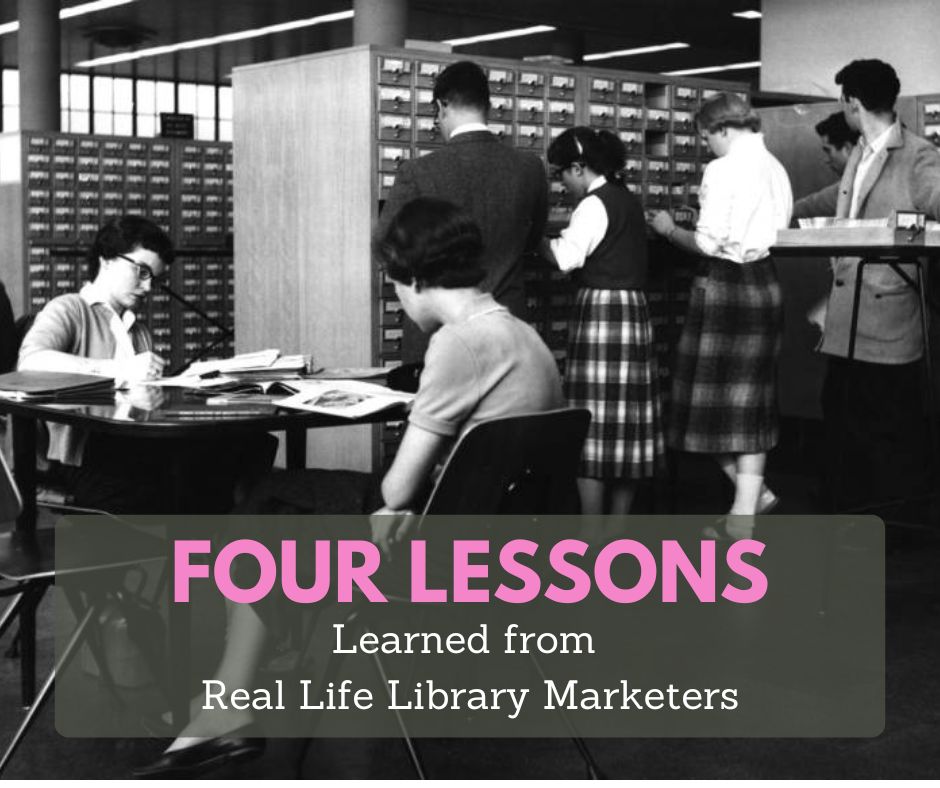
Teenagers and young people in the 1950s in a library. Some are sitting at a table looking at magazines, while others search through the card catalog.
Photo courtesy Public Library of Cincinnati and Hamilton County

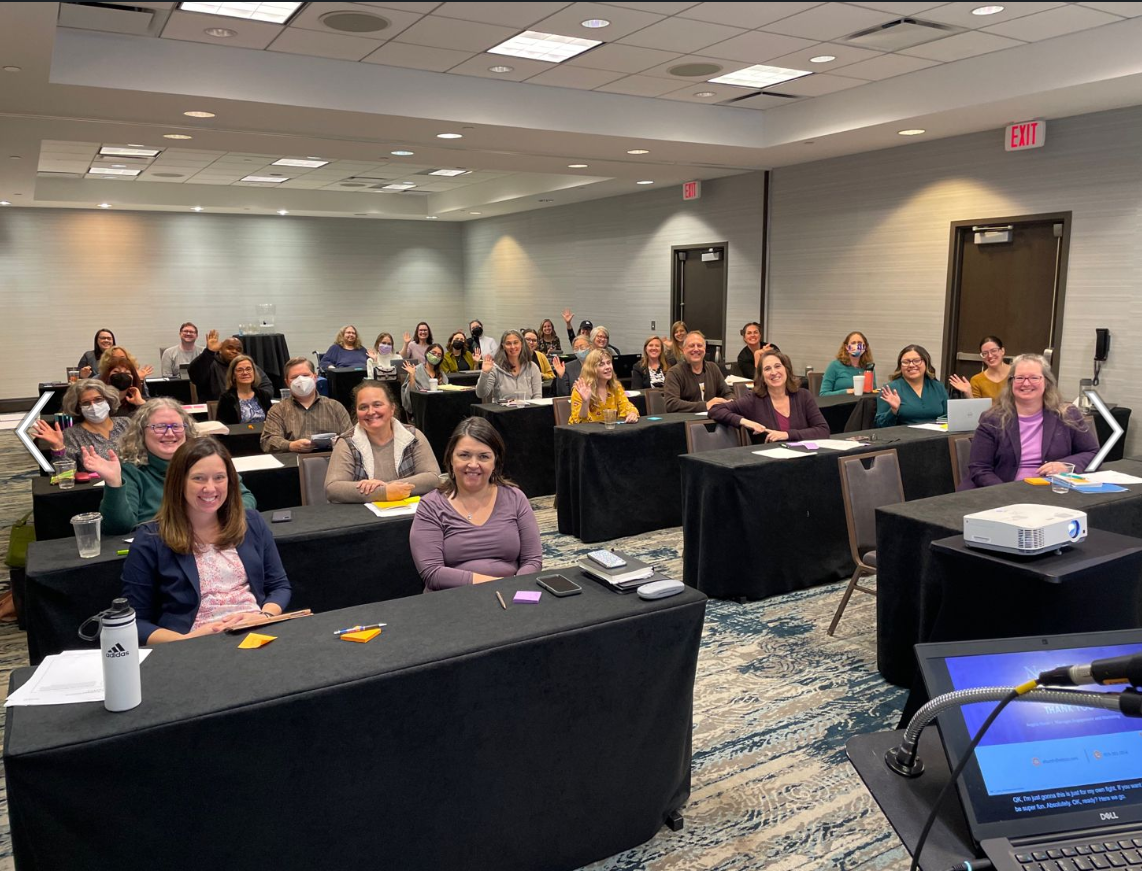
This past week, I spent three-plus hours in a room with 38 library marketers.

We worked together on all those pieces of library marketing that we donโ€™t normally have time for.

We identified our librariesโ€™ strengths and weaknesses. (My weakness: spelling).

We named our libraries opportunities and threats. We set SMART goals.

We identified our target audiences (hint: your audience is not everyone!). And we talked about measuring promotions to replicate success.

These are the fundamentals of library marketing. These are the building blocks that ensure your marketing will be successful.

This was the first-ever pre-conference workshop for the Library Marketing and Communications Conference, which returned in all its in-person glory. Shoutout to the dozens of readers who took the time to say hello to me!

I told the group that I knew, without a doubt, that I would learn something from them. And I did.

A room full of library marketers, sitting at tables and waving at the camera.
My 38 new best friends

Here are the four things I learned from this fantastic, dedicated, intelligent, creative, and curious set of library marketers.

Library marketers need time to think.

We are all doing too much.

We must make print collateral, send emails, schedule social media posts, attend meetings, make press releases, do outreach events, and then attend more meetings.

I asked almost everyone I met at LMCC how things are going at their library. And I lost track of the number of times the response was, โ€œItโ€™s been a little nuts.โ€

The idea ofย setting aside time to consider what is to be done, how it will be done, who will do it, and how it can be more effective, is an entirely foreign concept to most libraries.ย 

We donโ€™t give our employees the time to work through strategic planning. There is no rest. At many libraries, the marketing is done by librarians who also have other duties. There’s never any time to breathe.

And then we wonder why itโ€™s so difficult to create successful library marketing and communications.

That happens because we never take the time to do all the fundamental work that is necessary to ensure our marketing is effective. Weโ€™re building houses without foundations.

So, the workshop gave these library marketers permission to ignore email, text messages, chats, and outside distractions. They got three hours to focus solely on building the foundations for strong library marketing.

Itโ€™s important to create that space for yourself as a library marketer. I know itโ€™s difficult. If you canโ€™t attend a workshop, you can set aside time on your calendar, like you would for a meeting, to do this important background work.

Put your phone in a locked drawer. Turn off your chat program. You can even leave your physical workspace if you need to. When I worked at the Cincinnati Library, I would hide in the stacks when I needed to do this work.๐Ÿ˜‰

Library marketers face the same struggles.

We did a SWOT analysis exercise, where each library marketer identified their libraryโ€™s strengths and weaknesses, opportunities, and threats. And then we shared as a group.

How many of these do you recognize as your library’s weaknesses and threats?

  • A marketing team made up of one person, trying to do ALL the promotions
  • Difficulty getting people to take an action, like place a hold or register for a program after they engage with marketing
  • Having too much to do
  • Having no identifiable library branding
  • The approvals process
  • Threats to funding

The list goes on.

During this exercise, the library marketers in the room began to realize that they are not working alone on an island. There are thousands of library staffers out there who understand their struggles because they face those same difficulties. They felt truly seen.

Library marketers have a lot to celebrate.

As much as we struggle to do effective library marketing, we also have many, many, many wins to celebrate. We should be proud of:

  • Our social media engagement
  • Our impactful partnerships
  • The fact that people open and read our emails more than they do for any other industry!
  • We have so much great content to promote.

We donโ€™t do enough celebrations in library marketing. Thatโ€™s one of the reasons I started giving out Kudos in The Library Marketing Show and began recognizing libraries via #LibraryoftheDay.

You can help. When you see a library doing great marketing work, give them a shoutout on social media. Better yet, email them to let them know you noticed their amazing promotion. You can also nominate a library for Kudos on The Library Marketing Show.

A little bit of celebration goes a long way to boosting morale for library marketing. We can be each otherโ€™s cheerleaders!

Library marketers thrive when they have a friend.

Most of the attendees of the pre-conference session told me they are introverts. But when I asked this room full of strangers to pair up, the room got super noisy!

There were smiles. There was laughter. There were conspiratorial looks and nods of understanding. It was magical.

And it occurred to meโ€ฆ sometimes we just need someone who understands our work.

You may be wondering how you can find a library marketer to be friends with. One way is to join the LMCC Discussion Group. You can also join the Library Marketing Book Club.

Or you can message me on LinkedIn. Tell me a little about yourself and Iโ€™ll introduce you to a library marketing buddy.

Let’s support and encourage each other. When we work together, we strengthen the library industry and, most importantly, do a better job of providing service to our communities.


More Advice

Stop What You Are Doing! Before You Launch Another Library Event or Service, Take These 5 Steps to Define Your Promotional Strategy

Call It What It Is: Toledo Public Library Explains Their New Brand Strategy

Subscribe to this blog and youโ€™ll receive an email every time I post. To do that, enter your email address and click on the โ€œFollowโ€ button in the lower left-hand corner of the page.

Valuable and Timely Advice for Marketing from 5 of the Top Minds in Library Promotion

Photo courtesy Public Library of Cincinnati and Hamilton County

My first American Library Association Annual Conference was a whirlwind.

I spent my time in DC searching for my people. You know them–the library staff members who are tasked with promoting their libraries.

It’s a job that you can’t really understand unless you’ve done it. And these five people have done it.

So, I asked them to share their best piece of advice for library promotion. And I got five amazing answers that I wanted to share with you.

Because, no matter where you are, and no matter what size library you work for, these nuggets of wisdom will inspire you. They will cause you to think deeply and intentionally about your work.

And best of all, they will reassure you that other library marketers share your worries, problems, and challenges. You, my friends, are not alone.

Advice from 5 staffers working in library marketing and promotions

George Williams, Media Relations Manager, DC Public Library

“The most important part of marketing is to remember that it is about the customer. Before deciding on a strategy or a tactic, there has to be a very clear understanding of who would be most interested in an author, book, database, product, or service. Think about what it will help a customer do and what would that mean for them.”

“Next, use that information to think through what message would resonate with that person, what is the best way to communicate that message, and when is the best time to share that message. For example, resume help, in a practical sense, helps someone update a document. But the function it serves is to help someone rebrand their career, find a better job, or end the frustration of not being called for an interview.”

“Using that insight can help you figure out a lot of ways to talk about a service that we offer every day, That could change the trajectory of a customer’s life. Building a communications plan from that insight creates a lot of opportunities beyond a flyer that says ‘resume help.'”

“Our goal is always to connect with our customers. Starting from their perspective in planning makes a huge difference.”

April Harder, Editorial Supervisor, Arlington Heights Memorial Library

โ€œIn light of the last few years and how difficult it has been for staff to adjust to changes, be flexible. Be willing to change your methods. And then be willing to change them back if things change again. That flexibility in how you are delivering your message and how people want to receive it is key.”

“Make sure everyone on your team is cross-trained and everyone can step in at any moment and help each other out. That support aspect is super important when youโ€™re making changes on the fly and adapting to how you deliver the message based on our changing times.โ€

Michelle Nogales, Librarian, Hayward Public Library.

โ€œA lot of our library workers in their silos in the library like to produce their own visuals for social media and my one piece of advice that Iโ€™m always giving them is a social media image is not a flyer. You donโ€™t need to get all the words on it, you donโ€™t need to get all the information on it, you just need a nice image.โ€

Mark Aaron Polger, Coordinator of Library Outreach and Associate Professor, College of Staten Island, City University of New York.

โ€œCreate a marketing plan to tackle specific library services and resources. Make it scalable and manageable. Set realistic, tangible, quantifiable goals.”

“Conduct market research before planning marketing activities. All your marketing initiatives should be informed by data. Donโ€™t assume or guess what your users want. Conduct market research to identify your segments and learn about your library community.

“When conducting market research, use primary sources to obtain original data about your library community. Supplement with secondary sources like census, survey data from Pew Research, and community survey data.”

“You canโ€™t market to everyone; be selected and specific. Your marketing should target specific segments of your library community. Those segments are identified in your market research.โ€

Jordan Reynolds, Marketing Coordinator, Saline County Library

โ€œGet involved in your community. Libraries are essential to the community, but too many people assume they are only there to provide books. We all know that is not the reality! From driver’s test assistance and notary services to free Wi-Fi and computer help, libraries provide so many beneficial opportunities for free! By getting involved in the community, not only are you able to get your name and services out there, but you’re showing that your library is a team player.”

“Small businesses and civic organizations around your community can offer volunteers, provide giveaway items, sponsor events, and so much more. Join the chamber(s), put library representatives in civic organizations, and show up in the community and they will show up for you.โ€

Do you have any advice to share with fellow library marketers? Add your thoughts in the comments section.


Read These Articles Too!

Library Conferences Need More Marketing Sessions! 5 PLA Attendees Explain Why a Focus on Promotions is Critical Right Now

The 9 Best Conferences in 2022 for Anyone Looking To Learn More About Library Promotions and Marketing

Latest Book Review

Crying in H Mart by Michelle Zauner

Subscribe to this blog and youโ€™ll receive an email every time I post. To do that, enter your email address and click on the โ€œFollowโ€ button in the lower left-hand corner of the page.

Library Conferences Need More Marketing Sessions! 5 PLA Attendees Explain Why a Focus on Promotions is Critical Right Now [ARTICLE]

Photo courtesy the Cincinnati and Hamilton County Public Library

Iโ€™ve spent days trying to land on the right words to describe the amazing week Iโ€™ve just had.

I attended my first Public Library Association conference this past week in Portland, Oregon. It was glorious, wonderful, exhilarating, inspiring, transformative… and about 100 other adjectives.

Honestly, I felt like a kid attending her first week at a new school.

The sessions at PLA were mainly focused on equity, diversity, and inclusion practices. We also heard from experts about fighting censorship and first amendment challenges.

These are incredibly important and urgent problems facing the library industry. But there was a huge piece of the puzzle missing from the session offerings at PLA, and other library conferences Iโ€™m planning to attend this year.

Marketing and promotion are a critical part of all the work we do to be inclusive and to protect intellectual freedom. We need more library conference sessions that provide tips and inspiration for library promotion.

Megan Bratton, Marketing and PR manager for Natrona County Library, agrees. โ€œIt would be more valuable than most people realize,โ€ she told me in between sessions at PLA. โ€œLibraries do so much across so many spectrums and for so many demographics. It touches literally everyone in the community.โ€

We must make sure people know that our spaces, programs, and collections are open to all. We must share the message that we support EDI practices in our hiring process, collection development, and creation of services.

And to protect our libraries in the fight against censorship, we must do promotions to clearly explain the policies we put in place to ensure intellectual freedom is secure.

Marketing is an essential part of this work. Itโ€™s the job of everyone working at the library. And every library conference needs a marketing track.

The new friends I made a PLA agree with me. They shared a list of marketing struggles theyโ€™re facing that could be addressed through promotional-based sessions at library conferences.

Amy Cantley, assistant branch manager at Seminole County Public Library says she struggles to get information about her libraryโ€™s services to people outside of her buildingโ€™s wall. โ€œWe do social media promotion,โ€ she explained. โ€œHowever, we donโ€™t do any outside promotion beyond that. So, unless youโ€™re on our website on our social media channels youโ€™re not hearing about it.โ€

Lisa Plath of Collierville Burch Library says her library does a great job of marketing her collection to current cardholders. So, this year, sheโ€™s focusing on expanding her libraryโ€™s message.

Lisa says she is working on โ€œโ€ฆ getting the word out to people who donโ€™t use the library so that they know all the good we have to offer. The people who do use the library, knowing what we offer besides the books they come in to check out.โ€

Megan Maurer of Scenic Regional Library faces a similar challenge. She struggles with โ€œ… promoting things that people traditionally think about the library, but we donโ€™t necessarily do a good job of reminding people we have. We donโ€™t promote our collections or our databases.โ€

Katie Rothley of Northville District Library has seen the effectiveness of good storytelling in the for-profit marketing sector. She wants to replicate that for her library.

โ€œI really want to tell a story about each service, but I want it to be a story of the person (who)โ€ฆ was able to solve the problem by using a library resource,โ€ Katie said. โ€œConnecting with people with stories is the most effective way to spread awareness and increase empathy and prove effectiveness so I want to figure out a concise formula so I can do that. I want to connect with people emotionally and feel empowered in their own life.โ€

As for Megan of Natrona County Library, she says she would like to see more library conference sessions on creating messages and convincing everyone on her library staff to share them. โ€œEveryone in your organization should be sharing the same story,โ€ she observed. โ€œLibraries are very narrative-driven, and everyone needs to be speaking the same language. But people donโ€™t understand the value of marketing until the marketing doesnโ€™t do something they want it to… like their program doesnโ€™t get enough attendees.โ€

There is a demand for answers to these big marketing hurdles libraries are facing today. Library conferences need to add more sessions focused on promotion to their agenda. A marketing track should be part of every library conference.

Marketing courses are typically not included in most library degree programs. Library staff needs help with marketing. Itโ€™s critical to our industryโ€™s strength and survival.

So, I hope library conference organizers will take note and actively seek out more promotional-based sessions to add to their agendas. There are a lot of libraries of all sizes and shapes doing great promotions. Iโ€™d love to see more of these folks sharing their advice and stories at library conferences.

Do you agree? What is your favorite library conference? Share your thoughts in the comments.


You May Also Want to Read These Posts

I Went to My First In-Person Conference in 19 Months: Here Are the 7 Most Relevant Marketing Lessons I Learned and What They Mean for Libraries

5 Surprisingly Easy Ways to Write Email Subject Lines That People Actually WANT toย Read

Latest Book Review

All the Feels by Olivia Dade

Subscribe to this blog and youโ€™ll receive an email every time I post. To do that, enter your email address and click on the โ€œFollowโ€ button in the lower left-hand corner of the page.

Maybe the Biggest Lesson for Libraries from Content Marketing World: Why Broad is Flawed!

Watch Now

The Library Marketingโ€‹โ€‹โ€‹โ€‹โ€‹โ€‹โ€‹โ€‹ Show, Episode 114

In this episode, I’ll dive deeper into one of the big takeaways for libraries from Content Marketing World 2021. This is a concept that marketing expert Jay Baer explained during his keynote and for me, it was the most relevant takeaway for libraries from this year’s conference.

We’ll also share kudos for an amazing library promotional video. Watch the video to see which library we’re highlighting this week.

Do you have a suggestion for a topic for a future episode? Want to nominate someone for kudos? Let me know in the comments. And subscribe to this series to get a new video tip for libraries each week.

Thanks for watching!


Subscribe to this blog and youโ€™ll receive an email every time I post. To do that, enter your email address and click on the โ€œFollowโ€ button in the lower left-hand corner of the page.

I Went to My First In-Person Conference in 19 Months: Here Are the 7 Most Relevant Marketing Lessons I Learned and What They Mean for Libraries

Photo courtesy Public Library of Cincinnati and Hamilton County, Children's Room, 1950.

Last week, I felt like a groundhog venturing out of its hole after a long winter of hibernation. But groundhogs only hibernate for five months, and I’ve been in lockdown for 19 months.

I went to Content Marketing World, a global marketing conference run by the Content Marketing Institute. You’ve heard me talk about it (a lot!) here on the blog before. It’s the conference where I get the most inspiration. I come away with pages and pages of practical tips. And this year was no exception.

I listened to the top experts talk about the ways the pandemic has changed consumer behavior in email, social media, and engagement with brands. I will be bringing you more of those insights, and what they mean for libraries, in the coming weeks.

But I’m eager to share the top seven takeaways with you right now. These big ideas will impact the promotions you do for your library in the coming year.

Lesson #1: Focus only on the dataย youย need.

Jill Grozalsky Roberson, Product Marketing Director, Experience Platform, Sitecore.

Jill says you may hear from many experts that you need to be measuring certain key data points. And there are many things you can learn from data.

But, your library should focus on tracking and measuring the data points that will show you if you are meeting your strategic goals. And Jill gives you permission to ignore the rest.

Lesson #2: Email is a community builder.ย 

Dennis Shiao, Founder of Attention Retention LLC, and Ashley Guttuso, Director of Marketing for Simple Focus Software.

According to Ashley and Dennis, theย purpose of a newsletter is not to promote your events and services. It is toย buildย trust between your library and yourย community.

I’ll be translating more of their tips in the coming weeks. But for now, here’s a challenge from Ashley and Dennis: Create a newsletter that’s habit-forming, one that your audience gets excited to read whenever you send it.

The first step to doing that is to make your email newsletters opt-in. Ashley and Dennis have data to prove opt-in newsletters are more effective because readers are intentionally choosing to receive your information.

Lesson #3: We have to stop forcing our content on people. Instead, we must work to be invited into their lives.ย 

Jay Baer, Founder of Convince & Convert

Jay is an amazing author and speaker, and his keynote gave me a lot to think about.

He used the analogy of a castle and a moat to explain why people might be ignoring your promotions. Here’s how it works.

Our audience lives in a castle. Marketers are always trying to take over the castle by putting out lots and lots of promotions.

But the audience has built a moat around their castle to protect themselves from the onslaught of content. The moat is when your community unsubscribes or deletes your emails, or bounces out of your virtual programs, videos, or website after only a few seconds.

In history, armies tried to get around a moat by building a tall ladder and forcing their way into the castle. Anyone who has watched any historical drama knows this never works. The ladder gets pushed off the castle, and the soldiers never make it inside.

Instead, Jay challenged the audience to “get moativated” and get invited inside the castle by being radically relevant. He pointed out that the word “custom” is inside the word “customer.” People want content that is custom-tailored to them!

I’ll dive deeper into this idea and what it means for libraries in this Wednesday’s episode of The Library Marketing Show.

Lesson #4: Make sure your library is active on social media if you plan to do a PR push.

Michelle Garrett, PR Consultant, Garrett Public Relations

Michelle says journalists look at your library’s social media, especially Twitter, when they consider covering your library. So, if you are planning to do a major press push, you want to be active on social media before you send out your press release.

Many libraries have scaled down their posts on certain social media platforms because of a lack of engagement. I still believe that’s a good strategy, especially if your library lacks time and resources.

But, if you are planning something big and you’d like media coverage, Michelle says it’s in your library’s best interest to start posting on those platforms again a few weeks before you contact the media. It will increase your chances of getting covered.

Lesson #5: You can’t be remarkable on more than one social media channel at a time.

Joe Pulizzi, Founder, The Tilt

You may think this piece of advice runs contradictory to lesson #4. But when your library posts on social media with information about an upcoming event or service ahead of a PR push, you’ll be fulfilling a relevant but short-term objective.

Your library’s long-term objective with social media is to build audience engagement and drive people back to your website or catalog. To do that, you must be truly memorable with your social media posts. And to be truly memorable, you need to focus your efforts on one channel, preferably the place where most of your community is engaging.

Start thinking about which social media channel you would use for your library posts if you could only pick one channel. Then, create content that is relevant and remarkable in that channel.

Lesson #6: Constraintsย breed creativity.

Andrew Davis, Best Selling Author & Keynote Speaker

Andrew said the pandemic was a once-in-a-generation marketing experiment that answered the question: What happens when everyย businessย in the world is faced with the same disruptive forces?ย 

Then he told the amazing story of a sustainable farm that made an incredible pivot during the first days of the pandemic. They ended up making a huge profit, more than they had projected to make before the pandemic.

And all I could think about was the work of libraries in the pandemic. The services you created and unveiled to the public in a matter of days, including curbside pickup, book bundles, phone reference, take and make craft kits, virtual author events, and so much more, were born out of constraints.

YOU proved Andrew’s point.

I want you to recognize the awesomeness of what you did when you were constrained. Now, think about how constraints on your time and budget may lead to new creative ideas in the future.

Lesson #7: Purpose-driven marketing makes people follow, engage, and get behind your brand.

Jacquie Chakirelis, Director of Digital Strategy, Quest Digital Great Lakes Publishing

Jacquie’s talk made me realize that libraries need to highlight our doing purpose-driven work. She points out that consumers know that they have a voice. And that they are using that voice more frequently to make statements in their decisions to engage with brands who have a purpose.

Our mission statement differentiates libraries from our for-profit competitors. This is the core reason why library patrons feel loyal to your library.

Jacquie encourages you to find stories of how your library has taken a stand on issues in your community. Those stories will activate your community to become loyal fans of your library.


You May Also Want to Read These Posts

The Top Four Reasons To Use Content Marketing To Promote Your Library on Every Platform

The Virtual Library Conference is Over and Now the Work Begins! Hereโ€™s What to do Once Youโ€™ve Closed Your Laptop

Subscribe to this blog and youโ€™ll receive an email every time I post. To do that, enter your email address and click on the โ€œFollowโ€ button in the lower left-hand corner of the page.

The Virtual Library Conference is Over and Now the Work Begins! Here’s What to do Once You’ve Closed Your Laptop

Photo courtesy Public Library of Cincinnati and Hamilton County

This post is part two in my series on making the most of your virtual conference experience in 2020. If you haven’t already, I’d love for you to read part one here.

Once you close your laptop, the second part of your conference experience begins. It’s time to reflect on what you’ve learned, share with your co-workers and, most importantly, figure out how to put these new ideas into practice at your library.

Hereโ€™s a framework you can follow to maximize the value of your virtual conference experience with three important post-conference steps.

Reflect on what you’ve learned

After a virtual conference, you might be tempted to switch your brain off the minute you close your computer. But try to resist the urge to unplug right away. Instead, commit to capturing the insights you’ve learned while they are fresh in your mind.

I usually spend a half hour to an hour at the end of a conference day organizing my thoughts. At an in-person conference, I would return to my hotel, grab an adult beverage from the bar, and head to my room to organize my notes. At home, I schedule “buffer time” into my work calendar to complete this step. Reviewing your notes in detail while they are still fresh in your mind will help you retain the information.

First, copy important names, insights, and ideas into a collaboration tool like Evernote, Trello, a Google doc, or your library’s shared documents drive. Fill in details you may have scribbled down in haste. If you took screenshots, organize them so you can easily identify the presenter and session later.

If the virtual conference organizers are making videos available after the conference ends, go back to the sessions you watched to copy and paste the URLs into your notes. That way, if you want to re-watch them again, you’ll save yourself the time hunting for the right video!

Next, formalize any connections you made with other attendees. Look them up on Twitter and LinkedIn and follow them or send them a connection invite. Include a personalized message so they understand why you are reaching out.

If there were speakers or sessions that really inspired you, send a thank you email to the presenter. As a speaker, I can tell you I really appreciate hearing from attendees, especially when a session inspires them.

Finally, be sure to fill out any post-conference survey. Conference organizers and speakers truly appreciate the feedback.

Share what you’ve learned

At the very least, you’ll want to share what you’ve learned with your boss and your team. But more than likely, your conference learnings contain lessons that everyone at your library could benefit from. So, turn your notes into a short presentation and invite co-workers to watch. My husband does this as a “lunch and learn” for his co-workers.

If you aren’t comfortable doing a “live” presentation, you can record yourself on Zoom, Teams, or WebEx, and share the video (like you do with virtual story times!). Loom is also a great option for recording yourself.

During your presentation, share the top-line things you learned at each session you attended. Tie your findings to your library’s overall strategy. This will help prove the value of your conference attendance to your supervisors. It will also lay the groundwork for when you put your new ideas into practice.

After your presentation, make sure your co-workers have access to the notes you took at the conference using the collaboration tool in step one. Include links to any slideshows, handouts, or screenshots you have.

Put big ideas to work

Here’s where you find the true nuggets that will help your library. I suggest you look through your notes again and organize a new list of action items in categories that correspond with your work.

Tools and technology: List any digital trends and industry advances that your library should act on.

For instance, at the Library Advocacy and Funding Conference, I learned about new software platforms which allow libraries to gather and use data related to their community. I also learned new information about how to increase organic reach on Facebook and Instagram.

If you learn about a new social media platform or about a product that helps you to do a better job at promoting your library, list those in this section. Include the reasons why an upgrade or a change in tools and technology will help your library. Research cost and timetables for implementation.

Content inspiration: List any new creative concepts or topics you think your cardholders would respond to. If you attended a session from someone who shared practical ideas for what to put in your library’s newsletters or how to design print pieces, list those ideas. Then, pull out your editorial calendar and start scheduling!

Productivity and project management: List anything you learned that will help you and your library co-workers to do your job more efficiently.

Maybe you had a Twitter exchange with a fellow attendee whose library has an approval process you wish to imitate. Or maybe you attended a demonstration of a platform like Trello or Asana.

If you learn about new ways to address existing challenges, optimize workflow, or streamline your promotional methods, put those on your list. Your co-workers and supervisors will appreciate any new insight on how to improve efficiency at your library.

Have you changed the way you work at your library because of something you learned at a conference? I’d love to hear about it. Let me know in the comments.

You might also find these posts helpful

Six Tips to Make the Most of Your Online Experience During Virtual Conference Season

Three Transformative Tips to Improve Focus and Re-Energize You When Working in the Library Doesnโ€™t Feel Fun Anymore

Latest Book Reviews

The Escape Artist by Helen Fremont

Devolution by Max Brooks

Find more 60-second Book Reviews here.

Subscribe to this blog and youโ€™ll receive an email every time I post. To do that, click on the โ€œFollowโ€ button in the bottom left-hand corner of the page. Connect with me on YouTube, Twitter,ย Instagram, and LinkedIn.ย 

A WordPress.com Website.

Up ↑