Search

Super Library Marketing: Practical Tips and Ideas for Library Promotion

Category

Content Marketing

Fight for Your Ideas! Four Tips to Help You Get the Green Light for New Library Promotional Ideas

Photo of librarians, courtesy Public Library of Cincinnati and Hamilton County

It’s sometimes insanely hard to get any new marketing ideas to pass approval in a library.

If there is a silver lining to the COVID-19 pandemic, it’s that the crisis helped libraries to see that there are new ways to market and promote their library. It’s opened the door for experimentation.

Even so, presenting a new marketing or promotional idea is sometimes challenging and intimidating for library staff. I know this because every time I talk with librarians at conferences or in one-on-one consultations, they ask, “How do I get buy-in for this great promotional idea with my supervisors and co-workers?”

Here are the four things you can do to gather support and approval for your great new marketing and promotional ideas.

Tell me about a time you had to pitch a library promotional idea. What was the idea? Did you get a yes or no? What did you learn from the experience? Share your thoughts in the comments.

Thoroughly research and prepare your pitch.  

Before you pitch a new idea, do your research. You’ll want to present a clear, concise, and strategic case for your idea. Include the following information in your pitch:

  • How the work benefits your community and cardholders.
  • How the work ties into your library’s overall strategy and goals.
  • How the work will get done by staff.
  • The timeline for implementation.
  • What the success measures will be.
  • What the long-term goals of your promotional idea will be.
  • How you will handle problems that may arise.
  • The data to back up your claims.

Here’s an example pitch that includes these points.

You’ve determined that Facebook is not giving you the results you want when you promote individual programs. Registration and attendance at programs have been unchanged or decreasing in the last six months, despite the many posts you create. Instead of using social media, you want to start a targeted e-newsletter sent to the people who frequent each branch in your system. You believe these targeted emails will be more effective because they will reach the audiences most likely to attend these programs.

Your pitch will begin by explaining the problem using data. Include registration, attendance figures, and Facebook engagement figures especially clicks on your registration or event information links. Show how the Facebook posts are getting very little engagement and lead to no increase in registration or attendance.

Next, explain how the move to branch-specific e-newsletters will be better for your community and cardholders because it will offer information about events happening in their neighborhood that are specific to their wants and needs. Look for wording in your library’s strategic plan that will make it clear to senior leaders that you are working to fulfill the strategic goals by offering community-based access to information.

Next, make the case that e-newsletters are a more efficient use of your time because they will be more effective and targeted. Again, be specific when you talk about how long it takes to create a Facebook post versus an e-newsletter.

Now, talk about the ways you’ll measure success for your new e-newsletters: increases in registration and attendance, plus open and click rates on the emails. Be specific and use numbers. This will show that you are confident that your new idea will work.

Spend a few moments talking about your long-term goals: how many new subscribers do you want to get in the first six months or year? How much would you like to see registration and attendance grow? What other library services can you imagine promoting using your e-newsletters?

Layout a timeline: when do you think you can launch your first e-newsletter? How long will it take to grow your subscription list? How often will you send these e-newsletters?

Finally, talk briefly about problems you may encounter and how you’ll handle them. What program will you use to send the e-newsletters? Who will create them if you’re sick or on vacation?

Review and rehearse.

Review your plan several times. It’s a good idea to leave a few days in between each review of the plan, to let your ideas marinate. You may think of new benefits or pitfalls during those breaks. You’ll want to be fully prepared to answer any questions and defend your idea with confidence.

Next, practice presenting your idea to a friend at your organization. Choose someone you trust to give you honest feedback about your idea and your presentation.

You might also consider recording your pitch on Zoom or another video recording program. Check to make sure you are speaking slowly and clearly. Evaluate your tone of voice, eye contact, and body language during your practice pitch.

Pitch strategically.  

Find a time when your supervisor won’t be rushed. They’re more likely to listen to you when they have time to truly consider your idea.

Pick the right day of the week for your pitch. For example, Mondays are often busy and stressful for bosses. Your supervisor may be more negative at the beginning of the week and it’s likely not the best day for your pitch.

When you pitch, be mindful of your body language. If you are sitting in a chair, don’t pivot back and forth nervously or jiggle your legs. Sit still, but upright, and with confidence.

If you are standing, try separating your legs about shoulder-width apart. This is a “power” pose that will help you maintain good posture and will subconsciously give the impression that you know what you are doing… even if you don’t feel that confident!

If the answer is no, don’t necessarily give up. 

A “no” doesn’t have to mean the end of an idea, especially if you think it’s beneficial to your library and customers. There are no bad ideas–just ideas whose time has not yet come.  

Write yourself a note in your work calendar to revisit the idea in six months. Keep your eyes open for new opportunities to present your ideas in a different format.


Subscribe to this blog and youโ€™ll receive an email every time I post. To do that, click on the โ€œFollowโ€ button in the bottom left-hand corner of the page.

You May Also Want to Read These Posts

Prioritize! How to Decide Where To Spend Library Marketing Time and $$$

Five Creative Ideas to Help You Beat the Blues, Get Inspired, and Create Amazing Library Marketing Campaigns Again!

Two Key Areas of Marketing Focus That Will Deepen Your Communityโ€™s Loyalty to Your Library and Create the Truly Engaged Library User

Photo courtesy Public Library of Cincinnati and Hamilton County.
Photo courtesy Public Library of Cincinnati and Hamilton County. Click on the image to visit their digital library.

For most libraries, the end of the fiscal year is here. I think this is the perfect time to implement two new areas of focus for library promotions.

As discussed last week, libraries are at a critical moment. As we emerge into the post-pandemic world, we should not go back to doing things the way we were doing them before the crisis. That includes the way we do marketing and promotions.

Libraries need to start thinking beyond simply churning out flyers, posters, emails, and social media posts. We must devote time and energy to two primary areas of marketing focus: customer service and content marketing.

Here’s why.

Excellent customer service as marketing

We can create the truly engaged library cardholder by offering consistent, personal support.

Customer serviceย is anย extension of marketingย because nothing compares to the first-hand experience of a real person having a great experience with your library, and then sharing that experience with their friends and family.

Customers are comparing you to every other customer experience they have. Expectations are high.

A library with frontline staff who are friendly, courteous, and dedicated to personalized assistance will hold the key to customer retention. You want to retain cardholders because it’s less expensive and takes less resources to retain engaged and active patrons than it takes to get new cardholders.

The good news is that most libraries excel at customer service. There are two ways to take those excellent, basic skills to the next level so you can create those loyal customers.

Respond as quickly as possible to patrons, wherever they interact with your library

Customer service consultant STELLAService released a report a few months ago that found that 62 percent of companies ignore customer service emails. The average wait time for a customer service email is 12 hours! And only 20 percent of companies follow up to see if their original answer was satisfactory for the customer.

This is an area where libraries can do better than for-profit brands.

  • Make it a priority at your library to answer every email, phone call, and chat request in a timely manner.
  • Institute a policy to send a follow-up email or make a follow-up phone call to ensure that the original answers you gave to the patron are satisfactory.

For instance, if a parent requests a book bundle for their child, be sure to send them an email or call them a few days after they’ve picked up their hold to see if their child is enjoying the books you provided. Keep a spreadsheet where you can make notes about what the patron liked and disliked.

The next time that person calls the library for help, your front-line staff can consult that database and provide more valuable help to that patron.

That kind of deeply personal customer service is the best kind of marketing you can do because it builds a relationship with the patron that is meaningful and shows that you are deeply committed to creating the best library customer experience possible.

Listen to your community

To provide the most meaningful services, collection, and programs, we need to know exactly who is using the library and how they are using it. We must also anticipate our community needs.

You can do this by enlisting front line staff to ask three simple questions during every patron interaction for a three-week period.

  • How could the library better help you this year?
  • What services do you love?
  • What services do you need?

The answers will give you valuable insight into the services your library can provide that will truly create an engaged community.

If you notice a service that isn’t mentioned by patrons in these interactions, consider dropping that service, even if it’s been something you’ve been doing for a long while. You want to provide what your community wants and needs.

You can also survey patrons by email. If you’ve never created a survey before, this post will help you.

Content marketing deepens community relations

Content marketing is promoting your library, not through advertisements or push promotions, but through education.

By providing answers to your community’s main questions, your library builds trust and loyalty. People will come to see your institution as a valuable resource with services that can’t be replicated by other institutions.

Content marketing breaks through the noise and the clutter by providing compelling, useful information for your cardholder. It addresses whatever pain points your cardholders have. It positions your library as the go-to place for information. It builds trust.

And through content marketing, your library gets a better and deeper understanding of your cardholders. You can use that understanding to do an even better job of addressing your cardholders needs. Itโ€™s a constant circle of giving. It carries more weight for a longer periodย than a flier or a poster.

You donโ€™t have to be a trained marketer to understand how content marketing works. In fact, my contention is this: since more library marketing departments are run by trained librarians, youโ€™ll do better at implementing a content marketing strategy at your library than most people with a marketing degree.

You tell stories. You read stories. You review stories. You love stories. Youโ€™re the perfect person to tell stories about your library, its staff, and its users.

Stories stick. A good story will stay in your brain longer than a good ad. And once youโ€™ve told a great story, your cardholders will remember your brand. Stories build a connection which leads to customer loyalty, which leads to customer action.

Next week: Content marketing basics for libraries: easy ideas about how and where to tell stories about your library to deepen community loyalty.


Subscribe to this blog and youโ€™ll receive an email every time I post. To do that, click on the โ€œFollowโ€ button in the bottom left-hand corner of the page.


You may also like these articles

How Do We Get People To Come Back to the Library? Four Ideas That Can Help You Rebuild Use of Your Library

Listen To This! How To Use Social Listening To Gain New Insight and Catch Promotional Opportunities for Your Library

Angelaโ€™s latest book reviews

Beach Read by Emily Henry

The Truly Engaged Library User: Why It’s Critical That Libraries Focus Less on Transactions and More on Relationships

Photo courtesy Public Library of Cincinnati and Hamilton County. Acquisitions Department, Main Library, 1982-1983.

I was asked a deep question this week.

What is engagement?

I mean, you might as well ask me to explain the meaning of life. (I’m kidding. Please don’t ask me that question.)

There are two ways to define engagement in your library promotional efforts.

Transactional Engagement

One way to talk about engagement in library marketing is solely centered on numbers.

How many likes, shares, comments, and direct messages do your social media posts get? What is the open and click through rate of your emails? How many people signed up to attend your program based on the flyer you slipped into their checkout? How many people used a database after you mentioned it at your last program?

These hard numbers are measurable and easy to explain. They demonstrate that your community sees your marketing. They take an action.

Transactional engagement is data that proves people are interacting with your library marketing.

Relationship Engagement

But engagement cannot, and should not, be solely defined by the hard numbers. It must also be the ongoing relationship building that your library does with patrons.

People may be opening your emails and clicking on your social media posts. They’re checking out books and using your services.

But more importantly, how do they feel about your library long term?

Engagement must involve building a deeper relationship with your patrons over time. When that happens, the relationship will manifest itself in ways that go beyond hard numbers.

This is the real value of your library. Your cardholders will not only use the library more, but they’ll also donate more, volunteer more, speak out to support you more often, and influence others to use the library.

If this relationship building has not been in your list of priorities, you’re not alone. A study by Chief Marketing Officer found that most marketers fail to nurture long-term relationships. Instead, they focus more on the transactional nature of engagement.

That’s because transactional engagement is easy to measure. You can take those metrics to your supervisor and to the board. You can prove what you’re doing is effective. And you can feel good about your work.

It’s far more difficult to explain to your library administrators and stakeholders that you are building a lifelong emotional connection and loyalty with your community. It is hard to convince them that this is important. It’s also difficult to measure this work.

And building relationships doesn’t happen overnight. Libraries may feel they don’t have the luxury of devoting time to this work.

But we must. And we must do that right now.

Why this is the moment to focus on relationship building

Libraries are at a crossroads. I cannot stress this strongly enough: as we emerge into the post-pandemic world, we should not go back to doing things the way we were doing them before the crisis.

Libraries were already facing budget cuts, apathy, and accusations of irrelevancy. And that was before the pandemic forced us into lockdown and severed tenuous ties with our community by physically separating us from our customers.

The pandemic forced us to take our service models in a whole new direction. We proved that we can pivot.

We should use this opportunity to move our marketing in a new direction too. We cannot let the fear of doing something different keep us from making the bold changes needed to move into a real position of success.

Libraries should use this time to turn their sights on building loyalty. We’re going to need it to survive in the post-pandemic world.

Relationship engagement is the key. When we focus on building loyalty, we’ll learn more about our communities. We can put those discoveries to use to create services that actually solve problems. We can provide the services our community needs, not the services we *think* they need.

Yes, I know this sounds a little aspirational and far-fetched

Now, when I gave this answers to the folks who asked me do define engagement, I could see the look of skepticism on the faces of some of my peers. And I understand why.

We are just coming out a major life changing event. Most libraries think they must be solely focused on trying to get their circulation and usage numbers back up to pre-pandemic levels.

But I think this is a chance to do something bigger. This moment is an opportunity that comes once in a lifetime.

Library staffers often seek to find the deeper meaning of the work they are doing. They want to know that their jobs are having an impact on the community. If we focus on building sustainable relationships of loyalty and trust with our community, staff will feel like they are contributing to the library’s overall goals in a meaningful way.

How does relationship building work in a real library?

Let’s say your library does personalized reading suggestions. Staff members may view their work as transactional. A reader asks for a suggestion and answers a few questions. The library staffer sends them a list of suggested books based on their reading preferences. Interaction complete.

To turn this from solely a transactional interaction to a relationship building interaction, the library staff member could write a personal email or note to the reader, to explain why they chose these particular books. A few weeks later, the staff member could reach out to the reader to ask for their thoughts about the selections. Did they like them? Which books did they check out? Did they learn anything new about what they like to read?

This interaction takes longer but it’s more meaningful. It shows that the library cares about the person and strives to provide the best customer service possible. And that’s how you build loyalty in your community.

Here are more ideas that will help you take transactional library interactions and turn them into relationship building engagement.

By the way, this weekend, I heard someone say they believe the meaning of life is for us to help each other get to wherever we are going next.

That view has a connection to the work you do at your library, don’t you agree?

Subscribe to this blog and youโ€™ll receive an email every time I post. To do that, click on the โ€œFollowโ€ button in the bottom left-hand corner of the page. Connect with me on YouTubeTwitter, InstagramGoodreadsand LinkedIn.


You may also like these articles

The Best Library Customer Service Advice from an Expert

Customer Is Not a Dirty Word! Why Libraries Should Shift Their Focus to Customer Experience to Stay Competitive and Relevant

Angela’s latest book reviews

A Children’s Bible by Lydia Millet

Dark Tides by Philippa Gregory

Your Summer Reading Challenge: How Your Library Can Use Big Events To Gather Compelling Content for Promotions During the Rest of the Year

Group of women at the Public Library of Cincinnati and Hamilton County, circa 1947. Photo courtesy Public Library of Cincinnati and Hamilton County.

โ€œThe only way we can differentiate ourselves is in how we communicate.โ€

I heard this quote at a conference six years ago and it’s never left me. I can’t remember who said it, but I remember that it changed the entire way I thought about library marketing.

We do a lot of push promotions in the library world. We try to inform our communities about what our library has to offer. We tell them why they should support the library.

Honestly, we do a lot of talking at people. And we end up sounding like every other advertiser.

When is the last time you asked yourself: how can I differentiate my library from the crowd of competitors?

Content marketing is a good place to start. It is, according to Content Marketing Institute founder Joe Pulizzi, โ€œa strategic approach focused on creating and distributing valuable, relevant, and consistent content to attract and retain a clearly defined audienceโ€“ultimately, to drive profitable consumer action.โ€

But what does that mean for a library?

It means we canโ€™t rely on disruptive marketing to capture the attention of our cardholders. If we want to attract and retain people who will use the library and support the library and convince others of the value of the library, we have to be more strategic.

Think about how you go about interacting with signs, ads, and social media. Do you give every message your full attention… or half of your attention… or even a glance?

Unless something is seriously compelling, you filter it out. So do our cardholders.

Content marketing sticks with your audience because it’s not an ad. It doesn’t push.

It is stories about your library, your staff, or your community. Your cardholders will remember these kinds of promotions because stories make us feel emotions. And emotions are memorable.

Summer Reading, or any large library event or initiative, is the best time to be purposeful about using content marketing to promote your library. It’s also the best time to gather stories for promotion later in the year.

Here’s what I want you to do.

  • Gather stories about how cardholders are using the library. How is your library improving their lives? How is your library helping people get back on their feet or back to normal in this phase of the pandemic? Ask your library workers to be on the lookout for great story ideas.
  • Gather stories about your staffโ€“who are they? What do they like to do in their spare time? What do they love about interacting with cardholders? How their approach to work changed during the pandemic?
  • Gather information about your cardholders. Survey your users or use social listening to create a list of the problems they are facing. Ask your cardholders specific questions like “Tell us about a time when your library helped you find some information you thought you’d never be able to uncover.” Or “Tell us your favorite library memory from your childhood.”
  • Set up a form on your website and solicit cardholder stories on social media, in your email, and printed newsletters. That list will be the basis for further content marketing your library can create down the road that answers those problems.

And then, tell those stories using the platforms you have available. Write them up for your blog. Create social media posts. Add them to your newsletters. Start a landing page on your website. Make videos.

There are three key pieces to look for in a good content marketing library story.

Emotion. The joy of finding a book, the fear of not getting a job, the frustration of another night of homework without any helpโ€ฆ these are all emotions felt by our libraryโ€™s customers. Other people can relate to these experiences and empathize.

A good emotional story activates many portions of the brain, including sensory, memory, and empathy sectors. The more active the brain is while reading, the more likely it is that the listener/reader will remember the story.

Emotion is the most important criteria of a good story. If it makes you feel something, itโ€™s worth pursuing.

Conflict and a resolution. A good story includes some conflict, whether minor or major, and a problem or situation that is resolved.  Without conflict, a story is flat and unmemorable.

Look for stories with a beginning, middle, and end including a story arc that leads to a resolution.

Simplicity. A story thatโ€™s direct, with less adjectives and more heartfelt and straightforward language is more likely to be remembered by the listener than a complex story with a long, winding narrative and lots of details and unnecessary description.

When writing content for marketing purposes, draw a straight line from beginning, middle, and end. Keep the story moving forward with clear language.

Content marketing gives you a chance to tell your library’s story without making a direct pitch. It increases brand awareness and affinity and improves your library’s image. And stories are fun to tell!

We cannot rely on this old disruptive marketing policy to be the driving force behind our library marketing efforts anymore. Weโ€™re better than that.

We work with stories every day. Letโ€™s start telling them.


Do you use content marketing in your library promotions? Do you have some great stories that you’ve gathered about your library and cardholders? Do you have questions about storytelling and how it works for libraries? Share your thoughts and questions in the comments below!

You Might Also Like These Posts

The Biggest Threat to Your Libraryโ€™s Content Marketing

Five Content Marketing Lessons Learned at the Construction Site

Angela’s Latest Book Review

Broken (in the best possible way) by Jenny Lawson

Subscribe to this blog and youโ€™ll receive an email every time I post. To do that, click on the โ€œFollowโ€ button in the bottom left-hand corner of the page. Connect with me on YouTubeTwitter, InstagramGoodreadsand LinkedIn.

Library Blogs are the Best! How to Use Your Website to Amplify Your Library Marketing Message on Your Own Terms

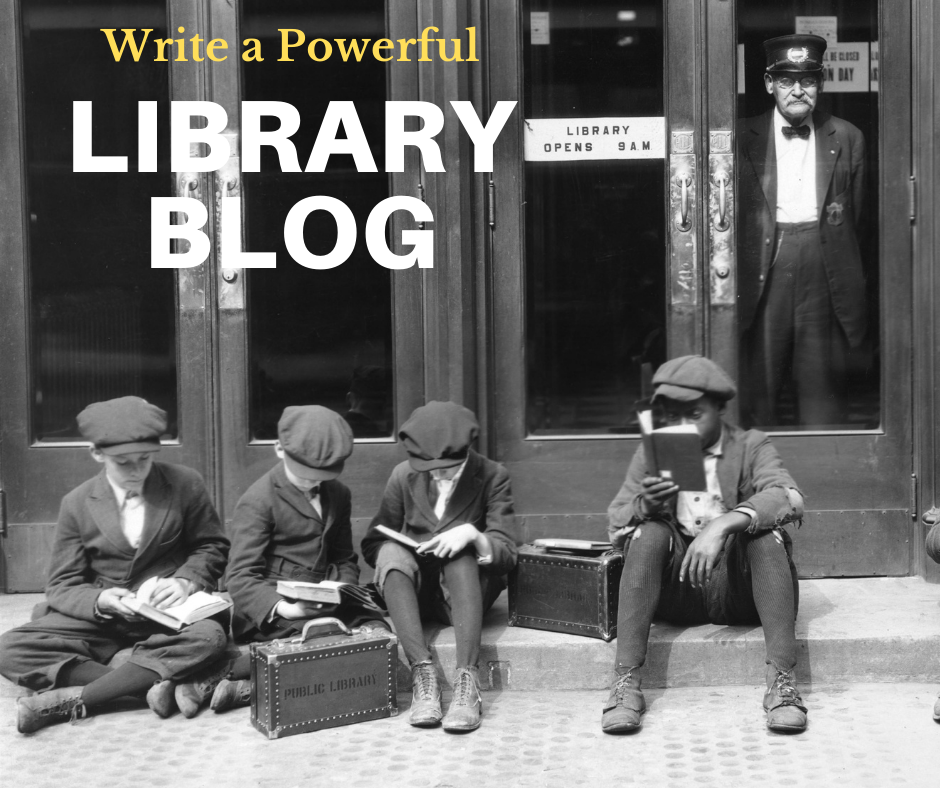
Photo courtesy Public Library of Cincinnati and Hamilton County

One of the hardest and most rewarding things I ever did while working for the Public Library of Cincinnati and Hamilton County was to start a blog. It took me five years to get it off the ground. I wrote about that experience in this blog post.

I worked hard to get a library blog because I knew it would be a transformative and powerful communication asset.

A blog allows your library to tell your own story, create brand awareness, and promote your library to your own audience for free, without having to deal with the rules of someone else’s platform.

If your library has a blog, you will want to make sure you are doing everything in your power to grow your audience. In this post, I want to share the best practices Iโ€™ve learned from years of blogging.

Before you post

Create an editorial calendar for your library promotions that includes your blog post ideas. I wrote a two-part guide to help you through this step.

A calendar will let you see all the promotions your library is doing in one glance. It will help you schedule posts that amplify your other marketing messages.

You can use your calendar to formulate due dates and publication dates for blog posts. You can also plan the promotion of your library blog posts on other channels, like your email newsletters and social media platforms.

The three main genres of library blog posts

The best blogs are a mix of these three types of blog posts.

Promotional posts: Most library blog posts are promotional. They focus on telling readers about an event, service, or collection item available at the library.

Promotional posts tend to be shorter. They also need to be frequently updated as services and collection items change.

Example: Jacksonville Public Library uses their blog to help their community find information on their website without having to create special landing pages for events and services.

Opinion posts: These posts demonstrate what the library stands for. They center on questions people have about libraries but are afraid to ask. Opinion posts also celebrate the strengths of libraries and the opportunities for improvement.

Opinion posts are compelling and allow your library to cement your voice and your position in a way that your readers and cardholders will remember. Itโ€™s great when a library takes a stand. People will respect you for it.  

Example: The Stark Library CEO and Executive Director took a clear stand against racism in this recent blog post.

Authoritative posts: These posts demonstrate your libraryโ€™s expertise in a subject. For instance, a post that highlights your library’s award-winning family history department is an authoritative post.

Example: Check out the My Librarian(s) Favorite Resources series on the Chapman University: Leatherby Libraries blog.

The Ugly First Draft

If youโ€™ve been asked to write a post on your libraryโ€™s blog, your journey begins with what my favorite marketer Ann Handley calls The Ugly First Draft (UFD).

Your first job is to get all your ideas down in whatever format they escape from your brain. Write your draft without worrying about spelling, grammar, punctuation, or phrasing.

Open a Word document and try to keep typing until you canโ€™t think of anything else to say on a subject. If you are a skilled typist, look away from the screen so you’re not tempted to focus on spelling or grammatical errors.

Revise to create the perfect library blog post

Write short paragraphs, not short posts. Itโ€™s a myth that short blog posts will attract more readers. If your blog post is long but compelling, youโ€™ll have no problem holding the attention of your readers. A longer post that is well written and contains keywords will do better in Google search than a shorter post.

However, you should break up your blog post into shorter paragraphs. Short paragraphs are easier to read and understand. They open white space on your blog, which makes your post more inviting.

Writing experts recommend paragraphs of no more than 150 words. I started writing shorter paragraphs about two years ago and saw a big boost in my metrics.

Be deliberate with your keywords. In the blog text, you need to include keywords for search.

Youโ€™ll notice I use the phrase โ€œlibrary marketingโ€ and โ€œlibrary promotionโ€ frequently in this blog. Thatโ€™s because people searching for help with library marketing use those two phrases most often. Try Keywordtool.io. It does an amazing job of helping you to narrow your target phrase.

Put your keyword phrase in title, header, and body of blog post at least two times but more often if it makes sense.

Include images. Images can help you craft your message and tell your story. They also help to break up the text of your blog posts.

Use images to explain concepts or enforce the emotion you are trying to create.

Link to other content from your library. Your blog post can funnel your readers into engaging with your library. If you are talking about a specific service or a part of your libraryโ€™s collection, include links embedded in your text to help readers find more information.

Make sure your links open in a new tab. Thereโ€™s nothing more annoying that clicking on an embedded blog post link in the middle of a post and then having to tab backwards to read the rest of a blog post.

Create engagement opportunities for your reader. Use your blog posts to start a conversation with your readers. Ask a question and invite readers to post their answers in the comment.

Your library can also embed a social media post in your blog so readers can post a key point to their social media. This gives your post the potential to reach new readers.

Spend a lot of time on your headline.  A good headline should give your readers a hint at the copy that lies ahead without giving away the whole story. It should trigger an emotional response that includes an irresistible urge to read more.

You can get lots of tips for headline writing in this blog post.  

Incorporate several rounds of edits for spelling, grammatical, and punctuation errors. Run your blog posts through an online editor to catch errors. Ask your co-workers to edit your blog as well.

Print your blog post out and read through it, word for word, out loud. Doing this will force your brain to pay attention to the extra attention to what you’ve written. Your brain will often fill in or gloss over errors when you silently read. But if you read your post out loud, those errors become obvious and can be fixed before publication.

Four more tips for library blog success

Use your blog as a networking tool. Ask community leaders to write guest posts. Reach out to school administrators, policy makers, influencers, and other nonprofit organizations. Or use your blog to interview someone.

Once you publish, send a link to the contributors or interviewees. Ask them to share your post with their audience. This will amplify your message and expose your blog to a new audience of readers.

Example: The National Library of Australia interviewed fashion designer Nicky Zimmermann in this blog post that led to lots of media exposure for the library.ย 

Post consistently. The best way to maintain web traffic to your blog is to make sure people are always waiting for an article to go live.

Decide how many posts you can create a week and which days youโ€™ll post on. Then stick to your schedule.

Promote your blog posts on other platforms. Most of your readers will not just stumble upon your post by accident. You need to make sure they know that your library has published a post.

Promote your posts on your social media platforms, in your emails, and in patron interactions.

Your blog can also be used instead of a press release to pitch a story to a member of the media.

Evaluate your post metrics. Check in once a month and enter your metrics on a spreadsheet so you can track results over time.

Compare views, watch time, and bounce rate for your posts. You can also compare post length.

Your metrics will help you to continue to improve and update your blog based on your audienceโ€™s needs and wants.


Does your library have a blog? I’d love to see it! Share a link in the comments!

Subscribe to this blog and youโ€™ll receive an email every time I post. To do that, click on the โ€œFollowโ€ button in the bottom left-hand corner of the page. Connect with me on YouTube, Twitter, Instagram, Goodreads, and LinkedIn.

The Quest for Perfection May Spoil Your Library Promotions! How To Walk the Line During the Revision Process and Still Create Authentic Messages

I learned a skill as a journalist which has been invaluable to me as a marketer.

As a journalist, I was an expert at knowingย when to let go of a piece of contentย and send it out into space, even though it was imperfect.

It’s the nature of the news business. You have a deadline and when the deadline arrives, you go to air or to print with as much information as you have. You know that youย can revisit the story later to add new details. And that must be enough.

One of the hardest adjustments I had to make when I left the newsroom and went to the library was the constant reshaping of promotional messages and campaigns.

The good and bad of the revision process

When I worked in a library, each blog post, print piece, email, social media post, or video would go through rounds of review by several departments. The record was held by our content marketing magazine, which sometimes went through upwards of 15 edits per issue.

All the scrutiny had its advantages. More edits meant grammatical, punctuation, and spelling errors were found and fixed. The revision process also gave me the chance to see how each message was perceived by different people with different perspectives.

I purposefully chose reviewers who worked with different target cardholder audiences. They told me whether they thought their patron base would respond to the message. I trusted their opinions and took their advice when they told me a phrasing or image change would increase my message’s effectiveness.

But there were also pitfalls to revision process. The message was sometimes reshaped by people who pressured me to add words or phrases that weren’t customer friendly. They might also wish to dilute or change the message altogether, depending on their department’s own goals or agenda.ย 

The point at which your library’s revision process goes from helpful to over-examined is the space I want to focus on in this post.

It’s very easy to start over-thinking text, images, and graphics. The message you’ve carefully crafted may not connect with your audience because it disappears in the search for perfection. It can be crippling.

There is a very thin line between authenticity and perfection. It takes practice to walk that line. Here’s the advice I have for you.

Constant improvement is better than perfection

The best content isn’t perfect. That is what makes it good.

Imperfection shows your library’s human side. When you write from the heart, your message feels more authentic. 

Don’t sabotage your own marketing efforts by waiting for the moment when every single detail is right.ย Give yourself permission to release a piece of marketing content when the time is right, not when it’s perfect.

Creative, honest messaging will be the doorway for your library to connect with consumers in the moment when they are genuinely searching for answers from your library.

I’m a fan of author, speaker, and showrunner Jay Acunzo. I highly recommend his newsletter. His niche is creativity. He inspires others by talking about how creativity intersects with work in the real world.

In this blog post, Jay makes a great point that I think about all the time. He says, “How can we aspire to perfection (even if it’s never something we reach) while still moving forward without delay (even if we aren’t creating amazing work yet)? Well, I think the key is to place perfection where it belongs: away in the distance. Then, we can busy ourselves with marching towards it.”

In the library, that means we must do the work and ship it when it needs to be shipped. But we also must commit to revising it, molding it, and realizing that it is a work in progress.

In your library promotional work, your goal must not be perfection. It must be constant improvement.

But I have a deadline!

You work in a real library with real goals and strategies. And the quest for perfection will sometimes seem like a lofty goal that you don’t have the luxury of achieving.

So how do you know when a piece of content is ready for release, even if it’s not perfect? Ask yourself these three questions.

1. Is your promotion as compelling and authentic as it can be in this moment?

2. Is your promotional piece free of grammatical, punctuation, and spelling errors?

3. Is the information in your promotional piece correct?

If the answer is yet to these three questions, it’s time to let go.

Marketing is one giant experiment. Even when you release a promotion that isn’t perfect, you will still learn plenty from it. Measure and record the results of your promotion. Then use that data to adjust and reconfigure your attempts on the next go-around.

Don’t get bogged down in the quest for perfection. Be human. Be authentic. Be true to your library voice.

And get the message out there! Your imperfect message may lead to some perfect insight into your community.


Do you have an example of a time when an imperfect message brought you some perfect insight into your customers? Share your thoughts in the comments!

You may also like these posts

Hereโ€™s When Itโ€™s Okay for Your Library To Forget Perfection and Just Push Send!

You Donโ€™t Have To Be Cool To Promote Your Library to Teens! Here Are Seven Seriously Easy Ways To Connect With Gen Z

Latest Book Review

The Only Good Indians by Stephen Graham Jones

Subscribe to this blog and youโ€™ll receive an email every time I post. To do that, click on the โ€œFollowโ€ button in the bottom left-hand corner of the page. Connect with me on YouTube, Twitter, Instagram, Goodreads, and LinkedIn.

Want To Do a Better Job at Marketing Your Library? Hereโ€™s the Secret: Read More Fiction!

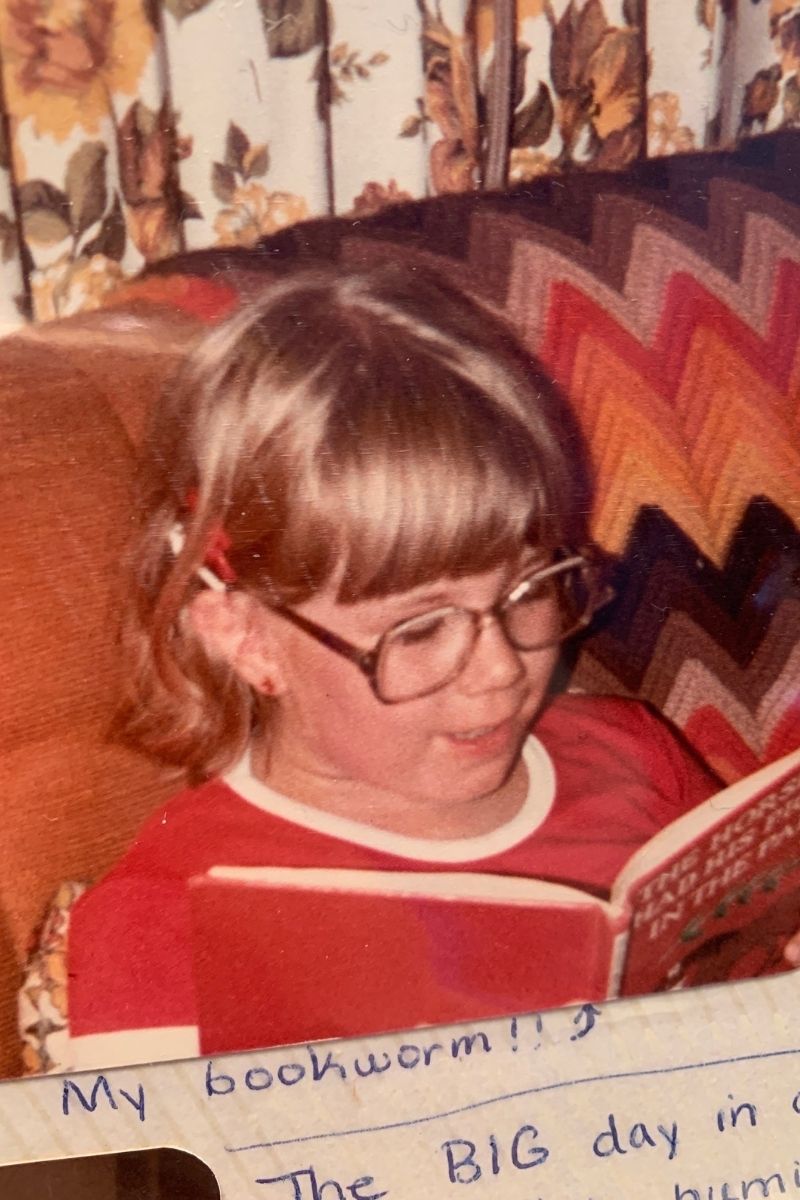
I was recently looking through some old photo albums when I came across this gem.

You can see my mother wrote the words “My bookworm” under this photo of me, age 7, reading “The Horse That Had His Picture in the Paper” by Helen Stone. I have always loved fiction.

Of all the people in the world, I am certain I really don’t have to explain to my readers why fiction is amazing. You work in a building stuffed with fiction!

But, if I were to ask you what you’ve read lately that will help improve your work skills, my guess is that you would not name a work of fiction.

Of course, your work will be improved by reading a great business or career-oriented book. I can think of a few inspiring examples, like Ann Handley’s Content Rules, which literally changed my life, or Unmarketing by Scott Stratten. You can get a chance to read books like these and talk about them with other library staffers if you join the Library Marketing Book Club on Facebook. There is a lot of value in reading advice on marketing.

But reading fiction will also make you a better marketer. Here are the six reasons why reading fiction will improve your ability to promote your library.

Fiction is good for your brain. A study by researchers at Emory University, published in the journal Brain Connect, found that reading a novel can increase connectivity in the brain and improve brain function. Lead researcher Gregory Berns concluded, “At a minimum, we can say that reading storiesโ€”especially those with strong narrative arcsโ€”reconfigures brain networks for at least a few days. It shows how stories can stay with us.”

Storytelling requires the work of different areas of your brain in order to help you understand the dialogue, plot, and characters. A work of fiction will train your brain will do a better job of processing complex problems in your library work.

Fiction teaches you to empathize with your community. That same study from Emory University found that reading fiction improved the readers’ ability to view the world from another person’s perspective.

Researchers theorize the act of reading forces the brain to process the emotions and physical actions of the protagonist. That processing leads to a greater compassion.

Activating compassion will cause you to create better service for your community. When you can put yourself in the shoes of your patrons, you are more likely to see their needs and find ways that your library can meet those needs.

Fiction activates your imagination. Reading fiction improved the imagination of the Emory University study subjects. It teaches you to think outside the normal boundaries of your life. It shows you the possibilities that exist when you don’t constrain yourself. It’s also a great way to forget your troubles for a few hours, and we could all use a little of that!

Fiction expands your vocabulary. A novel will expose your brain to a larger variety of words than you might run across in normal conversation or emails. The more your brain is exposed to this increased mass of vocabulary, the more you absorb it and incorporate it into your own work.

That doesn’t mean you have to write in a verbose manner in order to prove how your vocabulary has expanded. Rather, it means you’ll have a greater bank of words in your native vocabulary to choose from when you are trying to convey the perfect sentiment in your marketing pieces.

Fiction teaches you the difference between a great story and a terrible story. When’s the last time you started reading a novel and couldn’t stop? (For me, it was last month.) Now, when’s the last time you started reading a book and had to quit three chapters in because you couldn’t stand it anymore? (Again, this happened to me last month!)

The more fiction you read, the more you understand what a great story looks like. You’ll start to recognize good stories you can use as marketing for your library.

Reading fiction from your own library gives you a sense of your patrons’ experience. In the business world, companies and entrepreneurs are encouraged to go through the buying process for their own products to get a sense of what their customers experience. Library staff should do the same.

Look at the whole experience through the eyes of your community. Is your catalog easy to find on your website? Are there plenty of reading suggestions on your website, in your emails, and social media platforms? Can you find the books you love in the genre you prefer? How long do you have to wait to get your holds? Does your catalog suggest read-a-likes to keep your readers engaged while you wait for your holds? Is the process of checking out a book easy and painless?

Using your own collection can give you valuable insight. Your patrons’ delight and frustrations become your own delight and frustrations. The delights can become promotional tools for you to use in your marketing pieces. And the frustrations will prompt your library to make improvements that will increase circulation.


What are you reading right now? Do you prefer fiction or nonfiction books? Why or why not? Share your thoughts about reading and books in the comments section.

You may also like these posts

Four Eye-Opening Library Marketing Lessons I Finally Learned When I Left My Library Job and Became a Regular Patron

Experts Reveal the Truth About What Your Library Needs to Do Now to Build Support for the Future

Latest Book Review

The Lost Orphan by Stacey Halls

Subscribe to this blog and youโ€™ll receive an email every time I post. To do that, click on the โ€œFollowโ€ button in the bottom left-hand corner of the page. Connect with me on YouTube, Twitter, Instagram, Goodreads, and LinkedIn.

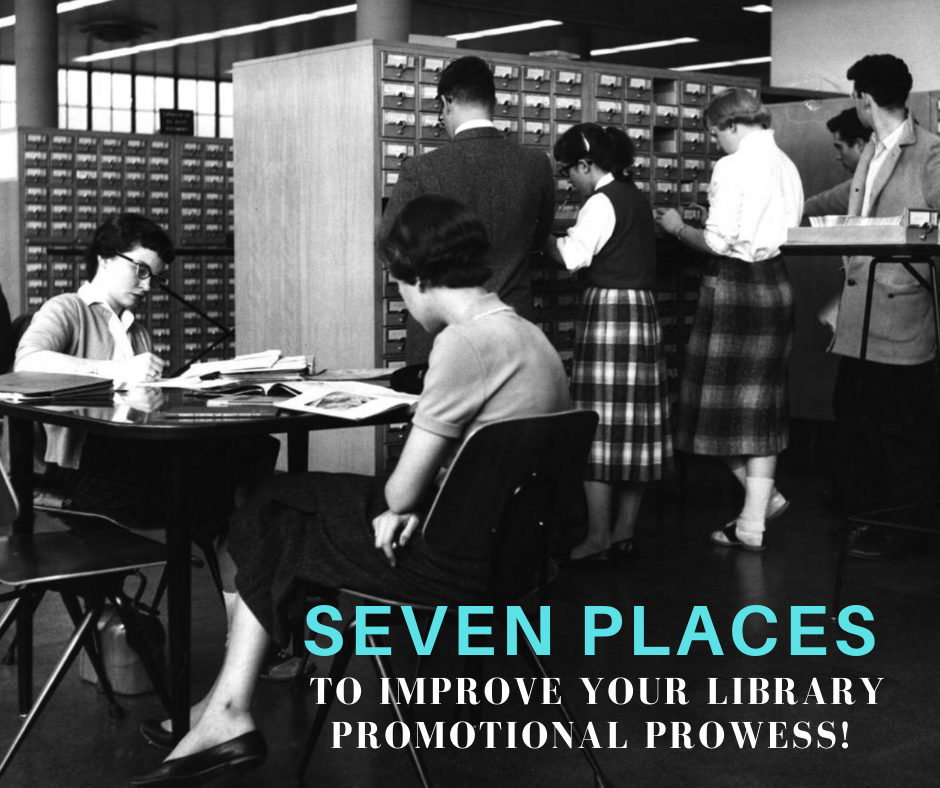
Feeling Lost and Uninspired by Library Marketing? Here Are Seven Places to Learn and Improve Your Library Promotional Prowess!

Photo courtesy the Public Library of Cincinnati and Hamilton County

Learning is essential to the existence of humans.

No, this blog hasn’t suddenly turned into a philosophical self-help website. But I do think it’s important to make learning and research a part of your work schedule.

You need to know the latest research on customer experience. You need to be alerted when social media algorithms change. You need to be inspired by creative, encouraging, thoughtful people who know the struggles, hurdles, and frustrations of marketing.

Boy, have I got a list for you!

I’ve followed a lot of marketers over the years. I’ve read a lot of blogs, subscribed (and then unsubscribed) to a lot of email newsletters. I’ve watched videos and listened to podcasts about marketing, in the never-ending search to find the people who could offer the most help to me and my library marketing friends.

Here are the seven best places for library marketers to get advice!

Ann Handley: Author, Marketer, Chief Content Officer at @marketingprofs. 

Ann is at the top of my list because she’s the definitive expert on writing and creating engaging content.

Read her two books, Content Rules and Everybody Writes. Your library likely has a copy of both.

Next, sign up for her newsletter, Total Annarchy. It’s the gold standard for e-newsletters and one of my favorite pieces of email to receive!

Mark SchaeferMarketing strategist, author, and podcaster.

Mark is a human being. I mean, that’s obvious. But what I’ve always loved about him is that he gives advice like he’s your best friend. He’s not afraid to talk about the hard truths of promotional work.

Back in 2014, he started warning marketers about content overload (sometimes also referred to as content shock). This is the idea that people don’t pay attention to marketing because there is just too much stuff bombarding them from all angles.

This was pretty revolutionary for the time, and as I recall, there were a lot of people who thought Mark was nuts.

But he was right. And that’s why he’s written seven best-selling marketing books, launched a podcast, and is a popular speaker.

Read his latest book, Marketing Rebellion. I also recommend his free Pandemic Playbook. Subscribe to his {grow} blog and his podcast Marketing Companion (co-hosted with another marketing expert, Brooke Sellas).

Jay BaerNY Times best-selling author, marketing consultant, keynote speaker. 

Jay is an expert in the content marketing and social media space.

He has two podcasts that contain tips that relate to libraries. Social Pros focuses on real people doing real work in social media. Talk Triggers shares inspirational case studies about businesses succeeding with word of mouth marketing. 

Library Marketing Book Club

What do Ann Handley, Jay Baer, and Mark Schaefer all have in common? They’ve all been guests at the Library Marketing Book Club on Facebook!

Chris Boivin of the Jacksonville Public Library founded the group in the fall of 2020. We meet once a month to discuss a marketing book and to share tips and strategies for library marketing. Chris is usually able to get the author of the books we discuss to come to our meetings!

Learn more about the book club.

Content Marketing Institute

This is the go-to organization for everything related to content marketing. I came to know of the existence of Ann Handley, Jay Baer, and Mark Schaefer because of this organization.

Sign up for Chief Content Officer magazine (its free) and for their email newsletter. You’ll get the heads-up on upcoming seminars, free webinars, eBooks, and white papers.

Follow their Twitter for great advice and alerts when they post new blog articles. CMI also hosts #CMWorld chat on Tuesdays at noon EST on a host of relevant marketing topics.

Social Media Today

This is my go-to website to check for the latest information on changing social media algorithms, new features, and tips on how to get the best organic reach.

The easiest way to consume their plethora of tips is to sign up for their daily newsletter. They also host #SMTLive chats on Twitter on a variety of social media topics. You can find recaps of their past Twitter chats on their website.

Social Media Examiner

This website makes a good companion for Social Media Today. It provides a deeper dive into social media marketing, with expert advice from some of the leading marketers in the space.

They have a variety of ways for you to receive updates. They post articles and have a robust YouTube channel full of tutorials and shows about social media marketing. They also have two podcasts chock full of information about social media and more expert interviews.

Do you have an expert that should be added to this list? Let me know in the comments!

You may also like these posts

Podcast Like a Pro! Amazing Advice from a Library Podcast Expert

Expert Advice on How to Work Diversity into Your Library Marketing

Latest Book Reviews

Finding Dorothy by Elizabeth Letts

Uncomfortable Conversations with a Black Man by Emmanuel Acho

Subscribe to this blog and youโ€™ll receive an email every time I post. To do that, click on the โ€œFollowโ€ button in the bottom left-hand corner of the page. Connect with me on YouTube, Twitter, Instagram, and LinkedIn.

Feeling Overworked? There’s a Secret Trick to Get More Mileage Out of Your Library Marketing Content!

Photo courtesy Public Library of Cincinnati and Hamilton County

Not long ago, I read the results of a new survey. It kind of blew my mind.

Orbitz Media asked content creators about the amount of time they spend blogging. They found the average blog post now takes 3 hours and 57 minutes to write. That’s up 65 percent from 2014! The same survey shows 52 percent of bloggers report that itโ€™s getting harder to get readers to engage with their content. WOW.

We live in a world dominated by a relentless and never-ceasing stream of content. But libraries can’t just turn off our content communications streams. Our very existence depends on our ability to educate the public about what we offer. We use our content to convince people to use the library.

So, what’s the solution, when your library staff is overworked, and your audience is oversaturated? Be more efficient.

There is a way to make your work stretch further and get your communication into the world. You can do this by republishing your content.

What is republishing content?

When you republish, you take an old press release, blog post, infographic, or video, and update it to include new and relevant information.

If your library has been publishing content for a while, you probably have quite a catalog. Most of it is still useful and relevant! Good content will never go out of style. These “evergreen” pieces of content are opportunities for you to republish.

Republishing content has many advantages for libraries.

  • It saves you time.
  • It improves your library’s chances of being found in search. When you improve content in the republishing process, you optimize it to bring it up to today’s best practices for headlines, tags, keywords, and length. That leads to improved search results.
  • It helps you to fill your editorial calendar when ideas and staff are sparce.
  • Your audience has changed since your original publish date. You’ve gained new cardholders and fans.
  • Your audience needs a reminder that you offer certain services.

How do you decide what pieces of content to republish?

Here are some ground rules.

First, take inventory of what you have already. This is called a content audit. Use a spreadsheet or organizational software to write down the blog posts, videos, and other pieces of content you previously published (and start keeping track of the new additions).

In your audit, make note of the following:

  • The type of content (blog post, press release, video, brochure, etc.)
  • The original publish date
  • The original headline
  • The keywords or tags used in the original piece
  • The word count or length of the content
  • The number of views, likes, comments, and shares the content originally received

Now you’re ready to make some decisions. What are your marketing goals? Are you (or your supervisors) looking to drive more people to your library webpage? Are you trying to increase social media engagement? Once you establish your goals, look at your old posts and determine which ones will help you reach those goals.

For example, if you want to drive more people to your webpage, and you have a video about your genealogy databases that drove a lot of traffic to your website at the time it was published, mark the video to be updated. It will likely have the same effect today, particularly if it’s refreshed.

Here’s another example. Let’s say your library director really wants to see likes, shares, and comments increase on your library’s new Instagram account. In your list of old content, you notice a blog post from two years ago about a uniquely themed story time that drove a lot of engagement when you posted it on Facebook. Mark that post to be updated. Chances are, with some careful recrafting, it will create the same kind of audience reaction when the updated version is promoted on Instagram.

Now what?

Once you identify the pieces of content you wish to republish, it’s time to update those pieces. Here’s a checklist of options for updating your content.

  • Are the statistics still relevant?
  • Are the links and resources still available?
  • Are quotes still relevant?
  • Are there new keywords or tags to add?
  • Can you freshen up the headline?
  • Do you need to adjust the original length of the piece to make it longer or shorter, based on current best practices?
  • Can you add a poll, a survey, or a comment section to enhance the content experience?

If your original piece of content requires no changes, you can republish it in its original form. Make a note at the beginning to let your readers or viewers know that you’ve republished it without changing it. You might say, “Here’s a popular blog post you may have missed” or “Here’s something from our archives.” Include the original post date for full transparency.

Have you republished content? What were the results? Share your experience in the comments.

Bonus tip

A few months ago, I wrote about another way to stretch your content distribution. Here is the article: Re-purposing Content Saves You Time and Reaches Your Whole Audience. Hereโ€™s How to Do It Right.

Latest Book Review

The Dutch House by Ann Patchett.

Find more 60-second Book Reviews here.

Subscribe to this blog and youโ€™ll receive an email every time I post. To do that, click on the โ€œFollowโ€ button in the bottom left-hand corner of the page. Connect with me on YouTube, Twitter, Instagram, and LinkedIn. 

A WordPress.com Website.

Up ↑