Search

Super Library Marketing: Practical Tips and Ideas for Library Promotion

Category

Content Marketing

Turn Library Promotions on Their Head with This Surefire Yet Simple Way To Capture Attention

Photo courtesy Public Library of Cincinnati and Hamilton County

Imagine for a moment that you are walking down a city street, minding your own business when you see the clown Pennywise.

Thatโ€™s right. The terrifying lead character from the Stephen King film โ€œIt,โ€ remade and re-released in 2017, is hanging out in your city.

Now, what if I told you that the reason this horrifying clown was roaming the streets was to promote a library event?

Yea, thatโ€™s the reaction I had too.

But a library in St. Petersburg, Russia really went this route. And you know what? It worked.

The library used the wandering horror film character as a chance to draw attention to their Stephen King Festival. Someone dressed as Pennywise โ€œwould walk through the city, frightening passers-by and informing them about the upcoming festival.โ€

Honestly, I would never have approved this when I was working as a marketing manager in a library.

But it worked for this library. Because the media found out about the Pennywise clown stalking pedestrians. The clown, and the library, were covered in the press. Weโ€™re talking about dozens of outlets.

And thatโ€™s how people found out about the event. That led to record attendance. The library said 800 people showed up for the festival, more than four times what they had expected.   

How do you draw attendance without scaring your community

Promoting your library is difficult. Events, renovations, new services, and additions to your collection cost money. They come with high expectations and goals. They require months of planning. The pressure to prove the value of your work to your community is high.

But there are things you can do to increase the likelihood your library gets noticed. This list does not include having someone dressed as a horror character wandering around your city or town.

But you know, Iโ€™ve learned a lesson from reading about the Friends Library. Sometimes you must be bold to get results.

Use storytelling to capture attention.

The first step is to think differently about the way you promote your library to the world. You want to capture the attention of your community, your cardholders, and the media. Telling a great story is a powerful and effective way to do this.

Your promotions need to do more than list off the details about your library. You want to set up the reason why your community should use your services. You want a memorable, compelling way to convey the value of your work.

A simple storytelling formula begins with the people.

Talk with the library staff and community members about whatever you are trying to promote. If you’re focused on a big event, follow the organizers around for a bit as they attend meetings, make calls, and get materials ready for the big day.

Interview a community member who is benefiting from the event, service, or collection item. If you are promoting a project that involves a partner or sponsor, get an interview from those organizations.

You don’t have to do a full-length Barbara Walters-style interrogation. You can ask a few simple questions that will add color and humanity to your promotion.

Here are some interview tips.

  • Write down your questions ahead of time.
  • Ask open-ended questions like, “Why did you sponsor this event?” or “Tell me why the library is offering this new service to our community.”
  • Actively listen and ask follow-up questions.
  • End the interview by asking if there is anything else the interviewee wants to say that you haven’t covered.

Once you have all your interviews, itโ€™s time to write.

Focus on the characters, not the library.

Put all the quotes you want to use into your document. Then, work the details of the event into your story where itโ€™s appropriate. Before you know it, you have a compelling piece that you can use to promote your event on social media, in email, and in print.   

Guille-Alles Public Library is on the island of Guernsey, just off the coast of Normandy. And they work with Storybook Dads, a charity that helps incarcerated parents stay connected to their families by recording a bedtime story for their children. The Library’s Outreach Team has been working with Guernsey Prison for several years to provide books and readersโ€™ advisory support for people convicted of crimes on the island.

To show the value of their work and to make sure their community knew about this project, the library wrote a compelling story. It featured interviews with library staff and incarcerated fathers.

Another great example of this comes from Bridges Library System. Marketing and Communications Librarian Jill Fuller does a great job humanizing the value of physical library spaces.

Find a home for your story.

The logical place to put this story is on your library blog. Another option is to create a landing page on your website and post your story. You want your work somewhere where you can easily share a link, preferably on your own website.

Housing your story on your website has an added benefit. You’ll also be rewarded by Google, which will pick up you keywords in your post and start showing the post in search results for anyone looking for those keywords. Google doesn’t catch keywords on PDF or Word document press releases posted to a website.  

If you are not allowed to post your story on your own website, you can post your story on Facebook or on LinkedIn as an article. Both social media outlets offer you plenty of space. Facebook gives you 60,000+ characters, which can be roughly 8-10,000 words. LinkedIn articles give you twice that amount!

Share your story link everywhere.

Your library has an available audience on a variety of platforms. Now it’s time to make sure they read your story!

  • Send an eblast to your cardholders and include the link.
  • Share the link on your other social media platforms.
  • Make bookmarks that include a few sentences teasing your article and a shortened URL. Insert those bookmarks in all your holds and checkouts leading up to your event. Share the bookmarks with your partner organizations.

And send a link to your story to your media contacts in a personalized email. I know it takes longer to send an email to each media contact than to send one mass email, but it’s worth it.

Here are some tips for writing the perfect pitch to journalists by email.

  • Keep the body short but personalized. Address the journalist by name.
  • Keep the subject line short and simple but intriguing.
  • Get to your point quickly and include the link to your story.
  • Explain why news of your upcoming event is beneficial to that media outlet.

3 Stories Your Library Should Be Telling Right Now


Related


Subscribe to this blog and youโ€™ll receive an email every time I post. To do that, enter your email address and click on the โ€œFollowโ€ button in the lower left-hand corner of the page.

How One Library is Promoting Themselves by Handing the Microphone to Patrons and Letting Them Make the Case

Photo courtesy Cincinnati and Hamilton County Public Library

Libraries know the power of storytelling. Most of us are literally and physically surrounded by some of the best stories in the world.

But the quest for library stories that have emotion and a compelling story arch is daunting for many libraries. A Kentucky librarian has the solution: let your patrons tell their own stories!

Levi Simonton has worked for the Jessamine County Public Library for three and a half years and is now the libraryโ€™s social media coordinator. โ€œI love this place,โ€ said Levi when I asked him about his work experience.

In January, Levi and his library launched a video series called Share A Story. The videos were created to amplify the voices of library superfans.

Leviโ€™s library believes that patronsโ€™ real-life experience is the best way to increase the use of the library and relay the libraryโ€™s value. โ€œWe think that a community member is more likely to visit the library after hearing a story from one of their peers rather than seeing an advertisement from us,โ€ explains Levi.

Approaching a patron and asking them to share their story is often intimidating for libraries. But Levi has a remarkably simple approach. โ€œWe typically ask other staff members if they know anyone who might be willing to share an impactful story with the library,โ€ says Levi. โ€œWe may also ask for patrons with experience on a specific topic we plan to promote. Sometimes it’s a bit more serendipitous, though. We met the first patron we interviewed by chance at our big comic con event last October.โ€

The interview itself doesnโ€™t take much time, according to Levi. He typically spends about 45 minutes interviewing his subject. Then he focuses on getting footage of the subject that matches what the patron talked about (in the TV world, this is called B-roll). The footage is used later in editing, to cover parts of soundbites and edits. It also makes the video more interesting.

Once the interview and footage are shot, itโ€™s time to put it all together. For Levi, this is the most labor-intensive part of the process. โ€œThese particular pieces usually take 10-15 hours over a week or two,โ€ recalls Levi. โ€œHonestly, that’s longer than it should take. I’m just new to video editing and have a bit of compulsive behavior when it comes to getting those darn details right.โ€

When the library launched the first video, the reaction was positive, both from patrons and staff. โ€œWe showed the videos at a recent staff meeting,โ€ says Levi. โ€œThey seemed to resonate with everyone. Hearing directly from patrons about the library’s impact on their lives brought at least a few staff to tears.”

So far, the library has released three videos in the series, including one from a woman who has been visiting the library since she was a little girl. “I grew up in an environment that was considered impoverished,” says Anna Kenion, who is featured in one of the videos. “However, my way of escape, to solitude time and to dream bigger was when I would go to our public library,”

The library is taking a break from releasing videos over the summer to focus on summer reading. But they are working on videos to promote their new outreach vehicle and children’s storytimes. โ€œWe may release podcasts, written pieces, or other media that fall under the Share A Story umbrella in the future,โ€ said Levi.

Is your library telling patron stories as part of your marketing? Let me know in the comments!


Read These Articles Too!

How to Gather Patron Stories for Library Promotion!

Your Library Should COMPLETELY Ignore These 4 Pieces of Promotional Advice! Plus What To Do Instead for Real Results. 

Latest Book Review

The Orphan Collector by Ellen Marie Wiseman

Subscribe to this blog and youโ€™ll receive an email every time I post. To do that, enter your email address and click on the โ€œFollowโ€ button in the lower left-hand corner of the page.

The 4 Essential Podcasts To Add to Your Playlist To Improve Your Library Marketing and Promotions

Photo courtesy Cincinnati and Hamilton County Public Library

In my day job, I create and teach professional development courses about library marketing. In a recent class, I asked the learners whether they wanted to learn about podcasts as promotional tools. The answer was loud and clear: “YES!”

Many of these library staffers were fans of podcasts. They understand the power of this medium.

Podcasts are fun, informative, and engaging. Listeners get valuable information and insight delivered in a way that feels intimate.

They’re also incredibly convenient. They show up on your phone when and wherever you want to listen to them–while exercising, while grocery shopping, while driving, while doing chores, and while crunching marketing data for your monthly reports. If you go on vacation, you don’t miss anything.

In my quest for lifelong learning and inspiration, I’ve found a bunch of shows that are really awesome–funny, fun, thoughtful, and well-produced. I subscribe to more than 20 podcasts, and I love them all. (If you want my full playlist, it’s at the bottom of this article).

The following four podcasts are essential for anyone who works in library promotion and who wants to do it well. Listening to these four shows will improve your work, inspire you, and help you feel more connected with the world.

I’ve got a blog post coming soon full of valuable advice from libraries with podcasts! Want to be a part of that post? Let me know by completing this short form.


Podcast Recommendation #1: That’s How it All Began from Andrew Davis

This is a series from one of my favorite experts. And, no surprise, it’s packed with incredible, intriguing stories.

In each episode, Andrew Davis focuses on a famous entrepreneur or business owner… except you don’t know who the famous person is until the very end of the episode.

By listening to this show, I’ve learned new techniques for storytelling and suspense. I’m also inspired by the stories. These are people who have found ways to overcome incredible hurdles. And because Andrew Davis is a marketing expert, his stories usually include a turning point, where his subject makes a marketing or promotional decision that changes their life.

Each episode is just 15 minutes or less. It’s the perfect show to listen to on the way to work.

Podcast Recommendation #2: Duct Tape Marketing from John Jantsch

This show was one of the first podcasts created. John Jantsch has been interviewing marketing experts, authors, and business owners about a vast range of topics including leadership since 2005.

I’ve learned a lot of practical marketing tips from this podcast. But this show is also a great example of how to turn an audio experience into an opportunity to drive more traffic to your website.

Each episode has its own website landing page, which includes a show description that’s packed with searchable keywords. John Jantsch shares his key takeaway, the questions he asked the guests, and a full transcript of the show. He also makes it easy to either listen to the show on the landing page or subscribe on a variety of platforms. And at the bottom of the page, he includes a further call to action to watch more podcasts, download a free resource, or sign up for a newsletter.

Each episode is between 20 and 30 minutes long. It’s another perfect show for your commute.

Podcast Recommendation #3: Death, Sex, and Money from WYNC Studios

This show, first released in 2014, is one of my staples. It’s hosted by Anna Sale, and it features stories of celebrities and regular folks talking about the most fundamental of human topics: death, sex, and money.

I’ve learned two big lessons from listening to this podcast. The first is how to interview. Anna Sale is an exemplary listener. That skill naturally allows her to ask deeply thoughtful follow-up questions. I can always tell that she is fully in the moment and present with her interview subjects.

The second lesson is how to offer additional support and resources. For many of her episodes, Sale and her team have created “starter kits.” They include playlists of songs, curated by listeners, to deal with tough subjects or get through challenging times. There are also starter kits for new listeners, featuring the best or most popular episodes, arranged by subject.

Most episodes range in length from 30 to 45 minutes. I usually save them for chore time on weekends. During the pandemic, this show made me feel more connected with the outside world.

Podcast Recommendation #4: This American Life from WBEZ Chicago

Hosted by the incomparable Ira Glass, a staple of NPR, This American Life meshes journalism and storytelling in a seamless and captivating format. It’s a masterclass in storytelling.

From listening to this podcast, I’ve learned how to find extraordinary stories in ordinary settings. Ira Glass and his team often use a technique called “story of self” to introduce a topic. They relate how or why they become interested in this subject. And that, in turn, makes it relatable to their audience.

Like Death, Sex, and Money, I’ve also learned lessons about interviewing from this show. In particular, the team is not afraid of silence when they are interviewing their subjects. They give their interviewees time to think and the audience time to reflect.

This show is a long-form podcast, with episodes lasting around an hour. I listen to this podcast on my walks and the stories are so intriguing and told so expertly that I am always surprised at how fast the time goes.

The rest of my podcast playlist

Armchair Expert

Conviction

Lovett or Leave It

The Librarian is In

Offline

Pod Save America

Professional Book Nerds

Reply All

Smartless

Sounds Like a Cult

This Old Marketing

Unhappy Hour

Unthinkable

You and Me Both

If you have a great podcast suggestion, please let me know in the comments.


Read These Articles Too!

A Library Staffer Reveals the Secret Formula for Connecting With and Entertaining Patrons. (Spoiler Alert: Itโ€™s a Podcast!)

I Asked a Podcast Host to Stop Interrupting His Guests.  What His Reaction Can Teach Us About Library Customer Service.

Latest Book Review

Project Hail Mary by Andy Weir

Subscribe to this blog and youโ€™ll receive an email every time I post. To do that, enter your email address and click on the โ€œFollowโ€ button in the lower left-hand corner of the page.
Your Library Should COMPLETELY Ignore These 4 Pieces of Promotional Advice! Plus What To Do Instead for Real Results. [ARTICLE]

Photo courtesy Cincinnati and Hamilton County Public Library

We live in a world full of advice.

We get tips (whether we ask for them or not!) on health, fashion, finance, work, and family nearly every day.

According to the Oxford Dictionary, the word advice means “guidance or recommendations offered with regard to prudent future action.” Personally, I will take all the help I can get for prudent future action!

There are a lot of blogs, videos, and newsletters that contain vast amounts of promotional advice. Some of it is valuable. And some of it is hogwash.

I’ve worked with libraries for nine years and in the communications field for another 20 years before that. One good thing about working in this field for so long is I can now identify the marketing advice that simply does not work for my library friends. In some cases, that bad advice has the potential to harm library promotional efforts.

๐Ÿ‘‰Ignore this: “You need to go viral.”ย 

Your library should not pursue the goal of going viral with anything. Libraries are about community. They must focus on making personal connections with the people who use and fund them.

When you focus on going viral, you do so at the expense of creating relationships with the people in your local community who need you. And frankly, you need them too.

Going viral is a fluke, not a real goal. It’s like winning the lottery. It happens rarely and randomly. And your library won’t reap any lasting benefits from the exposure.

๐Ÿ‘Do this instead:ย Create engaging content that speaks to YOUR audience.

If you want to break through the noise and become a subconscious part of your cardholdersโ€™ thought process, you must do two things.

The first is to segment your patrons based on their hopes, dreams, needs, and wants. This works particularly well for promotions by email and for social media posts.

Then, you should weave storytelling into your promotions. Stories create emotion and make your promotions more memorable to readers and listeners. Here’s a great example of how one library staffer used stories to change the public’s perception of her library.

Stories also help your library explain your services in a less clinical way. They demonstrate your value and relevance in real, tangible ways that your audience will relate to.

๐Ÿ‘‰Ignore this: “All you have to do is share good content and your audience will find it.”

Your library is creating engaging, entertaining, and informative videos, blog posts, emails, and print pieces. So why isn’t anyone seeing them?

Creating content is only half the job. This blog is a great example. My posts and videos don’t get much traction until I send an email to my readers and post a link on my social media channels.

๐Ÿ‘ย Do this instead: Have a distribution plan for your promotions.

The Marketing Rule of 7 states that a prospect needs to hear or see your library’s message at least seven times before theyโ€™ll take an action like register for an event, download an eBook, or use a service.

For your library, the Marketing Rule of 7 means itโ€™s important to publish content on various platforms and in multiple formats. This will allow your library to reach your entire target audience.

Marketing expert Andrew Davis gives good advice that you can trust! He taught me how to use a tiered strategy–which means that you publish content and then promote it one area at a time, overlapping your amplification efforts.

For example, let’s say you write and publish a blog. You promote it on Facebook. A few days later, you promote it on Twitter. A few days later, you include a blurb and a link in your email newsletter.

With a distribution plan, the work you put into creating that content will reach a wider audience over a longer period of time and get more engagement.

๐Ÿ‘‰Ignore this: “You must increase your social media follower count.”ย 

It doesn’t matter how many followers your library has on social media. The algorithm decides when and where your libraryโ€™s organic posts are shown.

I know of libraries that have tens of thousands of followers but suffer from lackluster engagement. And I know of libraries with hundreds of followers who get high engagement.

And the difference between those two kinds of libraries is the content of their posts. Successful libraries post content that gets likes, comments, and shares. Those three actions will determine the success of your library on any social media platform, no matter how many followers you have.

๐Ÿ‘ย Do this instead: Focus on creating posts that serve your audience.

Look at your insights on each of the platforms to which your library posts. Your audience will be different for every platform. Make a list of the different audiences.

Then, focus your content on serving that available audience. And this may mean you have to pull back on posting to certain platforms. That’s okay!

Focus your energy and resources on creating engaging posts that help your library reach its overall goals. Quality posts will always be better for your library than a high quantity of posts.

๐Ÿ‘‰Ignore this: “There’s a new social media platform or feature that you HAVE to use!”

Twitter Spaces, Snapchat, Clubhouse, TikTok, Reels… the list of new social media platforms and fancy new features increases every day.

Libraries have limited time and energy. But we feel immense pressure to take advantage of these new features and platforms.

We (understandably) fear missing out on a chance to reach a new audience. And we fear missing out on a chance to prove our modernity and relevance.

๐Ÿ‘ย Do this instead: Claim your domain. Then make decisions based on your library’s goals.

If a new social media platform emerges, it’s important to claim a domain for your library. Make an account and create a handle that matches your other social media platform handles. This prevents nefarious dealers from masquerading as your library.

Next, take a step back and decide if your audience is on the platform. You may need to track the platform for several months to see what kind of audience it builds. Then, you can decide whether that audience is one you need to reach.

You must also think about whether your current library strategy aligns with the platform or feature. For example, if you don’t have the time or resources to shoot and edit short video clips, a platform like TikTok or a feature like Instagram Reels is not an effective use of your time.

Finally, consider your resources. You may not have the staff or time to manage another account or use another feature now. And that’s okay!


Read These Articles Too!

Maybe the Biggest Lesson for Libraries from Content Marketing World: Why Broad isย Flawed!

The Top Four Reasons To Use Content Marketing To Promote Your Library on Everyย Platform

Angela’s Latest Book Review

Let’s Not Do That Again by Grant Ginder

Subscribe to this blog and youโ€™ll receive an email every time I post. To do that, enter your email address and click on the โ€œFollowโ€ button in the lower left-hand corner of the page.
The Magic Secret To Create Effective Library Marketing: How To Set Up Your Libraryโ€™s Promotional Calendar!

Photo courtesy Cincinnati and Hamilton County Public Library

Now that youโ€™ve created a library promotional strategy, itโ€™s time to take the next step. And that is to create a calendar for all your library promotions.

Three main reasons a library promotional calendar is important

A promotional calendar is vital to success. This is especially true in an organization with many contributors and stakeholders, like a library.

Hereโ€™s why youโ€™ll want to have a promotional calendar, even if your team of content creators or contributors is small.

  • It helps you stay organized and focused on the goals you set as part of your promotional strategy.
  • It helps you to keep track of holidays, seasonal library and literary events, and major annual promotions like summer reading.
  • It keeps everyone at your library up to date on your promotional plans.

How to set up your libraryโ€™s promotional calendar

Scroll down to the bottom of this post for my recommendations of three free calendar templates that you can use to create your libraryโ€™s promotional calendar.

No matter which template you choose, the calendar should be shareable. This will ensure the contributors at your library can see all future promotional plans. It will also make it easy for contributors to add comments and ideas.

Once you choose a template and a location where it will “live,” set up the columns to track the important pieces for library marketing. Your calendar should include spaces to track these things:

  • The name of the event or service you wish to promote
  • The date of the event or service launch if the service is new. If it’s an existing service, you can leave this space blank.
  • The start and end date of the promotion
  • The type of content. For example, blog post, video, etc.
  • The channel(s) in which the promotional content will be published. For example: email, social media platform, digital signs, etc.
  • The topic. For example: you may have two promotions for summer reading. One could be planned for two weeks before summer reading begins with the purpose of promoting registration. Later in the summer, you may launch a second promotion marking the halfway point and encouraging readers to log their reading hours. The “topics” for these two promotions could be “Registration Push” and “Halfway Check-in.”
  • Due dates
  • The date and time for publishing the content
  • The person in charge of each promotion
  • Follow-through. This column is where you will note if the content was published according to schedule or if there were delays. Tracking follow-through will help you spot hurdles in the process of creating and approving promotions, which will lead to more efficient planning of promotions in the future.
  • Links to promotions after they are published. This will be helpful for those times when you’ll need to find and analyze a promotion after itโ€™s out in the world.
  • Success measurements. List the data you gather after the promotion is published to measure engagement and effectiveness. Tracking your promotional success will help you spot the topics, formats, and publishing platforms that yield the best results for your library.

How your promotional calendar will improve your library marketing

The Marketing Rule of 7 states that a prospect needs to hear or see the advertiserโ€™s message at least seven times before theyโ€™ll buy that product or service.

For your library, the Marketing Rule of 7 means itโ€™s important to publish content on various platforms and in multiple formats. This will allow your library to reach your entire target audience.

Your promotional calendar will help you make those decisions by having a list of your channels all in one spot. Your calendar will also help you to spot effective ways to re-purpose your content.

For example, letโ€™s say you created an infographic demonstrating the value of summer reading in preventing the loss of literary skills. Initially, you planned to post the infographic to Instagram.

Using your promotional calendar, it may occur to you that the infographic would be a great starter for a blog post on the dangers of the โ€œsummer slide.โ€ Then, you realize you can promote that blog post and infographic in your next library e-newsletter.

The library promotional calendar helps you to see all your promotions and create a holistic campaign. It can help you decide if you have enough resources to focus on the platforms where your target audience is most likely to see your content.

Use your calendar to prioritize your most important channels. Focus on creating high-quality content instead of aimlessly posting on all available platforms.

Your calendar can also help you set deadlines. You’ll quickly learn how often you can realistically create and release new promotions.

Finally, your library promotional calendar will help you spot the busiest times for your library before they sneak up on you. It will help you plan for those busy times. You’ll be able to ensure that the promotional creation process is finished well before the publishing date!

What to include in your library promotional calendar

  • Holidays, especially ones that affect your libraryโ€™s service hours like Independence Day and Veterans Day.
  • Local holidays. For example, where I live in Cincinnati, Ohio, opening day for the Cincinnati Reds is a holiday.
  • Literary holidays such as Library Lovers Day or Audiobook Appreciation Month.
  • Seasons, like back to school or graduation.
  • Promotions tied to popular culture, like the Superbowl and the Olympics.
  • Building openings/renovations
  • New service releases
  • Summer Reading
  • Author events
  • Fundraising opportunities, like Giving Tuesday and National Library Week.
  • Patron stories
  • Interesting or funny details about your library.
  • Evergreen content, like collection promotion.

Three free promotional calendar templates

Some of these websites make you an offer to try their product, but you can still get these calendars without making a purchase.

  • Smartsheet: I recommend the Marketing Campaign Calendar Template.
  • Aha: I recommend the Integrated Calendar
  • Search Engine Journal: This is a template set up in Google Docs, with instructions on how to copy it for your libraryโ€™s use.

You May Also Want to Read These Posts

Library Blogs are the Best! How to Use Your Website to Amplify Your Library Marketing Message on Your Own Terms

Want To Improve Your Productivity and Feel Pride in Your Work? Here Are the 7 Essential Habits of Highly Effective Library Marketers.

Latest Book Review

Small Pleasures” by Clare Chambers

Subscribe to this blog and youโ€™ll receive an email every time I post. To do that, enter your email address and click on the โ€œFollowโ€ button in the lower left-hand corner of the page.
Listening Is the Key: How One Woman Turned Her Superpower Into a Video Marketing Series That Changed Public Perception of Her Library

Photo of children reading courtesy the Public Library of Cincinnati and Hamilton County's Digital Collection

As you well know, libraries have changed, evolved, and adapted in some remarkable ways, particularly in the past 19 months.

But past perception continues to be a real hurdle for libraries. Plenty of people who would call themselves a fan of the library donโ€™t know all the things the modern library does.

We must make sure our community understands who we are right now. And there is a movement to do that through storytelling.

One of those storytellers is Evelyn Shapiro, Promotions Manager at Champaign Public Library in Illinois. As I was preparing to speak at Content Marketing World, I reached out to Evelyn to ask for details about her content marketing campaign, A Library for Life.

Evelyn graciously shared the story of how she compiled this amazing YouTube playlist of patrons who shared the relevance and importance of the Champaign Library’s work. And sheโ€™s permitted me to share what she wrote with you.

I hope you will find inspiration in her words. But also, I hope you will see how practical and, frankly, easy it is to gather and tell stories about the ways your library is changing lives.

โ€œLibraries are one of the best ideas humans have ever had.โ€

Danielle Borasky, Vice-President, NoveList


“Friends and colleagues have told me that connecting with amazing people is one of my superpowers. It’s funny because I can’t help thinkingโ€”doesn’t everyone feel like they know truly remarkable people?”

“So, part of the genesis of the project came through the #LibraryLove shared by Karin Markovitch, the parent I interviewed. She had been sharing the most fantastic comments and stories with us in social media posts, tagging the library, also in person with the desk staff. She is just a natural library ambassador, brimming with appreciation.”

“I kept thinking about how I wanted to share her enthusiasm and appreciation of what we offer with the world, but especially with local community members who might not know about or use the library, and with staff because we never tire of hearing that our efforts and expertise result in a positive experience and impact for customers.”

“Our Teen Librarian Kathie Kading was keen on introducing me to Mallory Morris, the educator I interviewed. Mallory’s energy is pure magic, and she can speak with authority about the impact the library has on teachersโ€™ and students’ lives. Interviewing her would mean other people would get to hear her stories, in her words. She was able to put together our group of teen interviewees, drawing from students at her school (across the street from the library) which turned out to be powerful testimony as well.”

“Also, a colleague in the children’s department introduced me to an area artist, Stacey Robinson, who was using the study room next to the children’s desk as his studio, coming in regularly and drawing illustrations for a graphic novel he was creating. She had gotten to know him over time and wanted to be sure I knew his story. (He ended up surprising her by thanking her by name in the acknowledgments of his book!)”

“I connected with him, and it turns out we know people in common in town in the art/design/theatre/dance/music worlds. Again, he was passionate about the library and spoke so well about what a treasure this place is. I wanted to be able to share his story. He also teaches on the University of Illinois campus in the Art + Design department and is a lot of fun to follow on social media.” 

“So, momentum had started building and because it was our tenth anniversary in this building, I realized I could propose the project as interviews with ten community members. It was our first video project and not part of my original budget that year, but it was the right timing to ask.”

“Once approved, I needed to build my list of who I would bring on camera. I knew about some of the range I wanted and topics I wanted to highlight including a parent and teen, a Board member, and someone who could speak about the Branch. Our director was able to recommend three of those featuredโ€”Candace, Thom, and Rajiv.”

“While working on developing our strategic plan, we invited a group of community members (around 50) to a retreat here to talk about the library and community needs. In one session I attended, Charlisa spoke up about the Douglass Branch, what libraries meant to her as a child, and how children access literacy in our community. I was so compelled by what she had to say. Charlisa has become a very active participant on our social streams as well.”

“Around this time, I’d met a new-to-the-community social media manager named Huan who worked remotely with an international org in communications and marketing. It turned out she spent a lot of time in our new walk-in co-working space for area entrepreneurs. She used it as her office and was getting involved with supporting the library in a few different waysโ€”through a United Way young professionals project and through serving on the Library Friends Board. We met by chance in the FriendShop Bookstore. At the time, she was volunteering in the shop, and we had a chance to chat. She had an international perspective, having lived, and worked in co-working spaces in London. She could compare what we offered here with co-working amenities in a Big City.”

“I already knew Amanda personally and at this time she was heading up the local Project READ initiative and both our locations were public sites where their group offered tutoring. I love talking with her about making good things happen in our community. She had held the role of liaison for families as part of a school program our daughter participated in. I had seen how fluidly she moved in different worlds and languages and what an effective advocate she is. She turned out to be an ideal example of how the library partners with community groups and how our services help immigrants.”

“I learned to bring a stash of tissues with me each time because someone always started crying. The stories were so heartful. I’ve also thought about additional ways we could share these stories, including in print somehow. I haven’t even transcribed them yet or pulled quotes from them. There may be obvious ways to expand and reuse their stories. The key seems to be selecting people who could talk glowingly about the library, without a lot of prompting from me.”

“As communicators, we focus a lot on our messages, as we need to. However, I see our role as much as a listenerโ€”how else can we share great comments and stories?”

Evelyn Shapiro is Promotions Manager at Champaign Public Library in Illinois. Before that, she worked in graphic design and has more than 75 published books and CDs to her credit, along with numerous awards from Parents’โ€‹ Choice, University College and Designers Association, and the Chicago Book Clinic.

Is your library telling stories about your work and your patrons? I’d love to see and share those stories! Send me an email with more information.


You Might Also Want to Read These Articles

The Top Four Reasons To Use Content Marketing To Promote Your Library on Every Platform

The Dreaded Library Annual Report: How to Create a Masterpiece that Showcases Your Libraryโ€™s Value and Inspires Your Readers

Latest Book Review

Subscribe to this blog and youโ€™ll receive an email every time I post. To do that, enter your email address and click on the โ€œFollowโ€ button in the lower left-hand corner of the page.

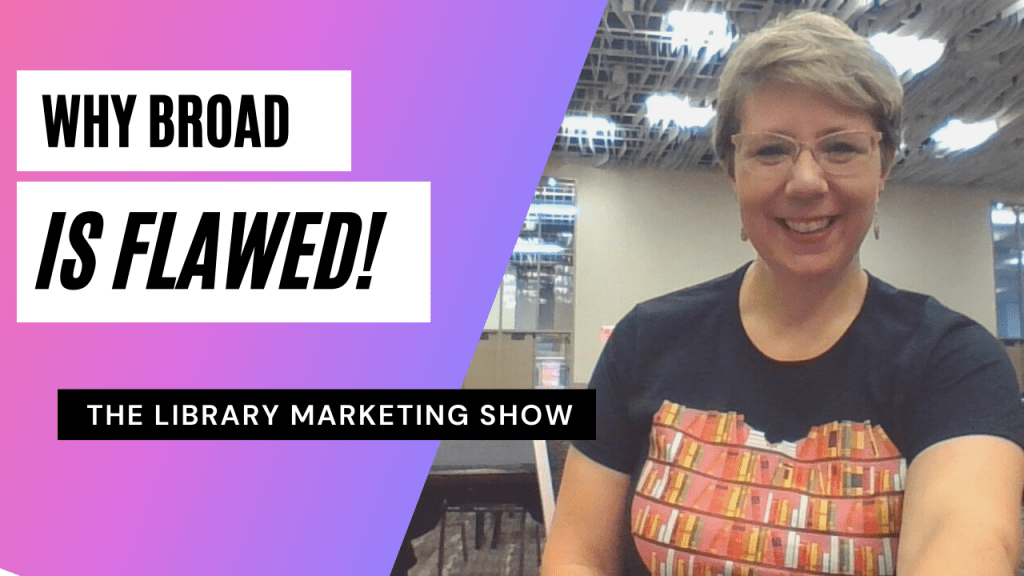
Maybe the Biggest Lesson for Libraries from Content Marketing World: Why Broad is Flawed!

Watch Now

The Library Marketingโ€‹โ€‹โ€‹โ€‹โ€‹โ€‹โ€‹โ€‹ Show, Episode 114

In this episode, I’ll dive deeper into one of the big takeaways for libraries from Content Marketing World 2021. This is a concept that marketing expert Jay Baer explained during his keynote and for me, it was the most relevant takeaway for libraries from this year’s conference.

We’ll also share kudos for an amazing library promotional video. Watch the video to see which library we’re highlighting this week.

Do you have a suggestion for a topic for a future episode? Want to nominate someone for kudos? Let me know in the comments. And subscribe to this series to get a new video tip for libraries each week.

Thanks for watching!


Subscribe to this blog and youโ€™ll receive an email every time I post. To do that, enter your email address and click on the โ€œFollowโ€ button in the lower left-hand corner of the page.
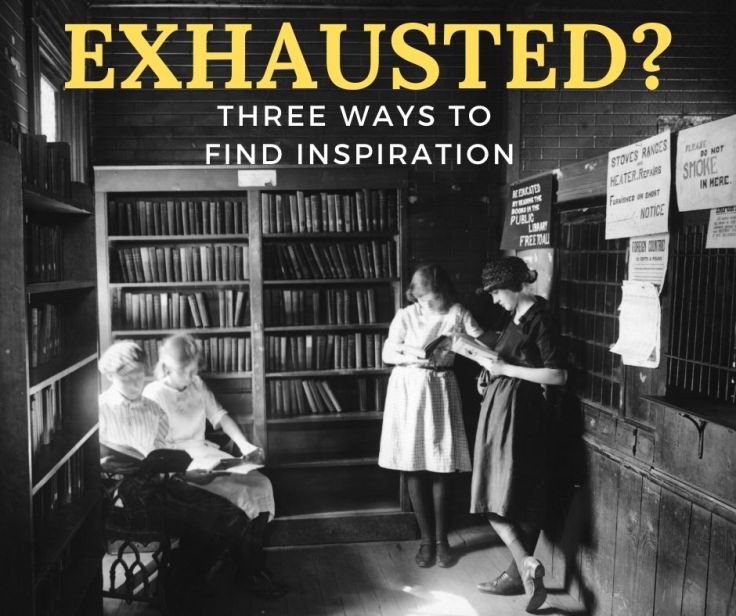
Three Easy Ways for the Exhausted Librarian to Figure Out What Your Community Needs AND Find Promotional Inspiration!

Photo courtesy Public Library of Cincinnati and Hamilton County

More than once, I’ve sat down at my computer to turn out a clever, groundbreaking, truly engaging library promotion… and ended up staring at a blank wall.

There are days, or weeks, or months (or let’s be honest, years… like 2020) when work in a library will run you ragged. As much as you’d like to create the most inspiring and noteworthy marketing piece for your library, you are just Too. Dang. Tired.

When I worked in a library, the exhaustion usually hit me after summer reading ended. With fall and winter looming, I felt my inspiration seeping away as quickly as the leaves fell from the trees.

If this happens to you, there are some things you can do to get your creativity back. If you need a little inspiration, look no further than your community.

The easiest and most effective library promotions are the ones that solve your cardholders’ big problems. If you have no idea what your community wants and needs from your library, here are three easy ways to figure that out and find the inspiration for your next effective promotion!

“Stalk” your library users.

There are three places you can go to learn more about your community.

Inside the building

If your library is currently open, take a walk around the library or visit the branches. This is your spy moment! Take off your badge and pretend to browse. Or sit at a table in a corner with your laptop.

Observe the way the cardholders browse the shelves, interact with staff, work the self-checkout machines, and use the public computers. Answer these questions.

  • Do they look for a map?
  • Are they drawn to a particular book display?
  • Do they linger over the new books, or do they dash in for their holds and dash out?
  • Do you notice all customers follow a particular path through your branch or are drawn to a particular place within the branch?
  • If your library has a drive-thru, is it busy? What kinds of customers use the drive-thru?

Watch how your community behaves inside the building to get an idea of what customers love and what problems they encounter during their interactions with your library. Both of those discoveries can be the basis for your next library promotion.

On your website

Take a close look at your library website’s analytics to find out who is visiting and what they’re doing.

Google Analytics is the best place to get a sense of how your community is interacting with your library’s website. If you don’t have access to your library’s Google Analytics, make an appointment to meet with whoever does have access. Talk with that person about their work. Then, share your goals for the library promotions you create. It’s your chance to form a collaboration that can lead to a more effective library website.

When you get a chance to see the data, ask these five questions:

  • Which landing pages are the most popular?
  • Which pages get zero traffic?
  • Has website traffic to certain pages changed over time or remained relatively the same?
  • How long did people stay on our website?
  • How does the bounce rate compare on your landing pages?

If you notice that people are interested in a certain section of your website, you may want to create promotions that support that. Likewise, if you realize that cardholders are missing some key places on your website, you may want to create promotions to entice people to visit those pages!

And if you notice that people are visiting a certain webpage but bouncing right off, you may want to think about improving the customer experience on that page.

On social media

Social listening is an insightful way to get promotional inspiration. It’s kind of like eavesdropping. It’s the purposeful search for conversations about your library on social media platforms.

Social listening will give you a clearer picture of how people feel about your library. You may be able to spot problems before they happen. And you will certainly spot promotional opportunities which you can amplify to connect to more users.

For full details about how to actively use social listening for promotional inspiration, read this post.

Check your statistics.  

Your library likely makes circulation and programming stats available on your internal website. These pieces of data can inspire you to find ways to help make their interaction with the library more worthwhile.

If you make it a regular part of your job to check your library statistics, you will find promotional inspiration. You’ll notice when there is a dip in the use of a service. When it happens, you’ll want to consider shifting some of your promotional focus to re-educate your community about that service.

If you work for a system with more than one location, you may notice trends in visits and circulation between the locations. Library staff at branches with lower visits and circulation can reach out to those with higher visits and circulation to see if you can steal some of their successful promotional ideas!

Talk to your coworkers.

You might find inspiration simply by “interviewing” your fellow staffers. Some key questions you can ask include:

  • What are your customers struggling with?
  • What are you struggling with?
  • What part of their job brings them joy?

You may uncover a great story that centers on your community member or cardholder as a hero. You can use that as a piece of content marketing to promote your library on every platform.

You might also learn that there is a customer problem that you can help to solve with your promotions. Answering a commonly asked cardholder question is an easy and effective way to promote your library.

You May Also Want to Read These Posts

The Quest for Perfection May Spoil Your Library Promotions! How To Walk the Line During the Revision Process and Still Create Authentic Messages

Behind the Scenes of The Library Marketing Show: Anyone Can Create Library Videos!

Angela’s Latest Book Review

The Sweetness of Water by Nathan Harris


Subscribe to this blog and youโ€™ll receive an email every time I post. To do that, enter your email address and click on the โ€œFollowโ€ button in the lower left-hand corner of the page.
The Secret to Writing Engaging Copy for Any Library Promotion AND Getting Results Starts With a โ€œKISSโ€!

	
Delivery room (2nd floor of intermediate building) - in 1898-1899 Annual Report. Moved here from first floor in 1898-1899. Photo courtesy Public Library of Cincinnati and Hamilton County.

In 1960, Kelly Johnson was the lead engineer at a division of Lockheed that made spy plans.

One day, he handed a team of design engineers a handful of tools. Then he told the engineers that they must design a jet aircraft that would be repairable by the average mechanic in the field under combat conditions using only those tools.

At that moment, the popular design phrase “Keep it Simple, Stupid” or KISS was born. It describes the idea that most systems will work better if they are designed simply.

I first heard this phrase in journalism school. Reporters, marketers, ad agents, and public relations employees are all taught the power of simplified language in copy.

Simplified copy is easy to read and understand. It sounds authentic. Conversational copy subconsciously signals to your audience that you are a person, and people like communicating with other people.

Librarians are intelligent and sophisticated people. They have a deep understanding and appreciation of complex concepts. They’re driven by accuracy and information. It’s challenging to write clearly when you’re an expert in your field!

But our cardholders may have a difficult time understanding library brochures, posters, blogs, and websites with convoluted and confusing language. They may be tune out if the wording of your promotions isn’t conversational.

Your job as a library marketer is to translate complex thoughts and concepts into a concise and clear language your audience can understand and appreciate.ย You must present information in a way that the cardholder can understand.

It’s easier said than done, but here is some guidance you can put into practice any time you’re asked to write a piece of library marketing.

Identify your target audience and the action you want them to take.  

Before you even write the first draft of any promotion, pinpoint your audience as precisely as possible.

Are you writing for teens ages 13-15? Are you writing for women, ages 25-54, who love to read cozy mysteries? Are you aiming your message at parents of preschoolers who need help finding books to read to their children?

When you’ve settled on your target audience, write a sentence about them at the top of the page. Be as descriptive as possible.

Underneath that, write a sentence that describes the point of your marketing material. Are you trying to persuade someone to try a new service? Do you want to increase participation in a preschool storytime? Are you trying to get teens to enter an art contest?

Once you know precisely who your audience is and what you want them to do after they’re read your marketing material, you’ll have an easier job of writing clearly.

Define unfamiliar or difficult words, titles, or services. 

Go through the draft of your material and highlight words or terms that may confuse your audience. Then, find a better way to say or explain those words.

Never take it for granted that your reader has been a lifelong user or follower of the library. Words used by librarians to describe services, programs, catalogs, and databases, which may seem common and every day to you and your staff, may not be so to your reader.

Shorten your sentences and paragraphs. 

You may have noticed that, about 18 months ago, I started writing shorter sentences and paragraphs here on the blog. Views rose by 118 percent!

That’s because shorter sentences and paragraphs make it easier for your reader to understand and absorb what you are saying. Long paragraphs look thick and off-putting. Multiple studies show readers will skip lengthy paragraphs. And the Poynter Institute’s Eyetrack Study shows people are more likely to read an entire webpage when the paragraphs are short.

There are two rules you can remember to help you get into the habit of shortening sentences and paragraphs.

  • Ziomek’s 1-2-3-4-5 rule: Created by Jon Ziomek, a professor at the Medill School of Journalism. The rule says each paragraph must contain: 1 idea, expressed in 2 to 3 short sentences, taking 4 to 5 lines.
  • Nityesh Agarwal‘s 80-20 rule: You can convey 80 percent of the information in any piece of writing using 20 percent of the words.

Get into the habit of hitting your return key more often. You can also break your writing up using bullet points or lists.

Use online writing tools.

There are lots of free tools that can help you craft sentences that are clear and concise, even when the subject matter is not! They can help you figure out a headline that will draw readers in. They can help you discover just the right word to make your meaning clear.

Here’s a list of my favorite online writing tools. The Grammarly extension for Windows is also extremely helpful.

Ask a non-library employee to read your work.

I often ask my family members to read my writing. If they find anything to be confusing or convoluted, I know I need to change it.

Bonus Tip: Read or listen to the bookย Everybody Writesย by Ann Handley. It’s life-changing. Check your library collection first. If you have Overdrive, you’ll have the audiobook version. You MUST read this. It will make you a better writer.

Do you have tips for writing more clearly or examples where you have taken a complex library concept and simplified it for an audience? Share your experience or questions in the comments.  

Related Posts

Library Blogs are the Best! How to Use Your Website to Amplify Your Library Marketing Message on Your Own Terms

Breaking News: Make Sure Your Library Gets More Press Coverage with These Six Tips from a Former Journalist

Angela’s Latest Book Review

The Office of Historical Corrections by Danielle Evans


Subscribe to this blog and youโ€™ll receive an email every time I post. To do that, enter your email address and click on the โ€œFollowโ€ button in the lower left-hand corner of the page.

A WordPress.com Website.

Up ↑