Search

Super Library Marketing: Practical Tips and Ideas for Library Promotion

Category

crisis communication

How Libraries Can Get Better Press Coverage: Real Tips From Former Journalists

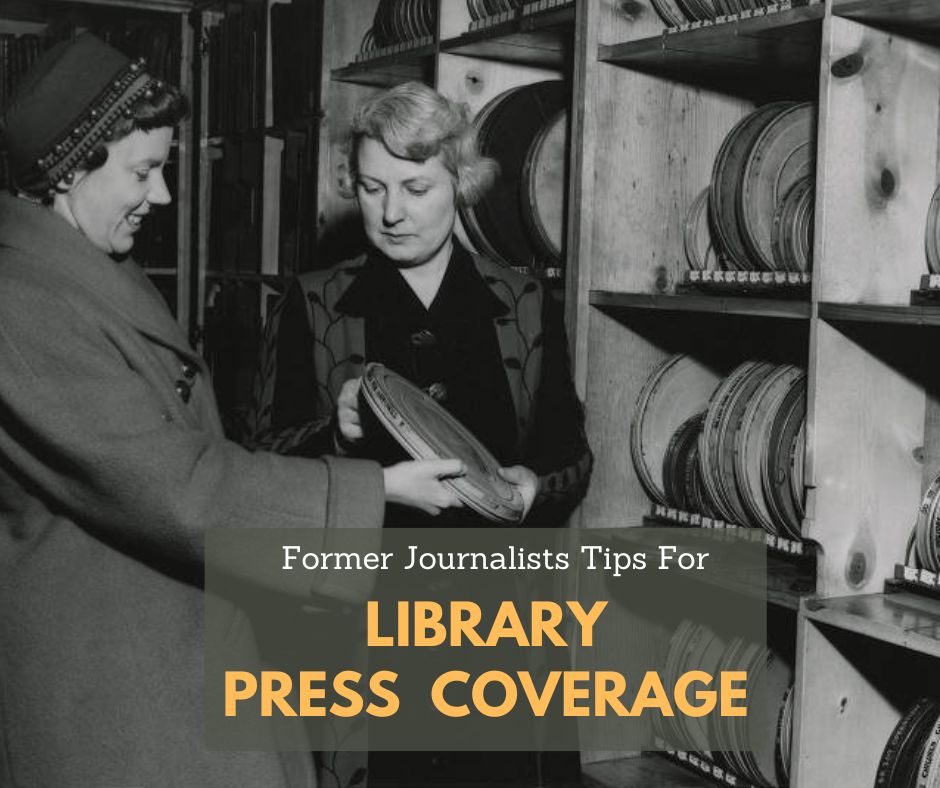
Black and white vintage photo of two women, one in a coat and hat and one in a dress, looking at film reels in a library.
Photo courtesy Cincinnati and Hamilton County Public Library

Ray Holley, the communications manager for Sonoma County Library, is fascinated with economic development and planning. When he took his current job at the library in 2018, one of the first questions he wanted to answer wasโ€ฆ what is the return on investment of a library?

Ray commissioned a respected local economist to conduct an independent study of the library system’s economic impact. The result? A headline-grabbing finding: For every $1 invested in the library, the community received $3.42 in return.

Ray knew this would make for great press coverage. He strategically timed his pitch, used an existing relationship with a reporter, and landed a feature story on the front page of the paper. That story sparked ongoing conversations about the value of libraries and gave the library system a powerful stat they continue to use in marketing and advocacy efforts.

As a former newspaper editor, Ray knows how to frame a story in a way that earns coverage. In a recent panel for the online event โ€œPutting Principles Into Practice,โ€ organized by the Library Marketing Conference Group, he joined me and another former journalistโ€“turnedโ€“library communicator, Leslie Marinelli of Forsyth County Public Library, to share insider tips on how libraries can achieve better media coverage.

Libraries have great stories to tell. But getting the media to listen isnโ€™t always easy. Here are the top 10 practical tips that Leslie, Ray, and I shared for getting your library into the news.

1. Know your media market size, so you can tailor your approach to press coverage.

Knowing whether youโ€™re in a small, medium, or large media market helps you tailor your approach and your expectations.

To determine the size of your media market, you need to identify your Designated Market Area (DMA). DMAs are geographic regions determined by the reach of local television stations and are used to define local television and radio markets.

You can find your DMA by consulting Nielsen’s DMA rankings, which are based on population size and the reach of broadcast signals. The top 25 cities on the list are considered large markets. Medium markets are numbers 25-100 on the list. If your area is listed at number 101 or lower, you are in a small market. Why does this matter?

  • Small markets may be more receptive to informal pitches, good stories, and contributor-written columns.
  • Medium markets might have a mix of overworked reporters and community-focused outlets. Relationship-building and persistence are key in these markets.
  • Large markets typically have more gatekeepers and higher competition for coverage. Youโ€™ll need a strong angle, professional press materials, and sometimes long-term relationship nurturing to break through.

2. Learn whatโ€™s truly newsworthy.

Tip from Ray: โ€œThereโ€™s what library staff think is newsworthy, and then thereโ€™s what reporters think is newsworthy. Your job is to bridge the gap.โ€ How do you do that?

  • Focus on stories that have a community impact, emotional appeal, or broad interest.
  • Think strategically. Donโ€™t pitch everything. Pitch whatโ€™s most likely to get picked up. Look through your local newspaper, magazine, radio, and TV stations to see what stories they normally cover. And check their social media accounts to see which stories receive a lot of engagement. Theyโ€™re more likely to respond to your pitch if they think it will draw attention to their platforms.
  • Highlight grand openings, author visits, new services, renovations, or impactful patron stories. Those are usually sure bets for press coverage.

3. Personalize your pitches.

Tip from Leslie: “I don’t send out very many formal press releases. I prefer casual emailsย โ€”ย sometimes with emojis โ€” and it works better for my small market.โ€ Leslie talked about this approach in depth in this post.

  • Know your market (see tip #1). It can help you decide how best to approach reporters. For example, in smaller communities, informal, friendly outreach can be more effective than polished press releases.
  • Use conversational language.
  • Personalize your email to each journalist, especially if you’re targeting a larger outlet.

4. Build relationships with reporters.

Tips from both Ray & Leslie:

  • Read or watch the media in your market. Know whoโ€™s covering what.
  • Reach out with thanks, praise, or helpful information, even when youโ€™re not pitching a story.
  • Say yes when reporters ask for quotes or information and respond quickly.

Ray reads the paper every day and sends personal follow-ups after he sends his press releases. Leslie has even gotten coffee with the editor of her local paper. And when I worked at a library, I often invited reporters for a personal, behind-the-scenes tour to get to know them and vice versa!

5. Pitch less, but pitch better.

Tip from Ray: โ€œToo many press releases can cause outlets to tune you out. Be strategic.โ€

  • Avoid sending releases for every single event, especially small, localized programs.
  • Always follow mass press releases with personalized outreach to key contacts.

When a brand-new library branch opened at Forsyth County Public Library, Leslie wrote a formal press release, and she packed it with everything a reporter might need: quotes with emotion, accurate stats, and ready-to-use details. That preparation led to multiple front-page stories, including this one, and a professionally produced video by the local government, something Leslie couldnโ€™t have done on her own as a one-person team. 

 6. Time your pitches well.

My rules of thumb:

  • Big events (e.g., author visits, renovations): Send your release 4โ€“6 weeks out, with a reminder a week before.
  • New services: Send your release 1โ€“2 weeks ahead.
  • Awards: Send your release 1 week ahead. If you want to send it earlier, include an โ€œembargo noticeโ€ which specifies that the news outlet canโ€™t publish or air anything about the story until a specific date. Newsrooms will honor embargoes.

And always include:

  • High-resolution images or video that the press can use to add visuals to the story if they canโ€™t get a reporter to the scene.
  • Human-sounding quotes. For example:
    • Corporate-speak quote (what not to do):
      โ€œYou can see our dynamic approach to customer service is essential to our strategic initiatives.โ€
    • Human-sounding quote (what to do instead):
      โ€œWeโ€™re adding an online, real-time reading recommendation service because we wanted to do a better job of helping people find the books they want.โ€
  • Clear, simple language. As you write, youโ€™ll want to avoid jargon, focus on benefits to the public, and make it easy for reporters (and readers) to understand. For example:
    • โ€œThe library is opening a brand-new branch with more space, updated technology, and a dedicated childrenโ€™s area to better serve the community.โ€
    • โ€œThis program gives families a chance to enjoy a free movie night together, right at the library.โ€

7. Write the story yourself.

Media outlets are short-staffed. If you can provide a full article or press-ready content, your chances of getting coverage go up, and you control the message.

Leslie prepares a media packet to distribute at every Library Board meeting, complete with pertinent figures, dates, quotes, and the correct spellings of people’s names so that it’s easier for her local reporters to write stories about the library. This saves her reporters from having to go digging for information, and it leads to much more accurate news stories, which is a win-win for both the library and the newspaper.

Bonus: Offer to write a monthly column for local papers or magazines. Leslie turned her proactive event roundups into a recurring feature!

8. Be your own news channel.

Tip from Ray: โ€œWe break our own news via newsletters and email. It gets our message out without relying on the press.โ€

  • Start a blog or email newsletter and communicate directly with your community. Rayโ€™s library has an entire news page with newsletters and blog posts to make it easy for reporters and stakeholders to see the latest library news.
  • Share bite-sized stories with elected officials, nonprofits, and other community partners.
  • Build a โ€œpartner relayโ€ list to quickly spread info during closures or tech issues.

9. When things go wrong, work to control the narrative.

If negative press is brewing, you’ll need to move quickly.

Ray says that when a change in how content was communicated upset some internal staff, one of them contacted the press, claiming the library was turning its back on DEI values. He immediately pulled together a response team, wrote talking points, coached his colleagues, and scheduled a call with the reporter, who happened to be someone he had previously hired!

Because he acted fast and came prepared, the story was successfully reframed to highlight the libraryโ€™s expanded and ongoing commitment to DEI. It ran as a positive feature instead of a negative exposรฉ. Some other tips include:

  • Have talking points ready, as Ray did.
  • Role-play interviews with your spokespeople.
  • Use your own platforms to clarify or correct the record.

On that last point, while I was working in marketing at the Cincinnati and Hamilton County Public Library, one of our biggest challenges was the lack of accessibility in several of our historic Carnegie-era branches. We knew renovations were needed and were preparing to ask voters to approve a levy to fund them.

Just as we were in the planning stages of the levy, a Vietnam veteran went to a local news station and shared that he couldnโ€™t access his neighborhood branch because it had no elevator or wheelchair ramp. (Hereโ€™s that story.) It was true, but it didnโ€™t mention our plans to renovate the branches.

Instead of ignoring the coverage or going on the defensive, we reached out. I invited the veteran to return to the library for a follow-up story, this time focused on what it would mean to him if he could fully access library services. We recorded an interview and shared it on the libraryโ€™s YouTube channel.

That heartfelt video helped us take control of the narrative and became a key part of our campaign messaging when it came time to ask the community to vote โ€œyesโ€ on the levy.

10. Show gratitude.

Tip from Leslie: โ€œSend thank-you notes. Nobody gets them anymore, and reporters remember.โ€

Praise good stories, thank writers publicly and privately, and copy their bosses when appropriate. It builds goodwill and earns more coverage next time.


Need more inspiration?

Interviewing Techniques Anyone Can Use To Land a Powerful Quote for Your Libraryโ€™s Blog, Video, Social Media, or Press Release

Subscribe to this blog, and youโ€™ll receive an email whenever I post. To do that, enter your email address and click on the โ€œFollowโ€ button in the lower left-hand corner of the page. You can also follow me on the following social media platforms:

Protect Your Library Marketing: 6 Smart Strategies for Turbulent Times

Photo courtesy Cincinnati and Hamilton County Public Library

I will confess to you that I am worried about the future of libraries.

The news that the current United States Presidential administration intends to eliminate the Institute of Museum and Library services is devastating. For some libraries, the funding from IMLS accounts for a huge percentage of their annual budget. In my day job with NoveList, Iโ€™ve heard that some U.S. libraries are worried they won’t have enough money to buy books, let alone pay staff and keep buildings open.

Libraries in other parts of the world are facing threats, too. Canadian libraries are beating back book censorship challenges. In the United Kingdom, Australia, and New Zealand, funding cuts continue to threaten libraries. Itโ€™s a scary and infuriating time to be a library marketer.

Iโ€™ve been compiling a list of things that library marketers can do to protect their jobs and prove the value of their promotions and their libraries. Putting a plan in place and acting on that plan makes me feel less helpless and hopeless. So, hereโ€™s what I want you to do.

Stay focused: Set goals and center your energy there

Focus is critical during turbulent times. You may be tempted to think that you must promote everything the library offers to fight back against budget cuts. But I can say from experience that this method is ineffective and exhausting for you and your audience.

This is where goal setting can be critical. Pick the three biggest goals for your library for the next six months. For example, you might say Summer Reading, opening a new branch, and increasing the circulation of print items.

Next, you set goals for each of those three items. Use numbers, active verbs, and decide on a timeline for when that goal will be completed. Do not set a goal of โ€œWe hope to get more people to participate in Summer Reading.โ€ Instead, say, โ€œBy August 15, we will increase participation in Summer Reading across all age groups by 10 percent.โ€ ย 

Next, use the divide and conquer method to focus your promotions on those goals. Youโ€™ll want to spend about 75 percent of your promotional time on these three key areas. What will you do with the other 25 percent?

Incorporate value-driven messages into your calendar

With the remaining 25 percent of your energy, youโ€™ll focus on repeated messaging that conveys core library values. Use messaging that focuses on the library as a welcoming place where privacy is protected and where community members can pursue learning, creativity, and connection. Here are 4 ideas for how to do that.

1. Use positive storytelling

      Share real-life stories of how the library is a refuge for students, job seekers, new residents, and others who need a safe, quiet, or supportive environment. Give your patrons opportunities to share why the library feels like a safe and welcoming place for them through video clips, quotes, or social media posts. Need inspiration? Hereโ€™s how one library marketer does it.

      2. Feature library services that center on safety and comfort

      Promote meeting spaces, quiet study areas, free Wi-Fi, literacy programs, or social services partnerships that help patrons feel secure and supported.

      3. Celebrate the joy of reading

       A Scottish librarian once told me, โ€œReading for pleasure is fairy dust.โ€ Itโ€™s magic. It transports you, teaches you, and inspires you.

      One way to connect with the readers in your community is to do more collection promotion, focused on the joy that the reading experience brings. Your readers are fierce library supporters, and theyโ€™ll be the first to defend you from attacks. Engage them with more reading recommendations!

      4. Use visual cues in the library

      Display signage that communicates safety and inclusivity, such as “All Are Welcome Here”, โ€œYour Library, Your Spaceโ€, and โ€œCome as you are. Stay as long as you like.โ€ You can use AI to help you come up with short, non-political phrases that will convey the message of welcoming.  

      Build your email lists

      Social media platforms are more divisive, and many people are leaving them. You need a way to directly communicate with your community without algorithms! Right now, start working on building your subscriber list for emails. Here is a step-by-step guide for doing that.

      Track metrics to prove your value

      I know itโ€™s time-consuming. But tracking marketing metrics helps you prove the value of your work by providing data-driven evidence of your impact on the community.  

      Metrics like email open rates, social media engagement, and website traffic show how well your library is connected with patrons. Compare your metrics to the industry averages to show the value of email marketing.

      You should also track event registrations, program attendance, and resource usage tied to promotions. These numbers will allow you to show how marketing drives participation. For example, if you track metrics, you can tell your supervisor and your board of trustees that the rise in participation in summer reading was the direct result of your promotional campaign. when requesting funding or staffing.

      Hard data will help protect the funding and staff you may have to work on marketing. If you donโ€™t believe it, this libraryโ€™s experience with metrics may cause you to change your mind.

      Remind yourself of your successes

      Library marketing always comes with setbacks, but remembering your past successes reminds you that you’ve overcome challenges before and can do so again. I have two ways that I practice this concept.

      Every two weeks, I write a post for our company Teams channel about the content and emails weโ€™ve released and their results (if I have them already!). I also give shout-outs to the coworkers who helped us with different pieces of marketing. I don’t ever want to take it for granted that everyone I work with knows what my team does and why our work is valuable.

      At the end of every day, I take just a second to acknowledge everything I have done that day. Itโ€™s a simple but effective way to remind yourself that you are working hard and making progressโ€ฆ because progress in marketing sometimes seems very slow!

      Network with others

      This is the perfect time to join groups that relate to your work. You may need those connections if your job is threatened. And itโ€™s always a positive boost to have people who understand library marketing in your circle.

      The Library Marketing Book Club is a great option! We meet every two months to discuss a marketing book and to share ideas about marketing. In between meetings, we celebrate successes and ask for help with projects on our Facebook and LinkedIn pages. You can sign up for the club here.


      Need more inspiration?

      How To Persuade Library Leaders To Take Your Marketing Advice

      Subscribe to this blog, and youโ€™ll receive an email whenever I post. To do that, enter your email address and click on the โ€œFollowโ€ button in the lower left-hand corner of the page. You can also follow me on the following social media platforms:

      Navigate Library Alerts Seamlessly: 7 Proven Messaging Techniques

      Photo courtesy Cincinnati and Hamilton County Public Library

      A few weeks ago, I received a question from a reader.

      The email read, โ€œMy library has recently dealt with many unexpected closures and disruptions in service. Our AC went down during a heatwave, our drive-thru will be closed for three days due to road repair, our parking lot was closed for resealing, our meeting rooms are short on tables due to some faulty wheels, our entrance was temporarily closed due to construction, our catalog will be down due to a migration, our elevator is on the fritz… and the list goes on!โ€

      โ€œOur staff always want to make sure that patrons are informed and prepared for what to expect when they arrive, but I’ve been concerned about balancing our messaging.โ€

      Ensuring your community has updates on broken equipment or services that are unavailable while continuing your normal promotions highlighting the library’s value is a common challenge. For my library marketing friends who are dealing with hurricanes, construction projects, unexpected power outages, and more, Iโ€™ve created this guide with recommendations on how to manage these situations.

      Tip #1: Prioritize critical messages.

      If your library is facing significant disruptions that impact a large number of patrons (e.g., catalog downtime, major entrance closures,), use all your available channels (website, social media, emails, texts, signs, etc.) to inform your patrons.

      As you craft your messaging, be certain to use clear, conversational text. Give easy, step-by-step instructions for navigating these disruptions. And, always be sure to include a phone number or email where community members can ask further questions.

      Let your community know how long the disruption will last. And promise to provide further updates. Your goal is to minimize situations where unexpected surprises could cause frustration or inconvenience.

      Here’s a great example from Delaware County District Library, which sent an email to let people know its locations will close for a staff training day.

      Tip #2: Use targeted messaging for less critical issues.

      For less critical issues (like broken equipment or minor repairs), an “Out of Order” sign on the affected item may be sufficient. If itโ€™s a piece of equipment in your MakerSpace, and you have emails for community members who have reserved the equipment, a quick email letting them know itโ€™s unavailable is warranted.

      You could also use your website or digital signage within the library to let patrons know about the disruption as they arrive at the branch.

      Tip #3: Have lots of disruptions? Consider bundling your messages.

      If youโ€™re facing a situation like my reader where you have multiple outages, consider bundling updates. A weekly update post on social media or an email summarizing all current disruptions will inform your community without inundating them with multiple messages.

      Tip #4: Create a โ€œService Alertsโ€ section on your website.

      A landing page where notifications about all service alerts are located makes it easy to keep all information about potential disruptions in one place. Like Vancouver Public Library, you can train your community members to look there for updates and point to this section when creating email or social media messages about new disruptions.

      Tip #5: Ensure staff have messaging for in-person interactions.

      Make sure you take the time to give your libraryโ€™s front-line staff up-to-date information so they can proactively inform patrons and suggest alternatives when disruptions affect a visit. This helps staff manage patron expectations. It also empowers staff and makes them feel more confident as they interact with community members.

      Tip #6: Consider adding humor to your messaging.

      Humor can be an effective way to soften the impact of negative news, like service disruptions, without downplaying their importance. It can also make your messaging feel more approachable and lessen frustration.

      For example, instead of a straightforward โ€œThe elevator is out of order,โ€ try: โ€œOur elevator decided to take a breakโ€”stairs are getting their time to shine!โ€ Or, if your catalog is down, you could say โ€œOur catalog is taking a nap for maintenance. Itโ€™ll wake up refreshed and ready soon!โ€

      You can also use funny visuals, as Orkney Library did when they were forced to close an hour early for a whole week.

      Finally, try pairing your disruption message with a positive point. For example, โ€œOur entrance is blocked due to construction, but weโ€™ve still got an open door to great reads.โ€

      Tip #7: Pay attention to your communityโ€™s response to the disruption.

      As with any library communications situation, pay attention to feedback from your community members regarding your communication strategy. You’re striking the right balance if patrons feel well-informed without being overwhelmed. If they complain that theyโ€™re getting too many or insufficient messages, adjust accordingly.

      Although disruptions are not ideal for your community and your marketing, you will learn things about your audience! For example:

      • How do patrons use the library? Disruptions can reveal patterns of library use. For example, if many patrons express frustration over catalog downtime, it indicates that digital access is a high priority. Alternatively, if theyโ€™re more concerned about space (like meeting room availability), it shows how much they rely on physical spaces. You can use this information to inform future marketing.
      • Which channels work best for communication? Analyze how patrons respond to disruption notices. Do they respond more to messages sent via social media, emails, or to messages delivered in person? This can tell you which communication channels are most effective for your libraryโ€™s audience.

      P.S. You might also find this helpful

      Libraries: Itโ€™s Time to Update Your Crisis Communication Plan! Hereโ€™s What You Need to Revise.

      Subscribe to this blog and youโ€™ll receive an email whenever I post. To do that, enter your email address and click on the โ€œFollowโ€ button in the lower left-hand corner of the page. You can also follow me on the following social media platforms:
      ๐ŸฅŠInside the Story of How NYPL’s Marketing Team Fought Back Against Budget Cuts and Won!

      Photo courtesy Cincinnati and Hamilton County Public Library

      When Jennifer Fermino graduated from college with a B.A. in English, she needed help figuring out how to put together a resume that would land her a job in communications. She found that help at what was then the New York Public Libraryโ€™s Mid-Manhattan Library (now the Stavros Niarchos Foundation Library).

      โ€œIt was an invaluable resource for a young person who really didnโ€™t know what she was doing or how to translate any of her job skills, which was then primarily waitressing and nannying, into the career path I was aiming for,โ€ recalls Jennifer. โ€œI would also add I am in good company: President Obama also credits the Stavros Niarchos Foundation Library with helping him get his first job.โ€

      And now, 20 years later, after stints as a reporter for the New York Post and the New York Daily News, as well as PR agencies and as Communications Director for the New York City Council, Jennifer works for NYPL as Vice President for Communications and Marketing. Sheโ€™s been at her dream job for about a year and a half.

      โ€œItโ€™s amazing to work for a system that serves three boroughs in the greatest city in the world (Manhattan, the Bronx, and Staten Island),โ€ enthuses Jennifer. โ€œWe have 92 locations and there is never a dull day.โ€

      Jennifer and a team of nearly 30 people run all marketing and promotions for the library. And her first 18 months on the job were, shall we say, a trial by fire.

      New York City Mayor Eric Adams proposed huge cuts to the libraryโ€™s budget earlier this year… $58.3 million to be exact… that would have forced NYPL to dramatically reduce hours. The budget cuts also threatened the libraryโ€™s budget for books, programs, and maintenance. Prior cuts, enacted in late 2023, forced all NYPL branches to close on Sundays.

      Soon after these new cuts were announced, NYPL, along with the Brooklyn and Queens Public Libraries, launched a massive campaign to show the importance of the cityโ€™s three libraries. And New Yorkers, as well as library lovers from across the country (myself included) jumped in to show their support.

      For months, I was served a social media post from NYPL every time I went online, on all channels. It felt like a coordinated, consistent effort to keep reminding people of the threat of the cuts. And thatโ€™s why I reached out to Jennifer. I wanted to know how her team managed the campaign.

      โ€œIt was a sustained effort to tap into the goodwill that people have for libraries and keep the cuts front and center,โ€ says Jennifer. โ€œI give huge credit to Victoria Reis, our social media manager, who is creative and has an understanding of both online culture and our audience.โ€

      โ€œWe began repurposing the famous โ€œThis is fineโ€™ meme with our mascot Patience and it was an immediate hit with our followers. People really connected to the campaign, and the message โ€“ that we already lost Sunday service and were in danger of losing more โ€“ resonated.โ€

      โ€œThe reaction kept growing and growing. Towards the end of the campaign, one of our memes โ€“ again a repurposing, this time of the โ€œgirl explainingโ€ meme, went over the top viral. Last I looked it had over 7M views on X (Twitter).โ€

      The team included messaging on other channels as well and worked hard to stay coordinated.

      โ€œSpecial shoutout to our talented Managing Editor Katherine Ward, whose job was to keep it all together for us,โ€ declares Jennifer.

      The team coordinated messaging using four main tactics:

      • Their NYPL Connect newsletter, which I encourage any library or NYC lover to sign up for, as well as regular reminders of the cuts on our home page.
      • Letter writing stations in branches in which patrons could easily write city leaders to support libraries.
      • Rallies of supporters at City Hall that the press was invited to cover.
      • And, as mentioned, a fun, creative social strategy.

      โ€œWe honestly didnโ€™t know what was going to happen โ€“ everyone was hopeful but on pins and needles,โ€ remembers Jennifer. โ€œReporters started calling me saying they had sources saying we would be saved, but I refused to believe it until it was official. People were congratulating us, but I felt like it was jinxing us. It took a bit for me to finally accept that it was over.โ€

      “Thankfully, the Mayor has a history of supporting libraries, and we are grateful that he funded us. We also had the City Council, including Speaker Adrienne Adams, firmly in our corner throughout.”

      “But I can say that our campaign engaged New Yorkers and showed how much people love their libraries, which is so important in the budget process.โ€

      While they fought the budget cuts, NYPLโ€™s marketing team had other promotions to balance.

      โ€œWe had launched our โ€œBooks for Allโ€ campaign celebrating the freedom to read and standing against book bans right before the cuts were enacted,โ€ explains Jennifer. โ€œWe continued that campaign all year long because the issue is of such importance to us.โ€ 

      โ€œWe also just finished our โ€˜Summer at the Libraryโ€™ campaign with Brooklyn and Queens to promote reading and education city-wide during the summer break for schools. Although not technically part of the advocacy campaign, efforts like this help show why funding libraries is so important.โ€

      And speaking of partners, Jennifer looks to her allies at the Brooklyn Public Library and Queens Public Library for inspiration.

      โ€œWe are always exchanging ideas and talking about how to engage New Yorkers,โ€ says Jennifer. โ€œIt is a great relationship. We are partners throughout the advocacy campaign and continue to do great work together.”

      “In fact, we are planning a national Freedom To Read Day of Action on Oct. 19 with Brooklyn and Queens, as well as the American Library Association, Unite Against Book Bans, and the Association for Rural and Small Libraries to stand against censorship. We have many libraries already signed up and invite everyone to join us.โ€


      P.S. You might also find this helpful

      Libraryโ€™s Print Magazine Is a Community Must-Read! Here Is Their Secretย Formula.

      Subscribe to this blog and youโ€™ll receive an email whenever I post. To do that, enter your email address and click on the โ€œFollowโ€ button in the lower left-hand corner of the page. You can also follow me on the following social media platforms:

      Save Time and Reach Your Whole Audience With an Incredible Trick! (Includes Guide and an Example You Can Steal)

      Photo courtesy Cincinnati and Hamilton County Public Library

      Last week, we went over the Marketing Rule of 7 and how consistent messaging delivered many times over multiple channels will lead to promotional success.

      But that does NOT mean you must create 500 versions of every promotion you do. PHEW!

      So, letโ€™s talk about the easiest way to make the Marketing Rule of 7 happen within the constraints of working in a library. We do that by repurposing our content.

      Repurposing content

      Repurposing content is the practice of reusing elements of existing content to expand that contentโ€™s reach.

      Repurposing content makes it easy to fulfill the Marketing Rule of 7 because you donโ€™t need to write every post, shoot every video, and design every infographic from scratch.

      Instead, you can use a piece of new content as the basis for lots of other content.

      Why repurpose your content?

      Your community is diverse. Their preferred methods of receiving information are diverse.

      Some of them are visiting your website every day for updates. Some are seeing your social media posts. Some are waiting for your next email to hit their inbox. And some are fans of your Reels, TikTok, or YouTube videos.

      Re-purposing content helps you reach more people on the channels they prefer efficiently, so you can go do all the other things you need to do in a day!

      I repurpose this blog every week. (Did you notice?!) Hereโ€™s how I do it.

      I pull out a few lines, usually from the first one-third of the post. I may use the lines exactly as they are in the post. Or I might rearrange them, adding more humor or emojisโ€ฆ things I wouldnโ€™t necessarily do in my blog post.

      Then I take those lines and I post them across my social media channels and in my emails.

      I also take parts of a post and use them in other posts, especially if these are key points I really want you to remember. For example, I strongly believe books are your library’s brand. And I say so… often!

      Sometimes, I take parts of my blogs and use them in presentations.  I also turn them into an infographic or a 60-second video.

      How will this work at your library?

      Letโ€™s say youโ€™ve created an infographic to communicate the value of your library in the past year. We know infographics are a great way to present those statistics and give a whole picture of your library’s contribution.

      But infographics take time to build. And some people will still need those stats broken down for them, piece by piece, in order to comprehend their meaning.

      So you can take each of the points on that infographic and create separate social media posts. This really helps your audience digest the information.

      Those separate pieces of breakout information can also serve as a springboard for your library to write blog posts or longer social media posts specifically diving into those key stats and what they mean for your community.

      Choose three of the facts on the infographic. Pick a staff member who loves being on camera and ask them to create a 60-second Reel or TikTok video using trending audio and creative elements to explain this serious subject: the value proposition of your library.

      Need more help figuring out how to make this work at your library? I created a 4-step guide for you!

      Easy 4-step guide to repurposing content

      Letโ€™s say your library is publishing a promotional blog post about Book Club Kits. It might look like this.


      Get Convenient, Easy Help Leading Your Next Book Club

      Are you someone who enjoys discussing books, sharing insights, and hearing different perspectives on a story? Or maybe you’ve been thinking about starting a book club but don’t know where to begin. Well, look no further! Our Book Club Kits are designed to bring people together through the power of literature, and here’s why you should definitely consider checking one out:

      1. Diverse Selection: Our Book Club Kits include a wide range of titles covering various genres, themes, and authors. Whether you prefer classics, contemporary fiction, non-fiction, or even a mix of everything, we have something for everyone. From thought-provoking novels to inspiring memoirs, our collection is carefully curated to spark engaging discussions.
      2. Convenience: Starting and maintaining a book club can be challenging, especially when it comes to sourcing multiple copies of the same book. With our Book Club Kits, we’ve taken care of that for you! Each kit includes multiple copies of the featured book, making it easy for your group to access and read the same title simultaneously.
      3. Discussion Guides: To facilitate meaningful conversations, our kits come with discussion guides. These guides provide questions, prompts, and talking points to help guide your book club discussions, ensuring that everyone gets a chance to share their thoughts and insights.
      4. Cost-Effective: Participating in a book club can sometimes become costly when you have to purchase multiple copies of a book. With our Book Club Kits, you can enjoy reading and discussing a wide variety of books without breaking the bank. It’s a budget-friendly way to explore new literary horizons.
      5. Community Building: Book clubs provide an excellent opportunity to meet new people, make friends, and engage in lively conversations. By checking out one of our Book Club Kits, you can be a part of a vibrant community of readers right here in your own neighborhood.
      6. Flexibility: Whether you prefer in-person meetings or virtual gatherings, our Book Club Kits are designed to accommodate your preferred format. You can use them to start a club with friends, family, or even coworkers, making it easy to connect with others over a shared love of reading.

      You can use that post as a base for repurposing.

      Step one: Write a two-line version of your blog post.

      This is going to be the mini-version of your post… the elevator pitch, so to speak.

      For this example, I would say:

      Book Club Kits from the library make it easy, convenient, and cost-effective to start a book club. The library provides free book copies and discussion guides that allow everyone to participate and build community.

      Step two: Promote in your emails.

      Add your two-line version of the blog post to your newsletter and any other email you send over the course of the next month, with a link to the full post.

      Step three: Share on your social channels.

      Post your two-line version of the blog and include a link to the full post in the comments of your social media post. (Hereโ€™s why you want to put it in the comments instead of the post.)  

      Keep the momentum going on different social media channels by creating more two-line versions of your blog. For example, during week one, post this to Instagram and Facebook:

      Book Club Kits from the library make it easy, convenient, and cost-effective to start a book club. The library provides free book copies and discussion guides that allow everyone to participate and build community.

      In week two, post a new two-line version on Instagram, Facebook, and LinkedIn:

      Book Club Kits from the library bring people together through the power of literature. The curated kits are convenient and flexible to help any book club leader.

      On week three, you put another two lines on Facebook, LinkedIn, and X:

      Meet new people, make friends, and engage in lively conversations about books without breaking the bank. Check out the free library’s Book Club Kits.

      And so on. Mix it up to make it sound like new content while driving home the key points you wish to make.

      Step four: Use the promotional message on print promotions.

      Create a bookmark, flier, and sign, with your favorite two-line pitch from your blog post. Include a QR code linking to the blog post.

      Place the bookmarks and fliers in every hold or checkout. Place your sign on a display of books that have been assembled into book club kits.

      Re-purposing all content

      You can do this with any piece of content, from podcasts to press releases. Break the content down into pieces and spread them across all your available platforms.

      In this way, you can make sure everyone in your community sees your message. You also can make sure the work you are doing right now will have maximum impact.

      The added benefit to re-purposing: more data.

      It won’t take long for you to learn where your audience is getting news about the library. If you notice that engagement is high on one marketing channel, you will know which channel to start with when you are promoting your library.


      P.S. Want more advice?

      Libraries Have a Huge Competitive Advantage: Customer Service! Here Are 3 Promotional Tips To Drive Home That Message

      Upcoming Appearances

      Will I see you soon?

      Subscribe to this blog and youโ€™ll receive an email whenever I post. To do that, enter your email address and click on the โ€œFollowโ€ button in the lower left-hand corner of the page. You can also follow me on the following social media platforms:

      A Former TV Star May Use Your Library as a Publicity Stunt: How To Prepare Now Through Promotions

      Watch this video

      The #LibraryMarketing Show, Episode 194

      My childhood TV crush is organizing an event at public libraries across the United States and your library needs to get ready for it, especially in terms of promotions.

      Watch this episode for tips on how to prepare now and educate your community about the importance of inclusive reading.

      Plus we give away kudos. Watch the video to find out which library is being recognized.

      Do you have a suggestion for a topic for a future episode? Want to nominate someone for kudos? Let me know here.

      Thanks for watching!


      Subscribe to this blog and youโ€™ll receive an email whenever I post. To do that, enter your email address and click on the โ€œFollowโ€ button in the lower left-hand corner of the page. You can also follow me on the following social media platforms:

      We Have a Problem: Burnout Is Real. Here Are the Top 5 Threats to Library Promotional Work.

      Photo courtesy Cincinnati and Hamilton County Public Library

      I sometimes daydream about taking a nap in the middle of the workday.

      It would be easy enough. My office is in a shed in our backyard and yaโ€™ll, thereโ€™s a pullout bed in here. I could totally take a power nap any time I wanted to.

      But I never do.

      Why NOT?? Seriously, what is wrong with me?

      For many of you, a midday work nap is something you could never consider. You simply don’t have time. Marketing your library is not the only work task you are expected to do. You are answering phones. Youโ€™re filling holds. Youโ€™re making sock puppets for story time. Youโ€™re cleaning the restroom.

      Your work is demanding. And for many of you, itโ€™s leading to staff burnout.

      Burnout is a big problem in library marketing. A quarter of all public libraries in the United States lost staff positions after the pandemic, according to the Public Library Association. And in more than half of those libraries, those positions were not replaced.

      So, weโ€™re doing more with less. And the burden is even heavier for those of you working to promote your library.

      According to a survey by Blind, the burnout rate for anyone working in marketing and communications was already high pre-pandemic, at 74.8 percent. After the pandemic, that rate shot up to 83.3 percent.

      We have a problem. But Iโ€™m certain my readers already knew that.

      What do we do about it?

      For the next two weeks, I want to address this issue. Iโ€™ll share some strategies Iโ€™ve learned in my own work and research.

      I decided to write this series now because:

      • Summer is stressful and busy for library promotions.
      • Youโ€™ll do better promotional work when you arenโ€™t stressed, and thatโ€™s good for your library.
      • I like you. A lot.

      What the heck is burnout?

      The World Health Organization (WHO) classifies burnout as a โ€œsyndrome conceptualized as resulting from chronic workplace stress that has not been successfully managed.โ€

      There are three main symptoms:

      • Feelings of fatigue, lethargy, or exhaustion
      • Feelings negative or apathetic about your library marketing work
      • Reduced productivity

      Why are library marketers experiencing burnout?

      This is, by no means, a comprehensive list. But I talk with libraries every day as part of my day job. And here are the main causes of burnout Iโ€™ve noticed.  

      Outside threats, like book challenges, hostile library boards, and antagonistic community members.

      I put this first because, to be honest, I think itโ€™s the biggest threat to libraries right now.

      The constant, never-ending, soul-sucking, scary, demeaning, and demoralizing effects of book challenges are doing more than impacting our freedom to read. Itโ€™s threatening the very existence of libraries by making working conditions impossible.

      This month, during Pride, I have held my breath every time I see a library post on social media. I tentatively check the comments, looking for anyone who might say something derogatory.

      I hear stories from fellow library marketers who tell me they receive replies to their regular library emails from people threatening and demeaning them.

      And Iโ€™ve listened as library staff break down in tears, describing hostile community members who threaten them, dox them, and call them all kinds of names, for doing their jobs–providing inclusive books and services.

      Lack of support or recognition from leadership

      You, my readers, are smart. You think strategically about your promotions and measure your results. And when you take those results to your boss and they ask you to keep doing the thing that isnโ€™t working anywayโ€ฆ that leads to burnout.

      If you are a manager reading this, here is a call to action: your job is to support your staff. Your job is to remove hurdles so your team members can do their best library marketing work.

      That doesnโ€™t mean you have to agree with every idea your team members bring. But if you disagree, provide context. And allow your team members to conduct library promotional experiments, even if you personally think theyโ€™re going to fail. You could be wrong. And the goodwill and trust you build with your team members are valuable.

      Unrealistic deadlines and results expectations

      How many times have you been asked to create an email, a social media post, or an ENTIRE campaignโ€ฆ right now, like yesterday.

      Library marketing work takes time and itโ€™s difficult to get others to understand that. And when they donโ€™t, that leads to stress and burnout.

      Itโ€™s also stressful when youโ€™re receiving pressure from fellow staff who expect you to drive hundreds of people into their programs.

      Remote work and mobile devices

      There is a downside to remote workโ€”one I personally struggle with.

      Before the pandemic, most of us had to commute. And that driving time, as stressful as traffic can be, did create a barrier that helped us disconnect from our work.

      Now, itโ€™s so dang easy to open your laptop after dinner and finish that email newsletter you didnโ€™t quite get through today. Or to check your email. We also carry these little computers around in our hand/purse/pocket that keep us constantly connected to the office.

      For a while, my home office was in my bedroom. HUGE MISTAKE. I would wake up in the middle of the night, glance over at my to-do list for the next day which was laying on the desk right next to me, and suddenly, the gears in my brain would start churning.

      Donโ€™t get me wrong: working at home is FANTASTIC. But remote workers do have to consciously create a barrier between their workday and their home life.

      The never-ending promotional content cycle

      The work that sets library promotions aside from every other bit of work in the library is the constant need for online content.

      Update the website. Write a blog post. Record a podcast episode. Post to social media.

      The content beast is always hungry. And that constant need to feed the beast leads to burnout.

      Are you experiencing burnout?

      If you are feeling like one more social media post or newsletter is going to put you over the edge, you are not alone. Next week, Iโ€™ll share 10 tips for avoiding burnout for anyone working in library promotions.

      Meanwhile, if you feel comfortable, share your burnout experience here. This form allows you to remain anonymous. Iโ€™m not a therapist, but hopefully, the act of writing about your feelings will help ease the burden a bit. I care about you.


      More Advice

      How to Get Stuff Done Without Losing Your Mind: My Top 6 Time Management Tips for the Busy Library Marketer

      Subscribe to this blog and youโ€™ll receive an email whenever I post. To do that, enter your email address and click on the โ€œFollowโ€ button in the lower left-hand corner of the page. You can also follow me on the following social media platforms:

      Security Threat! Twitter is Hot Mess Right Now: Four Steps to Lock Down Your Library’s Account

      Watch nowโฌ†๏ธ

      The Library Marketingโ€‹โ€‹โ€‹โ€‹โ€‹โ€‹โ€‹โ€‹ Show, Episode 167: This episode is a must-see for any library that posts on Twitter.

      Elon Musk’s takeover of the social media platform has put accounts at risk. I’ll explain the threat and the four steps your library can take right now to reduce the chances your library’s account will be cloned or hacked.

      Kudos in this episode go to the Dayton Metro Library.

      Do you have a suggestion for a topic for a future episode? Want to nominate someone for kudos? Let me know in the comments. And subscribe to this series to get a new weekly video tip for libraries.

      Thanks for watching!


      Subscribe to this blog and youโ€™ll receive an email whenever I post. To do that, enter your email address and click on the โ€œFollowโ€ button in the lower left-hand corner of the page.

      Libraries: It’s Time to Update Your Crisis Communication Plan! Here’s What You Need to Revise.

      The Library Marketingโ€‹โ€‹โ€‹โ€‹โ€‹โ€‹โ€‹โ€‹ Show, Episode 161: In the wake of Hurricane Ian, libraries around the world should take the time to update their crisis communication plans.

      Most libraries put a crisis plan into place during the pandemic. But if you haven’t revisited and revised the document since then, you could be in trouble.

      Disaster strikes every library. We’ll talk through the things you need to update in your plan.

      Kudos in this episode go to the Boone County Library. Watch the video to find out why they’re being recognized.

      Do you have a suggestion for a topic for a future episode? Want to nominate someone for kudos? Let me know in the comments.

      And subscribe to this series to get a new weekly video tip for libraries. Thanks for watching!


      Subscribe to this blog and youโ€™ll receive an email whenever I post. To do that, enter your email address and click on the โ€œFollowโ€ button in the lower left-hand corner of the page.

      A WordPress.com Website.

      Up ↑