Search

Super Library Marketing: Practical Tips and Ideas for Library Promotion

Category

Library Marketing Strategy

Avoid Email Vanity! Here Are the Results You Should Measure

I love email marketing. It’s one of the most effective tools in the modern library marketer’s toolbox. Emails are a direct way to interact with your cardholders and your community. They are easy to create. You can share stories, collection items, explain new services, and promote events directly with your audience. And library cardholders love getting emails from us. We don’t have to worry about unsubscribe rates the way other industries do.

Many libraries are now emailing their cardholders. And they’re reporting success with those campaigns. I’m so happy! But I’m also worried about something I hear often in conversation with other library marketers. I’m worried that we’re focused on the wrong measure of success–open rates. I’ve attended two events with other library marketers this summer. At both, there were deep and interesting discussions about success in email marketing. But at both events, the conversation about success centered on how to raise open rates.

Now, I have a confession to make. When I started targeted email marketing back in January of 2015, I was obsessed with my email open rates. And so were thousands of marketers in industries across the world. During my first trip to Content Marketing World, I attended several sessions on email marketing and every speaker mentioned open rates as a measure of success.

Open rates do mean something. They are a sign of customer loyalty. A high open rate means that your cardholders are eager to see what you’ve sent them. And that’s good. But it’s kind of like buying a house because it’s got a beautiful exterior. You may sign all the paperwork, open the front door and find all the walls are unfinished! Open rate is a vanity metric. It makes you feel good. But it’s what happens AFTER your cardholders open your email that counts.

I’m not suggesting you ignore open rates. They do give you information you can use to improve your emails. If your open rates are high, and your click-thru rates are low, you can be certain that you are writing compelling email subject lines (Good job, you!). You have a loyal and eager audience. But the content you are sending to your cardholders isn’t what they want. Now you can fix that problem!

Keep tabs on your open rate. But you should focus on two other valuable ways to really measure the success of your emails.

Click-through rates: The higher this number is, the more excited I get. It means that my cardholders opened an email, saw something they liked, and took an action! Most of the time, my library emails direct cardholders to do one of two things: click a link for a specific item in our collection or go to the event calendar where they can register or put an upcoming event on their calendar. Convincing a cardholder to take one of those actions is a huge victory. It also gives me data about what that particular cardholder is interested in. And I can use that information to craft future emails that are also compelling for that cardholder.

Conversion rates: A conversion rate is the most accurate way to measure email effectiveness. It is the percentage of people who take an action after clicking through an email. For example, let’s say 100 people click-through to look at a book I’ve promoted by email. If 50 of those 100 people put the book on hold, my conversion rate is 50 percent. Once I know what my average conversion rate is for a certain type of email, I can set goals to raise that conversion rate. I can  accurately compare my emails to one another.  I might see a high conversion rate for a certain genre of book and look for similar books to market to that cardholder. I might notice a spike in registration rates for a particular kind of program coming from an email and look for similar kinds of programs to market to my cardholders. Conversion rate is the most accurate measurement for determining the likes and dislikes of your cardholders.

For more on tracking the success of your email marketing, you can also read this article. And if you want to learn more about targeted email marketing and get more secrets for library email success, don’t forget the free webinar 

Subscribe to this blog and you’ll receive an email every time I post. To do that, click on “Follow” button in the bottom left-hand corner of the page. Connect with me on Twitter, Snapchat, and LinkedIn. I talk about library marketing on all those platforms!

Call It What It Is: Toledo Public Library Explains Their New Brand Strategy

A couple of weeks ago, a Tweet from the deputy director of the Toledo Public Library caught my eye.

Our marketing manager here at the library is leading a charge to “call things what they are” to reduce confusion for customers. We should be doing more of this in libraries and resist the urge for cutesy branding.

https://platform.twitter.com/widgets.js

Jason went on to explain, “When I joined the library three plus years ago, we had just launched a kind of umbrella branding for all of our making activities at the library. We called it Make U. It was clever, had a nice logo, and generally served a purpose… for us. Three years later, it’s still a confusing ‘second brand’ for our library (one of many tertiary brands, actually). Terri Carroll (our marketing manager) is working really hard to make the library’s brand the key identifier for all things library. Every time we roll out a new program or service, we have the urge to give it cute or clever branding. It’s just more education we have to do with our customers. So rather than trying to constantly educate people about our new brands, services, and programs, we focus on the library’s brand: a welcoming and accessible space where anyone has access to resources they need to make their lives, their communities, and their futures better. Now we call Make U what it is…tech tools. I’ve learned a tremendous amount from Terri in the short time she’s been with us about how we cut through a very noisy marketplace to reach people where they are when they need us.”

This is a major hurdle for my team and library marketer’s across the country! At my Library, I’ve counted no less than TEN branded services. And each one requires education for the staff and public. The names are cute but their meaning is obtuse.

Library marketers struggle with branding. We need to do a better job of defining who we are. We must create a consistent emotional connection with our cardholders if we’re going to compete with the likes of Amazon, Barnes and Noble, Netflix, and Google.

Jason’s co-worker, Toledo Public Library Marketing Manager Terri Carroll, graciously agreed to share her insights on the process.

So many libraries have a set of tertiary brands for their various programs and services. Why is that a problem? Each day, our current and potential customers are bombarded with media messages from well-funded and sophisticated retail, fast food, snack food, entertainment, sports, news, and service companies. While these organizations aren’t competing with us to provide library services, they are competing with libraries for people’s time and attention. If libraries hope to have people notice our message in a noisy marketplace, it is imperative we have one clear brand that makes it easy for people to know who we are and what value we provide. Tertiary brands dilute our message and make it more challenging to connect with customers.

Before the redesign, the Toledo Public Library struggled to bring a host of tertiary brands together to create one cohesive brand.

What prompted you to decide to focus less on giving everything a cutesy name and instead develop and nurture an umbrella brand? I started working at the Library in November and was struck by the fact that each program had its own look and message. The emphasis was on program names and unique graphics, rather than the Library as a whole. For example, a great deal of energy was spent on “logos” for programs such as Kindergarten Kickstart, Ready to Read, and Make U instead of thinking about messaging that clearly connects a valuable service (early literacy or access to technology) with the Library. This approach puts the burden of connecting the dots about the Library’s value and relevance on our customers. It also keeps the Marketing team from thinking strategically as they instead spend energy making everything look different. This is an unfortunate use of resources. Having things look similar within a brand compliance strategy makes it easier for customers to identify Library materials and messaging.

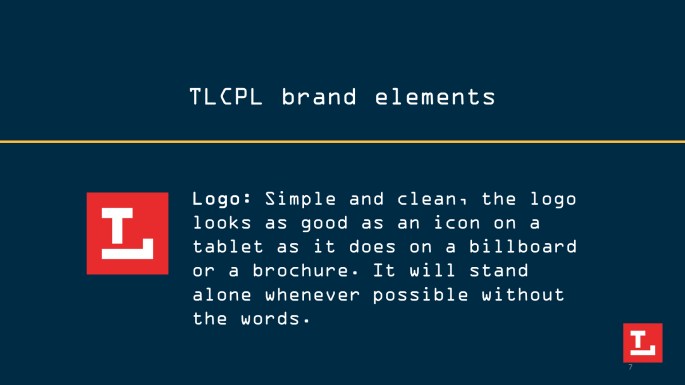
Terri laid out brand elements to create a clear and consistent message that can be understood by staff and library cardholders.

Have you seen positive results from this type of strategy yet?  We’ve been working on implementing this strategy since December, so it is tough to extrapolate data yet. For now, positive anecdotal comments to Library staff and leadership such as, “The Library is doing so much,” (when in fact we are doing a similar amount of work) and increased earned media attention are indicators of success. Ultimately, we should realize increases in circulation, door count, and program attendance as well as community and regional stakeholder invitations to be at the table on important issues, speaking opportunities, organizational partnership creations, and election results.

How can other library marketers make the case to their stakeholders, like their board of trustees, the senior leaders, and their staff, that developing a strong brand sense is more productive than creating brands individually as services are unveiled? Stakeholders repeatedly express interest in making sure the community knows about everything the Library does. I have invested a lot of time meeting with all of our internal stakeholders to show them how strong brand management is necessary to meet that goal.

My staff and I also work to keep a focus on making sure all materials and messages are customer-focused. We ask ourselves and our colleagues if our materials and messaging are giving customers all the information they need to engage with the Library. Focusing on how customers understand our Marketing keeps everyone externally (brand) focused and not internally (tertiary brand) focused.

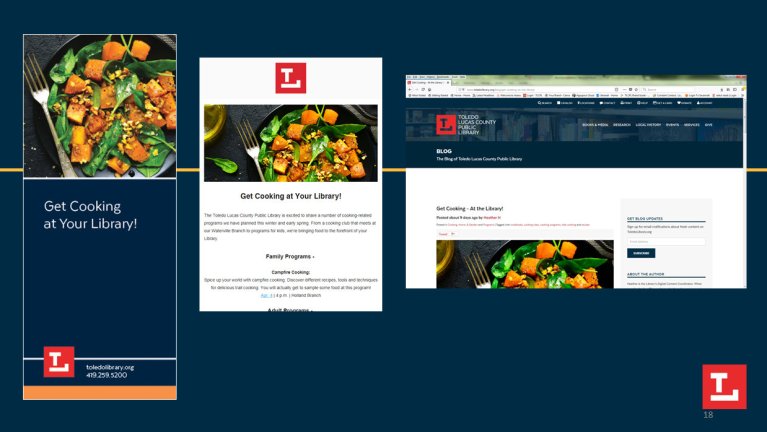
A clear, consistent look helps Toledo Public Library create a connection and makes it easier for their cardholders to recognize their messages.

Do you have any other advice for library marketers looking to strengthen their own brands? It is essential to have senior leadership support for strong brand management. If people are used to the tertiary brands and have enjoyed the creative process (either working with Marketing and/or doing their own design work at the department or branch level), moving to brand compliance can be painful. If those concerns/complaints are taken to senior leadership and exceptions are granted, then the entire brand strategy is compromised.

It is also important to expect some resistance and be willing to talk with people about their questions and concerns. In these conversations, something that seems to really resonate is when I say that we don’t want to re-educate people every time they see something from the Library. We want people to immediately identify a Library program or service. And while staff sees all the materials and, may in fact get a bit tired of the same colors and fonts, this easy identification and brand recognition is essential for customers who are wading through a marketplace of messages and materials.

Subscribe to this blog and you’ll receive an email every time I post. To do that, click on “Follow” button in the bottom left-hand corner of the page. Connect with me on Twitter, Snapchat, and LinkedIn. I talk about library marketing on all those platforms!

The One Mistake Your Library Can Never Make On Social Media

I was riding furiously on my parent’s elliptical machine, trying to distract myself from the fact that I absolutely HATE exercise by scrolling through Facebook, when I came across a post that nearly made me fall off the machine.

It was on a politically charged page dedicated to libraries. And it advocated the use of clickbait for driving engagement. I won’t post the example this person used here. It was a provocative post but it wasn’t well-constructed. There was no image and no link for action. It was also posted by a librarian, not a library. I suspect he was just trying out the line on the fly to gauge the reaction. It doesn’t really matter what his motivation was or how it played with his audience. And to be fair, the post technically was not clickbait. Clickbait is the act of writing a headline or a post that over-promises, oversensationalizes or misrepresents whatever content you are linking to. The easiest clickbait headlines to spot are the ones that contain the words “You’ll never believe” or “What happened next will shock/embarrass/outrage you.”

What matters to me is the assertion that libraries need to resort to clickbait to get followers to like, comment, and share their posts. You absolutely do not. And in fact, you should avoid clickbait at all costs.

Listen, we’ve all fallen for clickbait headlines before. I am a sucker for those slideshow galleries of photographs that promise to show me something shocking or new about historical events.  But once you’ve scrolled through a gallery of 45 shots and realized you haven’t seen anything new or shocking, you leave mad and vow never to visit that particular website again. We do not want to cause anger, disappointment, and distrust in our users. Using clickbait in posts could do serious damage to your library’s reputation. As an arbiter and protector of truth in an era of attacks on facts, we need to hold ourselves and our social media accounts to a higher standard. Clickbait headlines might get you more initial clicks, but they won’t deepen the relationship your cardholders have with your library.

We’re all fighting to get noticed in each of social media platforms. Algorithm changes mean we have to craft every post to match the demands of that particular platform. It’s exhausting. The temptation to use a clickbait headline to get more engagement is real, and I understand why it might seem like a good option. But it is not. We are better than that.

Your cardholders are smart. Treat them as such. Speak conversationally and openly, but don’t be sensational. You’ll be rewarded by your fans in trust, loyalty, and respect. And those three things are way more valuable than any engagement numbers you might garner in the short-term thanks to clickbait.

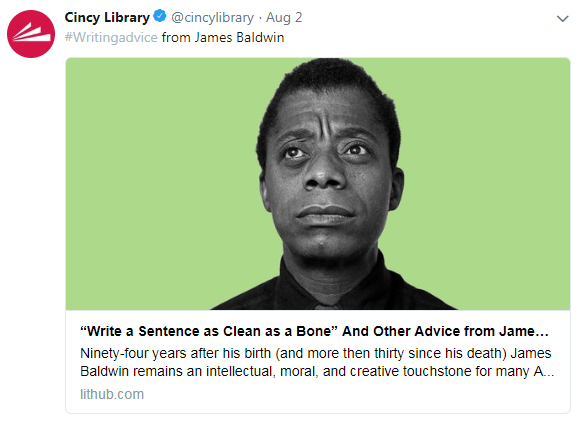
Instead, follow these guidelines for creating headlines with examples from my library’s social media platforms. Kudos to my library’s social media team for their amazing work: Danielle, Lisa, Veronica, and Andrea!

  • Be inspirational

  • Use keywords

  • Answer questions

  • Promote facts and figures

Incorporate numbers when possible

Subscribe to this blog and you’ll receive an email every time I post. To do that, click on “Follow” button in the bottom left-hand corner of the page. Connect with me on Twitter, Snapchat, and LinkedIn. I talk about library marketing on all those platforms! 
 

How to Get Over Fear and Other Big Challenges to Library Marketing

When I was in first grade, I wanted to be famous. My big break arrived in the form of a school contest. The winner got to read a public service announcement about education on the radio. “IT HAS TO BE ME!!!” I exclaimed to my bewildered mother when I learned of the contest. She gently explained that I couldn’t win. She knew I faced a huge obstacle. I did not know (yet) how to read! The time between the contest announcement and the audition was short. How would I ever learn to read well enough to do it on the air? My mother is a very practical person. This was an insurmountable obstacle in her eyes.

I proved my mother wrong through sheer determination, and with a little help from the “Dick and Jane” series. I learned to read and won the contest! That was likely the first time I realized this powerful fact: there really isn’t any problem out there that can’t be solved.

20 years later, I found myself in a similar situation at my job as TV producer. The station suffered a huge power failure. The generators died. We had no way to get on the air. But failure was not an option and with airtime fast approaching, we came up with a plan. We would broadcast live from the parking lot using our live truck. It worked. We felt like heroes. Once again, I realized there was no problem that could not be solved.

We all face obstacles every day. Library marketing is not an easy job. You deal with deadlines, staffing issues, tiny budgets, and bureaucracy. Despite these obstacles, you make it work, day after day.  Your attitude plays a huge role in determining whether you overcome obstacles. Many of our problems are unique to this industry. Do. Not. Fear. You can find ways around anything. Here are some ideas to help.

The obstacle: there is never enough time. The library year is like the “lazy river” at my local YMCA; a constant, swirling flow of events that keeps pushing us forward. It takes some force to break free. When you’re under pressure to promote each big event, you may feel like you never have enough time to do anything well. All the emphasis is on the result and most people don’t give too much thought to the process.

The solution: Create a marketing strategy and STICK TO IT. The strategy must be clear, with expectations and goals set in writing. Get it approved by your supervisor and administrators. Explain it to staff. A strategy will help you stay laser-focused. Your marketing can be consistent. Library users will start to recognize the strategy of your organization without reading the mission statement. You’ll be able to accurately measure results. And, most important, you’ll be able to say “no” to promotions that don’t serve to drive your library’s overall strategic mission.

The obstacle: there is never enough money.  Budgets are a pain. Nothing can make you feel like you can’t reach your goals like facing the cold, hard reality of zero cash flow.

The solution: start small and partner up. Ask your administration for money to fund social media advertising. It’s cheaper than traditional ad buys. Your administrators might not realize how effective targeted social media ads can be. You can easily prove that you can make a good return on their investment. Look for partnership opportunities to promote more than the big programs. Create a standard agreement for media sponsorships of major programs, listing the action items your potential sponsors will fulfill and what benefits you can offer them in return. For every big program or marketing push, brainstorm partnership opportunities. For instance, my library uses partnerships for author events and to promote our collection.

The obstacle: too much work, too few people. Trying to take on a concerted, strategic marketing initiative can be overwhelming when you work alone. It’s a struggle just to keep up with the day-to-day stresses of social media, press, and meetings.

The solution: Ask for more help. You’ll find librarians who have an interest and skill in social media, writing, video, and design. Ask around and recruit those staff members to help you create content, with their supervisor’s permission of course. Ask for permission to engage an intern or two. Every organization has people with hidden talents!

The obstacle: There is never enough data about customers. This one sounds like the most difficult of the problems to solve but it’s actually one of the easiest. If your library isn’t already collecting data about your current customers, it should. I know libraries have a long and proud tradition of protecting the data and privacy of users and I respect that. I think there is a balance that can be struck. We can’t serve our cardholders well and point them in the direction of the items and services they need and want unless we know something about them. Collecting data on their card use preferences isn’t intrusive and I bet if you ask your cardholders, they’d confirm my assertion as long as we don’t share the data or lose it.

The solution: Ask, ask, and ask again. When people come to programs, hand them a three-question survey: How did you find out about this program? Do you have a library card already? What other kinds of things would you like to see at this library?  Create a new cardholder survey to gauge the interests of people just entering your library system. A yearly satisfaction survey for all cardholders is also necessary, particularly when you can take the results and split them into your different persona groups.

There are a number of software companies that can help you sort through cardholder use while masking the names of the actual items checked out by your cardholders, like Savannah by Orangeboy. From there, you can map your customer’s journey: When they get a card, how long does it take them to use it? Are they checking out books or using your digital collection or computers? Do they simply let it languish? Do you have some customers who got a card years ago, used it a specific way, and then stopped altogether? Do you have some customers who are making the transition from print items to digital materials? Do you have some customers who are only interested in one particular kind of item–DVDs, audio books, or computers? Break your customers into groups based on what they do with the card. Start creating pieces of content that target those groups.

The obstacle: fear. After five years of sharing library marketing information, this is still the biggest problem we face. Libraries are afraid of change AND afraid of failure. How many times have you heard someone in your library say, “But that’s the way we’ve always done it!” It’s the phrase I dread. It takes an enormous amount of effort and energy to change the minds of our fellow library staff members and our administration. It seems like it would just be easier to stay the course.

The solution: no one will die if you try something and it doesn’t work. It’s just marketing. Try stuff. Just try!  We have to remember our main goal–to get customers to move through the cardholder journey and engage with the library. Without that engagement, the people who argue that libraries are obsolete will win! We can’t have that. Do not be afraid. Marketing works best when you start small. Think of it like a staircase. On the bottom step, you make a small argument and you try a new thing. You see results. You report the results and chances are you’ll get to climb to the next step. If you fail, it’s just failure. No one dies. You stay on that step and you try something else! You’ll never get to the top of the stairs unless you try.

Subscribe to this blog and you’ll receive an email every time I post. To do that, click on “Follow” button in the bottom left-hand corner of the page. Connect with me on Twitter, Snapchat, and LinkedIn. I talk about library marketing on all those platforms! 
Five Excellent Ways To Improve Every Sign in Your Library

I have a love/hate relationship with library signage.

Part of my job as a marketing professional in a major metropolitan public library is to conduct signage evaluations and to make changes or improvements to the signs in our 41 locations. As a customer, I know how helpful the right kind of signage can be, and my perspective as a customer helps me to understand the importance of the task. But to be honest, it’s probably one of my least favorite job requirements. That’s because I’ve found that signs seem like a simple thing but are, in truth, very complicated. My coworkers and my cardholders have passionate feelings about them.

Good signage serves as a silent employee to draw cardholders to your location, direct traffic inside your building, and answer basic customer questions. Signs can actually be a part of your library’s overall strategy and should certainly be worked into your marketing strategy each year. Ask yourself: What are your library’s overall goals, and how can signs help to meet those goals?

The task of tackling your library’s signage is much easier when you have brand specifications documented. The color, size, and language should be consistent throughout the building and multiple locations. Once you have that document created and have decided how signage will help you to execute your library’s goals, here are five tips to keep in mind as you work on signage for each building.

Tip #1: Less is more. Too many signs in a branch, particularly in a small location, can create clutter and can actually cause confusion. And too much signage can actually annoy your cardholders, particularly if most of your signs are bombarding them with marketing messages. Just as white space works to create breadth and depth for a website or a graphic, well-spaced signage in a branch creates flow. About 75 percent of the signs in your library locations should be wayfaring only–directing cardholders to important service points in the building. The other 25 percent can be selective marketing–promoting services and items that are of interest to your cardholders or that might be of interest to them, based on their patterns of checkout.

Tip #2: Match the signage display to the user of each physical space. Make sure that in your children’s area, the signs, shelves, and computers are all lowered to be a child’s level. Create larger signs for the section that holds your large print items. Place teen signs where the teens hang out, like near charging stations or computers. Use a combination of large and small signs to blend with the space requirements in your library and to keep your signage from becoming monotonous, without being overpowering.  Use a bold font and keep colors and designs simple.

Tip #3: Your library materials make the best displays. Use them instead of signs. Think about how your local bookstore will display books. They often turn them front-facing. Why? Book covers are a visual cue and publishers spend thousands of dollars creating beautiful and eye-catching covers. Use these designs to create a visually pleasing display instead of a sign. A good display will not even need a sign–it should be obvious to the cardholder what you are trying to market to them.

Tip #4: Use customer-friendly, positive language. Cardholders prefer conversational language in all our marketing, so it makes sense to incorporate that into your signage. Some examples are:

Replace self-check or circulation with checkout.

Replace reference with information.

Replace periodicals with magazines.

Replace juvenile with children’s and teens.

I know this is controversial but I’m saying it anyway. Drop the Dewey decimal system from your end panels and arrange your fiction and nonfiction items alphabetically. And incorporate positive language into your signs. Don’t tell customers what they can’t do. Rather, tell them what they can do or how they can enjoy a particular space or item in the collection.

Tip #5: Don’t forget the signs on the outside of your building. Your main sign should say LIBRARY in large letters. Save the actual name of the building, particularly if it’s a long name, for smaller letters by the door. Make sure your open and close times are large and clear and in an easy to spot location. The same goes for the signage for any outdoor services like book drops or drive-thru windows. Make sure the signs are as large as is allowed by your local government.

Bonus tips: Don’t rely on signs to convey everything you want to tell the customer. Hire staff who are willing to speak with customers and show customers where items are located with patience and kindness. And set a schedule for re-evaluating and refreshing your signage–once a year, if you can handle it.

Subscribe to this blog and you’ll receive an email every time I post. To do that, click on “Follow” button on the bottom left-hand corner of the page. Connect with me on Twitter and Snapchat–it’s where I talk about library marketing! I’m @Webmastergirl. I’m also on LinkedInInstagram and Pinterest. Views in this post are my own and do not represent those of my employer.

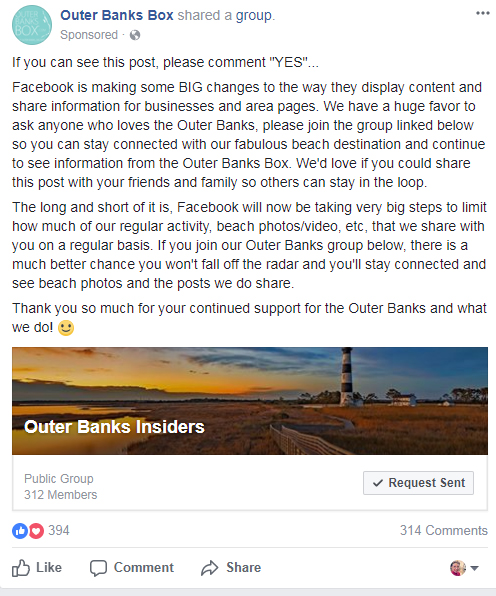
Facebook Does It Again! What the New Algorithm Changes Mean for Your Library

This week, Facebook announced it is making another change in the way the social media platform chooses to show content to its users. The big shift, as you likely know by now, is that Facebook will prioritize posts from friends and family in its news feed over public content from pages, like that of your library. In particular, the Facebook team will give top priority to posts that drive conversation between friends and family.

The announcement is causing consternation for many libraries, which rely heavily on organic, unpaid traffic for their promotional efforts. I honestly don’t know what the end effect will be. I have the same worries as most of my library colleagues. We’ve adjusted well since the last major algorithm change in 2015. So will we have to start over? In the wake of this announcement, I’ve wondered if the chicken comes before the egg. In other words, do our well-performing posts get more interaction because, prior to this week, Facebook has shown them to people in anticipation of interaction… or do they perform well because people are interacting with them? (Deep thoughts!!)

In the Facebook group, Libraries and Social Media, I asked social media marketers at libraries to comment on the change. Caleb Sheaffer of Shreve Memorial Library in Shreveport, LA said, “I never know what to expect until it actually happens. Right now, all the posts that perform well for our library are ones that have the most interaction anyway.”

Jennifer Redford from Boise, Idaho added, “I think that we’ll just need to focus more on writing and sharing great content. We’ve also started using events more and I wonder how that will be affected by the change.”

Finally, Molly Wetta, manager of the Santa Barbara Public Library, told me, “These announcements are pushing me to move forward more quickly with an idea I’ve had for a while. We’re experimenting with linked groups – I started one for youth services specific content, and we may also try one for smaller communities and branches within our system if this one is successful. The goals are to work more to create community connections in addition to marketing our events/services. I do love the events feature, and the notifications will hopefully be helpful but not intrusive. We’ll be sharing book recommendations and answering book-related questions, sharing early literacy tips and activities, and hopefully answering questions.”

The bottom line is that your library’s page may see your overall statistics drop. Your reach and referral traffic, your shares, and your comments may drop. MAY is the key word there. My overall impression of this change is that it will force library marketers to work smarter when using Facebook. All of the pointers in this recent article on Facebook still apply.

And now, more than ever, you must make sure your posts are really good. Share content from other sources related to books and literature–don’t just promote your own stuff, particularly on posts. Use events to promote your events. Ask questions. Create polls. And most importantly, shoot video. As we know, Facebook users respond in a big way to video. Facebook says live videos often lead to discussion among viewers and live videos get six times as many interactions as regular videos. So video marketing must be part of your plan.

You can also explain to your followers what is happening and ask them to choose to see your posts. People who want to see more posts from your library page can select See First in News Feed Preferences. You can also do what Molly’s library is doing and experiment with groups. One of my favorite Facebook pages did that this weekend and they put a little money behind it to make sure all their followers know about the move.

Finally, don’t bait people to interact with your posts. In this week’s announcement, Facebook made it very clear that they will penalize pages which use engagement bait, like. Use real questions and conversation starters. Read this article to see how to avoid engagement bait.

Here’s the thing to remember: posting content on Facebook is like building your house on rented land. It doesn’t belong to you and as much as it pains your library system when changes are made, there is little we can do about it. The big lesson is that we need to start relying on our own platforms and websites for promoting our programs and services. That means we should be building our own audience with blogs, podcasts, and other content delivery systems. We should be developing email subscriber lists so we can target and market to our specific library cardholders and give them the content they really want.

Facebook is great, but they’re not the only way to reach customers. Let’s make a concerted effort to start moving to other content delivery platforms where we have more control. Our fans are loyal and they’ll respond when we deliver content specifically targeted to them.

Subscribe to this blog and you’ll receive an email every time I post. To do that, click on “Follow” button on the bottom left-hand corner of the page. Connect with me on Twitter and Snapchat–it’s where I talk about library marketing! I’m @Webmastergirl. I’m also on LinkedInInstagram and Pinterest. Views in this post are my own and do not represent those of my employer.

A WordPress.com Website.

Up ↑