In this episode of The Library Marketing Show, I’ll answer a question from the viewer about sharing original content from other creators on social media.
This viewer asked for clarification on the correct online etiquette for sharing content, specifically cartoons or memes, from another page. I have two tips that worked for me when I worked in a library plus advice from experts.
Kudos in this episode go to Saul Hernandez of the Charlotte Mecklenburg Public Library.
Do you have a suggestion for a topic for a future episode? Want to nominate someone for kudos? Let me know in the comments.
And subscribe to this series to get a new weekly video tip for libraries.
Thanks for watching!
Subscribe to this blog and you’ll receive an email whenever I post. To do that, enter your email address and click on the “Follow” button in the lower left-hand corner of the page.
Photo courtesy Public Library of Cincinnati and Hamilton County
The library I worked for when I started this blog had an annual tradition. Every year, our staff would march in the Cincinnati Reds Opening Day parade.
Now, you must understand that Opening Day in Cincinnati is a holiday. Legitimately. And people look forward to the parade as much as they do the game. So, marching in it is incredibly exciting.
It was my job to organize the library’s entry every year. That involved getting library staff members to sign up to march in attire and carrying props that matched our summer reading theme.
You’d think that would be easy.
It was not.
Every year, I’d panic because I had too few staff members signed up to march. Then, staff would start calling me days before the parade, asking why they hadn’t heard about our library’s entry.
This happened because we had a messy, unorganized internal communications strategy. And that was dangerous.
If we were having problems getting information to staff about a fun event, we were really in trouble when it came to communicating the information they needed to do their work properly.
On this blog, we focus mainly on marketing and promotions aimed to reach your library community. But for the next two weeks, we’re going to turn our attention to a different audience: your staff.
Effective internal communication is incredibly important to the success of any library. Without it, staff feels disconnected from the library, their community, and each other. Morale can drop. Initiatives may not be successful when workers don’t feel like they understand the context and their role in the work.
And when library staff feel frustrated, they quit. Turnover is bad for your library. It costs you money and productivity.
But the people who really suffer in this equation are your community members.
That’s why every library, however big or small, needs an intentional internal communications plan.
Setting a realistic course of action
First, let me tell you from experience that an internal communications plan won’t magically transform the staff experience overnight. These things take time. But, if you create a solid plan and are consistent in your communications, you will see improvement.
You should approach this work just as you would for a customer-facing marketing campaign. First, you’ll want to answer some questions about the state of your library’s internal communications.
Ask:
Do you have a strategy? How effective is it?
What are your biggest strengths and weaknesses?
Who is currently involved in shaping and executing your current internal communications?
Who needs to be involved in improving those communications?
Next, you’ll want to determine your goals. Use the SMART goals framework to set your library up for success.
Your goals should be:
Specific: Define what you want to accomplish in clear, simple terms that everyone on your library staff, from front-line workers to senior leaders, can understand.
Measurable: Create milestones and targets that can help you see your progress toward each aspect of your goal.
Attainable: Set goals that are manageable and realistic.
Relevant: Create goals that develop your library staff members, serve your community, and connect to your library’s overall strategic plan.
Time-based: Create a specific timeframe for reaching your goals. This timeframe will ensure you are accountable to the staff. It will also prompt you to reflect on how your plan is progressing, and change direction if you encounter any issues.
Finally, you’ll want to decide how you’ll measure the success of your internal communications. You may want to measure:
Decrease in employee turnover
Increase in candidates applying for new jobs
Increase in staff workplace satisfaction
Increase in staff performance review ratings
Library staff is an audience
The next task is to uncover the best way to connect with your audience: the staff. What do they need to know? When do they need to know it? And how do they want that information delivered?
Jill Fuller is a Marketing and Communications Librarian for Bridges Library System. Her job involves a lot of communication with staff at various libraries in the system. And she uses surveys, like this one, to figure out what her audience wants to see in her staff emails.
“They have excellent open and click rates,” she explained, “but I wanted to get quantitative data too. I asked them questions about how helpful they were, whether they were relevant to their jobs, which topics they wanted me to focus on, the frequency and length of the emails, and more.”
“I never knew how much the emails were appreciated! With the data I gathered, I have been able to focus more on the topics the library staffs were most interested in and scaled the frequency down to every other week.”
Use Jill’s advice and create a survey to gauge the needs and preferences of your staff. Jill suggests you ask:
Their preferences for getting information
How they share system information with their staff or colleagues
Whether they feel they receive enough communication
Whether they feel the communication is accurate
How comfortable they feel contacting your library with questions.
Make the survey easy to fill out, and as short as possible. Let the staff know that the survey is their best way to share their thoughts about the direction your library should take with internal communications.
And give staff time to fill it out. It should be available for at least two weeks. You want a participation percentage of 80 percent or higher. Reminders in email, delivered by managers, and in signage in staff areas will help.
Even better, ask managers to set a meeting appointment on staff calendars for filling out the survey.
The benefit of a newsletter for internal library communications
If you have a lot of information to share, as Jill does, consider creating an internal library newsletter. Newsletters take what could have been multiple emails and condense them into a simple, easy-to-read format.
Cindy Starks is the Communications Coordinator for Coal City Public Library District, a small library southwest of Chicago, Illinois. They serve a population of 11,000 residents and have 22 employees.
After each monthly department heads meeting, it’s Cindy’s job to prepare a summary in a newsletter to staff called the Staff FYI Newsletter.
“The newsletter can be a lot of information to retain for staff,” admitted Cindy, “but by having it emailed they can refer to it at any time when they don’t remember something.”
Tips for a staff newsletter
Provide the right news and information. Carefully consider the kind of information your employees need. Try not to send too much information in one email, or too many emails.
Remember your calls to action. Encourage staff to take the next step, such as sharing information on social media, filling out a survey, or signing up for training or new initiatives.
Strengthen your subject lines. You want staff to open your emails, so consider your subject line just as you do for any email communication to patrons. Use emojis or power words to catch the attention of your staff.
Advice from a library
Grace Riario and Anita Baumann of Ramapo Catskill Public Library System send a newsletter six times per year to all library trustees serving on the Boards of their 47 member libraries.
They’ve got three pieces of advice for internal communications.
“Keep the text short and positive,” says Grace. “Pictures representing the topics are a must.”
“Lists, such as the three best things about being a library director, ensure that people will read that piece in your newsletter,” continued Grace.
“A third ‘strategy’ we employ is consistency in formatting and color palette,” shared Grace “Prominent display of the organization’s logo, as well as a uniform look and subject line in the email when it’s distributed help readers to recognize the material when it hits their inbox.”
Staff communication beyond emails
My library ended up adding an internal communications position to our ranks. That person attended meetings, created talking points for managers to explain new initiatives, and organized our internal staff website. She discovered our staff liked to hear the news directly from senior staff, so she started a weekly video series where senior leaders appeared in short videos to share information.
If your library cannot add a staff member specifically tasked with internal communications, there are still things you can do. Libraries can be very siloed and bureaucratic organizations. But the libraries that open those siloes and promote productive and meaningful conversations have success in internal communications.
This can be done by leaving space for question-and-answer sessions at the end of all-staff meetings. You can also add a Q and A board to your internal website. Encourage staff to ask questions and share information with each other.
Subscribe to this blog and you’ll receive an email every time I post. To do that, enter your email address and click on the “Follow” button in the lower left-hand corner of the page.
In this episode of The Library Marketing Show, we talk about one of the most frustrating parts of library promotions: getting approval for your work from your supervisors.
In my recent survey of readers and viewers of SuperLibraryMarketing.com, this was a common complaint: how do we create great work that passes inspection by supervisors? I’ll share tips that have worked for me!
Kudos in this episode go to the West End Library in Pennsylvania. Watch the video to see why they’re being recognized.
Do you have a suggestion for a topic for a future episode? Want to nominate someone for kudos? Let me know in the comments.
And subscribe to this series to get a new weekly video tip for libraries.
Thanks for watching!
Subscribe to this blog and you’ll receive an email whenever I post. To do that, enter your email address and click on the “Follow” button in the lower left-hand corner of the page.
Photo courtesy Cincinnati and Hamilton County Public Library
There’s nothing wrong with tooting your own horn.
A few months ago, I received an email from a library marketer nominating her library system for recognition in the “Kudos” segment on The Library Marketing Show. This particular project was so good, that it deserves an entire post.
Rebecca Kilde is the communication and marketing coordinator for IFLS Library System in western Wisconsin. She’s been with the system for five years and has a background in graphic design.
IFLS Library System covers ten counties with 53 libraries, mostly small, rural libraries. The libraries she served were facing a problem.
“My librarians were telling me that their visits weren’t bouncing back up to pre-pandemic levels,” recalled Rebecca. “There was some general confusion about whether libraries were even open.”
Rebecca Kilde, IFLS Library System
“Our libraries were open during almost all the last two and a half years and were important resources for some people in our communities. We didn’t want anyone to miss out on getting support from the library. We wanted our funding bodies to get that message as well.”
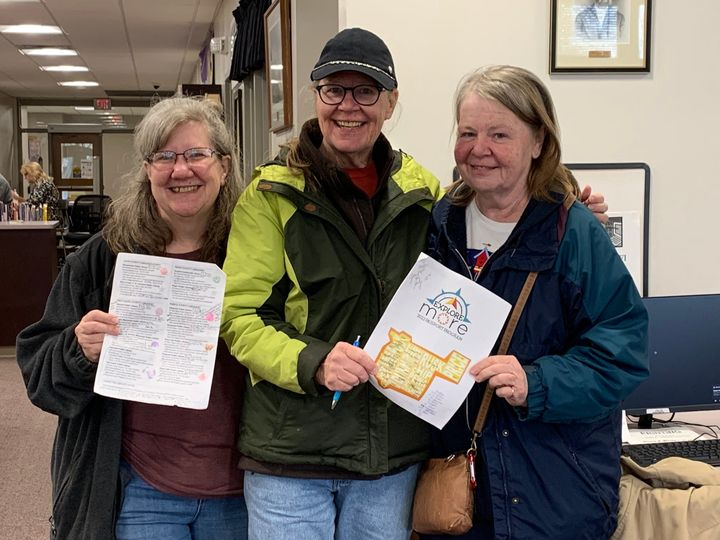
In the fall of 2021, Rebecca and her colleagues decided to explore a passport program system-wide. This program’s goal was to get people back into the library after the pandemic as well as educate people about the scope of their consortium services and benefits.
The idea was simple. All the libraries in the system had to have passports and entry forms available and a staff person to stamp passports and collect entry forms.
Setting a goal for any type of promotion is incredibly important to success. Rebecca had three things she wanted to accomplish.
First, Rebecca wanted patrons to experience the benefits of a library card firsthand. “We wanted to show how easy it is to check out and return items throughout our system,” she said. “We also wanted to send a clear message: Libraries are open, and libraries are fun!”
“Our app is new and includes navigation to all our locations in one handy spot, so this was a good opportunity to promote that. For our libraries, we wanted to increase circulation and engagement. A significant factor in support for library funding is having interacted with a librarian, so we built that in. We wanted people to engage with one of our wonderful librarians.”
Rebecca put her background in graphic design to work, creating a logo, a public-facing landing page on the system website, the passport, and marketing collateral.
“We printed enough for each library to get 25 passports,” explained Rebecca. “(We) sent them through courier as a kit that included a little rubber stamp, a stamp pad, signage, and a master sheet to make entry forms.”
Rebecca worked diligently to provide direction, content, and encouragement to her libraries. Each month, she emailed a marketing toolkit to all the participating libraries. The toolkit contained everything the libraries needed: a focused message; four social media posts with suggested messaging; updated posters; ideas from libraries, and comments from participants.
Some of the libraries took the passport program idea and ran with it. “Ellsworth handed out a water bottle with a bag of fun things that included a goat-milk soap sample from a local producer,” said Rebecca. “Clear Lake created prizes and a drawing of their own for their cardholders; Somerset ran out of their fun swag bags. Lots of libraries created great displays.”
The program was an outstanding success. Rebecca told me that over the course of the program, which ran from April 4 to July 15, participating libraries handed out more than 1500 passports and recorded more than 2800 stamps. Each of those stamps counts as one visit to the library. Nine people visited all 52 libraries!
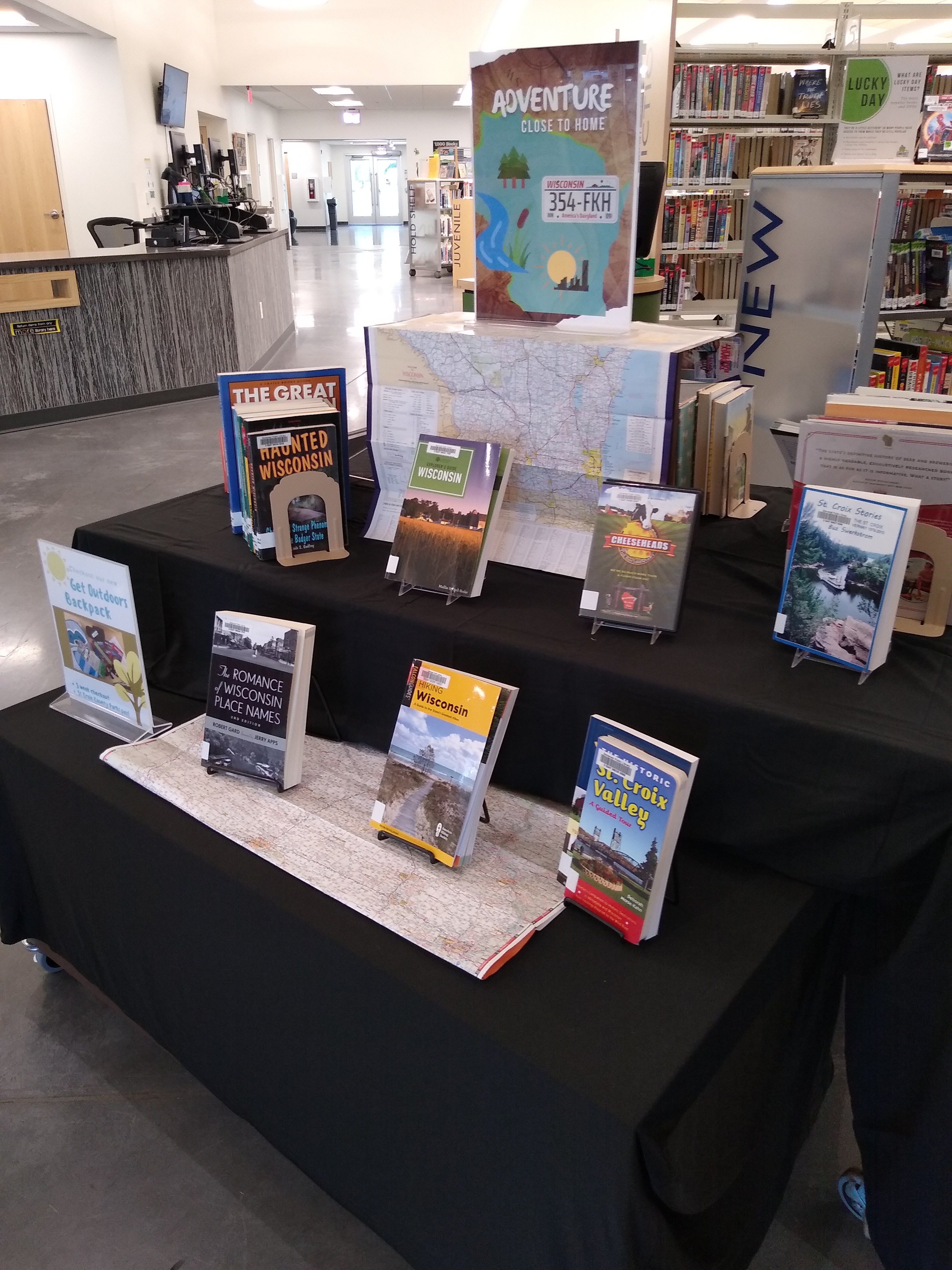
Participating libraries saw robust circulation of travel-related items featured in library displays. Most libraries invited passport visitors to participate in other activities, like a scavenger hunt for kids in River Falls or library bingo in Menomonie. And they were able to identify some library super fans, who may become influencers in a future campaign.
Rebecca credits several factors for the success of the program, including timing and collaboration. “People were ready to go out and explore,” she explained. “And this was NOT a top-down promotion. It was library-driven the whole way.”
Rebecca has one final piece of advice for libraries looking to put together a successful program. Simplicity is key, she said. “We’re looking for ways to expand what the program offers without requiring a lot of extra work.”
Subscribe to this blog and you’ll receive an email every time I post. To do that, enter your email address and click on the “Follow” button in the lower left-hand corner of the page.
In this episode, I want to share some good news for libraries about something called Perfection Fatigue.
This is the idea that people don’t want to see your library in its most perfect form. They’re looking for something much more authentic. And that’s good news for libraries! I’ll explain why.
Kudos in this episode go to Escanaba Public Library. Watch the video to see why they’re being recognized.
Do you have a suggestion for a topic for a future episode? Want to nominate someone for kudos? Let me know in the comments.
Subscribe to this series to get a new weekly video tip for libraries.
Thanks for watching!
Subscribe to this blog and you’ll receive an email whenever I post. To do that, enter your email address and click on the “Follow” button in the lower left-hand corner of the page.
In this episode, I will share four major social media headlines for libraries. These pieces of news apply to any library using TikTok or Instagram, and they could have major implications for your library’s promotions–in a positive way!
Kudos in this episode go to Berkley Library. Watch the video to see why they’re being recognized.
Do you have a suggestion for a topic for a future episode? Want to nominate someone for kudos? Let me know in the comments.
And subscribe to this series to get a new weekly video tip for libraries.
Thanks for watching!
Subscribe to this blog and you’ll receive an email every time I post. To do that, enter your email address and click on the “Follow” button in the lower left-hand corner of the page.
Photo courtesy Cincinnati and Hamilton County Public Library
In my many years of personal and professional social media use, I’ve never gone viral.
Until two weeks ago.
My brief moment in the sun came out of nowhere. And it was so crazy that I wanted to dissect it, to see if there was any lesson I could share with my library friends.
Experimenting with Instagram Reels
For the past few months, I’ve been experimenting with Reels so that I can give the best advice possible to libraries.
I started by creating my own original Reels. I shared recipes, book reviews, and homages to my co-worker. The results were nothing to write home about. I got a couple hundred views and a few likes for each video.
Then I changed focus. I decided to share my favorite genre of TikTok videos. These videos feature lots of home organization gadgets and cleaning products in action. They’re soothing to watch and usually contain some oddball element, like a fake plastic spider in the rice container!
I screen-record these videos. Then, I re-upload them on Instagram with my own narration, pointing out the things I love. I use similar captions and hashtags for every video. Sometimes I add emojis to the caption. I also add close-captioning to all the videos, using Instagram’s in-app creator tool.
Hitting the jackpot
On Sunday, August 14, at 3:30 p.m., I uploaded one such Reel.
This was the fourth Reel in my experiment. The most popular of the last three Reels got 4500 views and 26 likes.
But for some reason, this Reel was magic.
It received 1800 views in the first 20 minutes and a constant stream of likes. It was so wild that I took a screen recording of the notification stream.
Then I looked again at the views 40 minutes after I posted the video, and my jaw dropped.
22,000 views.
For a brief moment, I felt like that most popular girl at the dance.
But it was over as quickly as it started. 60 minutes after I posted my Reel, the notifications abruptly stopped. And the view count halted.
Understanding the Instagram Reels algorithm
The first step in the journey to dissect the success of this Reel is to understand the Instagram algorithm.
The main goal of Instagram Reels is to entertain. As a result, many of the videos that show up in a follower’s feed are from accounts they don’t follow.
And that’s certainly true with my Reel. Nearly all the likes I received from my Reel were from non-followers. Instagram was showing my Reel to those people because the algorithm predicted that my content would entertain them enough that they would watch all the way through and like or comment on the video.
These predictions are called ranking signals. They are part of every social media platform’s algorithm. The ranking signals for Instagram Reels are:
Recent user activity: Instagram predicts which Reels its users will find engaging by comparing new content with the kind of Reel a user has most recently liked, shared, or commented on.
Interaction history: If an Instagram user interacts with an account, Instagram will continue to show them content from that account, even if they aren’t a follower of that account.
Reel information: Signals about the content elements in a Reel, including the audio, hashtags, and keywords in the caption, help Instagram decide who to serve the Reel to.
Information about the poster: Instagram serves Reels from accounts that post consistent, entertaining videos.
Other factors that can impact the engagement of your library’s Reels
There are a number of things your library can do to try and boost the reach of your Instagram Reels.
Post at the right time
Since interactions are a strong ranking factor in the Instagram algorithm, you need to get as many likes and comments as possible within the first few seconds of posting your content. That’s why it’s important to catch your followers when they’re the most active on the platform.
The perfect timing will be different for every library. Check your Instagram insights to see when your audience is most likely to be using Instagram.
Carefully consider your caption
Write captions that give context or tell a story about your Reel. Consider a longer caption to boost the time people spend interacting with your posts as they read your caption.
Add one or two hashtags to your caption. Hashtags are an important ranking signal as they help the algorithm to understand what content is contained in your Reel.
Finally, add emojis to capture the attention of scrollers.
Interesting content outweighs expert advice on length
Experts say the optimum length of an Instagram Reel is 7 to 15 seconds. However, my viral Reel was much longer, at several minutes.
I’ve been experimenting with Instagram Reels length. I’ve found that length really doesn’t matter, so long as your video is interesting.
Really, it was just plain dumb luck
It’s most likely that my experience had nothing to do with my skill on Instagram. In fact, I’m sure of it.
Going viral on social media is like winning the lottery. You can plan and strategize and spend lots of time creating great content. And you may never go viral. That’s okay!
Going viral will bring you fame and brand recognition in markets outside of your service area. But that won’t increase your circulation or program attendance.
Your library’s goal should not be to go viral. Rather, create engaging content that speaks to YOUR audience and aligns with your library’s overall goals.
Final results and what I learned
In the two weeks since I posted my Reel, it’s received nearly 23,000 views and 609 likes. I got about 15 new followers from the Reel.
I have not seen a substantial increase in the number of visits to my blog. And I’ve got no website traffic or purchases for my day job at NoveList.
So, while it was exciting and interesting, my viral Reel did nothing to help me reach my strategic goals.
And that’s the most important thing to remember about social media. You can’t control who sees your library’s content. But you can create engaging posts aligned with your library’s goals.
Want to learn how to transcend algorithms and get the best results for your library’s social media promotions? I’ve created a self-paced course to help you reach your goals.
Subscribe to this blog and you’ll receive an email every time I post. To do that, enter your email address and click on the “Follow” button in the lower left-hand corner of the page.
Do you have a suggestion for a topic for a future episode? Want to nominate someone for kudos? Let me know in the comments.
And subscribe to this series to get a new weekly video tip for libraries.
Thanks for watching!
Subscribe to this blog and you’ll receive an email every time I post. To do that, enter your email address and click on the “Follow” button in the lower left-hand corner of the page.
Photo courtesy Cincinnati and Hamilton County Public Library
For many of us, a hamburger is a delicious sandwich, no matter where you get it. No one can mess them up.
But there are things you can do to make your hamburger exceptional. For me, that means the addition of bacon, cheese, and avocado. I’ll still eat and thoroughly enjoy the hamburger if those ingredients aren’t available. But they make the hamburger go from good, to memorable.
Hamburgers are like marketing. Much of the work you do to promote your library is already good (because I know you’re doing good work!) Now, you’re on the path to maximizing the effectiveness of your marketing.
One of the ways you can ensure success is to make certain your marketing content is the perfect length. It may seem insignificant. But the right number of characters or words for a piece of content can make all the difference.
How do you know how long your tactics should be? I did the research, so you don’t have to.
Ideal length of a Facebook post: 100-259 characters
Research from experts on this one is mixed. Some studies suggest you keep captions at 50 characters or less.
But in my work with libraries, I try to pay attention to engagement rates and post length. And I personally think 50 characters is too short. So, I would suggest you try to write between 100 and 259 characters.
Ideal length of a Tweet: 240-259 characters
Most experts agree that using slightly less than 280 character limit on Twitter is ideal. That gives people the room to quote Tweet your library.
But you can do two other things to improve your library’s Twitter engagement.
Include rich media in your post, like photos, graphics, and video. In fact, multiple photos or a mix of photos and a video will help your Tweet get more engagement.
Use emojis at the beginning of your Tweet to capture attention and stop people from scrolling past your messages.
Ideal length of an Instagram post: 138-150 characters
Fun posts should have shorter captions. Information or educational posts should have longer captions.
There are other caption tricks that help with Instagram post engagement.
Add spaces between your sentences, so they look like paragraphs. Here’s an example from Amherst Town Library.
Weave in plenty of emojis. You can even substitute emojis for words to add character to your post.
Include multiple kinds of rich media, like photos and videos all in the same post, to increase the value.
Ideal length of a TikTok video or Instagram Reel: between 7 and 34 seconds
There is not a lot of data or research surrounding TikTok videos or Instagram Reels. It does appear that, even though the platforms allow you to create videos that are several minutes long, shorter videos lead to maximum engagement.
Ideal length of a LinkedIn post: Less than 210 characters
There is lots of dispute around this recommendation. I’ve picked the median number. And to help with engagement, I have a formula that’s worked well for me.
Construct a good, first teaser sentence, and then put a space between it and the rest of your post caption. This will cause your reader to have to click on “see more.” It works!
Good content on LinkedIn is also important. Videos natively uploaded to the platform get lots of engagement. Also, try polls to increase engagement.
Ideal length of an email: 100 words
Different types of emails should have different lengths. If you’re sending someone an onboarding email, you’re going to need to write more than if you’re sending an email promoting an upcoming event.
There are some scenarios where a couple of sentences is plenty to capture your cardholder’s attention and others where you’ll need several paragraphs to get your full point across.
In general, keep your email text as simple as possible. Be straightforward about the benefit of your library service or collection item or event. And drive recipients to your website for more information.
Ideal length of an email newsletter: 3-4 pieces of information
In my experience advising libraries, email newsletter recipients never click anything past the first 3-4 pieces of content in an email. I always recommend sending shorter, more frequent email newsletters rather than one long monthly version.
If you don’t have control over how long your email newsletter is, you can help engagement by placing the 3-4 most important things at the beginning of the email. If your email provider has a table of contents feature, use that to drive interest to content further down in the email.
Ideal length of an email subject line: either very short (30 characters) or very long (90 characters or more)
It appears that the extreme ends of length catch the attention of the inbox scroller.
Longer subject lines boost response rates, according to Adestra, a U.K.-based email service provider. Its analysis of more than one billion emails showed that subject lines of 90 characters and more produced the highest response rates. They theorize the added characters increase engagement because they can communicate more value to the recipient.
But their research also found that subject lines at 30 characters or less performed well. That’s because the full subject line can usually be seen by the recipient, both in desktop and mobile versions of mail provider apps.
Experiment with both ends of the length spectrum to see which your audience responds to. And keep in mind the other factors that can impact subject line effectiveness.
Ideal length of a YouTube video: Between 7 and 15 minutes
This stat comes from several sources, including Social Media Examiner.
It’s important to let your content dictate video length. A how-to video may need five minutes or more to show the process. An unboxing video can be shorter. If your video is interesting to watch, the length won’t really matter.
Ideal length of a podcast: 22 minutes
Your target audience will really dictate the perfect length for your library. Most research I found recommended 20 minutes for podcasts aimed at listeners who are doing chores or taking short walks, 40 minutes for people commuting or doing longer chores, or 60 minutes for those who want an extended listen.
Ideal blog post length: 2,000 words
That’s a lot of words! For context, the Monday articles here on Super Library Marketing run between 1,000 and 1,500 words each.
So, before you get anxious about word length, remember that quality blog posts will always do well, no matter how long. If your post contains valuable or interesting information that your reader wants and needs, it will do well.
If your blog is less than 2,000 words, there are some things you can do to make it feel meaty to the reader. You may have noticed these tricks in my blog posts.
Present information using bullet points or lists.
Write longer paragraphs at beginning of the article.
Insert scannable headlines.
Include images, especially those that explain concepts or demonstrate your point.
Finally, it’s important to include keywords in your title and frequently within your post. You may notice I use the terms library marketing and library promotion in almost every title and throughout my articles. That’s because I know those are used by library staff searching for help with their marketing.
Subscribe to this blog and you’ll receive an email every time I post. To do that, enter your email address and click on the “Follow” button in the lower left-hand corner of the page.




 Super Library Marketing: Practical Tips and Ideas for Library Promotion