The Library Marketing Show, Episode 138: In this episode, I’ll answer a viewer’s question. Michelle from Atlantic Public Library writes, “I am the director of a small library serving about 7,000 people in rural southwest Iowa. You have inspired me (and my board) to make marketing a higher priority and include it in our new strategic plan. I have just over 1,000 folks signed up for my e-mail newsletters. Does it make sense to invest our very limited publicity funds into a product that allows segmented lists for such a (relatively) small community?”
Kudos in this episode go to the Grosse Pointe Public Library. Watch the video to find out why they’re being recognized.
Do you have a suggestion for a topic for a future episode? Want to nominate someone for kudos? Let me know in the comments. And subscribe to this series to get a new video tip for libraries each week.
Thanks for watching!
Subscribe to this blog and you’ll receive an email every time I post. To do that, enter your email address and click on the “Follow” button in the lower left-hand corner of the page.
Photo courtesy Cincinnati and Hamilton County Public Library
When I was a kid, I was careful to always order the least expensive meal on the menu.
When we shopped for clothes, I always picked the cheapest option. At the start of each school year, I scoured ads (yes, even as a child!) to find the lowest prices on supplies, backpacks, and lunchboxes.
My frugality was a blessing during my time working in a library. I did a lot of effective promotions for free, especially on social media.
When I started work at the library in 2013, the average organic reach of a Facebook post was 12.5 percent. Today, it’s just 5.2 percent. That means roughly only one in every 19 fans will see your content. That is a huge decline.
Platforms adjust their algorithms to help them make money. And that’s why organic reach is now so limited.
Why your library might want to spend money on social media ads
Social media ads can do what organic posts cannot. They will ensure your posts will be seen by your target audience.
For major library campaigns, there is value in spending precious library dollars to purchase social media ads. Your library should consider investing in social media ads for the following reasons:
To reach new audiences
To solicit participation in system-wide programs like summer reading
To publicize larger library events especially if your library has invested a lot of time and money creating the event.
To publicize building openings and renovations
To soften the ground for upcoming levy or bond issues
To introduce a new library director or board member
To solicit donations
To recruit volunteers
Careful planning will lay the groundwork for a successful library social media ad campaign.
Planning your library social media ads
The first step is to identify your goal. What result are you looking to achieve? Be specific. Use numbers. Specify how you will measure the results.
For example, you may write goals like these:
“Last year, we had 500 kids ages 12-18 participate in our summer reading program. This year, we will increase that participation number by 25 percent to 625 kids.”
“We will fill 95 percent of the seats at our next virtual author program with Benjamin Gilmer, author of the new book, The Other Dr. Gilmer. Our platform has a 300-viewer capacity, so we will get at least 285 people to log on for the event.”
Once you have a specific goal, your next step will be to identify your target audience.
Let’s take the two examples above. The target audience for the summer reading program goal would be teens, their parents, and teachers. For the virtual author program, your target audience would be avid readers of nonfiction, true crime, and thriller books, book club leaders, medical professionals, lawyers, and criminal justice leaders, as well as medical, law, and criminal justice students from the nearby university. Note your target audience under your goal.
Finally, you’ll need to determine the content of your ads. To do that you’ll make these decisions:
What text will we use?
What images will we use?
What will our call to action be?
When those details are in place, you’ll be ready to begin buying your ads.
Choosing your social media ad platform
Let’s compare the three major platforms on which libraries typically purchase ads: Facebook, Instagram, and YouTube.
Facebook
Facebook is still the largest of the social media platforms, with nearly two billion active daily users. 15 percent of those users interact with ads on Facebook.
Facebook has the most powerful and accurate tools to optimize and target your audience. Facebook says nearly ten percent of the people who see the ads take an action. That’s quite high, and a great argument for using money to buy Facebook ads.
It used to be that libraries would create one ad on Facebook and be done with it. But Facebook now encourages pages to run multiple ads at the same time for optimum results.
But don’t worry about having to create the perfect combination of text, images, and calls to action. Facebook makes it easy with its Dynamic Ad creative tools. You’ll find them in the Facebook Ad Creator section.
Select “optimize ad creative for each person.” Then give Facebook at least two options for text, headlines, and images or videos. Facebook will then use keywords and its extensive knowledge of its own audience to mix and match the right combination for your target audience.
To increase the chances that your dynamic ad content will be successful, be sure to select the keywords in your text and headlines carefully and strategically. Facebook will use these keywords to help it decide who your ads will be shown to, and when they’ll be shown.
The final step is to set up Google Analytics on your library’s website with a Facebook Pixel. That will allow you to accurately track your ad on Facebook. The pixel will give your insight into how many people click on your ad and come to your library’s website to take any action, like registering for a program or signing up to participate in summer reading.
Once your ad creative pieces are chosen and your pixel is set up, run a test of all the ad options for seven days. At the end of the week, you’ll have a clear idea of which ad combination works the best. You can then invest a little more money in the ad with the best performance.
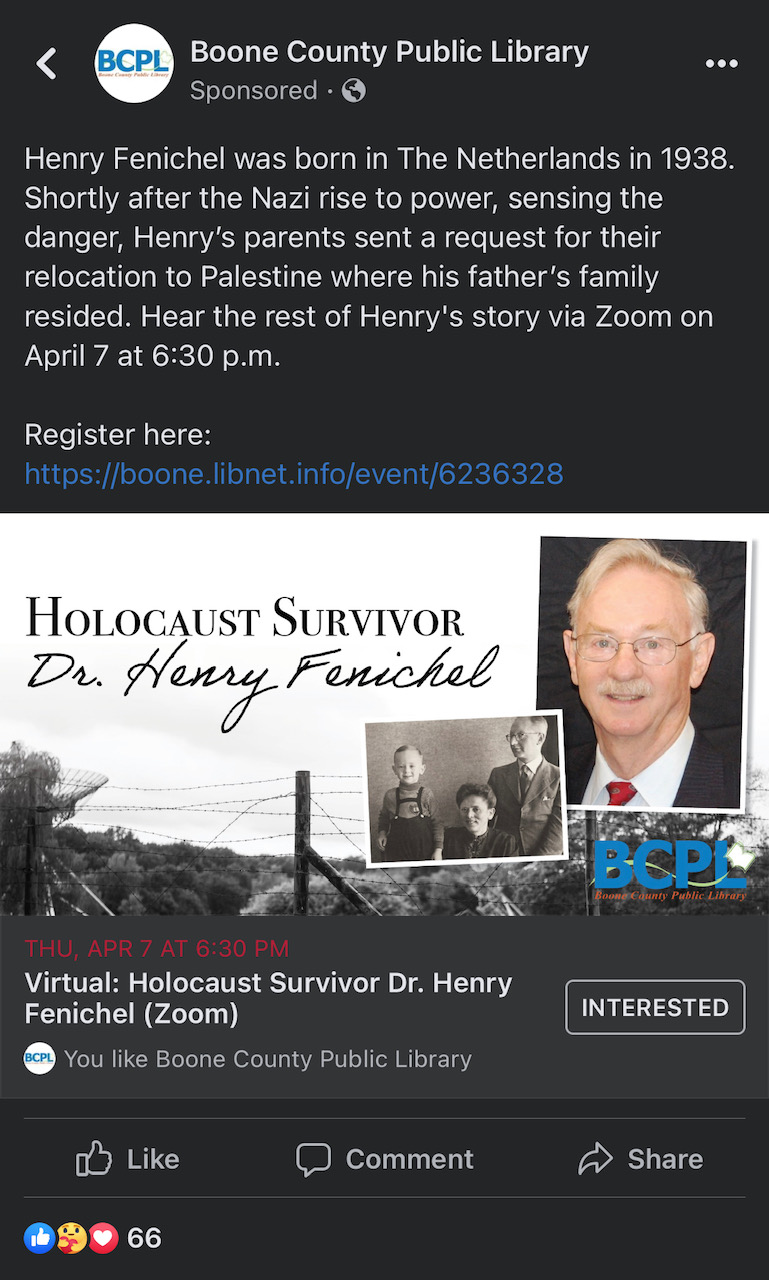
Boone County Library in Kentucky used Facebook ads.
Facebook also makes it easy to retarget people who interact with your initial ads. For example, let’s say you bought ads to spread awareness of your summer reading program. When registration opens, you can buy a second ad that will be shown to people who engaged with the first ad. That second ad might have a goal of getting those folks to register and pick up their reading log from the library.
A few weeks after that, your library could buy a third ad, retargeting anyone who engaged with the first and second ads. That third ad may have the goal of asking people to share summer reading content like photos of their book haul, their reading log, or their participation prizes.
Instagram
Instagram has around 500 million daily active users. 70 percent of shoppers say they use this app specifically to shop!
Libraries might not be selling anything, but we can certainly use the sales tools to drive engagement with our collection and services. And since the platform is owned by Facebook, libraries have access to the same targeting options that make Facebook ads so effective.
There are five types of Instagram ads:
Photo
Video
Carousel
Collection
Stories
Photo and video ads are self-explanatory. They feature one photo or video that shows up in the Instagram feed.
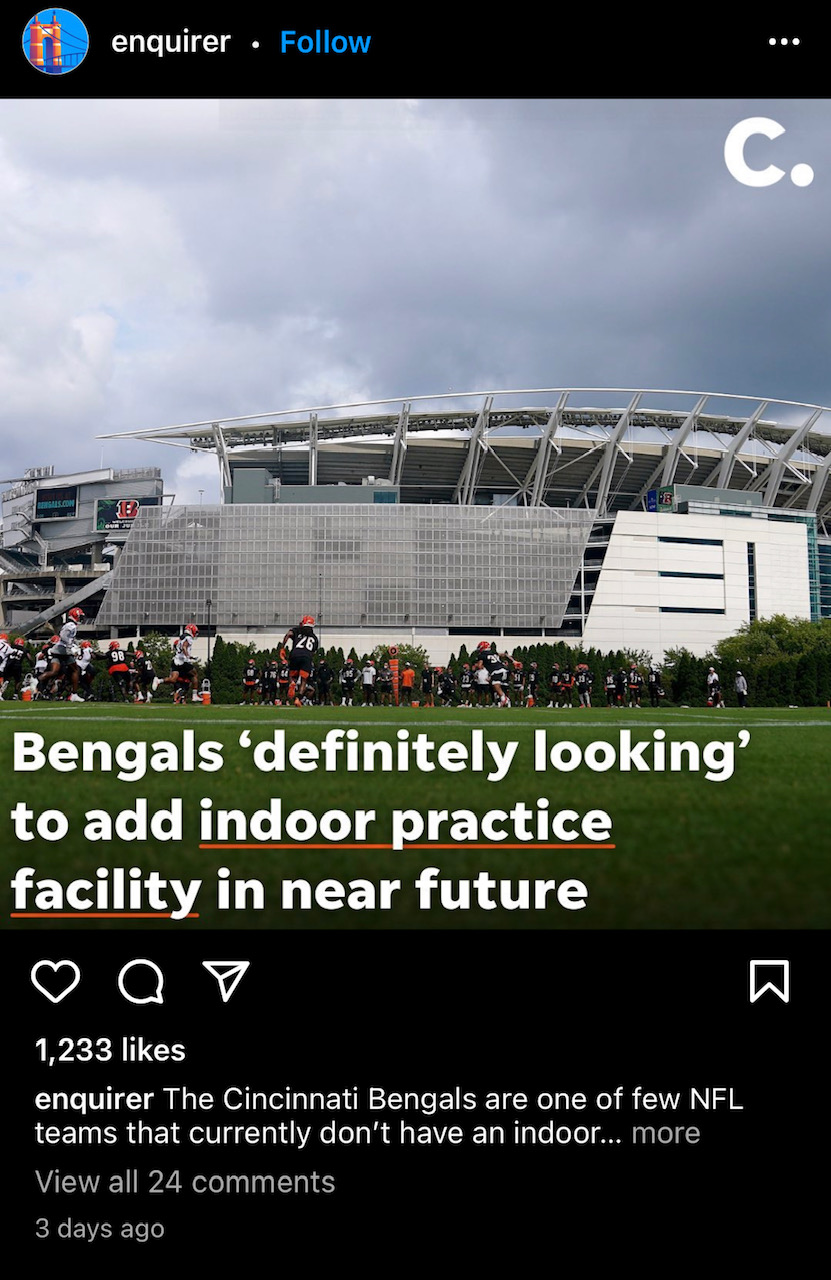
An example of a photo ad on Instagram.
Carousel ads let you combine anywhere from two and ten photos and videos all in the same post. People can swipe through to see everything in the carousel. These ads are dynamic, and they stand out from everything else in the Instagram feed.
Companies use collection ads to directly sell products. People can browse a wide range of products and services captured in a story format. For a library, a collection ad would let you showcase a series of specific library services, like a list of individual titles in a theme, or a list of your most popular databases.
You can also run Instagram story ads for your library. This would allow you to incorporate filters, video effects, music, and texts in these ads. And best of all, they include a swipe-up feature that directs the users to your library’s website.
To run an Instagram ad for your library, you’ll need to have an Instagram business or creator account—you can’t post ads from a personal Instagram account. You can convert your library page to a business account if you haven’t already done so.
You’ll be able to effectively target your audience on Instagram in the same way that you can on Facebook. You’ll choose from criteria including the location, age, gender, behavior, language, and browsing patterns of your target audience.
With both Facebook and Instagram, your library can set a daily budget. The platforms will help you determine the correct amount, based on your target audience specifications. For most libraries, a budget of $10 a day will be an adequate amount for a successful ad campaign.
YouTube
YouTube boasts an audience of over two billion monthly users. The platform is especially effective for reaching Gen Z. YouTube reaches more adults aged 18 to 24 than any TV network.
YouTube has two kinds of ads. The first, and most popular among users, is called “TrueView.” TrueView ads play before someone watches a video or in the middle of a video. The viewer may get the option to skip the ad after it plays for about 5 seconds. Your library can also customize your video’s call to action in a TrueView ad.
An ad that viewers can skip might not sound like a great idea. But YouTube’s pricing structure is set up so that your library will only pay for the ad if the user watches at least 30 seconds of a long ad or the entirety of a shorter video ad.
YouTube also has non-skippable ads that can play before, during, or after the main video. These are interruptive ads, but if you have a beautiful video ad that is valuable and entertaining, you won’t annoy the viewer. Non-skippable ads are shorter, between 7 and 15 seconds in length.
An example of a non-skippable ad on YouTube
The process of buying an ad on YouTube is slightly more complex than it is for Facebook and Instagram. Your library may end up being connected to a Google specialist by YouTube to help you make your final decisions.
But in general, once you’ve created your video ad, you’ll make some decisions that will impact the effectiveness of your ad. You’ll let YouTube know what goal you’re trying to reach. You’ll also indicate the demographics of your target audience. And you’ll set the budget for your ads. Then, your campaign begins!
Has your library purchased social media ads before? On which channels? Did you see results? Share your experience in the comments!
Subscribe to this blog and you’ll receive an email every time I post. To do that, enter your email address and click on the “Follow” button in the lower left-hand corner of the page.
The Library Marketing Show, Episode 136: In this episode, we’ll share the top three headlines and changes coming to Instagram, Facebook, and TikTok, and talk about their impact on library promotions and marketing.
Kudos in this episode go to the Mercer County Library System. Watch the video to see why they’re being recognized.
Do you have a suggestion for a topic for a future episode? Want to nominate someone for kudos? Let me know in the comments. And subscribe to this series to get a new video tip for libraries each week.
Thanks for watching!
Subscribe to this blog and you’ll receive an email every time I post. To do that, enter your email address and click on the “Follow” button in the lower left-hand corner of the page.
In this episode, I’ll answer a question from Laurie at Ellsworth Public Library. She asked, “Are websites an important cog in the machine of library marketing?”
Kudos in this episode go to the Orange County Library System. Watch the video to see why they are being recognized.
Do you have a suggestion for a topic for a future episode? Want to nominate someone for kudos? Let me know in the comments. And subscribe to this series to get a new video tip for libraries each week.
Thanks for watching!
Subscribe to this blog and you’ll receive an email every time I post. To do that, enter your email address and click on the “Follow” button in the lower left-hand corner of the page.
The Library Marketing Show, Episode 134: This episode was born out of a desire to help libraries address the war in Ukraine and other major world events.
There are 3 ways your library can provide context, resources, and support when a crisis breaks out at home or abroad. I’ll outline those tips.
Do you have a suggestion for a topic for a future episode? Want to nominate someone for kudos? Let me know in the comments. And subscribe to this series to get a new video tip for libraries each week.
Thanks for watching!
Subscribe to this blog and you’ll receive an email every time I post. To do that, enter your email address and click on the “Follow” button in the lower left-hand corner of the page.
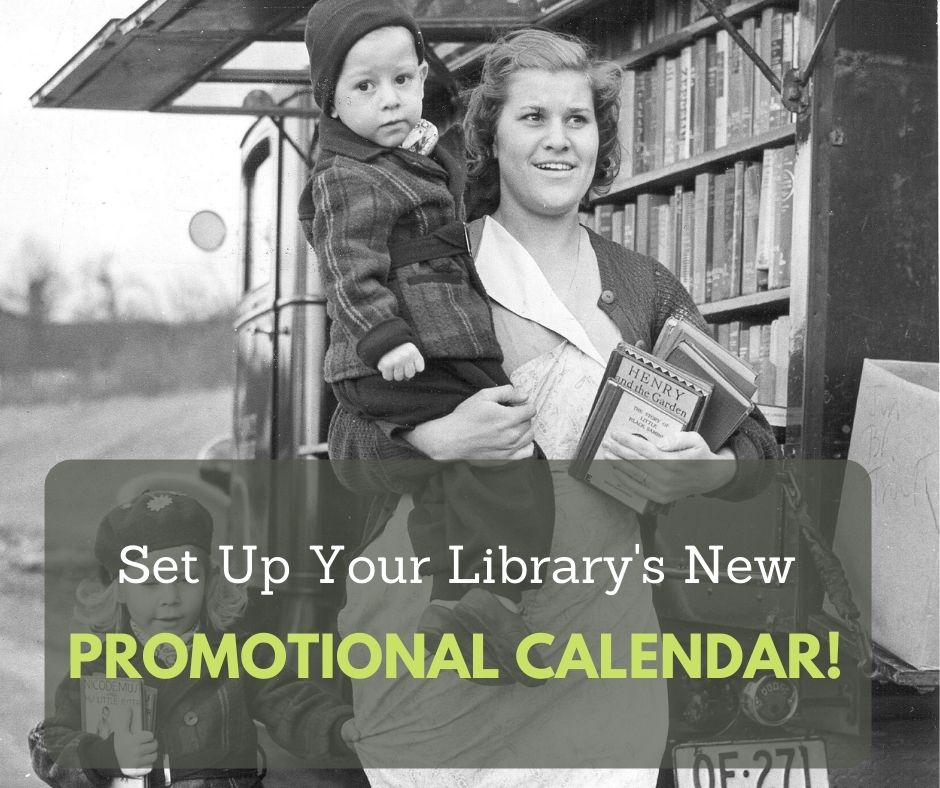
Now that you’ve created a library promotional strategy, it’s time to take the next step. And that is to create a calendar for all your library promotions.
Three main reasons a library promotional calendar is important
A promotional calendar is vital to success. This is especially true in an organization with many contributors and stakeholders, like a library.
Here’s why you’ll want to have a promotional calendar, even if your team of content creators or contributors is small.
It helps you stay organized and focused on the goals you set as part of your promotional strategy.
It helps you to keep track of holidays, seasonal library and literary events, and major annual promotions like summer reading.
It keeps everyone at your library up to date on your promotional plans.
How to set up your library’s promotional calendar
Scroll down to the bottom of this post for my recommendations of three free calendar templates that you can use to create your library’s promotional calendar.
No matter which template you choose, the calendar should be shareable. This will ensure the contributors at your library can see all future promotional plans. It will also make it easy for contributors to add comments and ideas.
Once you choose a template and a location where it will “live,” set up the columns to track the important pieces for library marketing. Your calendar should include spaces to track these things:
The name of the event or service you wish to promote
The date of the event or service launch if the service is new. If it’s an existing service, you can leave this space blank.
The start and end date of the promotion
The type of content. For example, blog post, video, etc.
The channel(s) in which the promotional content will be published. For example: email, social media platform, digital signs, etc.
The topic. For example: you may have two promotions for summer reading. One could be planned for two weeks before summer reading begins with the purpose of promoting registration. Later in the summer, you may launch a second promotion marking the halfway point and encouraging readers to log their reading hours. The “topics” for these two promotions could be “Registration Push” and “Halfway Check-in.”
Due dates
The date and time for publishing the content
The person in charge of each promotion
Follow-through. This column is where you will note if the content was published according to schedule or if there were delays. Tracking follow-through will help you spot hurdles in the process of creating and approving promotions, which will lead to more efficient planning of promotions in the future.
Links to promotions after they are published. This will be helpful for those times when you’ll need to find and analyze a promotion after it’s out in the world.
Success measurements. List the data you gather after the promotion is published to measure engagement and effectiveness. Tracking your promotional success will help you spot the topics, formats, and publishing platforms that yield the best results for your library.
How your promotional calendar will improve your library marketing
The Marketing Rule of 7 states that a prospect needs to hear or see the advertiser’s message at least seven times before they’ll buy that product or service.
For your library, the Marketing Rule of 7 means it’s important to publish content on various platforms and in multiple formats. This will allow your library to reach your entire target audience.
Your promotional calendar will help you make those decisions by having a list of your channels all in one spot. Your calendar will also help you to spot effective ways to re-purpose your content.
For example, let’s say you created an infographic demonstrating the value of summer reading in preventing the loss of literary skills. Initially, you planned to post the infographic to Instagram.
Using your promotional calendar, it may occur to you that the infographic would be a great starter for a blog post on the dangers of the “summer slide.” Then, you realize you can promote that blog post and infographic in your next library e-newsletter.
The library promotional calendar helps you to see all your promotions and create a holistic campaign. It can help you decide if you have enough resources to focus on the platforms where your target audience is most likely to see your content.
Use your calendar to prioritize your most important channels. Focus on creating high-quality content instead of aimlessly posting on all available platforms.
Your calendar can also help you set deadlines. You’ll quickly learn how often you can realistically create and release new promotions.
Finally, your library promotional calendar will help you spot the busiest times for your library before they sneak up on you. It will help you plan for those busy times. You’ll be able to ensure that the promotional creation process is finished well before the publishing date!
What to include in your library promotional calendar
Holidays, especially ones that affect your library’s service hours like Independence Day and Veterans Day.
Local holidays. For example, where I live in Cincinnati, Ohio, opening day for the Cincinnati Reds is a holiday.
Literary holidays such as Library Lovers Day or Audiobook Appreciation Month.
Seasons, like back to school or graduation.
Promotions tied to popular culture, like the Superbowl and the Olympics.
Building openings/renovations
New service releases
Summer Reading
Author events
Fundraising opportunities, like Giving Tuesday and National Library Week.
Patron stories
Interesting or funny details about your library.
Evergreen content, like collection promotion.
Three free promotional calendar templates
Some of these websites make you an offer to try their product, but you can still get these calendars without making a purchase.
Smartsheet: I recommend the Marketing Campaign Calendar Template.
Subscribe to this blog and you’ll receive an email every time I post. To do that, enter your email address and click on the “Follow” button in the lower left-hand corner of the page.
The Library Marketing Show, Episode 133: In this episode, I’ll address a recent discussion in the chat of a virtual conference I attended.
The commenter said, “I struggle with marketing our digital collection when my goal is getting people back in the Library. I am thankful for our digital collection and how it meets the needs of patrons, but when patrons mostly use our digital collection, they don’t come into the library. How should I be rethinking this?”
Kudos in this episode go to Rhone Talsma of the Chicago Public Library. Watch the video to find out why he’s being recognized.
Do you have a suggestion for a topic for a future episode? Want to nominate someone for kudos? Let me know in the comments. And subscribe to this series to get a new video tip for libraries each week.
Thanks for watching!
Subscribe to this blog and you’ll receive an email every time I post. To do that, enter your email address and click on the “Follow” button in the lower left-hand corner of the page.
In this episode, I’ll answer a viewer question from Hannah at the Johnson City Public Library. She asks, “What criteria would you use to justify retiring/making ‘private’ old blog posts?”
Kudos in this episode go to the Mary Wood Weldon Memorial Public Library. Watch the video to find out why they’re being recognized.
Do you have a suggestion for a topic for a future episode? Want to nominate someone for kudos? Let me know in the comments. And subscribe to this series to get a new video tip for libraries each week.
Thanks for watching!
Subscribe to this blog and you’ll receive an email every time I post. To do that, enter your email address and click on the “Follow” button in the lower left-hand corner of the page.
Last week, I wrote about the new email marketing data that changed the way I think about email and libraries. This week, I wanted to share more new tips to help you improve the chances your email subscribers will act.
Some of these come from Nancy Harhut, Founder and Chief Creative Officer of HMT Marketing. Nancy is an expert on behavioral science and consumer behavior. She studies how and why humans behave the way they do when they interact with marketing.
Nancy spoke at Content Marketing World. Her talk included a list of tricks to improve the effectiveness of your library promotional emails. I’ve combined her advice with new best practices I recently discovered while doing some deep research on email marketing.
And there’s a bonus in this post! Scroll down for a special free tool you can use to check the “spamminess” of your emails and get suggestions for improvement.
Tip #1: Make your community the focus of your email.
There’s a common mistake we make in library marketing. We often tell our community what we want them to hear.
But your email recipients are interested in how the library can help them. They have needs and wants that are specific to them.
@nharhut says your email recipients are not interested in everything you want to tell them. They want to know about the one thing they are looking for that will improve their lives.
Here’s a quick exercise you can do every time you create an email. Instead of making a list of items your library wants to promote, ask yourself these four questions about the person who receives your email.
What are their needs?
What’s driving their decision-making?
What are their goals?
What are they feeling?
This exercise will help you to focus on the way your library can help your community member. Once you’ve done that, you’ll want to include text in your email that makes it clear your library puts your community member first. It’s easiest to explain this using an example.
Library-focused readers’ advisory message: “We can recommend great books for you to read.”
Customer-focused readers’ advisory message: “You love to read. You’re busy. Leave the searching to us and get your reading recommendations fast.”
A few simple tweaks in wording put the patron first.
Finally, the images you choose for your email play a big part in making your community members feel that your library is focused on them. Be sure to choose images that reflect your community.
Here’s a real-life example: A library was creating an email to promote a yoga program. They chose a photo of a young, physically fit white woman in a yoga pose as their accompanying image.
But when they talked a bit about who actually comes to their yoga programs, they realized it’s attended by older, more diverse members of their population. Some of those attendees have physical challenges.
So, they found a new image that more accurately reflected their community. The image change helped drive more attendance to their yoga program!
Tip #2: Use first and second-person pronouns in your call-to- action button.
In all your library marketing text, you must connect with your community and make them feel seen, welcome, and invited. Using first and second-person pronouns like “me” and “my” or “you” and “yours” will help your email recipients to imagine themselves using your library.
In fact, using a first- or second-person pronoun for your CTA can result in as much as a 90 percent increase in clicks, according to market research conducted by two content marketing companies, Unbounce and ContentVerve.
Again, this is a simple tweak in wording that can lead to big results. Some pronoun-centered CTAs are:
Download my book
Claim your seat
Reserve your spot
Get my library card
Make your donation
Tip #3: Pair your calls-to-action.
Library emails tend to include many offers. But, according to Harhut, we should put our calls-to-action together, in pairs!
Why? Giving your email recipients a choice between two options will increase the likelihood that your subscriber will take an action, according to Harhut. In fact, she told us that researchers at Tulane University found pairing calls to action will quadruple the chance that someone will make a choice between the two options at the moment.
Here’s an easy example. Let’s say you are sending an email to promote new books in your collection. Simply pair them together, like this:
Pair book covers together to improve the chances that someone will click on a jacket and place a hold.
If you are promoting databases or events, use the same pairing trick. Put two options side-by-side. Doing this will create a “this or that” decision for your email recipient and increase the chances that they will choose one of the two options.
Tip #4: Try a tiny dose of negativity.
Our library promotional emails almost always emphasize the benefits or advantages of using the library. But Harhut says people are twice as motivated to avoid the pain of loss as they are to reap the benefits of gains.
This happens because of the Loss Aversion Theory. It was formulated by Nobel Prize-winning psychologists Daniel Kahneman and Amos Tversky.
Their research found that people value a loss more than an equivalent gain. Losses are unpleasant and evoke emotions like fear, guilt, regret, and anger. People will do pretty much anything to avoid those negative emotions.
We can take that fear of losing and use it to strengthen our library. How exactly does this work?
Let’s say your library is creating an email to promote your graduate school test preparation resources. You might try some text that says, “More than 50 percent of the students who don’t study for the LSAT can’t get into law school.” (A fact I looked up for this example… feel free to steal!)
Or, for your next ticketed event, emphasize the need to register before all the seats are taken.
These are just two examples of the way you can work a subtle hint of negative emotion into your marketing. For more ideas, I recommend this well-written research article from the Open Journal of Social Science: When and Why Negative Emotional Appeals Work in Advertising.
Tip #5: Include a good testimonial.
Your library emails shouldn’t just include promotions for products and services. Testimonials can help people to make decisions about whether to use your library. They help people to imagine themselves using your services.
Harhut says we should always be collecting and sorting testimonials so that we can use the best of them in our emails. It’s another great way to show that your library is focused on your community.
Use this list to help you pick your best testimonials.
Include a few lines from the testimonial in your email. Try putting it at the top of the email, before your promotions. This is especially effective if the testimonial is from someone who benefited from the program, service, or collection item you are promoting in your email.
Tip #6: Proofread. Then do it again. And again.
Spelling, punctuation, and grammar errors will damage the trust your community puts into your library.
Copy and paste your email text into Word, then run the editorial review.
Ask your co-workers to read through your email.
Read your email out loud. You’ll be surprised how many mistakes your brain will gloss over when you read silently.
Bonus: Free email testing tool.
There’s a new free tool I just learned about that can help your email. It’s called Mail Tester.
It was designed by software engineers who wanted a way to test the quality of their own email newsletters. So, they built their own tool and made it free to anyone who wanted to use it.
Here’s how it works.
Take an email that you plan on sending to your community and send it to Mail Tester first. They generate a random email address every time you go to their website.
Next, you click on the “check your score” button and wait for your results. You can see your results for up to 7 days.
I tried it using an example email I created for a presentation. Here are my results:
Subscribe to this blog and you’ll receive an email every time I post. To do that, enter your email address and click on the “Follow” button in the lower left-hand corner of the page.






 Super Library Marketing: Practical Tips and Ideas for Library Promotion