Search

Super Library Marketing: Practical Tips and Ideas for Library Promotion

Category

Storytelling

Your Patrons Are Not Goldfish! The Powerful, Scientifically Proven Reason Why Your Library Should Aim To Hold the Sustained Attention of Your Community

Photo courtesy Cincinnati and Hamilton County Public Library

When I was a child, my first pet was a goldfish.

I named it Goldie. Totally original, I know.

Goldie lived in a glass bowl decorated with neon-colored rocks and a tiny treasure chest that opened and closed to release bubbles. Iโ€™m sure when I brought her home from the pet store, she thought she’d landed in some kind of 1980s pirate hell.

I liked to watch Goldie swim around her bowl. And she liked to watch me.

When I did my homework or practiced my instrument or danced around my room to Phil Collins, she swam to the side of her bowl and stared at me. She could do this for hours. It would have been creepy had she not been a fish.

The statistic that some say ruined marketing

In 2015, large news organizations, including Time, The New York Times, and The Telegraph reported a single, mind-blowing finding from a new study by Microsoft.

The average human being’s attention span has shrunk to just eight seconds, about the same as a goldfish.

By the way, in researching this post, I found this great blog post from the University of Melbourne about the intelligence of goldfish. Their attention span is way longer than eight seconds.

The reports were grossly inaccurate

It turns out that the news organizations were not actually quoting the results of the Microsoft study. A BBC reporter investigated the origin of the goldfish statistic in 2017.

โ€œAll those references lead back to a 2015 report by the Consumer Insights team of Microsoft Canada, who surveyed 2,000 Canadians and also studied the brain activity of 112 people as they carried out various tasks. However, the figure that everyone picked up on โ€“ about our shrinking attention spans โ€“ did not actually come from Microsoftโ€™s research. It appears in the report, but with a citation for another source called Statistic Brain.โ€

Simon Maybin, BBC World Service

The goldfish comparison has since been removed from Statistic Brain. And the original study from Microsoft is no longer listed on their website.

But it was too late. The damage was done.

Marketers were told to create short, scannable promotions, use clickbait titles, and make sure our blogs and videos were “snackable.” Promotions began to all look the same.

Nothing stood out. Everything we created lacked depth and interest. And people actually paid less attention to us.

A better way to promote your library

It’s true that humans have difficulty dealing with distractions. But it’s also true that when we are consuming quality content, we can focus.

There are two kinds of attention. Transient attention is a short-term response to a stimulus that temporarily attracts us or distracts our attention. It comes into play when you read a billboard or a sign, or watch a TikTok video.

Then there is sustained attention. This describes your ability to focus on something for an extended period.

We use sustained attention when we binge-watch an entire season of Stranger Things in a single day, read a good book cover to cover in one sitting, or attend a concert, play, or sporting event.

Sustained attention is where great experiences are found. It is also the basis for information processing and cognitive development. It is where real connections are made.

That means that if you can engage your cardholders’ sustained attention, your marketing will be memorable. And memorable marketing is more effective.

How do we do this exactly?

There are circumstances in which you will need to create short promotions that appeal to transient attention. Social media is a perfect example. So are printed signs. A few, well-written but interesting sentences, and an eye-catching design are required for those formats.

But many of your library promotions should aim for the sustained attention of your cardholders. Blog posts and videos are perfect examples.

These pieces of content should be as long as they need to be to tell a good story. That means you can create a video that runs 8 minutes or write a blog post that is more than 1000 words, as long as they are interesting and compelling. They must also contain two key features.

  • Emotion: The joy of finding a book, the fear of not getting a job, the frustration of another night of homework without any helpโ€ฆ these are all emotions felt by our libraryโ€™s customers. Other people can relate to these experiences and empathize. Emotion activates many portions of the brain, including the sensory, memory, and empathy sectors. The more active the brain is while consuming content, the more likely it is that the listener or reader will remember the story.
  • Conflict and a resolution. Your sustained attention marketing must include some conflict and a problem or situation that is resolved. Without conflict, your story risks being flat and unmemorable.

How to get started

Pick one tactic to focus on. Your print or online newsletter is a perfect place to start. Take six months and watch as your audience transforms.

I’m speaking from experience here. In my former library job, I turned our print program calendar into a magazine filled with stories.

It took our community members about 10 to 15 minutes to read the magazine. That’s time they spent thinking about the library, empathizing with the patrons and staff in our stories, and committing our stories to memory.

And guess what happened? Our circulation increased. Database usage grew. Our brand awareness grew. We passed a levy to fund renovations to old libraries.

Podcasts are also a perfect example of long-form library content that holds attention. Most episodes last between 20 to 30 minutes. That’s an invaluable time in which you are talking directly to your community!

Your cardholders aren’t goldfish. They are real people with attention spans that can be used to our advantage. You can help them to make a lasting and meaningful connection to the library with longer, interesting, memorable content.


Further Reading

Latest Book Review

Subscribe to this blog and youโ€™ll receive an email every time I post. To do that, enter your email address and click on the โ€œFollowโ€ button in the lower left-hand corner of the page.

How One Library is Promoting Themselves by Handing the Microphone to Patrons and Letting Them Make the Case

Photo courtesy Cincinnati and Hamilton County Public Library

Libraries know the power of storytelling. Most of us are literally and physically surrounded by some of the best stories in the world.

But the quest for library stories that have emotion and a compelling story arch is daunting for many libraries. A Kentucky librarian has the solution: let your patrons tell their own stories!

Levi Simonton has worked for the Jessamine County Public Library for three and a half years and is now the libraryโ€™s social media coordinator. โ€œI love this place,โ€ said Levi when I asked him about his work experience.

In January, Levi and his library launched a video series called Share A Story. The videos were created to amplify the voices of library superfans.

Leviโ€™s library believes that patronsโ€™ real-life experience is the best way to increase the use of the library and relay the libraryโ€™s value. โ€œWe think that a community member is more likely to visit the library after hearing a story from one of their peers rather than seeing an advertisement from us,โ€ explains Levi.

Approaching a patron and asking them to share their story is often intimidating for libraries. But Levi has a remarkably simple approach. โ€œWe typically ask other staff members if they know anyone who might be willing to share an impactful story with the library,โ€ says Levi. โ€œWe may also ask for patrons with experience on a specific topic we plan to promote. Sometimes it’s a bit more serendipitous, though. We met the first patron we interviewed by chance at our big comic con event last October.โ€

The interview itself doesnโ€™t take much time, according to Levi. He typically spends about 45 minutes interviewing his subject. Then he focuses on getting footage of the subject that matches what the patron talked about (in the TV world, this is called B-roll). The footage is used later in editing, to cover parts of soundbites and edits. It also makes the video more interesting.

Once the interview and footage are shot, itโ€™s time to put it all together. For Levi, this is the most labor-intensive part of the process. โ€œThese particular pieces usually take 10-15 hours over a week or two,โ€ recalls Levi. โ€œHonestly, that’s longer than it should take. I’m just new to video editing and have a bit of compulsive behavior when it comes to getting those darn details right.โ€

When the library launched the first video, the reaction was positive, both from patrons and staff. โ€œWe showed the videos at a recent staff meeting,โ€ says Levi. โ€œThey seemed to resonate with everyone. Hearing directly from patrons about the library’s impact on their lives brought at least a few staff to tears.”

So far, the library has released three videos in the series, including one from a woman who has been visiting the library since she was a little girl. “I grew up in an environment that was considered impoverished,” says Anna Kenion, who is featured in one of the videos. “However, my way of escape, to solitude time and to dream bigger was when I would go to our public library,”

The library is taking a break from releasing videos over the summer to focus on summer reading. But they are working on videos to promote their new outreach vehicle and children’s storytimes. โ€œWe may release podcasts, written pieces, or other media that fall under the Share A Story umbrella in the future,โ€ said Levi.

Is your library telling patron stories as part of your marketing? Let me know in the comments!


Read These Articles Too!

How to Gather Patron Stories for Library Promotion!

Your Library Should COMPLETELY Ignore These 4 Pieces of Promotional Advice! Plus What To Do Instead for Real Results. 

Latest Book Review

The Orphan Collector by Ellen Marie Wiseman

Subscribe to this blog and youโ€™ll receive an email every time I post. To do that, enter your email address and click on the โ€œFollowโ€ button in the lower left-hand corner of the page.

Ditch the Formal Document! How One Library Turned Their Ordinary Annual Report Into a Storytelling Masterpiece That Connected With Their Community

Image courtesy Cincinnati and Hamilton County Public Library

Here is a question that has been the source of many an existential crisis for library staff. What is the value of your work?

That proposition is at the heart of a major project every library undertakes once a year–the creation of the annual report. In its most basic form, the annual report summarizes the work conducted by a library during the preceding year.

But what if the annual report was more than a formal document? What if it truly told the story of the impact a library had on its community, beyond numbers and statistics?

Thatโ€™s what Explore York Libraries and Archives in the United Kingdom, led by Barbara Swinn who is Head of Strategy and Engagement, set out to do this year with their annual report.

Explore York provides library service for a city founded in 71 AD by the Romans. The flagship library sits within Roman-era medieval walls and has the remains of St Leonards, the largest hospital in medieval Europe, within its grounds.

The library serves more than 211,000 residents. It is an affluent city but there is also need in the community. 13 percent of children in York live in low-income families.

Putting together an annual report that connects with a varied audience and also demonstrates the vast but important work of Explore York is daunting. Barbara has a small team at her disposal: herself, a co-worker, and an outsourced graphic designer. But these three visionaries wanted to do more than report facts and figures. So, they took a storytelling approach to their annual report.

โ€œNot everyone who reads our Annual Review will necessarily be a library user. This is our chance to intrigue, delight, and create that โ€˜wow, I didnโ€™t know my library did thatโ€™ moment.โ€     

Barbara Swinn

Barbara begins work on her next annual report as soon as sheโ€™s released the latest version. โ€œWe already produce quarterly reports for our Board of Directors, and for the City Council,โ€ explains Barbara. โ€œHowever, these reports are focused on fairly ‘dry’ information โ€“ statistics, evidence that we have met contract requirements, etc. We recognized that our Annual Review needed to be more than a reiteration of the yearโ€™s quarterly reviews. We knew, at the end of an extraordinary year, that our pandemic story made a powerful case for the enduring value of public libraries not only in our city but everywhere.โ€

So Barbara and her team decided to take a different approach. โ€œTo start off our planning we read Angelaโ€™s article on โ€œThe Dreaded Annual Library reportโ€ (!) and used it as a basis for our approach,โ€ Barbara recalled. โ€œWe read the example Reviews cited in the article, we chose our favorites, and decided which bits we were going to steal from them! We also looked at the Reviews some of our local cultural organizations had produced. We shared our thoughts with our graphic designer early on too, so she could start to think about how some of our preferred visual elements could be incorporated using our branding and style.โ€

Next, Barbara and her team set goals for their annual review. They had to connect with a variety of audiences, from politicians to donors to volunteers to library users. โ€œWe kept in our mind what we wanted our audiences to think, feel, and do as they read our Review,โ€ remembers Barbara. โ€œWe wanted them to understand the breadth and depth of what we had provided, feel reassured and proud of their libraries, and to support us in future years whether financially or through advocacy or practical support such as volunteering.โ€

“We wanted it to be a powerful advocacy tool and something that would tell our story through its imagery and design as well as through words and numbers.”

With all that in mind, Barbara and her team began to plan and gather content for each section. But she recalls that, with so much worthy and valuable work happening at her library, the focus was tricky. โ€œOur aim was to hold up some diamonds from our daily work and from our special projects, so they could shed light over all the work we do day by day, in every library and Reading Cafรฉ across the City of York,โ€ explained Barbara.

The team did a lot of groundwork gathering feedback and testimonials from the community. โ€œSome of the feedback we had gathered specifically with documenting our pandemic story, some arrived through the ordinary feedback channels and through conversations with our library staff,โ€ said Barbara. โ€œWe gave equal weight to facts and figures, quotations from people, and imagery. We edited and edited to keep the words brief and to the point.โ€

โ€œTelling the story was key for us,โ€ continued Barbara. โ€œWe wanted to create a connection with the reader and us, to demonstrate our values that would hopefully resonate with the reader and encourage them to find out more, to become more involved perhaps as a volunteer or potential funder. Angela described this as a call to action for readers, that by the end of the review they would know what help we need for the following year.โ€

The final product is extraordinary. Read it here.

Barbara has some advice for libraries in putting together their annual report or review. โ€œRemember we are all about stories, we hear them every day and we see the impact we have on the lives of people in our communities every day,” she explains. “Use that rich resource to shine a light on the value of our community activities, programs, and events to stir emotion and build a connection to our organization. Inspire future donors and volunteers to be involved, to want to be part of our story.โ€

Barbara Swinn joined Explore in 2015 as manager of the city centre flagship library York Explore and has worked in the libraries sector for 40 years. She’s been awarded the British Empire Medal in The Queenโ€™s Birthday Honours for her work with the library. She is a passionate advocate for public libraries and a gifted leader. Committed to improving the customer experience, Barbara is skilled at creating spaces and environments where people can learn and grow, connect with others, and contribute to their community. In particular, her work with the award-winning Explore Labs project shows Barbaraโ€™s exceptional talent for development and innovation. Her work and encouragement have helped Explore grow and develop as a cultural business, and she is always looking at new ways for people to engage with the riches of Yorkโ€™s libraries and archives.


You May Also Want to Read These Articles

Help Your Community Understand a Crisis: 3 Tips To Thoughtfully Address World Events With Library Promotions

Does Your Community Feel Welcome At Your Library? Why Inclusive Language Is a Critical Part of Your Promotions.

Latest Book Review

To Sir, with Love by Lauren Layne

Subscribe to this blog and youโ€™ll receive an email every time I post. To do that, enter your email address and click on the โ€œFollowโ€ button in the lower left-hand corner of the page.

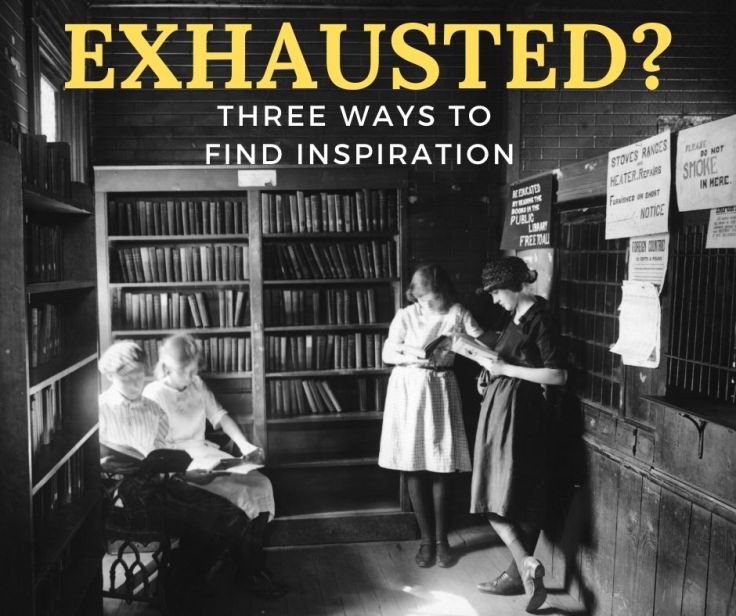
Three Easy Ways for the Exhausted Librarian to Figure Out What Your Community Needs AND Find Promotional Inspiration!

Photo courtesy Public Library of Cincinnati and Hamilton County

More than once, I’ve sat down at my computer to turn out a clever, groundbreaking, truly engaging library promotion… and ended up staring at a blank wall.

There are days, or weeks, or months (or let’s be honest, years… like 2020) when work in a library will run you ragged. As much as you’d like to create the most inspiring and noteworthy marketing piece for your library, you are just Too. Dang. Tired.

When I worked in a library, the exhaustion usually hit me after summer reading ended. With fall and winter looming, I felt my inspiration seeping away as quickly as the leaves fell from the trees.

If this happens to you, there are some things you can do to get your creativity back. If you need a little inspiration, look no further than your community.

The easiest and most effective library promotions are the ones that solve your cardholders’ big problems. If you have no idea what your community wants and needs from your library, here are three easy ways to figure that out and find the inspiration for your next effective promotion!

“Stalk” your library users.

There are three places you can go to learn more about your community.

Inside the building

If your library is currently open, take a walk around the library or visit the branches. This is your spy moment! Take off your badge and pretend to browse. Or sit at a table in a corner with your laptop.

Observe the way the cardholders browse the shelves, interact with staff, work the self-checkout machines, and use the public computers. Answer these questions.

  • Do they look for a map?
  • Are they drawn to a particular book display?
  • Do they linger over the new books, or do they dash in for their holds and dash out?
  • Do you notice all customers follow a particular path through your branch or are drawn to a particular place within the branch?
  • If your library has a drive-thru, is it busy? What kinds of customers use the drive-thru?

Watch how your community behaves inside the building to get an idea of what customers love and what problems they encounter during their interactions with your library. Both of those discoveries can be the basis for your next library promotion.

On your website

Take a close look at your library website’s analytics to find out who is visiting and what they’re doing.

Google Analytics is the best place to get a sense of how your community is interacting with your library’s website. If you don’t have access to your library’s Google Analytics, make an appointment to meet with whoever does have access. Talk with that person about their work. Then, share your goals for the library promotions you create. It’s your chance to form a collaboration that can lead to a more effective library website.

When you get a chance to see the data, ask these five questions:

  • Which landing pages are the most popular?
  • Which pages get zero traffic?
  • Has website traffic to certain pages changed over time or remained relatively the same?
  • How long did people stay on our website?
  • How does the bounce rate compare on your landing pages?

If you notice that people are interested in a certain section of your website, you may want to create promotions that support that. Likewise, if you realize that cardholders are missing some key places on your website, you may want to create promotions to entice people to visit those pages!

And if you notice that people are visiting a certain webpage but bouncing right off, you may want to think about improving the customer experience on that page.

On social media

Social listening is an insightful way to get promotional inspiration. It’s kind of like eavesdropping. It’s the purposeful search for conversations about your library on social media platforms.

Social listening will give you a clearer picture of how people feel about your library. You may be able to spot problems before they happen. And you will certainly spot promotional opportunities which you can amplify to connect to more users.

For full details about how to actively use social listening for promotional inspiration, read this post.

Check your statistics.  

Your library likely makes circulation and programming stats available on your internal website. These pieces of data can inspire you to find ways to help make their interaction with the library more worthwhile.

If you make it a regular part of your job to check your library statistics, you will find promotional inspiration. You’ll notice when there is a dip in the use of a service. When it happens, you’ll want to consider shifting some of your promotional focus to re-educate your community about that service.

If you work for a system with more than one location, you may notice trends in visits and circulation between the locations. Library staff at branches with lower visits and circulation can reach out to those with higher visits and circulation to see if you can steal some of their successful promotional ideas!

Talk to your coworkers.

You might find inspiration simply by “interviewing” your fellow staffers. Some key questions you can ask include:

  • What are your customers struggling with?
  • What are you struggling with?
  • What part of their job brings them joy?

You may uncover a great story that centers on your community member or cardholder as a hero. You can use that as a piece of content marketing to promote your library on every platform.

You might also learn that there is a customer problem that you can help to solve with your promotions. Answering a commonly asked cardholder question is an easy and effective way to promote your library.

You May Also Want to Read These Posts

The Quest for Perfection May Spoil Your Library Promotions! How To Walk the Line During the Revision Process and Still Create Authentic Messages

Behind the Scenes of The Library Marketing Show: Anyone Can Create Library Videos!

Angela’s Latest Book Review

The Sweetness of Water by Nathan Harris


Subscribe to this blog and youโ€™ll receive an email every time I post. To do that, enter your email address and click on the โ€œFollowโ€ button in the lower left-hand corner of the page.

The Top Four Reasons To Use Content Marketing To Promote Your Library on Every Platform

Photo of card catalog courtesy Public Library of Cincinnati and Hamilton County

My high school history teacher never assigned a textbook for his class.

Instead, every day, Mr. David Ulmer would pace back and forth at the front of a room of students, explaining the events of the world in vivid detail as a story.

He would wildly gesticulate when the action got heated or dangerous, use voices to give life to historical figures, and punctuate points with hilarious statements written on the chalkboard.

My classmates and I sat in rapt attention. We tried to take notes. But frankly, it was hard to tear your eyes away from Mr. Ulmer. We didnโ€™t want to miss a single detail.

No one failed tests in Mr. Ulmerโ€™s class. Thatโ€™s because his method of teaching was storytelling. Everyone remembered the details.

Mr. Ulmer used content marketing as a means of teaching history. Rather than pushing a bunch of facts, figures, and details at us, he made historical events personal, vivid, and memorable by telling stories.

Your library can have that kind of lasting, memorable impact. You only need to integrate content marketing as part of your promotional strategy.  

Now is the time to work stories into your library promotions. You want desperately to break through the noise of life. You want your community to think of your library every time they face a problem. You want them to remember they can come to you for anything they need.

I sometimes wonder if libraries dismiss this idea because stories as marketing sounds childish and unprofessional. The word โ€œstoryโ€ may also imply that the content is made up.

But, in marketing, we use stories as content because they are true testimonials about how your library has helped your community. They arenโ€™t fiction. Theyโ€™re told with integrity and clarity. 

 โ€œPeople think in stories, not statistics, and marketers need to be master storytellersโ€.

Author, columnist, and businesswoman Arianna Huffington

Here are the four things you need to know to start working content marketing into your library promotions. ย 

You donโ€™t have to do all the work.

Research by Nielsen shows that 92 percent of people will trust a recommendation from someone they know. When a cardholder talks about the way your libraryโ€™s collection, programs, and services have impacted their lives, people will listen. Let your community share their story about their experience at the library.

One year at my library, we sent an email to a target group of library users. We asked them to tell us why they loved the library.

We got more than 400 responses! Some people wrote a few sentences, and some wrote paragraphs.

That one โ€œaskโ€ was a gold mine for content for more than a year. We contacted many of the responders later to ask them to elaborate on their stories on camera. We used those interviews for fundraising and content marketing. We pulled some of their quotes and had our librarians read them on camera, which we used as content marketing during Library Workers Week and other big events.

We used some of those stories to lay the groundwork for the passage of a levy. And we used stories on social media. That drove our organic engagement rates higher and made our other organic posts more effective.

Your community is eager to share testimonials with you. All you have to do is ask.

You can gather stories every day.

Make it a practice at your library to start a conversation with cardholders at a point of service.

Use your own story to begin the conversation. You can share a few sentences about how the library has impacted your life. Or you can talk about why you decided to work in a library.

Sharing your personal story will signal to your patron that itโ€™s okay for them to share their story. And once they have, you can ask them if you might write down the story and share it as content marketing with other patrons. Most people will say yes.

Stories donโ€™t have to be long or complicated.

Your content marketing can be a few sentences, a few paragraphs, or a few pages. Thereโ€™s no formula for length. If youโ€™re not a confident writer, or your patron feels uncomfortable sharing in detail, you can still create a great content marketing story within a few sentences.

Jacksonville Public Library shared the story of a father who got his high school diploma with the help of the library. It’s less than 400 words, but it’s powerful.

Your library can share content marketing everywhere you do promotions.

Start by including one story in each of the places where you normally promote your library.

For instance, if you send a monthly library newsletter, include a story. You donโ€™t have to delete any of the other things you normally promote in your newsletter. But slip a story into the mix.

Tease the story in your subject line to increase your open rates. A story will appeal to a wider audience. Once the subscriber opens your email and reads the story, they’ll be responsive to other promotional content in the email.

If your library has a blog, include at least one cardholder story on your blog every month. Your blog will grow in traffic and subscribers, which is good news for the other content you post.

One of the best places to share content marketing is in a video. Champaign Public Library has a full YouTube playlist of content marketing videos. Their work is a great example of the power of an on-camera interview testimonial.

You can create a newsletter filled with stories. You can create a landing page on your website. You can share stories on your blog, on social media, in your videos, and in your print pieces.

The Brown County Library works content marketing into its Facebook page posting schedule. They’ve even created a hashtag, #WhatsYourLibraryStory to drive engagement.

Content marketing deepens your library’s connection to your community. Are you using it for library promotions? Share your ideas by clicking on the “Feedback” button.


Subscribe to this blog and youโ€™ll receive an email every time I post. To do that, click on the โ€œFollowโ€ button in the bottom left-hand corner of the page.

You may also like these articles

Library Blogs are the Best! How to Use Your Website to Amplify Your Library Marketing Message on Your Own Terms

Inspiring Advice From An Expert Blogger

Angelaโ€™s latest book review

How the Word is Passed by Clint Smith

Two Key Areas of Marketing Focus That Will Deepen Your Communityโ€™s Loyalty to Your Library and Create the Truly Engaged Library User

Photo courtesy Public Library of Cincinnati and Hamilton County.
Photo courtesy Public Library of Cincinnati and Hamilton County. Click on the image to visit their digital library.

For most libraries, the end of the fiscal year is here. I think this is the perfect time to implement two new areas of focus for library promotions.

As discussed last week, libraries are at a critical moment. As we emerge into the post-pandemic world, we should not go back to doing things the way we were doing them before the crisis. That includes the way we do marketing and promotions.

Libraries need to start thinking beyond simply churning out flyers, posters, emails, and social media posts. We must devote time and energy to two primary areas of marketing focus: customer service and content marketing.

Here’s why.

Excellent customer service as marketing

We can create the truly engaged library cardholder by offering consistent, personal support.

Customer serviceย is anย extension of marketingย because nothing compares to the first-hand experience of a real person having a great experience with your library, and then sharing that experience with their friends and family.

Customers are comparing you to every other customer experience they have. Expectations are high.

A library with frontline staff who are friendly, courteous, and dedicated to personalized assistance will hold the key to customer retention. You want to retain cardholders because it’s less expensive and takes less resources to retain engaged and active patrons than it takes to get new cardholders.

The good news is that most libraries excel at customer service. There are two ways to take those excellent, basic skills to the next level so you can create those loyal customers.

Respond as quickly as possible to patrons, wherever they interact with your library

Customer service consultant STELLAService released a report a few months ago that found that 62 percent of companies ignore customer service emails. The average wait time for a customer service email is 12 hours! And only 20 percent of companies follow up to see if their original answer was satisfactory for the customer.

This is an area where libraries can do better than for-profit brands.

  • Make it a priority at your library to answer every email, phone call, and chat request in a timely manner.
  • Institute a policy to send a follow-up email or make a follow-up phone call to ensure that the original answers you gave to the patron are satisfactory.

For instance, if a parent requests a book bundle for their child, be sure to send them an email or call them a few days after they’ve picked up their hold to see if their child is enjoying the books you provided. Keep a spreadsheet where you can make notes about what the patron liked and disliked.

The next time that person calls the library for help, your front-line staff can consult that database and provide more valuable help to that patron.

That kind of deeply personal customer service is the best kind of marketing you can do because it builds a relationship with the patron that is meaningful and shows that you are deeply committed to creating the best library customer experience possible.

Listen to your community

To provide the most meaningful services, collection, and programs, we need to know exactly who is using the library and how they are using it. We must also anticipate our community needs.

You can do this by enlisting front line staff to ask three simple questions during every patron interaction for a three-week period.

  • How could the library better help you this year?
  • What services do you love?
  • What services do you need?

The answers will give you valuable insight into the services your library can provide that will truly create an engaged community.

If you notice a service that isn’t mentioned by patrons in these interactions, consider dropping that service, even if it’s been something you’ve been doing for a long while. You want to provide what your community wants and needs.

You can also survey patrons by email. If you’ve never created a survey before, this post will help you.

Content marketing deepens community relations

Content marketing is promoting your library, not through advertisements or push promotions, but through education.

By providing answers to your community’s main questions, your library builds trust and loyalty. People will come to see your institution as a valuable resource with services that can’t be replicated by other institutions.

Content marketing breaks through the noise and the clutter by providing compelling, useful information for your cardholder. It addresses whatever pain points your cardholders have. It positions your library as the go-to place for information. It builds trust.

And through content marketing, your library gets a better and deeper understanding of your cardholders. You can use that understanding to do an even better job of addressing your cardholders needs. Itโ€™s a constant circle of giving. It carries more weight for a longer periodย than a flier or a poster.

You donโ€™t have to be a trained marketer to understand how content marketing works. In fact, my contention is this: since more library marketing departments are run by trained librarians, youโ€™ll do better at implementing a content marketing strategy at your library than most people with a marketing degree.

You tell stories. You read stories. You review stories. You love stories. Youโ€™re the perfect person to tell stories about your library, its staff, and its users.

Stories stick. A good story will stay in your brain longer than a good ad. And once youโ€™ve told a great story, your cardholders will remember your brand. Stories build a connection which leads to customer loyalty, which leads to customer action.

Next week: Content marketing basics for libraries: easy ideas about how and where to tell stories about your library to deepen community loyalty.


Subscribe to this blog and youโ€™ll receive an email every time I post. To do that, click on the โ€œFollowโ€ button in the bottom left-hand corner of the page.


You may also like these articles

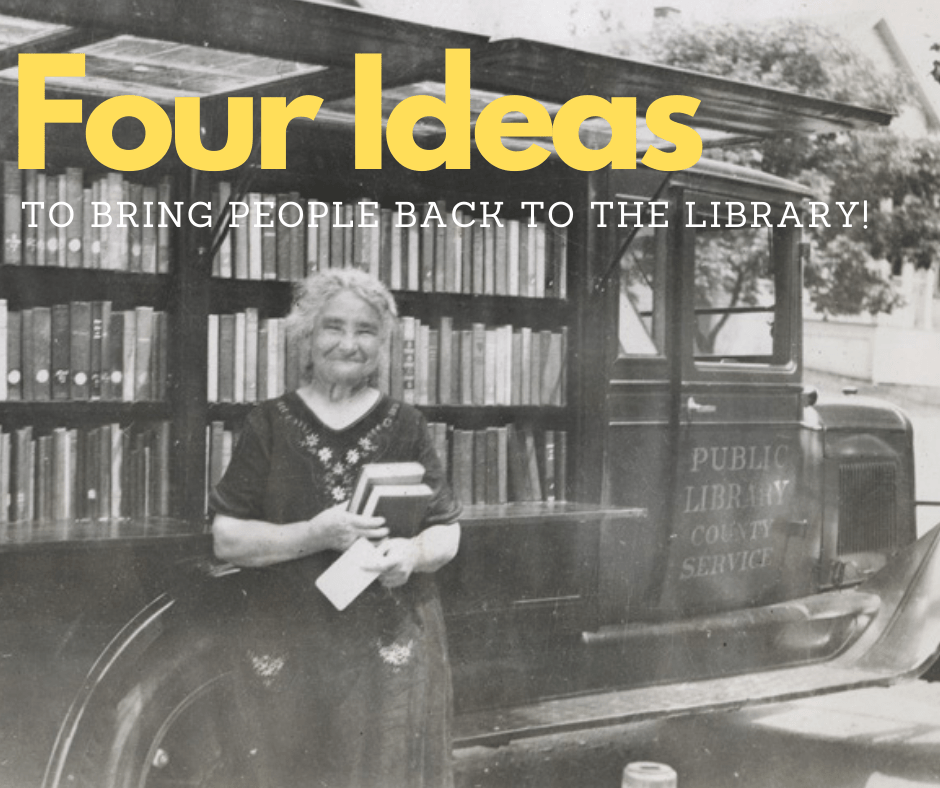
How Do We Get People To Come Back to the Library? Four Ideas That Can Help You Rebuild Use of Your Library

Listen To This! How To Use Social Listening To Gain New Insight and Catch Promotional Opportunities for Your Library

Angelaโ€™s latest book reviews

Beach Read by Emily Henry

How Do We Get People To Come Back to the Library? Four Ideas That Can Help You Rebuild Use of Your Library

Here is something I’ve noticed in my conversations with library staff over the past six months.

Staff share a profound feeling of separation from their communities. They’ve been working for more than a year without the normal interactions with the public. And that has led to increased anxiety about whether things will ever return to normal.

The big questions I’m getting are: How long will it take before circulation returns to normal? How long will it take before program attendance is back to where it was before the pandemic?

I can’t answer those questions. I’m not sure anyone credibly can.

But what I can do is help you to rebuild use of your library through marketing and promotions.

Here are four ideas that libraries can strategically use to bring people back to the library, re-engage cardholders, and get new community members to use the library.

Renew everyoneโ€™s library cards automatically and incentivize people to use them. Then, use that interaction to re-connect.

If you have a system where cards need to be renewed, a blanket automatic renewal is a great promotional tactic. Automatic renewal of library cards is a customer service best practice. And doing so right now, when we are coming off more than a year of service limitations, is strategically smart.

If your senior leaders have concerns about a blanket renewal, ask them to read Cordelia Anderson’s book. It explains the advantages of this action.

The next step is to gather prizes from partners, like you would for summer reading. Let people know theyโ€™ll be entered into a drawing to win a prize if they use their card. If they check out a book or use an online resource, they can fill out an entry. If your priorities are to drive attendance at in-person programs or to get people to physically come into a branch, you can tell people they get two entries in the drawing!

Once they come back, make sure you do everything you can to re-connect with these cardholders. Have your staff do three things with every person they interact with.

  • Get their email address.
  • Get them to self-identify their interests. Are they looking for help solving a particular problem, like finding a job? Are they looking for books for entertainment and relaxation? Ask your public to name at least one topic they would want more information about.
  • Give them a print piece of marketing material to encourage further use of the library. Don’t let them leave this interaction without something in their hands. Remind them that the library is open and actively providing service to your community again.

Rebuild a sense of community.

One of the things that library users said they missed most during the pandemic was social interaction. This is another opportunity for libraries to rebuild.

Rather than re-starting our one-off programs, letโ€™s spend our energy putting together programs that everyone can participate in. Wider-ranging programs, which focus on getting large groups people to do an activity together, help to build a sense of community.

One idea: everyone reads the same book, or watches the same movie, or listens to the same piece of music. Then, your library creates ways for your community to share their thoughts and experiences around that group activity.

Another idea: ask your patrons to share their pandemic stories. Encourage them to share how they survived their time in lockdown, what they learned, and how the experience changed them.

Let the public know you’ll be posting their contribution on a special landing page of your website, and sharing them through social media and in email. You can even print short versions of the stories on a bookmark, which youโ€™ll slip into holds and checkouts to encourage other library users to share their stories.

Finally, hold an event where people can have the chance to read their stories to an audience.

A shared experience builds community. And a community that feels connected to your library, and to each other, will keep coming back to use your services.

Use your virtual programs and videos to encourage your community to expand their library use.

Since the beginning of the pandemic, libraries have embraced livestream and video programming. Now we can use the platforms and audiences we have built for promotions.

Do a livestream from inside your building. Show your audience one thing they can do in your library that they havenโ€™t been able to use since the building was closed or operating under limited services. Save the video and repost it later for on-demand viewing.

Do a livestream where the community can ask questions about the library… an “ask me anything” type event. During your livestream, be sure to mention programs or services that may be interesting to those asking questions.

It’s like working the front desk: people ask questions and you provide the answers. You’ll be demonstrating your staff’s expertise and reminding people that the library is there to help.

Buy two kinds of social media ads.

We know social media algorithms do not work in favor of organic posts. Use some of your budget to circumvent the system by purchasing ads. 

Your ad approach can have two methods. One ad should focus on followers. They donโ€™t necessarily see your posts because of the algorithm. But a purchased ad will make sure you are in their feeds. Use the ad to alert them to your expanded changes in service.

The other ad should be focused on people who arenโ€™t library users or followers. You can even split this audience into people you think might be interested in coming into a branch versus people who might want to use digital resources. Social media platforms do a great job of helping you to target specific audiences with your ads.

Spend $25 and see what kind of results you get. If you have more money, use the data youโ€™ve received from this smaller test to run larger, longer ads.


You Might Also Like These Posts

Why NOW Is the Time To Experiment With Your Library Marketing and Promotions!

Your Summer Reading Challenge: How Your Library Can Use Big Events To Gather Compelling Content for Promotions During the Rest of the Year

Angela’s Latest Book Reviews

Everything Sad is Untrue by Daniel Nayeri

A Certain Hunger by Chelsea Summers

Subscribe to this blog and youโ€™ll receive an email every time I post. To do that, click on the โ€œFollowโ€ button in the bottom left-hand corner of the page. Connect with me on YouTubeTwitter, InstagramGoodreadsand LinkedIn.

The Dreaded Library Annual Report: How to Create a Masterpiece that Showcases Your Library’s Value and Inspires Your Readers

Is there any library marketing task as daunting as the annual report? I don’t think so.

Neither does reader Carrie Weaver of Peters Township Public Library. She is the inspiration behind this post.

Carrie writes, “I am sure many other libraries are preparing their 2020 summaries for stakeholders, elected officials, and the folks in the communities they serve. Can you talk about what they should/should not be? What should be included? What is a good length? I want our annual report to be more than a bunch of stats – I want to tell the story of how our library served our community in this year like no other!

Confession: I created six annual reports during my time at the The Cincinnati and Hamilton County Public Library. And I found it to be the most difficult work I had to do every year.

Carrie was spot on. The annual report has an importance that no other piece of library marketing holds. And that’s especially true this year. It must convey the work you did, the value you provided, and the ways the pandemic affected your library.

And, as Carrie says, your annual report is more than an archive of your libraryโ€™s work. It is a way to tell the story of your library.

Your annual report can show the connection between your libraryโ€™s mission and strategy. It can clarify the impact your organization had on the community. And of course, your annual report can thank donors and volunteers, as well as inspire future donations and volunteers.

You are no longer locked into using a brochure or a longform magazine. Your library may decide to change format, the size, and the way you present that information to best serve your audience.

Weโ€™ll start with ten tips for putting together a highly effective annual report. Then, I’ve gathered examples of library annual reports, as well as annual reports from other non-profit organizations for inspiration!

Decide what your key message will be.

Your annual report should be more than a list of your work. It can tell a story. And you can use it to stir emotion.

Ask yourself: What do you want your readers to feel once theyโ€™re finished reading your annual report? Think about how youโ€™ll construct a narrative and take your readers through the various pieces to an end point, the focus of your key message.

Think of this as a call to action for readers. How can they help your organization to make progress this year? The answer should be very clear to readers once they reach the end of your document.

Focus on your libraryโ€™s accomplishments, not just activities.

The readers of your annual report want to know why your library did what it did in 2020. Youโ€™ll want to highlight how your library staff responded to the pandemic. Donโ€™t just talk about how you pivoted to provide support to your community. Talk about why that pivot was so important.

Write about the impact your work had on your community. Connect the everyday activities of your library to your mission statement and your libraryโ€™s overall strategy.

Create an outline to lay out what you want to cover and how youโ€™ll cover it. 

Plan to mix elements, with some pages including text, photos, and data. This mix will keep your audience interested and will help them to comprehend and remember the story and data points in your annual report.

Also, make sure that the pages include room for photos, as well as plenty of white space.

Use infographics to convey data.

Infographics can explain complex ideas and information in a simple way that is accessible to many audiences.

Our brains are hard wired for visuals. An infographic can trigger a reaction in the human brain, sometimes even before the person consciously realizes and processes that reaction. For more tips about constructing an infographic, read this post.

Balance data with stories.

Stories can humanize the work of your library and make your annual report more compelling.  

Clearly show the change that resulted from your libraryโ€™s work. Use a storytelling structure with a beginning, middle, and end to show what changed as a result of your library.

In addition to patron stories, you might also consider including stories about your senior staff and employees to showcase the value of the people who do your libraryโ€™s work. 

Finally, share a story of one person rather than a group. Your readers will find it easier to connect to a single person than a group of people. For the most compelling story, use that personโ€™s own words as much as you can by including quotes and first-person narratives.

Use your words to inform and inspire.

The text portions of your report must be in your libraryโ€™s brand voice. Youโ€™ll want your words to feel authentic and intimate to appeal to the heart of your audience.

Try to avoid being professorial or aloof. You can excite, surprise, and delight readers of your annual report by writing in a conversational tone.  

In fact, your library may consider using a blog-like model for the text in your annual report. Streamline your text to highlight only the most interesting tidbits for your readers.

Let the story determine the length.

There is no right or wrong length for an annual report. The amount of space you need to accurately convey the story of your library’s journey through the past year is exactly the right length.

Of course, you may need to add or cut sections based on factors outside of the story. For instance, if you use a vendor to print copies of your report, you may be bound to fill or fit a certain number of pages. But in general, let the story of your library be the guide when determining the length of your report.

Convey a sense of gratitude throughout the document.

An attitude of gratitude should permeate the entire report. Be sure to emphasize how important taxpayer and donor support is to your success. Saying โ€œthank youโ€ creates a personal connection to your supporters that can boost engagement for future fundraising campaigns, as well as loyalty to your library.

If you highlight a specific initiative or program, you can conclude the text with a line like: This was made possible with the support of taxpayers, corporate partners, foundation, friends, and individual supporters.

Proofread like your life depends on it.

Your annual report should be professional, polished, and proof-read. Recruit at least three staff members outside of your department to read the proof before it goes to the printer.

And double check the names of donors. Donors will feel slighted if their name is misspelled or if their donation is not acknowledged in the annual report.

Repurpose your annual report for additional marketing content.

You can extend the value of all the hard work you’ve put into your annual report by using the pieces for marketing.

Put the full report on your website for public transparency. Write a blog post version of the report and link to the full document.

Add a line to your emails and newsletters to prompt the community to read the report. And separate out the sections to create condensed social media posts for further reach.

Library annual reports for inspiration

San Mateo County Libraries 2019-2020 Annual Report

Mid-Continent Public Library 2019-2020 Annual Report

Cuyahoga County Public Library 2019 Annual Report

Spokane Public Library’s 2019 Annual Report

New York Public Library’s 2019 Annual Report

Other annual reports for inspiration

EveryLibraryโ€™s 2019 Annual Report

Feeding Americaโ€™s 2019 Annual Report

Equal Justice Initiative 2018 Annual Report

You may also like these posts

Nine Free Online Writing Tools To Help Add Clarity and Creativity to Your Writing Every Day!

Experts Reveal the Truth About What Your Library Needs to Do Now to Build Support for the Future

Latest Book Review

Seven Days of Us by Francesca Hornak

Subscribe to this blog and youโ€™ll receive an email every time I post. To do that, click on the โ€œFollowโ€ button in the bottom left-hand corner of the page. Connect with me on YouTube, Twitter, Instagram, and LinkedIn.

How to Gather Patron Stories for Library Promotion!

Watch Now

The Library Marketing Show, Episode 67

In this episode, Angela answers a question from Emily Orischak, Community Relations Coordinator at Berks County Public Libraries. She wants to know how to gather stories from your library patrons about why they love and use the library! Angela shares some tips that any library can use.

Kudos in this episode comes from Carrie Weaver who nominated the Peters Township Public Library for the work they did promoting books during Banned Books Week.

Carrie said, “I have to nominate the staff members at my library who created an awesome video to explain Banned Book Week and show several examples of books that are banned. We also have a display of all of our banned books in the main lobby for people to check out and celebrate their right to read! I am so proud of them!”

Do you have a suggestion for a topic for a future episode? Want to nominate someone for kudos? Let me know in the comments. And subscribe to this series to get a new video tip for libraries each week!

Thanks for watching.

A WordPress.com Website.

Up ↑