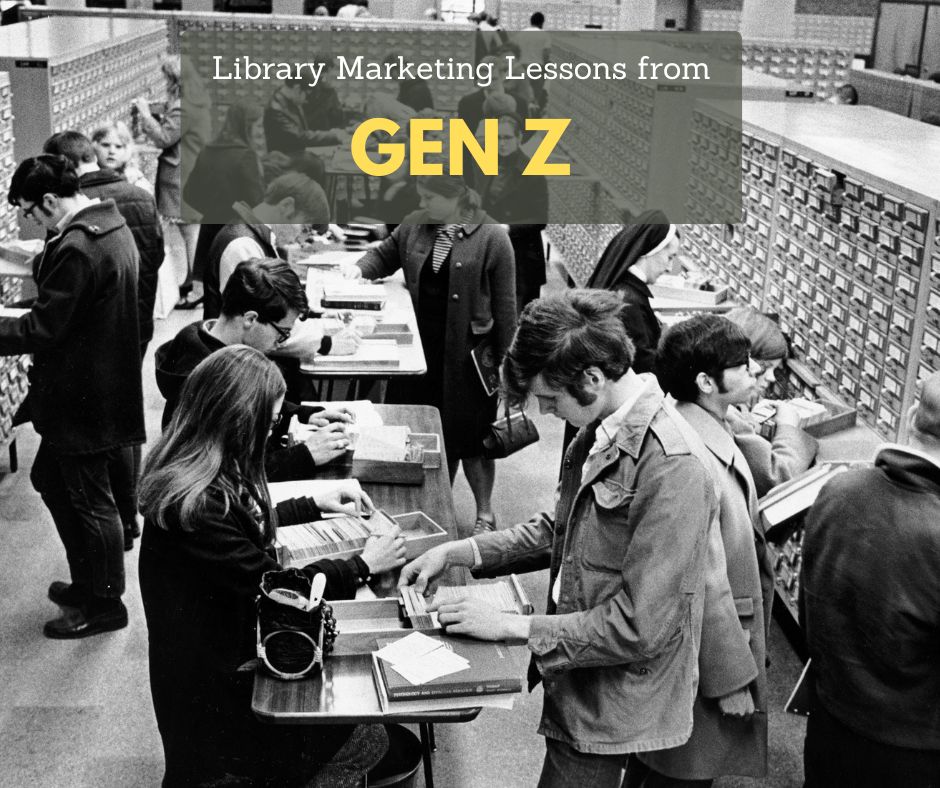
Photo courtesy of Cincinnati and Hamilton County Library
Your answers will help shape the blog posts, videos, and resources I create for library marketers in 2027.
For the past 11 years, I’ve asked library staff who work on marketing and promotion to share what’s working and what isn’t working for their library. But this year, I wanted to get more granular and provide results that help libraries improve their marketing.
To do that, I crowdsourced questions from library marketers and communicators, and some of the best ideas made it into this yearโs State of Library Marketing Survey.
That makes this yearโs survey especially meaningful to me because these arenโt just my questions. Theyโre questions our library marketing community said they want answered.
If you work in library marketing, communications, outreach, social media, programming, or any other role that involves promoting your library, Iโd love to have your perspective. The survey takes about 7โ10 minutes, and the results will be published on January 4, 2027.
Subscribe to this blog, and youโll receive an email whenever I post. To do that, enter your email address and click on the โFollowโ button in the lower left-hand corner of the page. You can also follow me on the following social media platforms:
Photo courtesy of Cincinnati & Hamilton Public Library
For years, library staff and library marketers have worried about reaching Generation Z, the generation roughly born between 1997 and 2012. Currently, this group is between the ages of 14 and 29.
We’ve been asking ourselves the same questions (myself included): How do you reach people who have grown up with smartphones? How do you compete with TikTok, YouTube, streaming services, AI, and an endless supply of digital entertainment? Does this generation have attention spans so short that nothing we create will stick with them?
New research suggests we may have been worried about the wrong thing.
A Library Journal analysis of nationwide survey data contains encouraging news. Public library use among Gen Z has increased significantly since 2022, and many of the assumptions we’ve made about young adults simply aren’t true.
This study shows that Gen Z cares deeply about libraries. (Hooray!) They also reveal several opportunities for library staff and library marketers.
Here are the top five takeaways from the analysis.
Gen Z use of libraries is increasing
I think we should print this statistic out and put it in every staff workroom in every library!
67 percent of Gen Z respondents reported visiting a public library in the past year. That’s a dramatic increase from 54 percent just three years earlier.
That’s pretty amazing. Let it soak in for a second.
This is the first generation raised entirely in the digital age. They have instant access to entertainment and information. Yet more than two-thirds are still visiting and using the public library.
Books are still the gateway
One of my favorite findings from the research is that books remain central to the relationship between Gen Z and libraries.
Libraries ranked just behind bookstores but ahead of Amazon(!) as one of the primary ways Gen Z gets books. Librarian recommendations are also increasingly influential, with more than one-third of Gen Z saying they discover books through librarians.
For years, library marketers have felt pressure to market everything except books. But this research reminds us that books are still one of our strongest brand assets. Instead of treating books as “just another service,” we should recognize them as our biggest marketing opportunity.
Every book recommendation, staff pick, reading list, and display becomes a chance to build trust with a young audience actively looking for guidance.
Discovery doesn’t always happen where we think
The study also reinforces something I’ve written about before. People don’t simply wake up and decide to visit the library.
Discovery happens through many different touchpoints. Sometimes it’s BookTok. Sometimes it’s a friend. Sometimes it’s attending one event and falling in love with the library.
Marketing doesn’t create library users overnight. Marketing creates hundreds of small moments of awareness that eventually add up to a visit.
Gen Z users have one thing in common with older generations of library users
The report also uncovered a familiar problem. Even among Gen Z library users, awareness of other services offered by the library besides books remains surprisingly low.
That means the phrase that’s the nemesis of every library marketer, “Wait…the library has that?” may also be uttered by this young generation.
I know this can feel like a marketing failure. But here’s how I look at it: Do you know everything that your local grocery store carries? Probably not! And that’s okay.
You go to the store to buy the things you want or need. And when you want something new or different from your regular order, you likely search by asking an employee or pulling up the store’s app or website.
It’s unrealistic, in my opinion, to expect the public to know all your library’s services. So, let’s work on making the search element as good as possible.
Can folks easily find things on your website or app? Does your staff know about all the things available at your library? (The answer you get from staff might surprise you!)
Gen Z wants authenticity, not perfection
While the survey focused on library use, it aligns with broader trends we’ve seen in digital marketing.
Gen Z responds to authenticity. They value recommendations from real people. They appreciate transparency. They trust creators more than institutions.
Fortunately, libraries have something most brands would love to have: Humans who genuinely love helping others. That’s your competitive advantage.
Instead of relying exclusively on polished graphics and promotional language, show off your staff.
Film a librarian recommending their favorite mystery novel. Record someone unpacking new books. Capture genuine moments during programs. Introduce the faces behind your services.
People connect with people. Libraries just happen to employ a lot of wonderful ones.
What library marketers should do now
Reading this research, it’s clear that to win with this generation, we should double down on what already works.
That means:
Keep marketing books. They’re still one of your strongest draws.
Make librarian expertise visible through videos, blogs, newsletters, and social media.
Look for opportunities to explain your other services and don’t worry if library users can’t name everything you offer.
Show real staff interacting with real patrons.
Remember that one promotional piece rarely changes behavior. Consistent storytelling does.
Final thought
Every generation wants to belong somewhere. Every generation wants recommendations they can trust. Every generation wants spaces that feel welcoming
Marketing is constantly evolving, but human behavior doesn’t change nearly as much as we think.
That’s why I think this study is so encouraging. It reminds us that libraries remain incredibly relevant even to the generation that grew up with the internet in their pocket. And that’s something we can build on.
Subscribe to this blog, and youโll receive an email whenever I post. To do that, enter your email address and click on the โFollowโ button in the lower left-hand corner of the page. You can also follow me on the following social media platforms:
Photo courtesy Cincinnati and Hamilton County Public Library
To be honest, I’m not a huge fan of New Year’s Day celebrations. I am usually in bed and fast asleep by the time the ball drops.
But I do feel a certain kind of hope as I wake up on January 1st every year. Itโs an opportunity to reflect on the past year and set new goals for the next 12 months.
And so, I use that day to write this post, revealing the results of the annual State of Library Marketing survey. Your answers help me plan Super Library Marketing content and episodes of The Library Marketing Show for 2026
Here are the big takeaways from this year’s survey results:
Increasing physical visits is the most important goal for more library marketers.
Time and capacity are the biggest challenges library marketers face.
Frustration with social media effectiveness continued to grow.
Formal marketing planning remains elusive for nearly half of the respondents.
Facebook and Instagram are nearly tied for promotional use by libraries.
Most library marketers either have a budget of $5000 or more or no budget at all.
Basic methodology
The survey was fielded in September 2025 and received 125 total responses, a 15 percent increase in responses over 2024. Questions included multiple-choice and open-ended items about platforms, goals, budgets, planning, evaluation cadence, AI usage, and the biggest challenges facing library marketers.
Who responded
86 percent work at a public library.
8 percent work at an academic or university library.
2 percent work at some other kind of library.
Size of libraries
38 percent serve a population of 25,000 or less.
26 percent serve a population between 25,000 and 50,000.
14 percent serve a population between 50,000 and 100,000.
8 percent serve a population between 100,000 and 250,000.
The rest work at a large library.
Marketing experience and workload
88 percent of the respondents to this survey report having three or more years of experience.
60 percent of respondents say promotion is one of many responsibilities they have.
40 percent are working solely on library marketing.
Social media platforms used by libraries in order of popularity
Facebook
Instagram
YouTube
LinkedIn
TikTok
Threads
X
Budgets
More than $5,000: 32 percent
No budget: 22.4 percent
$1,000โ$5,000: 16 percent
Not certain: 16 percent
$500โ$1,000: 8.8 percent
$100โ$500: 4.8 percent
Top goals for the next 12 months
Drive visits to the physical library location.
Reach non-patrons.
Drive the use of services.
Increase program attendance.
How effective do libraries consider their promotions?
68.8 percent say somewhat effective.
12 percent say very effective.
18.4 percent say somewhat effective, not very effective, or not effective at all.
The top five most pressing challenges for library promotion
#1: Time & capacity
41 percent of respondents stated they feel they lack the time or resources needed to perform their jobs effectively. This is a huge shift from 2025, when staff buy-in was ranked as the number one challenge.
As one person put it, โI’m often racing to complete all my tasks. I’m the only marketing person. I try to prioritize the items that are most important. It can be a challenge.โ
Another said, “With additional resources, we could expand our efforts significantly. We are constantly busy, and despite an award-winning year of results, there remains the perception that we could always do more.”
But that respondent also shared some advice that I thought was profound.
โWeโve had to accept that marketing will always be a balancing act between capacity, expectations, and impact. At the end of the day, we focus on doing the most we can with the resources we have and ensuring that our efforts deliver real value to the library and the community.
I can assure you that marketers in many other industries with larger staff and budgets feel like they are also always short of time and money. But it shouldnโt be that way, should it? We canโt do our best work when we are stressed, burned out, and chasing success with our hair on fire.
So, this year, Iโll be looking for ways to help you prioritize projects, reuse content, and convince your leadership and coworkers to give you the resources you need.
#2: Social media effectiveness
This challenge rose from the fifth biggest challenge in 2025 to the second spot in 2026.
You can hear the frustration in this respondentโs comment: โThe ever-changing algorithms! What worked in the past is dead, and we constantly have to learn new things.โ ย
Another said, โI wish we had more time for the team to get training, learn from experts, etc. Also, a budget for apps and tools to make social media content creation easier and more efficient.โ
To be honest, it is very hard to be successful on social media. You may have noticed I tried in 2025 to share more tips about ways to promote the library that did not involve social media. However, some of my most popular videos and posts are about social media.
You are telling me you need to use it, and it needs to work. I hear you, and Iโll focus more on social media effectiveness in 2026.
#3: Budget and resources
I often wonder if anyone ever really has enough money to do the marketing they want to do. I suspect the answer is no. But for libraries, and especially in 2025, the money, or lack thereof, was a huge issue.
With cuts to funding and the closure of the Institute of Museum and Library Services (and all its grants), U.S. libraries in particular faced huge difficulties finding the money to market effectively.
In 2026, Iโll continue to provide tips that libraries can use without spending a fortune.
#4: Staff and leadership buy-in
I can sense sheer frustration from many respondents that their coworkers and their bosses donโt understand or support their efforts.
โStaff view participating in marketing efforts as someone else’s job, and not important,โ said one respondent. โWe have a social media committee that writes blog posts and manages our social media platforms, but they see very little value in posting to social media and aren’t active in social media in their personal lives.โ
Said another, โThere is only so much you can do from one department. In the end, the branches must facilitate the promotions and participate.”
“Also, there is still an old-school mentality of marketing in the branches that does not conform to the professional branding needed to elevate marketing throughout the library system.”
โMy challenges continue to be the lack of director-level support for formalizing a process to incorporate a broader focus on non-program offerings in our publicity campaigns,โ laments a third marketer.
Iโll continue to look for ways to offer tips and strategies for library marketers facing this problem, which is related to the final big challengeโฆ
#5: Planning and strategy
Itโs difficult for library marketers to know what to focus on when there is no overall plan or strategy for the promotions or for the library, in some cases.
In fact, 47 percent of respondents said they have no formal marketing plan to follow. And even when they have a plan, library marketers face challenges without someone at the helm directing everyone and keeping the focus clear.
โWe have one plan, but different people do it differently,โ lamented one respondent. โThere are a lot of different skill sets and thoughts about marketing. It can be hard to try to get some on board.โ
Another shared this wish for 2026: โConvincing management that a strategy we all adhere to really would be more effective than being spontaneous.โ
Look for more posts and videos in 2026 about how to convince senior leaders to create a strategy and, if that doesnโt work, how to make your own plan!
How libraries decide what to promote
When asked how they choose which programs, services, or resources to highlight, respondents revealed a mix of strategy and necessity. About a quarter said decisions are anchored in strategic plans or leadership priorities, often guided by directors, committees, or formal marketing calendars.
Another 25 percent rely heavily onย usage data and registration numbers, giving extra attention to underused services or events with low signups. Cost plays a big role, too. Highโinvestment programs, outside presenters, and grantโfunded initiatives often rise to the top.
Many libraries aim for fairness by rotating coverage across branches and age groups, while others admit choices are still adโhoc or driven by staff requests.
A smaller but notable group prioritizes seasonal themes and cultural relevance, trying promotions to holidays or trending topics.
So, while some libraries have formal frameworks, many are still juggling competing priorities and making reactive decisions when time is short.
Lessons that changed marketing approaches
I asked a new question this year: What’s one thing you learned this year that has changed your approach to marketing and promotions?
The most common answer was rethinking social media volume. Many library marketers learned that posting less, but with more intention, can boost engagement and free up time for higherโimpact tactics.
Others embraced email segmentation and onboarding email series.
Video remains a priority, with several respondents focusing on shortโform content while acknowledging capacity limits.
Partnerships stood out as another bright spot: collaborating with schools, local organizations, or influencers amplified reach and built trust.
Interestingly, AI sparked mixed reactions. Some respondents experimented and found it unreliable, while others leaned on it for editing and idea generation.
Suggestions for improving Super Library Marketing and “The Library Marketing Show.”
I also use this survey to get feedback on what Iโm doing now and how I can improve! Here are some suggestions that Iโd like to respond to.
โMore examples or case studies from libraries in different regions and cultural settings, especially those working with multilingual communities or limited resources.โ This is a great idea and one I will work more diligently to fulfill in 2026.
โMaybe highlight some things that DIDN’T work. It both makes failure okay and shows that we can learn when things don’t turn out as we expected.โ Wow, great idea! And Iโll try to find some examples for you.
โI appreciate the transcript you provide. Would it be too hard to use photos as examples of what you’re talking about during your kudos?โ As soon as I read this response, I started doing itโฆ I hope you noticed!
โI would just like to see captions on the videos so those of us in common workspaces can watch them without sound.โ I do provide captions on all my videos on YouTube and LinkedIn. To turn it on, click on the โCCโ button in the lower right corner under the video.
โFocus a little bit more on academic libraries and special libraries.โ Great idea–I would love to do more of that in 2026.
Did you know there are seven things that you can learn by taking a marketing survey? I believe library marketers should be taking surveys from brands and companies because you can learn a lot about how to survey!
I’m going to share some tips with you and why I think it’s really important to take those surveys in this episode of The Library Marketing Show.
Plus, we’ll give kudos to a library that received press attention for a unique outreach program.
Do you have a suggestion for a topic for a future episode? Do you want to nominate someone for kudos? Let me know here. Thanks for watching!โ
Subscribe to this blog, and youโll receive an email whenever I post. To do that, enter your email address. Then, click the โFollowโ button in the lower left-hand corner of the page. You can also follow me on the following social media platforms:
Photo courtesy Cincinnati and Hamilton County Public Library
Whenever I am handed a survey, I answer it.
As a marketer, I understand the value of surveys. For the respondent, they are a rare chance to voice their opinion about a product, service, or organization. For the organization, they are a way to gather valuable information and create a better user experience.
For the past 9 years, Iโve sent out a survey once a year filled with questions that help me better understand who you are, and how this blog and The Library Marketing Show can be as helpful to you as possible. The posts and videos directly respond to the questions and concerns you share. For example, the 2025 Social Media Guide to Libraries was planned and published based on the results of this survey.
The struggles and goals of libraries shifted in some major ways this year. As we begin 2025, here is the state of library marketing.โ
Basic methodology
The survey was conducted for two weeks in September 2024. The survey was a mix of multiple-choice and open-ended questions. There were 109 responses.
Type of library
Respondents to the survey consist mainly of public library workers.
84.4 percent of respondents work in a public library.
11 percent work in an academic library.
The remaining 4.5 percent of respondents work in school, special, military, or state libraries.
Size of library
Respondents to the survey come mainly from small and medium-sized libraries.
33 percent serve a population of 25,000 or less.
19.3 percent serve a population between 25,000 and 50,000.
20 percent serve a population between 50,000 and 100,000.
14.7 percent serve a population between 100,000 and 250,000.
The remaining respondents work at a large library.
Marketing experience
Most of the respondents are experienced marketers.
79 percent of respondents say theyโve managed promotions for a library for 3 years or longer.
16.5 percent have worked in library marketing for 1-2 years.
4.5 percent said they have worked for less than 12 months in library marketing.
Time spent on library marketing
Half the respondents to this yearโs survey say marketing the library is their primary job function. The other half say marketing is just one of many responsibilities they must complete.
Top five most pressing questions or concerns
#1: Staff and library leadership buy-in
The survey respondents this year identified struggles with other staff members as the most common issue. Library marketers specifically report having difficulties in getting their supervisors and co-workers to understand their roles. They find it challenging to communicate the value of their work and their expertise in library promotions.
โI have to provide a lot of education/context for them to understand why they should take marketing seriously,โ said one respondent. โI suspect that, because we are a small library/community, they feel it’s not necessary.
Another respondent asked, โOne of the biggest challenges is staff expecting the level of marketing for something will dictate how successful it will be. Everyone (including the library board) has their opinions about how marketing should be handled and are constantly pulling us in different directions with their own priorities. We end up spending a lot of time doing things we don’t think is a good thing to focus on, leaving us little time to work on what we think or know will be better.โ
And yet a third respondent told me, โStaff expect us to create posters and Social media posts for every program but they’re also creating programs that the community didn’t ask for. So, when no one registers, marketing gets blamed. You have to have some tough skin to work in library marketing because everyone thinks they’re a better marketer and everyone is a critic.โ
An academic library marketer said, โThe university marketing department has completely shut down the library social media accounts and we cannot send mass emails. All print materials must be approved and abide by the campus brand book. We use a university portal to post announcements of library events and highlight a library database subscription or collection. We are cultivating advocacy efforts among library student workers to use their own dept/program email groups to share library information.โ Great idea!
#2: Budget
Iโm not surprised that this came up as a frequent problem this year. In my conversations with libraries, the budget has once again become a critical worry, as local, state, and federal lawmakers cut money from public services in the U.S., Canada, the UK, and Australia. (Jerks!)
One respondent said, โIt’s always a challenge to get experienced marketing/graphic design professionals to work for a library salary.โ
Said another, โWe’re a small library and most of our promotional efforts rely on us finding ways to do it without cost or coming up with sponsors for special promotional materials.”
#3: Time
We never have enough time to do all the things we need to do to reach our target audiences. And for those of you who work at a small library, this is especially problematic.
โI’m pretty much a one-person team, with one part-time assistant who does most of the print promotions,โ said one respondent. โSo, trying to do everything (website, email, social media, graphic design, etc.) solo is challenging. Really hard to do a really good job at all the things at once.โ
#4: Reaching non-users
The age-old problem of how to reach people who donโt use the library continues to perplex library marketers. Said one frustrated respondent,โ It’s easier for people not to attend programs, it’s easier for people to stay home instead of coming to the library. How can we motivate them to want to come?โ
Another told me they struggle with… โreaching people outside of the building and convincing them that they are missing out on wonderful free programs and services, great materials, and saving money.โ
#5: Social media
Respondents shared frustration with changing social media algorithms and the lack of engagement on the platforms where they post.
โFacebook is better at reaching patrons in our specific area, but fewer people are using it,โ said one respondent. โInstagram isn’t working for us at all. I don’t have the bandwidth for more social media platforms at this time.โ
Said another, โThere are now way too many social media channels while traditional media is shrinking. We can’t be on every platform and do it well.โ
A third respondent said, โI find social media to be less and less effective for promoting events and general information so I’m posting less often, although that’s not necessarily a bad thing since I can then dedicate that extra time to other, more useful tasks.โ
Other concerns
AI, project management, fighting for relevancy, and keeping up with trends were also mentioned by respondents as topics of concern.
Social media use
Here is the percentage of libraries using specific social media platforms, according to the survey respondents.
Facebook: 98 percent
Instagram: 97 percent
YouTube: 67 percent
LinkedIn: 40 percent
Twitter/X: 22 percent
TikTok: 20 percent
Pinterest: 7 percent
Threads: 7 percent
Of note: The number of libraries using LinkedIn for promotion jumped 19 percent. The number of libraries posting videos to YouTube rose by 13 percent. And the number of libraries using X dropped by 15 percent this year.
Email marketing
I asked my respondents how often their library sends promotional emails.
Once a week: 35 percent
Once a month: 33 percent
Several times a week: 14 percent
14 percent of respondents said their library doesnโt send any email at all. Thatโs an increase of 5 percentage points from 2023. Iโm curious: If you are a library that doesnโt send email, can you share a little bit about why in the comments?
The most important library marketing goals
For this yearโs survey, I made a list of the marketing goals I hear most often from libraries. I asked respondents to choose the one goal they most wanted to concentrate on over the next 12 months. Here are the top four answers with their corresponding percentages.
Driving visitors to your physical location, website, or catalog: 27.5 percent.
Reaching non-patrons: 23 percent.
Getting current cardholders to use the library more often: 16.5 percent.
Driving the use of services like databases, Makerspace, Library of Things, etc.: 9 percent.
Use of AI
This year, I added a question to see how libraries are using AI for marketing, if at all. Turns out that most library marketers are NOT using AI. Those who do use AI log on about once a month and get help with developing new ideas and producing or editing text.
Effectiveness of promotions
This year, I asked respondents to gauge how effective their library promotions are. Most respondents, 72.5 percent to be exact, rate their promotions as โSomewhat effective.โ
When asked to give more specific answers about why their marketing is either effective or ineffective, I got lots of insightful and interesting responses.
Here is a sampling of answers from people who ranked their marketing as โineffective.โ
โSocial media marketing is pretty much the only marketing we’re doing and that doesn’t reach enough people.โ
โTiming of emails–too late for patrons to register for events because marketing is sent out the day before. Inconsistency in what is being promoted and what message is being given because of too many people on the team and no direction from leadership. Insistence on only using social media to market (to save money) even though most of our patrons don’t follow us online and many don’t even have internet access at home.โ
โThere has never been a marketing plan before. I am trying to establish one, but it is not valued.โ
โOur Marketing Coordinator does not have a coordinated plan, use social media calendars, or know how to write for todayโs audiences. We arenโt connecting with new or old patrons because there is no defined target audience for any promotions. They throw money at Facebook ads if things arenโt going well. Weโre not sure how to teach that skill and keep them up to speed with the rest of the team, who come across as more experienced because they use social media daily.โ
Here is a sampling of answers from people who ranked their marketing as โvery effective.โ
โPersistence, having time, knowing which audience is where (email vs. Facebook).โ
โI think we are very intentional about our goals and how we are using our tactics to achieve those goals.โ
โAcademic library: Our promotional is a mix of information and fun things. Students, faculty, and staff seem very engaged with our content.โ
โA highly skilled marketing professional leading all levels of communication is imperative to our success. We have a cash budget to purchase paid media and marketing placement.โ
โWe have consistent messaging and branding and a very supportive community.โ
โWe’ve been using special events to reach non-patrons. It’s been largely effective to just get them in the door, offering an experience, courtesy of the library.โ
What to expect from Super Library Marketing this year
Readers asked for more examples of libraries doing effective marketing. I have a whole series of library profiles lined up for this yearโฆ so stay tuned!
Readers also asked for more profiles of libraries outside the United States. I will be looking to find those libraries. A reminder you can message me anytime with suggestions if you see a library outside the United States that would make a good profile.
One reader commented, โI’d love to see more ideas on how to translate general marketing strategies to fit library structures.โ I will continue to try to do this during Library Marketing Show episodes this year.
A reader said, โI’d love for you to discuss WCAG 2.1 Level AA and the new ADA law that was passed. Like– how do we implement (beyond just alt text)?โ I will be sharing information on that in the coming months.
And finally, someone said, โI always feel like I need to up my lip color game when I watch an episode of The Library Marketing Show. It’s inspiring!โ Thank you! I wear Divine Wine #695 by Maybelline.
Subscribe to this blog and youโll receive an email whenever I post. To do that, enter your email address and click on the โFollowโ button in the lower left-hand corner of the page. You can also follow me on the following social media platforms:
You asked for it and this week, Iโm sharing the results of the latest Super Library Marketing Survey.
Surveys are an effective form of market research. They illuminate the services that are needed to help a target audience. And you, my dear readers, are my target audience.
For the past 8 years, Iโve asked questions that help me get a better sense of who you are, and how this blog and The Library Marketing Show can be as helpful to you as possible. The Monday posts and Wednesday videos are direct responses to the questions and concerns you share in the survey.
The struggles and goals of libraries shifted in some major ways. As we begin 2024, here is the state of library marketing.โ
Basic methodology
The survey was conducted for two weeks in early September 2023. The survey response rate rose this year by a whopping 32 percent. The survey was a mix of multiple-choice and open-ended questions.
Type of library
Respondents to the survey consist mainly of public library workers.
86.6 percent of respondents work in a public library.
7.1 percent work in an academic library.
The remaining 6.3 percent of respondents work in school, special, or state libraries.
Marketing experience
Most of the respondents are experienced marketers.
69.3 percent of respondents say theyโve been managing promotions for 3 years or longer.
19.7 percent have been doing marketing for 1-2 years.
The remaining 11 percent said they have been in promotions for less than 12 months.
Time spent on library marketing
The average respondent estimated they spent about 60 percent of their daily work time on marketing and promotions. This means that many of you are also managing other job duties, such as programming and collection development.
Marketing as a priority
Every year, I ask respondents to tell me if their library has a dedicated marketing department. A marketing department can consist of one or more people, whose sole job role is marketing. The presence of a marketing department is a clear indication of whether marketing is a priority for senior leaders.
This year, the results were:
50.4 percent said no.
49.6 percent said yes.
The number of libraries with a dedicated marketing department fell two percentage points this year. Thatโs not enough to call it a trend but I will keep an eye on this.
The most pressing question or concern
Last year, the top concerns of my readers were how to reach new users, storytelling for marketing, email marketing best practices, and budgeting.
This year, the answers can be broken down by five categories.
How to reach new users
Respondents said they struggled to promote to community members through traditional means, like newspapers, as well as on social media. Several named specific target audiences they hope to reach, including young adults, parents and caregivers of young children, and non-English speaking communities.
One respondent said, โHow do we make sure we are effectively reaching patrons and members of the community without overdoing it or over-communicating? I am a one-person marketing team for my library.โ
Time
Respondents shared frustration over a lack of time to adequately plan, create, and analyze their marketing. They struggle with the coordination of tasks, especially when working with other library staff. Balancing priorities and goals is difficult.
Said one respondent, โWe’re a progressive system that’s constantly adding new things (which is great) but it seems like there’s never enough time or space to share it all and get real awareness out there.โ
Buy-in and strategy
Many of the respondents said they are struggling to get supervisors and co-workers to understand their jobs: the difficult parts of marketing, the time this work takes, and the value of doing it right.
โThere are not enough marketers for everything Admin wants us to do,โ said one respondent. โOthers don’t understand how many priorities we’re trying to balance or how time-consuming our work is. I feel like some coworkers think we’re doing our jobs badly, but they don’t understand our jobs.โ
Another respondent asked, โHow can I best unify staff? My biggest challenge is encouraging everyone to follow our style guide or at least inform themselves about marketing best practices.โ
Social media
Respondents shared frustration with changing social media algorithms and the burnout that can happen. โTheyโre showing more Reels, then they are showing still pictures, then they arenโt showing unless there are commentsโฆyou know what I mean?โ asked one respondent.
Other concerns
Content creation, audience segmentation, reaching volunteers, burnout, budgeting, metrics, competing with nearby libraries for attention, and AI all round out the list of concerns this year for library marketers.
These topics will all be addressed this year.
Social media use
Here is the percentage of libraries using specific social media platforms, according to the survey respondents. Of note was the jump in Facebook and Instagram use this year, as many libraries moved away from Twitter/X.
Facebook: 97 percent
Instagram: 92 percent
YouTube: 54 percent
Twitter/X: 38 percent
LinkedIn: 21 percent
TikTok: 16 percent
Pinterest: 9 percent
Threads: 6 percent
In the open-ended questions, many of you said you rely on this blog for social media news and analysis. And I will continue to provide that this year.
However, I have made the decision not to promote the blog on Twitter/X anymore and will not cover any best practices for that platform this year, unless something drastic changes.
Email marketing
I asked my respondents how often their library sends promotional emails.
The big takeaway: more of you are sending emails. Only 9 percent of respondents said their library doesnโt send any email at all. Thatโs down ten percentage points from 2022!
Here is how the rest of the sending breaks down:
Once a month: 38 percent
Once a week: 36 percent
Several times a week: 12 percent
The most important library goals
Last year, I asked respondents if they set goals. This year, I got more specific. I asked respondents to check all that applied. Here is how the results break down.
Driving visitors to your physical location, website, or catalog: 76 percent.
Increasing program attendance: 67 percent.
Reaching non-patrons: 63 percent.
Getting current cardholders to use the library more often: 60 percent.
Driving the use of services like databases, Makerspace, Library of Things, etc.: 57 percent.
Advocating for the freedom to read: 18 percent.
Facing book challenges
This year, I added a question asking respondents if theyโd faced a book challenge in the past 12 months.
55 percent said no.
30 percent said yes.
15 percent were not certain.
And though most readers said they hadnโt been targeted; this issue does loom large over the work you are doing for promotions.
โOur library is choosing to keep our head down on the book-banning issue, hoping no one will notice or bring it up,โ reports one respondent.
Says another, โWeโve had to be careful about how we promote everything. For example, we used to hand out these fun rainbow-colored pens to kids but stopped because we were called groomers during the book challenges. We have also been having a rash of bomb threats to the libraries in our area which has also affected the feeling of security with our staff. I feel like my job is less about promoting programs and services and more about crisis management these days and how to communicate feelings of safety etc. This is not something I was really trained to do so it can feel overwhelming.โ
More changes for Super Library Marketing this year
Readers asked for posts about how to create interactive and impactful community presentations to outside groups and tips for print promotions. Iโll cover these in the next year.
Some want the videos to be released as podcasts on Spotify. I will consider that if time and money allow.
Many of you requested more advanced subject matter in the blog posts and videos. I will try to do more of that this year.
Iโm also hoping to more profile school libraries and special libraries this year. Do you work at a school or special library and have a library marketing success story to share? Contact me here.
I always try to share tips and strategies for library marketers who wear multiple hats, and that will continue in 2024.
Finally, someone asked for subtitles for the videos. This year, I started providing captions for all my videos on YouTube and LinkedIn. Click the โCCโ icon on the screen to see the captions.
The CC button circled in white is where you click for captions on YouTube.
Subscribe to this blog and youโll receive an email whenever I post. To do that, enter your email address and click on the โFollowโ button in the lower left-hand corner of the page. You can also follow me on the following social media platforms:
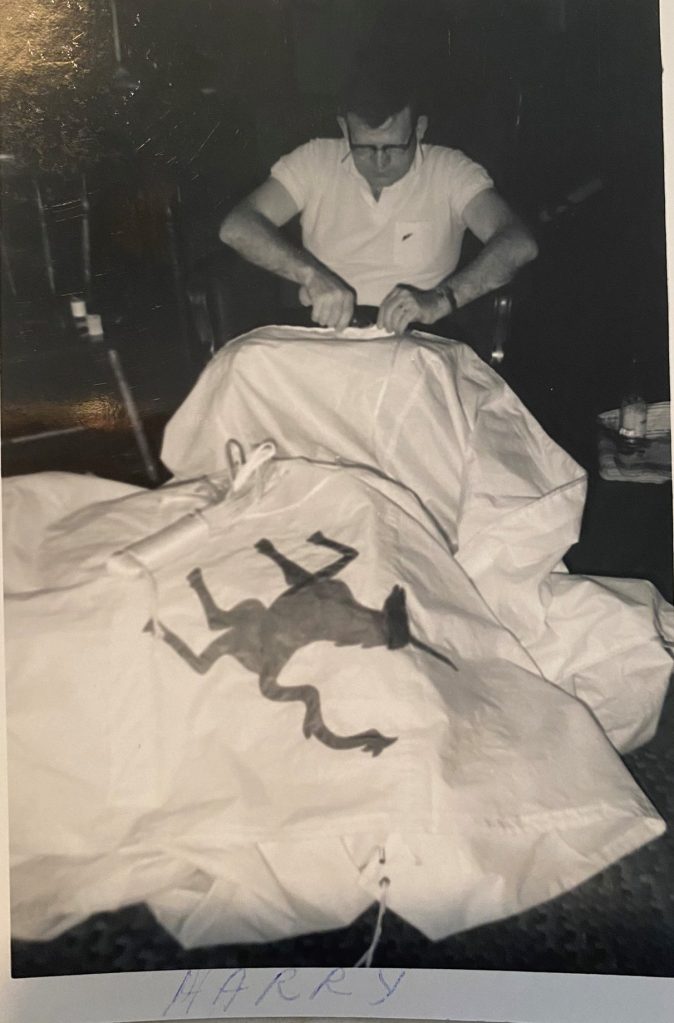
Photo courtesy Cincinnati and Hamilton County Public Library
Jenie Lahmannโs parents were DIYers before it was in style.
Growing up in Richmond, Indianaโ”a fun midwestern town with rich history and endless green spaces to exploreโ, her family made weekly visits to Morrisson-Reeves Library (MRL) to indulge their need to craft and create.
โDad would go to the Do-It-Yourself section and Mom would get cookbooks and the latest Erma Bombeck writings,โ recalls Jenie. โMy brother Pat and I were off to explore the shelves in the Childrenโs Department. We always left the library with an armful of books.โ
โMy father was a self-taught craftsman and could build anything. He drew plans for making a sailboat from library books and reference librarian’s tips. From concept to completion, he used the library every step of the way. He even sewed the sails with help from Momโs sewing talents. Itโs incredible what you can learn from the library!โ
The infamous sailboat
Jenie’s dad making sails
Jenie started working at the library in high school, following in her big brotherโs footsteps. She spent a year as a shelver. Then a manager started to mentor her on print promotion. โWe created bookmarks, booklets, and other helpful printed tools for patrons before the age of library digitization,โ explains Jenie.
โThe first day, I was so nervous I fainted in her office, and we formed a strong friendship after that. She trained me in using all the printing machines and developed a trained eye for layout and design.โ
Jenie now works as Marketing and Communications Manager for the library. This year, she co-led a team of five people during a major project: a survey of their community.
MRL was looking for data to help the library create a five-year strategic plan. They included lots of questions that are standard for libraries. But Jenie says they really wanted to get to the root of what motives their community members.
โWe dug deeper and asked what services they enjoyed, and how their experience was when they walked through the door,โ elaborates Jenie. โWe want to see how we can improve our services to best meet our changing communityโs needs and to help enrich their lives.”
“We asked them to prioritize a list of eight services we are thinking of adding or expanding upon. We asked them to rate what type of programs they wanted to see, what made them happy to use the library, and what didnโt work for them.โ
MRL partnered with a local business consulting company to help them formulate the survey. Library staff met over the course of 6 weeks and looked at previous library surveys to determine which questions to ask. They added specific questions based on how often the community members used the library.
โIt was difficult to formulate the questions while keeping in mind the end goal of having data we could use to formulate the BIG Strategic Plan,โ confesses Jenie.
Jenie was kind enough to share the final survey with us.
The library released the survey into the world for a three-week stretch, accompanied by a carefully orchestrated plan to ensure they got the survey in front of as many community members as possible.
โFirst, we created a landing page on the libraryโs website,โ explains Jenie. โIt was the hub for all the content and links. Consistent graphics and wording were used.โ
โWe talked on radio programs, developed videos, e-newsletters, postcards with QR codes, and social media campaigns. We had staffers reach out to their contacts to ask them to fill out the survey personally.”
“The survey was also offered in Spanish. We canvased apartments, churches, and social groups too.โ
MRL had a goal of 500 responses. But get this: they more than doubled their response rate goal, gathering 1,104 survey responses! About 11 percent of responses came from paper copies. The rest were filed online through a Survey Monkey page.
However, the survey wasnโt the only tactic MRL used to make decisions for their strategic plan. Along with their business consulting firm partner, MRL conducted focus groups. They gathered teens, parents of teens, preschooler parents, senior citizens, community influencers, community partners, and potential community partners.
These small groups gave robust input that was combined with the survey data to give the library an overarching sense of what their community wants and needs from the library.
โIt was enlightening news that our regular library users love us,โ exclaims Jenie. โWe heard from many people who said they donโt know about library services beyond books and storytimes.โ
โWe heard that many people get their library info from e-mailed newsletters. Many people suggested that we needed to improve our message through marketing. Tough news to hear for me, but we see it as an opportunity to grow and reach people in new ways.โ
โThe main interests in the library were gathering spaces, a small business resource center, performing arts, and DIY maker spaces. People may not have access to these free services elsewhere and seek the library for these things.โ
โA big surprise was about weeding. Many patrons donโt know how or why we weed books from the library. We use library standards for weeding, but weโll need to do a better job of explaining that to our patrons.โ
Jenie says if she could do anything differently, it would be to make the survey shorter. MRLโs questions took 15 minutes to complete.
Her advice for any library looking to conduct a community-wide survey such as this is to define your end goal. โSpend time formulating your questions for the outcome data you are seeking,โ advises Jenie.
โHaving a few narrative data entry questions and the rest with a rating scale can prove to make the data processing task easily graphed or charted to show trends and outcomes. Test the digital survey on mobile, desktop, and other digital devices.โ
Jenie and the folks at MRL are now discussing a campaign idea they got from the survey, as well as an origin story campaign, asking library users to explain why they use the library, with a superhero theme.
Subscribe to this blog and youโll receive an email whenever I post. To do that, enter your email address and click on the โFollowโ button in the lower left-hand corner of the page. You can also follow me on the following social media platforms:

I admit it… sometimes, when I hear a marketer use the word “engagement,” I sigh. We throw that term around quite a bit.
Community engagement. Patron engagement. Email engagement. And lately, I’ve been thinking what does that actually mean?
Then, as if she was reading my mind, one of my favorite marketing experts sent out a newsletter with some details on how to really talk about and think about engagement. We’ll unpack that advice in this episode.
Plus we give away kudos! Watch the video to find out which library is being recognized.
Do you have a suggestion for a topic for a future episode? Want to nominate someone for kudos? Let me know in the comments.
Thanks for watching!
Subscribe to this blog and youโll receive an email whenever I post. To do that, enteryour email addressand click on the โFollowโ button in the lower left-hand corner of the page. You can also follow me on the following social media platforms: