
Search

Super Library Marketing: Practical Tips and Ideas for Library Promotion

Tag

brand awareness

How to Build a Cohesive Library Brand Across Your Entire System

Black-and-white photo of two women standing behind a library circulation desk, surrounded by shelves of books and large windows. Overlaid text reads โ€œHow to Build Your LIBRARY BRAND!โ€ with โ€œLibrary Brand!โ€ in bold orange lettering.
Photo courtesy Cincinnati & Hamilton County Public Library

In this post, I walked you through what branding really means in a library: Itโ€™s the consistent experience people have every time they interact with you.

Now comes the harder question: How do you actually make that happen across an entire library system?ย Believe me, I know what a struggle this can be!

The Real Problem Isnโ€™t Branding. Itโ€™s Alignment.

Most library marketers I work with tell me they struggle with branding because the library system is very siloed. Libraries are collaborative by nature but decentralized in structure.

Most library systems have:

  • Multiple branches
  • Multiple departments (youth, adult, outreach, etc.)
  • Staff with different backgrounds and comfort levels with marketing

So people do what they think is best in the moment. And over time, that creates inconsistency.

  • Each department and branch creates its own promotional materials
  • Messaging varies depending on who writes it
  • Tone and styleย vary depending on who writes it

No one is intentionally trying to dilute the brand. But no one is working from the same playbook, either.

The Fix: Give Staff Clarity, Not Control

Hereโ€™s where many branding efforts go off track. Leadership tries to โ€œfixโ€ inconsistency by:

  • Locking down templates
  • Requiring approvals for everything
  • Centralizing all marketing decisions

That might create consistency. But it also creates bottlenecks, frustration, and disengagement. It also lowers staff morale, because it appears that leaders don’t trust branch or department staff to do their jobs.

Instead, what staff really need is clarity.

The 2 Things Every Staff Member Needs to Know

If you want your entire library to create promotion using one brand, every staff member, regardless of their role, should be able to answer these two questions:

1. Who Are We?

Iโ€™m not talking about reciting your mission statement. Iโ€™m talking about your libraryโ€™s personality, tone, and voice. 

Are you:

  • Friendly and conversational?
  • Educational and authoritative?
  • Playful and creative?

If staff donโ€™t understand this, theyโ€™ll default to their own voice.

2. Who Are We Talking To?

Your audience is not everyone. I know thatโ€™s so hard to understand when youโ€™re working in an organization that aims to serve everyone.

But when you are working on promotions, you have to target a specific audience. So, your staff must be trained to think in specifics.

Who are they hoping to see come through the door as a result of their promotion? Are they looking for:

  • Parents of young children?
  • Job seekers?
  • Lifelong learners?
  • Teens looking for a place to belong?
  • Some other target audience?

When staff can identify the specific people they are trying to reach, their messaging becomes more consistent โ€” naturally

How to Communicate Your Brand to Staff

Your library doesnโ€™t need a 40-page brand guide. Most libraries only need a simple document that includes:

1. Voice Traits (3โ€“5 words)

These are the personality descriptors that guide how your library โ€œsoundsโ€ in writing. For example:

  • Friendly, welcoming, knowledgeable, community-focused
  • Curious, inclusive, encouraging, playful
  • Helpful, clear, approachable, trustworthy

For example, if your library decides its personality descriptor is “helpful, clear, approachable, and trustworthy,” you can tell staff that instead of saying, โ€œPatrons must return materials by the due date“, you’ll say, โ€œJust a heads up… return your items by the due date to avoid any fees.โ€

2. Visual Guidelines (colors, fonts, image style)

These define how your library looks visually across every tactic and channel, including social media, flyers, signage, and your website.

For example, your library might have three colors in your brand palette. Each color likely represents a feeling or emotion that you want your community to experience when they encounter materials from your library.

Let your staff know about the intentionality of your color palette by explaining each color’s associated emotion, like this:

  • Primary: Deep blue (trust, stability). We use this color for promotions about our hours and policies.
  • Secondary: Bright orange (energy, engagement). We use this color for promotions that include a call to action, like signing up or registering for a program.
  • Neutral: Light gray or cream. This color provides us with a clean background for promotions.

Set guidelines for font use. Be sure to lay out which font staff should use for headlines, body text, or as an accent font for special promotions for kids’ programming, summer reading, or other big programs.

Finally, give staff clear direction about the use of photos in your promotions. You may want to indicate that all photos must depict real patrons in one of your branches. (Check out this post about how to do a “stock photo day” to build your library’s cache of photos.)

If photos of real community members are not an option, let staff know what kind of stock photos they may use. For example, you may set guidelines that all staff photos must include:

  • Warm, candid, natural lighting
  • Diverse, inclusive representation
  • Focus on interaction (reading, attending programs, using spaces)

Coming Next

Now that you know how to align your team, thereโ€™s one more big challenge.

How do you create a consistent voice and look without making everything feel rigid and templated?

Your job is not to control every piece of marketing. Your job is to:

  • Set the direction
  • Define the brand clearly
  • Equip your team to execute

Thatโ€™s what weโ€™ll tackle in Part 3, which will publish on May 11.


Want more help?

Branding for Your Library: Stand Out From the Crowd With Smart, Strategic Placement of Yourย Brand

Subscribe to this blog, and youโ€™ll receive an email whenever I post. To do that, enter your email address and click on the โ€œFollowโ€ button in the lower left-hand corner of the page. You can also follow me on the following social media platforms:
Viewer Question: Are Specialty Logos for Services a Good Idea? Here Are the Pros and Cons.

Watch this video now

#LibraryMarketing Show, episode 261

Does it make sense for your library to have separate logos for your main services? It’s a fascinating question sent in by a viewer. I will give you some things to think about before you create a new logo in this episode of the Library Marketing Show.

Plus we’ll give kudos to a library doing something exciting, educational, and informative this election cycle.

Do you have a suggestion for a topic for a future episode? Want to nominate someone for kudos? Let me know here. And thanks for watching!โ€‚

For a transcript of this episode, click here.


Miss the last episode? No worries!

Will I see you soon?

Subscribe to this blog and youโ€™ll receive an email whenever I post. To do that, enter your email address. Then click on the โ€œFollowโ€ button in the lower left-hand corner of the page. You can also follow me on the following social media platforms:

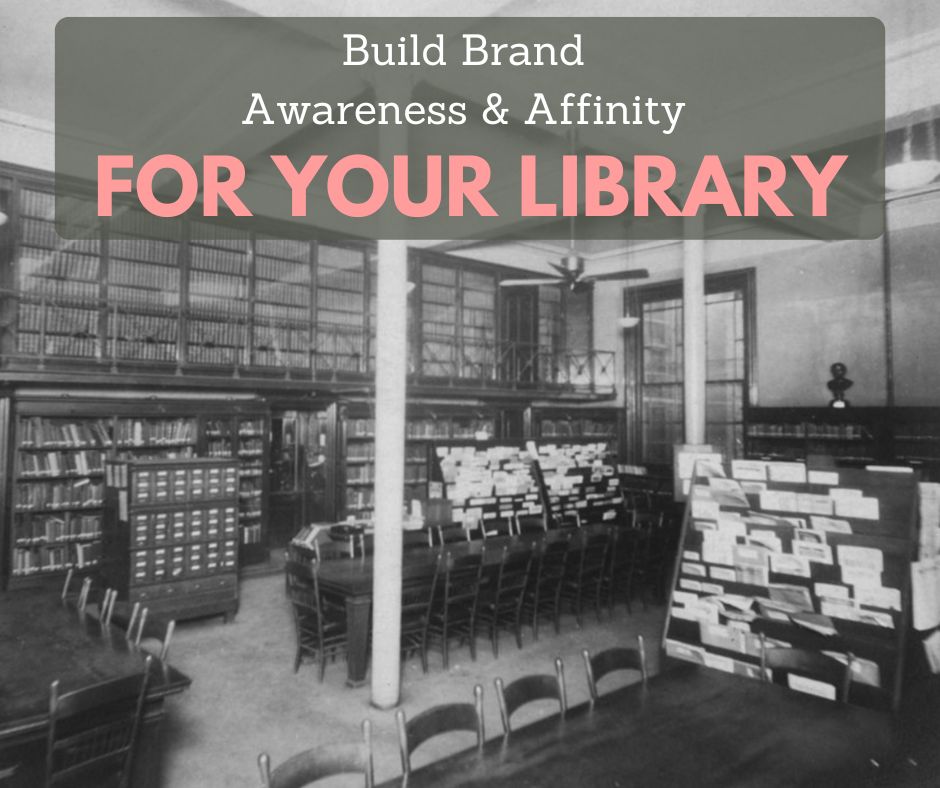
Marketing Done Differently: How To Use the Next Two Months To Build Library Brand Awareness and Affinity

Photo courtesy Public Library of Cincinnati and Hamilton County

My favorite library marketing season is about to begin.

The last two months of the year are when a library marketer must do in-depth work that will strengthen your libraryโ€™s position for the coming year.

Every other business and competitor will be ramping up their sales and discounts as we go into the holiday season. You may be worried that any promotions your library does will get lost in the shuffle.

You should be worried! According to Sprout Social, your audience receives about 2,477 messages per month from retailers between January through October. But in November and December, that number goes up 13 percent to 2,804 messages per month.

Thatโ€™s why I advocate pulling back on your โ€œregularโ€ push promotions during the last two months of the year. Instead, you can stand out by doing something different: focus on using this time to create a deeper connection with your community.

Youโ€™ll do that by strategically building library brand awareness and affinity.

What are brand awareness and brand affinity?

In its simplest terms, brand awareness is the extent to which your community can recall or recognize your library brand, no matter where they run across it. It means your community members know what you stand for and what you have to offer. Brand affinity, by contrast, is building an emotional connection between your library and your community.

Brand awareness and brand affinity are critically important to your library’s success. We want your community to recognize your content. And we want to create a lasting relationship between your library and your community.

When your library has strong brand awareness and brand affinity, your community members will choose to use your library over your competitors. Theyโ€™ll recommend your services to friends and family. And theyโ€™ll support you with funding and volunteerism.

In fact, a study from eMarketer showed that 64 percent of people cite brand values as the primary reason they have a relationship with a particular brand. (BTW, your library is a brand!)

Thatโ€™s why itโ€™s crucial to make brand awareness a top priority for your library marketing over the next two months. Here’s how to do that.

Step #1: Inform, educate, and entertain your community.

The most effective way to build brand awareness and affinity is to position your library as a place that adds value to your community. You do this by helping people solve problems. 

For this to work, youโ€™ll spend 8 weeks strategically educating and informing your audiences. This is called content marketing. It’s a strength that libraries have, and we don’t do this kind of marketing often enough.

Create and release a series of tips for your cardholders on how they can use your library to make their lives a little easier during the holiday. Brainstorm a list of ways your library helps ease the rush and craziness of the holiday season. Then decide on a sequence and schedule for releasing those ideas.

Create the promotional collateral to go with it: bookmarks, graphics for your website, email, social media, and short videos. Then, tell your cardholders you’re going to be helping them out this holiday. Reveal your plans and tell them exactly when you’ll be releasing each tip and on what platform. Create excitement and anticipation, then pay it off with your content.

Your tips can include:

  • Ideas for holiday gifts, recipes, and more–especially if they are literary-themed or items in your library of things that can be tested out before they make a purchase.
  • A special phone line or email inbox where you can take questions from community members who need help picking out a gift, cooking a big meal, or figuring out etiquette questions like which fork to use.
  • Curated lists of collection items for decorating, entertaining, wrapping gifts, and cooking.
  • A quick video tutorial on how to use their card to get free access to Consumer Reports.

Step #2: Promote your mission, vision, and values.

Libraries spend so much time marketing what we do that we donโ€™t often talk about why we do it. In fact, Iโ€™d argue that we take it for granted that our community members know the importance of our work. So, during your two-month brand awareness and affinity campaign, make it a point to talk and promote your libraryโ€™s mission, vision, and values.

Have a staff member or patrons (or both) write a blog post on the impact of the library. Here is a great example. Repurpose those stories for social media posts and print pieces like bookmarks featuring quotes from real-life library users.

You can gather patron stories by asking email subscribers to share how your libraryโ€™s work has impacted their lives. When I worked for the Cincinnati Library, I sent an email to a portion of my cardholder base and asked them to share such a story. Our library received more than 900 responses! I was then able to pick a few of the best stories. Those patrons were more than happy to share them with the world at large.

Step #3: Show the contrast between your library and your competitors.

Start checking your competitors’ websites and ads as soon as they begin their holiday marketing. Figure out what their offers are and how you can counteract those offers with free stuff!

Stark Library, Winnipeg Public Library, Monroe County Public Library, and Brown County Library all are great examples of how this can work.

Step #4: Showcase your staff.

Other companies have employees. Libraries have experts who truly care about the work they are doing and the impact they have on the community.

That’s why your staff is one of your most valuable resources. They are what makes your library stand out from your competitors. Spend the next two months making sure your community understands the value of your staff.

Interview staff about their work, and why they got into this industry. Ask them to share the story of a time when they helped a community member. Then share those stories on your blog, on social media, and in emails. The Lane Library at Stanford University is a great example of how to write a profile.

You can also ask staff members to name their favorite book of the year. Release that as a special end-of-the-year booklist. You can cross-promote these staff picks on your social platforms and include an email message to cardholders. Make sure you ask all staff members to participate… even the cleaning staff!

Step #5: Re-educate your cardholders about all your library has to offer.

Your library should create a series of emails sent to cardholders once a week for the next eight weeks. Those emails will re-introduce your cardholders to the best features of your library. It will inspire them to use their cards again.

To create this campaign, youโ€™ll make two lists. The first will be for the most popular resources at your library. This could include things like your Makerspace, popular storytimes, laptop terminals, or your extensive e-book collection.

Next, make a list of your libraryโ€™s hidden treasures. These may be items or services that you know will solve problems for your community. This list should include things that are unique to your library, like online Homework Help, your small business resources, your vast historical resources, or your Library of Things.

Finally, look at the two lists youโ€™ve created and narrow your focus. You want to highlight the best and most helpful things at your library without overwhelming your recipients. Choose to promote one resource from your list of popular items and one from your list of hidden library treasures for each of the emails you send.


More Advice

The Top Four Reasons To Use Content Marketing To Promote Your Library on Every Platform

Feeling Overworked? Thereโ€™s a Secret Trick to Get More Mileage Out of Your Library Marketing Content!

Subscribe to this blog and youโ€™ll receive an email every time I post. To do that, enter your email address and click on the โ€œFollowโ€ button in the lower left-hand corner of the page.

A WordPress.com Website.

Up ↑