
Search

Super Library Marketing: Practical Tips and Ideas for Library Promotion

Tag

brand marketing

What Branding Really Means in a Library (And Why Most Libraries Get It Wrong)

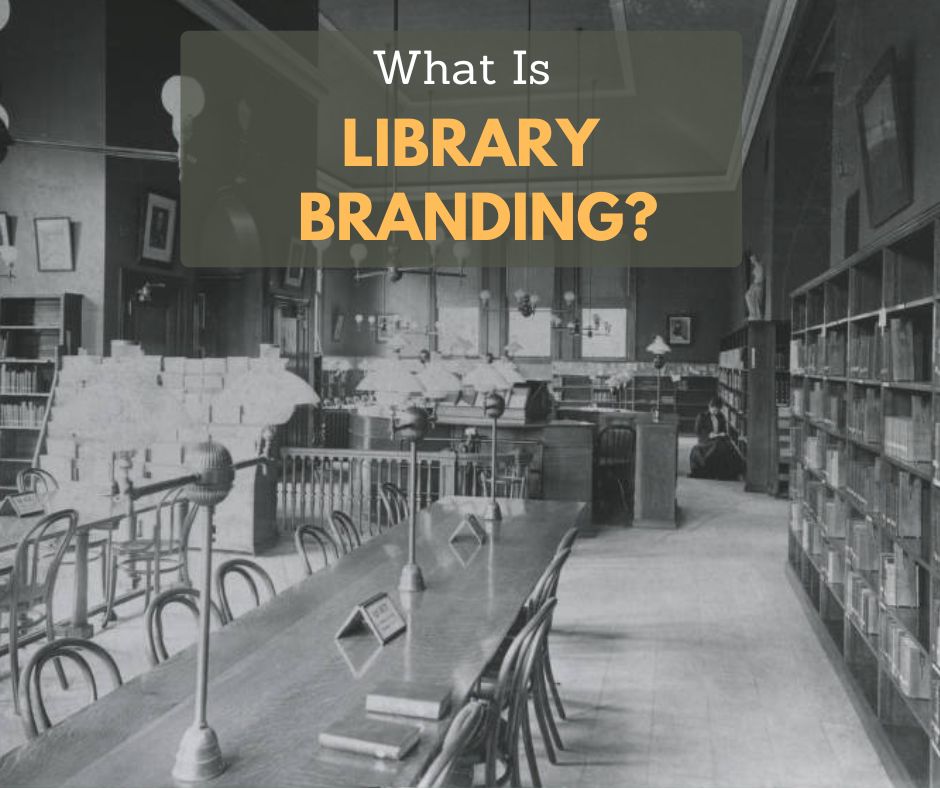
A black-and-white photo of a historic library reading room with long wooden tables, chairs, and bookshelves lining the walls. Desk lamps sit along the tables, and a few people are visible in the background. Overlaid on the image is a translucent box with the text: โ€œWhat Is LIBRARY BRANDING?โ€ with โ€œLibrary Brandingโ€ highlighted in yellow.
Photo courtesy Cincinnati & Hamilton County Public Library

When most libraries talk about branding, theyโ€™re really talking about logos, colors, and templates.

But branding isnโ€™t only what your materials look like.

Itโ€™s how your library feels to the people you serve.

And that experience doesnโ€™t center only on the work that your communications staff does. It comes from every single staff member. This is especially true for small or rural libraries and for large metro libraries. 

A solid library brand will define your library in a crowded world. Itโ€™s the thing that makes people say, โ€œI love my library.โ€

But many libraries struggle with branding. When I asked, โ€œWhat do you need help with?โ€ in the State of Library Marketing survey, one of the most common answers was โ€œbranding.โ€

So, we’re going to tackle that! This is the first in a three-part series all about library branding.ย 

Branding Is Not a Logoย 

Weโ€™ll begin with this concept, because itโ€™s the root of the problem.

Branding is often confused with:

  • Your logo
  • Your color palette
  • Your graphic templates

Those things matter. But they are expressions of your brand, not the brand itself.

In fact, ย research into library branding shows that a libraryโ€™s brand encompasses multiple dimensions tied to user experience, perception, and emotional connection โ€” not just visuals.

That means your libraryโ€™s brand is shaped just as much by a storytime experience, a conversation at the circulation desk, the tone of a Facebook post, or signage in your building as it is by your logo.

Hereโ€™s the truth: Your library already has a brand! People in your community have an existing impression of your library. This is true even if youโ€™ve never written a brand guide, your graphics are inconsistent, and your co-workers all seem to do their own thing when it comes to library promotion.

So, youโ€™re not starting this journey from scratch.

Real Library Examples: When Branding Becomes Part of the Library Experience

One of the best examples of true library branding is the transformation of Rangeview Library District into Anythink Libraries.

Here’s what happened: The Rangeview Library District was considered by its community to be old-fashioned, small, and unappealing. In 2009, as part of its renewed branding efforts, the District changed the names of its libraries to Anythink libraries.

But the library did more than a name and logo change. They renamed every branch. The changed staff job titles to include โ€œConciergeโ€ and โ€œGuide.โ€ They reframed the entire library experience around creativity and curiosity.

It was a complete alignment of experience, language, and culture. And it worked.

The rebranding led to higher circulation and visitor numbers. The system was able to connect with users and pass a levy, which helped them build or renovate libraries. And they were awarded a national Medal for Museum and Library Service.ย ย ย 

My own library, the Cincinnati & Hamilton County Public Library, also went through a rebrand in the last five years. While our name change is not as significant (previously, we were The Public Library of Cincinnati and Hamilton County), we are transforming our connection to the community.

Yes, we created a completely new visual palette. But the core of our new branding is focused on our beliefs, which every library staff member is committed to living out through their work. Our beliefs are:

  • Empathy: We believe in everyoneโ€™s innate value and potential.
  • Enjoyment: We believe there is no prescribed path to knowledge, so why not make the journey fun?
  • Connection: We believe we got farther, together.
  • Community: We believe libraries are incubators of community.

That defined focus on those four beliefs is strengthening the connection our library has to the community, elected officials, and donors. Thatโ€™s the power of branding.

Many libraries have also leaned into branding through physical experience and design. In fact, studies show that libraries are increasingly positioned as community hubs and cultural spaces, with branding tied to how people use and feel in the space, not just what they see.

Branding encompasses everything. The building, the programming, the atmosphere โ€” all of it contributes to the brand.

Where Most Libraries Go Wrong

Most libraries donโ€™t have a branding problem. They have a disconnect problem.

It usually looks like this:

  • Marketing creates one type of message
  • Youth services create another
  • Branches design their own flyers
  • Social media has a completely different tone

This creates a fragmented experience. And from a patronโ€™s perspective, it feels like interacting with multiple different organizations instead of one library system.

So What Is Library Branding?

Hereโ€™s the simplest, most useful definition I can give you:

Your libraryโ€™s brand is the consistent experience people have every time they interact with you.

Branding is not owned by the marketing department. Branding is created by the entire staff.

That means every flyer, every conversation, every program description, every social media post is either strengthening your brand or weakening it.

Coming Next

In the next post on April 27, weโ€™re going to tackle the biggest challenge libraries face when it comes to branding:ย 

How do you actually get an entire library system to act like one brand?

Meanwhile, if your library has worked on branding, Iโ€™d love to hear what worked, what didnโ€™t, and where your staff struggled. You can let me know by commenting below or by emailing me.


Want more help?

Boost Your Biggest Supporters: Branding and Marketing Advice for Your Friends of the Libraryย Group

Subscribe to this blog, and youโ€™ll receive an email whenever I post. To do that, enter your email address and click on the โ€œFollowโ€ button in the lower left-hand corner of the page. You can also follow me on the following social media platforms:
Libraries are Winning the Relevancy War! Why Now is the Perfect Time to Banish Your Fear and Promote Your Books

I have a confession to make.

For more than a year now, I’ve been amid an internal struggle that caused me some anguish. It started when I realized that I was hearing the same phrase from many administrators and staff in public libraries, both here in the U.S. and abroad.

Here’s what I kept hearing, over and over: In order to stay relevant, libraries must change completely.

The fear that the public perceives libraries as old-fashioned and unnecessary is not new. But it seemed to reach a kind of fever pitch last year. Everyone was writing about it. Everyone was talking about. There were whole conference sessions and webinars dedicated to library relevancy.

I thought maybe I was imagining it at first. So, I did what any normal person does when they’re looking for validation. I did a Google search.

I clicked on the first result, “library relevance.” There are 314 million results.

I understand why libraries are worried about relevancy. It’s the media narrative. (For a great perspective on that, read this fabulous opinion piece from Public Libraries Online). It’s also the argument made by those who want to cut funding and services for libraries.

But here’s the thing. The public at large doesn’t think libraries are irrelevant. In fact, they think quite the opposite.

I’m sure you saw the new Gallup poll released this past Friday (Jan. 24, 2020) that shows “Visiting the library remains the most common cultural activity Americans engage in, by far. The average 10.5 trips to the library U.S. adults report taking in 2019 exceeds their participation in eight other common leisure activities.”ย ย 

Public libraries have bought into the notion that we have a brand perception problem. But we don’t. We’re doing a great job. And people see it.

What we have is a fear problem. Public libraries are afraid to market the fact that they have books.

Why? Because they’re terrified that talking about our collection will reinforce a notion that libraries are a dusty, old, unsophisticated repository of classics. They may even believe that marketing the collection will distract people from the other great services that the library offers.

I vehemently disagree.

Libraries should market their collection. In fact, they should do a lot of collection marketing. Instead of limiting the conversation to non-collection services, libraries should expand the conversation to show the connection between the books, literacy, and all the other amazing work they do.

Your collection makes it possible for you to offer social services. Your collection makes it possible for you to create programming around workforce development. Your collection makes it possible for your library to offer support to educational institutions in your community. Your collection makes it possible for your library to be a thriving, open, welcoming, and inclusive public space.ย ย 

Literacy is tied, undeniably and inextricably, with all the things libraries do outside the realm of books.

Data tells us that most people who sign up for a library card do so to get free and open access to the collection. The collection is the gateway to get community members in the door of your library, where they’ll experience the other services you provide.

If you were to look at the Google Analytics data for your website, or the usage data provided by your library’s app developer, I’ll bet my bottom dollar that the number one activity for online use of your library is collection-based. That’s why your library spends most of its non-facility related, non-staff related budget on collections.

Studies of library usage by the Pew Research Institute shows that 66 percent of library cardholders use their card to check out items including books, magazines, CDs, and more. Only 17 percent of library cardholders say they use their card to attend programs, classes, or lectures.

People are still reading books. People believe libraries have transformed themselves into tech hubs. People see that libraries offer digital services. People hear about the social service help offered by libraries.ย Libraries are winning the relevancy war (good job, you!). The community knows and understands that we are more than a place for books. It’s why your library gets regular requests from organizations looking for a partner in important outreach work and advocacy.

The message is out there that libraries are more than books. But make no mistake, most of the folks who walk through your doors or interact with your library online, are there for the collection.

Before I was a library marketer, I worked as a television news producer. That means I put together each night’s newscast, decided which stories were told, in what order, and how they were told.

Every year, our news director would bring in a consulting firm to help us improve our shows and increase our viewership. I was proud of my work as a journalist. But when I was presented with the feedback from focus groups, it was clear that most viewers were watching my show for the weather. I spent a lot of time writing insightful, informed, well-sourced investigative pieces. But my viewers only wanted to know was whether it would rain the next day.

In television news, weather is king. In libraries, the collection is king. That’s why your library spends the majority of it’s non-staff and non-facility money on the collection.

Now, please understand me. I’m not saying you stop promoting your non-collection related activities. Far from it. Library programs and outreach nourish the soul of our community and offer cultural and educational opportunities for those who might not otherwise have access to them. And they must be given attention through marketing.

But don’t stop talking about your collection. Don’t hide your collection below the fold on your website. Mention your collection when you talk with the media. Write about your collection on your blog. Send emails to your cardholders with reading suggestions.

If we want to compete with Amazon, Audible, Netflix, Hulu, and other paid content providers, we must promote our main asset. If you want to attract new cardholders and keep the ones we have happy and using their library, market the collection. If you want to have a part in making the world more informed, more educated, and more empathetic, market the collection. Share this infographic to help spread the word!

Check the Upcoming Events page for a list of webinars and conferences where I’ll be next. Let’s connect! Plus, subscribe to this blog and youโ€™ll receive an email every time I post. To do that, click on the โ€œFollowโ€ button in the bottom left-hand corner of the page. Connect with me on YouTube, Twitter,ย Instagram, and LinkedIn.ย 

A WordPress.com Website.

Up ↑