How can a Friends of the Library group successfully spread the word, attract more donations, and recruit new members? They need marketing and branding! But they often don’t have the expertise or budget. So… then what?
This is a very niche episode that you’ll want to send to your friends of the library group!
Plus, we’ll give kudos to a library with a brilliant idea for a simple library storytelling video.
Do you have a suggestion for a topic for a future episode? Do you want to nominate someone for kudos? Let me know here. Thanks for watching!
Subscribe to this blog, and you’ll receive an email whenever I post. To do that, enter your email address. Then, click the “Follow” button in the lower left-hand corner of the page. You can also follow me on the following social media platforms:
Does it make sense for your library to have separate logos for your main services? It’s a fascinating question sent in by a viewer. I will give you some things to think about before you create a new logo in this episode of the Library Marketing Show.
Plus we’ll give kudos to a library doing something exciting, educational, and informative this election cycle.
Do you have a suggestion for a topic for a future episode? Want to nominate someone for kudos? Let me know here. And thanks for watching!
Subscribe to this blog and you’ll receive an email whenever I post. To do that, enter your email address. Then click on the “Follow” button in the lower left-hand corner of the page. You can also follow me on the following social media platforms:
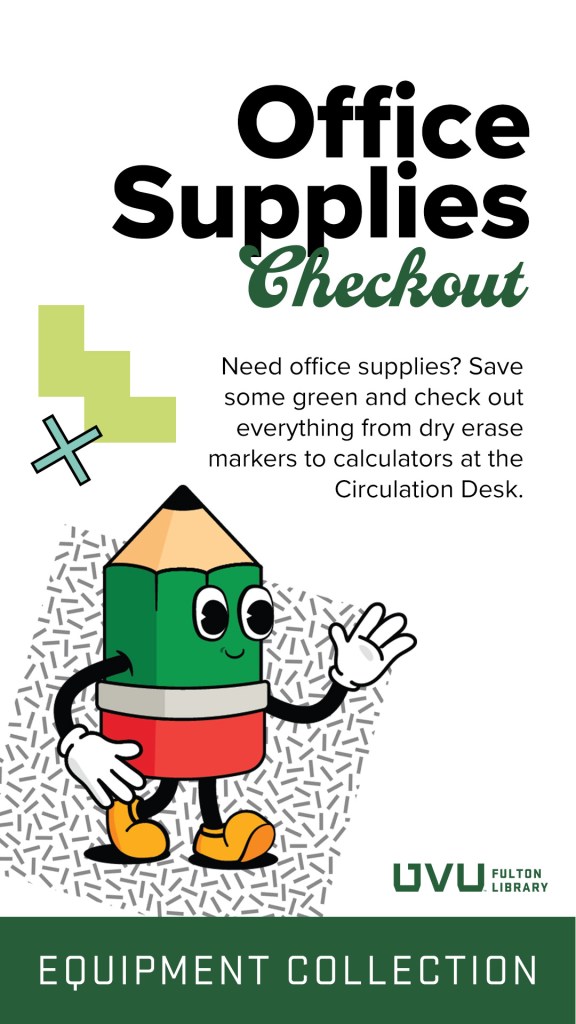
Photo courtesy Public Library of Cincinnati and Hamilton County
My favorite library marketing season is about to begin.
The last two months of the year are when a library marketer must do in-depth work that will strengthen your library’s position for the coming year.
Every other business and competitor will be ramping up their sales and discounts as we go into the holiday season. You may be worried that any promotions your library does will get lost in the shuffle.
You should be worried! According to Sprout Social, your audience receives about 2,477 messages per month from retailers between January through October. But in November and December, that number goes up 13 percent to 2,804 messages per month.
That’s why I advocate pulling back on your “regular” push promotions during the last two months of the year. Instead, you can stand out by doing something different: focus on using this time to create a deeper connection with your community.
You’ll do that by strategically building library brand awareness and affinity.
What arebrand awareness and brand affinity?
In its simplest terms, brand awareness is the extent to which your community can recall or recognize your library brand, no matter where they run across it. It means your community members know what you stand for and what you have to offer. Brand affinity, by contrast, is building an emotional connection between your library and your community.
Brand awareness and brand affinity are critically important to your library’s success. We want your community to recognize your content. And we want to create a lasting relationship between your library and your community.
When your library has strong brand awareness and brand affinity, your community members will choose to use your library over your competitors. They’ll recommend your services to friends and family. And they’ll support you with funding and volunteerism.
In fact, a study from eMarketer showed that 64 percent of people cite brand values as the primary reason they have a relationship with a particular brand. (BTW, your library is a brand!)
That’s why it’s crucial to make brand awareness a top priority for your library marketing over the next two months. Here’s how to do that.
Step #1: Inform, educate, and entertain your community.
The most effective way to build brand awareness and affinity is to position your library as a place that adds value to your community. You do this by helping people solve problems.
For this to work, you’ll spend 8 weeks strategically educating and informing your audiences. This is called content marketing. It’s a strength that libraries have, and we don’t do this kind of marketing often enough.
Create and release a series of tips for your cardholders on how they can use your library to make their lives a little easier during the holiday. Brainstorm a list of ways your library helps ease the rush and craziness of the holiday season. Then decide on a sequence and schedule for releasing those ideas.
Create the promotional collateral to go with it: bookmarks, graphics for your website, email, social media, and short videos. Then, tell your cardholders you’re going to be helping them out this holiday. Reveal your plans and tell them exactly when you’ll be releasing each tip and on what platform. Create excitement and anticipation, then pay it off with your content.
Your tips can include:
Ideas for holiday gifts, recipes, and more–especially if they are literary-themed or items in your library of things that can be tested out before they make a purchase.
A special phone line or email inbox where you can take questions from community members who need help picking out a gift, cooking a big meal, or figuring out etiquette questions like which fork to use.
Curated lists of collection items for decorating, entertaining, wrapping gifts, and cooking.
A quick video tutorial on how to use their card to get free access to Consumer Reports.
Step #2: Promote your mission, vision, and values.
Libraries spend so much time marketing what we do that we don’t often talk about why we do it. In fact, I’d argue that we take it for granted that our community members know the importance of our work. So, during your two-month brand awareness and affinity campaign, make it a point to talk and promote your library’s mission, vision, and values.
Have a staff member or patrons (or both) write a blog post on the impact of the library. Here is a great example. Repurpose those stories for social media posts and print pieces like bookmarks featuring quotes from real-life library users.
You can gather patron stories by asking email subscribers to share how your library’s work has impacted their lives. When I worked for the Cincinnati Library, I sent an email to a portion of my cardholder base and asked them to share such a story. Our library received more than 900 responses! I was then able to pick a few of the best stories. Those patrons were more than happy to share them with the world at large.
Step #3: Show the contrast between your library and your competitors.
Start checking your competitors’ websites and ads as soon as they begin their holiday marketing. Figure out what their offers are and how you can counteract those offers with free stuff!
Other companies have employees. Libraries have experts who truly care about the work they are doing and the impact they have on the community.
That’s why your staff is one of your most valuable resources. They are what makes your library stand out from your competitors. Spend the next two months making sure your community understands the value of your staff.
Interview staff about their work, and why they got into this industry. Ask them to share the story of a time when they helped a community member. Then share those stories on your blog, on social media, and in emails. The Lane Library at Stanford University is a great example of how to write a profile.
You can also ask staff members to name their favorite book of the year. Release that as a special end-of-the-year booklist. You can cross-promote these staff picks on your social platforms and include an email message to cardholders. Make sure you ask all staff members to participate… even the cleaning staff!
Step #5: Re-educate your cardholders about all your library has to offer.
Your library should create a series of emails sent to cardholders once a week for the next eight weeks. Those emails will re-introduce your cardholders to the best features of your library. It will inspire them to use their cards again.
To create this campaign, you’ll make two lists. The first will be for the most popular resources at your library. This could include things like your Makerspace, popular storytimes, laptop terminals, or your extensive e-book collection.
Next, make a list of your library’s hidden treasures. These may be items or services that you know will solve problems for your community. This list should include things that are unique to your library, like online Homework Help, your small business resources, your vast historical resources, or your Library of Things.
Finally, look at the two lists you’ve created and narrow your focus. You want to highlight the best and most helpful things at your library without overwhelming your recipients. Choose to promote one resource from your list of popular items and one from your list of hidden library treasures for each of the emails you send.
Subscribe to this blog and you’ll receive an email every time I post. To do that, enter your email address and click on the “Follow” button in the lower left-hand corner of the page.
In this episode, we will answer a viewer’s question.
Margaret Luedke is Programs and Marketing Coordinator at Juneau Public Library in Juneau, AK. She writes, “I am new to library marketing and do not have a marketing background. My library did not have a marketing plan or brand style guide when I started so I am working to develop them now. I’ve found your guides on both topics very helpful! I wanted to ask though, how far do you suggest we take our branding?”
Kudos in this episode go to the winners of the Library Science Tuition Scholarship in Kentucky.
Do you have a suggestion for a topic for a future episode? Want to nominate someone for kudos? Let me know in the comments. And subscribe to this series to get a new video tip for libraries each week.
Thanks for watching!
Subscribe to this blog and you’ll receive an email every time I post. To do that, enter your email address and click on the “Follow” button in the lower left-hand corner of the page.
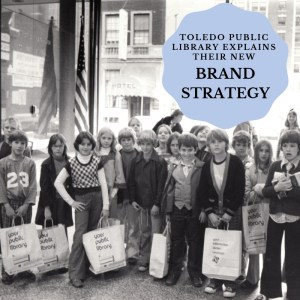
A couple of weeks ago, a Tweet from the deputy director of the Toledo Public Library caught my eye.
Our marketing manager here at the library is leading a charge to “call things what they are” to reduce confusion for customers. We should be doing more of this in libraries and resist the urge for cutesy branding.
Jason went on to explain, “When I joined the library three plus years ago, we had just launched a kind of umbrella branding for all of our making activities at the library. We called it Make U. It was clever, had a nice logo, and generally served a purpose… for us. Three years later, it’s still a confusing ‘second brand’ for our library (one of many tertiary brands, actually). Terri Carroll (our marketing manager) is working really hard to make the library’s brand the key identifier for all things library. Every time we roll out a new program or service, we have the urge to give it cute or clever branding. It’s just more education we have to do with our customers. So rather than trying to constantly educate people about our new brands, services, and programs, we focus on the library’s brand: a welcoming and accessible space where anyone has access to resources they need to make their lives, their communities, and their futures better. Now we call Make U what it is…tech tools. I’ve learned a tremendous amount from Terri in the short time she’s been with us about how we cut through a very noisy marketplace to reach people where they are when they need us.”
This is a major hurdle for my team and library marketer’s across the country! At my Library, I’ve counted no less than TEN branded services. And each one requires education for the staff and public. The names are cute but their meaning is obtuse.
Library marketers struggle with branding. We need to do a better job of defining who we are. We must create a consistent emotional connection with our cardholders if we’re going to compete with the likes of Amazon, Barnes and Noble, Netflix, and Google.
Jason’s co-worker, Toledo Public Library Marketing Manager Terri Carroll, graciously agreed to share her insights on the process.
So many libraries have a set of tertiary brands for their various programs and services. Why is that a problem? Each day, our current and potential customers are bombarded with media messages from well-funded and sophisticated retail, fast food, snack food, entertainment, sports, news, and service companies. While these organizations aren’t competing with us to provide library services, they are competing with libraries for people’s time and attention. If libraries hope to have people notice our message in a noisy marketplace, it is imperative we have one clear brand that makes it easy for people to know who we are and what value we provide. Tertiary brands dilute our message and make it more challenging to connect with customers.
Before the redesign, the Toledo Public Library struggled to bring a host of tertiary brands together to create one cohesive brand.
What prompted you to decide to focus less on giving everything a cutesy name and instead develop and nurture an umbrella brand? I started working at the Library in November and was struck by the fact that each program had its own look and message. The emphasis was on program names and unique graphics, rather than the Library as a whole. For example, a great deal of energy was spent on “logos” for programs such as Kindergarten Kickstart, Ready to Read, and Make U instead of thinking about messaging that clearly connects a valuable service (early literacy or access to technology) with the Library. This approach puts the burden of connecting the dots about the Library’s value and relevance on our customers. It also keeps the Marketing team from thinking strategically as they instead spend energy making everything look different. This is an unfortunate use of resources. Having things look similar within a brand compliance strategy makes it easier for customers to identify Library materials and messaging.
Terri laid out brand elements to create a clear and consistent message that can be understood by staff and library cardholders.
Have you seen positive results from this type of strategy yet? We’ve been working on implementing this strategy since December, so it is tough to extrapolate data yet. For now, positive anecdotal comments to Library staff and leadership such as, “The Library is doing so much,” (when in fact we are doing a similar amount of work) and increased earned media attention are indicators of success. Ultimately, we should realize increases in circulation, door count, and program attendance as well as community and regional stakeholder invitations to be at the table on important issues, speaking opportunities, organizational partnership creations, and election results.
How can other library marketers make the case to their stakeholders, like their board of trustees, the senior leaders, and their staff, that developing a strong brand sense is more productive than creating brands individually as services are unveiled? Stakeholders repeatedly express interest in making sure the community knows about everything the Library does. I have invested a lot of time meeting with all of our internal stakeholders to show them how strong brand management is necessary to meet that goal.
My staff and I also work to keep a focus on making sure all materials and messages are customer-focused. We ask ourselves and our colleagues if our materials and messaging are giving customers all the information they need to engage with the Library. Focusing on how customers understand our Marketing keeps everyone externally (brand) focused and not internally (tertiary brand) focused.
A clear, consistent look helps Toledo Public Library create a connection and makes it easier for their cardholders to recognize their messages.
Do you have any other advice for library marketers looking to strengthen their own brands? It is essential to have senior leadership support for strong brand management. If people are used to the tertiary brands and have enjoyed the creative process (either working with Marketing and/or doing their own design work at the department or branch level), moving to brand compliance can be painful. If those concerns/complaints are taken to senior leadership and exceptions are granted, then the entire brand strategy is compromised.
It is also important to expect some resistance and be willing to talk with people about their questions and concerns. In these conversations, something that seems to really resonate is when I say that we don’t want to re-educate people every time they see something from the Library. We want people to immediately identify a Library program or service. And while staff sees all the materials and, may in fact get a bit tired of the same colors and fonts, this easy identification and brand recognition is essential for customers who are wading through a marketplace of messages and materials.
Subscribe to this blog and you’ll receive an email every time I post. To do that, click on “Follow” button in the bottom left-hand corner of the page. Connect with me on Twitter,Snapchat, and LinkedIn. I talk about library marketing on all those platforms!