Have you ever wondered how your community discovers books? Here’s a spoiler alert…
It’s not just on your shelves! A new study explores the discovery habits for books in Canada, the U.S., Australia, and New Zealand. I’ll give you the highlights and three smart marketing tips for each area that you can do to promote your collection in this episode of The Library Marketing Show.
Plus, we’ll give kudos to a library for a program that promotes Freedom to Read without being partisan or political.
Do you have a suggestion for a future episode’s topic? Do you want to nominate someone for kudos? Let me know here. Thanks for watching!
Subscribe to this blog, and you’ll receive an email whenever I post. To do that, enter your email address. Then, click the “Follow” button in the lower left-hand corner of the page. You can also follow me on the following social media platforms:
Photo courtesy Cincinnati and Hamilton County Public Library
My co-worker Yaika recently returned from StokerCon with an amazing library marketing story.
Yaika was on a panel. The organizers of the panel brought about 700 Advanced Reader copies, or ARCs, to the session. An ARC is a version of a book that is made available before the official publication date.
The ARCs were set on tables before the presentation. The panelists then talked about the various ARCs during the session, naming them by title and author and discussing the most intriguing things about each book.
Of course, they gave a quick summary of the plot. But, every time they talked about a book, they mentioned the appealing factors that make people want to read a book: the characters, the tone, the setting, the pacing, and the themes.
And once the audience heard the appealing factors, a bunch of people would jump out of their seats and run to the ARC table to see if the book was available.
Why did attendees, who seemed hesitant to pick up a book before the session, feel compelled to grab books during the session?
It’s because the panelists were book-talking.
A book talk is a short presentation about a book to convince other people to read it. Book talking is not a formal book report or review. It’s more of a mini-commercial.
And book talking is one of the most effective ways to promote your collection, especially when you describe the book using those intriguing story elements.
Whether you are a degreed librarian who works on library promotions or a communications professional who works in a library, everyone… and I mean everyone… can talk about books in this way.
Your passion for the collection, not your degree or expertise, is what makes this type of marketing so special. And promoting your collection is incredibly important to the success of your library.
Your collection is the reason most people get a library card. Books are your brand. You should promote your collection all year long.
If you are a front desk worker, you can book talk with patrons during every interaction! But how do you book talk if you aren’t working at the front desk?
Here are 5 promotional tactics that you can use to book talk with readers when you aren’t working directly with the public.
Email
Every month, I get an email from the Jacksonville Public Library that drives me to the catalog EVERY SINGLE TIME I get it. Do you know why? The email is a book talk in digital form!
I don’t even live in Jacksonville. I don’t live in Florida! But this email makes me want to read books.
The email contains a list of books, usually fewer than 10. Next to each book is a summary of the plot, plus a little extra something: a review, or a hint at something appealing about the theme, genre, or characters. It’s intriguing! And it makes me add to my TBR (to-be-read) pile.
I also love this example from Jefferson Public Library. Scroll to the bottom of the email to find a promotion that includes those appealing elements which can be more helpful in describing a book than the plot.
Print
The folks at LibraryReads offer a downloadable PDF flyer each month that is a book talk in print. Each of their selected titles is listed, along with a description of the book that includes not only the plot, but words that describe the book’s genre, intriguing factors, and the author’s style.
On your website
I must confess that every time I visit my library’s website, I am on the hunt for books. Your readers are too. Your job is to make those books sound enticing enough to compel them to place a hold.
Create a page on your website, like Naperville Public Library. They have their book recommendations divided by genre and age group.
And they describe more than the plot. The annotations next to each title help readers decide which of the titles to check out.
Bookmarks
Your library can “upsell” books using bookmarks. Upselling is a sales term in which customers are encouraged to buy a more expensive version of a product than they originally intended.
For libraries, upselling is any action that compels your cardholders to check out more items than they originally intended. And bookmarks are the easiest way to do this.
Start small and manageable. Pick 3 categories to focus on, like cookbooks, horror, and Westerns. You can also choose age-based categories like adults, teens, and early readers.
Once you’ve decided on your categories, make one bookmark for each of your categories. Each bookmark should feature 3-6 books (3 if your bookmarks are one-sided, 6 books if your bookmark is two-sided).
For each book on your bookmark, add a photo of the cover (because book covers can also be enticing!) and the title. Then, write one line about the plot. Write a second line about the characters. Write a third line that describes the book using intriguing language like “quirky,” “thought-provoking,” and “funny.”
Challenge yourself and your staff to hand out a bookmark during every patron interaction. Make it a game to match the bookmark with the patron’s interest using context clues.
For example, if you saw the person browsing your new arrivals display and they’re an adult, you can hand them your adult fiction bookmark.
If someone comes to the drive-through to pick up their holds and you notice they’re checking out a whole stack of picture books, give them one of the early readers’ bookmarks. Heck, give them an adult bookmark too!
If someone checks out a cake pan from your Library of Things, give them a cookbook bookmark. And so on.
Videos
Ask a fellow staff member or patron to talk on camera about a book they read and loved. Challenge them to do it in under 60 seconds, like Thayer Public Library does!
Then, post the video natively to all the social media platforms your library uses with a direct link to the book in the catalog. You know how social media platforms LOVE videos!
Bonus idea
I have to share this infographic created by Lester Public Library. They gathered stats on book talks they provided to local students. It’s such a great way to prove the value of the library to the community, parents, and stakeholders like local legislators and funders!
Subscribe to this blog and you’ll receive an email whenever I post. To do that, enter your email address and click on the “Follow” button in the lower left-hand corner of the page. You can also follow me on the following social media platforms:
In my previous role at a major metropolitan system serving a population of nearly a million people, I thought I knew people who were wild about books. But these folks at my new company love books on a whole new level.
I have learned so much in my first month. And I’ve come to realize that, as much as I loved collection marketing, I was making mistakes. In fact, I did a lot of things wrong.🤷
Because promoting the collection should be the core of any library’s marketing efforts, I want to make sure I pass on what I’ve learned.
Seven Mistakes to Avoid When Promoting Books
What I did wrong: I recommended books. What you should do instead: Suggest books.
It sounds like semantics, but there is a real difference between recommending and suggesting books to potential readers.
Readers advisory consultant Becky Spratford of RA for All points out that library anxiety is a real thing. People come into your building or log onto your website to find a book they love. But they have a certain amount of anxiety. They feel like they absolutely must read a book that is recommended to them by a library staff worker. If they don’t finish it, they worry that we will judge them.
So, let your library users know that your book recommendations are just suggestions. No one will judge them for not reading the titles you suggest. And let your customers know it’s okay to return books unread!
What I did wrong: I used plot to promote books. What you should do instead: Use story elements to promote books.
Most readers advisory experts rely on something called the Vocabulary of Story Appeals to make books suggestions. This is a way of describing the book without talking about the plot.
When picking their next book, readers don’t look for a certain plot line. They are looking for factors that appeal to them, including pacing, characters, tone, style, and the story line. Story line, I have learned, is different from plot in that it focuses on the WAY the story is told, as opposed to what happens in the story. Mind blown.
It’s so much more interesting to describe a book in terms of story elements. It intrigues readers and may lead them to place holds on books they would otherwise ignore.
What I did wrong: Promoting only new books. What you should do instead: Promote new books AND offer a readalike available right now on the shelf to help soften the hold wait.
At my library job, I stopped promoting older books because the data told me that new books were the ones that got the most circulation from my targeted email marketing.
My change in philosophy doesn’t mean that the data was wrong. But there was a piece I was missing.
Sometimes, the most popular books are also the ones with the longest hold list. Most library lovers are, in my experience, okay with waiting awhile for a book they really want to read.
In the meantime, library marketers can do a better job of suggesting a currently available readalikes to our readers. This helps to create satisfaction for our readers. It also can expand their worldview. It keeps them engaged with the library while they wait for the new title. And, it helps our circulation numbers!
What I did wrong: Thinking I really didn’t have the skills to suggest books. What you should do instead: Everyone in your library can suggest books. And I mean everyone!
I had a real hang-up with suggesting books to others. I can’t tell you how many times I said the words, “I’m not a real librarian but…”
But what I’ve come to learn is that I am a book expert because I love reading! I don’t have a degree, but I do read… a lot.
I also read about books a lot. I listen to podcasts about books. I talk to other book lovers. I have resources at my disposal that I can use like NoveList and Goodreads.
You don’t have to have a degree to be passionate about books or connect with another reader.
What I did wrong: Limiting the book genres I suggest to what I have know or read. What you should do instead: Use resources to make recommendations from genres you’re not familiar with.
Consciously push yourself to suggest books outside your own comfort zone. It’s better for you, for your friends, your fellow readers, and for the world in general, when we broaden our horizons to suggest books outside our comfort zone. We should strive for equity, diversity, and inclusion in all areas of our lives—and that includes our reading materials.
By using more than just one list of bestsellers, I could have gotten a better idea about what was truly a best seller. Lists from USA Today and Amazon include books from every age, genre, and publishing house.
Don’t discount sales of a book. If a book is making money, it’s popular. And your community is full of people who can’t afford to buy those books. But that doesn’t mean that people don’t want to read those books. We need to let them know they have access.
What I did wrong: Not asking my readers often enough what kind of books they like. What you should do instead: Ask your readers about the books they love!
Survey your patrons. And do it regularly, because their tastes change. Your population changes. You don’t even have to do this using a formal survey. Just ask on social media. People love to talk about what they’re reading or what they want to read!
Subscribe to this blog and you’ll receive an email every time I post. To do that, click on the “Follow” button in the bottom left-hand corner of the page. Connect with me on YouTube, Twitter,Instagram, and LinkedIn. For more help with your library marketing, email me at ahursh@ebsco.com.
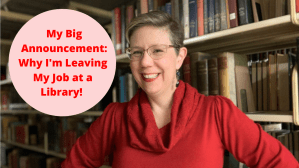
I have a huge announcement for readers of SuperLibraryMarketing.com and viewers of The Library Marketing Show! In this episode, I share why I’m making a big change in my career and what it means for the future of Super Library Marketing and the Library Marketing Show.
Also Kudos to the Oklahoma City Metro Library System! Their customers checked out more than 2 million eBooks in 2019, which is a huge number! It shows that collection marketing is important and effective. It also makes it clear that public libraries need to keep fighting for fair pricing models from publishers and digital vendors.
Want more Library Marketing Show or want to suggest a topic for a future episode? Watch previous episodes!
Check the Upcoming Events page to see where I’ll be soon. Let’s connect!
Subscribe to this blog and you’ll receive an email every time I post. To do that, click on “Follow” button in the bottom left-hand corner of the page. Connect with me on Twitter,Instagram, and LinkedIn.
There is ONE THING that many libraries miss when they are making big decision. This thing is super important to marketing and to serving our communities. In this episode, learn about this step is, why it matters, and how I almost missed an opportunity to put this one thing to use when making changes to my library’s print publication!
Also Kudos go out to NoveList for the free book The Secret Language of Books, which is incredibly helpful for marketing your collection. You can get a free print or digital copy!
Have an idea for the next Library Marketing Live Show?Submit it now.
Check the Upcoming Events page to see where I’ll be soon. Let’s connect!
Subscribe to this blog and you’ll receive an email every time I post. To do that, click on “Follow” button in the bottom left-hand corner of the page. Connect with me on Twitter,Instagram, and LinkedIn.



 Super Library Marketing: Practical Tips and Ideas for Library Promotion