Search

Super Library Marketing: Practical Tips and Ideas for Library Promotion

Tag

customer satisfaction

Two Key Areas of Marketing Focus That Will Deepen Your Communityโ€™s Loyalty to Your Library and Create the Truly Engaged Library User

Photo courtesy Public Library of Cincinnati and Hamilton County.
Photo courtesy Public Library of Cincinnati and Hamilton County. Click on the image to visit their digital library.

For most libraries, the end of the fiscal year is here. I think this is the perfect time to implement two new areas of focus for library promotions.

As discussed last week, libraries are at a critical moment. As we emerge into the post-pandemic world, we should not go back to doing things the way we were doing them before the crisis. That includes the way we do marketing and promotions.

Libraries need to start thinking beyond simply churning out flyers, posters, emails, and social media posts. We must devote time and energy to two primary areas of marketing focus: customer service and content marketing.

Here’s why.

Excellent customer service as marketing

We can create the truly engaged library cardholder by offering consistent, personal support.

Customer serviceย is anย extension of marketingย because nothing compares to the first-hand experience of a real person having a great experience with your library, and then sharing that experience with their friends and family.

Customers are comparing you to every other customer experience they have. Expectations are high.

A library with frontline staff who are friendly, courteous, and dedicated to personalized assistance will hold the key to customer retention. You want to retain cardholders because it’s less expensive and takes less resources to retain engaged and active patrons than it takes to get new cardholders.

The good news is that most libraries excel at customer service. There are two ways to take those excellent, basic skills to the next level so you can create those loyal customers.

Respond as quickly as possible to patrons, wherever they interact with your library

Customer service consultant STELLAService released a report a few months ago that found that 62 percent of companies ignore customer service emails. The average wait time for a customer service email is 12 hours! And only 20 percent of companies follow up to see if their original answer was satisfactory for the customer.

This is an area where libraries can do better than for-profit brands.

  • Make it a priority at your library to answer every email, phone call, and chat request in a timely manner.
  • Institute a policy to send a follow-up email or make a follow-up phone call to ensure that the original answers you gave to the patron are satisfactory.

For instance, if a parent requests a book bundle for their child, be sure to send them an email or call them a few days after they’ve picked up their hold to see if their child is enjoying the books you provided. Keep a spreadsheet where you can make notes about what the patron liked and disliked.

The next time that person calls the library for help, your front-line staff can consult that database and provide more valuable help to that patron.

That kind of deeply personal customer service is the best kind of marketing you can do because it builds a relationship with the patron that is meaningful and shows that you are deeply committed to creating the best library customer experience possible.

Listen to your community

To provide the most meaningful services, collection, and programs, we need to know exactly who is using the library and how they are using it. We must also anticipate our community needs.

You can do this by enlisting front line staff to ask three simple questions during every patron interaction for a three-week period.

  • How could the library better help you this year?
  • What services do you love?
  • What services do you need?

The answers will give you valuable insight into the services your library can provide that will truly create an engaged community.

If you notice a service that isn’t mentioned by patrons in these interactions, consider dropping that service, even if it’s been something you’ve been doing for a long while. You want to provide what your community wants and needs.

You can also survey patrons by email. If you’ve never created a survey before, this post will help you.

Content marketing deepens community relations

Content marketing is promoting your library, not through advertisements or push promotions, but through education.

By providing answers to your community’s main questions, your library builds trust and loyalty. People will come to see your institution as a valuable resource with services that can’t be replicated by other institutions.

Content marketing breaks through the noise and the clutter by providing compelling, useful information for your cardholder. It addresses whatever pain points your cardholders have. It positions your library as the go-to place for information. It builds trust.

And through content marketing, your library gets a better and deeper understanding of your cardholders. You can use that understanding to do an even better job of addressing your cardholders needs. Itโ€™s a constant circle of giving. It carries more weight for a longer periodย than a flier or a poster.

You donโ€™t have to be a trained marketer to understand how content marketing works. In fact, my contention is this: since more library marketing departments are run by trained librarians, youโ€™ll do better at implementing a content marketing strategy at your library than most people with a marketing degree.

You tell stories. You read stories. You review stories. You love stories. Youโ€™re the perfect person to tell stories about your library, its staff, and its users.

Stories stick. A good story will stay in your brain longer than a good ad. And once youโ€™ve told a great story, your cardholders will remember your brand. Stories build a connection which leads to customer loyalty, which leads to customer action.

Next week: Content marketing basics for libraries: easy ideas about how and where to tell stories about your library to deepen community loyalty.


Subscribe to this blog and youโ€™ll receive an email every time I post. To do that, click on the โ€œFollowโ€ button in the bottom left-hand corner of the page.


You may also like these articles

How Do We Get People To Come Back to the Library? Four Ideas That Can Help You Rebuild Use of Your Library

Listen To This! How To Use Social Listening To Gain New Insight and Catch Promotional Opportunities for Your Library

Angelaโ€™s latest book reviews

Beach Read by Emily Henry
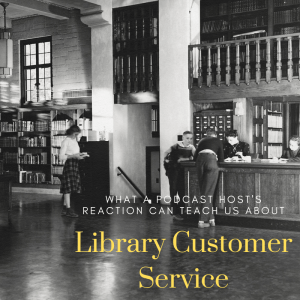
I Asked a Podcast Host to Stop Interrupting His Guests. ๐Ÿ˜  What His Reaction Can Teach Us About Library Customer Service.

A few weeks ago, I had an incredibly disappointing interaction with a man I’ve looked up to for ages. I’m not going to name him or his website in this post. But I’ve been listening to his podcasts for more than five years. I’ve sent staff to his conference. I’ve recommended his website and his materials here on the blog. I’ve met him in person. He was lovely to me.

But about a year ago, he started doing something that really upset me. He got into the habit of interrupting guests on his podcast. All. The. Time.

I’m a manager. I’ve been trying to foster better listening skills in myself and my staff.

It irked me that this person never let anyone finish a thought. It got so bad that he started cutting people off as they were explaining concepts and giving specific instructions on marketing tactics.

I decided to email him to ask him to stop interrupting his guests. I was as polite. I told him I loved his show and website. I said that I wished he would just let people finish their thoughts.

Here was his response:

Thanks for the feedback Angela. I pre-discuss with all of my guests that I often have questions and will likely stop people who are fast talkers and dig deeper. They all know I will do it. Indeed many of my listeners love that I do this. For example: ” I have to say that you have a special gift for asking great questions and making sure the audience can actually visualize the process & pin down your guest to clarify so we fully understand the material presented. Itโ€™s like you have a second sense for what we are thinking. I think of a question, and BAM!…you come in with the perfect question that was on my mind. (I donโ€™t even know if Iโ€™m saying this right but I bet you know what I mean). I listen every day and look forward to the incredible, valuable and TIMELY nature of what you share. Iโ€™ve been a long-term fan of your blog for years and if anyone is seeking to stay current in whatโ€™s going on with everything related to social media marketing, youโ€™d be crazy not to take advantage of this invaluable podcast. Thank you, for your gift of putting yourself in your audiences shoes and knowing how to get clarity from your guests. Itโ€™s truly an awareness most podcasters lack. Truly inspiring!”

So yes I understand that sometimes I interrupt guests but it really is by design to help make the show better AND the guests are fully in agreement that it’s okay for me to do it.

I NEVER intend for it to be rude EVER. I am actually friends with most of the guests that get on my show so I will reach out to them and see what they say. Thanks again for your perspective.ย 

There’s a lot to unpack here. In a nutshell, this was a defensive response. I didn’t feel heard. I didn’t feel acknowledged. I didn’t feel that this person was willing to do anything to address my complaint. The unattributed customer testimonial is self-important.

I ended up unsubscribing from the podcast.

And because I always try to learn from my experiences, I decided to use this exchange as a catalyst to think about the best way to respond to negative comments from library customers.

Libraries have it pretty easy. Most of our cardholders love us and rave about everything we do. Itโ€™s good to be loved.

But we do have our critics. They may post their comments online or in email. They may express their complaints to you in person at the front desk or at events.

Like this podcaster, your immediate reaction may be to go to defensive mode. You may feel the need to defend your library, its services, and practices. That’s a totally natural response.

But I want you to take a step back (and a big, deep breath) and find the opportunity in that negative comment. There are ways to response to customer feedback, even negative feedback, that acknowledge the complaint without damaging the relationship between your customer and your library.


Your response to complaints can also build credibility for your organization. And, because emotions are involved, it’s best to have a process in place beforehand so you can handle complaints professionally and swiftly. Here are your new best practices.

Donโ€™t censor online comments. Unless the comment violates your social media or website standards of behavior in some grave way, donโ€™t hide the comment and donโ€™t want to respond negatively.

Respond as quickly as possible. Itโ€™s important to address the issue as soon as you can. The basic rule of thumb for businesses now is to respond to complaints within 60 minutes. I know that’s difficult for a lot of libraries, who struggle to balance staff work time in a 24-hour a day world. Make your best effort to respond to complaints quickly. Never let a complaint sit without an answer for more than 24 hours, even if that means you have to answer it on your off time.

Acknowledge the customer’s words and apologize. By simply telling your user that you hear what they are saying, and that you are sorry for the situation, you can diffuse a good deal of the anger or hurt that can be associated with a bad library experience. An apology is not a sign of guilt. It doesn’t mean that the complainer is right. Just saying, “I’ve been in situations like this before and it’s frustrating. I’m sorry this happened to you” can help to smooth the road for resolving the issue. It increases the likelihood that your complainer will leave the interaction with a renewed love for the library.

A co-worker asked me what I had hoped to hear from the podcast host I emailed. This was all he would have had to say to keep me as a fan and listener: “I’m sorry. I’ve been interrupted while speaking and it is frustrating. I’ll work on that.”ย 

If the problem cannot be solved easily, take it offline. Ask the cardholder for their email address so you can continue to resolve the complaint without doing so in front of an audience. โ€œIโ€™m sorry to hear you are having this problem. We want to make it right. Can I have your email so I can ask for more details about your experience? Then I can make sure your issue gets in front of the right person and is addressed.โ€

Realize that you cannot please everyone. Every once in a while, someone will complain about something and you will not be able to fix the problem. Apologize, explain your libraryโ€™s side of the situation as best you can, and move on.

Don’t forget to join us for the LIVE LIBRARY MARKETING TALK ON INSTAGRAM every Tuesday at noon ET. We’ll talk about library marketing topics for about 15 minutes each week. My handle is Webmastergirl. You can email questions and topic suggestions ahead of time. Just fill out this form.

And check out these upcoming events and webinars where we can connect and discuss library marketing. Registration links included.

Subscribe to this blog and youโ€™llย receiveย an emailย every time I post. To do that, click on โ€œFollowโ€ button in the bottom left-hand corner of the page. Connect with me on Twitter,ย Instagram, and LinkedIn. ย 

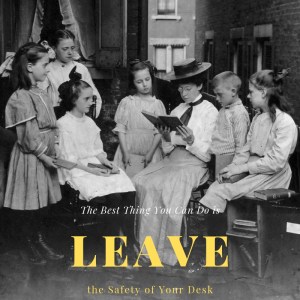
The Best Thing You Can Do is Leave the Safety of Your Desk

I had an amazingly and scary experience this week.

My library is in the very first stages of comprehensive facilities plan. With money from a levy passed by our county voters in May, we’re going to renovate or rebuild ALL 41 library locations.

I’m trying hard not to not have a panic attack reading that sentence back to myself.

When complete, these projects will likely change the course of our library forever. As a first step in that massive undertaking, our board of trustees hired an architectural consulting firm to gather ideas and insight from our cardholders. As part of this opinion-gathering process, our library is holding community forums and structured question-and-answer meetings at each branch over the course of the next year. If you’re counting, that’s 80 plus chances for us to interact with the public and ask them directly what they want their library to be. MY GOSH, what a gift. Am I right? It’s a huge task but it’s also a huge opportunity!

I volunteered to work the forum boards during the first of our community meetings, and to help with logistics at the second one. Both opportunities gave me the chance to get out of my basement office and actually talk face to face with the people who receive, consume, and respond to my marketing messages. And it was amazing.

I’m serious. I learned all kinds of interesting stuff just from talking to people. I found out what they think about the layout of libraries, the frequency of email messages, the reasons they got a library card, their favorite parts of the collection, their impression of our staff, and their dreams for the services they want us to provide. It was gold mine of information.

Honestly, I’ve never actually done drugs, but I felt high was I left my first shift. I ran into one of my good friends who works as front-line staff and I gushed to her about how amazing it was to actually talk to people. She said, “Hey, you should just come hang out at the desk with me. People will tell you exactly what they think of our marketing if you ask them, and you’ll learn so much about our cardholders.”

And I realized in that moment, for all the research and thinking and strategic planning and data analysis that I do, I might be missing one of the most important aspects of library marketing–my cardholders. I *think* I know what they want and need. I’ve got survey results and conversion data and social media engagement statistics that tell me about the people our library serves. But, before last week, I cannot remember the last time I actually talked to a customer about the library.

That changes now.

I don’t really have to worry about forcing myself outside my comfort zone over the next year. All I must do is sign up to be a part of each of those community forums as they are scheduled. But after that, I’m going to have to make sure that I get out and talk to people. I have learned that direct interaction with customers is exceedingly valuable.

I hope you are better at this than I have been. Maybe you’re reading this and saying, “Duh, Angela.” If so, my hat goes off to you. I’m learning this lesson late. But I thought it was important to share it with you.

Don’t be a dummy like me and stay locked in your basement office, separated from your cardholders. Get out of your comfort zone and talk to your cardholders. Set up a regular calendar reminder and spend an hour with your front-line staff. You could just observe. Or you could ask questions. You’ll learn so much. You’ll make the cardholders feel valued. And you’ll be demonstrating your commitment to customers to your fellow staff members. You can’t be any more engaged than that!

Subscribe to this blog and youโ€™llย receiveย an emailย every time I post. To do that, click on โ€œFollowโ€ button in the bottom left-hand corner of the page. Connect with me on Twitter,ย Snapchat, and LinkedIn.ย I talk about library marketing on all those platforms!

A WordPress.com Website.

Up ↑