Search

Super Library Marketing: Practical Tips and Ideas for Library Promotion

Tag

library content

The 5 Best Free Keyword Research Tools To Find the Perfect Keywords for Your Library Promotions (With Video Tutorials)

Photo courtesy Cincinnati and Hamilton County Public Library

A war is being waged 10 feet from my office window.

I love watching birds feed and listening to them chirp, squawk, and sing. I have a feeder that I’ve positioned so I can see the birdies enjoying their meal as I work.

But something is ruining my relationship with my feathered friends.

Some mornings, I come outside to find my oversized bird feeder, which I always fill the night before, COMPLETELY EMPTY. The seed is scattered all over the ground. And a scurry of squirrels are gorging themselves on the spoils.

The first time this happened, I did what anyone does in this modern era. I turned to the internet for help.

I typed “how to keep squirrels off my bird feeder” into Google. Suddenly I found myself down a rabbit hole (pun intended) with all the squirrel battle content you could ever want.

Repellant. Special bird feeders. Tips for installing slinkies on the pole to prevent climbing. SPIKES. Videos, advice, and products galore.

Why is it so hard to find tips on fighting squirrels?

The internet is a giant swirling vortex of content. According to Master Blogging, there are 7.5 million blog posts published every single day. (Thanks for reading this one!)

When you factor in social media posts, videos, website content, emails, etc., it’s no wonder your library has a hard time breaking through the noise. A search by anyone for anything is likely to turn up hundreds of results.

So how do you make sure your library content reaches the people who need it most?

Keywords are the key

When a community member is online, trying to find the source that will help them write a research paper, add branches to their family tree, or make a decision about whether to purchase a car, they need us to speak their language.

That’s where keywords come into play.

Keywords help search engines and social media algorithms understand what your content is about. They use those keywords to categorize your content and then match your content to people who are searching for it.

The right keywords make it more likely that the content you write will end up on the computer or mobile phone screen of the person who needs it most.

But you don’t have to guess at what keywords to use! There are tools to help find keywords to weave into your content. Here are my five favorites. They’re reliable, efficient, and free. I’ve made a video tutorial for each to show you exactly how to use them.

Spyfu

This website has a robust, free keyword research tool. You can use it without setting up an account or handing over your email.

Google Search Bar

The Google search bar allows you to see what content is rising to the top of Google’s algorithm. You can work keywords or phrases from those top-performing content pieces into your promotions.

Don’t forget to scroll to the bottom to see “people also search for,” which I find to be extremely valuable as a source of more keywords.

Google Keyword Planner

You can also use Google’s more robust Keyword Planner to search for keywords. The Keyword Planner is intended as a tool for buying Google ads but I find it to be an insightful way to find keywords for my website and social media.

Here’s a quick video to show you how both the regular Google search bar and the Google Keyword Planner work for sourcing keywords for library promotions.

Wordstream

This free tool gives you 25 keywords… more if you’re willing to provide them with your email. They’ll also show you the search volume for the phrase and the level at which you’ll compete with other content for attention. Type in your opening phrase and choose “All industries” for the best results.

Moz

This free keyword tool shows top suggestions, monthly volume, organic click-to-open rate, and difficulty ranking for any key phrase you search. You can get more robust suggestions if you hand over your email.

Whatever tool you use, the keywords you uncover should be placed in your blog headlines, in the text on your website, and in your social media posts.

But Angela, did you defeat the squirrels?

Yes, I did with the help of three slinkies, a 7-foot pole, and a baffle, which is a cone-shaped device that stops the squirrel from climbing up your pole to your feeder. I knew of the existence of baffles, but I had no idea that’s what it was called. But thanks to keyword research and placement by the vendor, I found it. Now my birds can eat in peace.
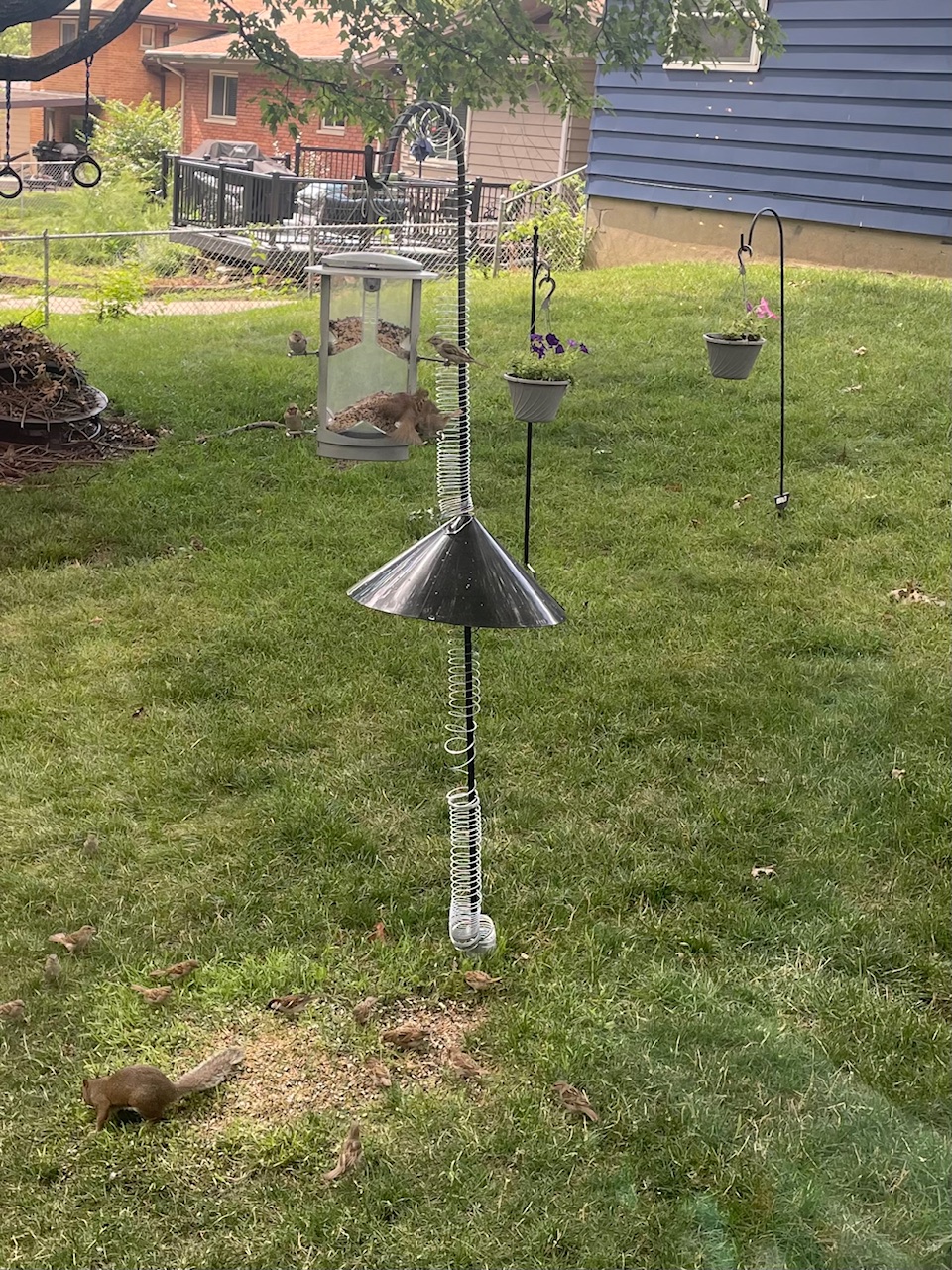
Note Mr. Squirrel, who is now relegated to picking up seeds from the ground.


P.S. You might also find this helpful

Finding the Perfect Name for a Library Program: A Checklist and Tips for Using AI

Subscribe to this blog and youโ€™ll receive an email whenever I post. To do that, enter your email address and click on the โ€œFollowโ€ button in the lower left-hand corner of the page. You can also follow me on the following social media platforms:
Save Time and Reach Your Whole Audience With an Incredible Trick! (Includes Guide and an Example You Can Steal)

Photo courtesy Cincinnati and Hamilton County Public Library

Last week, we went over the Marketing Rule of 7 and how consistent messaging delivered many times over multiple channels will lead to promotional success.

But that does NOT mean you must create 500 versions of every promotion you do. PHEW!

So, letโ€™s talk about the easiest way to make the Marketing Rule of 7 happen within the constraints of working in a library. We do that by repurposing our content.

Repurposing content

Repurposing content is the practice of reusing elements of existing content to expand that contentโ€™s reach.

Repurposing content makes it easy to fulfill the Marketing Rule of 7 because you donโ€™t need to write every post, shoot every video, and design every infographic from scratch.

Instead, you can use a piece of new content as the basis for lots of other content.

Why repurpose your content?

Your community is diverse. Their preferred methods of receiving information are diverse.

Some of them are visiting your website every day for updates. Some are seeing your social media posts. Some are waiting for your next email to hit their inbox. And some are fans of your Reels, TikTok, or YouTube videos.

Re-purposing content helps you reach more people on the channels they prefer efficiently, so you can go do all the other things you need to do in a day!

I repurpose this blog every week. (Did you notice?!) Hereโ€™s how I do it.

I pull out a few lines, usually from the first one-third of the post. I may use the lines exactly as they are in the post. Or I might rearrange them, adding more humor or emojisโ€ฆ things I wouldnโ€™t necessarily do in my blog post.

Then I take those lines and I post them across my social media channels and in my emails.

I also take parts of a post and use them in other posts, especially if these are key points I really want you to remember. For example, I strongly believe books are your library’s brand. And I say so… often!

Sometimes, I take parts of my blogs and use them in presentations.  I also turn them into an infographic or a 60-second video.

How will this work at your library?

Letโ€™s say youโ€™ve created an infographic to communicate the value of your library in the past year. We know infographics are a great way to present those statistics and give a whole picture of your library’s contribution.

But infographics take time to build. And some people will still need those stats broken down for them, piece by piece, in order to comprehend their meaning.

So you can take each of the points on that infographic and create separate social media posts. This really helps your audience digest the information.

Those separate pieces of breakout information can also serve as a springboard for your library to write blog posts or longer social media posts specifically diving into those key stats and what they mean for your community.

Choose three of the facts on the infographic. Pick a staff member who loves being on camera and ask them to create a 60-second Reel or TikTok video using trending audio and creative elements to explain this serious subject: the value proposition of your library.

Need more help figuring out how to make this work at your library? I created a 4-step guide for you!

Easy 4-step guide to repurposing content

Letโ€™s say your library is publishing a promotional blog post about Book Club Kits. It might look like this.


Get Convenient, Easy Help Leading Your Next Book Club

Are you someone who enjoys discussing books, sharing insights, and hearing different perspectives on a story? Or maybe you’ve been thinking about starting a book club but don’t know where to begin. Well, look no further! Our Book Club Kits are designed to bring people together through the power of literature, and here’s why you should definitely consider checking one out:

  1. Diverse Selection: Our Book Club Kits include a wide range of titles covering various genres, themes, and authors. Whether you prefer classics, contemporary fiction, non-fiction, or even a mix of everything, we have something for everyone. From thought-provoking novels to inspiring memoirs, our collection is carefully curated to spark engaging discussions.
  2. Convenience: Starting and maintaining a book club can be challenging, especially when it comes to sourcing multiple copies of the same book. With our Book Club Kits, we’ve taken care of that for you! Each kit includes multiple copies of the featured book, making it easy for your group to access and read the same title simultaneously.
  3. Discussion Guides: To facilitate meaningful conversations, our kits come with discussion guides. These guides provide questions, prompts, and talking points to help guide your book club discussions, ensuring that everyone gets a chance to share their thoughts and insights.
  4. Cost-Effective: Participating in a book club can sometimes become costly when you have to purchase multiple copies of a book. With our Book Club Kits, you can enjoy reading and discussing a wide variety of books without breaking the bank. It’s a budget-friendly way to explore new literary horizons.
  5. Community Building: Book clubs provide an excellent opportunity to meet new people, make friends, and engage in lively conversations. By checking out one of our Book Club Kits, you can be a part of a vibrant community of readers right here in your own neighborhood.
  6. Flexibility: Whether you prefer in-person meetings or virtual gatherings, our Book Club Kits are designed to accommodate your preferred format. You can use them to start a club with friends, family, or even coworkers, making it easy to connect with others over a shared love of reading.

You can use that post as a base for repurposing.

Step one: Write a two-line version of your blog post.

This is going to be the mini-version of your post… the elevator pitch, so to speak.

For this example, I would say:

Book Club Kits from the library make it easy, convenient, and cost-effective to start a book club. The library provides free book copies and discussion guides that allow everyone to participate and build community.

Step two: Promote in your emails.

Add your two-line version of the blog post to your newsletter and any other email you send over the course of the next month, with a link to the full post.

Step three: Share on your social channels.

Post your two-line version of the blog and include a link to the full post in the comments of your social media post. (Hereโ€™s why you want to put it in the comments instead of the post.)  

Keep the momentum going on different social media channels by creating more two-line versions of your blog. For example, during week one, post this to Instagram and Facebook:

Book Club Kits from the library make it easy, convenient, and cost-effective to start a book club. The library provides free book copies and discussion guides that allow everyone to participate and build community.

In week two, post a new two-line version on Instagram, Facebook, and LinkedIn:

Book Club Kits from the library bring people together through the power of literature. The curated kits are convenient and flexible to help any book club leader.

On week three, you put another two lines on Facebook, LinkedIn, and X:

Meet new people, make friends, and engage in lively conversations about books without breaking the bank. Check out the free library’s Book Club Kits.

And so on. Mix it up to make it sound like new content while driving home the key points you wish to make.

Step four: Use the promotional message on print promotions.

Create a bookmark, flier, and sign, with your favorite two-line pitch from your blog post. Include a QR code linking to the blog post.

Place the bookmarks and fliers in every hold or checkout. Place your sign on a display of books that have been assembled into book club kits.

Re-purposing all content

You can do this with any piece of content, from podcasts to press releases. Break the content down into pieces and spread them across all your available platforms.

In this way, you can make sure everyone in your community sees your message. You also can make sure the work you are doing right now will have maximum impact.

The added benefit to re-purposing: more data.

It won’t take long for you to learn where your audience is getting news about the library. If you notice that engagement is high on one marketing channel, you will know which channel to start with when you are promoting your library.


P.S. Want more advice?

Libraries Have a Huge Competitive Advantage: Customer Service! Here Are 3 Promotional Tips To Drive Home That Message

Upcoming Appearances

Will I see you soon?

Subscribe to this blog and youโ€™ll receive an email whenever I post. To do that, enter your email address and click on the โ€œFollowโ€ button in the lower left-hand corner of the page. You can also follow me on the following social media platforms:

A WordPress.com Website.

Up ↑