Artificial intelligence, or AI, has many implications for library marketing. And now, AI is changing how people search for your library on the internet. But…
There is one, relatively easy thing you can do to ensure people find your library when searching for it on ChatGPT, Google’s Perplexity, and Microsoft’s CoPilot. We’re going to get into it in this episode of The Library Marketing Show.
Plus we’ll give kudos to a library that’s cross-posting videos from one social media platform to another. Normally, this is a no-no but there is an exception… and this library is taking advantage of it!
Do you have a suggestion for a topic for a future episode? Want to nominate someone for kudos? Let me know here. And thanks for watching!
Subscribe to this blog and you’ll receive an email whenever I post. To do that, enter your email address and click on the “Follow” button in the lower left-hand corner of the page. You can also follow me on the following social media platforms:
In a few weeks, kids in your community will head back to school. This time of year is a marketing opportunity for all libraries! Lucky for us, one of the major social media platforms just published a guide for marketing to back to school. I’ll share the top three takeaways for library marketing during back-to-school time in this episode.
Plus we’ll share kudos for a library that did something extraordinary by harnessing the power of their loyal library fans.
Do you have a suggestion for a topic for a future episode? Want to nominate someone for kudos? Let me know here. And thanks for watching!
Subscribe to this blog and you’ll receive an email whenever I post. To do that, enter your email address and click on the “Follow” button in the lower left-hand corner of the page. You can also follow me on the following social media platforms:
A war is being waged 10 feet from my office window.
I love watching birds feed and listening to them chirp, squawk, and sing. I have a feeder that I’ve positioned so I can see the birdies enjoying their meal as I work.
But something is ruining my relationship with my feathered friends.
Some mornings, I come outside to find my oversized bird feeder, which I always fill the night before, COMPLETELY EMPTY. The seed is scattered all over the ground. And a scurry of squirrels are gorging themselves on the spoils.
The first time this happened, I did what anyone does in this modern era. I turned to the internet for help.
I typed “how to keep squirrels off my bird feeder” into Google. Suddenly I found myself down a rabbit hole (pun intended) with all the squirrel battle content you could ever want.
Repellant. Special bird feeders. Tips for installing slinkies on the pole to prevent climbing. SPIKES. Videos, advice, and products galore.
Why is it so hard to find tips on fighting squirrels?
The internet is a giant swirling vortex of content. According to Master Blogging, there are 7.5 million blog posts published every single day. (Thanks for reading this one!)
When you factor in social media posts, videos, website content, emails, etc., it’s no wonder your library has a hard time breaking through the noise. A search by anyone for anything is likely to turn up hundreds of results.
So how do you make sure your library content reaches the people who need it most?
Keywords are the key
When a community member is online, trying to find the source that will help them write a research paper, add branches to their family tree, or make a decision about whether to purchase a car, they need us to speak their language.
That’s where keywords come into play.
Keywords help search engines and social media algorithms understand what your content is about. They use those keywords to categorize your content and then match your content to people who are searching for it.
The right keywords make it more likely that the content you write will end up on the computer or mobile phone screen of the person who needs it most.
But you don’t have to guess at what keywords to use! There are tools to help find keywords to weave into your content. Here are my five favorites. They’re reliable, efficient, and free. I’ve made a video tutorial for each to show you exactly how to use them.
The Google search bar allows you to see what content is rising to the top of Google’s algorithm. You can work keywords or phrases from those top-performing content pieces into your promotions.
Don’t forget to scroll to the bottom to see “people also search for,” which I find to be extremely valuable as a source of more keywords.
You can also use Google’s more robust Keyword Planner to search for keywords. The Keyword Planner is intended as a tool for buying Google ads but I find it to be an insightful way to find keywords for my website and social media.
Here’s a quick video to show you how both the regular Google search bar and the Google Keyword Planner work for sourcing keywords for library promotions.
This free tool gives you 25 keywords… more if you’re willing to provide them with your email. They’ll also show you the search volume for the phrase and the level at which you’ll compete with other content for attention. Type in your opening phrase and choose “All industries” for the best results.
This free keyword tool shows top suggestions, monthly volume, organic click-to-open rate, and difficulty ranking for any key phrase you search. You can get more robust suggestions if you hand over your email.
Whatever tool you use, the keywords you uncover should be placed in your blog headlines, in the text on your website, and in your social media posts.
But Angela, did you defeat the squirrels?
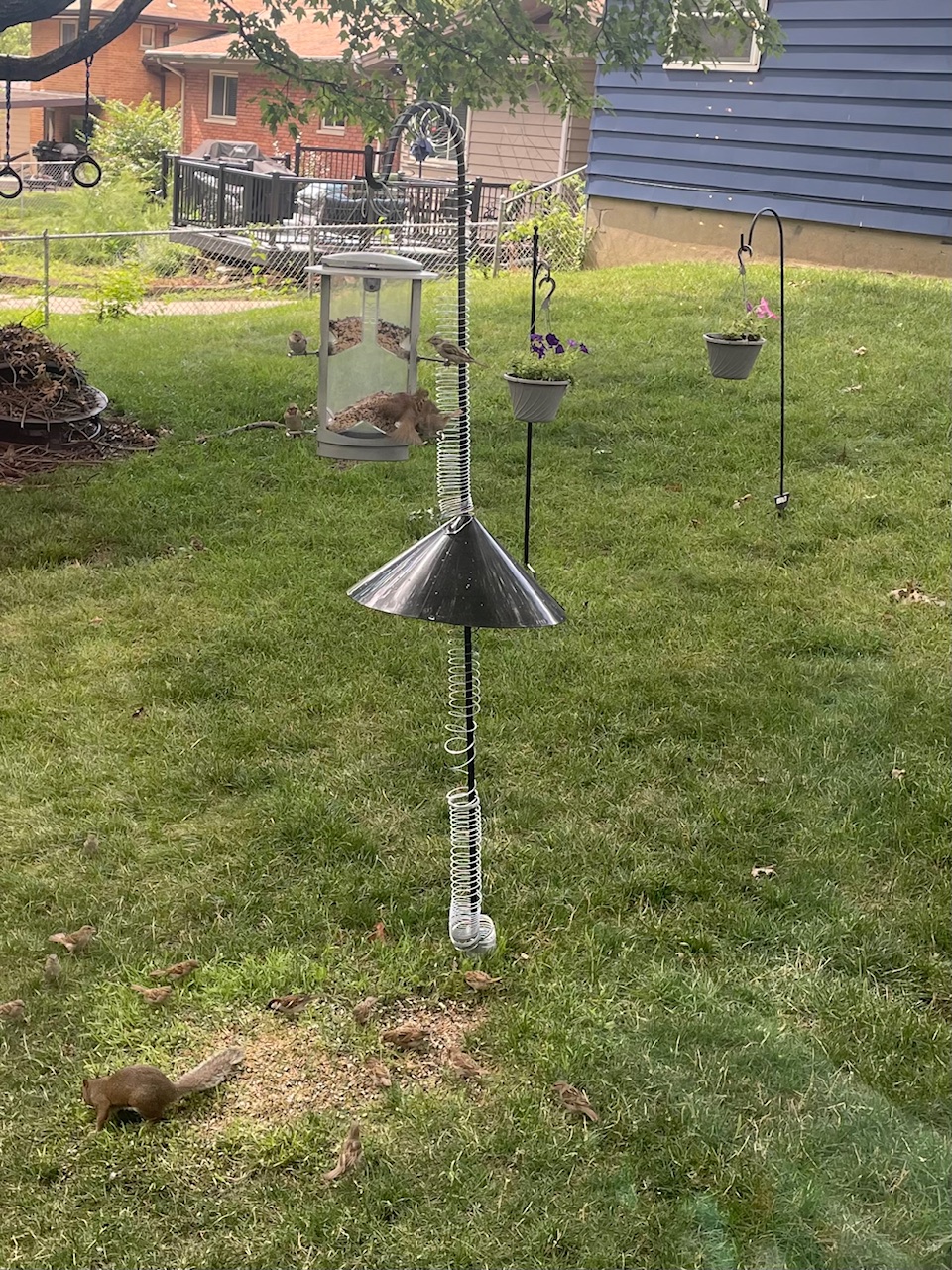
Yes, I did with the help of three slinkies, a 7-foot pole, and a baffle, which is a cone-shaped device that stops the squirrel from climbing up your pole to your feeder. I knew of the existence of baffles, but I had no idea that’s what it was called. But thanks to keyword research and placement by the vendor, I found it. Now my birds can eat in peace.
Note Mr. Squirrel, who is now relegated to picking up seeds from the ground.
Subscribe to this blog and you’ll receive an email whenever I post. To do that, enter your email address and click on the “Follow” button in the lower left-hand corner of the page. You can also follow me on the following social media platforms:
Library marketers want to make sure that their entire community knows everything the library has to offer. That’s a tall order.
Is it even possible? I have some advice about that today that may surprise you. We’ll get into it in this episode.
Plus we’ll give away kudos to a library that created a one-of-a-kind QR code with a complimentary campaign to educate the community about their offerings!
Do you have a suggestion for a topic for a future episode? Want to nominate someone for kudos? Let me know here. And thanks for watching!
Subscribe to this blog and you’ll receive an email whenever I post. To do that, enter your email address and click on the “Follow” button in the lower left-hand corner of the page. You can also follow me on the following social media platforms:
Here’s a shocking headline: It turns out that young people are not using Google to find your library!
How do we know this? There’s a new study from Forbes that may have you rethinking your strategy on search and where you post your library promotions. I’ll share the results with you in this episode of The Library Marketing Show.
Plus we’ll give kudos to a library system offering a much-needed service for its community.
Do you have a suggestion for a topic for a future episode? Want to nominate someone for kudos? Let me know here. And thanks for watching!
Subscribe to this blog and you’ll receive an email whenever I post. To do that, enter your email address and click on the “Follow” button in the lower left-hand corner of the page. You can also follow me on the following social media platforms:
Instagram has made four major changes to its algorithm! One of these changes might be a deal-breaker for your library, especially if you are a team of one person. We’ll unpack the four new things you’ll have to keep in mind when posting to Instagram and how those changes impact the work of your library marketing in this episode.
Plus we’ll give kudos today to a library that won’t have to worry about changing their Instagram strategy because they’re already following best practices for one of these four new Instagram algorithm changes.
Do you have a suggestion for a topic for a future episode? Want to nominate someone for kudos? Let me know here. And thanks for watching!
Subscribe to this blog and you’ll receive an email whenever I post. To do that, enter your email address and click on the “Follow” button in the lower left-hand corner of the page. You can also follow me on the following social media platforms:
There is a phrase that pops up quite frequently in library marketing which has bothered me for quite some time: “More than books.” Other than a few people I work with at NoveList, I thought I was the only person who felt this way. But I’m not! A librarian wrote an eloquent piece about it this week, and we’ll talk about it in this episode of The Library Marketing Show.
Plus kudos go to a library for their perfect response when trolls took over a Facebook post about their in-library Pride Month display.
Do you have a suggestion for a topic for a future episode? Want to nominate someone for kudos? Let me know here. And thanks for watching!
Subscribe to this blog and you’ll receive an email whenever I post. To do that, enter your email address and click on the “Follow” button in the lower left-hand corner of the page. You can also follow me on the following social media platforms:
Photo courtesy Cincinnati and Hamilton County Public Library
The first thing I do when I visit my parents is greet their dogs. The second thing is to look for my list.
My parents are aging, so I like to help with things they can no longer do. I wash windows, weed the flower beds, and sew on loose buttons. As I work through the list, I get a certain satisfaction in checking things off.
Lists have always been a part of my life. My mother wrote a daily list for when I got home from school. Feed the dogs. Make a salad. Start your homework. It’s almost as if she thought I wouldn’t know what to do with myself if I didn’t have a list to follow.
And she was right. I now make lists for everything. Lists for packing. Lists for groceries. Lists of tasks I need to complete during the workday. Gift lists at the holidays.
Lists help you focus and prioritize. So, when one of my readers asked for a list of the ten best tips and practices for library marketing, I dug in. (Imagine me cracking my knuckles, blowing on my fingers, and setting my fingers on the keyboard here.)
Top Ten Tips for Library Marketing and Promotions
#1: Send email to your community.
Email is the most effective marketing tactic. You don’t have to battle algorithms. And 99 percent of people with an email address read their email daily, usually first thing in the morning.
Starting a consistent library email program can be intimidating. But I put it at the top of the list because it’s the best use of your time.
You can start small by sending a newsletter. Work your way up to targeted email segments, where you’ll be sending shorter, more focused messages to specific groups of people. Don’t worry that you’re leaving people out with more niche emails… you are not.
#2: Post no more than once a day on your social media channels.
Social media for libraries works to create brand awareness and affinity. But they’re also ruled by algorithms that determine who sees your posts. The algorithms value quality posts, not quantity. So, posting often does nothing to boost your reach. Once a day is plenty.
Make a schedule to create quality posts and give your social media feeds consistency (which the algorithms love). For example:
Monday: Promote an item in your collection.
Tuesday: Share a video.
Wednesday: Ask a question.
Thursday: Promote a program.
Friday: Share something about a library staff member or something behind the scenes of library work.
Saturday: Promote a service, like your seed library, a database, streaming videos, or your MakerSpace.
Sunday: Share something funny, inspiring, or thoughtful about the joy of reading or the importance of intellectual freedom.
Each year, beginning in November, I publish a best practices guide for each of the major social media channels. To see the guides, type the name of the platform you want to research in the homepage search bar.
#3: Put a bookmark in every hold and checkout that leaves your library.
Your collection is a marketing tactic! No library visitor should ever leave the building without a piece of promotional material.
To get started, pick three areas of focus for your bookmarks. Make one bookmark for each of your three focus promotions. For example:
A booklist
An online item like streaming music
A recurring program.
Teach staff to add a bookmark to every hold and checkout. They use context clues to decide which of your three focused promotional bookmarks will resonate most with each library visitor.
#4: Write a general marketing script and have staff recite or read it before every program.
Your programs are also a marketing tactic. Use the first minute of each program as a “housekeeping moment”, so share a marketing message to this captive audience.
The message should be short, 3-4 sentences. And it should be tailored to the audience.
Here’s an example. Let’s say your library just purchased a set of after-hours holds lockers. You want people to use them. You can create a script for staff to read before programs.
For children’s programs your script might say:
“Hello everyone! I wanted to let you know about a new service we have at the library – our after-hours holds lockers. You can pick up your reserved books and materials anytime, even when the library is closed. It’s a convenient way to get the books your family needs, on your schedule!”
For adult programs, your script might say:
“Hello everyone! Before we begin, I want to tell you that our library now has after-hours holds lockers. Maybe you saw them as you walked in: they’re just to the right of the front doors. You can pick up your reserved books and materials at any time, even outside of our regular hours. So if you work a late shift or you’re going to have a particularly busy day and can’t get to the library before we close, you can still get your books!”
#5: Talk to one community group every month.
Reach out to the Kiwanis Club, Chamber of Commerce, Junior League, and local professional groups. Ask for five minutes during their next meeting to talk about what is available at the library and to sign up members for a library card.
#5: Analyze your promotional metrics each month.
Schedule 30 minutes once a month to look at the past month’s performance on social media, email, and your website.
Watch for trends. Did your social media impressions spike this month? What may have caused that? Did your email open rate plummet? Take a look at the emails you were sending to determine what may have caused the dip. Did attendance skyrocket at your monthly book club after you posted an Instagram Reel promoting it? Do more Instagram Reels!
This work will help you spot issues and opportunities. You can replicate the things that your audience responds to. And you can stop doing the things that don’t work for your audience, and have the data to back up your decision! It’s time well spent.
#6: Create an editorial calendar for the next 6-12 months.
Planning your promotional schedule gives you time to thoughtfully create your promotions and get approvals. Plus, you can share your plans with your coworkers and supervisors, so everyone at the library knows what’s been marketed and when.
Schedule your emails, when you’ll change your website graphics, your book displays… even the signs in your library lobby.
Some of this planning will be easy. You know when summer reading, Library Workers Week, National Library Card Signup Month, back-to-school, and holiday events happen.
Leave space in your calendar for those unexpected things that come up. If your director announces his or her retirement, your building needs renovations, or your library buys a new database… you’ll have space in your calendar to accommodate those promotions.
#7: Ask for time at the next all-staff meeting to discuss library marketing.
One of the most common things library marketers struggle with is their coworkers. They don’t understand how promotions work!
Transparency is always a good idea. You want everyone, from the front-line staff to your senior staff, to understand what you’re doing and why you’re doing it.
Talk about your goals. Talk about how you work to accomplish them, and why you use certain marketing channels for certain promotions. Then, share successes to show that your efforts are working and share failures to drive home the point that marketing is an experiment and you’re always learning.
The media is an audience you must court, like any other target audience! The easier you make their job, the more positive press coverage your library will enjoy.
I used to work as a television news producer and I have many friends still in the business. Here are the top six tips they give for garnering press coverage for your library. Here are more tips from another former journalist turned library marketer.
And, I hope you’re planning to attend the 2024 Library Marketing and Communications Conference because this is the focus of my session this year! I’ll be moderating a panel with three former journalists turned library marketers who will share their top tips for building positive relationships with your local media.
#9: Start a blog.
A blog is one of the best ways to share information about the library and drive visitors to your website. It allows your library to tell your story, create brand awareness, and promote your library to your audience for free, without having to deal with the rules of someone else’s platform.
Marketing is changing all the time. You can keep up with the latest social media news and marketing tips by dedicating time to this work.
Hey library marketing friends: Remember, every promotion you put out into the world can spark a lifelong love of reading in someone. Your work makes a difference!
Subscribe to this blog and you’ll receive an email whenever I post. To do that, enter your email address and click on the “Follow” button in the lower left-hand corner of the page. You can also follow me on the following social media platforms:
We are going to put a common library marketing fear to rest, once and for all.
Here’s the concern: Are you inadvertently leaving people behind when you target people with your email marketing? Let’s get into it in this episode of The Library Marketing Show.
Plus kudos go to a library that was the focus of a blog post by a local country radio station DJ!
Do you have a suggestion for a topic for a future episode? Want to nominate someone for kudos? Let me know here. And thanks for watching!
Subscribe to this blog and you’ll receive an email whenever I post. To do that, enter your email address and click on the “Follow” button in the lower left-hand corner of the page. You can also follow me on the following social media platforms: