Subscribe to this blog and youโll receive an email whenever I post. To do that, enter youremail address and click on the โFollowโ button in the lower left-hand corner of the page. You can also follow me on the following social media platforms:
Photo courtesy Cincinnati and Hamilton County Public Library
Terrance is a senior in high school, with a bright future ahead of him.
Heโs gregarious, curious, and extroverted. He lives with his dad and two younger siblings. His dad is managing to make ends meet, but there isn’t a lot of money left over for things like vacations or extra-curricular activities.
Terrance doesnโt have a car, but heโs been using public transportation all his life. He really wants to go to college. Heโd be the first in this family to go. But the application, the financial aid paperwork, interviewing, and essay writing required for admission feels overwhelming to him.
Terrance isnโt a real kidโฆ not exactly. He was a target persona I built when I worked at a library.
Terrance was based on real teens who used our library. And when I read that description, I could clearly see Terrance in my mind. (I still can–can you?) More importantly, I could find the words I needed to say in library promotions that would reach Terrance.
Terrance helped me figure out how to create effective library promotions.
What is a target persona and why do we need them?
A target persona is a fictional profile of a person who represents one of your key target audience groups, based on the characteristics of your community members.
Target personas help us get granular about our target audience. Getting granular helps us create promotions that let our community members know that we see and hear them.
Simply put, we can use target personas to create marketing that convinces those community members to use the library.
A target persona is not supposed to detail one specific person. It should never be based on one specific individual. Itโs a composite sketch, like Terrance, that should reflect most people it is supposed to represent.
How to build target personas for your library
Your community members can be broken down into core segments, or groups, based on their wants, motivations, and the problems they need your library’s help to solve. Those are your target personas.
The number of target personas your library will need will depend entirely on your library’s strategic goals and your marketing goals. Some libraries only need 2 or 3 target personas. Some will need more.
The first thing your library will do is gather demographic information about the community or target group for which you are building a persona. You may do this by researching census data or other data available from your city or town government. Settle on a general answer to these questions:
Age range
Income
Education level
Living situation (Married, single, living with multiple generations in one house, living in an apartment, unhoused, etc.)
Transportation situation (Do they have their own car or do they use public transit?)
Current library usage
Then you want to add depth to your persona. Write down answers to these questions:
Their motivations. Are they career or money-motivated? Are they family-focused?
Their attitudes. Can you identify their perspective on social issues like environmental welfare, human rights, or intellectual freedom?
Their pain points: What problems are they looking to solve?
Their aspirations for the future.
The activities they participate in, both inside and outside of the library.
Their religious and political affiliation.
Using ChatGPT to create target personas
Once you have gathered as much information as you can on your target audience by answering the questions above, itโs time to create your target persona. ChatGPT can help you get started.
Let’s say you want to build a target persona for someone who might use your library’s small business center.
Put all the information you have on your target persona together in a description and feed it into ChatGPT like this:
โPretend you are a marketer. Build me a target audience persona for a person who is in their mid-50s, who was laid off from the job they held for more than 20 years. This person has always wanted to start their own business, and they figure now is the time. But they do not have a business or marketing degree, and they have very little money. They are single and are living off savings now. They do have a bachelor’s degree in English. They have their own car. They use the library to check out books about once a month. They could use library resources to help them start their small business.โ
ChatGPT generated a target persona for “John Anderson, a resilient midlife entrepreneur on a mission!” ChatGPT assigned characteristics that I hadn’t considered, like tech savviness and media consumption.
Here’s the rest of the ChatGPT-generated target persona for John Anderson.
Goals and Motivations
Fulfilling a lifelong dream of starting his own business.
Achieving financial stability and independence.
Creating a legacy and finding personal fulfillment through his work.
Challenges
Limited budget and financial resources.
Lack of formal education in business and marketing.
Navigating the challenges of entrepreneurship later in life.
Hobbies and Interests
Enjoys reading, especially classic literature and business-related books.
Values community engagement and local events.
Appreciates the arts and cultural activities.
Media Consumption
Relies on traditional media like newspapers and local community bulletins.
Limited online presence and social media usage.
Listens to podcasts or watches videos for learning and entertainment.
Tech Savviness
Basic computer skills but may need assistance with advanced online tools.
Open to learning and adapting to technology for business purposes.
Values
Values hard work, perseverance, and integrity.
Desires to make a positive impact on the local community.
Values practical and actionable advice.
How the Library Can Help
Access to beginner-friendly business books and resources to guide him through the basics of entrepreneurship.
Workshops and one-on-one assistance on creating a business plan, marketing on a budget, and utilizing digital tools.
Free or low-cost online courses for building essential business skills.
Networking events to connect with local entrepreneurs and mentors.
ChatGPT also said, “Understanding John’s unique situation and tailoring library resources to cater to his specific needs will be crucial. Marketing messages should focus on the practicality, accessibility, and community support the library provides for someone like John as he takes the leap into entrepreneurship.”
If I worked at a library, I qould take this ChatGPT generated persona and add or subtract the things that apply to my community.
Are personas too generalized?
There is nothing that replaces a personal conversation with a community member. But it is physically impossible to talk to everyone who lives in your service area.
Personas allow us to find the commonalities of the different segments of our audience. This exercise will lead you to create promotional items that connect with your target audience.
Your target personas will likely change over time. They may be different for different programs or goals that your library is trying to reach. Thatโs okay! Your target personas should be like your library: adaptable, flexible, and able to change to meet the needs of your community.
But by having defined target personas, you are better equipped with the insights needed to build an experience that consistently and efficiently speaks to your patrons as individuals โ with content thatโs super relevant to them.
Subscribe to this blog and youโll receive an email whenever I post. To do that, enter your email address and click on the โFollowโ button in the lower left-hand corner of the page. You can also follow me on the following social media platforms:
I know, we haven’t even gotten to Halloween yet. But guess what??
TikTok has released its holiday shopping guide for marketers! And although this guide was created for shops and profit brands, there were a lot of really great tips in here that you can use at your library. Let’s dig into the guide in this episode.
Plus someone will receive kudos!
Do you have a suggestion for a topic for a future episode? Want to nominate someone for kudos? Let me know here. Thanks for watching!
(P.S. Here is the guide mentioned in this episode, no email required!)
Subscribe to this blog and youโll receive an email whenever I post. To do that, enter youremail address and click on the โFollowโ button in the lower left-hand corner of the page. You can also follow me on the following social media platforms:
I am proposing that you throw out one-third of your planned marketing and promotions for the next 12 months! I know it’s a big ask.
But I want you to use that space to create marketing and promotions that fight back against the biggest existential threat libraries have ever faced in their existence. I’ll explain why this is absolutely necessary in this episode.
Do you have a suggestion for a topic for a future episode? Want to nominate someone for kudos? Let me know here.
Subscribe to this blog and youโll receive an email whenever I post. To do that, enter youremail address and click on the โFollowโ button in the lower left-hand corner of the page. You can also follow me on the following social media platforms:
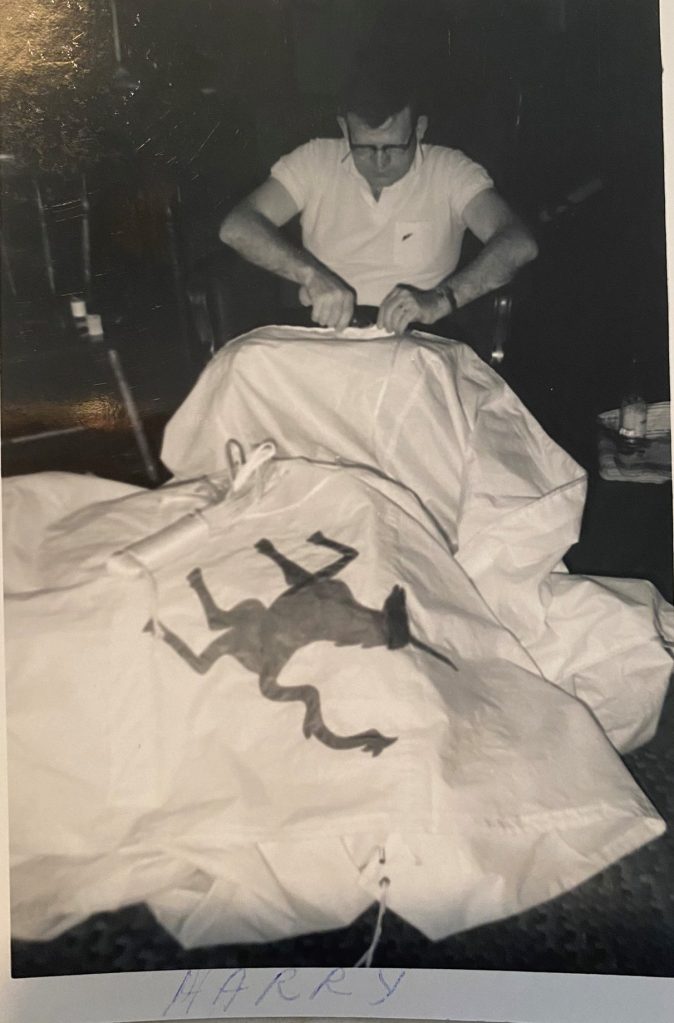
Photo courtesy Cincinnati and Hamilton County Public Library
A few weeks ago, I walked through my neighborhood listening to the Library Marketing for Library Marketers podcast. Katie Rothley was interviewing a woman named Sarah Tolle, who manages content for a large Canadian agency. And Sarah said something that literally stopped me in my tracks.
โPeople take comfort in hearing the same story repeatedly. They like knowing that they know the story and that they understand you. And they anticipate the ending. โ
-Sarah Tolle, content director for Black and White Zebra.
I was standing there on the sidewalk, staring at a squirrel gathering nuts from the front yard of an indiscriminate house, and I thought, HOLY SMOKES, this woman is dropping some truth bombs.
Sarah was talking about the value of a consistent message. The timing of this episode could not have been more perfect. In my day job, I’ve been spending a lot of time thinking about how library marketers can get the most bang for their buck.
Many of the libraries I work with are struggling to figure out how to do three big things:
Drive more visitors to their buildings
Get higher attendance at their programs
Get their cardholders to use their cards more often.
Theyโre working alone or with a small team, with very little money, and very little time. Itโs an impossible formula.
Except, as Audrey Hepburn once said, โNothing is impossible. Even the word itself says, ‘Iโm possible.'”
And the secret to success may be found in the form of a marketing axiom thatโs nearly 100 years old.
The Marketing Rule of 7
The Marketing Rule of 7 was developed by the movie industry in the 1930s. Studio bosses discovered that a certain amount of advertising and promotion was required to compel someone to see a movie.
It takes time and consistent marketing to make people aware of your library. One message, delivered on one platform, one time, is not going to be enough. We must work to make sure people are familiar with our library.
Now, I know what you are thinking. The Marketing Rule of 7 makes sense. But it’s also in complete contradiction to another marketing fact that is entirely a product of the digital age.
The Reality of Content Shock
Marketing expert Mark Shaffer, author of more than 12 books on marketing, defines Content Shock as “the phenomenon when exponentially increasing amounts of content intersect with our limited human capacity to consume it.”
In other words, thereโs too much stuff to read and not enough time to read it. (Are we talking about my inbox or my TBR? Or both?)
So how do we square both marketing truths? And how do we figure out a way forward so we can reach the goals of our library marketing?
First, the number 7 in the Marketing Rule of 7 is an arbitrary number. It could take somebody more than seven times the exposure before they become a loyal library user. Or maybe it will only take five times. Or two times.
Donโt focus so much on the number. Focus on the consistent message.
Because when your audience is overloaded with content, sharing one, consistent message, repeatedly, will break through.
Political candidates know this is true. When theyโre trying to get elected or whip up support for a bill, they come up with a main message. They repeat it everywhere: on fliers, social media, in interviews with the press, in speeches, etc. They do this because they know they must repeat the message to make sure their constituents hear and understand it.
How to Create a Consistent Message
Letโs say you work for a high school library and your goal is to get more kids to check out books to read for pleasure (because, letโs be honest, most kids do not find reading Catcher in the Rye all that pleasurable).
First, write a few lines that succinctly encapsulate the message you want to get across.
Read something for once just for fun! The library is filled with books that wonโt give you class credit but will take you on an adventure youโll never forget.
Now, use those two lines across your promotions: on bookmarks, posters, displays, and in morning announcements. Repeat it to kids who wander into the library looking for something to read. Do it all year long. By the end of the year (and probably sooner), the message will have sunk into the kids. Thatโs consistent messaging.
Next week: I’ll give you a four-step plan for repurposing any piece of content you create across multiple channels without losing your consistent, core message. (Yes, it can be done!)
Subscribe to this blog and youโll receive an email whenever I post. To do that, enter your email address and click on the โFollowโ button in the lower left-hand corner of the page. You can also follow me on the following social media platforms:
“If you build it, they will come” applies not only to baseball. It works for email marketing for libraries too!
A reader asked: How do you get people to sign up for your email newsletter? It’s easier than you think. But you have to think of it holistically. I’ll share my four-step strategy in this episode.
One note: I mention an opt-in page in this episode. I think major library announcements, like changes in service, the opening of new locations, and all-system programs like Winter Reading, Summer at the Library, and Back to School, should be opt-out. In other words, send those emails to everyone, and let them opt out if they like (most won’t!)
Do you have a suggestion for a topic for a future episode? Want to nominate someone for kudos? Let me know here.
Subscribe to this blog and youโll receive an email whenever I post. To do that, enter youremail address and click on the โFollowโ button in the lower left-hand corner of the page. You can also follow me on the following social media platforms:
Photo courtesy Cincinnati and Hamilton County Public Library
Jenie Lahmannโs parents were DIYers before it was in style.
Growing up in Richmond, Indianaโ”a fun midwestern town with rich history and endless green spaces to exploreโ, her family made weekly visits to Morrisson-Reeves Library (MRL) to indulge their need to craft and create.
โDad would go to the Do-It-Yourself section and Mom would get cookbooks and the latest Erma Bombeck writings,โ recalls Jenie. โMy brother Pat and I were off to explore the shelves in the Childrenโs Department. We always left the library with an armful of books.โ
โMy father was a self-taught craftsman and could build anything. He drew plans for making a sailboat from library books and reference librarian’s tips. From concept to completion, he used the library every step of the way. He even sewed the sails with help from Momโs sewing talents. Itโs incredible what you can learn from the library!โ
The infamous sailboat
Jenie’s dad making sails
Jenie started working at the library in high school, following in her big brotherโs footsteps. She spent a year as a shelver. Then a manager started to mentor her on print promotion. โWe created bookmarks, booklets, and other helpful printed tools for patrons before the age of library digitization,โ explains Jenie.
โThe first day, I was so nervous I fainted in her office, and we formed a strong friendship after that. She trained me in using all the printing machines and developed a trained eye for layout and design.โ
Jenie now works as Marketing and Communications Manager for the library. This year, she co-led a team of five people during a major project: a survey of their community.
MRL was looking for data to help the library create a five-year strategic plan. They included lots of questions that are standard for libraries. But Jenie says they really wanted to get to the root of what motives their community members.
โWe dug deeper and asked what services they enjoyed, and how their experience was when they walked through the door,โ elaborates Jenie. โWe want to see how we can improve our services to best meet our changing communityโs needs and to help enrich their lives.”
“We asked them to prioritize a list of eight services we are thinking of adding or expanding upon. We asked them to rate what type of programs they wanted to see, what made them happy to use the library, and what didnโt work for them.โ
MRL partnered with a local business consulting company to help them formulate the survey. Library staff met over the course of 6 weeks and looked at previous library surveys to determine which questions to ask. They added specific questions based on how often the community members used the library.
โIt was difficult to formulate the questions while keeping in mind the end goal of having data we could use to formulate the BIG Strategic Plan,โ confesses Jenie.
Jenie was kind enough to share the final survey with us.
The library released the survey into the world for a three-week stretch, accompanied by a carefully orchestrated plan to ensure they got the survey in front of as many community members as possible.
โFirst, we created a landing page on the libraryโs website,โ explains Jenie. โIt was the hub for all the content and links. Consistent graphics and wording were used.โ
โWe talked on radio programs, developed videos, e-newsletters, postcards with QR codes, and social media campaigns. We had staffers reach out to their contacts to ask them to fill out the survey personally.”
“The survey was also offered in Spanish. We canvased apartments, churches, and social groups too.โ
MRL had a goal of 500 responses. But get this: they more than doubled their response rate goal, gathering 1,104 survey responses! About 11 percent of responses came from paper copies. The rest were filed online through a Survey Monkey page.
However, the survey wasnโt the only tactic MRL used to make decisions for their strategic plan. Along with their business consulting firm partner, MRL conducted focus groups. They gathered teens, parents of teens, preschooler parents, senior citizens, community influencers, community partners, and potential community partners.
These small groups gave robust input that was combined with the survey data to give the library an overarching sense of what their community wants and needs from the library.
โIt was enlightening news that our regular library users love us,โ exclaims Jenie. โWe heard from many people who said they donโt know about library services beyond books and storytimes.โ
โWe heard that many people get their library info from e-mailed newsletters. Many people suggested that we needed to improve our message through marketing. Tough news to hear for me, but we see it as an opportunity to grow and reach people in new ways.โ
โThe main interests in the library were gathering spaces, a small business resource center, performing arts, and DIY maker spaces. People may not have access to these free services elsewhere and seek the library for these things.โ
โA big surprise was about weeding. Many patrons donโt know how or why we weed books from the library. We use library standards for weeding, but weโll need to do a better job of explaining that to our patrons.โ
Jenie says if she could do anything differently, it would be to make the survey shorter. MRLโs questions took 15 minutes to complete.
Her advice for any library looking to conduct a community-wide survey such as this is to define your end goal. โSpend time formulating your questions for the outcome data you are seeking,โ advises Jenie.
โHaving a few narrative data entry questions and the rest with a rating scale can prove to make the data processing task easily graphed or charted to show trends and outcomes. Test the digital survey on mobile, desktop, and other digital devices.โ
Jenie and the folks at MRL are now discussing a campaign idea they got from the survey, as well as an origin story campaign, asking library users to explain why they use the library, with a superhero theme.
Subscribe to this blog and youโll receive an email whenever I post. To do that, enter your email address and click on the โFollowโ button in the lower left-hand corner of the page. You can also follow me on the following social media platforms:
We’ve already established that your open rate is not necessarily the best way to measure the effectiveness of your library’s email marketing. It’s your click rate. But…
What is a good click rate? And when are you supposed to send your library’s emails? You’ll find expert advice on both of those important points in this episode.
Plus a wonderful library video earns this week’s Kudos award!
Do you have a suggestion for a topic for a future episode? Want to nominate someone for kudos? Let me know here.
Subscribe to this blog and youโll receive an email whenever I post. To do that, enter youremail address and click on the โFollowโ button in the lower left-hand corner of the page. You can also follow me on the following social media platforms: