The Library Marketing Show, Episode 167: This episode is a must-see for any library that posts on Twitter.
Elon Musk’s takeover of the social media platform has put accounts at risk. I’ll explain the threat and the four steps your library can take right now to reduce the chances your library’s account will be cloned or hacked.
Do you have a suggestion for a topic for a future episode? Want to nominate someone for kudos? Let me know in the comments. And subscribe to this series to get a new weekly video tip for libraries.
Thanks for watching!
Subscribe to this blog and you’ll receive an email whenever I post. To do that, enter your email address and click on the “Follow” button in the lower left-hand corner of the page.
The Library Marketing Show, Episode 166: This episode is all about click-thru rates for digital promotions!
This topic was suggested by a viewer named Lily who says, “We have a super high open rate and super low click-through rate. Could you talk CTRs?” I sure can!
Do you have a suggestion for a topic for a future episode? Want to nominate someone for kudos? Let me know in the comments. And subscribe to this series to get a new weekly video tip for libraries.
Subscribe to this blog and you’ll receive an email whenever I post. To do that, enter your email address and click on the “Follow” button in the lower left-hand corner of the page.
Photo courtesy Public Library of Cincinnati and Hamilton County
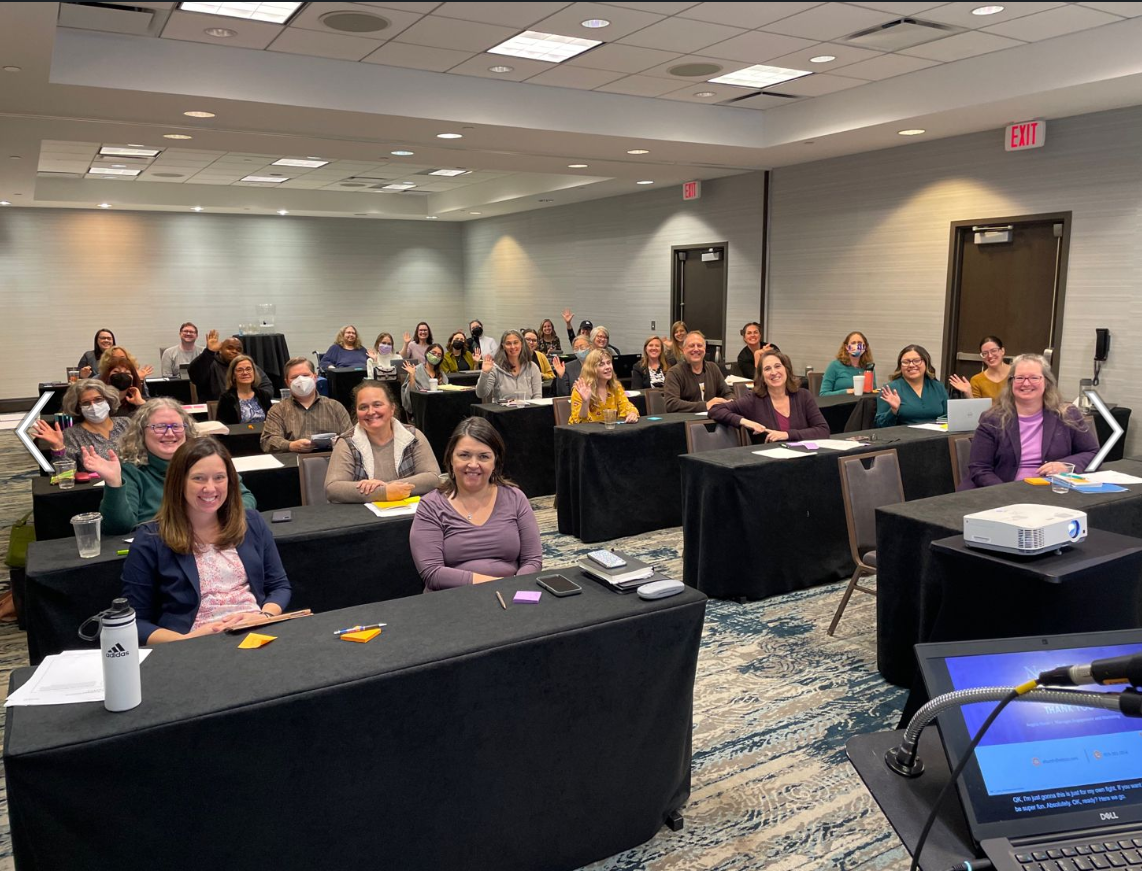
This past week, I spent three-plus hours in a room with 38 library marketers.
We worked together on all those pieces of library marketing that we don’t normally have time for.
We identified our libraries’ strengths and weaknesses. (My weakness: spelling).
We named our libraries opportunities and threats. We set SMART goals.
We identified our target audiences (hint: your audience is not everyone!). And we talked about measuring promotions to replicate success.
These are the fundamentals of library marketing. These are the building blocks that ensure your marketing will be successful.
This was the first-ever pre-conference workshop for the Library Marketing and Communications Conference, which returned in all its in-person glory. Shoutout to the dozens of readers who took the time to say hello to me!
I told the group that I knew, without a doubt, that I would learn something from them. And I did.
My 38 new best friends
Here are the four things I learned from this fantastic, dedicated, intelligent, creative, and curious set of library marketers.
Library marketers need time to think.
We are all doing too much.
We must make print collateral, send emails, schedule social media posts, attend meetings, make press releases, do outreach events, and then attend more meetings.
I asked almost everyone I met at LMCC how things are going at their library. And I lost track of the number of times the response was, “It’s been a little nuts.”
The idea of setting aside time to consider what is to be done, how it will be done, who will do it, and how it can be more effective, is an entirely foreign concept to most libraries.
We don’t give our employees the time to work through strategic planning. There is no rest. At many libraries, the marketing is done by librarians who also have other duties. There’s never any time to breathe.
And then we wonder why it’s so difficult to create successful library marketing and communications.
That happens because we never take the time to do all the fundamental work that is necessary to ensure our marketing is effective. We’re building houses without foundations.
So, the workshop gave these library marketers permission to ignore email, text messages, chats, and outside distractions. They got three hours to focus solely on building the foundations for strong library marketing.
It’s important to create that space for yourself as a library marketer. I know it’s difficult. If you can’t attend a workshop, you can set aside time on your calendar, like you would for a meeting, to do this important background work.
Put your phone in a locked drawer. Turn off your chat program. You can even leave your physical workspace if you need to. When I worked at the Cincinnati Library, I would hide in the stacks when I needed to do this work.😉
Library marketers face the same struggles.
We did a SWOT analysis exercise, where each library marketer identified their library’s strengths and weaknesses, opportunities, and threats. And then we shared as a group.
How many of these do you recognize as your library’s weaknesses and threats?
A marketing team made up of one person, trying to do ALL the promotions
Difficulty getting people to take an action, like place a hold or register for a program after they engage with marketing
Having too much to do
Having no identifiable library branding
The approvals process
Threats to funding
The list goes on.
During this exercise, the library marketers in the room began to realize that they are not working alone on an island. There are thousands of library staffers out there who understand their struggles because they face those same difficulties. They felt truly seen.
Library marketers have a lot to celebrate.
As much as we struggle to do effective library marketing, we also have many, many, many wins to celebrate. We should be proud of:
Our social media engagement
Our impactful partnerships
The fact that people open and read our emails more than they do for any other industry!
We have so much great content to promote.
We don’t do enough celebrations in library marketing. That’s one of the reasons I started giving out Kudos in The Library Marketing Show and began recognizing libraries via #LibraryoftheDay.
You can help. When you see a library doing great marketing work, give them a shoutout on social media. Better yet, email them to let them know you noticed their amazing promotion. You can also nominate a library for Kudos on The Library Marketing Show.
A little bit of celebration goes a long way to boosting morale for library marketing. We can be each other’s cheerleaders!
Library marketers thrive when they have a friend.
Most of the attendees of the pre-conference session told me they are introverts. But when I asked this room full of strangers to pair up, the room got super noisy!
There were smiles. There was laughter. There were conspiratorial looks and nods of understanding. It was magical.
And it occurred to me… sometimes we just need someone who understands our work.
Or you can message me on LinkedIn. Tell me a little about yourself and I’ll introduce you to a library marketing buddy.
Let’s support and encourage each other. When we work together, we strengthen the library industry and, most importantly, do a better job of providing service to our communities.
Subscribe to this blog and you’ll receive an email every time I post. To do that, enter your email address and click on the “Follow” button in the lower left-hand corner of the page.
The Library Marketing Show, Episode 165: I need your library’s help forcing a change that will make social media more accessible to everyone.
I’ll explain why your library should use camel case hashtags and how you can join the movement to make camel case the default option for all social media platforms.
Do you have a suggestion for a topic for a future episode? Want to nominate someone for kudos? Let me know in the comments.
And subscribe to this series to get a new weekly video tip for libraries.
Thanks for watching!
Subscribe to this blog and you’ll receive an email whenever I post. To do that, enter your email address and click on the “Follow” button in the lower left-hand corner of the page.
Photo courtesy Public Library of Cincinnati and Hamilton County
My favorite library marketing season is about to begin.
The last two months of the year are when a library marketer must do in-depth work that will strengthen your library’s position for the coming year.
Every other business and competitor will be ramping up their sales and discounts as we go into the holiday season. You may be worried that any promotions your library does will get lost in the shuffle.
You should be worried! According to Sprout Social, your audience receives about 2,477 messages per month from retailers between January through October. But in November and December, that number goes up 13 percent to 2,804 messages per month.
That’s why I advocate pulling back on your “regular” push promotions during the last two months of the year. Instead, you can stand out by doing something different: focus on using this time to create a deeper connection with your community.
You’ll do that by strategically building library brand awareness and affinity.
What arebrand awareness and brand affinity?
In its simplest terms, brand awareness is the extent to which your community can recall or recognize your library brand, no matter where they run across it. It means your community members know what you stand for and what you have to offer. Brand affinity, by contrast, is building an emotional connection between your library and your community.
Brand awareness and brand affinity are critically important to your library’s success. We want your community to recognize your content. And we want to create a lasting relationship between your library and your community.
When your library has strong brand awareness and brand affinity, your community members will choose to use your library over your competitors. They’ll recommend your services to friends and family. And they’ll support you with funding and volunteerism.
In fact, a study from eMarketer showed that 64 percent of people cite brand values as the primary reason they have a relationship with a particular brand. (BTW, your library is a brand!)
That’s why it’s crucial to make brand awareness a top priority for your library marketing over the next two months. Here’s how to do that.
Step #1: Inform, educate, and entertain your community.
The most effective way to build brand awareness and affinity is to position your library as a place that adds value to your community. You do this by helping people solve problems.
For this to work, you’ll spend 8 weeks strategically educating and informing your audiences. This is called content marketing. It’s a strength that libraries have, and we don’t do this kind of marketing often enough.
Create and release a series of tips for your cardholders on how they can use your library to make their lives a little easier during the holiday. Brainstorm a list of ways your library helps ease the rush and craziness of the holiday season. Then decide on a sequence and schedule for releasing those ideas.
Create the promotional collateral to go with it: bookmarks, graphics for your website, email, social media, and short videos. Then, tell your cardholders you’re going to be helping them out this holiday. Reveal your plans and tell them exactly when you’ll be releasing each tip and on what platform. Create excitement and anticipation, then pay it off with your content.
Your tips can include:
Ideas for holiday gifts, recipes, and more–especially if they are literary-themed or items in your library of things that can be tested out before they make a purchase.
A special phone line or email inbox where you can take questions from community members who need help picking out a gift, cooking a big meal, or figuring out etiquette questions like which fork to use.
Curated lists of collection items for decorating, entertaining, wrapping gifts, and cooking.
A quick video tutorial on how to use their card to get free access to Consumer Reports.
Step #2: Promote your mission, vision, and values.
Libraries spend so much time marketing what we do that we don’t often talk about why we do it. In fact, I’d argue that we take it for granted that our community members know the importance of our work. So, during your two-month brand awareness and affinity campaign, make it a point to talk and promote your library’s mission, vision, and values.
Have a staff member or patrons (or both) write a blog post on the impact of the library. Here is a great example. Repurpose those stories for social media posts and print pieces like bookmarks featuring quotes from real-life library users.
You can gather patron stories by asking email subscribers to share how your library’s work has impacted their lives. When I worked for the Cincinnati Library, I sent an email to a portion of my cardholder base and asked them to share such a story. Our library received more than 900 responses! I was then able to pick a few of the best stories. Those patrons were more than happy to share them with the world at large.
Step #3: Show the contrast between your library and your competitors.
Start checking your competitors’ websites and ads as soon as they begin their holiday marketing. Figure out what their offers are and how you can counteract those offers with free stuff!
Other companies have employees. Libraries have experts who truly care about the work they are doing and the impact they have on the community.
That’s why your staff is one of your most valuable resources. They are what makes your library stand out from your competitors. Spend the next two months making sure your community understands the value of your staff.
Interview staff about their work, and why they got into this industry. Ask them to share the story of a time when they helped a community member. Then share those stories on your blog, on social media, and in emails. The Lane Library at Stanford University is a great example of how to write a profile.
You can also ask staff members to name their favorite book of the year. Release that as a special end-of-the-year booklist. You can cross-promote these staff picks on your social platforms and include an email message to cardholders. Make sure you ask all staff members to participate… even the cleaning staff!
Step #5: Re-educate your cardholders about all your library has to offer.
Your library should create a series of emails sent to cardholders once a week for the next eight weeks. Those emails will re-introduce your cardholders to the best features of your library. It will inspire them to use their cards again.
To create this campaign, you’ll make two lists. The first will be for the most popular resources at your library. This could include things like your Makerspace, popular storytimes, laptop terminals, or your extensive e-book collection.
Next, make a list of your library’s hidden treasures. These may be items or services that you know will solve problems for your community. This list should include things that are unique to your library, like online Homework Help, your small business resources, your vast historical resources, or your Library of Things.
Finally, look at the two lists you’ve created and narrow your focus. You want to highlight the best and most helpful things at your library without overwhelming your recipients. Choose to promote one resource from your list of popular items and one from your list of hidden library treasures for each of the emails you send.
Subscribe to this blog and you’ll receive an email every time I post. To do that, enter your email address and click on the “Follow” button in the lower left-hand corner of the page.
The Library Marketing Show, Episode 163: I’ll share some exciting news for anyone who wants to learn more about library promotions from the top minds in the business.
There is a new podcast in the world all about library marketing. It’s hosted by a library marketer. And it’s called Library Marketing for Library Marketers! I’ll give you all the details.
Do you have a suggestion for a topic for a future episode? Want to nominate someone for kudos? Let me know in the comments.
And subscribe to this series to get a new weekly video tip for libraries.
Thanks for watching!
Subscribe to this blog and you’ll receive an email whenever I post. To do that, enter your email address and click on the “Follow” button in the lower left-hand corner of the page.
Photo courtesy Public Library of Cincinnati and Hamilton County
The house I grew up in was surrounded by cornfields.
The nearest town was four miles away. It featured a grain elevator, a tiny country store, a barber shop, and a post office. A traffic light was installed after a tractor damaged the bridge from the town to the surrounding area.
Photo of the old bridge, courtesy BridgeHunter
I’m a product of small-town America. So small towns fascinate me. So do small libraries.
According to the Institute of Museum and Library Services’ annual Public Library Survey, 57 percent of libraries in the United States have five or fewer staff members. 27 percent have one or fewer full-time employees!
If you are working in a small library, you are doing everything, from working with readers to cleaning the bathrooms. Promoting your library is likely just one more thing on your to-do list, something you’ll get to if you get time.
But of course, we want people in our community to use our library. We need them to use it. So how do you market your library when you are pressed for time or staff resources?
Marketing is really not a job for one person. But that’s the reality for so many of my readers.
So here are the very focused, strategic steps you should take to consistently and effectively promote your library if you are working alone or with a tiny staff.
Set one, SMART goal.
You will need to be hyper-focused in your promotional efforts. Pick one thing you want to work on. Then set a Specific, Measurable, Attainable, Relevant, and Time-bound goal for that work.
The village of Wayne, Ohio has a population of about 900 people. It is very much like the small town I grew up in, with one notable exception: it has a library!
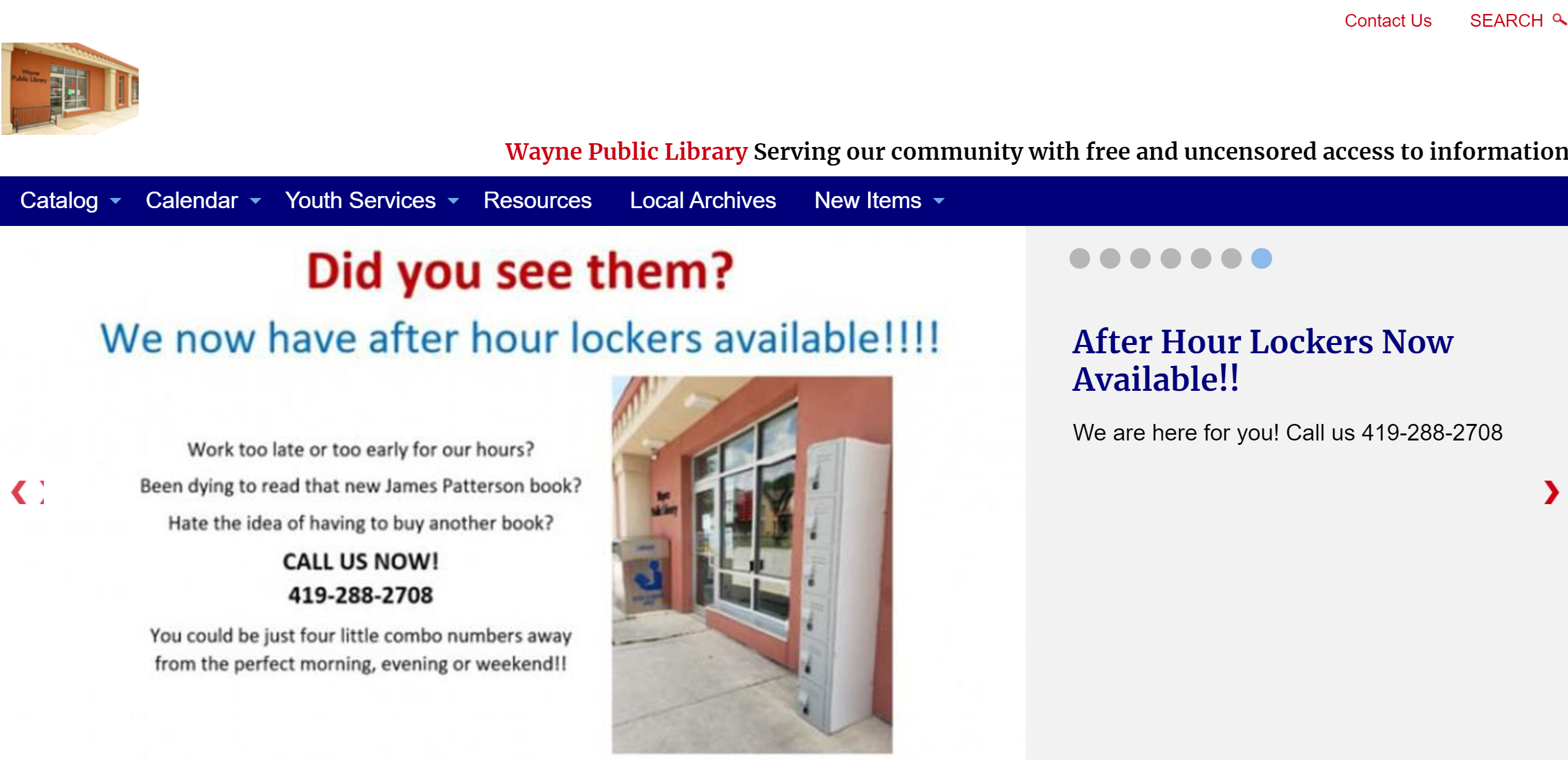
Driving through town a few weeks ago, I noticed the library has purchased an outdoor locker so patrons can pick up holds when the library isn’t open. They want people to use the locker, of course. So, they’ll want to promote it.
I don’t know anyone on the 7-person staff of the Wayne Library. But, if I were working with them, I would encourage them to set a SMART goal like this:
We will get 30 people a month to request their holds pickup via the outdoor locker. We’ll do this by promoting the locker on our website and by specifically asking patrons if they’d prefer to pick up their holds via the locker when we place holds for them. This goal is important because it will prove the value of this investment and will increase circulation. We’ll track and record the total the number of locker users at the end of each month.
You can see this goal contains specific numbers. It sets the context for why this promotion is important. And it lays out how the staff will measure success.
A SMART goal will help you organize your promotions and keep you accountable. It will give you a sense of direction for your work.
Focus on tactics that work best to reachsmall communities.
Make a list of all the ways you can promote your library: your website, email lists, social media, in-person interactions, print, partners, signs… etc. Then take a highlighter and pick the 2-3 things that work best for your community. Those are the tactics you should use to reach your SMART goal.
Every library community is different. And small libraries often find promotional success in places that are different from their larger counterparts.
For example, if your library is located by a major road, use outdoor signage to attract the attention of passing motorists. If your school is a significant community hub, ask teachers to send home promotional bookmarks and fliers in kids’ backpacks. If your town has a little restaurant where residents come for breakfast every Saturday, ask the restaurant owners to give out a promotional print piece like a bookmark or flier with the check.
Wayne Public Library uses its website to promote its lockers.
Live and die by an editorial calendar.
An editorial calendar will help you decide what, where, and when to publish. After those decisions are made, the editorial calendar will help you assign tasks and keep up to date on deadlines.
First, you’ll create your calendar. Then you’ll decide how to populate it with content that will ensure you reach your promotional goals.
Repurpose content.
When your staff is small, you’ll need to work smarter, not harder. A smart way to maximize your time and efforts is by repurposing content.
Repurposing content is the act of finding new ways to recycle your existing content. It’s basically taking one piece of content, say an email newsletter, and re-formatting it for different mediums like social media, a blog post, and an email
You can do this with any piece of content, from your website graphics to your annual report. Break the content down into pieces and spread them across all your available platforms. In this way, you can make sure everyone in your community sees your message. You also can make sure the work you are doing right now will have maximum impact.
Technology can be your best friend if you are working on promotion all by yourself. Schedule your emails, blog posts, and social media posts as far in advance as possible.
There are several great social media schedulers that have free plans. This post is an excellent list of each of those options.
For blogs, I recommend WordPress. You can get a free account and you can schedule posts to go out whenever you like. Plus, patrons who follow your blog will get an automatic email every time you post. That means you don’t have to create an email to let them know you’ve published new content.
You will have to invest in an email platform. But once you do, you can create and schedule emails to go out to your patrons as far in advance as you like.
Learn from larger libraries but don’t compare your success.
The success or failure of a library’s marketing has nothing to do with the size of its staff. In fact, I would argue it might be easier for a small library to create successful library promotions.
Small libraries have more freedom to experiment. Their staff tends to be personally connected with patrons. They have a deeper understanding of what their community wants and needs from their library.
So, follow those large library systems on social media. Sign up for their emails. Look at their websites. Visit large libraries when you travel. Make a list of ideas that you want to try at your smaller library.
But remember, the key to success is a library’s ability to connect with its own community. Any library can do that, no matter how large or small the staff.
I was recently the guest on a new podcast called Library Marketing for Library Marketers. Listen to that episode here.
Subscribe to this blog and you’ll receive an email every time I post. To do that, enter your email address and click on the “Follow” button in the lower left-hand corner of the page.
The #LibraryMarketing Show, Episode 162: This episode is my response to a recent comment by a library staffer. They believe that marketing emails aren’t worth their time because people receive too many emails from brands.
That’s a common misconception. I’ll explain why it’s not true and share some tips for making sure your library marketing emails get opened and clicked on!
Kudos in this episode go to Kathy Zappitello. Watch to find out why she’s being recognized.
Do you have a suggestion for a topic for a future episode? Want to nominate someone for kudos? Let me know in the comments.
And subscribe to this series to get a new weekly video tip for libraries.
Thanks for watching!
Subscribe to this blog and you’ll receive an email whenever I post. To do that, enter your email address and click on the “Follow” button in the lower left-hand corner of the page.
Photo courtesy Public Library of Cincinnati and Hamilton County
You are pressed for time.
I know it. I have the receipts.
Every time I lead a Learn with NoveList course, I ask a question of my audience. What’s the hardest part of library marketing?
And in every single class, the answer is always the same: Finding the time to do the work.
And yet, you’re expected to crank out library promotion after library promotion. You are asked to increase visitors, program attendance, circulation, and donations to your library. And you are often doing this promotional work while doing other things like answering reference questions, shelving books, filling holds, and cleaning the bathroom.
It’s exhausting. And sometimes, it seems downright impossible.
Time management is hard. But the benefits are well worth it. Time management helps you achieve bigger goals, reduces procrastination, and increases productivity.
I was fortunate, early in my library career, to have a mentor who helped me get control of my schedule and learn how to prioritize my work. It’s now my turn to pass on the six most effective tips for managing your time without losing your mind.
Tip #1: Schedule everything.
My calendar is more than a place to keep track of meetings. It serves as the hub for all my work tasks.
If you need time to focus, research, or think about something, schedule it in your calendar. Schedule the time you’ll be spending at the front desk. Schedule the time it takes you to work on holds or shelve books. Schedule the programs you’ll lead. Schedule time to read your email. Schedule everything.
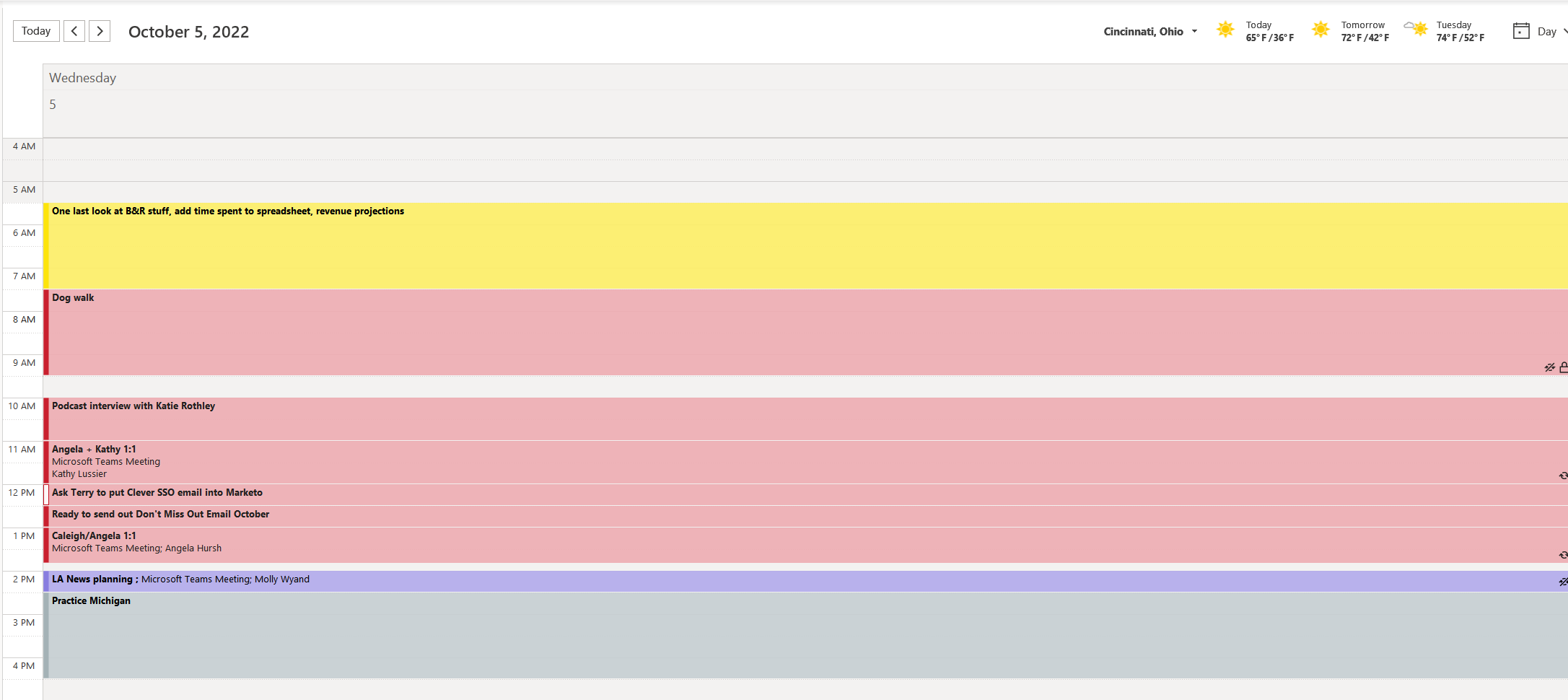
Here is a screenshot of my calendar. I use color coding to help me keep track of important, ongoing projects. Notice I even schedule my daily walk!
This method makes it clear what you’ll be working on each day. It also keeps you from forgetting tasks. When I’m given an action item from a meeting, I immediately go to my calendar and schedule time to do that work.
I also enter recurring tasks in my calendar, so I can be reminded to add those tasks to my wish list (see tip #6) when the time to do them arrives. This leaves me more time to focus on tasks for today, and not worry that I’ve forgotten to do something important.
Tip #2: Arrange your daily tasks in order of difficulty.
The most difficult or important thing on your to-do list should be the first thing you get done every day. This method creates momentum and frees up the rest of your day so you can do easier tasks or tasks you enjoy more.
Tip #3: Block out distractions.
If you need to concentrate, do whatever you have to do to get focused. A study at the University of California, Irvine found that, once you get distracted, it takes 23 minutes to regain focus. That’s a lot of time.
When you need to remove distractions, you should:
Shut down your email.
Shut down Microsoft Teams, Skype, or whatever program your library uses for internal messaging.
Close your website browser.
Turn your phone over so you can’t see the screen and put the ringer on vibrate.
Go to another location. This is especially important if your workspace is in a shared office or near patron areas of your library. It is okay to create physical barriers between you and your distractions!
Tip #4: Say “no” to be more efficient.
If you’re asked to add to your library promotional schedule but the addition does not drive the overall strategy of the library or falls outside the boundaries of your documented marketing strategy, say no. Saying no gives you time to really concentrate on the pieces that will help your library the most. Your work will be better the LESS you do.
I understand this is extremely difficult to do. I encourage you to bookmark this short but powerful essay on the power of saying no in marketing from Joe Pulizzi. I re-read this piece when I need a little help saying no!
Tip #5: Take creative breaks.
No one can churn out tasks, one right after the other, all day long. Creative breaks will give your mind a rest and help you focus when you need to. Walk the stacks or go for a walk around the block. Get away from your desk for five minutes to stretch your legs and gather your thoughts.
Tip #6: At the end of every day, celebrate what you got done and make a wish list for tomorrow.
Many, many years ago, I heard singer Wynonna Judd say something that I think about almost every day. She was discussing her schedule, and how easy it is to get to the end of the day and to feel like a failure. That’s because many of us focus on what we didn’t manage to get done, instead of celebrating what we did accomplish.
I took that to heart. At the end of the day, I spend a few minutes paying homage to the work I did, even if I didn’t make it to all the tasks I intended to do.
Then, I make a “wish list” of tasks for the next day. Notice I don’t call it a “to-do list.” That’s because library staff must be flexible and deal with unexpected work.
As you make out your “wish list,” include every task: meetings, lunches, phone calls, calculations, reports, writing assignments–the whole deal. At the end of today, go through your wish list and highlight three things that absolutely must get done. Those will be the first three things you tackle the next day.
Be protective about your wish list. If someone emails you with a task and it isn’t urgent, put it on tomorrow’s list.
And finally, do not beat yourself up if you don’t finish every task on your list. Move uncompleted items to the wish list for the next day.
Subscribe to this blog and you’ll receive an email every time I post. To do that, enter your email address and click on the “Follow” button in the lower left-hand corner of the page.