Search

Super Library Marketing: Practical Tips and Ideas for Library Promotion

Tag

marketing for libraries

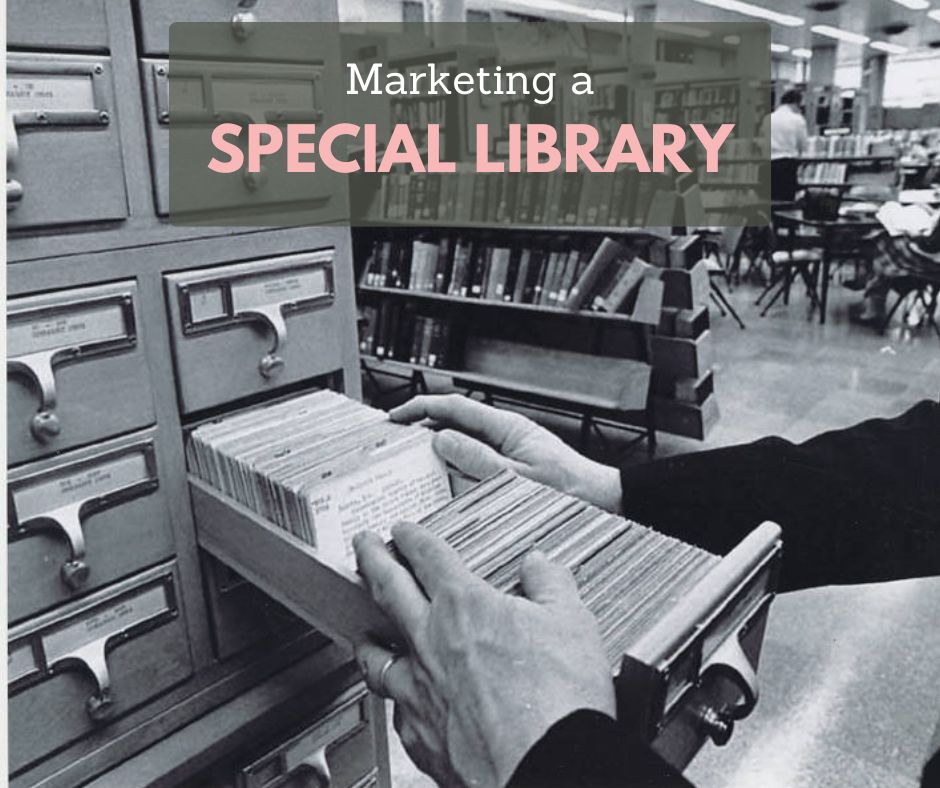
Whatโ€™s It Like To Promote a Library With a Non-Circulating Collection? Marketer at a Cultural Institution Takes Us Behind the Scenes

Photo courtesy Cincinnati and Hamilton County Public Library

Growing up in Columbia, Missouri, Lili Pangborn visited her local library nearly every day after school.

โ€œThe library staff quickly began to recognize me,โ€ recalls Lili. โ€œThey would offer to help me with homework or chat about whatever books I was reading at the time. I feel like this willingness to help others is common among library staff; libraries truly are a special place for community collaboration!โ€

Lili still spends nearly every day at the library. Sheโ€™s now the Communications Coordinator at the Newberry Library, a non-circulating research and cultural archive library in Chicago.

The library has a diverse collection of rare books, manuscripts, maps, and secondary literature that can help researchers interpret and understand original source materials. It also offers programs and exhibits.

Lili works with the Director of Communications and two graphic designers to promote the Newberry.

โ€œMuch of our marketing is focused on promoting our public events,โ€ explains Lili. โ€œWe frequently collaborate with the Public Programs, Adult Education, and Exhibitions departments to develop marketing strategies specific to each teamโ€™s needs.โ€

โ€œI believe that to successfully promote our institution, it is imperative to fully understand all aspects of how the library functions. For that reason, I try to maintain working relationships with colleagues across all departments at the Newberry, even those with whom we donโ€™t work as closely.โ€

Liliโ€™s library is quite different from that of most of my readers, as are her marketing goals.

โ€œAs an independent library that is free and open to the public, of course, our overarching goal is to get people in the doors, engaging with the collection, learning, reading, and discussing,โ€ says Lili. โ€œHowever, unlike school and public libraries, our focus isnโ€™t necessarily on literacy or early childhood education.โ€

โ€œWe are non-circulatory, which means library users cannot take collection items out of the library. Because of that, we aim to promote how users near and far can engage with the Newberry and promote the message that our collection is for everyone, not just scholars or research fellows at the library.โ€

โ€œThere are so many ways our collection can benefit personal or professional work, so one goal is to make sure our audience is aware of our collection specialties and how they can be utilized.โ€

โ€œFor example, if you are from Chicago and want to learn more about your neighborhood or a certain Chicago event, we have tons of materials on Chicago history, culture, and political movements. If you are curious about the Indigenous communities local to your area, we have a wide breadth of materials from various regions across the American continents. Or, say you are interested in building your family tree, the Newberry has a slew of materials relevant to genealogic research, not just Chicago specific!โ€

โ€œMany of our audience members are interested in learning from the items in our collection but are not interested in conducting formal research. So, we also want to make sure people know about the wide breadth of opportunities available to engage with the collection in a less formal setting, through our public programs, adult education classes, and exhibitions.โ€

I came to know of the Newberry Library through one of my readers, who mentioned that they admired the Newberryโ€™s Instagram account. Indeed, itโ€™s a history and book lovers’ dream, with lots of photos and videos featuring historic books, albums, documents, and more.

Lili shares social media posting duties with the Director of Communications, Bob Dolgan.

โ€œWe prioritize Instagram, Facebook, and Twitter, though we also have content on YouTube, Vimeo, and Threads,โ€ says Lili. โ€œBecause each platform functions differently, I try to tailor the media we share accordingly.

โ€œFor example, because Instagram is visually oriented, Iโ€™ve found that our audience responds positively when we exhibit unique and interesting items from our collection in a visually appealing way.”

“Facebook is a text- and link-oriented site, we focus more on sharing relevant articles, blog posts, and events. Due to the character limit, Twitter falls somewhere in the middle, and YouTube is primarily used as a hosting site for free recordings of our public programs and video tours of our exhibitions.โ€

The Newberry also has an amazing blog, Source Material, which features in-depth articles about interesting sections of the Newberryโ€™s collection. ย ย 

Lili says Source Material is a collaboration between departments. Sheโ€™s never at a loss for blog ideas and sometimes gets to author the articles. For example, Lili wrote this piece about the five most-requested collection items of 2023, which was a huge hit with readers. ย ย 

โ€œWe try to schedule blog posts according to relevant dates or events at the Newberry, which allows us to cross-market each item,โ€ explains Lili. โ€œThis is usually in the form of email campaigns and social media posts.โ€

โ€œOur audience loves to learn more about the behind-the-scenes work at the Newberry and are curious about new ways they can engage with our collection. Our blog posts help inspire this!โ€

The Newberry also has very clear and recognizable branding. The font, the clean outline of their website, and the images they choose all convey that old-world, historical collections connection but in a modern way.

โ€œI think that sometimes, even if people understand the value of studying the humanities, they struggle to connect that value to their everyday lives,โ€ says Lili.

โ€œAs a humanities research institution, a goal of ours has always been to show how the study of art, music, literature, cartography, and history can inform our understanding of the contemporary world.”

“Our website and social media are often peopleโ€™s first impression of the Newberry, so we want our online presence to reflect that.โ€

Lili says the communications team at the Newberry is focused in 2024 on positioning the Newberry collection and staff as resources to the community.

For inspiration, Lili looks to other special libraries, such as the Huntington Library, the Folger Shakespeare Library, and the Morgan Library.

โ€œHowever, I personally admire the Milwaukee Public Libraryโ€™s media presence,โ€ says Lili. โ€œThey do such a wonderful job of tying traditional library goals to lighthearted contemporary media trends. This strategy seems crucial, given the current movement focused on defunding public libraries and limiting access to certain books/subjects. I also love the way they continuously engage with their community members, especially the younger generation of library users.โ€


P.S. You might also find this helpful

Library Marketer Shares Her Ingenious Trick for Making Sure Her Community Sees Her Social Mediaย Posts

Subscribe to this blog and youโ€™ll receive an email whenever I post. To do that, enter your email address and click on the โ€œFollowโ€ button in the lower left-hand corner of the page. You can also follow me on the following social media platforms:

๐Ÿ›‘A Message for You and Your Supervisor on the Most Difficult, Complicated, and Important Step in Library Marketing

Watch this video now

#LibraryMarketing Show, episode 233

There’s a specific library marketing task that I admit I personally struggle to make time to do. It’s complicated and tedious. But it is so important that I dedicate this episode to it. Note: scroll to the 2:00 mark for a special message for managers of library marketers.

Plus, kudos go to a library that got press coverage of a fun event that didn’t involve any “real” visitors to the library!

Do you have a suggestion for a topic for a future episode? Want to nominate someone for kudos? Let me know here. And thanks for watching!โ€‚


Miss the last episode? No worries!

Will I see you soon?

Subscribe to this blog and youโ€™ll receive an email whenever I post. To do that, enter your email address and click on the โ€œFollowโ€ button in the lower left-hand corner of the page. You can also follow me on the following social media platforms:

Is Your Library Struggling With Program Attendance? Here Are 4 Proven Ways To Focus Your Marketing and Boost Your Numbers

Photo courtesy Cincinnati and Hamilton County Public Library

On my first day working in a library, I was handed a calendar of library events. “Here is everything that happens during the library year. You’ll learn what to expect pretty quickly and how to plan to market each of these events as they rotate in the library calendar.” 

My first thought was, “Holy cow, that’s a lot to promote. There are multiple events happening nearly every day of the year.”

And there was one other potential problem that I didnโ€™t dare say aloud.

While Iโ€™ve been a voracious user of library collections all my life, I had never attended a library program outside of taking my kids to storytime when they were little. How was I going to convince someone else to go to one??

Programs at any library, whether public, academic, special, or school are considered a core service. Every library strategic plan includes some language pledging to provide programming to fill a gap in the needs of the community.

In my work at NoveList, the amount and variety of programs Iโ€™ve seen promoted each year is astounding. There is something for everyone. Soโ€ฆ

Why do libraries struggle so much trying to get people to attend these programs?

Here’s what I’ve learned.

The libraries that get a lot of people to attend their programs focus on providing high-quality programs that meet specific community needs at a time and place most convenient for their patrons. They require registration, and they go out of their way to remind registrants to attend.

Many of you are worried about program attendance. For most libraries, it just has not returned to levels seen before the pandemic. In fact, many of you mentioned in the latest Super Library Marketing survey that you particularly struggle to promote adult programming.

So how do we increase program attendance?

I work with a lot of libraries. The ones that are successfully driving program attendance are doing three specific things.

  • Fewer overall programs
  • More quality, community-focused programs
  • More efficient and effective marketing

Your target audiences respond more to your marketing when you are promoting fewer, high-quality programs that meet their needs. And your marketing will be more effective with focus and a little help from friends. It’s truly that simple.

Take these four steps to boost library program attendance.

Ask cardholders what kinds of programs they need.

Conduct a two-question survey to ask your cardholders what they want to do or learn at the library. Resist the urge to ask more questions! You can always conduct a larger survey later.

This survey has a singular focus: to give you a sense of what interests the community.

  • Ask your community members to choose categories of programs that would be valuable and interesting to them.
  • Ask your community members about the format: How long do they want your programs to be? And where do they want it to be?

You may learn that programs at a certain branch would be more convenient for your community. You may discover that the weekdays are inconvenient for your community members. You may learn that your adult community members want you to schedule adult programs at the same time as your children’s programming so they don’t have to get a babysitter.

Research events at related organizations in your community.

Avoid creating programs at your library that compete with other organizations for time and attention.

For instance, if your branch is near a community center that’s already hosting a bunch of knitting and crafting events or groups, then your knitting and crafting programs will be in direct competition.

Instead, create programs that complement what other organizations are doing.

For example, your library might start a knitting or crafting-themed book club where participants read books related to knitting, crafting, or fiber arts. Then you can approach the community center and ask them to help you promote that program to their knitting program attendees!

Gather email addresses and send attendance reminders.

Walk-ins for programs are great. But, requiring registration allows your library to ask for an email address. Then, you can send program reminders like this one from Iredell County Public Library. ย ย ย 

Remind your attendees twice, once one week before the program and once within 24 hours of when the program is going to happen.

Partner to create and market your programming.

My library partnered with a local organization to teach workforce development skills to single parents. We also partnered with a local brewery to do a program on home brewing techniques. Both programs filled up fast (the brewery actually ran out of tables!)

Later, my library created a set of programs with an organization that teaches young girls how to do computer coding. And guess what? Registration was full!

I confess I did a bare minimum amount of marketing for all three programs. The partner organizations did most of the heavy lifting. Youโ€™ll get more people to attend (and have less promotional work to do yourself) because your partner organizations can and will share your marketing materials.

Need more help with program attendance?


P.S. You might also find this helpful

Passport to Success: How One Intrepid Library Marketer Hatched a Plan To Bring People Back to the Library

Subscribe to this blog and youโ€™ll receive an email whenever I post. To do that, enter your email address and click on the โ€œFollowโ€ button in the lower left-hand corner of the page. You can also follow me on the following social media platforms:

๐Ÿค– Let the Robots Help: How ChatGPT Can Make Posting to Social Media Faster and Easier

Watch this video now

#LibraryMarketing Show, episode 232

I have a new trick that I use in my own workday for posting across multiple social media platforms. It helps me stay within best practices in terms of post length. And this is one of those instances in which the robots are very helpful!

I will show you exactly how I do this, in this episode.

Plus, kudos go to an academic library that uses Instagram Live to build excitement and engagement.

Do you have a suggestion for a topic for a future episode? Want to nominate someone for kudos? Let me know here. And thanks for watching!โ€‚


Miss the last episode? No worries!

Will I see you soon?

Subscribe to this blog and youโ€™ll receive an email whenever I post. To do that, enter your email address and click on the โ€œFollowโ€ button in the lower left-hand corner of the page. You can also follow me on the following social media platforms:

Library Marketer Shares Brilliant 4-Step Plan for Getting Press Coverage and Building Personal Relationships With Media

Photo courtesy Cincinnati and Hamilton County Public Library

Leslie Marinelli says her happy place growing up was the Edgewood Branch of the C. C. Mellor Memorial Library in Pittsburgh, Pennsylvania. The library was right up the block from her childhood home.

โ€œBeing able to walk there and check out books on my own gave me such a sense of independence as a kid,โ€ recalls Leslie.

When her youngest son was in elementary school, Leslie volunteered as a shelver in the school media center and โ€œtotally fell in love again with the transformative power of libraries.”

“I had been a freelance writer and editor for about 10 years and took a job as a Youth Specialist at Forsyth County Public Library (FCPL) in 2017. When the Communications Manager role was created at FCPL in 2021 I jumped at the chance to use my skills and experience to promote the library to a wider audience.โ€

โ€œI typically write formal press releases for big series, special events, and major announcements,โ€ explains Leslie. โ€œBut for this branch-specific engagement program, I thought an informal email might be more personal and effective.โ€

โ€œI pitched this as a human-interest story to just one reporter and her editor. My hope was that a more casual email would stand out and not get lost in the mountain of press releases they receive daily.โ€

โ€œI also really wanted to be involved in helping to shape the story, so this approach enabled me to arrange a meeting and be there to make introductions, direct the photography, and highlight the key points. And of course, I used the emoji trick I learned in your marketing class to make the email stand out in her inbox!โ€

โ€œI also test all my important email subject lines at SubjectLine.com to see if thereโ€™s anything I can do to make them more effective. This one scored a 100. Again, I learned that trick from you and it has been a game changer for me.โ€

The subject line worked and Leslieโ€™s work building a relationship with the media landed her a victory: The display was covered in the local newspaper (you have to be a subscriber to read the full story).

Leslie says the time it takes to build those relationships with local reporters is a worthy investment for any library, no matter the size.

โ€œForsyth County is a rapidly growing area, but it still has a small-town feel,โ€ says Leslie. โ€œNetworking has been a critical part of building these relationships for me.”

โ€œOne relationship I have with a local magazine was the result of a media kit I sent to our local partners and media outlets about a big event a few years back. It contained a variety of graphics and blurbs they could copy and paste to make it easier for them to post about it online. The magazine owner liked it so much that she sent an email about it to my library director who then arranged a meeting for us. Weโ€™ve collaborated on several projects since then and she recently invited me to speak about the Library to her Rotary Club.โ€ 

โ€œI started making those media kits about select events after seeing one of our partners copy and paste the full 2-page text of one of my press releases into a Facebook post. (The horror!) Nobody is going to read that. Community partners want to support us, so the easier we make it for them to spread the word the way we want it, the better the end results will be.โ€

Leslie also has some excellent strategies for managing what gets covered by local media.

โ€œWe send out a curated list of events to the local paper each week,โ€ she explains. โ€œI started doing this after noticing they were picking events to include that werenโ€™t necessarily the programs we wanted to boost. Not only that, but they were getting some of the details wrong. By curating the events for them, in their preferred format, we have more control over the message, and it makes it easier for them to cover.โ€

Leslie also writes library-related articles for two different outlets, 400 Life and My Forsyth. (Hereโ€™s her favorite piece.) Itโ€™s a terrific way to promote the library and she says it works to satisfy her creative writing itch.

And that willingness to help her local media outlets has paid off in big ways for her library.

โ€œI helped a freelance reporter with a couple of articles about the library a couple of years ago,โ€ remembers Leslie. โ€œWe kept in touch and corresponded over email about library news I thought sheโ€™d enjoy. Last year she became the managing editor of the local newspaper, and she has been an invaluable resource for me. Weโ€™ve met a few times for coffee and lunch, and she let me pick her brain about how to improve my press releases.โ€

Leslie has four tips for any library looking to nurture a mutually beneficial relationship with the media and local partners.

Keep them informed: Invite the media to everything and follow up with them to make sure they are receiving your invitations and releases.

Make their jobs easier: In addition to the media kits for major events, create a media packet to hand out to reporters who attend your library board meetings. Include an executive summary of the topics that will be covered at the meeting, including key names, dates, and numbers, so reporters donโ€™t have to search for answers later.

โ€œOne local reporter told me sheโ€™s never received something like this from anyone else,โ€ says Leslie.

Another thing Leslie does is follow up with reporters after an event or meeting to email them additional details, links, name spellings, and more.

โ€œHaving your name misspelled or being misquoted is disheartening,โ€ exclaims Leslie. โ€œI try to do whatever I can behind the scenes to make sure everyone is happy with the results.โ€

Support their work: When a reporter writes something about your library or one of your pieces is published in a local magazine or blog, share it everywhere. This lets you support the media, fills your editorial calendar with great content, and builds your libraryโ€™s brand at the same time.

Thank them: โ€œI try to never miss an opportunity to thank and praise someone for writing a great article about my library or publishing one of my pieces,โ€ says Leslie. โ€œEmail is perfectly fine for this, but a handwritten note really stands out these days. (My grandmother would be so proud of me right now for saying that.)โ€

Leslie says press coverage is so importantโ€”now more than everโ€”for helping communities (and hopefully, lawmakers) better understand the value of libraries and excellent library workers. But thatโ€™s not the only value her library sees.

โ€œI think this kind of coverage can also be a big morale booster for staff who are in the trenches and probably donโ€™t hear often enough what a difference they make by creating such incredible programs, displays, and positive experiences for the patrons they serve,โ€ she says.

Leslie says her coworkers have told her that they know patrons who visited the library due specifically to the media coverage. As for the Charles Dickens display, the impact of the positive press coverage has a numeric value: nearly 1,000 more visitors came to the library than in the previous December.

Now FCPL turns its attention to other marketing initiatives including their annual report, an onboarding campaign for new cardholders, and building its presence on Facebookโ€ฆ again.

“We just launched a new Facebook page and changed all our social media handles to match (FoCoLibrary) due to a fruitless two-year-long battle with Meta to regain ownership of our page after a series of staffing changes,โ€ explains Leslie. โ€œNow that we have full control over the new page, weโ€™re having a lot of fun rebuilding our following and connecting with new audiences!โ€

I always ask the library marketers I profile where they draw inspiration for library marketing. Leslie says, โ€œAt the risk of sounding like a total sycophant, I have learned so much about library marketing from you and Caleigh Haworth (my co-worker at NoveList)! In fact, I just reached out to Caleigh the other day to ask how she did that cool poll in her follow-up eBlast after the LibraryAware Summer Templates Reveal Party.โ€

โ€œThe Library Marketing Book Club group on Facebook has been a great source of support and inspiration. Chris Boivin at Jacksonville Public Library does a masterful job running that group, keeping morale high, and communicating with all of us.โ€  

โ€œI love the Southern Adirondack Library Systemโ€™s Facebook page. Itโ€™s a great mix of literary humor, art, and community. They clearly got the memo that social media is supposed to be social and not a steady stream of program ads.โ€ 

โ€œThe Oklahoma Department of Wildlife Conservationโ€™s social media strategy is the best thing to ever happen to a government agencyโ€™s public persona. Iโ€™m in awe of how funny and irreverent they are.โ€

โ€œI think most library staff would be shocked to learn how much work goes on behind the scenes with such a shoestring budget to amplify the libraryโ€™s story and increase public awareness. Iโ€™m grateful to have found this little corner of the internet where we can share ideas, support, and encouragement.”  


P.S. You might also find this helpful

Emmy-Award Winning Journalist Shares 6 Dependable Ways To Get Press Coverage for Your Library

Subscribe to this blog and youโ€™ll receive an email whenever I post. To do that, enter your email address and click on the โ€œFollowโ€ button in the lower left-hand corner of the page. You can also follow me on the following social media platforms:

Making Amends After a Marketing Mistake: 6 Proven Ways To Make It Right When You Screw Up

Watch this video now

#LibraryMarketing Show, episode 231

Everyone makes mistakes. But mistake-making can impact your self-esteem and job performance.

I’ve made lots of mistakes in my career. And in this episode, I want to share the six things I do to regain the trust of those impacted by my mistakes and regain my confidence.

Plus, kudos go to a library mentioned on NPR’s Morning Edition!

Do you have a suggestion for a topic for a future episode? Want to nominate someone for kudos? Let me know here. And thanks for watching!โ€‚


Miss the last episode? No worries!

Will I see you soon?

Subscribe to this blog and youโ€™ll receive an email whenever I post. To do that, enter your email address and click on the โ€œFollowโ€ button in the lower left-hand corner of the page. You can also follow me on the following social media platforms:

๐ŸคซThe 2 Secret Tricks I Use To Get More Organic Reach for Facebook Posts

Watch this video now

#LibraryMarketing Show, episode 230

Not long ago, I got back in the social media game posting for the company I work for, NoveList. Very quickly, I remembered how difficult it is to get organic reach on regular Facebook feed posts!

But then I learned two little tricks that take me about 30 seconds a day. They work! So I’m going to share them with you in this episode

Plus, kudos go to a library that got national press coverage for an initiative to get people back into their physical branches.

Do you have a suggestion for a topic for a future episode? Want to nominate someone for kudos? Let me know here. And thanks for watching!โ€‚


Miss the last episode? No worries!

Will I see you soon?

Subscribe to this blog and youโ€™ll receive an email whenever I post. To do that, enter your email address and click on the โ€œFollowโ€ button in the lower left-hand corner of the page. You can also follow me on the following social media platforms:

The Shocking Results of a New Survey May Have You Completely Rethinking Your Libraryโ€™s Social Media Strategy

Watch this video now

#LibraryMarketing Show, episode 229

I was shocked by the results of a new Pew Research Center survey.

The survey asked adults in the U.S. which social media platform they used the most. And the top result was NOT Facebook!

Get the topline results and an action step to use for your library marketing in this episode.

Plus, kudos go to a library that received an award for the 17th year in a row!

Do you have a suggestion for a topic for a future episode? Want to nominate someone for kudos? Let me know here. And thanks for watching!โ€‚


Miss the last episode? No worries!

Will I see you soon?

Subscribe to this blog and youโ€™ll receive an email whenever I post. To do that, enter your email address and click on the โ€œFollowโ€ button in the lower left-hand corner of the page. You can also follow me on the following social media platforms:

A WordPress.com Website.

Up ↑