Search

Super Library Marketing: Practical Tips and Ideas for Library Promotion

Tag

marketing for libraries

How To Use ChatGPT To Build Target Personas and Hit the Mark ๐ŸŽฏEvery Time With Your Library Promotions

Photo courtesy Cincinnati and Hamilton County Public Library

Terrance is a senior in high school, with a bright future ahead of him.

Heโ€™s gregarious, curious, and extroverted. He lives with his dad and two younger siblings. His dad is managing to make ends meet, but there isn’t a lot of money left over for things like vacations or extra-curricular activities.

Terrance doesnโ€™t have a car, but heโ€™s been using public transportation all his life. He really wants to go to college. Heโ€™d be the first in this family to go. But the application, the financial aid paperwork, interviewing, and essay writing required for admission feels overwhelming to him.

Terrance isnโ€™t a real kidโ€ฆ not exactly. He was a target persona I built when I worked at a library.

Terrance was based on real teens who used our library. And when I read that description, I could clearly see Terrance in my mind. (I still can–can you?) More importantly, I could find the words I needed to say in library promotions that would reach Terrance.

Terrance helped me figure out how to create effective library promotions.

What is a target persona and why do we need them?

A target persona is a fictional profile of a person who represents one of your key target audience groups, based on the characteristics of your community members.

Target personas help us get granular about our target audience. Getting granular helps us create promotions that let our community members know that we see and hear them.

Simply put, we can use target personas to create marketing that convinces those community members to use the library. 

A target persona is not supposed to detail one specific person. It should never be based on one specific individual. Itโ€™s a composite sketch, like Terrance, that should reflect most people it is supposed to represent.

How to build target personas for your library

Your community members can be broken down into core segments, or groups, based on their wants, motivations, and the problems they need your library’s help to solve. Those are your target personas.

The number of target personas your library will need will depend entirely on your library’s strategic goals and your marketing goals. Some libraries only need 2 or 3 target personas. Some will need more.

The first thing your library will do is gather demographic information about the community or target group for which you are building a persona. You may do this by researching census data or other data available from your city or town government. Settle on a general answer to these questions:

  • Age range
  • Income
  • Education level
  • Living situation (Married, single, living with multiple generations in one house, living in an apartment, unhoused, etc.)
  • Transportation situation (Do they have their own car or do they use public transit?)
  • Current library usage

Then you want to add depth to your persona. Write down answers to these questions:

  • Their motivations.  Are they career or money-motivated? Are they family-focused?
  • Their attitudes. Can you identify their perspective on social issues like environmental welfare, human rights, or intellectual freedom?
  • Their pain points: What problems are they looking to solve?
  • Their aspirations for the future.
  • The activities they participate in, both inside and outside of the library.
  • Their religious and political affiliation.   

Using ChatGPT to create target personas

Once you have gathered as much information as you can on your target audience by answering the questions above, itโ€™s time to create your target persona. ChatGPT can help you get started.

Let’s say you want to build a target persona for someone who might use your library’s small business center.

Put all the information you have on your target persona together in a description and feed it into ChatGPT like this:

โ€œPretend you are a marketer. Build me a target audience persona for a person who is in their mid-50s, who was laid off from the job they held for more than 20 years. This person has always wanted to start their own business, and they figure now is the time. But they do not have a business or marketing degree, and they have very little money. They are single and are living off savings now. They do have a bachelor’s degree in English. They have their own car. They use the library to check out books about once a month. They could use library resources to help them start their small business.โ€

ChatGPT generated a target persona for “John Anderson, a resilient midlife entrepreneur on a mission!” ChatGPT assigned characteristics that I hadn’t considered, like tech savviness and media consumption.

Here’s the rest of the ChatGPT-generated target persona for John Anderson.

Goals and Motivations

  • Fulfilling a lifelong dream of starting his own business.
  • Achieving financial stability and independence.
  • Creating a legacy and finding personal fulfillment through his work.

Challenges

  • Limited budget and financial resources.
  • Lack of formal education in business and marketing.
  • Navigating the challenges of entrepreneurship later in life.

 Hobbies and Interests

  • Enjoys reading, especially classic literature and business-related books.
  • Values community engagement and local events.
  • Appreciates the arts and cultural activities.

 Media Consumption

  • Relies on traditional media like newspapers and local community bulletins.
  • Limited online presence and social media usage.
  • Listens to podcasts or watches videos for learning and entertainment.

 Tech Savviness

  • Basic computer skills but may need assistance with advanced online tools.
  • Open to learning and adapting to technology for business purposes.

 Values

  • Values hard work, perseverance, and integrity.
  • Desires to make a positive impact on the local community.
  • Values practical and actionable advice.

 How the Library Can Help

  • Access to beginner-friendly business books and resources to guide him through the basics of entrepreneurship.
  • Workshops and one-on-one assistance on creating a business plan, marketing on a budget, and utilizing digital tools.
  • Free or low-cost online courses for building essential business skills.
  • Networking events to connect with local entrepreneurs and mentors.

ChatGPT also said, “Understanding John’s unique situation and tailoring library resources to cater to his specific needs will be crucial. Marketing messages should focus on the practicality, accessibility, and community support the library provides for someone like John as he takes the leap into entrepreneurship.”

If I worked at a library, I qould take this ChatGPT generated persona and add or subtract the things that apply to my community.

Are personas too generalized?

There is nothing that replaces a personal conversation with a community member. But it is physically impossible to talk to everyone who lives in your service area.

Personas allow us to find the commonalities of the different segments of our audience. This exercise will lead you to create promotional items that connect with your target audience.

Your target personas will likely change over time. They may be different for different programs or goals that your library is trying to reach. Thatโ€™s okay! Your target personas should be like your library: adaptable, flexible, and able to change to meet the needs of your community.

But by having defined target personas, you are better equipped with the insights needed to build an experience that consistently and efficiently speaks to your patrons as individuals โ€“ with content thatโ€™s super relevant to them.


More advice

The Top 7 Tips for Library Emails That Are Guaranteed To Appeal to Millennials and Gen Z Readers

Subscribe to this blog and youโ€™ll receive an email whenever I post. To do that, enter your email address and click on the โ€œFollowโ€ button in the lower left-hand corner of the page. You can also follow me on the following social media platforms:
โญIt’s Never too Early! Get Ready to Promote Your Library on TikTok This Holiday Season

Watch this video now

#LibraryMarketing Show, episode 210

I know, we haven’t even gotten to Halloween yet. But guess what??

TikTok has released its holiday shopping guide for marketers! And although this guide was created for shops and profit brands, there were a lot of really great tips in here that you can use at your library. Let’s dig into the guide in this episode.

Plus someone will receive kudos!

Do you have a suggestion for a topic for a future episode? Want to nominate someone for kudos? Let me know here. Thanks for watching!

(P.S. Here is the guide mentioned in this episode, no email required!)


(P.S.)

Miss last week’s episode? No worries!

Will I see you soon?

Subscribe to this blog and youโ€™ll receive an email whenever I post. To do that, enter your email address and click on the โ€œFollowโ€ button in the lower left-hand corner of the page. You can also follow me on the following social media platforms:

The Top 13 Places To Find Library Content To Share When Youโ€™re Tired and Overworked (Bookmark This Post!)

Courtesy Cincinnati and Hamilton County Public Library

Promoting your library can feel a lot like feeding a very hungry, very demanding giant.

You want your community to know that your library is the source of rich and valuable information. But, let’s be honest. When you are doing the entire job of promoting your library by yourself or with a small staff, keeping up with the audience’s expectations can be exhausting.

Heck, doing it with a big staff is exhausting. Marketing is tiring.

And the more exhausted and overworked you get, the more your original content suffers. You can’t put your best work out into the world when you are weary.

Your original content, like blog posts, videos, newsletters, and social media posts that talk about what your library offers and how your library helps your community, must be as engaging as possible. Those pieces of content take precedence. You should devote your energy to making those shine.

But there are so many content holes to fill! That’s where a little trick called content curation can be super helpful.

Content curation is sharing articles, infographics, case studies, videos, and other content created by other organizations on your library’s platforms.

Now, I know this sounds counter-intuitive to promoting your library. Why would you share the work of someone else with your audience? Shouldn’t you take every opportunity to engage your followers with your library’s stuff?

That would be ideal. But I know darn well you don’t have a staff of 20 writers to fill your content needs every day. And besides helping you fill your editorial calendar, content curation has other benefits.

Sharing content that aligns with your library’s mission, vision, and values will strengthen your library’s brand. It does this by building trust in your library as an institution of knowledge and inspiration. And it helps you to drive home important messages, like the joy of reading.

Before you begin sharing

The library I used to work for was huge: 600,000 plus cardholders and 41 locations. However, I had a small marketing staff. We often shared content from other sources to fill gaps in our social media and email calendars.

We set a focus for this shared content: anything we shared from outside sources had to be related to books and the literary world. This aligned with one of our library’s overall goals to drive circulation.

That focus was both simplistic and broad. It allowed us to fill our content needs with posts about authors, new books, books being made into movies, health news related to reading, beautiful libraries around the world, historic libraries (including our own), and a lot more.

Our library’s curated content led to higher organic reach on social media. Those pieces of shared content were intriguing additions to our emails. The curated content got a high click rate.

This strategy positioned us as a news source for all things related to the book world. Our followers and fans thought of us as more than a library. They turned to us for information on all topics related to literature.

So, I advise you to set a focus: one that is simple and aligns with your libraryโ€™s strategic goals.

For example, Hennepin County Public Libraryโ€™s strategic plan includes the line:  โ€œOffering free access to essential technology and connectivity.โ€ Their curated content focus can be on technology and the benefits of open access to a community.

Here’s another example. One of Montgomery County Public Library’s strategic goals is to make sure all children ages 5 and younger are ready for kindergarten. Their curated content focus might be on shared literacy tips for caregivers of young children, as well as any content that helps caregivers prepare their kiddos for school.

Once youโ€™ve set your focus, you can start sharing. Here is a list of 13 websites where you can find library-related content to share with your audience.

Do you know of a website I should add to the list? Comment below the post to let me know!

BuzzFeed Books

This fantastic BuzzFeed spin-off is a rich source of fun content related to books, authors, and celebrities.

reddit Books

This list of user-generated content on books, libraries, and the literary world is invaluable. Use the discussion boards to give your ideas for fun, and interactive polls to create for your social media followers or email subscribers.   

NPR Books

A good source of more high-brow literary news and lots of book reviews. Use this site to help you decide which books to highlight for individual promotions on social media and through email.

HuffPost Books

Like NPR Books but with a lot of news about politics, book challenges, and diverse authors.

Book Riot

Find in-depth articles and interesting angles on literary themes. Scroll down to the bottom for links to a host of podcasts on every kind of literary subject.  

Electric Lit

A high-brow website with a fun, cultural perspective on literature.

NoveList

My team is responsible for the blog and newsletters, and we work hard to make sure they are a rich source of content curation or promotional ideas for your library. Steal away!

Library Journalโ€™s technology section

Periodic stories about how technology can impact libraries and their patrons. They publish about once a week.

School Library Journal

A great source for posts about books and other library-adjacent services for young readers.

The Princh blog

This company is based in the UK and sells printing options for libraries. Their blog is rarely about printing. Instead, they cover library topics like the impact of early literacy strategies and the joy of volunteering at a library.

American Library Association Office of Intellectual Freedom blog

Need help curating content that educates your community about the dangers of book challenges? This is the premier spot to find it.

Content Prompt

This daily email from Megan Kowalski (profiled here) will give TONS of great, daily ideas for content. Sheโ€™s a whiz at following those little-known holidays that can make for great fun on social media (Hello, Fish Tank Floorshow Night!)

Any blog from another library or one of your partners!

If you type “library blog” into Google these days, you’ll come up with a whole list of libraries that are publishing content on a variety of subjects. They’ll appreciate you if you share their content. And you’ll know those content pieces are well-researched and written from the library’s perspective.

Your partner organizations will also be flattered if you share their content. For example, if the town yoga instructor who occasionally holds a class at your branch posts about how yoga helps relieve stress, and your content curation focus is on mental health, share that post!


P.S. Want more advice?

Empathy Marketing: How To Use Greed, Fear, Love, and Hope To Motivate Your Audience

Subscribe to this blog and youโ€™ll receive an email whenever I post. To do that, enter your email address and click on the โ€œFollowโ€ button in the lower left-hand corner of the page. You can also follow me on the following social media platforms:

Libraries Face a Crisis: Why You Should Throw Out a Full One-Third of Your Planned Promotions To Fight Back

Watch this video now

#LibraryMarketing Show, episode 209

I am proposing that you throw out one-third of your planned marketing and promotions for the next 12 months! I know it’s a big ask.

But I want you to use that space to create marketing and promotions that fight back against the biggest existential threat libraries have ever faced in their existence. I’ll explain why this is absolutely necessary in this episode.

Do you have a suggestion for a topic for a future episode? Want to nominate someone for kudos? Let me know here.

Thanks for watching!


Miss last week’s episode? No worries!

Will I see you soon?

Subscribe to this blog and youโ€™ll receive an email whenever I post. To do that, enter your email address and click on the โ€œFollowโ€ button in the lower left-hand corner of the page. You can also follow me on the following social media platforms:
Emmy-Award Winning Journalist Shares 6 Dependable Ways To Get Press Coverage for Your Library

Watch this video now

#LibraryMarketing Show, episode 208

The media is an important part of your library marketing strategy. But how do you get reporters to cover your library? You’ve come to the right place.

In my former life, I was an Emmy-award-winning journalist. And I’m going to share some strategies to help you with press coverage in this episode.

Do you have a suggestion for a topic for a future episode? Want to nominate someone for kudos? Let me know here.

Thanks for watching!


Miss last week’s episode? No worries!

Will I see you soon?

Subscribe to this blog and youโ€™ll receive an email whenever I post. To do that, enter your email address and click on the โ€œFollowโ€ button in the lower left-hand corner of the page. You can also follow me on the following social media platforms:

The Magic of a Consistent Message: How to FINALLY Break Through the Noise and Promote Your Library

Photo courtesy Cincinnati and Hamilton County Public Library

A few weeks ago, I walked through my neighborhood listening to the Library Marketing for Library Marketers podcast. Katie Rothley was interviewing a woman named Sarah Tolle, who manages content for a large Canadian agency. And Sarah said something that literally stopped me in my tracks.

โ€œPeople take comfort in hearing the same story repeatedly. They like knowing that they know the story and that they understand you. And they anticipate the ending. โ€œ

-Sarah Tolle, content director for Black and White Zebra.

I was standing there on the sidewalk, staring at a squirrel gathering nuts from the front yard of an indiscriminate house, and I thought, HOLY SMOKES, this woman is dropping some truth bombs.  

Sarah was talking about the value of a consistent message. The timing of this episode could not have been more perfect. In my day job, I’ve been spending a lot of time thinking about how library marketers can get the most bang for their buck.

Many of the libraries I work with are struggling to figure out how to do three big things:

  • Drive more visitors to their buildings
  • Get higher attendance at their programs
  • Get their cardholders to use their cards more often.

Theyโ€™re working alone or with a small team, with very little money, and very little time. Itโ€™s an impossible formula.

Except, as Audrey Hepburn once said, โ€œNothing is impossible. Even the word itself says, ‘Iโ€™m possible.'”

And the secret to success may be found in the form of a marketing axiom thatโ€™s nearly 100 years old.

The Marketing Rule of 7

The Marketing Rule of 7 was developed by the movie industry in the 1930s. Studio bosses discovered that a certain amount of advertising and promotion was required to compel someone to see a movie.

It takes time and consistent marketing to make people aware of your library. One message, delivered on one platform, one time, is not going to be enough. We must work to make sure people are familiar with our library.

Now, I know what you are thinking. The Marketing Rule of 7 makes sense. But it’s also in complete contradiction to another marketing fact that is entirely a product of the digital age.

The Reality of Content Shock

Marketing expert Mark Shaffer, author of more than 12 books on marketing, defines Content Shock as “the phenomenon when exponentially increasing amounts of content intersect with our limited human capacity to consume it.”

In other words, thereโ€™s too much stuff to read and not enough time to read it. (Are we talking about my inbox or my TBR?  Or both?)

So how do we square both marketing truths? And how do we figure out a way forward so we can reach the goals of our library marketing?

First, the number 7 in the Marketing Rule of 7 is an arbitrary number. It could take somebody more than seven times the exposure before they become a loyal library user. Or maybe it will only take five times. Or two times.

Donโ€™t focus so much on the number. Focus on the consistent message.

Because when your audience is overloaded with content, sharing one, consistent message, repeatedly, will break through.

Political candidates know this is true. When theyโ€™re trying to get elected or whip up support for a bill, they come up with a main message. They repeat it everywhere: on fliers, social media, in interviews with the press, in speeches, etc. They do this because they know they must repeat the message to make sure their constituents hear and understand it.  

How to Create a Consistent Message

Letโ€™s say you work for a high school library and your goal is to get more kids to check out books to read for pleasure (because, letโ€™s be honest, most kids do not find reading Catcher in the Rye all that pleasurable).

First, write a few lines that succinctly encapsulate the message you want to get across.

Read something for once just for fun! The library is filled with books that wonโ€™t give you class credit but will take you on an adventure youโ€™ll never forget.

Now, use those two lines across your promotions: on bookmarks, posters, displays, and in morning announcements. Repeat it to kids who wander into the library looking for something to read. Do it all year long. By the end of the year (and probably sooner), the message will have sunk into the kids. Thatโ€™s consistent messaging.

Next week: I’ll give you a four-step plan for repurposing any piece of content you create across multiple channels without losing your consistent, core message. (Yes, it can be done!)

More advice

How to Properly (and Legally!) Share Creative Content on Your Libraryโ€™s Social Media Channels

Upcoming Appearances

Will I see you soon?

Subscribe to this blog and youโ€™ll receive an email whenever I post. To do that, enter your email address and click on the โ€œFollowโ€ button in the lower left-hand corner of the page. You can also follow me on the following social media platforms:

Survey Says: A Midwestern Library Marketer Shares Her Library’s Secrets for Uncovering Patron Motivations

Photo courtesy Cincinnati and Hamilton County Public Library

Jenie Lahmannโ€™s parents were DIYers before it was in style.

Growing up in Richmond, Indianaโ€””a fun midwestern town with rich history and endless green spaces to exploreโ€, her family made weekly visits to Morrisson-Reeves Library (MRL) to indulge their need to craft and create.

โ€œDad would go to the Do-It-Yourself section and Mom would get cookbooks and the latest Erma Bombeck writings,โ€ recalls Jenie. โ€œMy brother Pat and I were off to explore the shelves in the Childrenโ€™s Department. We always left the library with an armful of books.โ€

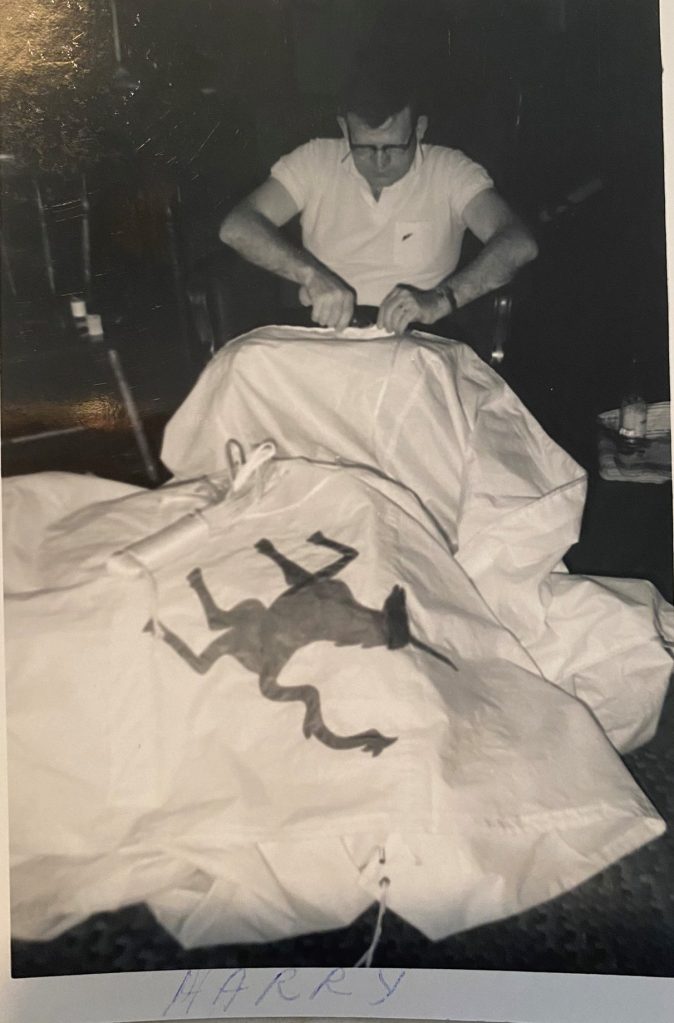
โ€œMy father was a self-taught craftsman and could build anything. He drew plans for making a sailboat from library books and reference librarian’s tips. From concept to completion, he used the library every step of the way. He even sewed the sails with help from Momโ€™s sewing talents. Itโ€™s incredible what you can learn from the library!โ€

Jenie started working at the library in high school, following in her big brotherโ€™s footsteps. She spent a year as a shelver. Then a manager started to mentor her on print promotion. โ€œWe created bookmarks, booklets, and other helpful printed tools for patrons before the age of library digitization,โ€ explains Jenie.

โ€œThe first day, I was so nervous I fainted in her office, and we formed a strong friendship after that. She trained me in using all the printing machines and developed a trained eye for layout and design.โ€

Jenie now works as Marketing and Communications Manager for the library. This year, she co-led a team of five people during a major project: a survey of their community.

MRL was looking for data to help the library create a five-year strategic plan. They included lots of questions that are standard for libraries. But Jenie says they really wanted to get to the root of what motives their community members.

โ€œWe dug deeper and asked what services they enjoyed, and how their experience was when they walked through the door,โ€ elaborates Jenie. โ€œWe want to see how we can improve our services to best meet our changing communityโ€™s needs and to help enrich their lives.”

“We asked them to prioritize a list of eight services we are thinking of adding or expanding upon. We asked them to rate what type of programs they wanted to see, what made them happy to use the library, and what didnโ€™t work for them.โ€

MRL partnered with a local business consulting company to help them formulate the survey. Library staff met over the course of 6 weeks and looked at previous library surveys to determine which questions to ask. They added specific questions based on how often the community members used the library.

โ€œIt was difficult to formulate the questions while keeping in mind the end goal of having data we could use to formulate the BIG Strategic Plan,โ€ confesses Jenie.

Jenie was kind enough to share the final survey with us.

The library released the survey into the world for a three-week stretch, accompanied by a carefully orchestrated plan to ensure they got the survey in front of as many community members as possible.

โ€œFirst, we created a landing page on the libraryโ€™s website,โ€ explains Jenie. โ€œIt was the hub for all the content and links. Consistent graphics and wording were used.โ€

โ€œWe talked on radio programs, developed videos, e-newsletters, postcards with QR codes, and social media campaigns. We had staffers reach out to their contacts to ask them to fill out the survey personally.”

“The survey was also offered in Spanish. We canvased apartments, churches, and social groups too.โ€

MRL had a goal of 500 responses. But get this: they more than doubled their response rate goal, gathering 1,104 survey responses! About 11 percent of responses came from paper copies. The rest were filed online through a Survey Monkey page.

However, the survey wasnโ€™t the only tactic MRL used to make decisions for their strategic plan. Along with their business consulting firm partner, MRL conducted focus groups. They gathered teens, parents of teens, preschooler parents, senior citizens, community influencers, community partners, and potential community partners.

These small groups gave robust input that was combined with the survey data to give the library an overarching sense of what their community wants and needs from the library.

โ€œIt was enlightening news that our regular library users love us,โ€ exclaims Jenie. โ€œWe heard from many people who said they donโ€™t know about library services beyond books and storytimes.โ€

โ€œWe heard that many people get their library info from e-mailed newsletters. Many people suggested that we needed to improve our message through marketing. Tough news to hear for me, but we see it as an opportunity to grow and reach people in new ways.โ€

โ€œThe main interests in the library were gathering spaces, a small business resource center, performing arts, and DIY maker spaces. People may not have access to these free services elsewhere and seek the library for these things.โ€

โ€œA big surprise was about weeding. Many patrons donโ€™t know how or why we weed books from the library. We use library standards for weeding, but weโ€™ll need to do a better job of explaining that to our patrons.โ€

Jenie says if she could do anything differently, it would be to make the survey shorter. MRLโ€™s questions took 15 minutes to complete.

Her advice for any library looking to conduct a community-wide survey such as this is to define your end goal. โ€œSpend time formulating your questions for the outcome data you are seeking,โ€ advises Jenie.

โ€œHaving a few narrative data entry questions and the rest with a rating scale can prove to make the data processing task easily graphed or charted to show trends and outcomes. Test the digital survey on mobile, desktop, and other digital devices.โ€

Jenie and the folks at MRL are now discussing a campaign idea they got from the survey, as well as an origin story campaign, asking library users to explain why they use the library, with a superhero theme.


Upcoming Appearances

Will I see you soon?

Subscribe to this blog and youโ€™ll receive an email whenever I post. To do that, enter your email address and click on the โ€œFollowโ€ button in the lower left-hand corner of the page. You can also follow me on the following social media platforms:

Email Click Rates and Send Times: What Are the New Best Practices For Libraries??

Watch this video

#LibraryMarketing Show, episode 206

We’ve already established that your open rate is not necessarily the best way to measure the effectiveness of your library’s email marketing. It’s your click rate. But…

What is a good click rate? And when are you supposed to send your library’s emails? You’ll find expert advice on both of those important points in this episode.

Plus a wonderful library video earns this week’s Kudos award!

Do you have a suggestion for a topic for a future episode? Want to nominate someone for kudos? Let me know here.

Thanks for watching!


Miss last week’s episode? No worries!

Will I see you soon?

Subscribe to this blog and youโ€™ll receive an email whenever I post. To do that, enter your email address and click on the โ€œFollowโ€ button in the lower left-hand corner of the page. You can also follow me on the following social media platforms:

A WordPress.com Website.

Up ↑