In this episode, we’ll talk about the news that Elon Musk purchased Twitter. What does this mean for your library’s social media strategy? I’ll share three things that might happen under Musk’s ownership of the platform. Plus, I’ll show you the one thing you can do right now to make sure your communication path with your community is clear no matter what happens to Twitter.
Kudos in this episode go to the LA Public Library. Watch the video to see why they’re being recognized.
Do you have a suggestion for a topic for a future episode? Want to nominate someone for kudos? Let me know in the comments. And subscribe to this series to get a new video tip for libraries each week.
Thanks for watching!
Subscribe to this blog and you’ll receive an email every time I post. To do that, enter your email address and click on the “Follow” button in the lower left-hand corner of the page.
The Library Marketing Show, Episode 140: In this episode, we’ll share three HUGE pieces of news in the social media world. Libraries will want to hear about these and think about how they affect their work.
The updates include news about TikTok and Instagram, as well as a major report about the best times to post on all the major platforms.
Kudos in this episode go to the Brighton Public Library. Watch the video to see why they’re being recognized.
Do you have a suggestion for a topic for a future episode? Want to nominate someone for kudos? Let me know in the comments. And subscribe to this series to get a new video tip for libraries each week.
Thanks for watching!
Subscribe to this blog and you’ll receive an email every time I post. To do that, enter your email address and click on the “Follow” button in the lower left-hand corner of the page.
Photo courtesy Cincinnati and Hamilton County Public Library digital collection
At nearly every conference I attend, there is a session on podcasting for libraries. And no wonder, as podcasting has the cost of producing episodes has declined while listenership has skyrocketed.
57 percent of Americans have listened to a podcast, according to a study conducted by Edison Research and Triton Digital. That same study found that the number of people who listen to a podcast has grown nearly 30 percent since 2018.
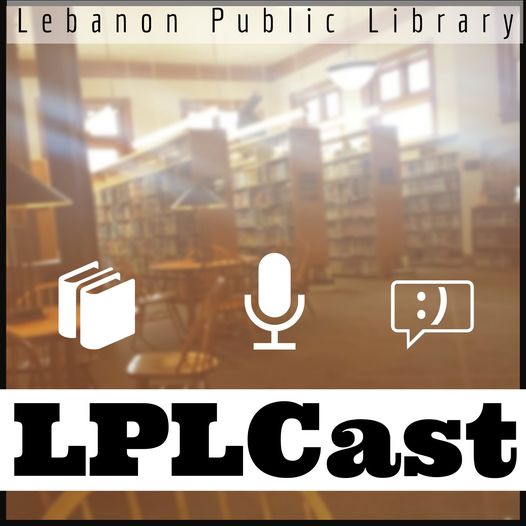
Dylan Posa works for the Lebanon Public Library in Ohio, which is located about 29 miles to the northeast of my home. We met at the Southwest Ohio and Neighboring Libraries Summer Planning Conference in January, where Dylan was presenting a session on podcasting.
The idea for LPLCast was born in the first days of the pandemic. “When our library shut down in March of 2020, the Director tasked each member of the staff to find ways that we could continue to reach our patrons and community while the doors were closed,” recalls Dylan. “My wife had recently turned me on to podcasts, so she suggested that the library create one. I immediately knew who I would choose for a co-host, as we had an easy rapport at work already.”
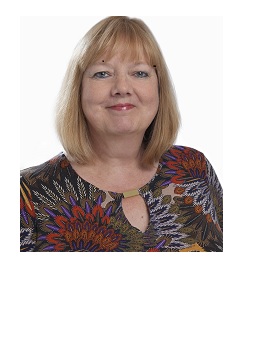
Dylan’s co-host is Barb Leitschuh, a Circulation Desk Supervisor at the library. Barb has been working at the library for more than 22 years and is a longtime resident of Lebanon. “She knows everyone on a first-name basis, and has a very snarky sense of humor, which makes our conversations that much more fun,” says Dylan.
The next step for Dylan and Barb was to set some goals for the podcast. Dylan knew that the work he was doing needed to align with his library’s overall strategic goals. “Our overall strategic goals have always been focused on community,” said Dylan. “For instance, we have never installed self-checkout stations because we feel it’s important to have contact with all our patrons whenever possible. Our goal for the podcast is to create a fun and informative environment where we can highlight library services while supporting our community.”
The first episode was published on September 20, 2020. Dylan and Barb keep to an ambitious publishing schedule, releasing new 30-minute episodes every week. “We feel like this is a decent amount of time to invest, from a listener’s point of view,” said Dylan. “The type of podcast we were creating wasn’t going to be serialized, and we didn’t want to inundate listeners with lots of detail and data. I think people would be surprised at how fast 30 minutes goes by when the talk is light and breezy!”
Dylan, a musician, and home recording enthusiast used his own equipment to produce the few episodes. Eventually, his library saw the value of the podcast and agreed to invest about $250 in equipment. “The first cost was the hosting site, “said Dylan. “I looked into several options, and the one I signed up for costs $15 per month.”
“The library had microphones and cables, so I got a 4-channel USB mixing desk that all inputs can go through,” continues Dylan. “Then I decided to use a free piece of software called Audacity that enables me to record, edit, and upload files to the hosting site. I use Garageband to create the ‘bumper’ music for each segment of our episodes; bonus points for also being free! You also need a piece of promotional. I used a free site called Adobe Spark to design something eye-catching.”
Barb oversees finding guests. In the beginning, she would just call patrons who she was already friends with and ask if they wanted to be on the podcast. But this task has gotten easier since Barb and Dylan have moved to a new format, which isn’t dependent on having a guest in every episode. “We started to open up our programming a bit, and we wanted to integrate more of the other departments into the podcast,” says Dylan.
“The first segment is an overview of what the library has going on over the next week – programs both passive and active, events, displays, etc.,” explains Dylan. “The second segment is now open for guests but is also a chance to talk to employees about whatever they want to talk about.” Each episode ends with book recommendations.
During the pandemic, Dylan would bring the equipment to Barb’s living room. But lately, they’ve been recording in their library’s training room. “We record about 35-45 minutes of material, and I edit it down to get rid of any weird noises or digressions,” says Dylan.” Sometimes a guest will ask to re-do a section, or I will have to get creative to work around some technical glitch.”
“It usually takes me about 30-45 minutes to get the episode published,” continues Dylan. “Between editing, exporting to a smaller file format, uploading onto the hosting site, creating the metadata, and double-checking to make sure I posted the right file.”
The next step is marketing each episode. Dylan says his library relies on bookmarks, which he says is… “the best marketing tool a library has! We also make sure to let people know when they check out books, and every week we post a link to the newest episode on Facebook and Instagram. We also rely on our guests to promote their own appearances to widen our exposure.”
So far, listener feedback is positive. “They have told us how fun we are to listen to,” Dylan said. “It definitely helps to have two people who like to talk to each other!”
Dylan has some advice for libraries thinking of starting a podcast. He says it’s crucial to figure out who your community is and create content that caters to their wants and needs.
Dylan also says there are lots of options for library staff to create a podcast even if they don’t have a budget or Dylan’s technical expertise. “I want to emphasize that a lot of this information is simply what works for us and our library – for instance, I definitely over-engineer our recording,” says Dylan. “There are a number of options for recording podcasts that exist as apps for phones and tablets.”
Dylan Posa is the head of the Lebanon Public Library’s reference desk and is also the manager of Acquisitions. Dylan uses his outside experience in the music business and retail industry to create new and interesting program ideas for his library.
Subscribe to this blog and you’ll receive an email every time I post. To do that, enter your email address and click on the “Follow” button in the lower left-hand corner of the page.
The Library Marketing Show, Episode 139: In this episode, I’ll answer a question I hear frequently at conferences and events. There are thousands of small and rural libraries across the world that depend on a very small staff to deliver services and create promotions. How do you effectively market your library when you’re working alone? I’ll share my top four tips.
Kudos in this episode go to the Niles-Maine District Library. Be sure to watch the video to see why they’re being recognized.
Do you have a suggestion for a topic for a future episode? Want to nominate someone for kudos? Let me know in the comments. And subscribe to this series to get a new video tip for libraries each week.
Thanks for watching!
Subscribe to this blog and you’ll receive an email every time I post. To do that, enter your email address and click on the “Follow” button in the lower left-hand corner of the page.
Image courtesy Cincinnati and Hamilton County Public Library
Here is a question that has been the source of many an existential crisis for library staff. What is the value of your work?
That proposition is at the heart of a major project every library undertakes once a year–the creation of the annual report. In its most basic form, the annual report summarizes the work conducted by a library during the preceding year.
But what if the annual report was more than a formal document? What if it truly told the story of the impact a library had on its community, beyond numbers and statistics?
Explore York provides library service for a city founded in 71 AD by the Romans. The flagship library sits within Roman-era medieval walls and has the remains of St Leonards, the largest hospital in medieval Europe, within its grounds.
The library serves more than 211,000 residents. It is an affluent city but there is also need in the community. 13 percent of children in York live in low-income families.
Putting together an annual report that connects with a varied audience and also demonstrates the vast but important work of Explore York is daunting. Barbara has a small team at her disposal: herself, a co-worker, and an outsourced graphic designer. But these three visionaries wanted to do more than report facts and figures. So, they took a storytelling approach to their annual report.
“Not everyone who reads our Annual Review will necessarily be a library user. This is our chance to intrigue, delight, and create that ‘wow, I didn’t know my library did that’ moment.”
Barbara Swinn
Barbara begins work on her next annual report as soon as she’s released the latest version. “We already produce quarterly reports for our Board of Directors, and for the City Council,” explains Barbara. “However, these reports are focused on fairly ‘dry’ information – statistics, evidence that we have met contract requirements, etc. We recognized that our Annual Review needed to be more than a reiteration of the year’s quarterly reviews. We knew, at the end of an extraordinary year, that our pandemic story made a powerful case for the enduring value of public libraries not only in our city but everywhere.”
So Barbara and her team decided to take a different approach. “To start off our planning we read Angela’s article on “The Dreaded Annual Library report” (!) and used it as a basis for our approach,” Barbara recalled. “We read the example Reviews cited in the article, we chose our favorites, and decided which bits we were going to steal from them! We also looked at the Reviews some of our local cultural organizations had produced. We shared our thoughts with our graphic designer early on too, so she could start to think about how some of our preferred visual elements could be incorporated using our branding and style.”
Next, Barbara and her team set goals for their annual review. They had to connect with a variety of audiences, from politicians to donors to volunteers to library users. “We kept in our mind what we wanted our audiences to think, feel, and do as they read our Review,” remembers Barbara. “We wanted them to understand the breadth and depth of what we had provided, feel reassured and proud of their libraries, and to support us in future years whether financially or through advocacy or practical support such as volunteering.”
“We wanted it to be a powerful advocacy tool and something that would tell our story through its imagery and design as well as through words and numbers.”
With all that in mind, Barbara and her team began to plan and gather content for each section. But she recalls that, with so much worthy and valuable work happening at her library, the focus was tricky. “Our aim was to hold up some diamonds from our daily work and from our special projects, so they could shed light over all the work we do day by day, in every library and Reading Café across the City of York,” explained Barbara.
The team did a lot of groundwork gathering feedback and testimonials from the community. “Some of the feedback we had gathered specifically with documenting our pandemic story, some arrived through the ordinary feedback channels and through conversations with our library staff,” said Barbara. “We gave equal weight to facts and figures, quotations from people, and imagery. We edited and edited to keep the words brief and to the point.”
“Telling the story was key for us,” continued Barbara. “We wanted to create a connection with the reader and us, to demonstrate our values that would hopefully resonate with the reader and encourage them to find out more, to become more involved perhaps as a volunteer or potential funder. Angela described this as a call to action for readers, that by the end of the review they would know what help we need for the following year.”
Barbara has some advice for libraries in putting together their annual report or review. “Remember we are all about stories, we hear them every day and we see the impact we have on the lives of people in our communities every day,” she explains. “Use that rich resource to shine a light on the value of our community activities, programs, and events to stir emotion and build a connection to our organization. Inspire future donors and volunteers to be involved, to want to be part of our story.”
Barbara Swinn joined Explore in 2015 as manager of the city centre flagship library York Explore and has worked in the libraries sector for 40 years. She’s been awarded the British Empire Medal in The Queen’s Birthday Honours for her work with the library. She is a passionate advocate for public libraries and a gifted leader. Committed to improving the customer experience, Barbara is skilled at creating spaces and environments where people can learn and grow, connect with others, and contribute to their community. In particular, her work with the award-winning Explore Labs project shows Barbara’s exceptional talent for development and innovation. Her work and encouragement have helped Explore grow and develop as a cultural business, and she is always looking at new ways for people to engage with the riches of York’s libraries and archives.
Subscribe to this blog and you’ll receive an email every time I post. To do that, enter your email address and click on the “Follow” button in the lower left-hand corner of the page.
The Library Marketing Show, Episode 138: In this episode, I’ll answer a viewer’s question. Michelle from Atlantic Public Library writes, “I am the director of a small library serving about 7,000 people in rural southwest Iowa. You have inspired me (and my board) to make marketing a higher priority and include it in our new strategic plan. I have just over 1,000 folks signed up for my e-mail newsletters. Does it make sense to invest our very limited publicity funds into a product that allows segmented lists for such a (relatively) small community?”
Kudos in this episode go to the Grosse Pointe Public Library. Watch the video to find out why they’re being recognized.
Do you have a suggestion for a topic for a future episode? Want to nominate someone for kudos? Let me know in the comments. And subscribe to this series to get a new video tip for libraries each week.
Thanks for watching!
Subscribe to this blog and you’ll receive an email every time I post. To do that, enter your email address and click on the “Follow” button in the lower left-hand corner of the page.
The Library Marketing Show, Episode 137: In this episode, I’ll share highlights of my favorite session at the #PLA2022 Conference in Portland, Oregon.
One library saw a 79 percent increase in circulation during the pandemic. How did they do it? Details in the video!
Do you have a suggestion for a topic for a future episode? Want to nominate someone for kudos? Let me know in the comments. And subscribe to this series to get a new video tip for libraries each week.
Thanks for watching!
Subscribe to this blog and you’ll receive an email every time I post. To do that, enter your email address and click on the “Follow” button in the lower left-hand corner of the page.
Photo courtesy Cincinnati and Hamilton County Public Library
When I was a kid, I was careful to always order the least expensive meal on the menu.
When we shopped for clothes, I always picked the cheapest option. At the start of each school year, I scoured ads (yes, even as a child!) to find the lowest prices on supplies, backpacks, and lunchboxes.
My frugality was a blessing during my time working in a library. I did a lot of effective promotions for free, especially on social media.
When I started work at the library in 2013, the average organic reach of a Facebook post was 12.5 percent. Today, it’s just 5.2 percent. That means roughly only one in every 19 fans will see your content. That is a huge decline.
Platforms adjust their algorithms to help them make money. And that’s why organic reach is now so limited.
Why your library might want to spend money on social media ads
Social media ads can do what organic posts cannot. They will ensure your posts will be seen by your target audience.
For major library campaigns, there is value in spending precious library dollars to purchase social media ads. Your library should consider investing in social media ads for the following reasons:
To reach new audiences
To solicit participation in system-wide programs like summer reading
To publicize larger library events especially if your library has invested a lot of time and money creating the event.
To publicize building openings and renovations
To soften the ground for upcoming levy or bond issues
To introduce a new library director or board member
To solicit donations
To recruit volunteers
Careful planning will lay the groundwork for a successful library social media ad campaign.
Planning your library social media ads
The first step is to identify your goal. What result are you looking to achieve? Be specific. Use numbers. Specify how you will measure the results.
For example, you may write goals like these:
“Last year, we had 500 kids ages 12-18 participate in our summer reading program. This year, we will increase that participation number by 25 percent to 625 kids.”
“We will fill 95 percent of the seats at our next virtual author program with Benjamin Gilmer, author of the new book, The Other Dr. Gilmer. Our platform has a 300-viewer capacity, so we will get at least 285 people to log on for the event.”
Once you have a specific goal, your next step will be to identify your target audience.
Let’s take the two examples above. The target audience for the summer reading program goal would be teens, their parents, and teachers. For the virtual author program, your target audience would be avid readers of nonfiction, true crime, and thriller books, book club leaders, medical professionals, lawyers, and criminal justice leaders, as well as medical, law, and criminal justice students from the nearby university. Note your target audience under your goal.
Finally, you’ll need to determine the content of your ads. To do that you’ll make these decisions:
What text will we use?
What images will we use?
What will our call to action be?
When those details are in place, you’ll be ready to begin buying your ads.
Choosing your social media ad platform
Let’s compare the three major platforms on which libraries typically purchase ads: Facebook, Instagram, and YouTube.
Facebook
Facebook is still the largest of the social media platforms, with nearly two billion active daily users. 15 percent of those users interact with ads on Facebook.
Facebook has the most powerful and accurate tools to optimize and target your audience. Facebook says nearly ten percent of the people who see the ads take an action. That’s quite high, and a great argument for using money to buy Facebook ads.
It used to be that libraries would create one ad on Facebook and be done with it. But Facebook now encourages pages to run multiple ads at the same time for optimum results.
But don’t worry about having to create the perfect combination of text, images, and calls to action. Facebook makes it easy with its Dynamic Ad creative tools. You’ll find them in the Facebook Ad Creator section.
Select “optimize ad creative for each person.” Then give Facebook at least two options for text, headlines, and images or videos. Facebook will then use keywords and its extensive knowledge of its own audience to mix and match the right combination for your target audience.
To increase the chances that your dynamic ad content will be successful, be sure to select the keywords in your text and headlines carefully and strategically. Facebook will use these keywords to help it decide who your ads will be shown to, and when they’ll be shown.
The final step is to set up Google Analytics on your library’s website with a Facebook Pixel. That will allow you to accurately track your ad on Facebook. The pixel will give your insight into how many people click on your ad and come to your library’s website to take any action, like registering for a program or signing up to participate in summer reading.
Once your ad creative pieces are chosen and your pixel is set up, run a test of all the ad options for seven days. At the end of the week, you’ll have a clear idea of which ad combination works the best. You can then invest a little more money in the ad with the best performance.
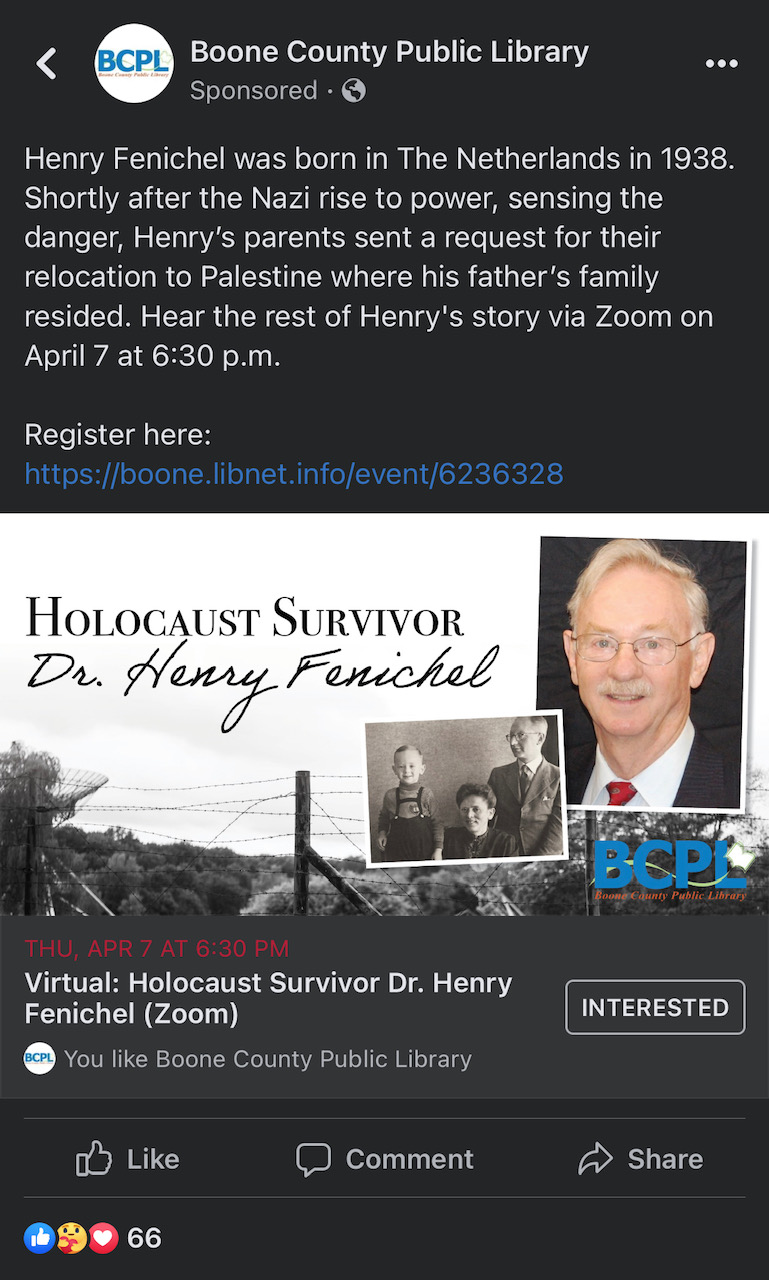
Boone County Library in Kentucky used Facebook ads.
Facebook also makes it easy to retarget people who interact with your initial ads. For example, let’s say you bought ads to spread awareness of your summer reading program. When registration opens, you can buy a second ad that will be shown to people who engaged with the first ad. That second ad might have a goal of getting those folks to register and pick up their reading log from the library.
A few weeks after that, your library could buy a third ad, retargeting anyone who engaged with the first and second ads. That third ad may have the goal of asking people to share summer reading content like photos of their book haul, their reading log, or their participation prizes.
Instagram
Instagram has around 500 million daily active users. 70 percent of shoppers say they use this app specifically to shop!
Libraries might not be selling anything, but we can certainly use the sales tools to drive engagement with our collection and services. And since the platform is owned by Facebook, libraries have access to the same targeting options that make Facebook ads so effective.
There are five types of Instagram ads:
Photo
Video
Carousel
Collection
Stories
Photo and video ads are self-explanatory. They feature one photo or video that shows up in the Instagram feed.
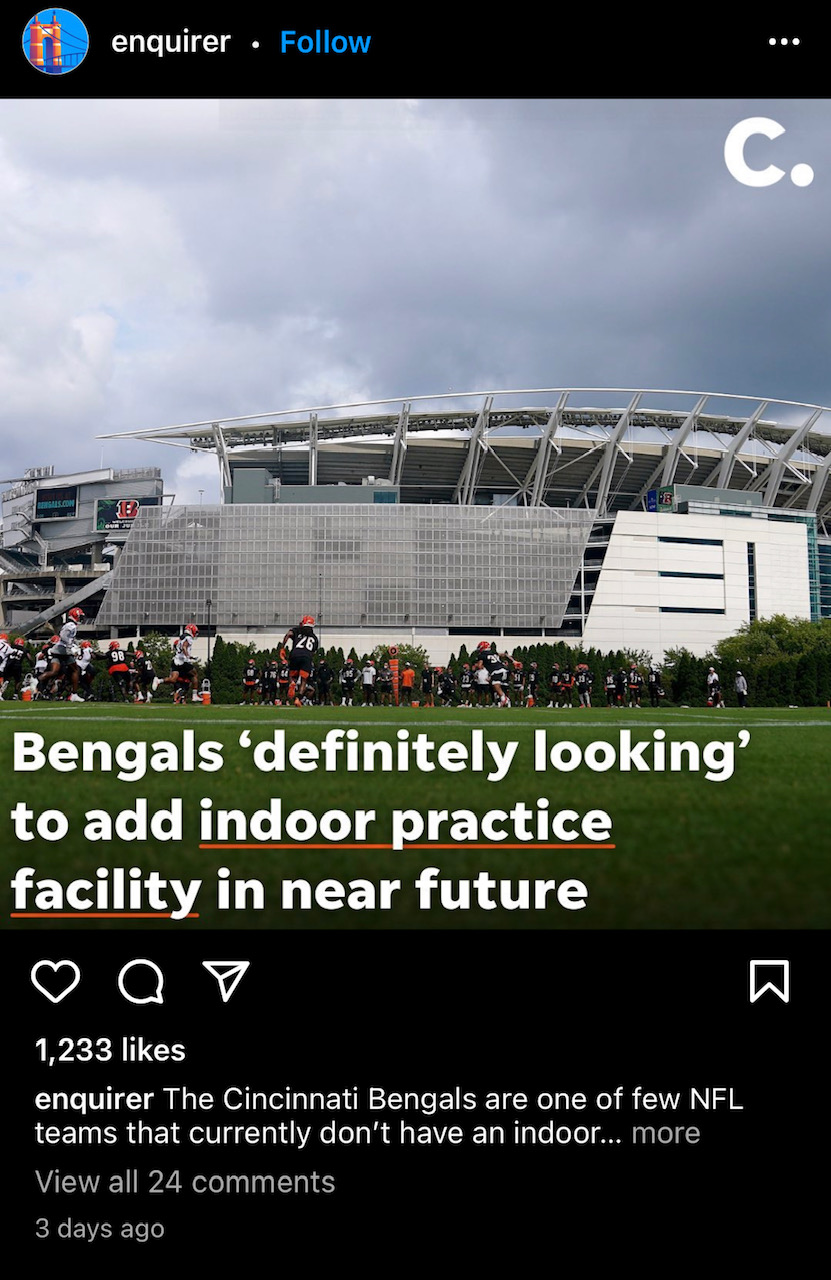
An example of a photo ad on Instagram.
Carousel ads let you combine anywhere from two and ten photos and videos all in the same post. People can swipe through to see everything in the carousel. These ads are dynamic, and they stand out from everything else in the Instagram feed.
Companies use collection ads to directly sell products. People can browse a wide range of products and services captured in a story format. For a library, a collection ad would let you showcase a series of specific library services, like a list of individual titles in a theme, or a list of your most popular databases.
You can also run Instagram story ads for your library. This would allow you to incorporate filters, video effects, music, and texts in these ads. And best of all, they include a swipe-up feature that directs the users to your library’s website.
To run an Instagram ad for your library, you’ll need to have an Instagram business or creator account—you can’t post ads from a personal Instagram account. You can convert your library page to a business account if you haven’t already done so.
You’ll be able to effectively target your audience on Instagram in the same way that you can on Facebook. You’ll choose from criteria including the location, age, gender, behavior, language, and browsing patterns of your target audience.
With both Facebook and Instagram, your library can set a daily budget. The platforms will help you determine the correct amount, based on your target audience specifications. For most libraries, a budget of $10 a day will be an adequate amount for a successful ad campaign.
YouTube
YouTube boasts an audience of over two billion monthly users. The platform is especially effective for reaching Gen Z. YouTube reaches more adults aged 18 to 24 than any TV network.
YouTube has two kinds of ads. The first, and most popular among users, is called “TrueView.” TrueView ads play before someone watches a video or in the middle of a video. The viewer may get the option to skip the ad after it plays for about 5 seconds. Your library can also customize your video’s call to action in a TrueView ad.
An ad that viewers can skip might not sound like a great idea. But YouTube’s pricing structure is set up so that your library will only pay for the ad if the user watches at least 30 seconds of a long ad or the entirety of a shorter video ad.
YouTube also has non-skippable ads that can play before, during, or after the main video. These are interruptive ads, but if you have a beautiful video ad that is valuable and entertaining, you won’t annoy the viewer. Non-skippable ads are shorter, between 7 and 15 seconds in length.
An example of a non-skippable ad on YouTube
The process of buying an ad on YouTube is slightly more complex than it is for Facebook and Instagram. Your library may end up being connected to a Google specialist by YouTube to help you make your final decisions.
But in general, once you’ve created your video ad, you’ll make some decisions that will impact the effectiveness of your ad. You’ll let YouTube know what goal you’re trying to reach. You’ll also indicate the demographics of your target audience. And you’ll set the budget for your ads. Then, your campaign begins!
Has your library purchased social media ads before? On which channels? Did you see results? Share your experience in the comments!
Subscribe to this blog and you’ll receive an email every time I post. To do that, enter your email address and click on the “Follow” button in the lower left-hand corner of the page.
The Library Marketing Show, Episode 136: In this episode, we’ll share the top three headlines and changes coming to Instagram, Facebook, and TikTok, and talk about their impact on library promotions and marketing.
Kudos in this episode go to the Mercer County Library System. Watch the video to see why they’re being recognized.
Do you have a suggestion for a topic for a future episode? Want to nominate someone for kudos? Let me know in the comments. And subscribe to this series to get a new video tip for libraries each week.
Thanks for watching!
Subscribe to this blog and you’ll receive an email every time I post. To do that, enter your email address and click on the “Follow” button in the lower left-hand corner of the page.








 Super Library Marketing: Practical Tips and Ideas for Library Promotion