Search

Super Library Marketing: Practical Tips and Ideas for Library Promotion

Tag

media coverage for libraries

How Libraries Can Get Better Press Coverage: Real Tips From Former Journalists

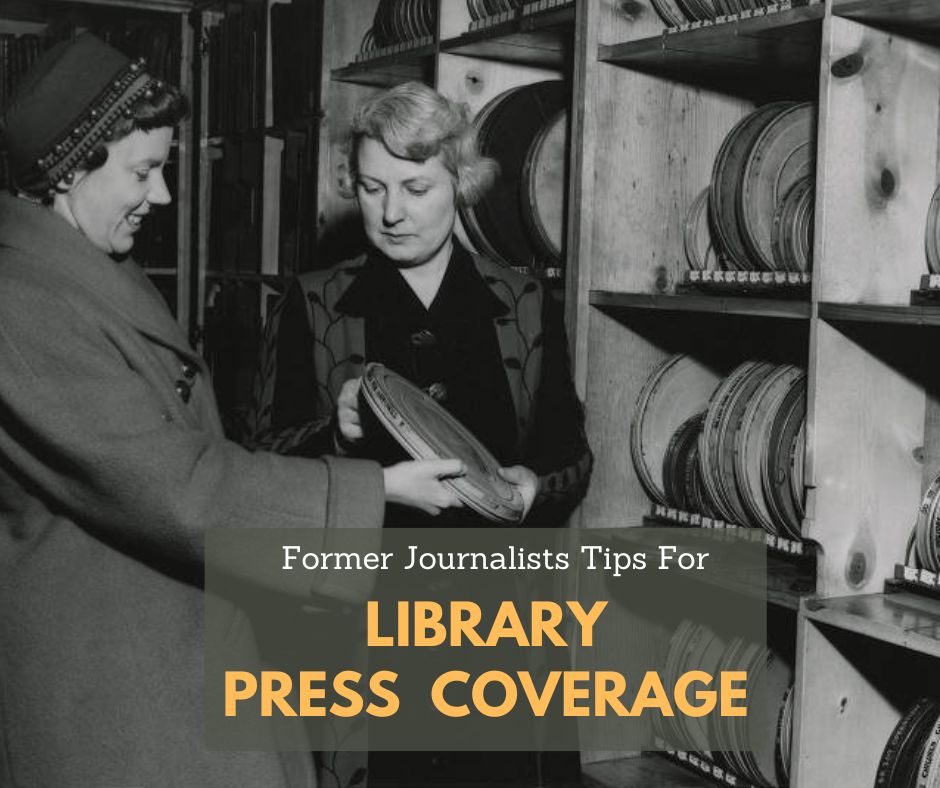
Black and white vintage photo of two women, one in a coat and hat and one in a dress, looking at film reels in a library.
Photo courtesy Cincinnati and Hamilton County Public Library

Ray Holley, the communications manager for Sonoma County Library, is fascinated with economic development and planning. When he took his current job at the library in 2018, one of the first questions he wanted to answer wasโ€ฆ what is the return on investment of a library?

Ray commissioned a respected local economist to conduct an independent study of the library system’s economic impact. The result? A headline-grabbing finding: For every $1 invested in the library, the community received $3.42 in return.

Ray knew this would make for great press coverage. He strategically timed his pitch, used an existing relationship with a reporter, and landed a feature story on the front page of the paper. That story sparked ongoing conversations about the value of libraries and gave the library system a powerful stat they continue to use in marketing and advocacy efforts.

As a former newspaper editor, Ray knows how to frame a story in a way that earns coverage. In a recent panel for the online event โ€œPutting Principles Into Practice,โ€ organized by the Library Marketing Conference Group, he joined me and another former journalistโ€“turnedโ€“library communicator, Leslie Marinelli of Forsyth County Public Library, to share insider tips on how libraries can achieve better media coverage.

Libraries have great stories to tell. But getting the media to listen isnโ€™t always easy. Here are the top 10 practical tips that Leslie, Ray, and I shared for getting your library into the news.

1. Know your media market size, so you can tailor your approach to press coverage.

Knowing whether youโ€™re in a small, medium, or large media market helps you tailor your approach and your expectations.

To determine the size of your media market, you need to identify your Designated Market Area (DMA). DMAs are geographic regions determined by the reach of local television stations and are used to define local television and radio markets.

You can find your DMA by consulting Nielsen’s DMA rankings, which are based on population size and the reach of broadcast signals. The top 25 cities on the list are considered large markets. Medium markets are numbers 25-100 on the list. If your area is listed at number 101 or lower, you are in a small market. Why does this matter?

  • Small markets may be more receptive to informal pitches, good stories, and contributor-written columns.
  • Medium markets might have a mix of overworked reporters and community-focused outlets. Relationship-building and persistence are key in these markets.
  • Large markets typically have more gatekeepers and higher competition for coverage. Youโ€™ll need a strong angle, professional press materials, and sometimes long-term relationship nurturing to break through.

2. Learn whatโ€™s truly newsworthy.

Tip from Ray: โ€œThereโ€™s what library staff think is newsworthy, and then thereโ€™s what reporters think is newsworthy. Your job is to bridge the gap.โ€ How do you do that?

  • Focus on stories that have a community impact, emotional appeal, or broad interest.
  • Think strategically. Donโ€™t pitch everything. Pitch whatโ€™s most likely to get picked up. Look through your local newspaper, magazine, radio, and TV stations to see what stories they normally cover. And check their social media accounts to see which stories receive a lot of engagement. Theyโ€™re more likely to respond to your pitch if they think it will draw attention to their platforms.
  • Highlight grand openings, author visits, new services, renovations, or impactful patron stories. Those are usually sure bets for press coverage.

3. Personalize your pitches.

Tip from Leslie: “I don’t send out very many formal press releases. I prefer casual emailsย โ€”ย sometimes with emojis โ€” and it works better for my small market.โ€ Leslie talked about this approach in depth in this post.

  • Know your market (see tip #1). It can help you decide how best to approach reporters. For example, in smaller communities, informal, friendly outreach can be more effective than polished press releases.
  • Use conversational language.
  • Personalize your email to each journalist, especially if you’re targeting a larger outlet.

4. Build relationships with reporters.

Tips from both Ray & Leslie:

  • Read or watch the media in your market. Know whoโ€™s covering what.
  • Reach out with thanks, praise, or helpful information, even when youโ€™re not pitching a story.
  • Say yes when reporters ask for quotes or information and respond quickly.

Ray reads the paper every day and sends personal follow-ups after he sends his press releases. Leslie has even gotten coffee with the editor of her local paper. And when I worked at a library, I often invited reporters for a personal, behind-the-scenes tour to get to know them and vice versa!

5. Pitch less, but pitch better.

Tip from Ray: โ€œToo many press releases can cause outlets to tune you out. Be strategic.โ€

  • Avoid sending releases for every single event, especially small, localized programs.
  • Always follow mass press releases with personalized outreach to key contacts.

When a brand-new library branch opened at Forsyth County Public Library, Leslie wrote a formal press release, and she packed it with everything a reporter might need: quotes with emotion, accurate stats, and ready-to-use details. That preparation led to multiple front-page stories, including this one, and a professionally produced video by the local government, something Leslie couldnโ€™t have done on her own as a one-person team. 

 6. Time your pitches well.

My rules of thumb:

  • Big events (e.g., author visits, renovations): Send your release 4โ€“6 weeks out, with a reminder a week before.
  • New services: Send your release 1โ€“2 weeks ahead.
  • Awards: Send your release 1 week ahead. If you want to send it earlier, include an โ€œembargo noticeโ€ which specifies that the news outlet canโ€™t publish or air anything about the story until a specific date. Newsrooms will honor embargoes.

And always include:

  • High-resolution images or video that the press can use to add visuals to the story if they canโ€™t get a reporter to the scene.
  • Human-sounding quotes. For example:
    • Corporate-speak quote (what not to do):
      โ€œYou can see our dynamic approach to customer service is essential to our strategic initiatives.โ€
    • Human-sounding quote (what to do instead):
      โ€œWeโ€™re adding an online, real-time reading recommendation service because we wanted to do a better job of helping people find the books they want.โ€
  • Clear, simple language. As you write, youโ€™ll want to avoid jargon, focus on benefits to the public, and make it easy for reporters (and readers) to understand. For example:
    • โ€œThe library is opening a brand-new branch with more space, updated technology, and a dedicated childrenโ€™s area to better serve the community.โ€
    • โ€œThis program gives families a chance to enjoy a free movie night together, right at the library.โ€

7. Write the story yourself.

Media outlets are short-staffed. If you can provide a full article or press-ready content, your chances of getting coverage go up, and you control the message.

Leslie prepares a media packet to distribute at every Library Board meeting, complete with pertinent figures, dates, quotes, and the correct spellings of people’s names so that it’s easier for her local reporters to write stories about the library. This saves her reporters from having to go digging for information, and it leads to much more accurate news stories, which is a win-win for both the library and the newspaper.

Bonus: Offer to write a monthly column for local papers or magazines. Leslie turned her proactive event roundups into a recurring feature!

8. Be your own news channel.

Tip from Ray: โ€œWe break our own news via newsletters and email. It gets our message out without relying on the press.โ€

  • Start a blog or email newsletter and communicate directly with your community. Rayโ€™s library has an entire news page with newsletters and blog posts to make it easy for reporters and stakeholders to see the latest library news.
  • Share bite-sized stories with elected officials, nonprofits, and other community partners.
  • Build a โ€œpartner relayโ€ list to quickly spread info during closures or tech issues.

9. When things go wrong, work to control the narrative.

If negative press is brewing, you’ll need to move quickly.

Ray says that when a change in how content was communicated upset some internal staff, one of them contacted the press, claiming the library was turning its back on DEI values. He immediately pulled together a response team, wrote talking points, coached his colleagues, and scheduled a call with the reporter, who happened to be someone he had previously hired!

Because he acted fast and came prepared, the story was successfully reframed to highlight the libraryโ€™s expanded and ongoing commitment to DEI. It ran as a positive feature instead of a negative exposรฉ. Some other tips include:

  • Have talking points ready, as Ray did.
  • Role-play interviews with your spokespeople.
  • Use your own platforms to clarify or correct the record.

On that last point, while I was working in marketing at the Cincinnati and Hamilton County Public Library, one of our biggest challenges was the lack of accessibility in several of our historic Carnegie-era branches. We knew renovations were needed and were preparing to ask voters to approve a levy to fund them.

Just as we were in the planning stages of the levy, a Vietnam veteran went to a local news station and shared that he couldnโ€™t access his neighborhood branch because it had no elevator or wheelchair ramp. (Hereโ€™s that story.) It was true, but it didnโ€™t mention our plans to renovate the branches.

Instead of ignoring the coverage or going on the defensive, we reached out. I invited the veteran to return to the library for a follow-up story, this time focused on what it would mean to him if he could fully access library services. We recorded an interview and shared it on the libraryโ€™s YouTube channel.

That heartfelt video helped us take control of the narrative and became a key part of our campaign messaging when it came time to ask the community to vote โ€œyesโ€ on the levy.

10. Show gratitude.

Tip from Leslie: โ€œSend thank-you notes. Nobody gets them anymore, and reporters remember.โ€

Praise good stories, thank writers publicly and privately, and copy their bosses when appropriate. It builds goodwill and earns more coverage next time.


Need more inspiration?

Interviewing Techniques Anyone Can Use To Land a Powerful Quote for Your Libraryโ€™s Blog, Video, Social Media, or Press Release

Subscribe to this blog, and youโ€™ll receive an email whenever I post. To do that, enter your email address and click on the โ€œFollowโ€ button in the lower left-hand corner of the page. You can also follow me on the following social media platforms:

Library Marketer Shares Brilliant 4-Step Plan for Getting Press Coverage and Building Personal Relationships With Media

Photo courtesy Cincinnati and Hamilton County Public Library

Leslie Marinelli says her happy place growing up was the Edgewood Branch of the C. C. Mellor Memorial Library in Pittsburgh, Pennsylvania. The library was right up the block from her childhood home.

โ€œBeing able to walk there and check out books on my own gave me such a sense of independence as a kid,โ€ recalls Leslie.

When her youngest son was in elementary school, Leslie volunteered as a shelver in the school media center and โ€œtotally fell in love again with the transformative power of libraries.”

“I had been a freelance writer and editor for about 10 years and took a job as a Youth Specialist at Forsyth County Public Library (FCPL) in 2017. When the Communications Manager role was created at FCPL in 2021 I jumped at the chance to use my skills and experience to promote the library to a wider audience.โ€

โ€œI typically write formal press releases for big series, special events, and major announcements,โ€ explains Leslie. โ€œBut for this branch-specific engagement program, I thought an informal email might be more personal and effective.โ€

โ€œI pitched this as a human-interest story to just one reporter and her editor. My hope was that a more casual email would stand out and not get lost in the mountain of press releases they receive daily.โ€

โ€œI also really wanted to be involved in helping to shape the story, so this approach enabled me to arrange a meeting and be there to make introductions, direct the photography, and highlight the key points. And of course, I used the emoji trick I learned in your marketing class to make the email stand out in her inbox!โ€

โ€œI also test all my important email subject lines at SubjectLine.com to see if thereโ€™s anything I can do to make them more effective. This one scored a 100. Again, I learned that trick from you and it has been a game changer for me.โ€

The subject line worked and Leslieโ€™s work building a relationship with the media landed her a victory: The display was covered in the local newspaper (you have to be a subscriber to read the full story).

Leslie says the time it takes to build those relationships with local reporters is a worthy investment for any library, no matter the size.

โ€œForsyth County is a rapidly growing area, but it still has a small-town feel,โ€ says Leslie. โ€œNetworking has been a critical part of building these relationships for me.”

โ€œOne relationship I have with a local magazine was the result of a media kit I sent to our local partners and media outlets about a big event a few years back. It contained a variety of graphics and blurbs they could copy and paste to make it easier for them to post about it online. The magazine owner liked it so much that she sent an email about it to my library director who then arranged a meeting for us. Weโ€™ve collaborated on several projects since then and she recently invited me to speak about the Library to her Rotary Club.โ€ 

โ€œI started making those media kits about select events after seeing one of our partners copy and paste the full 2-page text of one of my press releases into a Facebook post. (The horror!) Nobody is going to read that. Community partners want to support us, so the easier we make it for them to spread the word the way we want it, the better the end results will be.โ€

Leslie also has some excellent strategies for managing what gets covered by local media.

โ€œWe send out a curated list of events to the local paper each week,โ€ she explains. โ€œI started doing this after noticing they were picking events to include that werenโ€™t necessarily the programs we wanted to boost. Not only that, but they were getting some of the details wrong. By curating the events for them, in their preferred format, we have more control over the message, and it makes it easier for them to cover.โ€

Leslie also writes library-related articles for two different outlets, 400 Life and My Forsyth. (Hereโ€™s her favorite piece.) Itโ€™s a terrific way to promote the library and she says it works to satisfy her creative writing itch.

And that willingness to help her local media outlets has paid off in big ways for her library.

โ€œI helped a freelance reporter with a couple of articles about the library a couple of years ago,โ€ remembers Leslie. โ€œWe kept in touch and corresponded over email about library news I thought sheโ€™d enjoy. Last year she became the managing editor of the local newspaper, and she has been an invaluable resource for me. Weโ€™ve met a few times for coffee and lunch, and she let me pick her brain about how to improve my press releases.โ€

Leslie has four tips for any library looking to nurture a mutually beneficial relationship with the media and local partners.

Keep them informed: Invite the media to everything and follow up with them to make sure they are receiving your invitations and releases.

Make their jobs easier: In addition to the media kits for major events, create a media packet to hand out to reporters who attend your library board meetings. Include an executive summary of the topics that will be covered at the meeting, including key names, dates, and numbers, so reporters donโ€™t have to search for answers later.

โ€œOne local reporter told me sheโ€™s never received something like this from anyone else,โ€ says Leslie.

Another thing Leslie does is follow up with reporters after an event or meeting to email them additional details, links, name spellings, and more.

โ€œHaving your name misspelled or being misquoted is disheartening,โ€ exclaims Leslie. โ€œI try to do whatever I can behind the scenes to make sure everyone is happy with the results.โ€

Support their work: When a reporter writes something about your library or one of your pieces is published in a local magazine or blog, share it everywhere. This lets you support the media, fills your editorial calendar with great content, and builds your libraryโ€™s brand at the same time.

Thank them: โ€œI try to never miss an opportunity to thank and praise someone for writing a great article about my library or publishing one of my pieces,โ€ says Leslie. โ€œEmail is perfectly fine for this, but a handwritten note really stands out these days. (My grandmother would be so proud of me right now for saying that.)โ€

Leslie says press coverage is so importantโ€”now more than everโ€”for helping communities (and hopefully, lawmakers) better understand the value of libraries and excellent library workers. But thatโ€™s not the only value her library sees.

โ€œI think this kind of coverage can also be a big morale booster for staff who are in the trenches and probably donโ€™t hear often enough what a difference they make by creating such incredible programs, displays, and positive experiences for the patrons they serve,โ€ she says.

Leslie says her coworkers have told her that they know patrons who visited the library due specifically to the media coverage. As for the Charles Dickens display, the impact of the positive press coverage has a numeric value: nearly 1,000 more visitors came to the library than in the previous December.

Now FCPL turns its attention to other marketing initiatives including their annual report, an onboarding campaign for new cardholders, and building its presence on Facebookโ€ฆ again.

“We just launched a new Facebook page and changed all our social media handles to match (FoCoLibrary) due to a fruitless two-year-long battle with Meta to regain ownership of our page after a series of staffing changes,โ€ explains Leslie. โ€œNow that we have full control over the new page, weโ€™re having a lot of fun rebuilding our following and connecting with new audiences!โ€

I always ask the library marketers I profile where they draw inspiration for library marketing. Leslie says, โ€œAt the risk of sounding like a total sycophant, I have learned so much about library marketing from you and Caleigh Haworth (my co-worker at NoveList)! In fact, I just reached out to Caleigh the other day to ask how she did that cool poll in her follow-up eBlast after the LibraryAware Summer Templates Reveal Party.โ€

โ€œThe Library Marketing Book Club group on Facebook has been a great source of support and inspiration. Chris Boivin at Jacksonville Public Library does a masterful job running that group, keeping morale high, and communicating with all of us.โ€  

โ€œI love the Southern Adirondack Library Systemโ€™s Facebook page. Itโ€™s a great mix of literary humor, art, and community. They clearly got the memo that social media is supposed to be social and not a steady stream of program ads.โ€ 

โ€œThe Oklahoma Department of Wildlife Conservationโ€™s social media strategy is the best thing to ever happen to a government agencyโ€™s public persona. Iโ€™m in awe of how funny and irreverent they are.โ€

โ€œI think most library staff would be shocked to learn how much work goes on behind the scenes with such a shoestring budget to amplify the libraryโ€™s story and increase public awareness. Iโ€™m grateful to have found this little corner of the internet where we can share ideas, support, and encouragement.”  


P.S. You might also find this helpful

Emmy-Award Winning Journalist Shares 6 Dependable Ways To Get Press Coverage for Your Library

Subscribe to this blog and youโ€™ll receive an email whenever I post. To do that, enter your email address and click on the โ€œFollowโ€ button in the lower left-hand corner of the page. You can also follow me on the following social media platforms:
You Don’t Need a Press Release to Get Good Media Coverage of Your Library! Here’s the Secret Trick From a Former Journalist.

Watch Now

The Library Marketing Show, Episode 55

Angela used to work in a TV newsroom and at a library and she shares a secret for getting good press coverage for your library. It doesn’t involve writing a press release!

Also, a reader wants to know if YOU know of any cartoon artists doing library-specific drawings or memes to share on social media. If you do, let her know in the comments!

Also Kudos to the winners of the 2020 PR Xchange Award Winners!

What did you think of this episode? Are you struggling with marketing and promotion right now? Do you have an episode suggestion? Would you like to nominate someone for kudos? Let me know in the comments.

And subscribe to this series to get a new video tip for libraries each week! Thanks for watching.

Subscribe to this blog and youโ€™ll receive an email every time I post. To do that, click on the โ€œFollowโ€ button in the bottom left-hand corner of the page. Connect with me on YouTube, Twitter,ย Instagram, and LinkedIn.ย 

A WordPress.com Website.

Up ↑