In my former life as a web journalist for a television news station, crafting the best headline for each story was the most challenging part of my day. It was also the most crucial task.
A compelling headline for any piece of content–email, social media posts, blog posts, newsletters, posters, and signage is essential. The right headline will make it impossible for people to ignore your content.
It may seem silly to spend a lot of time, energy, and brainpower on a couple of words. But it’s a critical component of all your marketing efforts. Libraries should spend time crafting the best headline on every piece of content they publish. This applies to their website, blog, social media posts, press releases, and emails, including personal emails and mass emails to customers.
A good headline should give your readers a hint at the copy that lies ahead without giving away the whole story. It should trigger an emotional response that includes an irresistible urge to read more.
Think of your headline as the gateway to all the content you have poured energy into creating. It may seem tall order for a short succession of words but it can be done.
So how do you write a good headline? Here are my tips.
If someone held a gun to your head and demanded you describe the copy in one sentence, what would you say? This is my twisted yet effective technique for getting that first draft of a headline down on paper. It forces you to boil your work down to its main point or big idea. Go for the emotional core of your copy.
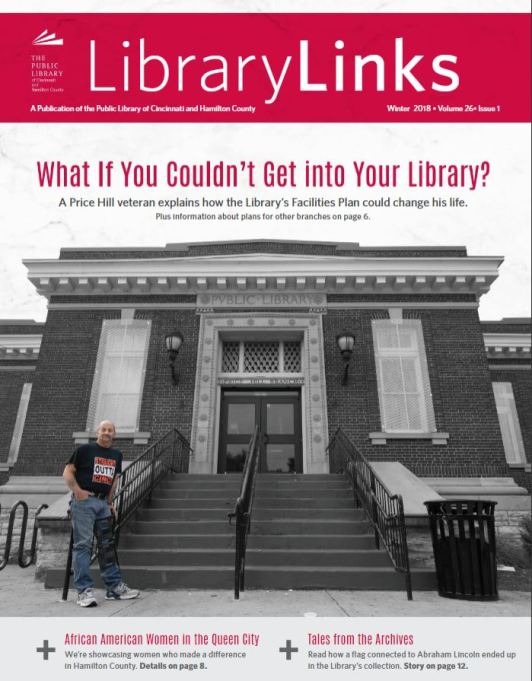
Example: The title of this issue of our Library Links magazine. The lead story was about a veteran living with a disability. His neighborhood branch is a Carnegie library built in 1909. It’s never been renovated and it’s inaccessible to people living with mobility issues. We were about to ask voters to pass a levy to fund upgrades to this branch and more just like it.
I asked to interview him. He told me the story about how he can’t climb those stairs, and how fellow veteran friends who also live in his neighborhood have to drive their motorized wheelchairs to the next closest branch. The trip sometimes takes three hours. His story invoked a feeling of frustration and injustice. How the heck do you encapsulate that in a short sentence?
Keep the length manageable and the vocabulary conversational. Remember, you want to tease your readers into craving more information, not give away the whole story. You also don’t want to confuse them by using language they don’t understand.
Example: Our library recently made a pivotal switch in the way we market our storytimes. We want to emphasize the educational aspects.
It would be easy to get lost in a lot of technical language and big words to describe our focus on literacy and learning. I decided the best approach would be to write text that sounded like what I would say in person if I were talking to a parent about storytime.

This sounds like an easy step, but I see a lot of libraries and brands that get caught up in the technical language of their products and services. It makes us feel important when we use big words. But headlines and copy need to be simple in order to connect with the audience.
Headlines for press releases deserve as much attention as headlines for emails and blogs. Library marketers must remember newsrooms are a target audience and journalists crave a good story just as much as the average Joe. You really have to dig deep to grab their attention and evoke your emotional response. You want them to go into their morning meeting and fight for the permission to cover your library’s story. So, give them enough ammunition.
Example: This release triggered coverage by all the major media outlets in town. Its headline is very simple and straightforward but it got the job done.
Be versatile–it’s okay to change the headline based on the distribution platform. If you have a great blog post you want to share on Twitter, but the headline, when coupled with the URL and a photo, exceed the 280-character limit, re-craft the headline just for Twitter. You might also want to re-craft headlines for different social media audiences. Your Twitter fans may have a different perspective on your article than your LinkedIn fans. You can rewrite it for an email distribution too.
Example: This blog! I often change the headline for the different social media platforms. Sometimes I’ll repost a blog in a month or two with a different headline as well, just to freshen it up and catch viewers who might not have been interested by my first headline. Experimenting is good!
Use the tools. There are lots of fantastic tools to help you fine tune your headline. My absolute favorite is Sharethough’s Headline Analyzer. It’s easy to understand. Since I’ve been using it to craft headlines for this blog, my views have gone up about 10 percent!
For this particular post, Sharethrough gave me a 75 rating, which is above average. It says this headline works because it’s long, it has a human connection, and limited use of positive sentiment. It also gives suggestions on how to improve the headline to get a higher score.
Go with your gut. Sometimes, all the tools and analysis can cloud your head. If you’ve composed a headline that you feel will do the best job at capturing your audience’s attention, use it. You know your audience best.
Subscribe to this blog and you’ll receive an email every time I post. To do that, click on “Follow” button in the bottom left-hand corner of the page. Connect with me on YouTube, Twitter, Instagram, and LinkedIn. And check my list of upcoming events so we can connect.
 Super Library Marketing: Practical Tips and Ideas for Library Promotion