Search

Super Library Marketing: Practical Tips and Ideas for Library Promotion

Category

Advertising Your Library

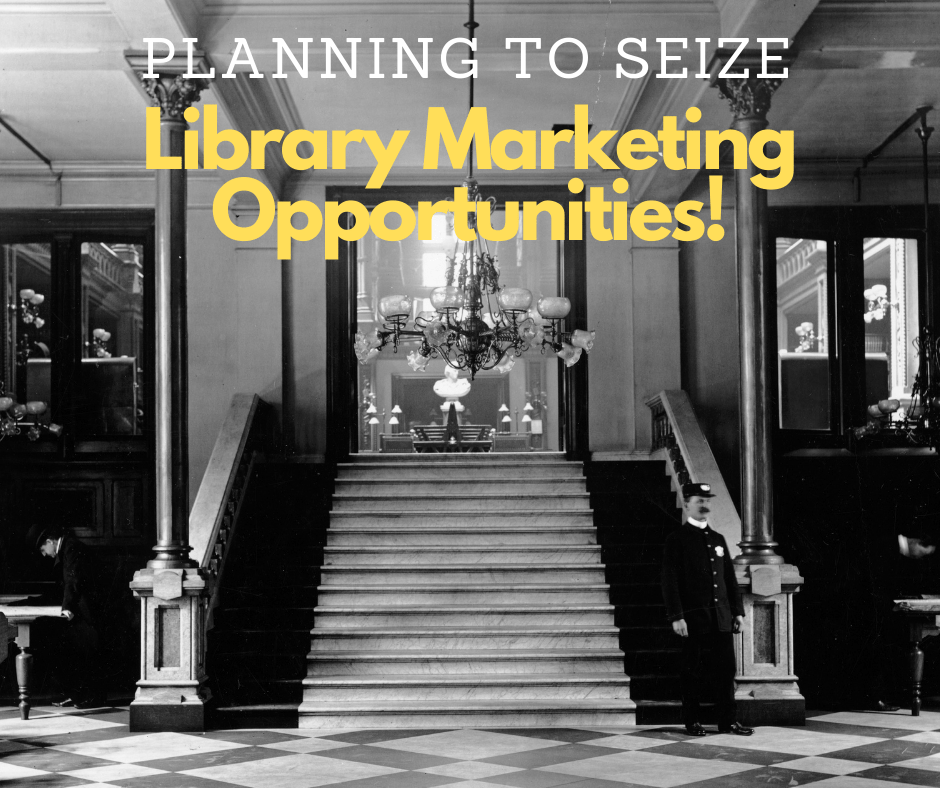
Planning for Magic! How To Keep Your Eyes (and Your Schedule) Open for Unexpected Library Promotional Opportunities

Courtesy Public Library of Cincinnati and Hamilton County. Check out their digital library here: https://digital.cincinnatilibrary.org/digital/collection/p16998coll12?fbclid=IwAR3gV2a2TMW2DFTLlsU0shgVGKzEFtzSJBYpqyAircAHN3eh6wvoE-siipw

I have never been one for spontaneous excursions. When I travel (boy, do I miss travel!), I like to have a plan.

I research restaurants. I research tourist attractions. I check to see if there’s a library in the area. I might even jump onto Google Street View and “walk” the area myself to make sure I’ll know where I’m going.

I do all of this because I want to get the most value out of the time I’m spending in a new place. I don’t want to miss anything fun, interesting, or historic.

But occasionally, I’ll stumble upon something amazing that I didn’t find in my research. Those discoveries always end up being completely amazing.

On my first few hours in Edinburgh, Scotland, I had lunch in a tavern. As I left a tour of Holyrood Palace, I realized I hadn’t eaten in 12 hours. I was starving. I didn’t feel like walking another mile to one of the restaurants I had chosen in my pre-trip planning.

I found Tolbooth Tavern tucked into a tiny corner of an ancient-looking wall near Holyrood Palace. It looked quiet and unassuming. And everything on the menu posted outside sounded delicious.

It was the best meal I had in Edinburgh. The haggis was spectacular and beautiful. The beer was perfect. The atmosphere was exactly what I imagined I’d find in that city. It’s one of my favorite memories of the trips.

What in the world does this have to do with library marketing?

On most occasions, I believe in planning. A well-executed marketing plan thatโ€™s strategic and focused is the best recipe for library marketing success.

But sometimes, you can stumble upon an amazing promotional opportunity that you didn’t plan for. And those unexpected opportunities can be surprisingly successful.

If inspiration strikes or you see a chance to grab a new marketing or promotional opportunity, you should absolutely do it. A quick pivot can lead to engaging and successful promotions.

Planning for the unpredictable

Anyone can include some flexibility in their marketing schedule. The key lies in planning… which sounds contradictory. But the trick is simple.โ€ฏโ€ฏ

When youโ€™re laying outโ€ฏyour regular marketing schedule, be sure to deliberately leave holes where you might be able to drop in promotions

In general, most of your editorial calendar, around 75 percent, will consist of promotions that have hard deadlines. The rest, 25 percent, can be open spaces for those opportunities that you cannot plan for.

How does this work, exactly?

Be on the lookout for opportunities to do some flexible marketing. Great promotional stories sometimes appear unexpectedly. They may include:

  • User-generated content on social media
  • A connection to an event happening in pop culture
  • A suggestion from a customer or staff member
  • An idea you got from another library
  • A last-minute opportunity from a vendor or a partner organization. 
  • A great event thatโ€™s been planned by a branch at the last minute. 

If you purposefully leave 25 percent of your editorial calendar open, you can seize these opportunities for the space you’ve deliberately set aside.

Example: My library turned around a movie promotionโ€ฏsent to us by a vendor, who offered a free first-run movie streaming on their site on the same day that the movie was released into theaters.

We got word a week before the movie premiere. The movie had a great cast that we thought might be popular with our cardholders.

We swung into gear. We created graphics for our website, social media, and an email campaign to let users of our digital services know about the promotion. We managed to do all of this in two days.

And the promotion was a success! On a normal day, we stream about 25 movies to cardholders. After this promotion, we streamed 244 copies of this first-rate movie alone. โ€ฏ

This happened because we left holes in our calendar for opportunities just like this.

You wonโ€™t have to turn a last-minute campaign around every week or even every month. But when you doโ€ฆ it will be worth it.โ€ฏ Sometimes the gold nuggets of promotion are the ones you canโ€™t plan of time! 

The benefits of flexibility in your library promotions

Flexible marketing can be fun. You may do some of your best work when you are formulating promotions in a few days or a few hours.โ€ฏA deadline or a great idea with a time limit can push you and your staff to be creative in ways youโ€™ve never imagined. 

Flexibility allows you to adapt to unforeseen shifts in your community’s needs and wants.

And flexible marketing makes it easy to continuously improve the way you do library marketing. It gives you an excuse to experiment.

And when you do that, you will learn new things about your audience, what they like, and what they dislike. Your marketing overall will improve.

What happens if I don’t have anything to fill my calendar holes?

Nothing.

Give yourself a break. Take that day off from promoting your library.

I know this is a crazy concept coming from a blog that is all about library marketing. But we need to spend more time in reflection if we want our library marketing to be amazing.

True creativity, the kind that adds value to your workplace and your life, is something that needs to be treasured and cultivated. If you want your library to succeed, you need to take time to be creative.

An unfilled hole in your editorial calendar is the perfect opportunity for that.


You May Also Want to Read These Articles

Part One of the Library Marketerโ€™s Definitive Guide to Creating an Editorial Calendar That Actually Works!

Fight for Your Ideas! Four Tips to Help You Get the Green Light for New Library Promotional Ideas

Latest Book Review

Subscribe to this blog and youโ€™ll receive an email every time I post. To do that, enter your email address and click on the โ€œFollowโ€ button in the lower left-hand corner of the page.
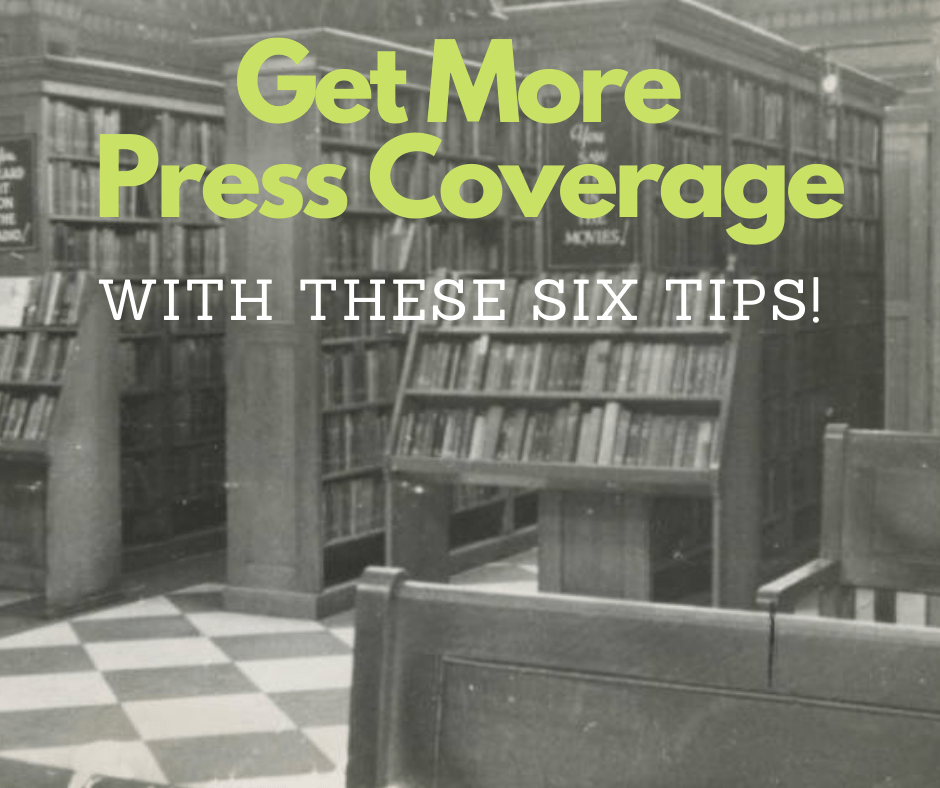
Breaking News: Make Sure Your Library Gets More Press Coverage with These Six Tips from a Former Journalist

Photo courtesy Public Library of Cincinnati and Hamilton County

Before I worked in library marketing, I spent nearly 20 years as a broadcast television journalist.

I was a newscast producer for a local TV station. I created a nightly newscast from scratch. I decided which stories would be told, who would tell them, how long they would be, and more.

Every day, I was part of the newsroom decision-making process. I know why certain stories get airtime and others don’t (ratings). I know why important facts end up “on the cutting room floor” (time constraints). I know why online media outlets and newspapers write sensational headlines (clicks).

For the last eight years, I’ve been on the other side of that world. I’ve been the one sending press releases and asking, sometimes begging, for coverage of my library or for the libraries I work with in my current job.

A library blog and a video marketing strategy are the best ways to control the narrative and tell your own library story on your terms.

But let’s be honest… media coverage can be great for your library.

So here are my top six tips to help get more positive press for your library.

Did your library get amazing press coverage? How did you do it? Share your story by clicking on the feedback button in the lower left-hand corner of your screen.

Send news releases early.

For events like author visits, grand openings, and other programs, send press releases four to six weeks before the event. Then, send a reminder to the media again about a week before the event.

If your library is unveiling a new service, send your press release one to two weeks before the new service launches.

For big announcements, like awards, send the press release one week before the official announcement and include a line that embargos the release. That means the news outlet can’t cover the story in print or on air until the day the embargo ends. Put the embargo right in the sub-headline of the press release, to be sure the journalists see it.

Write a news story instead of writing a press release.

If you send the newsroom a publishable piece of content with photos or video, you win on two levels.

First, you’ll increase the chances that your library will get coverage. Second, the narrative is exactly as you want it! You make the important points. You have control.

So, write a story which the media outlet can copy and paste into a script or column. Use Associated Press style and these four basic journalistic principles:

  • A catchy lead sentence;
  • The who-what-where-when-why sequence,ย interspersed withย a quote or two;
  • Clear writing without library jargon or technical terms. If you must use a technical term, explain it clearly. And,
  • A concise ending.

Make your quotes sound like they come from a real person.

Reporters and editors can spot a manufactured quote a mile away.

I know a manufactured quote is often a necessity in libraries. So, if you must make up a quote from your director, don’t write: “Our dynamic approach to customer service is central to our strategic initiatives. We are scheduled to implement more of these forward-thinking tactics.”

This is so much better: “We are adding an online, real-time reading recommendations service because we wanted to do a better job of answering our patrons’ questions and help them find the books they want. We’re hoping to really shake up the service experience. But mostly, we want to make it easy for people to get personal attention and a great book.”

Don’t send your press release in a mass email.  

A reporter is much less likely to follow up with you for a story if they are part of a large group of journalists who’ve all received the same story. Journalists want the “exclusive,” even on small things. So don’t let on that you are also sending your release to other outlets.

When you create your list of media contacts, include information about that outlet’s target audience, the kind of stories they usually cover, and the reporters with whom you have a personal connection.

Then, match your potential story with the right reporter rather than sending your release to every reporter you know. It’s a better use of your time and energy, and you’re more likely to get media coverage.

Find good interview subjects ahead of time.

Reporters are looking for compelling quotes that add depth to a story.

They’ll love a quote or a soundbite from a child who finally catches up in reading because of extra tutoring from a children’s librarian. They’ll jump at the chance for a quote or soundbite from an immigrant who got help at his library filling out a naturalization form.

Arrange diverse interviews, including people from all different backgrounds and walks of life. Most newspapers, TV, and radio stations will tell you their target audience is women, ages 25-54. Your interview subjects should be relatable to people in that demographic.

Pick interview subjects who are comfortable on camera and can “talk in soundbites”. That means they can make a point in three to four sentences.

Respect the reporters’ deadline.

When I was a journalist, it was frustrating to call an organization hoping for an interview or answers to questions only to be told that the person was out of the office or wouldn’t be able to call me back until late in the day.

If a reporter is calling you, chances are that they’re working on the story for today’s edition or newscast, which means they’d really like to have all the elements by early afternoon at the latest, to give themselves time to craft the story. Tomorrow is too late.

Move heaven and earth to accommodate the reporter as much as possible. When you do that, you’re more likely to get coverage every time you ask for it.

Newsrooms often have crews available at odd hours, like 10 a.m. or 8 p.m. Sometimes reporters will squeeze in a story during a very limited window in their day. They may call you and say they can come to the library in 10 minutes. Make sure you and your interview subjects can accommodate those last-minute requests.

I have a special request.

I’m putting together a conference presentation and I’m looking for some examples.

  • Libraries that have reopened and have had some success drawing people back into the physical branch.
  • Libraries who believe they’ve figured out the hybrid program model.
  • Libraries who are trying to turn their pandemic digital users on to other services now that the library has reopened.

I’ve created a form so you can brag about your library.

I know you are doing amazing work. I want to highlight you on a national stage! Thank you in advance.


Subscribe to this blog and youโ€™ll receive an email every time I post. To do that, click on the โ€œFollowโ€ button in the bottom left-hand corner of the page.
You May Also Want to Read These Posts

You Donโ€™t Need a Press Release to Get Good Media Coverage of Your Library! Hereโ€™s the Secret Trick From a Former Journalist.

Lessons From The Greatest Press Release Ever Written!

Angela’s Latest Book Review

The Indifferent Stars Above by Daniel James Brown

My Favorite ๐Ÿ’œWays to Use Customer or Patron Testimonials for Library Marketing!

Watch Now

The Library Marketing Show, Episode 65

In this episode, answers a viewer question about how to use customer testimonials for library marketing.

Kudos in this episode goes to Madison County in Mississippi for creating a Virtual Library.

Do you have a suggestion for a topic for a future episode? Want to nominate someone for kudos? Let me know in the comments. And subscribe to this series to get a new video tip for libraries each week!

Thanks for watching.

Why the Circle of Promotion is Your Best Bet for Library Marketing

Watch Now

The #LibraryMarketing Show, Episode 46

Angela explains the Circle of Promotion and how all of your marketing tactics should tie together so we can reach our whole community. Here is the blog post by Angela’s former library that she talks about in this video.

Also Kudos to the Spartanburg County Public Library. They are doing a Pandemic time capsule, which is a fun activity. Their contest rules are also hilarious! Check it out here.ย 

And subscribe to this series to get a new video tip for libraries each week! Thanks for watching.

Want more Library Marketing Show? Watch previous episodes!

This blog consistsย of my own personal opinions and may not represent those of my employer. Subscribe to this blog and youโ€™ll receive an email every time I post. To do that, click on โ€œFollowโ€ button in the bottom left-hand corner of the page. Connect with me on Twitter,ย Instagram, andย LinkedIn.ย  ย 
How Your Library Can Use Google Ad Grants to Supercharge Your Website and Reach a Huge Untapped Audience

Note: A newly updated version of this blog post is now published. Read it here.

Four Sneaky Ideas to Insert Marketing Tactics Into Your Everyday Work as a Librarian

I need your help! In a few weeks, I’m giving a short online seminar to library directors about marketing! I have 15 minutes to convince them to throw their full support behind library marketing. I really want this talk to impact the way library directors think about your work. So… please let me know what you want library directors to know about library marketing. Fill out the form before you even read this post. It’s anonymous! Thank you!

โ† Back

Thank you for your response. โœจ

Librarians are busy folks. You’re on the front lines, trying to work with cardholders and community members. You’re looking up information. You’re connecting people with social service resources. You’re filling out paperwork, creating curriculum for story time, and putting up displays. And you’re doing about 100 other things that I don’t know about because I’m not a librarian.

I worry about how much libraries lean on librarians to do their own marketing. Senior staff might believe spending money to hire staff for marketing is not a good use of their limited funds. But it’s not good for the librarians and it’s not good for the library.

I also can’t change the world in one blog post. What I can do is help the librarians in my readership to strategize to make marketing part of their regular duties. Here are four things that you can do that are already part of your job. These are marketing tactics, though you may not have thought of them that way before!

Merchandising. Merchandising is a form of marketing that focuses on presenting the items in your branch in the way that will compel people to interact with them. Every display, every sign, every decision on the arrangement space in your branch is a chance to market your library.

I know that the decision many libraries made to switch from using the Dewey Decimal system to a more categorized approach for arranging items pains library purists. But it pays off.ย  Library visitors are accustomed to browsing in stores by categories. By mimicking that display effect, libraries make it easier for people to find the items they want and need. We want to be as easy to use (or easier) than our for-profit competitors.

It’s a time-consuming process but I’ve put merchandising first on this list because it is the most important and impactful way that librarians can market their branch. If you haven’t thought about re-arranging the materials in your branch, now is a great time to start. And to get some help, I recommend the slides from a presentation from Allison Fiscus of the Toledo Lucas County Public Library. She recently did an online seminar. Her presentation includes data that shows how merchandising positively effects the customer experience. She included a lot of visuals to help you understand her concepts. You can find them here.

Exceptional customer service. A lot of big brands have focused on improving customer service as a marketing tactic. If you are working on the front-line of your library, you have a unique opportunity to interact with cardholders.

The marketing buzz phrase for doing this is “surprise and delight.” We want to surprise our cardholders with service that exceeds their expectations. When we do that, they feel delighted with us! (Isn’t that just a sunny thought?) Delighted cardholders are more likely to spread the word to their friends and family about our system and the services we provide. They may be compelled to talk about us positively on social media, give us great reviews on Google Business, and support our work through donations or volunteerism. These are all marketing wins!

Good customer service is a competitive edge for libraries. If we can create an environment of inclusive and open access where people truly feel supported and cared for, we’ll have the clear advantage over for-profit competitors. One-on-one help is time-consuming, but it will pay off. We’ll build a reputation as a warm and inviting space. When’s the last time you heard Amazon or Best Buy described in those terms?

Library staff must make the commitment to provide good customer service. It’s not a skill that comes naturally to everyone. To help you, I love this free guide from Hubspot. It’s got templates and a ton of great information that you can use to improve your own customer service skills.

I also recommend you read this interview with Dan Gingiss, an expert at customer service. He’s written a great book with tips about customer service in social media and his interview has lots of ideas for improving library customer service to make our industry more competitive.

Word of mouth promotion. I get a lot of requests from librarians in my system who want our marketing department to promote their event or service. Posters and emails and fliers work, but the most effective method of marketing, in my experience, is word of mouth. You need to be telling your cardholders about your branch, events, and services. Talk to them!

Librarians are in a better position to sell people on their services and events than a for-profit business. That’s because you are a trusted member of the community. Librarians are admired and your opinions are valued more than the average person. Use that advantage to help “sell” the things that your branch offers!

I know word of mouth promotion seems time-consuming.ย  But consider this. Data tells us that you have to get your message in front of your cardholder an average of SEVEN TIMES before they’ll be compelled to act on it. But when you have a direct conversation with a cardholder about your library, you are making a compelling and personal case. 75 percent of people don’t believe the advertisements they read but 92 percent believe brand recommendations they receive from trusted sources. Librarians are trusted! So just talk to people.

Sharing on your personal social media. Yes, you should be sharing posts from your library’s social media channels on your own personal channel. There’s no right or wrong way to do it. Just pick the promotions you feel most personally passionate about. Hit the “share” button and add a line about why this particular event or service is meaningful to you.

Your recommendations are trusted because of your position. It’s not unethical to share your employer’s promotional social posts. I know you feel passionate about the work your library is doing. Don’t be shy. Share your enthusiasm!

Subscribe to this blog and youโ€™llย receiveย an emailย every time I post. To do that, click on โ€œFollowโ€ button in the bottom left-hand corner of the page. Connect with me on Twitter,ย Instagram, and LinkedIn. ย 

How to Hook New Cardholders and Make Them Loyal with Email

We talk a lot about emailing our cardholders with information about new products, services, and collection items. But you can also use your email list in a powerful way to reach people who have just signed up for a library card.

Most libraries take a minimalist approach to “on-boarding” a new cardholder.ย  Once a person fills out a library card application, we hand them a card, a welcome brochure, and send them on their way. We’re friendly and we’re genuinely excited to welcome them to our system.ย But we make a mistake that’s common for a lot of businesses and organizations. We know our system inside and out and we often forget that our new cardholders know nothing about what we offer. We assume they can find their way to the things they need.

It’s important to help those cardholders learn to navigate the behemoth number of resources and items available at the library.ย A solid on-boarding campaign retains new cardholders and turns them into lifelong loyal users of the library. The first 90 days of a new library cardholder’s experience is crucial to determining their feelings of connection and loyalty to the library.

It also makes good business sense. Studies show it costs five times as much to gain a new customer than it does to retain them. A library marketer practicing good stewardship will want to do their best to keep new cardholders coming back to use the library.

The most effective way to on-board a new cardholder is through email marketing. Many libraries create a campaign with specific emails sent to new cardholders at a pre-determined pace. Those emails slowly introduce them to new features and inspire them to try out all the library has to offer. It’s easy to do this using some mail systems, like OrangeBoy and MailChimp.

My library has a 90 day on-boarding campaign set to run automatically through OrangeBoy. Creating it was a bit of process. But the effort was worth it. In addition to retaining customers, the on-boarding emails reduce unsubscribes for future targeted promotional emails. Here’s how we did it and what we learned about doing it well.

First, make a list of the services, events, and collection types that get the most use at your library. You’ll want to include information about the most popular features you offer in your emails to new cardholders.

Then, make a list of the services, events, and collection types that are interesting or unique to your library but don’t get a lot of use. These are the gold nuggets of your on-boarding campaign. You’ll have the attention of your new cardholder. The relationship is fresh. Why not use that to showcase the hidden treasures at your library.

Finally, create an outline of your campaign, mapping out each message, when it will be sent, and what it will say. Look at the two lists you’ve created and narrow your focus. Try to promote no more than four things per on-boarding message. You don’t want to overwhelm your new cardholder. Rather, you’ll want to introduce people to the library in small doses. Pick a theme for each message with a specific call to action. Keep the language simple, conversational, and free of industry jargon.

Create, test, and release the messages. This part took me nearly as long as creating the plan did! But you’re almost there.

Track results. Of course, you’ll want to use a Google URL tracker or Bitly link to see which services and items get the most interest from your new cardholders. You can also track unsubscribe rates, and if you have the ability to divide cardholders into clusters, you can see where your new cardholders land after they finish the on-boarding process.

Here are a couple of examples of my library’s on-boarding emails so you can see what we do.

How do new cardholders react to these messages? They definitely don’t hate them. Our unsubscribe rate is 0%. We’re a large system and we’ve sent these for several yearsย to thousands of new cardholders. Over the course of our campaign, we’ve had a couple of hundred people unsubscribe.

We send six emails over 90 days. The first email gets a lot of engagement, which is not a surprise.ย  The fifth email about using your neighborhood branch (see the image above) is the second most engaging email for us. Overall, about half of the new cardholders we sign up end up becoming loyal library customers. Most use our computers but the rest are checking out physical and digital items or using our MakerSpace.

If your library is doing something to on-board cardholders, I’d love to hear about it. Please take this poll and tell me about what you are doing in the comments.

Subscribe to this blog and youโ€™llย receiveย an emailย every time I post. To do that, click on โ€œFollowโ€ button in the bottom left-hand corner of the page. Connect with me on Twitter,ย Snapchat, and LinkedIn.ย I talk about library marketing on all those platforms!


Manipulating Cardholder Feelings to Get Results

A cardholder recently leveled an accusation against my marketing department for making her feel all the feels.

Here’s the brief story: our library is trying to raise money for a facilities plan. We have several Carnegie-era branches that are not yet accessible to those with disabilities. So we’ve started a content marketing campaign to educate our cardholders and the residents of our service area about the problem, as we will be asking them for money to fund the facilities plan. In our first video portion of the campaign, we interviewed a veteran who cannot get into the library branch in his neighborhood.

When we released the video, one of the viewers sent us a message. She said, “How dare youย  manipulate my emotions and try to make me feel sorry for this guy.”ย I think this person was trying to make us feel guilty for marketing to her.

Sorry, not sorry.

Emotional marketing is effective. We have seen it work time and again for our library and other libraries. You may remember the story of the Leeds Library campaign, which used story-driven emotional marketing to change that community’s perception of the modern library and its value. Leeds wonย an award for their campaign, and one judge commented, “We loved the application of real-life, personal journeys to draw on the emotions, capture the imagination and change the perceptions of the audience.โ€

Effective marketing appeals to emotions, not logic, reason, or even facts. This is particularly effective in the world now, where social media algorithms are cutting into our organic reach. If we want better unpaid reach, we need to constantly engage our audience. To constantly engage our audience, we need them to take an action on every post. To get them to take action, we need to motivate them through emotion.

Research from the Institute of Neuroscience and Psychology at the University of Glasgow, published in Current Biology, says humans really feel just four basicย emotions: happy, sad, afraid/surprised, and angry/disgusted. The kind of messages that get us engagement are all based on these basic emotions. When you feel happy or angry, you want to share that emotion with others in your social network. When you feel sad, you empathize with the subject your sadness and feel a motivation to help ease their suffering. When you are afraid, you want to take action to ease your fear.

Your most loyal cardholders are likely already emotionally connected to your brand, particularly if you work in a school or public library. The people who alreadyย use your library on a regular basis know it’s value. I bet you have superfans, and you know who they are. So what do you do with all that emotion? How do you make it work in your library’s marketing?

Ask loyal customers to share their stories with you. Conduct interviews with those passionate customers by email or on video and use those answers in many ways. Video marketing is the best way to capture emotion. There is no substitute for talking to someone on camera, for hearing their voice and seeing their facial expressions as they talk about your library. You don’t need fancy equipment. Pull out your cell phone, have them stand facing a window or head outside for a few minutes to take advantage of the natural light, and then ask them some emotionally charged questions about their library experience.

What is your favorite library memory?

Tell me about how the library has changed your life.

How would you feel if the library suddenly closed tomorrow?

If aย  neighbor asked you to describe how you feel about the library, what would you say?

Ask your staff to share their stories with you. The next time youโ€™re at an all-managers meeting, visiting another branch, or enjoying lunch with a fellow employee, ask them about life in their branch. Ask them to describe their customers. Inevitably, theyโ€™ll have one or two specific examples of people who have an unbridled enthusiasm for their location, or whom the branch staff has helped with a specific problem. Once again, pull out your phone, find some good lighting, and ask open-ended questions like:

How did that request by that cardholder make you feel?

Tell me how the situation was resolved.

Did you worry about how you would handle that request?

What is your relationship with the customer now?

And for good measure, I always ask, What compelled you to look for work in a library?

You can post these emotional marketing videos as a whole edited piece or in sections. You can turn the quotes into a printed piece for your newsletter or email list. You can create digital slides or posters in your branches using the quotes. My library used this tactic last year for a series of videos we called Customer Impact stories. We posted them on YouTube and on Facebook and is was one of our first pieces of video content marketing. The audience and our staff LOVED them. We broke them down and used them in our Library Links publication and in other ways, and they prompted more customers and staff to come forward with more amazing stories. It wasn’t hard and it didn’t take a long time to put together. It was effective. Score!

Adding emotional marketing to your regular promotional schedule keeps your cardholders engaged and feeling all the feels whenever they think of your library. It’s not something to apologize for. It’s something to be proud of.

Subscribe to this blog and youโ€™llย receiveย an emailย every time I post. To do that, click on โ€œFollowโ€ button on the bottom left-hand corner of the page. Connect with me on Twitter and Snapchatโ€“itโ€™s where I talk about library marketing! Iโ€™mย @Webmastergirl.ย Iโ€™m also onย LinkedIn,ย Instagramย andย Pinterest.ย Views in this post are my own and do not represent those of my employer.


A WordPress.com Website.

Up ↑