There’s something that should feel completely obvious about libraries. But lately, it almost feels radical to say out loud: libraries are book experts.
Libraries build trust and relevance when they actively help patrons discover books, authors, and reading experiences, not just access materials.
In this episode of The Library Marketing Show, I explore what it means for libraries to reclaim that role and why leaning into book expertise could be one of the most powerful library marketing strategies we have.
Plus, a library is nominated for kudos for its inventive short-form video!
Do you have a suggestion for a future episode’s topic? Do you want to nominate someone for kudos? Let me know here.
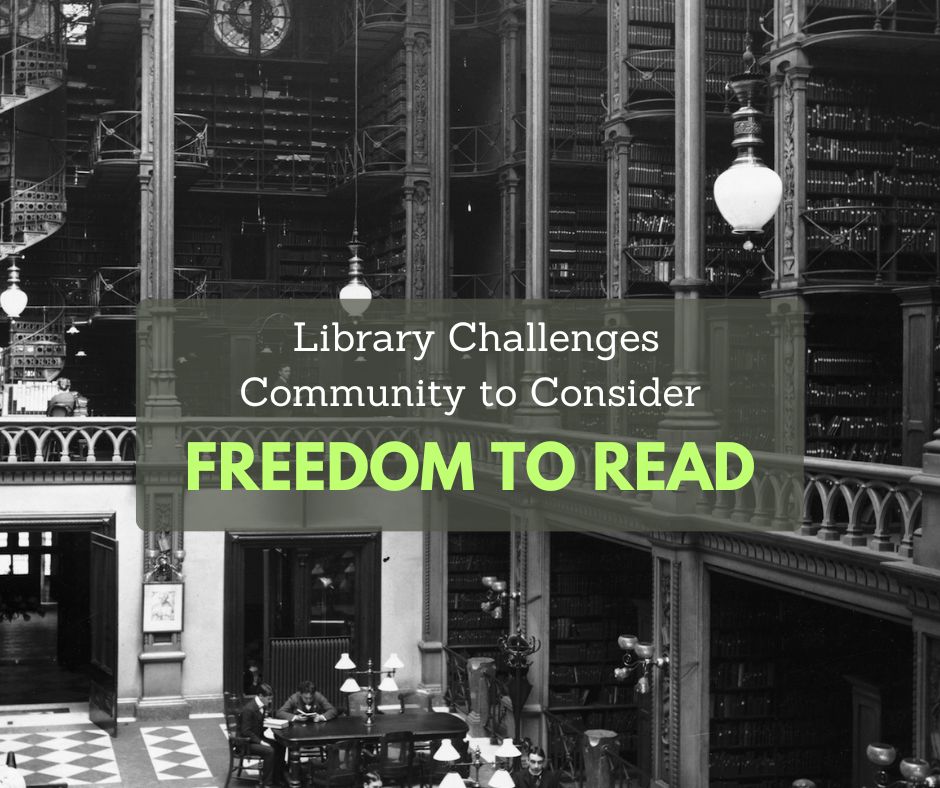
Photo courtesy Cincinnati and Hamilton County Public Library
I will confess to you that I am worried about the future of libraries.
The news that the current United States Presidential administration intends to eliminate the Institute of Museum and Library services is devastating. For some libraries, the funding from IMLS accounts for a huge percentage of their annual budget. In my day job with NoveList, I’ve heard that some U.S. libraries are worried they won’t have enough money to buy books, let alone pay staff and keep buildings open.
Libraries in other parts of the world are facing threats, too. Canadian libraries are beating back book censorship challenges. In the United Kingdom, Australia, and New Zealand, funding cuts continue to threaten libraries. It’s a scary and infuriating time to be a library marketer.
I’ve been compiling a list of things that library marketers can do to protect their jobs and prove the value of their promotions and their libraries. Putting a plan in place and acting on that plan makes me feel less helpless and hopeless. So, here’s what I want you to do.
Stay focused: Set goals and center your energy there
Focus is critical during turbulent times. You may be tempted to think that you must promote everything the library offers to fight back against budget cuts. But I can say from experience that this method is ineffective and exhausting for you and your audience.
This is where goal setting can be critical. Pick the three biggest goals for your library for the next six months. For example, you might say Summer Reading, opening a new branch, and increasing the circulation of print items.
Next, you set goalsfor each of those three items. Use numbers, active verbs, and decide on a timeline for when that goal will be completed. Do not set a goal of “We hope to get more people to participate in Summer Reading.” Instead, say, “By August 15, we will increase participation in Summer Reading across all age groups by 10 percent.”
Next, use the divide and conquer method to focus your promotions on those goals. You’ll want to spend about 75 percent of your promotional time on these three key areas. What will you do with the other 25 percent?
Incorporate value-driven messages into your calendar
With the remaining 25 percent of your energy, you’ll focus on repeated messaging that conveys core library values. Use messaging that focuses on the library as a welcoming place where privacy is protected and where community members can pursue learning, creativity, and connection. Here are 4 ideas for how to do that.
1. Use positive storytelling
Share real-life stories of how the library is a refuge for students, job seekers, new residents, and others who need a safe, quiet, or supportive environment. Give your patrons opportunities to share why the library feels like a safe and welcoming place for them through video clips, quotes, or social media posts. Need inspiration? Here’s how one library marketer does it.
2. Feature library services that center on safety and comfort
Promote meeting spaces, quiet study areas, free Wi-Fi, literacy programs, or social services partnerships that help patrons feel secure and supported.
3. Celebrate the joy of reading
A Scottish librarian once told me, “Reading for pleasure is fairy dust.” It’s magic. It transports you, teaches you, and inspires you.
One way to connect with the readers in your community is to do more collection promotion, focused on the joy that the reading experience brings. Your readers are fierce library supporters, and they’ll be the first to defend you from attacks. Engage them with more reading recommendations!
4. Use visual cues in the library
Display signage that communicates safety and inclusivity, such as “All Are Welcome Here”, “Your Library, Your Space”, and “Come as you are. Stay as long as you like.” You can use AI to help you come up with short, non-political phrases that will convey the message of welcoming.
Build your email lists
Social media platforms are more divisive, and many people are leaving them. You need a way to directly communicate with your community without algorithms! Right now, start working on building your subscriber list for emails. Here is a step-by-step guide for doing that.
Track metrics to prove your value
I know it’s time-consuming. But tracking marketing metrics helps you prove the value of your work by providing data-driven evidence of your impact on the community.
Metrics like email open rates, social media engagement, and website traffic show how well your library is connected with patrons. Compare your metrics to the industry averages to show the value of email marketing.
You should also track event registrations, program attendance, and resource usage tied to promotions. These numbers will allow you to show how marketing drives participation. For example, if you track metrics, you can tell your supervisor and your board of trustees that the rise in participation in summer reading was the direct result of your promotional campaign. when requesting funding or staffing.
Hard data will help protect the funding and staff you may have to work on marketing. If you don’t believe it, this library’s experience with metrics may cause you to change your mind.
Remind yourself of your successes
Library marketing always comes with setbacks, but remembering your past successes reminds you that you’ve overcome challenges before and can do so again. I have two ways that I practice this concept.
Every two weeks, I write a post for our company Teams channel about the content and emails we’ve released and their results (if I have them already!). I also give shout-outs to the coworkers who helped us with different pieces of marketing. I don’t ever want to take it for granted that everyone I work with knows what my team does and why our work is valuable.
At the end of every day, I take just a second to acknowledge everything I have done that day. It’s a simple but effective way to remind yourself that you are working hard and making progress… because progress in marketing sometimes seems very slow!
Network with others
This is the perfect time to join groups that relate to your work. You may need those connections if your job is threatened. And it’s always a positive boost to have people who understand library marketing in your circle.
The Library Marketing Book Club is a great option! We meet every two months to discuss a marketing book and to share ideas about marketing. In between meetings, we celebrate successes and ask for help with projects on our Facebook and LinkedIn pages. You can sign up for the club here.
Subscribe to this blog, and you’ll receive an email whenever I post. To do that, enter your email address and click on the “Follow” button in the lower left-hand corner of the page. You can also follow me on the following social media platforms:
There is a phrase that pops up quite frequently in library marketing which has bothered me for quite some time: “More than books.” Other than a few people I work with at NoveList, I thought I was the only person who felt this way. But I’m not! A librarian wrote an eloquent piece about it this week, and we’ll talk about it in this episode of The Library Marketing Show.
Plus kudos go to a library for their perfect response when trolls took over a Facebook post about their in-library Pride Month display.
Do you have a suggestion for a topic for a future episode? Want to nominate someone for kudos? Let me know here. And thanks for watching!
Subscribe to this blog and you’ll receive an email whenever I post. To do that, enter your email address and click on the “Follow” button in the lower left-hand corner of the page. You can also follow me on the following social media platforms:
Most of us think libraries are a magical place. But the library Patrick Culliton frequented as a child was truly a place of wonder.
It was in the William E. Telling Mansion in South Euclid, Ohio. Built in 1928, the Telling Mansion now houses the Museum of American Porcelain Art. But back when Patrick was a kid, this historic building was home to the South Euclid-Lyndhurst branch of the Cuyahoga County Public Library system.
“I remember going to storytimes with my mother, studying with friends in junior high, and even exploring the wooded area on the back part of the lot,” recalls Patrick.
Nowadays, Patrick works on a marketing team of two at Willoughby-Eastlake Public Library. He and his coworker manage all the digital and print promotion for the library, which serves a population of 67,000 residents with four locations.
A few months ago, Patrick and the team at Willoughby-Eastlake launched a Banned Book Challenge. The idea came from the library’s Collection Services librarian, who was concerned about calls to remove library materials from shelves.
“I noticed other libraries and educational institutions in Ohio conducting their own events about “controversial” materials, including art shows, book discussions, and guest presentations,” says the librarian, who wishes to remain anonymous. “It felt right to involve the Willoughby-Eastlake libraries in the effort to combat book banning and to educate the public about the matter.”
“To promote the Banned Books challenge, I had our four library branches create a display for their building that encouraged patrons to sign up for the challenge and retrieve a small prize from the circulation desk for noticing the display.”
“The primary goal was to engage readers and encourage them to check out library materials. That is always the main prerogative for all reading challenges—to get patrons in the door and circulating those library materials!”
“The second goal was to show the public what materials are up for debate—currently and throughout history. I assembled a list of 450 books that have been challenged at any point in time in the United States. Patrons and staff alike were surprised to see their favorite books from childhood, such as Where the Wild Things Are on the list with A Clockwork Orange and The Bluest Eye. The public had an opportunity to learn why books were challenged, as well as what is challenged.”
Library staff published a blog post to explain the threat that book challenges pose to all readers. The challenge itself was simple: patrons were asked to read 5 books from the banned books list and enter a drawing for a gift card.
Patrick and his team promoted the challenge using a press release, a graphic for our website carousel, scheduled social media posts, and the library’s e-newsletter.
“The experience itself was up and down,” remembers Patrick. “Our local paper ran a story on it from our press release, and they shared their article on their Facebook page, which got a lot of traction. The comments there were mostly positive.”
“Then, when we sent our e-blast the following Monday, with the Banned Books Challenge as the lead, we received a few angry phone calls and emails. While this was concerning, it spurred us to have a good conversation at our Staff Day. Marketing and Administration then updated some policies related to materials challenges and first amendment audits and then supplied staff with the necessary support and documentation, should these issues arise in the buildings.”
“And I should say, we also got a few positive emails from patrons, too, along with positive comments on our posts about the Challenge. That e-blast had a marked increase in clicks, naturally.”
The email had a click-through rate of 6.5 percent. That’s three times higher than Willoughby-Eastlake’s average click-through rate.
163 people of all ages signed up for the challenge and 35 people completed it, reading five banned books. Two of those patrons won Target gift cards.
“We received a lot of positive feedback both online and in-person,” says the collection services librarian. “Patrons enjoyed the displays and shared the social media posts about the challenge.”
“We also received a handful of disputes, which were handled accordingly. Complaints were mainly made over the phone to the director. Willoughby-Eastlake employees also hosted a panel for the staff, in which they learned more about banned books on a larger scale and how to handle argumentative patrons.”
Now Patrick and the staff are turning their promotional attention to their winter reading Warm-up Challenge and the Solar Eclipse in April.
“We have a LOT of eclipse glasses, programs are being planned, and one of our Librarians received Eclipse Ambassador training from the Great Lakes Science Center,” relays Patrick. “It’s going to be a fun, wild day!
For inspiration, Patrick and the team follow lots of other libraries on social media. And one non-library account: the NE Ohio Regional Sewer District’s Twitter account.
Subscribe to this blog and you’ll receive an email whenever I post. To do that, enter your email address and click on the “Follow” button in the lower left-hand corner of the page. You can also follow me on the following social media platforms:
I am proposing that you throw out one-third of your planned marketing and promotions for the next 12 months! I know it’s a big ask.
But I want you to use that space to create marketing and promotions that fight back against the biggest existential threat libraries have ever faced in their existence. I’ll explain why this is absolutely necessary in this episode.
Do you have a suggestion for a topic for a future episode? Want to nominate someone for kudos? Let me know here.
Subscribe to this blog and you’ll receive an email whenever I post. To do that, enter youremail address and click on the “Follow” button in the lower left-hand corner of the page. You can also follow me on the following social media platforms:
My childhood TV crush is organizing an event at public libraries across the United States and your library needs to get ready for it, especially in terms of promotions.
Watch this episode for tips on how to prepare now and educate your community about the importance of inclusive reading.
Plus we give away kudos. Watch the video to find out which library is being recognized.
Do you have a suggestion for a topic for a future episode? Want to nominate someone for kudos? Let me know here.
Thanks for watching!
Subscribe to this blog and you’ll receive an email whenever I post. To do that, enteryour email addressand click on the “Follow” button in the lower left-hand corner of the page. You can also follow me on the following social media platforms: