Search

Super Library Marketing: Practical Tips and Ideas for Library Promotion

Category

Content Marketing

๐Ÿค”How To Choose Between Short or Long-Form Content Like a Pro

Watch this video now

#LibraryMarketingShow, episode 291

Have you ever stared at a piece of library marketing content and thought, should this be a quick update or a deep dive? Let’s settle that today! Here is how to know if you should use short-form content or when it’s time to go to long-form content in this episode of the Library Marketing Show.

Plus, we’ll give kudos to the subject of a past Super Library Marketing profile who just won a huge award.

Do you have a suggestion for a topic for a future episode? Do you want to nominate someone for kudos? Let me know here. Thanks for watching!โ€‚

P.S.: If you wish, you may download a transcript of this episode.


Miss the last episode? No worries!

Will I see you soon?

Subscribe to this blog, and youโ€™ll receive an email whenever I post. To do that, enter your email address. Then, click the โ€œFollowโ€ button in the lower left-hand corner of the page. You can also follow me on the following social media platforms:
The 5 Best Free Keyword Research Tools To Find the Perfect Keywords for Your Library Promotions (With Video Tutorials)

Photo courtesy Cincinnati and Hamilton County Public Library

A war is being waged 10 feet from my office window.

I love watching birds feed and listening to them chirp, squawk, and sing. I have a feeder that I’ve positioned so I can see the birdies enjoying their meal as I work.

But something is ruining my relationship with my feathered friends.

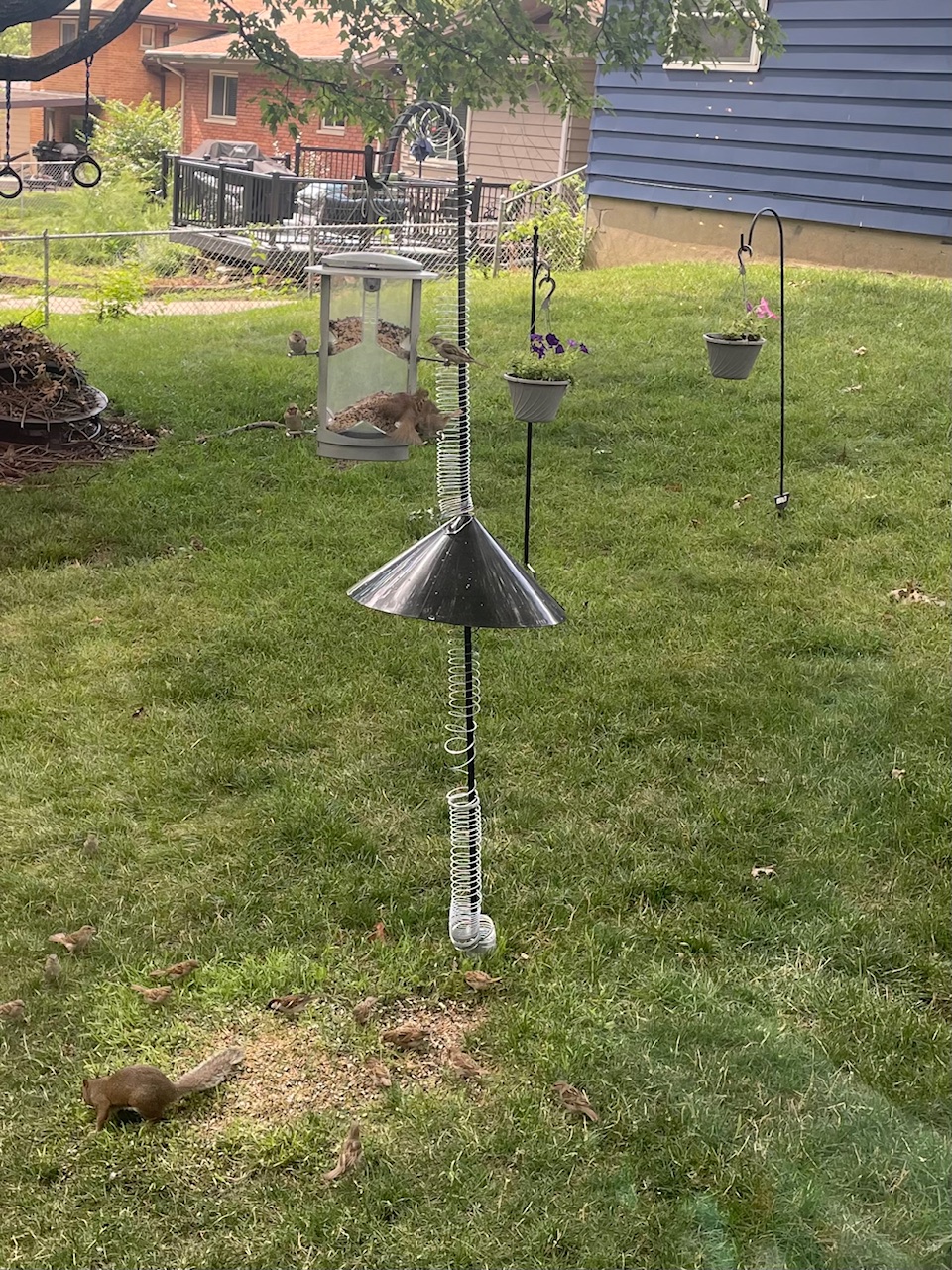
Some mornings, I come outside to find my oversized bird feeder, which I always fill the night before, COMPLETELY EMPTY. The seed is scattered all over the ground. And a scurry of squirrels are gorging themselves on the spoils.

The first time this happened, I did what anyone does in this modern era. I turned to the internet for help.

I typed “how to keep squirrels off my bird feeder” into Google. Suddenly I found myself down a rabbit hole (pun intended) with all the squirrel battle content you could ever want.

Repellant. Special bird feeders. Tips for installing slinkies on the pole to prevent climbing. SPIKES. Videos, advice, and products galore.

Why is it so hard to find tips on fighting squirrels?

The internet is a giant swirling vortex of content. According to Master Blogging, there are 7.5 million blog posts published every single day. (Thanks for reading this one!)

When you factor in social media posts, videos, website content, emails, etc., it’s no wonder your library has a hard time breaking through the noise. A search by anyone for anything is likely to turn up hundreds of results.

So how do you make sure your library content reaches the people who need it most?

Keywords are the key

When a community member is online, trying to find the source that will help them write a research paper, add branches to their family tree, or make a decision about whether to purchase a car, they need us to speak their language.

That’s where keywords come into play.

Keywords help search engines and social media algorithms understand what your content is about. They use those keywords to categorize your content and then match your content to people who are searching for it.

The right keywords make it more likely that the content you write will end up on the computer or mobile phone screen of the person who needs it most.

But you don’t have to guess at what keywords to use! There are tools to help find keywords to weave into your content. Here are my five favorites. They’re reliable, efficient, and free. I’ve made a video tutorial for each to show you exactly how to use them.

Spyfu

This website has a robust, free keyword research tool. You can use it without setting up an account or handing over your email.

Google Search Bar

The Google search bar allows you to see what content is rising to the top of Google’s algorithm. You can work keywords or phrases from those top-performing content pieces into your promotions.

Don’t forget to scroll to the bottom to see “people also search for,” which I find to be extremely valuable as a source of more keywords.

Google Keyword Planner

You can also use Google’s more robust Keyword Planner to search for keywords. The Keyword Planner is intended as a tool for buying Google ads but I find it to be an insightful way to find keywords for my website and social media.

Here’s a quick video to show you how both the regular Google search bar and the Google Keyword Planner work for sourcing keywords for library promotions.

Wordstream

This free tool gives you 25 keywords… more if you’re willing to provide them with your email. They’ll also show you the search volume for the phrase and the level at which you’ll compete with other content for attention. Type in your opening phrase and choose “All industries” for the best results.

Moz

This free keyword tool shows top suggestions, monthly volume, organic click-to-open rate, and difficulty ranking for any key phrase you search. You can get more robust suggestions if you hand over your email.

Whatever tool you use, the keywords you uncover should be placed in your blog headlines, in the text on your website, and in your social media posts.

But Angela, did you defeat the squirrels?

Yes, I did with the help of three slinkies, a 7-foot pole, and a baffle, which is a cone-shaped device that stops the squirrel from climbing up your pole to your feeder. I knew of the existence of baffles, but I had no idea that’s what it was called. But thanks to keyword research and placement by the vendor, I found it. Now my birds can eat in peace.

Note Mr. Squirrel, who is now relegated to picking up seeds from the ground.


P.S. You might also find this helpful

Finding the Perfect Name for a Library Program: A Checklist and Tips for Using AI

Subscribe to this blog and youโ€™ll receive an email whenever I post. To do that, enter your email address and click on the โ€œFollowโ€ button in the lower left-hand corner of the page. You can also follow me on the following social media platforms:
Is It Possible for Your Library to Overcommunicate? ๐Ÿ›‘ Here Are 4 Ways To Tell if You Are Flooding Your Community With Too Many Promotional Messages

Watch this video now

#LibraryMarketing Show, episode 239

You may wonder, is it possible to over-communicate with my patrons?

Can you send too many emails, do too many social media posts, and put up too many posters and flyers in your library?

There are some telltale signs that you’re overdoing it! I have four tips to help you determine if you are flooding your community with too many messages in this Library Marketing Show episode.

Plus kudos go to a library that received press coverage for the return of a long overdue book with a funny note inside!

Do you have a suggestion for a topic for a future episode? Want to nominate someone for kudos? Let me know here. And thanks for watching!โ€‚


Miss the last episode? No worries!

Will I see you soon?

Subscribe to this blog and youโ€™ll receive an email whenever I post. To do that, enter your email address and click on the โ€œFollowโ€ button in the lower left-hand corner of the page. You can also follow me on the following social media platforms:
Interviewing Techniques Anyone Can Use To Land a Powerful Quote for Your Libraryโ€™s Blog, Video, Social Media, or Press Release

Photo courtesy Cincinnati and Hamilton County Public Library

Interviewing a stranger about their library experience is intimidating for many people. If the thought of having an intentional conversation to elicit a sound bite you can use in a blog, video, social media post, press release, or other content sounds daunting, the post is for you.

Why a powerful quote is important.

Your audience wants to hear directly from the people impacted by your library’s work. Whether that is your staff, director, board members, or patrons, a good quote can drive home your work’s value.

A quote can convey passion or a strong point of view. It can turn a story about statistics or complicated concepts into something understandable and relatable. A quote can also establish an emotional connection with the reader or viewer.

And, if your goal is to catch the attention of local media, a good quote can make your press release, blog post, or email stand out. Because…

The media knows when your quote is fake.

I worked in a local television newsroom for nearly 20 years before I became a library marketer. And Iโ€™m here to tell youโ€ฆ journalists can tell when youโ€™ve made up a quote for a press release.

I understand why it happens. Your director or coworkers may tell you they trust you to put words in their mouths. It seems less time-consuming than doing an interview.

But the media can tell when youโ€™re making it up. Thatโ€™s why an interview, however short, is key to getting an authentic quote. So here are tips to make the interview process smooth and successful.

Prepare as much as possible.

If you are interviewing a co-worker, a board member, or the director of your library, take a few moments to see if there is any documentation that gives you clues about their background. Search their LinkedIn profile and board minutes. Do a Google search to see if theyโ€™ve ever done an interview. You may learn new facts about them and their speaking style.

Think about how you might structure your piece before you even write it.

That structure may lead you to questions to ask.

For example, readers may notice that I often start library profiles on this blog with some facts about my subjectโ€™s life before they worked in marketing. I ask people to tell me about their childhood library and their work before libraries, to build the scene and give a deep background on my subject. Use this technique for any interview leading to a blog post, social media post, or video.

If you are interviewing to get a quote for a press release, I suggest writing the press release before doing the interview. Leave spaces where a quote or two would grab the media’s attention and add context and emotion to the story youโ€™re trying to pitch. Now youโ€™re ready to write your questions.

Craft targeted questions that elicit insightful responses.

  • Use simple sentences and language.
  • Add intention to your questions. If you want someone to share a firsthand experience or observation, craft your sentence to gently lead your interviewee to that answer.
  • Ask open-ended questions. If you must ask a yes or no question, follow up with โ€œWhy?โ€ to give your subject the nudge to elaborate.
  • Still stuck? Use your tools. ChatGPT can help you craft questions for your interview.

To show how this works, I typed into ChatGPT: โ€œI am interviewing my library director about a new partnership that will help community members land a job or advance their careers. Can you give me some sample questions I might use to get a good quote?โ€

Here is the list of questions ChatGPT gave me.

  • Can you please provide an overview of the new partnership aimed at helping community members with job placement and career advancement?
  • What motivated the library to pursue this partnership?
  • How do you envision this partnership benefiting members of our community?
  • Could you elaborate on the specific resources or services that will be made available through this partnership?
  • In what ways will the library be collaborating with the partner organization to deliver these resources and services effectively?
  • How will the library measure the success of this partnership in terms of its impact on community members?
  • Are there any demographics or groups within the community that stand to benefit most from this initiative?
  • How does this partnership align with the library’s broader mission and goals?
  • Can you share any success stories or examples of how similar partnerships have been effective in other communities?
  • What steps will the library take to ensure that community members are aware of and can easily access the resources and services offered through this partnership?

That is a huge list! It’s a great start. All I would need to do is go through and tweak the questions to match the tone I want to set and to sound more like something I would say.

Now comes the fun part: the interview!

6 tips for conducting the interview

  • #1: Record the conversation.
  • #2: Talk a little about yourself to get the conversation started.
  • #3: Ask an easy first question to calm everyoneโ€™s nerves.
  • #4: Encourage elaboration on interesting points.
  • #5: Let the person talk. Donโ€™t be afraid of silence.
  • #6: Paraphrase or summarize key points to nudge the interviewee towards a quotable response.

P.S. You might also find this helpful

Library Marketer Shares Brilliant 4-Step Plan for Getting Press Coverage and Building Personal Relationships With Media

Subscribe to this blog and youโ€™ll receive an email whenever I post. To do that, enter your email address and click on the โ€œFollowโ€ button in the lower left-hand corner of the page. You can also follow me on the following social media platforms:
A Viewer Asks: Should You Go Back and Rewrite Your Library’s Old Social Media and Blog Posts?

Watch this episode now

#LibraryMarketing Show, episode 213

A viewer wants to know: “Do I need to go back in time and update all my social media posts and my blog posts”

That’s a great question! Is it a good practice or a waste of your time? I’ll give my best advice in this episode.

Plus someone will receive kudos!

Do you have a suggestion for a topic for a future episode? Want to nominate someone for kudos? Let me know here.

Thanks for watching!


Miss the last episode? No worries!

Will I see you soon?

Subscribe to this blog and youโ€™ll receive an email whenever I post. To do that, enter your email address and click on the โ€œFollowโ€ button in the lower left-hand corner of the page. You can also follow me on the following social media platforms:
The Top 13 Places To Find Library Content To Share When Youโ€™re Tired and Overworked (Bookmark This Post!)

Courtesy Cincinnati and Hamilton County Public Library

Promoting your library can feel a lot like feeding a very hungry, very demanding giant.

You want your community to know that your library is the source of rich and valuable information. But, let’s be honest. When you are doing the entire job of promoting your library by yourself or with a small staff, keeping up with the audience’s expectations can be exhausting.

Heck, doing it with a big staff is exhausting. Marketing is tiring.

And the more exhausted and overworked you get, the more your original content suffers. You can’t put your best work out into the world when you are weary.

Your original content, like blog posts, videos, newsletters, and social media posts that talk about what your library offers and how your library helps your community, must be as engaging as possible. Those pieces of content take precedence. You should devote your energy to making those shine.

But there are so many content holes to fill! That’s where a little trick called content curation can be super helpful.

Content curation is sharing articles, infographics, case studies, videos, and other content created by other organizations on your library’s platforms.

Now, I know this sounds counter-intuitive to promoting your library. Why would you share the work of someone else with your audience? Shouldn’t you take every opportunity to engage your followers with your library’s stuff?

That would be ideal. But I know darn well you don’t have a staff of 20 writers to fill your content needs every day. And besides helping you fill your editorial calendar, content curation has other benefits.

Sharing content that aligns with your library’s mission, vision, and values will strengthen your library’s brand. It does this by building trust in your library as an institution of knowledge and inspiration. And it helps you to drive home important messages, like the joy of reading.

Before you begin sharing

The library I used to work for was huge: 600,000 plus cardholders and 41 locations. However, I had a small marketing staff. We often shared content from other sources to fill gaps in our social media and email calendars.

We set a focus for this shared content: anything we shared from outside sources had to be related to books and the literary world. This aligned with one of our library’s overall goals to drive circulation.

That focus was both simplistic and broad. It allowed us to fill our content needs with posts about authors, new books, books being made into movies, health news related to reading, beautiful libraries around the world, historic libraries (including our own), and a lot more.

Our library’s curated content led to higher organic reach on social media. Those pieces of shared content were intriguing additions to our emails. The curated content got a high click rate.

This strategy positioned us as a news source for all things related to the book world. Our followers and fans thought of us as more than a library. They turned to us for information on all topics related to literature.

So, I advise you to set a focus: one that is simple and aligns with your libraryโ€™s strategic goals.

For example, Hennepin County Public Libraryโ€™s strategic plan includes the line:  โ€œOffering free access to essential technology and connectivity.โ€ Their curated content focus can be on technology and the benefits of open access to a community.

Here’s another example. One of Montgomery County Public Library’s strategic goals is to make sure all children ages 5 and younger are ready for kindergarten. Their curated content focus might be on shared literacy tips for caregivers of young children, as well as any content that helps caregivers prepare their kiddos for school.

Once youโ€™ve set your focus, you can start sharing. Here is a list of 13 websites where you can find library-related content to share with your audience.

Do you know of a website I should add to the list? Comment below the post to let me know!

BuzzFeed Books

This fantastic BuzzFeed spin-off is a rich source of fun content related to books, authors, and celebrities.

reddit Books

This list of user-generated content on books, libraries, and the literary world is invaluable. Use the discussion boards to give your ideas for fun, and interactive polls to create for your social media followers or email subscribers.   

NPR Books

A good source of more high-brow literary news and lots of book reviews. Use this site to help you decide which books to highlight for individual promotions on social media and through email.

HuffPost Books

Like NPR Books but with a lot of news about politics, book challenges, and diverse authors.

Book Riot

Find in-depth articles and interesting angles on literary themes. Scroll down to the bottom for links to a host of podcasts on every kind of literary subject.  

Electric Lit

A high-brow website with a fun, cultural perspective on literature.

NoveList

My team is responsible for the blog and newsletters, and we work hard to make sure they are a rich source of content curation or promotional ideas for your library. Steal away!

Library Journalโ€™s technology section

Periodic stories about how technology can impact libraries and their patrons. They publish about once a week.

School Library Journal

A great source for posts about books and other library-adjacent services for young readers.

The Princh blog

This company is based in the UK and sells printing options for libraries. Their blog is rarely about printing. Instead, they cover library topics like the impact of early literacy strategies and the joy of volunteering at a library.

American Library Association Office of Intellectual Freedom blog

Need help curating content that educates your community about the dangers of book challenges? This is the premier spot to find it.

Content Prompt

This daily email from Megan Kowalski (profiled here) will give TONS of great, daily ideas for content. Sheโ€™s a whiz at following those little-known holidays that can make for great fun on social media (Hello, Fish Tank Floorshow Night!)

Any blog from another library or one of your partners!

If you type “library blog” into Google these days, you’ll come up with a whole list of libraries that are publishing content on a variety of subjects. They’ll appreciate you if you share their content. And you’ll know those content pieces are well-researched and written from the library’s perspective.

Your partner organizations will also be flattered if you share their content. For example, if the town yoga instructor who occasionally holds a class at your branch posts about how yoga helps relieve stress, and your content curation focus is on mental health, share that post!


P.S. Want more advice?

Empathy Marketing: How To Use Greed, Fear, Love, and Hope To Motivate Your Audience

Subscribe to this blog and youโ€™ll receive an email whenever I post. To do that, enter your email address and click on the โ€œFollowโ€ button in the lower left-hand corner of the page. You can also follow me on the following social media platforms:

Save Time and Reach Your Whole Audience With an Incredible Trick! (Includes Guide and an Example You Can Steal)

Photo courtesy Cincinnati and Hamilton County Public Library

Last week, we went over the Marketing Rule of 7 and how consistent messaging delivered many times over multiple channels will lead to promotional success.

But that does NOT mean you must create 500 versions of every promotion you do. PHEW!

So, letโ€™s talk about the easiest way to make the Marketing Rule of 7 happen within the constraints of working in a library. We do that by repurposing our content.

Repurposing content

Repurposing content is the practice of reusing elements of existing content to expand that contentโ€™s reach.

Repurposing content makes it easy to fulfill the Marketing Rule of 7 because you donโ€™t need to write every post, shoot every video, and design every infographic from scratch.

Instead, you can use a piece of new content as the basis for lots of other content.

Why repurpose your content?

Your community is diverse. Their preferred methods of receiving information are diverse.

Some of them are visiting your website every day for updates. Some are seeing your social media posts. Some are waiting for your next email to hit their inbox. And some are fans of your Reels, TikTok, or YouTube videos.

Re-purposing content helps you reach more people on the channels they prefer efficiently, so you can go do all the other things you need to do in a day!

I repurpose this blog every week. (Did you notice?!) Hereโ€™s how I do it.

I pull out a few lines, usually from the first one-third of the post. I may use the lines exactly as they are in the post. Or I might rearrange them, adding more humor or emojisโ€ฆ things I wouldnโ€™t necessarily do in my blog post.

Then I take those lines and I post them across my social media channels and in my emails.

I also take parts of a post and use them in other posts, especially if these are key points I really want you to remember. For example, I strongly believe books are your library’s brand. And I say so… often!

Sometimes, I take parts of my blogs and use them in presentations.  I also turn them into an infographic or a 60-second video.

How will this work at your library?

Letโ€™s say youโ€™ve created an infographic to communicate the value of your library in the past year. We know infographics are a great way to present those statistics and give a whole picture of your library’s contribution.

But infographics take time to build. And some people will still need those stats broken down for them, piece by piece, in order to comprehend their meaning.

So you can take each of the points on that infographic and create separate social media posts. This really helps your audience digest the information.

Those separate pieces of breakout information can also serve as a springboard for your library to write blog posts or longer social media posts specifically diving into those key stats and what they mean for your community.

Choose three of the facts on the infographic. Pick a staff member who loves being on camera and ask them to create a 60-second Reel or TikTok video using trending audio and creative elements to explain this serious subject: the value proposition of your library.

Need more help figuring out how to make this work at your library? I created a 4-step guide for you!

Easy 4-step guide to repurposing content

Letโ€™s say your library is publishing a promotional blog post about Book Club Kits. It might look like this.


Get Convenient, Easy Help Leading Your Next Book Club

Are you someone who enjoys discussing books, sharing insights, and hearing different perspectives on a story? Or maybe you’ve been thinking about starting a book club but don’t know where to begin. Well, look no further! Our Book Club Kits are designed to bring people together through the power of literature, and here’s why you should definitely consider checking one out:

  1. Diverse Selection: Our Book Club Kits include a wide range of titles covering various genres, themes, and authors. Whether you prefer classics, contemporary fiction, non-fiction, or even a mix of everything, we have something for everyone. From thought-provoking novels to inspiring memoirs, our collection is carefully curated to spark engaging discussions.
  2. Convenience: Starting and maintaining a book club can be challenging, especially when it comes to sourcing multiple copies of the same book. With our Book Club Kits, we’ve taken care of that for you! Each kit includes multiple copies of the featured book, making it easy for your group to access and read the same title simultaneously.
  3. Discussion Guides: To facilitate meaningful conversations, our kits come with discussion guides. These guides provide questions, prompts, and talking points to help guide your book club discussions, ensuring that everyone gets a chance to share their thoughts and insights.
  4. Cost-Effective: Participating in a book club can sometimes become costly when you have to purchase multiple copies of a book. With our Book Club Kits, you can enjoy reading and discussing a wide variety of books without breaking the bank. It’s a budget-friendly way to explore new literary horizons.
  5. Community Building: Book clubs provide an excellent opportunity to meet new people, make friends, and engage in lively conversations. By checking out one of our Book Club Kits, you can be a part of a vibrant community of readers right here in your own neighborhood.
  6. Flexibility: Whether you prefer in-person meetings or virtual gatherings, our Book Club Kits are designed to accommodate your preferred format. You can use them to start a club with friends, family, or even coworkers, making it easy to connect with others over a shared love of reading.

You can use that post as a base for repurposing.

Step one: Write a two-line version of your blog post.

This is going to be the mini-version of your post… the elevator pitch, so to speak.

For this example, I would say:

Book Club Kits from the library make it easy, convenient, and cost-effective to start a book club. The library provides free book copies and discussion guides that allow everyone to participate and build community.

Step two: Promote in your emails.

Add your two-line version of the blog post to your newsletter and any other email you send over the course of the next month, with a link to the full post.

Step three: Share on your social channels.

Post your two-line version of the blog and include a link to the full post in the comments of your social media post. (Hereโ€™s why you want to put it in the comments instead of the post.)  

Keep the momentum going on different social media channels by creating more two-line versions of your blog. For example, during week one, post this to Instagram and Facebook:

Book Club Kits from the library make it easy, convenient, and cost-effective to start a book club. The library provides free book copies and discussion guides that allow everyone to participate and build community.

In week two, post a new two-line version on Instagram, Facebook, and LinkedIn:

Book Club Kits from the library bring people together through the power of literature. The curated kits are convenient and flexible to help any book club leader.

On week three, you put another two lines on Facebook, LinkedIn, and X:

Meet new people, make friends, and engage in lively conversations about books without breaking the bank. Check out the free library’s Book Club Kits.

And so on. Mix it up to make it sound like new content while driving home the key points you wish to make.

Step four: Use the promotional message on print promotions.

Create a bookmark, flier, and sign, with your favorite two-line pitch from your blog post. Include a QR code linking to the blog post.

Place the bookmarks and fliers in every hold or checkout. Place your sign on a display of books that have been assembled into book club kits.

Re-purposing all content

You can do this with any piece of content, from podcasts to press releases. Break the content down into pieces and spread them across all your available platforms.

In this way, you can make sure everyone in your community sees your message. You also can make sure the work you are doing right now will have maximum impact.

The added benefit to re-purposing: more data.

It won’t take long for you to learn where your audience is getting news about the library. If you notice that engagement is high on one marketing channel, you will know which channel to start with when you are promoting your library.


P.S. Want more advice?

Libraries Have a Huge Competitive Advantage: Customer Service! Here Are 3 Promotional Tips To Drive Home That Message

Upcoming Appearances

Will I see you soon?

Subscribe to this blog and youโ€™ll receive an email whenever I post. To do that, enter your email address and click on the โ€œFollowโ€ button in the lower left-hand corner of the page. You can also follow me on the following social media platforms:

The Magic of a Consistent Message: How to FINALLY Break Through the Noise and Promote Your Library

Photo courtesy Cincinnati and Hamilton County Public Library

A few weeks ago, I walked through my neighborhood listening to the Library Marketing for Library Marketers podcast. Katie Rothley was interviewing a woman named Sarah Tolle, who manages content for a large Canadian agency. And Sarah said something that literally stopped me in my tracks.

โ€œPeople take comfort in hearing the same story repeatedly. They like knowing that they know the story and that they understand you. And they anticipate the ending. โ€œ

-Sarah Tolle, content director for Black and White Zebra.

I was standing there on the sidewalk, staring at a squirrel gathering nuts from the front yard of an indiscriminate house, and I thought, HOLY SMOKES, this woman is dropping some truth bombs.  

Sarah was talking about the value of a consistent message. The timing of this episode could not have been more perfect. In my day job, I’ve been spending a lot of time thinking about how library marketers can get the most bang for their buck.

Many of the libraries I work with are struggling to figure out how to do three big things:

  • Drive more visitors to their buildings
  • Get higher attendance at their programs
  • Get their cardholders to use their cards more often.

Theyโ€™re working alone or with a small team, with very little money, and very little time. Itโ€™s an impossible formula.

Except, as Audrey Hepburn once said, โ€œNothing is impossible. Even the word itself says, ‘Iโ€™m possible.'”

And the secret to success may be found in the form of a marketing axiom thatโ€™s nearly 100 years old.

The Marketing Rule of 7

The Marketing Rule of 7 was developed by the movie industry in the 1930s. Studio bosses discovered that a certain amount of advertising and promotion was required to compel someone to see a movie.

It takes time and consistent marketing to make people aware of your library. One message, delivered on one platform, one time, is not going to be enough. We must work to make sure people are familiar with our library.

Now, I know what you are thinking. The Marketing Rule of 7 makes sense. But it’s also in complete contradiction to another marketing fact that is entirely a product of the digital age.

The Reality of Content Shock

Marketing expert Mark Shaffer, author of more than 12 books on marketing, defines Content Shock as “the phenomenon when exponentially increasing amounts of content intersect with our limited human capacity to consume it.”

In other words, thereโ€™s too much stuff to read and not enough time to read it. (Are we talking about my inbox or my TBR?  Or both?)

So how do we square both marketing truths? And how do we figure out a way forward so we can reach the goals of our library marketing?

First, the number 7 in the Marketing Rule of 7 is an arbitrary number. It could take somebody more than seven times the exposure before they become a loyal library user. Or maybe it will only take five times. Or two times.

Donโ€™t focus so much on the number. Focus on the consistent message.

Because when your audience is overloaded with content, sharing one, consistent message, repeatedly, will break through.

Political candidates know this is true. When theyโ€™re trying to get elected or whip up support for a bill, they come up with a main message. They repeat it everywhere: on fliers, social media, in interviews with the press, in speeches, etc. They do this because they know they must repeat the message to make sure their constituents hear and understand it.  

How to Create a Consistent Message

Letโ€™s say you work for a high school library and your goal is to get more kids to check out books to read for pleasure (because, letโ€™s be honest, most kids do not find reading Catcher in the Rye all that pleasurable).

First, write a few lines that succinctly encapsulate the message you want to get across.

Read something for once just for fun! The library is filled with books that wonโ€™t give you class credit but will take you on an adventure youโ€™ll never forget.

Now, use those two lines across your promotions: on bookmarks, posters, displays, and in morning announcements. Repeat it to kids who wander into the library looking for something to read. Do it all year long. By the end of the year (and probably sooner), the message will have sunk into the kids. Thatโ€™s consistent messaging.

Next week: I’ll give you a four-step plan for repurposing any piece of content you create across multiple channels without losing your consistent, core message. (Yes, it can be done!)

More advice

How to Properly (and Legally!) Share Creative Content on Your Libraryโ€™s Social Media Channels

Upcoming Appearances

Will I see you soon?

Subscribe to this blog and youโ€™ll receive an email whenever I post. To do that, enter your email address and click on the โ€œFollowโ€ button in the lower left-hand corner of the page. You can also follow me on the following social media platforms:

A WordPress.com Website.

Up ↑