Search

Super Library Marketing: Practical Tips and Ideas for Library Promotion

Category

Content Marketing

Five Creative Ideas to Help You Beat the Blues, Get Inspired, and Create Amazing Library Marketing Campaigns Again!

It is hard to believe that in a building filled with the stories, a library marketer would need inspiration.

But alas, we are human. And sometimes we get stuck in a rut.

Library marketers are expected to be energetic and enthusiastic at all times. We must come to all meetings and be able to give a list on the fly of exciting and innovative ideas for promoting major developments and smaller decisions that affect the everyday cardholders.

I don’t know about you, but sometimes, I just too plain exhausted to be the marketing superwoman. The busyness of the library summer reading season seems to melt every year into the busyness of fall. There is little time to rest. And exhaustion makes it even more difficult to find creative inspiration.

We struggle to inspire our cardholders, both old and new. We want our customers to use our collection and enjoy our services every day, but we can’t seem to figure out a way to make them act. The tried and true methods of marketing no longer work and we’re frustrated, angry, and frankly, a little worried.

Here’s what I do when I find myself stuck in a marketing rut.

Define your workflow and make it the law of your marketing landscape. A defined outward-facing workflow sounds like the opposite of a creative endeavor. But in reality, it creates space for you to think. It ensures that you have time to be thoughtful so you can develop and deliver a quality product.

Set an expectation about who will manage workflow. That means all marketing requests go through one person on your team. That person is responsible for looking at the request and determining if it fits into the library’s overall strategic goals. That person sets clear expectations and goals for each project. That person communicates a plan of action based on realistic timelines and due dates.

Let me tell you: a defined workflow is a lifesaver. It reduces stress and anxiety for everyone on your team. When your staff understands what is expected of them, they can focus on the creative parts of the job.

If you are new to your library, it will take time to get a smooth workflow in place. Be patient with yourself and with others. Keep reinforcing your expectations. Eventually, your coworkers will be on board with you, especially when they start to see results.

Be generous with positive reinforcement. Positive reinforcement always creates an emotional experience for individuals or a team working together. Don’t just say, “Well done.” Write a note or a card praising specific actions or portions of work. Give yours staff unexpected breaks: team lunches and surprise treats can lift the spirit of your team and re-energize them.

Use your staff’s strengths to create passion for the work. I highly recommend that you invest in the Gallup Strengths Finders test. It gives you incredible and nuanced insight into yourself and your staff members. It shows you how to recognize the strengths of your team members and how to actually manage them to put those strengths to good use. You can find the book by Tom Rath at Walmart and Target for about $15. It includes a code that each team member uses to take the test online.

Through the Gallup process, I discovered my team members have a strong capacity for collaboration. This wasn’t much of a surprise to me. But the book also gave me suggestions for how to actually use that desire for collaboration to the advantage of my library. It also gave me greater insight and empathy for team members who prefer to work alone or who seem resistant to change. I can assign tasks to the best person for each job. It’s really changed the dynamics of my staff and made work easier for everyone.

Observe your customers. It helps me just to take a walk around the library or to visit the branches. I pretend to be browsing the books but really, I’m watching the way the cardholders browse the shelves, interact with staff, work the self-checkout machines and use the public computers. Do they look for a map? Do they look confused? Are they drawn to a particular book display? Do they linger over the new books or do they dash in for their holds and dash out? What questions do they ask? How do people actually move through the branch?

Observing the behavior of customers inside the library can give you an idea of what visitors love and what problems they encounter during their interaction with your system. Then, you can focus on creating new marketing ideas that spotlight the things your cardholders love, and answer the questions they have.

You can also observe online visitors. Spend some time poking around Google Analytics. Figure out which pages get the most visitors. Look for the pages where visitors stay for the longest period of time. Look for the landing pages with a high bounce rate. Page views and read time will help you focus effort on improving the customer experience for your website.

Check your statistics.  Our library makes circulation and programming stats available on our intranet. This little piece of data inspires me to find ways to help make their interaction with the library more worthwhile.

Sometimes a surprising trend emerges and that gives me a creative marketing idea. Sometimes a service takes a dip in usage, and it becomes clear that we need to shift our marketing focus to re-educating the public about that service. Data is such a valuable inspirational tool. Use whatever stats you can get your hands on!

More inspiration

11 Powerful Quotes for Marketing Inspiration

5 Ted Talks for Marketing Inspiration

Need Marketing Inspiration? It’s All Around You!

Subscribe to this blog and you’ll receive an email every time I post. To do that, click on “Follow” button in the bottom left-hand corner of the page. Connect with me on YouTube, Twitter, Instagram, and LinkedIn.  And check my list of upcoming events so we can connect.
Frustrated with Your Library Marketing Newsletter? Here’s Why You’re Not Getting the Results You Want AND How to Fix It

I hold a controversial opinion. Newsletters are an ineffective tool for library marketing.

I totally understand why libraries create them. Our customers are a wide and diverse audience and our budget is limited. Newsletters are an easy and efficient way to get information to our audience.

But many libraries are frustrated by the lack of demonstrable results from their newsletters, both the print and email versions. And there’s a reason you can’t get good results from a newsletter.

The mistake is: You’re sending the same message to all of your cardholders.

It’s understandable. It feels like the natural thing to do. Your library has great stuff and you want everyone to know about everything.

The problem with that approach is that your cardholders are individuals. One message never fits them all. The needs and interests of your cardholders vary greatly.

I’m not suggesting you ditch your newsletter. By transforming the way you approach your current print and e-newsletter, you can make it actually work! The trick is to make changes that increase your newsletter’s value by refining the message.

Tips that work for both print and e-newsletters

Give your cardholders LOTS more of what THEY want. I know you’ve been keeping track of attendance at events and holds or checkouts of books you promoted in your previous newsletters. If you notice that your newsletter audience turns out for a particular type of event or that they like a particular genre of books or collection items, put MORE of those in your newsletters.

Library marketers are often pressured to promote what their co-workers or bosses think is interesting. Or worse, what their co-workers think the audience NEEDS to hear.

I’ve actually had to gently explain to my colleagues that, while reading classic authors like Ernest Hemingway and Jane Austen are good for the brain, most people are not looking for an intellectual challenge when they reach for a book. It’s like getting kids to eat their vegetables. Veggies are healthy, but if your child doesn’t like them, they’ll clamp their mouth shut and refuse to take a bite.

The newsletter audience is the same. You can’t make people attend events or read books because they’re healthy or intellectual. Library marketers sometimes have to be an advocate for their audience; you have to be persistent in your defense of what your cardholders want.

At my library, we pivoted our newsletter to focus more on our the parts of our collection that our cardholders like. We had the data to back it up. We know that our cardholders really love content about coding and coding classes. We know they love mystery books. We know they love workshops about writing and publishing their own books. We learned all of these nuanced preferences by carefully measuring our audience’s response to marketing in all areas. Patterns emerge. And now, we do a lot of promotion around these areas because we know, for a fact, that our cardholders love this kind of content.

Make your content helpful, not promotional. Your cardholders are regularly bombarded with offers, sales, and promotions, both in their inbox and in your mailbox. To get people to read your newsletter, the content needs to be interesting, useful, or helpful.

Hundreds of studies and surveys about consumer behavior show us that content that is educational or entertaining gets better results that content that is promotional. So how can you promote something while being entertaining or informative? Content marketing in the answer.

Content marketing is a strategic approach focused on creating and distributing valuable, relevant, and consistent content to attract and retain a clearly defined audience–ultimately, to drive profitable consumer action.

Content marketing breaks through the noise and the clutter by providing compelling, useful information for your cardholder–any type of information. It addresses whatever pain points your cardholders have. It positions your library as the go-to place for information. It builds trust.

And through content marketing, your library gets a better and deeper understanding of your cardholders. You can use that understanding to do a better job of addressing your cardholders’ needs. It’s a constant circle of giving and it carries more weight for a longer period than a traditional newsletter promotion.

Stop thinking of your publication as a newsletter. Start creating news magazines. Most library newsletters that come to my inbox or mailbox are long and contain a ton of text and images. There isn’t much white space and scanning them is difficult, because there is so much to scan.

At my library, we increased the effectiveness of our print newsletter by transforming it into a magazine. We trimmed it from 16 to 12 pages. My graphic artists started to give the publication a magazine feel in layout, using bolder visuals and shorter, more engaging articles. We left some white space. We changed the balance of the articles from 100 percent promotional to 50 percent informational and 50 percent promotional (even I have to fight the battle with my library to be less overtly promotional!).

What happened when we made these changes? Our news magazine became a must-read. People started asking when the next issue would be out. We had to order more copies. Library staff and outside partners vie for space in the publication. The news magazine is popular!

Tips specific to e-newsletters

Keep the text short and scannable. Your e-newsletter is a touch point, not the end of a conversation. Readers should get enough to be left with the feeling of wanting to know more about a particular subject. Drive your recipients to your website or another platform where they can get more information with compelling text and enticing calls to action.

Make it easy to share your e-newsletter. Include social share buttons that link directly to your library’s social pages.

Segment your e-newsletters. You can segment your e-newsletter in a number of ways… by age, by interest, and by location. This means you’ll need to create more than one e-newsletter. But each one will be targeted to a specific audience, which increases effectiveness. This step will be more work for you but it’s worth it for better results.

By targeting your message, you are more likely to say something that matters significantly to your cardholders. That individualized message makes them more likely to take an action, which makes it more likely that your newsletter will be successful.

More help for library marketers

How the Best Newsletters Get-and Keep-Reader’s Attention from Content Marketing Institute

NoveList’s Guide to Best Practices for Library Newsletters

7 Tips for Creating Engaging Newsletters from Mailjet

Great examples of targeted library newsletters

Dallas Public Library’s Young Black Readers Newsletter

Indian Prairie Public Library’s DVD Preview

Subscribe to this blog and you’ll receive an email every time I post. To do that, click on “Follow” button in the bottom left-hand corner of the page. Connect with me on Twitter, Instagram, and LinkedIn.


How to Launch a Library Blog: A Guide to Pitching Your Idea and Getting It Off the Ground

How to Launch a Library Blog

We did a big, big thing at my library this year.

We launched a blog.

It’s been a long time coming. I first pitched the idea of a blog to senior leadership in 2015. I created a document that explained the reasons why our library needed a blog. It also laid out my bare bones ideas for how the content creation process would work.

Marketing Advantages to Having a Library Blog

  • Easy, cheap, effective way to promote smaller, niche programs.
  • We no longer have to rely on traditional media to get the word out about programs and services. We have our own publishing platform for reaching our audience. Traditional media outlets will follow the blog. The posts will be more engaging than a press release and will pitch themselves as bigger story ideas.
  • The blog will give us something to link to for promotional posts on social media.
  •  A blog would be a place to show our thought leadership. We are the information experts! We can demonstrate why people should care about what we say in a long-form, insightful, and meaningful way.
  •  Easy way to keep our brand top of mind all the time.
  •  Easy way to show the Library’s human side and let our customers get to know one another.
  • Partnership opportunity: We can invite partners to write posts for the library, creating great, shareable content for our users and in turn getting our posts shared by our partners.

So How Would This Work?

  • Marketing would be the centralized location for publication-we would manage the editorial calendar, recruit writers, copy edit, publish, and promote posts.
  • We would set a cadence for posts—one post per week to start—and re-evaluate at a later date.
  • We would recruit post writers from all branches and departments at the Library. We would also recruit Library customers, evangelists, and fellow bloggers and influencers to write guest posts. We would provide them with a simple template for writing their posts, which we would copy-edit and publish. We would ask all guest writers to share the content, once published, on their platforms, giving us instant exposure to their audience.
  • Editorial standards will be high: content must be written in a conversational tone, AP style usage of punctuation and grammar must be adhered to, and posts must be engaging, shareable, and interesting to our core audience.
  • We would also re-purpose content to use as posts, providing new/updated/additional information not seen in print from sources such as Library newsletters, and email.
  • We would evaluate top performing posts once per month and adjust our editorial calendar as necessarily based on data.

I also created a mock editorial calendar listing various post ideas and who might be tapped to write them. After presenting these to my boss, I waited.

And waited.

And waited.

For four long years.

Finally, in the summer of 2018, there was major leadership change at our library. Our previous director resigned and a new person took the director’s role. And a few months after that, marketing got the green light for a blog.

To say that there was much rejoicing and celebrating among my staff would be an understatement. After the confetti was cleaned up and the champagne was gone (I’m kidding–there was no confetti or champagne and I regret this immensely), we realized we had to launch this thing as we had promised. And so, we did! Here’s our beautiful finished product.

Our first blog was published on March 4, 2019. So far, we’ve published 65 posts on the blog.

It has already fulfilled all of the advantages I listed in the proposal document. Traffic to our website is up. Media are now going to our blog for story ideas about the library. Our search ranking increased. We have lots of partner organizations asking for permission to write posts for us. Our staff members are writing posts and using the blog as a way to let the public know about the important work they’re doing in their branches and departments. We haven’t spent any money creating beyond staff time. And it helps us to stay top-of-mind with our cardholders and the community at large.

We did learn some big lessons during the process and I want to share them with you now.

Lessons Learned While Launching a Library Blog

Lesson #1: The hardest part is getting started. It took forever to get buy-in on the idea.  Keep advocating. Don’t give up.

Lesson #2: Building something from scratch is exciting and frustrating. It was liberating to have the freedom to do whatever we wanted. It was also terrifying. Lean into it! Be open and honest about your fears and expectations. Keep your supervisors in the loop about your observations as you work through the process.

Lesson #3: Communication with staff is vital. Get a vision and guidelines set down on paper and approved as soon as possible, then tell staff so they can begin to build excitement among cardholders. Their enthusiasm is your best marketing tool.

Lesson #4: The first year will be about experimentation. Set a posting schedule that you can keep to without having a stroke. Write all kinds of posts to see what interests your audience. Experiment with posting on different days of the week to see which is best for capturing your audience’s attention.

Lesson #5: Promotion of your blog is just as important as your blog itself. Make sure you work out a plan for how you’ll promote the blog once it’s up and running.

My big piece of advice is to actually refrain from promoting the fact that you have a blog until you have a cache of articles. Promote individual posts but wait a couple of weeks to start talking about the blog as a whole service. Once you have a variety of posts up on the blog, then you can do your big promotional push and reveal. You’ll have to do this full push campaign at least once a year to remind the public that the blog exists, and to let new cardholders and community members know that it’s there.

Lesson #6: Your blog doesn’t have to be perfect on launch day. Pick a launch day and stick to it. It can be a work in progress. You can fix things as you go along. But if you wait for it to be exactly perfect,  it’ll never get off the ground.

Lesson #7: Measure and report. Data is your friend. Evaluate what works and what doesn’t. look at the data but also gather feedback from staff and customers about what they want to see.

Don’t forget to join us for the LIVE LIBRARY MARKETING TALK ON INSTAGRAM every Tuesday at noon ET. We’ll talk about library marketing topics for about 15 minutes each week. My handle is Webmastergirl. You can email questions and topic suggestions ahead of time. Just fill out this form.

And check out these upcoming events and webinars where we can connect and discuss library marketing. Registration links included!

Subscribe to this blog and you’ll receive an email every time I post. To do that, click on “Follow” button in the bottom left-hand corner of the page. Connect with me on Twitter, Instagram, and LinkedIn.  

Part One of the Library Marketer’s Definitive Guide to Creating an Editorial Calendar That Actually Works!

I don’t know about you, but I spend the majority of my day as a library marketer making decisions. I answer probably two dozen or more questions a day from co-workers, staff, and friends about everything from the title of our library’s next blog post to the photo used in an email campaign to the kind of swag we give out at library events. This may be why my poor husband often has to choose the restaurant when we go out to eat. By the end of the day, I’m tired of making decisions!

Library marketing often feels like air traffic control. So how can a library marketer work effectively without losing their ever-loving mind? Organization, my friends. And the best way to get organized is to live and die by a working editorial calendar.

An editorial calendar will define and control the process of creating content, from the creation of an idea through writing and publication. A good editorial calendar will help you decide which content ideas to publish, where to publish, and when to publish. After those decisions are made, the editorial calendar will help you assign tasks and keep up to date on deadlines.

The editorial calendar is literally the heart and soul of the library marketer. Mine is open all the time, as long as I’m at work at my desk. It’s a score card, to-do list, and road map all rolled into one. Without it, I’d be lost.

A number of readers have asked me how they can create an editorial calendar that will lead to effective marketing. I’ve broken it up into two parts. First, let’s go through the steps to setting yourself up for success by funneling your team and tasks into one tool. You need to pick the tool, define your process, and learn how to work your calendar in your role as the project manager.

The Library Marketer’s Definitive Guide to Creating an Editorial Calendar, Part One: How to Pick Your Tool and Use It

Step #1: You need a tool that will help you keep track of everything… and I mean everything! You should consolidate all of your team’s tasks into one place. That means anyone who has anything to do with creating content for your blog, social media, video, email, print, press release, digital signage, or newsletters is on the same tool.

The one tool approach will help everyone to know where each promotion is at any given time. It will also help to maintain a consistent voice and message throughout all of your marketing. Working off the same tool will also maximize the effective use of every piece of content. The one tool approach will also help you, as project manager, to minimize overlap and mistakes.

Set expectations with your team early. Tell them you’ll do your best to pick the right tool for your team. Then make it clear that there will come a point at which everyone will be expected to have transitioned to the new tool.

Step #2: Get your team involved in picking your tool. First, you’ll want to explore how the new system will make their jobs and their lives easier. You can do this by asking your team to list the problems they have right now with content creation. Then, ask them to prioritize them. Which problems cost your team the most time and energy?

How to create an editorial calendar in Google Calendar

Marketing Strategy Bundle from CoSchedule (includes editorial calendar)

Free Excel Spreadsheet-based templates from Smartsheet

Step #3: Enforce compliance. Once you pick the right tool for your team, you have to delete all your other calendars and tools. I’m not being harsh. Your team may need that extra push to use one tool. And it’s likely there may be someone on your team who doesn’t like whatever tool you end up choosing. You cannot allow them to go rogue. In order for this to work, everyone has to use the same base.

Step #4: Make checking your editorial calendar a part of your daily ritual. As the project manager, your job will be to keep everyone on track using your new tool. Some days, this task will take five minutes. Some days it will take longer.

I add promotions into my calendar as soon as I learn about them. I have some promotions planned six months in advance. Advance planning helps me to visualize the promotions I’m doing and make sure everything gets the proper attention it needs. I can still be flexible and change things around as needed. But if I know what my marketing will look like in October during the month of July, I’ll have a better chance of getting everything done in time. That also gives me time to think about what’s coming up and to work on creative and innovative ideas to make those promotions better.

Step #5: Leave plenty of room for data. Measure the results of your content so you can adjust the editorial calendar and improve the effectiveness of future promotions.

Analytics should drive most of the decisions in your editorial calendar. I say most because I believe analytics should be responsible for 75 percent of the decisions. The other 25 percent is experimentation, gut instinct, and a deep knowledge of your audience.

Measuring results has two benefits: It helps you to decide what to do and it helps you decide what to drop. If you find a particular content subject or format isn’t getting the results you want for your library, you have data to back up your decision to drop it. Likewise, when something is working well, you can use data to reinforce your decision to that thing more often!

Read this next!

Part Two of the Library Marketer’s Definitive Guide to Creating an Editorial Calendar That Actually Works!

Subscribe to this blog and you’ll receive an email every time I post. To do that, click on “Follow” button in the bottom left-hand corner of the page. Connect with me on Twitter, Instagram, and LinkedIn.  

Five Totally Doable Things That Make Your Library Content More Shareable

Every content creator fears no one will read their work. By contrast, the most exhilarating thing you can do in marketing is to write something that people read, share, and comment on. I speak from experience. There is no better compliment.

Last week, I told you about the upcoming keynote I’m giving on content marketing and shared some reasons why your library should be creating content. The more I write for this blog, the more I learn about the kinds of content my audience will read AND share. That second part is important. You want to reach new people and make them library fans. But what makes your content shareable?

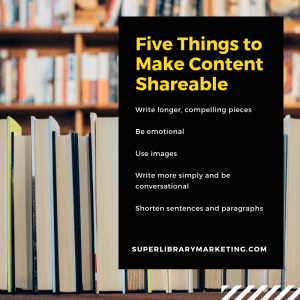
I have five simple ideas for you. Each of these increase the likelihood that your content gets shared.

Write longer, compelling pieces. Seriously, the whole thing about how your audience only has the attention of a goldfish is bunk. They will read a 2,000-word post from you if it’s compelling.  People read whole books with 50,000 plus words! I don’t know why this myth of the “too-long content piece” exists when there is literally hundreds of years’ worth of proof that it’s not true.

If you tell a story in long form, with authentic quotes, an emotional arch with conflict and resolution, and a clear beginning, middle, and end, it will not feel like a long read. And a piece of content with all of those characteristics is also likely to be memorable. Great stories stick in our minds long after we read them. And memorable posts get shared!

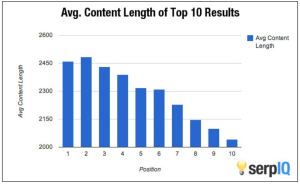
Long form content is also better for your library’s search results. Back in 2012, serpIQ conducted a study involving more than 20,000 keywords. The results showed that the average content length of the top 10 search results was more than 2,000 words.

I have some evidence that this works personally. In 2018, I purposefully started writing longer blog posts here. Most of my posts land at around 1,000 words… not quite up to serpIQ’s standards but about 200-300 more words per post than I wrote in 2017. And guess what happened? My engagement stats increased by nearly 215 percent over 2017!

My library just started a blog two weeks ago. We will experiment with post length. And you can bet that I’ll push our writers to put out longer and more compelling stories, even if that means we have to publish fewer total posts. Write longer, more interesting posts and people will respond.

Be emotional. According to research from the journal Psychological Science, our emotional responses to content play a huge role in our decision to share that content. But all emotions are not created equal. The study shows people will share content that makes them feel fearful, angry, or amused. There is also a ton of evidence to suggest that people like to share content that inspires or contains a surprise.

Conversely, you should avoid creating content with negative emotions like sadness or even contentment, which tend to cause inaction. We don’t want that!

Insert images in your content. You may have noticed I’ve started inserting more images into my posts on this blog. That’s because adding images to your content is proven to increase the likelihood that it is seen and shared. My post popular post ever is this one, which contains three images. Those three images are strategically placed to emphasis the meaning of the words. They also break up the text for a visually pleasing read.

You must also use images on social media when promoting your content. This rule applies to all platforms. Your audience is visual and they want to see images in addition to your important words. The right image–one that evokes emotions or really serves to succinctly illustrate whatever you are saying in your content–will also make your content more shareable.

Write simply and conversationally. The more your audience understands what you’re trying to say, the most likely they are to share your posts. Define unfamiliar or difficult words, titles, or services. Go through the draft of your material and highlight words or terms that may confuse your audience. Then, find a better way to say or explain those words.

Never take it for granted that your reader has been a lifelong user or follower of the library. Words used by librarians to describe services, programs, catalogs, and databases may seem common to you and your staff. They are not common to your reader. Always explain. Then, ask a non-library employee to read your work. I often take my stuff home and ask my husband or my teenage daughter to read it. If they find anything to be confusing or convoluted, I know I need to change it.

Shorten your sentences and paragraphs. Shorter sentences will make it easier for your reader to understand and absorb what you are saying. The same is true with paragraphs. A piece of material with lots of long paragraphs looks thick and off-putting. Readers will skip lengthy paragraphs, according to British grammarian H. W. Fowler. In addition, the Poynter Institute’s Eyetrack Study shows people are more likely to read an entire web page when the paragraphs are short. And if you can get the reader to look at the entire post, it’s more likely that they’ll share the content.

Subscribe to this blog and you’ll receive an email every time I post. To do that, click on “Follow” button in the bottom left-hand corner of the page. Connect with me on Twitter, Snapchat, and LinkedIn. I talk about library marketing on all those platforms!

Eight Major Reasons To Add Content To Your Library Marketing {Infographic}

I’m so excited to be the keynote speaker for the Illinois Library Association Marketing Forum Mini-Conference in Chicago in a few weeks. My brain is entirely engulfed in content marketing as I formulate the talk. There are also some big content changes afoot at my library. I’ll talk more about those when we have our campaigns up and running. But, let’s just say that most of my marketing focus in my professional life is on content–why we should do it, how to make it work better, and how to be efficient in our content creation.

The most important part of the speech I’ll give next month is the “why.” Why is content marketing important to libraries? This was actually the focus of one of my early posts here on blog. The argument for content marketing hasn’t changed. You can make all the posters and fliers you want. People don’t pay attention to those push promotional tactics. That’s why marketing seems frustrating.

You want desperately to break through the noise of life and become a subconscious part of your cardholders’ thought process. You want them to think of you every time they face a problem. You want them to remember they can come to you for pretty much anything they need. This is the common struggle for libraries everywhere, no matter their size, staffing, or service area. Honest to goodness, the only way to achieve that is through content marketing. I know this from experience.

There is now a lot of data to back up the assertion that content works. I want to share some of that with you. I’m hoping that, if you are hesitant or nervous about working content marketing into your overall library marketing strategy, these stats will convince you. I truly believe this is an opportunity for libraries that cannot be missed. If we are to survive and thrive as an industry, we need to do more content marketing.

Here are the facts for why content is key to library marketing.

Why Content is Key to Library Marketing

80 percent of people prefer to get information about your library from a series of articles versus an advertisement.

71 percent of people are turned off by content that seems like a sales pitch. Which means, if you are doing mostly traditional promotional marketing, it’s not working.

75 percent of people who find local, helpful information in search results are more likely to visit a physical building. We want to get more bodies inside our libraries. Content is the key.

Only 45 percent of marketers are using storytelling to create a relationship with their audience. Most big brands are still running ads and push promotion. This is our open door. It’s a huge opportunity for libraries. This is how we sneak in and take away audience share… by telling stories. And who doesn’t love a good positive story about a library?

95 percent of people only look at the first page of search results. Optimized content (that’s content that uses keywords that are likely to be picked up by Google and other search engines) is incredibly helpful. If your library’s content appears on the second page or later, people won’t see it.

Blog posts are the content that get the most shares. And if your post is helpful to others, it’s more likely to be shared. 94 percent of readers share a blog post because they think it can be useful to someone they know. And the more often you publish blog content, the more often your content will show up in search, which increases the likelihood that people will find your library while doing a search. Amazing, right?

90 percent of the most successful marketers prioritize educating their audience over promotion their company’s promotional messages. Education is our main industry. Libraries are perfectly aligned to make this work for us.

But here’s a stat that really surprised me. 78 percent of effective content marketers use press releases as part of their strategy. Yep, press releases can be content marketing too. Use your releases to be informative but to really pitch amazing story ideas to the media. If you have a great story and you can make all the elements available to the media, you can let them tell it and take advantage of their built-in audience to spread the word about your library.

These stats come from a variety of great blogs including Impact, Marketing Profs, OptinMonster, Elite Copywriter, Cision, and Forbes. I hope they’ve convinced you to do content marketing at your library.

Subscribe to this blog and you’ll receive an email every time I post. To do that, click on “Follow” button in the bottom left-hand corner of the page. Connect with me on Twitter, Snapchat, and LinkedIn. I talk about library marketing on all those platforms!

Five Insider Tricks To Improve Your Library’s Voice Search Ranking

One of my most vivid class memories from college happened during my freshman year. A woman visited our communications class to talk about this new thing sweeping the nation: the internet. She said that someday companies would be able to send us information on any product or service we could ever want or need, based on our previous purchases or on search.

Was she psychic? Nope. She was forward-thinking. The internet, and later the introduction of smartphones, caused a huge shift in the way libraries interact with cardholders. And now, we’re about to enter another era of technology change. We’ll need to re-evaluate how we interact with cardholders. Because voice search is going to change everything.

My library is now dabbling in this technology. We created an Alexa skill that allows cardholders to do some very basic things: find out what’s going on at a branch or ask about our hours of operation. But that’s only the tip of the iceberg when it comes to voice search.

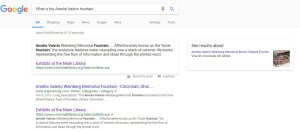
At Content Marketing World 2018, I attended a session led by Courtney Cox, who is manager of Digital Marketing at Children’s Health. She talked with us about the Google Search box. You’re probably familiar with it. It looks like this:

The answer box is text-based but it’s an important key to getting your library information in front of cardholders doing keyboard-based search inquires AND those using voice search options like Alexa or Suri. How is the answer box connected to voice search? Cox explains that voice search technology reads whatever answer appears first in the Google search. So, if you’re in the answer box, you are in first position and you get read by the voice search technology. That means if you live in the second or third results on Google, you won’t get read out. EVERYTHING ELSE underneath the answer box is ignored. There’s no glory in second place.

Wow. That’s depressing.

Comscore estimates that by 2020, half of all web browsing sessions will be done without a screen. So, what’s a library to do? Here are five steps to take now to move your library into the first position on Google search. These tips will increase the chances that your library will appear in the answer box and connect with more users.

Keyword research: Cox says you need to do real-world keyword research. That means you can use online tools like those I talked about in this post. But you must also talk to customers, face-to-face. Talk to front-line staff. Talk to the call center staff. Find out what customers are saying when they ask questions. What specific words or phrases do they use? Then start incorporating that language into your web content, social content, and all your marketing messages.

Competitor research: Cox suggests you do periodic searches for competing services offered by Amazon, your local bookstore, and online databases. What phrases and words do they use? How long, in words and characters, are their answers? Do they use bulleted lists, tables, or graphics to convey information to their customers?  What aren’t they doing well? All of these questions will inform you as you write searchable text for your website. You should feel free to copy what others are doing well. You can improve on what your competitors are doing poorly! You don’t need a big budget to write more searchable content.

Stop dictating your own content. Cox says we all need to stop brainstorming internally about what you want to write about. Start focusing on what your customers want. We must be answering the questions our customers have.

Create a FAQ page on your library website. Make the page easy to find and promote it throughout the web with blog posts, social media, emails… every marketing method at your disposal. The more people who go to the FAQ page, the higher the search ranking for that page will be, and the more quickly you’ll get into the answer box.

Re-purpose your content–with a purpose. Many libraries are creating videos for marketing purposes (HOORAY!). Now it’s time to take those videos and make them work to improve your search position. Take each of your videos and turn it into text. Post the text on your library blog and promote it in other ways. The more eyes that read the content in its written form, the more likely it is that the content will make its way into the answer box!

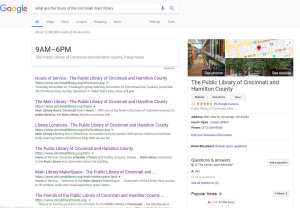
We’ve got our work laid out for us. After the conference, I started doing random searches to see where my library shows up in the answer box–and when it doesn’t. In some ways, we’re doing okay.

And in some ways, we have a lot of work to do.

So I’ll be looking for ways to make these five pieces of advice work in my content. And I’ll be paying more attention to the words we use on the website, making them local and specific. I’ll start thinking about what people will say when they use voice search to ask questions about my library. I’ll check these searches again in a few months to see how I’m doing. I urge you to do the same!

Subscribe to this blog and you’ll receive an email every time I post. To do that, click on “Follow” button in the bottom left-hand corner of the page. Connect with me on Twitter, Snapchat, and LinkedIn. I talk about library marketing on all those platforms!

The Best Advice for Library Marketing From CMWorld 2018

I wrote this post while sitting in my hotel room at the end of a week in Cleveland, Ohio at Content Marketing World. My brain is packed with ideas. My laptop battery is dead. Everywhere I look, I see orange. My iPhone says I’ve gotten about 13-15,000 steps a day and I didn’t even do my regular morning walk!

Content Marketing World was fantastic. I saw old friends and made new ones. And I’ve got plenty of new material to research and share with my fellow library marketers. But first, I want to share the quick takeaways from the presenters I saw. These are some pieces of advice that you can implement at your library right away.

Robert Rose, Chief Strategy Advisor, Content Marketing Institute: 38 percent of marketers have a documented content marketing strategy, according to the latest research from the Content Marketing Institute and Marketing Profs. That’s up a bit from 2017 but still not very high. Write down a content marketing strategy for your library. A written strategy helps remind you every day of what you are working on. It makes you accountable for results.

Joe Pulizzi, Founder, Content Marketing Institute: It only takes three things to be successful in your career. Step one is to write what you want to do. Set specific dates for when you will achieve those goals. And make sure you are serving others in your life.

Andrew Davis, Author, Brandscaping & Town, INC.: We are always told to keep our content short because our audience has the attention of a goldfish. QUIT BLAMING THE FISH. Our audience is capable of paying attention for as long as we can grab and hold their attention.

Michael Brenner, CEO, Marketing Insider Group, and Chief Marketing Officer, CONCURED: Marketing has a marketing problem. We are the cause of that problem because we create stuff that as consumers we wouldn’t consume, stuff no one wants.

Brian Massey, Conversion Scientist at Conversion Sciences: We must be aware of the bias we have for marketing tactics that have worked in the past. Data will tell you when something isn’t working. Listen to the data!

Cassandra Jowett, Director of Content Marketing, Pathfactory: Services like Netflix, Amazon, and Uber are influencing the way our buyers interact with companies. Everyone expects to have an on-demand experience in all aspects of their lives. We need to accommodate those demands.

Courtney Cox, Manager, Digital Marketing, Children’s Health: By 2020, 30 percent of web browsing sessions will be done without a screen. Voice search will dominate the way we gain information on the internet. That means if you live in the second or third result on Google Searches, you won’t get read out on any voice-activated device. We must place a priority on getting into that first position on Google.

Rachel Schickowski, Employee Engagement Manager, Rockwell Automation: Employee engagement should be a top priority at your library. When employees are engaged, they give a better experience to customers.

Ann Handley, Chief Content Officer, MarketingProfs: The most important part of the newsletter isn’t the news. The most important part is the letter. Editorial content performs way better than straight-up promotional mailings alone.

Dewitt Jones, photographer for National Geographic and other top publications: When passion and creativity exist, discipline and commitment are not an issue. Celebrate what is right with the world.

Kathleen Diamantakis, Managing Director, Strategy, T Brand, The NY Times: Cardholders are looking for something deeper and more meaningful when we engage with brands. They are discontent with content. There is an epidemic of meaninglessness in content.

Andrew and Pete, Founders, Andrew and Pete: There are always going to be bigger marketing teams out there that have bigger audiences, and that dominate search. They have giant budgets. Statistically speaking it’s impossible for your library to be the best. But there is another way to stand out. That’s by being better or different!

Jenny Magic, Senior Digital Strategist, Springbox: When you pitch a new idea or service to your co-workers, you can agree on how to move forward if you involve everyone in the process.  Redefine resistance as a positive thing. Dissent is a source of breakthroughs.

Tim Schmoyer, Founder, Video Creators: YouTube wants you to serve the right video to the right person at the right time. If you craft video content that does that, YouTube will elevate your video and more people will see it.

Margaret Magnarelli, Vice President, Marketing, Monster: In order to really engage our cardholders and get them to be loyal to us, we need to practice empathetic listening. It’s not that we shouldn’t use data to make informed decisions. But if we don’t combine facts with feelings, we’ll sacrifice relationships.

Tina Fey, Actress, Producer, Writer: Trust your gut. It’s always better to put it out there!

Subscribe to this blog and you’ll receive an email every time I post. To do that, click on “Follow” button in the bottom left-hand corner of the page. Connect with me on Twitter, Snapchat, and LinkedIn. I talk about library marketing on all those platforms!

Introducing the Nine Blogs That Will Make You a Better Library Marketer

(Read time: 2 minutes, 28 seconds)

I am a fan of blogs. God bless the internet, it’s the best way to keep up to date on everything–food, fashion, the news, and the changes in library marketing. And, as much as I am also a fan of books of all kinds, I am not a fan of marketing books! The landscape of this profession changes fast. Unless it’s a philosophical take on marketing, most marketing books feel out of date within a year or two of publication.

Instead, I get my advice from blogs. So I’ve listed the nine blogs I recommend you read to stay on abreast of all the news in marketing. For the best use of your time, sign up for the email newsletters offered by these sites. Most will let you choose which topics you like to hear about and will send you content at the frequency that’s best for you. Set aside time on your calendar every day to read the content shared by these blogs. It’ll be time well spent. I’ve listed them in alphabetical order.

The Content Strategist

This blog features interesting articles broken into categories like storytelling, strategy, and ROI. They also post inspirational articles, which I love to save and read on days when I feel like my work is not having the impact it could or should.

Content Marketing Institute

At first glance, you might be intimidated. This blog is aimed at C-Suite or executive level marketers. But it’s good to read this advice even when you’re a little guy! There are always pieces of their strategy and bits of advice you can pick up and mold to work for your library. And the writers of this blog always seem to see the trends in consumer and business marketing before any other experts. Also, when you sign up for this newsletter you’ll get notifications about CMI’s free webinars. They have the most helpful webinars of any company in the marketing space.

Coschedule

I found this blog after using their online tool for writing better headlines. It’s among my favorites. Coschedule creates a lot of useful templates and writes easy-to-read, concise instructions on how to use them and how to improve your marketing.

The Daily Carnage

I read this one for laughs, good advice, and a lesson on how to write with humor and still be taken seriously.

Hubspot

Hubspot also gives away a lot of free templates and online courses that have tremendous value. Their blog posts cover a range of topics and are fun and insightful.

Mashable Marketing

One of my favorites by far. Their content is easy to read and interesting. They cover topics from social media to graphic elements to equipment to how pop culture affects marketing. It’s also written very, very well. This website is daily appointment reading for me!

PR Daily

If you sign up or bookmark just one blog from this post, this should be it. It’s essential for library marketing. This blog contains everything you need to know about public relations and the media. You have my permission to stop reading and subscribe to this one now. Then come back. Please.

Social Media Examiner

When I interview candidates for a social media position, I asked them where they get their news about social media. If they name this blog, they get a big A+ from me. Read it AND listen to Michael Stelzner’s podcast to get the best advice on social media from the industry’s best minds.

Spin Sucks

This blog offers a lot of helpful PR advice with a mix of fun posts designed to stretch your creative brain and general marketing advice. I really look forward to their daily email newsletter. I always learn something!

What is your favorite marketing blog? Please share the name in the comments so I can read it too!

Subscribe to this blog and you’ll receive an email every time I post. To do that, click on “Follow” button on the bottom left-hand corner of the page. Connect with me on Twitter and Snapchat–it’s where I talk about library marketing! I’m @Webmastergirl. I’m also on LinkedInInstagram and Pinterest. Views in this post are my own and do not represent those of my employer.


A WordPress.com Website.

Up ↑