Search

Super Library Marketing: Practical Tips and Ideas for Library Promotion

Category

library marketing

Donโ€™t Release All Your Library Promotions at the Same Time: Why a Staggered Approach Reaches More People!

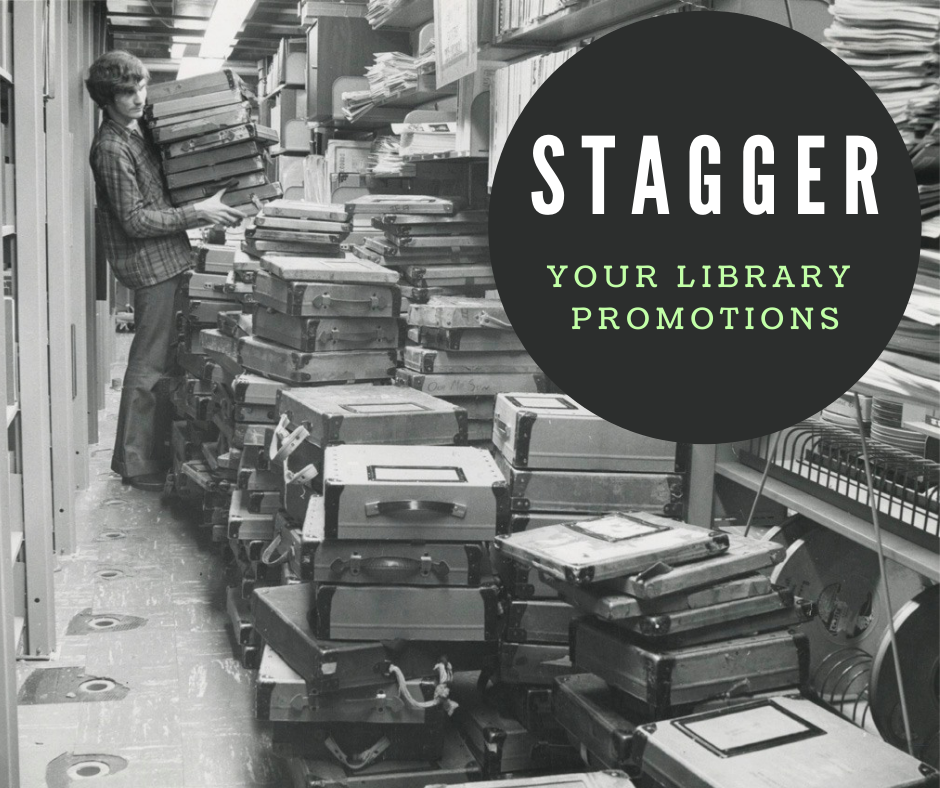
Shelver in the 16mm film area of the stacks, May 26th, 1974. Photo courtesy Public Library of Cincinnati and Hamilton County.

I am a new-ish fan of K-pop.

During quarantine, my 20-year-old daughter asked me to watch a reality series with her. It features her favorite Korean boy band, Stray Kids.

I was touched that she wanted to spend time together. I couldn’t say no, especially when I know she’ll be moving out of our house soon.

So during those dreary days of lockdown, I had something to look forward to: the point in the evening when she and I would make tea and snacks, and crawl into her bed to watch the members of Stray Kids compete to see who could sled down a hill holding a pitcher of water without spilling it or who could catch the most fish.

I became a fan of their music. And because I work in marketing, I started taking note of the way the promotion for Stray Kids, and other Korean musical groups, is coordinated.

Right now, six big K-pop groups are competing in a music variety reality show called Kingdom. It’s a master class in promotion. The marketing team builds excitement in the fan base by staggering promotional content over a specific period of time before each episode airs. Fans are seeing content at different times and days as they move across various platforms.

Libraries can learn something from K-pop.

Creating a compelling message, picking images, and deciding which tactics you will use to promote your library is important. But, deciding when you’ll release those promotions is just as critical.

When I started work in library marketing, I would create a marketing campaign and intentionally release all the promotions on all channels in the same day.

On the appointed day, my team sent an email and a press release. We added a homepage graphic and posted on all our social media platforms. We changed out the digital signage in our branches and put up posters.

And it was never very effective.

Then I heard marketing expert named Andrew Davis talk about staggered distribution. The approach takes advantage of the consumer cycle of excitement to expand your reach.

When you use staggered distribution, you release one or two promotional tactics at the beginning of your promotional cycle.ย Maybe you put up posters and send an email to your community.

Your promotion gets some play, and excitement builds in your community. People start talking about it. They might even share your promotion with their family and friends.

When the excitement dies out, you release your promotion on a second channel. The cycle of excitement and sharing begins again.

When that ends, you release your promotion on a third channel. You cycle through your promotion like this until you’ve used all the tactics planned.

When you use the staggered approach, you get a longer promotional thread. Your promotions will be more successful because the excitement around them builds over time, not in one big burst. Everyone in your audience sees the promotions. And more people take the action you want them to take!

For decades, my library used a traditional, all-at-once promotional approach to our Summer Reading program, which ran from June 1 through July 31. We released promotions using all our available tactics on May 1. And our registration numbers and check-in numbers were never as high as we wanted.

By the time we got to June 1, our audience was already tired of hearing about Summer Adventure. We used up all their excitement before we even got to the event!

So, we switched to a staggered approach.

We released promotions on our website on May 1 and installed yard signs. On May 15, we sent an email. On May 20, we put up all the signs around the inside of the library and started promotions on social media. From May 21 until June 1, we’d post once a day on one of our social media platforms. We started our ads on May 25. We sent a second email on June 1.

Throughout the course of our summer reading program, we would stagger promotions around all channels, so the message reached everyone in our audience, wherever they were consuming our content. We kept our audience excited, engaged, and interested.

And most importantly, it was effective. The first year we tried this staggered approach to distribution, we saw an 18 percent increase in registrations and a 67 percent increase in weekly check-ins.

This approach will work for your audience for any large-scale promotion. Stagger the elements of your promotion across various channels over time. More people will see your marketing and your efforts will be more effective.

I talked more about this idea in this episode of the Library Marketing Show. Try it and let me know if you see an increase in the effectiveness of your marketing work.


You Might Also Like These Posts

Everything You Need to Know to Create an Effective Marketing Plan for Any Library Promotion

Virtual Library Programmersโ€“Heads Up! Hereโ€™s a Super Easy, Step-by-Step Plan to Establish a Style Guide for Your Library Videos

Latest Book Reviews

How to Avoid a Climate Disaster by Bill Gates

Subscribe to this blog and youโ€™ll receive an email every time I post. To do that, click on the โ€œFollowโ€ button in the bottom left-hand corner of the page. Connect with me on YouTubeTwitter, InstagramGoodreadsand LinkedIn.

What a New Study Says About Books, Reading, and Libraries!

Watch Now

The Library Marketingโ€‹โ€‹โ€‹ Show, Episode 89

In this episode, โ€‹we’ll talk about the top line results of the Immersive Media & Books Research Project 2020.

Kudos in this episode go to Richmond Public Library for their Binge Bundles Bags. They were nominated by Chris Boivin of the Jacksonville Public Library.

Do you have a suggestion for a topic for a future episode? Want to nominate someone for kudos? Let me know in the comments. And subscribe to this series to get a new video tip for libraries each week.

Thanks for watching!

Library Blogs are the Best! How to Use Your Website to Amplify Your Library Marketing Message on Your Own Terms

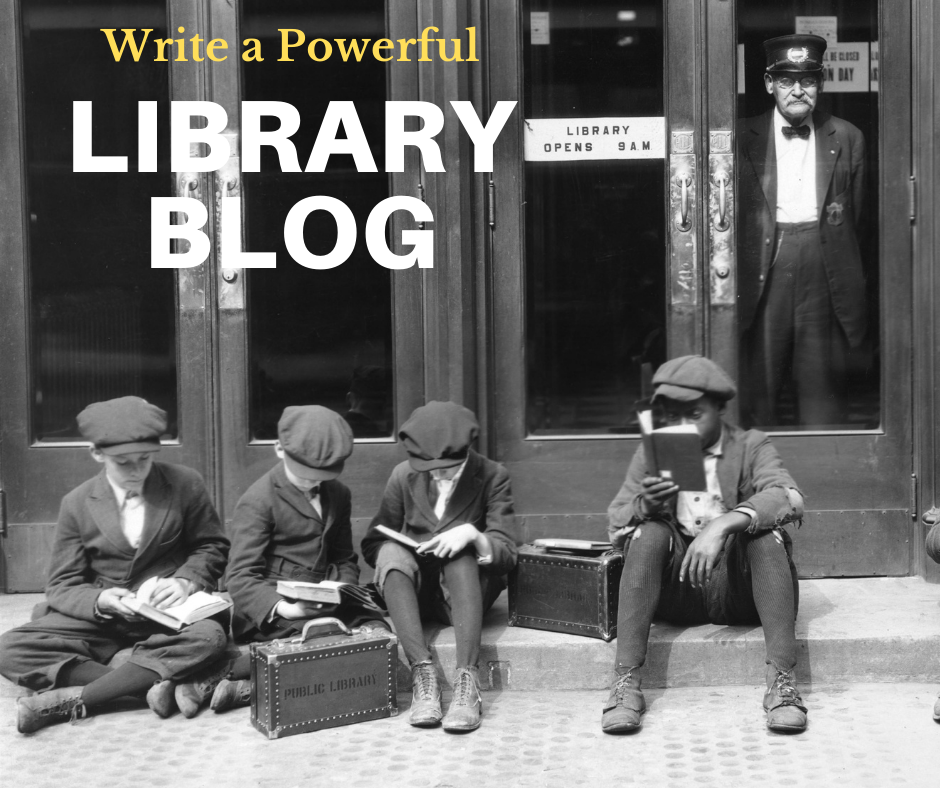
Photo courtesy Public Library of Cincinnati and Hamilton County

One of the hardest and most rewarding things I ever did while working for the Public Library of Cincinnati and Hamilton County was to start a blog. It took me five years to get it off the ground. I wrote about that experience in this blog post.

I worked hard to get a library blog because I knew it would be a transformative and powerful communication asset.

A blog allows your library to tell your own story, create brand awareness, and promote your library to your own audience for free, without having to deal with the rules of someone else’s platform.

If your library has a blog, you will want to make sure you are doing everything in your power to grow your audience. In this post, I want to share the best practices Iโ€™ve learned from years of blogging.

Before you post

Create an editorial calendar for your library promotions that includes your blog post ideas. I wrote a two-part guide to help you through this step.

A calendar will let you see all the promotions your library is doing in one glance. It will help you schedule posts that amplify your other marketing messages.

You can use your calendar to formulate due dates and publication dates for blog posts. You can also plan the promotion of your library blog posts on other channels, like your email newsletters and social media platforms.

The three main genres of library blog posts

The best blogs are a mix of these three types of blog posts.

Promotional posts: Most library blog posts are promotional. They focus on telling readers about an event, service, or collection item available at the library.

Promotional posts tend to be shorter. They also need to be frequently updated as services and collection items change.

Example: Jacksonville Public Library uses their blog to help their community find information on their website without having to create special landing pages for events and services.

Opinion posts: These posts demonstrate what the library stands for. They center on questions people have about libraries but are afraid to ask. Opinion posts also celebrate the strengths of libraries and the opportunities for improvement.

Opinion posts are compelling and allow your library to cement your voice and your position in a way that your readers and cardholders will remember. Itโ€™s great when a library takes a stand. People will respect you for it.  

Example: The Stark Library CEO and Executive Director took a clear stand against racism in this recent blog post.

Authoritative posts: These posts demonstrate your libraryโ€™s expertise in a subject. For instance, a post that highlights your library’s award-winning family history department is an authoritative post.

Example: Check out the My Librarian(s) Favorite Resources series on the Chapman University: Leatherby Libraries blog.

The Ugly First Draft

If youโ€™ve been asked to write a post on your libraryโ€™s blog, your journey begins with what my favorite marketer Ann Handley calls The Ugly First Draft (UFD).

Your first job is to get all your ideas down in whatever format they escape from your brain. Write your draft without worrying about spelling, grammar, punctuation, or phrasing.

Open a Word document and try to keep typing until you canโ€™t think of anything else to say on a subject. If you are a skilled typist, look away from the screen so you’re not tempted to focus on spelling or grammatical errors.

Revise to create the perfect library blog post

Write short paragraphs, not short posts. Itโ€™s a myth that short blog posts will attract more readers. If your blog post is long but compelling, youโ€™ll have no problem holding the attention of your readers. A longer post that is well written and contains keywords will do better in Google search than a shorter post.

However, you should break up your blog post into shorter paragraphs. Short paragraphs are easier to read and understand. They open white space on your blog, which makes your post more inviting.

Writing experts recommend paragraphs of no more than 150 words. I started writing shorter paragraphs about two years ago and saw a big boost in my metrics.

Be deliberate with your keywords. In the blog text, you need to include keywords for search.

Youโ€™ll notice I use the phrase โ€œlibrary marketingโ€ and โ€œlibrary promotionโ€ frequently in this blog. Thatโ€™s because people searching for help with library marketing use those two phrases most often. Try Keywordtool.io. It does an amazing job of helping you to narrow your target phrase.

Put your keyword phrase in title, header, and body of blog post at least two times but more often if it makes sense.

Include images. Images can help you craft your message and tell your story. They also help to break up the text of your blog posts.

Use images to explain concepts or enforce the emotion you are trying to create.

Link to other content from your library. Your blog post can funnel your readers into engaging with your library. If you are talking about a specific service or a part of your libraryโ€™s collection, include links embedded in your text to help readers find more information.

Make sure your links open in a new tab. Thereโ€™s nothing more annoying that clicking on an embedded blog post link in the middle of a post and then having to tab backwards to read the rest of a blog post.

Create engagement opportunities for your reader. Use your blog posts to start a conversation with your readers. Ask a question and invite readers to post their answers in the comment.

Your library can also embed a social media post in your blog so readers can post a key point to their social media. This gives your post the potential to reach new readers.

Spend a lot of time on your headline.  A good headline should give your readers a hint at the copy that lies ahead without giving away the whole story. It should trigger an emotional response that includes an irresistible urge to read more.

You can get lots of tips for headline writing in this blog post.  

Incorporate several rounds of edits for spelling, grammatical, and punctuation errors. Run your blog posts through an online editor to catch errors. Ask your co-workers to edit your blog as well.

Print your blog post out and read through it, word for word, out loud. Doing this will force your brain to pay attention to the extra attention to what you’ve written. Your brain will often fill in or gloss over errors when you silently read. But if you read your post out loud, those errors become obvious and can be fixed before publication.

Four more tips for library blog success

Use your blog as a networking tool. Ask community leaders to write guest posts. Reach out to school administrators, policy makers, influencers, and other nonprofit organizations. Or use your blog to interview someone.

Once you publish, send a link to the contributors or interviewees. Ask them to share your post with their audience. This will amplify your message and expose your blog to a new audience of readers.

Example: The National Library of Australia interviewed fashion designer Nicky Zimmermann in this blog post that led to lots of media exposure for the library.ย 

Post consistently. The best way to maintain web traffic to your blog is to make sure people are always waiting for an article to go live.

Decide how many posts you can create a week and which days youโ€™ll post on. Then stick to your schedule.

Promote your blog posts on other platforms. Most of your readers will not just stumble upon your post by accident. You need to make sure they know that your library has published a post.

Promote your posts on your social media platforms, in your emails, and in patron interactions.

Your blog can also be used instead of a press release to pitch a story to a member of the media.

Evaluate your post metrics. Check in once a month and enter your metrics on a spreadsheet so you can track results over time.

Compare views, watch time, and bounce rate for your posts. You can also compare post length.

Your metrics will help you to continue to improve and update your blog based on your audienceโ€™s needs and wants.


Does your library have a blog? I’d love to see it! Share a link in the comments!

Subscribe to this blog and youโ€™ll receive an email every time I post. To do that, click on the โ€œFollowโ€ button in the bottom left-hand corner of the page. Connect with me on YouTube, Twitter, Instagram, Goodreads, and LinkedIn.

Library Promotion Updates for Instagram, YouTube, and Facebook That You Need To Know!

Watch Now

The Library Marketingโ€‹โ€‹ Show, Episode 88

It’s time for our social media updates for Library Marketing! In this episode, find out about updates to Instagram Stories, YouTube shorts, and Facebook.

Kudos in this episode go to Illinois Prairie District Library for their purchase of a Short Story Cube.

Do you have a suggestion for a topic for a future episode? Want to nominate someone for kudos? Let me know in the comments. And subscribe to this series to get a new video tip for libraries each week.

Thanks for watching!

Rebuild Your Summer Reading Program! Here Are Ten Tips To Boost Participation This Year

Photo of girl looking at books from 1902 courtesy the Public Library of Cincinnati and Hamilton County

In just a few weeks, the annual summer reading program will kick off at libraries in the U.S., Canada, and the U.K. And for the second year in a row, libraries are struggling to create a program that engages the community without risking their safety.

Last year’s pandemic Summer Reading program was a challenge (boy, that’s the understatement of the decade). Many libraries were physically closed. We were still learning about how the virus spread and trying to figure out how to mitigate the risk with physical materials. Staff members were doing virtual programming for the first time. We counted any participation as a success.

I think 2021 is going to be the first rebuilding year for summer reading. Attendance and participation numbers are not going to return to pre-pandemic levels this year. Many libraries are still dealing with limited service. Zoom fatigue is real. Vaccines are not widely available. It’s going to take us a couple years to get back to “normal.”

It’s okay. Do the best you can. Celebrate any growth you see this year. And use these ten tips to make your summer reading program as successful as possible.

Drop the library card requirement. 

Let anyone in your community participate in summer reading, not just library cardholders.

Dropping the requirement to get a library card sounds counterintuitive. But it opens your program up to a whole population of people who don’t regularly use the library, particularly those in under-served communities. It makes your program more inclusive. It’s a goodwill gesture.

Of course, at registration and check-in, your front-line library staff should still suggest participants get a card. Doing so will grow your cardholder numbers. But don’t make it a requirement to register or get prizes.

Make participation super easy.

Don’t ask your participants to jump through complicated steps to earn a prize. Summer reading should be three-step maximum– read, log your reading, claim a prize.

If you want to push participation in programs, I suggest making that a bonus: let people earn extra prizes or points toward prizes by attending virtual programs or in-person events, if that can be done safely in your area. You can also reward people for watching a streaming video or listening to free streaming music.

Let adults participate.

It still surprises me when I see a library that limits their summer reading program to only teens and kids.  Children who see the adults in their lives reading are more likely to read themselves. So why not entice parents to participate?

This year is an opportunity to get more adults engaged with your library. Plus, the adults in your community deserve to have some fun! If you can provide that for them, they will be grateful and supportive of your library.

Add experiences to your participation elements.

Create themes for each week of your summer program, like DIY, arts, nature, and sports. Make suggestions for activities people can complete to earn participation credit, like cooking a recipe from a cookbook they got at the library, going on a nature walk, visiting the zoo or a park, painting a picture or making sidewalk art, building something with LEGOs, writing a storyโ€ฆ the possibilities are endless.

If a participant doesnโ€™t read 20 minutes a day but still completes an experience activity, they should get credit. This is another way to make your program more inclusive and enticing to people.

Offer both print and digital tracking options.

Many libraries have an app or an online software platform that participants use to track their reading. But your under-served community members donโ€™t have access to a computer or Wi-Fi at home. They canโ€™t log in to track their reading and they canโ€™t download or use an app.

In addition, many of your connected participants may find the process of downloading the app, putting in their information, and then using it to log their reading to be cumbersome. Add a paper tracking option to ensure everyone can participate.

Print copies of your tracking log and add them to your curbside pickup bags or slip them into holds. Let participants bring it back to your drive-thru or curbside window for credit.

Ask partner organizations to help you promote summer reading.

Now is the time to “call in favors” with your partner organizations. Ask them to show support and help rebuild your summer reading program.

If you don’t have partners, you can use summer reading to build partnerships! Ask local realtors and rental agencies if they can hand out a summer reading promotional piece to prospective homeowners or new renters. Give information and promotional pieces to day care providers, teachers, summer camps, recreational centers, your local zoo, your local park board, and other civic organizations. You can even ask restaurants to include a summer reading promotional piece in their takeout bags!

Use your email list to its full potential. 

If your summer goal is to increase the number of readers and the amount of materials they read, then keep suggesting things for them to read! This is a great time to promote parts of your collection that don’t get a lot of use, like online graphic novels, as well as your backlist titles.

Build a template with whatever email service you use and fill in the blanks. Send two to three suggestions to your cardholders every two weeks during your summer program. It’s a great way to re-engage cardholders. You can also use email to remind your cardholders to participate in summer reading and boost your circulation numbers for the year.

Spend money on targeted social media ads. 

This is the most efficient and cost-effective way to reach people and summer is the perfect time to buy social media ads. You barely need a budget to get started. $25 is all you need to get started.

Summer reading is also a great opportunity to buy ads on several platforms and compare results. The platforms will guide you through the process of picking your target audience. If you see success on one platform, you can use that data to create other small budget campaigns for your library during the year.

Incentivize user-generated content.

Hold contests to encourage people to post photos and videos of themselves using your library and participating in summer reading. Offer a chance to win a prize drawing for submitting reviews and testimonials about your library. You can use that content to further promote summer reading.

You may discover someone who is a super-fan of your library. That person could be an “influencer” for a future library promotional campaign!

Put good customer service on display. 

Even with the pandemic, you’ll likely see a boost in visits to your library for curbside or holds pickup during the summer. You’ll definitely get more visitors to your website. Make sure everything is in tip-top shape, attractive, and easy-to-use.

Stress the importance of good customer service to staff, including those who work on responding to comments and questions via email, chat, and social media. Give them talking points to help them promote a few year-round services and challenge them to pick one to mention during every customer interaction.

Put your expertise on display front and center on the website. Is your staff great at readers’ advisory? Do you have an amazing e-newsletter? Are your virtual programs fun and innovative? Use summer reading to promote the best of your year-round services and collection items.


Is your library doing anything innovative this year for summer reading? What concerns do you have about the program this year? Share your thoughts in the comments!

You may also like these posts

There is NO SUCH THING as Too Many Library Marketing Emails! Why Libraries are the Exception to the Rule.

Should My Library Spend  on Social Media Ads?

Latest Book Reviews

Wow, No Thank You by Samantha Irby

An Absolutely Remarkable Thing by Hank Green

Subscribe to this blog and youโ€™ll receive an email every time I post. To do that, click on the โ€œFollowโ€ button in the bottom left-hand corner of the page. Connect with me on YouTube, Twitter, Instagram, Goodreads, and LinkedIn.

Which is the Best Platform for My Library’s Virtual Storytime Videos? Viewer Question Answered!

Watch Now

The Library Marketingโ€‹ Show, Episode 87

In this episode, I’ll answer a question from Jennifer from Lexington County Public Libraries. She writes, “Keeping in mind fair use guidelines, would it be better to post our virtual pre-recorded story times to our Facebook story rather than to our timeline. My understanding is that stories only appear for 24 hours and can be tailored somehow to only reach certain audiences. Do you have any suggestions?”

Kudos in this episode go to Pottsboro Area Library for hosting telehealth appointments at their library.

Do you have a suggestion for a topic for a future episode? Want to nominate someone for kudos? Let me know in the comments. And subscribe to this series to get a new video tip for libraries each week.

Thanks for watching!

How to Celebrate and Promote National Library Week….in a Pandemic!

Watch Now

The Library Marketing Show, Episode 86

In this episode, I’ll share some ideas for promoting the work of your library during National Library Week (April 4-10). These are suggestions you can use even though we’re in the middle of a pandemic.

Kudos in this episode go to the Jackson County Library System for their new animated series, “Lost in a Book.”

Do you have a suggestion for a topic for a future episode? Want to nominate someone for kudos? Let me know in the comments. And subscribe to this series to get a new video tip for libraries each week.

Thanks for watching!

You Donโ€™t Have To Be Cool To Promote Your Library to Teens! Here Are Seven Seriously Easy Ways To Connect With Gen Z

Photo courtesy Public Library of Cincinnati and Hamilton County

Once you have taken a look inside the minds and lives of Gen Z, you can focus energy on teens as a target promotional audience. Here are seven tips to create effective promotions that reach your teen audience.

Create personas that reflect your diverse teen audience.

Teens have widely different tastes in just about everything-music, movies, clothesโ€ฆ the list goes on and on. That makes it hard for a library to market to them. But, if you can pinpoint exactly what kind of teen will be interested in the program or service you want to promote, you can do a better job of marketing.

Before you write any copy or create any graphics, build a persona to help you imagine the exact teen you wish to reach. How old is the teen you’re targeting? What kind of student are they? What do they like to do in their free time? Are they a regular library user or do they barely ever interact with the library?

These questions will help you decide what to write, what graphics to use, and where to put your promotions. For example, a poster is not effective for reaching an older teen who is an ambitious and college-focused student, who has very little free time, and who mainly interacts with the library online. For that teen, you’ll want to create digital promotions with photos or graphics that accurately reflect that specific population.

Build relationships with people who can help you.ย 

Adults who regularly interact with teens, including teachers and teen librarians, will be your library’s secret promotional weapon. These adults can give you insight on your specific teen audience, including their interests, transportation situation, and struggles in school. Use these insights to build those targeted personas.

Of course, you’ll want to keep your teen librarians and the teachers in your local school district informed about new programs and services. You can also ask them to recruit teen influencers to help spread the word. Kids put more trust into recommendations from other teens as well as from adults they trust.

Ask teens what they want.

In my former library job, I was asked to promote our homework help service. I created a target persona and wrote some marketing messages.

Then, I went to a group of teens I know and I asked them for feedback. That led to a fascinating and enlightening conversation. Not only did they share their thoughts on my proposed marketing, they also provided feedback on the homework help service itself.

They thought it would be even more helpful to have homework help late at night. They also suggested that libraries schedule teen programs later to accommodate their schedule. And the teens all said that they prefer to do things in groups with other teens, so they wanted us to do more group-oriented programming.

That conversation left a lasting impression on me. I came to understand that teens are not often asked for their opinions by adults. Doing so makes them feel engaged and connected to the library. The conversation itself was a form of marketing! I also gained some insight that helped my library improve it’s services to teens.

If you don’t have access to a group of teens yourself, ask your teen librarians and teacher friends to run ideas by their patrons and students to get preliminary feedback on your services and your marketing.

Let teens market to other teens.

Teen Read Week happens every year here in the U.S. For the first few years in my former job at a library, I was very general with my marketing message. โ€œHey teens, itโ€™s Teen Read Week. You shouldโ€ฆ read.โ€ You won’t be surprised when I tell you that never worked very well.

One year, I decided to create aย specific reading recommendation list for teens created by other teens. I recruited the help of our teen librarians. They asked teens to write down their favorite book along with a one-sentence explanation of why they would recommend that book to other kids their age.

We compiled the responses into a book list which was our main promotional focus during Teen Read Week. We did social media posts. Then, we created an email that we sent to our teen cardholders with a direct link to the list.

The results were fantastic. We saw a 29 percent increase in circulation for the books on that list during Teen Read Week. And we had more teens than normal who shared the social media posts about the booklist because they had helped to create it.

This list worked because teens love to be asked for their opinions about books. And theyโ€™re more likely to read something suggested to them by another teenager.

You can recreate this success for all kinds of promotions. Ask your teen librarians to recruit teens who love the library and who are willing to talk about it with other teens. Let them create TikTok videos, Instagram Stories, and Instagram Reels talking about your library. Encourage them to tag your library when they’re at the library, posting selfies on social media. Teen influencers are the most effective marketing tactic for other teens.

Market to teens’ parents and adult caregivers. ย 

In my former job, my library received a grant for a financial literacy program. During the first year of this two-year program, we tried targeting our message directly at teens. That tactic was only marginally successful. Attendance was never at the level we wanted.

So, when it came time to plan for year two of the program, we changed course. We started targeting our message to the teens’ parents and teachers. We used the same promotional tactics-fliers, posters, emails, social media posts, and a paid ads. But we changed the message to appeal to adults who are worried about the financial literacy of their teens. We encouraged teachers to offer extra credit to students who attended.

And it worked–attendance rose significantly during that second year. You can replicate that success by taking the same approach at your library.

Emphasize the social value of your library.

Research shows teens appreciate companies and products that support good causes. They want to be involved in organizations that help to transform the world. Your library can tap into teen activism by emphasizing the social value of your library.

Create content marketing for teens to educate them about the work you do. If you have programs and services for underserved populations, let your teens know. If your library is actively involved in social justice causes, let your teens know that too. Then, make sure there are ways for the teens in your community to volunteer their time to help you!

Donโ€™t forget the collection!

Kids still love to read. Donโ€™t let anyone tell you any differently. They want reading suggestions. They want to know when new books are added to your collection.

Ask teens if they want to sign up for an e-newsletter so you can send them reading suggestions directly to their inbox. (Yes, teens read email!) Market your readers’ advisory service to teens. And ask teens to help you compile reading lists to send to other Gen Z patrons.


Did I miss anything? Has your library had success marketing to teens? Share your ideas in the comment section.

You may also like these posts

Your Library Can Reach Teens With Programming and Marketing! A Look Inside the Lives and Minds of the Elusive Generation Z

Zoom Fatigue is RUINING My Library Programming! How the Heck Should Libraries Deal With That?

Latest Book Review

The Cold Vanish by Jon Billman

Subscribe to this blog and youโ€™ll receive an email every time I post. To do that, click on the โ€œFollowโ€ button in the bottom left-hand corner of the page. Connect with me on YouTube, Twitter, Instagram, Goodreads, and LinkedIn.

Here’s When Itโ€™s Okay for Your Library To Forget Perfection and Just Push Send!

Watch Now

The Library Marketing Show, Episode 85

In this episode, I’ll talk about why it’s sometimes okay to send out marketing emails and e-newsletters that are *NOT* perfect.

Kudos in this episode go to the Clearwater Public Library System.

Do you have a suggestion for a topic for a future episode? Want to nominate someone for kudos? Let me know. And subscribe to this series to get a new video tip for libraries each week.

Thanks for watching!

A WordPress.com Website.

Up ↑