Search

Super Library Marketing: Practical Tips and Ideas for Library Promotion

Category

library marketing

Tips for Dealing With Angry Patrons When Your Library Reopens

Watch Now

The Library Marketing Show, Episode 49

Angela addresses a serious subject. As libraries reopen their physical buildings, library staff members are worried about dealing with patrons who are upset. Angela offers some tips for dealing with patrons who are having trouble accepting the new rules and regulations. She also has a special message for library managers-PLEASE WATCH!

Do you have more tips to share with your fellow library staffers? Please add your suggestions in the comments.

Also Kudos to Poudre River Public Library District. They have a fun and innovated curbside service for kids called Bag ‘O Books. 

What did you think of this episode? Are you struggling with marketing and promotion right now? Do you have a nominee for the Kudos segment? Drop a comment below!

And subscribe to this series to get a new video tip for libraries each week! Thanks for watching.

Seven Cheap and Clever Ways to Bridge the Digital Divide and Promote Your Library to People Who Don’t Have Internet Access


If I had a nickel for every time I was asked, how do we promote our library to people who don’t have internet access or who choose to live offline?, I’d be a rich woman.

This problem has always plagued libraries. By nature, our services are needed most by those who struggle with economic disadvantage. And it’s a huge concern of many librarians right now. Some libraries in the United States are reopening their physical buildings and returning to services involving in-person interaction with patrons, like curbside pickup or drive-thru windows. But there seems to be no way to make sure our offline community members know we have returned to service.

I’ve always been a fan of digital marketing because it’s targeted, effective, and easy. The problem of reaching people who don’t have access to Wi-Fi and will never see those messages has always bothered me.

What’s a library to do?

I decided to stop letting it bother me. It’s time to solve the problem. 

Prepping for promotion

First, concentrate on your core message. If you only had 10 seconds to tell someone about your library’s reopening, what would you say? Boil your message down to the most important points. Then create a few, highly focused and easy-to-deliver print pieces to carry that message. Good choices are a bookmark, a quarter-sheet flier, and a postcard. These will be your library’s main promotional vehicles for non-digital marketing efforts.

Second, adopt an outreach attitude. Many libraries are hesitant to market themselves. They worry they are intruding. They don’t want to seem pushy or salesy. They are convinced their promotional efforts will be viewed as “spam”.

You are not spam. You are not intruding. You are not selling a product. You are promoting a service that is free and necessary. 

Your community is already paying for library services in some form or fashion. They need to know what they’re paying for. They need to know how you can help them. They are grateful to learn how to access the services they are funding.

It’s more important than ever to promote your library. We need to make sure, at the very least, that our community understands what we do and why our work is important. So, make a commitment to banish humility! Don’t be timid!

Now, here are seven relatively cheap, yet clever ideas for promoting your library. And they all have nothing to do with the internet.

Non-digital promotional tactics

Mail your postcard. If you have the budget, now is a good time to try mailing your postcard to people in your community. Start with your patrons. And if you have leftover money, a mailing house can help your library secure addresses for people who are not patrons.

In some U.S. states, your library can request a list of voter addresses from the Board of Elections for free. You can reach people who aren’t library patrons but who are registered voters, legally and cheaply.  

Canvass. Adapt this political campaign strategy for library awareness! Distribute your printed piece door-to-door.

Now, I know it’s time-consuming but it’s also effective. In my former job at a large metropolitan library, our outreach librarians went to apartment complexes and hung door hangers with information about the library. Door hangers are relatively cheap. If you can’t spring for them,  slip your postcard into screen doors. This is a great job for libraries looking for ways to keep their staff busy. And, of course, you will reach people who have forgotten the library or who have never interacted with the library.

Buy a print ad. Many newspapers will give your library a discount on ad space. Try to use your limited space to the full advantage. Use a catchy graphic to draw the eye.

Put your partnerships with local businesses and other non-profit organizations to use. Ask partner organizations to distribute a bookmark or some other kind of small print promotional piece to their visitors. Ask local businesses, like restaurants, to include a small promotional piece in their takeout bags. Ask local realtors and rental agencies to give your promotional piece to prospective homeowners or new renters. Give some of your print pieces to day care providers, teachers, summer camps, and recreational centers. Seek the help of any business or organization with a physical location that is open in some capacity and ask them to distribute your material to people who use their services.

Place signs outside your building. A banner in your front yard or a sidewalk sign can help spread the word to people in the neighborhood. There are lots of online stores that will sell you weather-proof signage for a reasonably cheap price.

Pitch to the media. Despite what you may see on the news right now, journalists are always looking for good news stories. And your library offering services is good news. Try pitching to individual reporters. Keep THEIR audience in mind and make sure you point out how a story about your library will be beneficial to their audience.

And be helpful. If they need photos but can’t make it over to your branch, offer to provide some. Have staff members who are comfortable on camera at the ready to deliver soundbites to local TV news crews. You might even offer to write a piece for your community paper. Free press is a great form of marketing.

Call patrons. I spoke to some librarians this week who called people to let them know that their library had reopened. They clearly identified themselves at the beginning of the call and asked permission to proceed with the call. If the receiver said “yes”, the library staffer proceeded to relay the information about their library’s new hours and service requirements and asked the receiver if they had any questions. Like canvassing, this is a time-consuming tactic, but it may be necessary in a community without internet access.

Related Help

Email vs. Social Media: Which is Better for #LibraryMarketing Right Now?⚔️

Marketing is Not a Dirty Word! Why Libraries Need to Promote Themselves Now, More Than Ever

Latest Book Reviews

You Don’t Look Your Age and Other Fairy Tales by Sheila Nevins.

Postscript by Cecelia Ahern.

The Familiars by Stacey Halls.

Find more 60-second Book Reviews here.

Subscribe to this blog and you’ll receive an email every time I post. To do that, click on the “Follow” button in the bottom left-hand corner of the page. Connect with me on YouTube, Twitter, Instagram, and LinkedIn.  

Email vs. Social Media: Which is Better for #LibraryMarketing Right Now?⚔️

Watch Now

The Library Marketing Show, Episode 48

Angela is back in her outdoor work tent and this week, she’s sharing her opinion about the best way for your library communicate wth cardholders. Is it email? Is it social media? Can you guess? Listen and then join the conversation–let her know what works best for your community in the comments.

Also Kudos to the Toledo-Lucas County Public Library for their Safe Work Playbook. This is the best physical library building reopening document I’ve come across.  

What did you think of this episode? Do you love a specific library’s Facebook work? Are you struggling with marketing and promotion right now? Do you have a nominee for the Kudos segment? Drop a comment below. And subscribe to this series to get a new video tip for libraries each week! Thanks for watching.

Want to Make the World a Better Place? Tools and Tips For Libraries to Combat Racial Inequity in Their Communities

Photo Courtesy Public Library of Cincinnati and Hamilton County

In the United States, a week of riots and violence protesting racial inequities was enough to send me in paralysis of inaction. It was soul-crushing. Like many of you, I sat at my computer or scrolled through my phone. I felt anger and despair. I felt hopeless and helpless.

I’m just a library marketer. What can I do to help?

Equality, inclusion, and diversity are social justice issues. Social justice aligns with the core values of library work. Equal access, educational equality, free service, and safe spaces are all essential and valuable library missions.

Many of the librarians I work with have hearts bent for social justice. They may not be aware of it. But their empathy, compassion, and drive to pass on information and ideas make the world a better place.

Every time a library staffer teaches someone to read or feeds someone or helps someone to get a job or offers a space for a group to meet in safety and peace, they are doing social justice work. Every time a library staffer recommends a diverse book or helps someone fax an unemployment claim to job services or helps a minority-owned business owner secure a grant or a patent or a trademark, they are doing social justice work.

If you feel that the problems of the world are too numerous or too difficult, that your job is too small, that no one cares about what you do or say, YOU ARE WRONG. You do make a difference working in a library. And you have the power to change lives.

This week, I want to share a list of resources and ideas to respond to racial inequity. I believe that libraries can help our communities to be more equal, inclusive, and diverse. Here is advice I’ve learned from experts, and tools to help you make changes in your collection, your marketing, and ultimately, your community.

What is your #1 library marketing worry or concern right now?

← Back

Thank you for your response. ✨

Be aware of your own bias. I was raised to be prejudiced. I must consciously work on my own mind. And so should you. We must all make a habit of constantly questioning our own beliefs and reactions.

It’s not easy. It’s work we must do every single day. It starts with educating yourself. I’ve found several resources to help me with this. The best is this fantastic list of anti-racism resources for white people. There is also this great list of resourcesto help with racial division and the ongoing COVID crisis on the Facebook page Libraries Step Up (in times of crisis).

I also turn to friends like Kim Crowder. Kim is a former library marketer who now runs her own consulting firm aimed at helping organizations like libraries to make sure they are diverse, equal, and inclusive in their marketing, workforce, and services. She’s written for this blog on diversity in library marketing.

Kim is offering an anti-racism course on how to live an inclusive life. Inclusive leaders and professionals live diverse lives. She says, “Anti-racism and silence cannot inhabit the same space. Find out tools you can take with you and ways to grow and influence those around you. Let’s get comfortable with being uncomfortable. Humanity must lead.”  Sign up for her newsletter now for more details.

Recommend diverse books. One of a librarian’s main jobs is to recommend books to readers. This is your chance to create empathy in your community.

There are SO MANY resources to help you find diverse titles, including the website for the social movement We Need Diverse Books and The Children’s Book Council. My friends at the Public Library of Cincinnati and Hamilton County responded this week by quickly pulling together a list of books about race and anti-racism, which they displayed at the top of their Overdrive page. Your library can replicate that.

You can also turn to the Own Voices movement to find diverse books. Own Voices is an adjective that describes a book about diverse characters written by authors from that same diverse group.

If you aren’t familiar with diverse titles, there are two great places to find these books. The first is NoveList. (Note: I work for NoveList.) I have found many library staffers have no idea that their library is a subscriber. Check your library’s website. If you have NoveList, you can use it to find diverse and Own Voices books to recommend.

The other place is Pinterest. Searching “diverse books” and “Own Voices” on Pinterest will lead you to a host of booklists created by librarians, publishers, and other book industry websites.

Lift up diverse voices on your platforms. If you have a blog or a newsletter, ask patrons and community leaders from diverse backgrounds to write for you about their experiences at the library and beyond in the wider world. The library is built on stories. Those stories can be a way to affect change in the world. There is no more powerful way to do this than to amplify diverse voices.

Be intentional about adding diversity to story time and programs. Children’s librarians, you have the power to influence the next generation of readers. Read diverse books and share songs and crafts from diverse cultures at your story time. My favorite example is happening on the DC Library Facebook page, where they’ve posted bi-lingual story time videos.

The DC Library is also leading the way with diverse presenters for their programs. Be intentional about including presenters and experts from a variety of backgrounds, abilities, and perspectives. Your library is a safe space where ideas and information are shared. Let’s make sure we include all voices in discussions about all subjects, large and small.

Use diverse images in all your marketing. Representation matters. The library is a place where everyone in your community feels welcomed and included. Studies show that younger library users are more likely to respond to marketing that includes visual representations of diversity.

It is difficult, but not impossible, to find free diverse stock photos. Some good choices are Pexels diversity photo collection, Nappy, Women in Tech, and Unsplash.

Use social media for good. I know your social media feeds feel like a cesspool of hell. It doesn’t have to be that way. Libraries can help by curating content on diversity, equity, and inclusion.

You should, of course, share library resources to help your community learn about diversity and inclusion. But also look outside the library for content to share. Share posts by readers and people in your community from diverse backgrounds. Start a conversation with your followers about diversity. You can even do this live on Facebook or Instagram. And share posts from local organizations about events or educational opportunities tied to diversity and inclusion.

Do you have more ideas for how libraries can help their communities deal with racial inequalities and promote diversity? Please leave a comment below. Thank you for reading this.

Subscribe to this blog and you’ll receive an email every time I post. To do that, click on the “Follow” button in the bottom left-hand corner of the page. Connect with me on YouTube, Twitter, Instagram, and LinkedIn.  
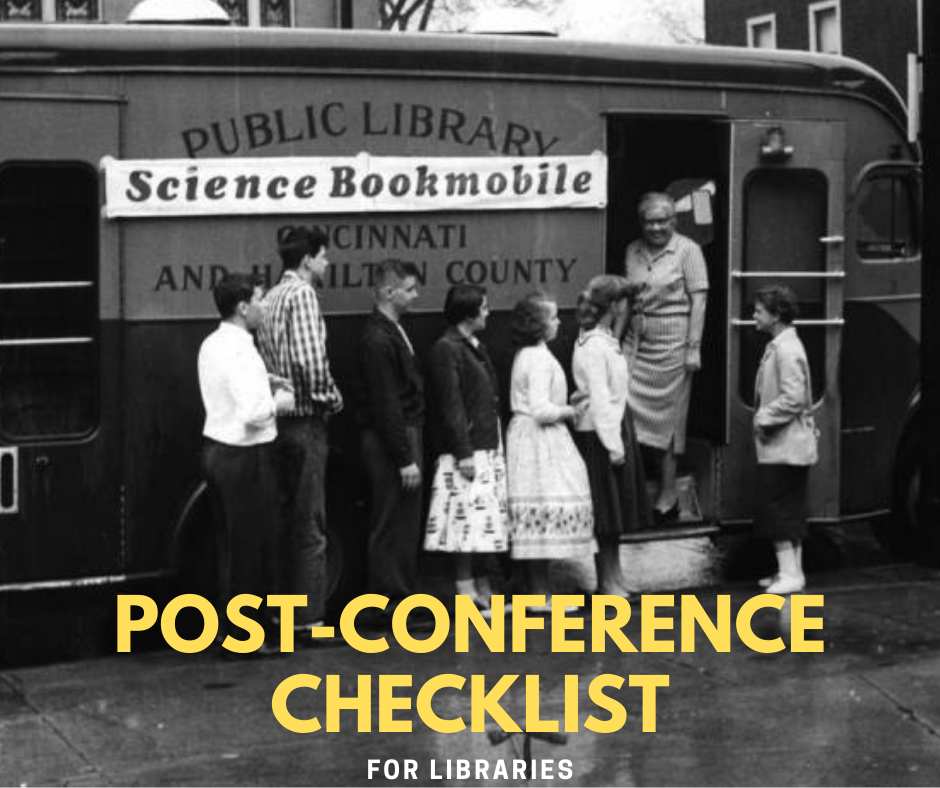
 

Which Libraries Are Kicking *ss on Facebook? A Viewer Seeks Inspiration

Watch Now

The Library Marketing Show, Episode 47

Angela answers a viewer question from a librarian at Pearsall Public Library. This librarian feels like she’s “drowning” on Facebook. She wanted to know if there were any libraries doing a great job on Facebook right now. The answer is…yes! Watch for my picks and add your own library Facebook page to the comments.

Also Kudos to everyone doing curbside service videos.

Don’t forget to subscribe to this series to get a new video tip for libraries each week! Thanks for watching.

Want more Library Marketing Show? Watch previous episodes!

I also have a new video series, 60-Second Book Reviews.

This blog consists of my own personal opinions and may not represent those of my employer. Subscribe to this blog and you’ll receive an email every time I post. To do that, click on “Follow” button in the bottom left-hand corner of the page. Connect with me on Twitter, Instagram, and LinkedIn.   


Why the Circle of Promotion is Your Best Bet for Library Marketing

Watch Now

The #LibraryMarketing Show, Episode 46

Angela explains the Circle of Promotion and how all of your marketing tactics should tie together so we can reach our whole community. Here is the blog post by Angela’s former library that she talks about in this video.

Also Kudos to the Spartanburg County Public Library. They are doing a Pandemic time capsule, which is a fun activity. Their contest rules are also hilarious! Check it out here

And subscribe to this series to get a new video tip for libraries each week! Thanks for watching.

Want more Library Marketing Show? Watch previous episodes!

This blog consists of my own personal opinions and may not represent those of my employer. Subscribe to this blog and you’ll receive an email every time I post. To do that, click on “Follow” button in the bottom left-hand corner of the page. Connect with me on Twitter, Instagram, and LinkedIn.   

Your Library is Reopening: How to Communicate New Rules to Your Staff and the Public During a Pandemic

Photo courtesy Public Library of Cincinnati and Hamilton County

What is your #1 library marketing worry or concern right now?

← Back

Thank you for your response. ✨

In many parts of the United States, library boards and senior staff have decided to reopen in the next few weeks. My social media feeds are filled with posts from library staff airing concerns over a return to “normal” library duties.

The plans vary. But it appears that most institutions are slowly phasing in services. Some libraries are doing curbside only. Some are opening drive-thrus. And some are fully allowing patrons back inside their physical buildings. 

When your library settles on what to do, it will be your job to let your staff and community know what’s happening. This week, I spent a lot of time compiling the best advice I could offer to help you communicate a library reopening during a pandemic.

As you know, communicating is SO important. Your staff, your regular customers, and your community need to know what you are doing and what changes you are making to keep them safe. They will need you to say it more than once. And they will need time to digest all this information.  

A guide to communicating your library’s new policies

It starts with the staff. So many libraries think about customer communications first and forget that staff need to know what is happening. If your library is contemplating reopening, be open and honest with your staff about all aspects of what that will entail. Ask for feedback and listen respectfully to staff concerns and ideas. Adjust your plan where you can.

And expect pushback. It’s uncomfortable. People are scared. And there are members of your staff who will be vocal about their disapproval. If you are a library leader, find ways to address the concerns of staff. The Library Management Group on Facebook is a helpful resource for advice from other managers.

When sharing news with your community, use all your tactics. Create a page on your website where you put all your re-opening information. Link to it from your homepage and, for the time being, in the bio of all your social media accounts.

Make a video, or several videos, to explain the changes. If your library has accounts on multiple social media platforms, use all of them to tell people about your plans. And make your re-opening plans the exclusive focus of a social media live event. You can really build excitement and interest by publicizing the livestream where you’ll unveil the plans and take direct questions from the audience in the comments or chat.

Send emails to your community and patrons. Ask community partners to help share information about your reopening. Finally, pitch your reopening as a story to your local media. 

Create one core message and repeat it. You are going to have to say the same things and repeat the same information before the changes sink in.

Remember the Marketing Rule of 7? People need to hear a message seven times before they are compelled to take an action. It applies in this instance. And, with the vast amount of information coming at them from various sources, your community may need MORE than seven messages to fully grasp your library’s new service requirements. 

For maximum effect, settle on a few sentences as your core message or talking points. Repeat those on all your channels.

For social media, post your message at varying times of the day to make sure that it’s seen by as many followers as possible. Add your message to all your email marketing campaigns. Ask staff to practice your message as talking points so they can deliver a consistent answer when they receive questions from people at the desk, at the door, or by phone. Add the message to your holds slips and receipts. Add your message to videos. If you do live virtual events, ask staff to repeat the message before they go into their main program. 

It’s going to seem redundant to you. But a consistently repeated messaging campaign works.

But don’t overwhelm people. I received a reopening email from a library this past week with no less than 18 calls to action! It was overwhelming. And I didn’t click on any of them.

Don’t make that mistake. The services you provide are going to be different for different people. If you can break your messages up by audience, do so. And instead of sending one message with EVERYTHING in it, send two or three messages containing your core talking points, plus two to three details that pertain to a targeted audience. Your readers will be better able to digest and retain the information.

Use your signage wisely. I know many libraries are putting a good deal of information on their signage to keep interactions with the public to a minimum. But remember that too much signage will look crowded, cluttered, and overwhelming to your patrons. Take some time to plan where you’re place signage, and what they will say, for maximum effect.

Don’t forget to keep stakeholders and legislators in the loop. It’s important to send regular updates about what your library has been doing during the shutdown and what it is doing now as it plans to resume physical service. Highlight the many ways your collection was used even when your building was closed.

Legislators love numbers… so check your library statistics for use of digital resources. Point out trends. Show how your library helped the community cope with the stresses of the shutdown. 

Why is this so important? Right now, we must send the message that the library is always valuable. A time is coming when the economic crisis caused by this pandemic will lead to budget cuts. We need to do everything we can on the front side of this crisis to save as much of our funding as possible. And that starts now, with communication. 

Resources to help you deal with reopening

Self-Care for Library Social Media Staff in the Midst of a Crisis like #COVID-19

Don’t Stop Communicating! Tips for Handling Library Promotion Overload During a Crisis

Libraries and Social Media Facebook Group

Libraries Step Up in a Time of Crisis Facebook Group

Subscribe to this blog and you’ll receive an email every time I post. To do that, click on the “Follow” button in the bottom left-hand corner of the page. Connect with me on YouTube, Twitter, Instagram, and LinkedIn.  
The Very Latest Research on Social Media and How It Affects Library Marketing

Watch Now

The #LibraryMarketing Show, Episode 45

Angela goes over the latest study from Sprout Social which lays out the latest research on how people are using social media, plus how they view social media use by brands. The same study then compares how marketers *think* people use social media and how they view brands. The difference is fascinating, and there is a lot of great insights for libraries.

Also Kudos to the Monroe County Public Library. They released a video called “A Cautious Path to Phasing In Services” which manages to be formal and light-hearted at the same time.

What did you think of this episode? Are you struggling with marketing and promotion right now? Do you have tips for handling this crisis that you can share with other libraries? Do you have a nominee for the Kudos segment? Drop a comment below! And subscribe to this series on YouTube to get a new video tip for libraries each week!

Want more Library Marketing Show? Watch previous episodes!

This blog consists of my own personal opinions and may not represent those of my employer. Subscribe to this blog and you’ll receive an email every time I post. To do that, click on “Follow” button in the bottom left-hand corner of the page. Connect with me on Twitter, Instagram, and LinkedIn.   

Marketing is Not a Dirty Word! Why Libraries Need to Promote Themselves Now, More Than Ever

Photo courtesy Public Library of Cincinnati and Hamilton County

Back in February, I had the great pleasure of attending and speaking at the Edge 2020 conference in Edinburgh, Scotland. While there, I heard from librarians across the United Kingdom as they shared stories about the fantastic work happening in their libraries. You can now see video of all the sessions on their web page.

Scott Simpson, Head of Library & Information Services, and Paul Martin, Systems Development & Support Officer, East Renfrewshire, discussed their library’s program, “Do Your Bucket List at Your Library.” Attendees can visit places they’ve always wanted to see, pretty much anywhere in the world, using a VR headset and guidance from a library staffer. Simpson and Martin told us that many older people use VR to revisit places they haven’t seen in years or to show their families where they grew up.

I think this is brilliant. And marketable. And I said so on Twitter.

That’s when this back and forth happened.

The discussion has been on my mind ever since. I thought about it last week, when I recorded an episode of The Library Marketing Show about the need for libraries to keep communicating their value. I want to expand on that point.

The debate surrounding the word “marketing” in libraries is not new. When I worked for a large metropolitan public library system, my department was often met with skepticism or wary looks from librarians.

Most staffers wanted me to promote their programs and events. But many told me they felt weird or icky about promoting the non-program library work, like the collection or summer reading or homework help or online resources.

Library staff was more than happy to talk one-on-one about how great their library was. But there was something off-putting about loudly proclaiming the value of the library in mass library promotions.

Frankly, we must get over it. We must stop being humble. We must talk more about the work we do in our libraries, as loudly as we can, to as many people as will listen. Our very existence depends on it.

I don’t mean to be overly dramatic. But I am deeply worried about the future of libraries.

Marketing is not a dirty word. The importance of library marketing is the reason I started this blog five years ago. It is my mission to help library staff communicate their value to the public.

I love the library industry. I truly believe that libraries are the key to building a fair, educated, and empathetic society.

We’re not very good at marketing libraries, to be honest. In 2018, OCLC released this report on the marketing approach of public libraries in the United States. According to the data, 96 percent of US libraries said they use social media. I bet that number is much higher now. 70 percent send emails (also probably higher now, due the pandemic).

Here is the bad news. At the time of this report, only 40 percent of public libraries had a communications strategy. Only 17 percent said their strategy was current.

Why?  75 percent of libraries say they don’t have the necessary staff resources to do marketing. They don’t even have a marketing professional on their staff. That’s a big red flag, my friends.

I’ve been frustrated by the lack of focus on library marketing for years. But now, amid a pandemic, when library buildings are closed and when libraries face imminent budget cuts, it’s become a serious problem.

Many library staffers make an assumption that the community knows what they do in the library. But I am certain your community does not know the full extent of your impact.

They don’t know how you help craft the resume of the single parent looking to get a better job so he or she can provide a better future for their family. They don’t see how you help a terrified cancer patient research the latest treatment option. They don’t have any idea that you provide after-school homework help or teach young children to love reading. They don’t have a clue that your building is the only safe space a teenager has to hang out. They don’t know that the library is sometimes the only place where a child in their community gets a meal. Heck, half the time, they don’t realize you have eBooks.

It’s important to talk about all your work–loudly, openly, and all the time. It’s more than pride. It’s survival.

If you educate your community about the work of your library, it’s going to be painful for leaders to make budget and staff cuts. Your community will come to defense if they understand the loss that those cuts will mean for their community.

This is a change in mindset for libraries. This is not something that you’ll talk about once at a staff meeting and forget it. This is something we need to do every day, without fail.

Now is the time to make marketing one of the main focal points of your library’s outreach. It’s our duty to advocate for our own professional services and expertise.

Your patrons don’t want you to remain neutral. They want you to take a stand.

If your library isn’t centered on marketing, you might well face more problems than just getting people to your programs.

The very survival of your library depends on marketing.

Subscribe to this blog and you’ll receive an email every time I post. To do that, click on the “Follow” button in the bottom left-hand corner of the page. Connect with me on YouTube, Twitter, Instagram, and LinkedIn.  


A WordPress.com Website.

Up ↑