Check the Upcoming Events page to see where I’ll be soon. Let’s connect!
This blog consists of my own personal opinions and may not represent those of my employer. Subscribe to this blog and you’ll receive an email every time I post. To do that, click on “Follow” button in the bottom left-hand corner of the page. Connect with me on Twitter,Instagram, and LinkedIn.
Anytime I hear anyone talk a new marketing trend, I must consciously remind myself not to roll my eyes. Marketing trends tend to be nonsense created by agencies hoping to generate buzz.
So, when I first learned about a trend called experiential marketing a few years ago at a conference, I listened politely, and filed it away in the back of my mind, along with my skepticism about whether this truly existed.
It’s clear to me now that experiential marketing isn’t just a buzzword. It’s a legit marketing option for libraries everywhere. And it could be the trend that permanently cements the bond between your library and the community it serves.
What is experiential marketing?
Experiential marketing is sometimes also called event marketing. It can be a pop-up library or program. It can take the form of a special day long library event, an immersion experience, a conference, a workshop—there are limitless possibilities.
But this isn’t just an ordinary event. An experiential marketing event is a program that includes a way to create an experience, to engage the attendee’s senses, and to create a personal and memorable interaction with your library.
It’s about sparking positive emotions in the people who attend. Those emotions become imprinted in the minds of the attendees. They associate that positive emotion with your library.
See why it sounded a little hokey to me the first time I heard it?
But here’s the thing. While most marketing interrupts and forces itself on the community, the experiential experience is voluntary. Your community or cardholders are choosing to interact with your library. Those experiences create beautiful memories. Those beautiful memories become a part of the overall library experience for your community. A loyalty is formed.
Libraries tend to think about their programs and events in simple terms. The program is a way to offer something to the community that is in line with the library’s overall strategic plan. It may also help to fill a community need like literacy or workforce development. These reasons are all valid and valuable.
But there is a clear marketing value in expanding our understanding of what a program or experience can be for our community–and what it can do for our libraries.
And we need to do so because our younger cardholders are at stake. Experiential marketing appeals to younger people. A study by Harris Group found that 72 percent of millennials would rather pay for an experience than for material objects.
This can be a differentiating factor for libraries. We should jump at the chance.
Why experiential marketing is so appealing
It all comes down to the fear of missing out, or FOMO. We see our friends and family posting on social media as they engage in exciting events. We feel anxious because we are missing out on these amazing experiences. And we feel compelled to resolve that anxiety by attending.
Think FOMO isn’t real? Check out the Twitter feed anytime the ALA or PLA conference is in full swing. The number of librarians who lament about missing the conference is pretty astounding.
What are the benefits of creating library experiences?
Experiential marketing forges a personal connection with your library. As younger generations increasingly value experience over tangible items, they’ll patronize and visit libraries that have taken the time to get to know them and offer them experiences that they can learn and grow from in a deep and meaningful way.
85% of consumers say they were likely to purchase after participating in events or experiences.
91% of consumers say they had more positive feelings about brands after attending events or experiences.
Examples of experiential library marketing programs
Challenge yourself to go beyond the normal crafting groups, story times, and passive programs. Instead, push your library to nurture the relationship between the library brand and your community.
You can create all kinds of innovative programs that foster a love and joy of reading. Try a TED talk style book talk. Invite readers to give a compelling talk under a time limit, say 60 seconds, to convince people to read one of their favorite books. Or schedule book dates, where readers talk one-on-one with under a limited time deadline about their favorite books.
At the Edge 2020 conference in Edinburgh last week, the head of Library and Information Services at East Renfrewshire Libraries in Scotland talked about programs they hold called “Come Complete Your Bucket List at the Library.” Visitors use virtual reality sets to visit places and have experiences they’ve only dreamed about. That is an amazing example of experiential library marketing.
Other great experiences for library customers include:
Escape rooms
Interactive STEM programs for adults and kids
Interactive activities between patrons and in-residence programs featuring authors, entrepreneurs, makers, and artists
Interactive programs in your MakerSpace
A conference connecting readers and authors interacting in sessions, workshops, and one-on-one experiences
Interactive and immersive library exhibits
Interactive activities at outreach events
Library sleepovers
Experiential experiences are any kind of program that creates a lasting, emotional experience that will bond your community to your library. This is not a one-off kind of event. This is something memorable.
You’ll notice the word “interactive” is used frequently to describe these events. Experiential marketing events require that attendees to do more than sit, listen, and absorb. If they are playing a part in the activities, they’ll remember them.
Experiential marketing is not a quiet kind of marketing. It’s often noisy, literally and figuratively. It might be messy. It might take more planning. These events are not what people think of when they think about what libraries look like.
And that’s the whole point, isn’t it?
Subscribe to this blog and you’ll receive an email every time I post. To do that, click on the “Follow” button in the bottom left-hand corner of the page. Connect with me on YouTube, Twitter,Instagram, and LinkedIn.
This week, we talk about the work of Becky Spratford from RaForAll.Blogspot.com. She is a reader’s advisory expert. Her seminar made me think about how to improve library book promotion. You’ll learn four things that can help you with your library collection promotion.
Also, KUDOS in this episode go out to Greenfield Public Library in Greenfield, Massachusetts which recently received great press for their pop-up library initiative. Get out of your building and reach out to the community. That’s good marketing!
If you have a topic for the show, kudos to share, or want to talk to me about library marketing, email me at ahursh@ebsco.com.
Check the Upcoming Events page to see where I’ll be soon. Let’s connect!
This blog consists of my own personal opinions and may not represent those of my employer. Subscribe to this blog and you’ll receive an email every time I post. To do that, click on “Follow” button in the bottom left-hand corner of the page. Connect with me on Twitter,Instagram, and LinkedIn. Need help with your library marketing? Email me at ahursh@ebsco.com.
In my previous role at a major metropolitan system serving a population of nearly a million people, I thought I knew people who were wild about books. But these folks at my new company love books on a whole new level.
I have learned so much in my first month. And I’ve come to realize that, as much as I loved collection marketing, I was making mistakes. In fact, I did a lot of things wrong.🤷
Because promoting the collection should be the core of any library’s marketing efforts, I want to make sure I pass on what I’ve learned.
Seven Mistakes to Avoid When Promoting Books
What I did wrong: I recommended books. What you should do instead: Suggest books.
It sounds like semantics, but there is a real difference between recommending and suggesting books to potential readers.
Readers advisory consultant Becky Spratford of RA for All points out that library anxiety is a real thing. People come into your building or log onto your website to find a book they love. But they have a certain amount of anxiety. They feel like they absolutely must read a book that is recommended to them by a library staff worker. If they don’t finish it, they worry that we will judge them.
So, let your library users know that your book recommendations are just suggestions. No one will judge them for not reading the titles you suggest. And let your customers know it’s okay to return books unread!
What I did wrong: I used plot to promote books. What you should do instead: Use story elements to promote books.
Most readers advisory experts rely on something called the Vocabulary of Story Appeals to make books suggestions. This is a way of describing the book without talking about the plot.
When picking their next book, readers don’t look for a certain plot line. They are looking for factors that appeal to them, including pacing, characters, tone, style, and the story line. Story line, I have learned, is different from plot in that it focuses on the WAY the story is told, as opposed to what happens in the story. Mind blown.
It’s so much more interesting to describe a book in terms of story elements. It intrigues readers and may lead them to place holds on books they would otherwise ignore.
What I did wrong: Promoting only new books. What you should do instead: Promote new books AND offer a readalike available right now on the shelf to help soften the hold wait.
At my library job, I stopped promoting older books because the data told me that new books were the ones that got the most circulation from my targeted email marketing.
My change in philosophy doesn’t mean that the data was wrong. But there was a piece I was missing.
Sometimes, the most popular books are also the ones with the longest hold list. Most library lovers are, in my experience, okay with waiting awhile for a book they really want to read.
In the meantime, library marketers can do a better job of suggesting a currently available readalikes to our readers. This helps to create satisfaction for our readers. It also can expand their worldview. It keeps them engaged with the library while they wait for the new title. And, it helps our circulation numbers!
What I did wrong: Thinking I really didn’t have the skills to suggest books. What you should do instead: Everyone in your library can suggest books. And I mean everyone!
I had a real hang-up with suggesting books to others. I can’t tell you how many times I said the words, “I’m not a real librarian but…”
But what I’ve come to learn is that I am a book expert because I love reading! I don’t have a degree, but I do read… a lot.
I also read about books a lot. I listen to podcasts about books. I talk to other book lovers. I have resources at my disposal that I can use like NoveList and Goodreads.
You don’t have to have a degree to be passionate about books or connect with another reader.
What I did wrong: Limiting the book genres I suggest to what I have know or read. What you should do instead: Use resources to make recommendations from genres you’re not familiar with.
Consciously push yourself to suggest books outside your own comfort zone. It’s better for you, for your friends, your fellow readers, and for the world in general, when we broaden our horizons to suggest books outside our comfort zone. We should strive for equity, diversity, and inclusion in all areas of our lives—and that includes our reading materials.
By using more than just one list of bestsellers, I could have gotten a better idea about what was truly a best seller. Lists from USA Today and Amazon include books from every age, genre, and publishing house.
Don’t discount sales of a book. If a book is making money, it’s popular. And your community is full of people who can’t afford to buy those books. But that doesn’t mean that people don’t want to read those books. We need to let them know they have access.
What I did wrong: Not asking my readers often enough what kind of books they like. What you should do instead: Ask your readers about the books they love!
Survey your patrons. And do it regularly, because their tastes change. Your population changes. You don’t even have to do this using a formal survey. Just ask on social media. People love to talk about what they’re reading or what they want to read!
Subscribe to this blog and you’ll receive an email every time I post. To do that, click on the “Follow” button in the bottom left-hand corner of the page. Connect with me on YouTube, Twitter,Instagram, and LinkedIn. For more help with your library marketing, email me at ahursh@ebsco.com.
In this episode, we talk about a hot button issue: deleting your library’s Facebook account.
Many libraries are thinking about quitting Facebook for a variety of reasons. In this episode, we go over a few key Facebook statistics to consider before you make a decision. NO JUDGEMENT HERE! Stats are courtesy of Social Media Today.
Check the Upcoming Events page to see where I’ll be soon. Let’s connect!
Subscribe to this blog and you’ll receive an email every time I post. To do that, click on “Follow” button in the bottom left-hand corner of the page. Connect with me on Twitter,Instagram, and LinkedIn.
I attended a session hosted by Jeff Laser at the Ohio Library Council Conference in Cincinnati. His tips on creating a great library podcast were clear, concise, and actionable.
I thought I knew everything there was to know about library podcasts, having helped launch and promote Inside the Writer’s Head, now in its fifth season. Turns out, I did not know everything. But Jeff does! And that’s why I asked him to share his knowledge with you. This post was written by him.
Jeff Laser is an Adult Services Librarian at Bexley Public Library in Columbus, Ohio. He has worked at BPL since 2012 and in that time has helped launch services such as Book-a-Librarian and is the host of the BPL Podcast. He has a BM in Music Composition from Capital University and an MLIS from Kent State University.
Podcast Like a Pro by Jeff Laser
So why start a podcast at your library? As we move further into the 21st century, libraries are increasingly looking for ways to serve the public beyond our physical walls. Podcasts allow just that.
In addition, they provide a platform to discuss important (and fun!) topics and promote library services. It’s also a great way to utilize staff talent, offering a unique, creative outlet that is both fun and stimulating.
That said, one of the main reasons Bexley Public Library (BPL) decided to give a library podcast an earnest shot was to leverage our high caliber adult programming. We host a range of speakers, professors, writers, and other experts to discuss a variety of subjects including social justice, literature, culture, and more. The podcast gives us a unique opportunity to have a concise conversation about these subjects in a format that is accessible beyond just the one-night speaking engagement. This gives patrons who are unable to attend the program itself an entertaining and convenient alternative.
Even if your library doesn’t have a similar focus on adult programming, don’t fret. There are several directions a podcast can go besides the traditional host-interviewing-guest structure. Narrative podcasts (e.g. Serial or Welcome to Night Vale) tell a story across multiple episodes. Review podcasts, such as Binge Mode, focus on a particular book, movie, or television show for in-depth discussion.
How Much Will It Cost?
Being a public library means having a limited budget. Employees need to justify expenses. Realizing this, Bexley Public Library purchased equipment that has multiple functions at the library.
For example, we use the same equipment for the library podcast that we use to record our oral history interviews, and to record full-length programs from time to time. We also make the equipment available for our patrons to use.
The initial expense for starting a podcast doesn’t need to be outrageous. Free software such as Audacity or GarageBand will work just fine. Quality microphones can be purchased for around $100 each. Add a few accessories like pop filters and boom, and you’re ready to record.
Making a Great Podcast
Interview preparation goes a long way to ensure an engaging conversation with your guest. Familiarize yourself with their material and come up with a few questions.
During the interview, allow yourself to go off-script and ask follow-up questions. If you know you and your guest share common interests, ask about them! Capturing that human connection is one of the most fruitful parts of podcasting and one of the primary reasons the format has grown exponentially.
Editing is arguably as important as preparation. If you come across long silences, excessive filler words, unwanted background noise, or even just generally uninteresting passages, remove them! Remember, however, the goal is to keep the human element intact. Don’t go as far as removing every single “um”, “uh”, or slight pause in the conversation. Keep it sounding natural.
From the technical side of things, less is usually more with podcast editing. I stick with equalization, compression, and reverb. A high-pass filter is useful for removing unwanted low sounds such as hums, fans, etc. Compression will help even out the peaks and valleys of your audio track for a smoother listening experience. Finally, a bit of reverb will add some depth to your recording (not too much though or it will sound like your interview was recorded in a gymnasium!)
Getting Your Podcast Out There
You have a few great interviews edited and ready to go, what now? First, you’ll want to find a hosting solution for your podcast. Popular options include Blubrry, Libsyn, and WordPress. BPL uses Podbean, which allows unlimited upload time for $108 per year. These services will guide you through setting up your Really Simple Syndication (RSS) feed, which will allow you to submit your podcast to various platforms. You’ll provide information about your podcast during this process, such as artwork, title, author, and description.
Once your RSS feed is ready, submit it to as many platforms as you can: Apple Podcasts, Google Podcasts, Stitcher, and Spotify. The process is easy and the more platforms you’re on, the easier it will be for listeners to find you.
Don’t overlook the importance of branding your podcast. Even if you aren’t a graphic designer, you can create simple but effective graphics by using tools such as Canva. (Note from Angela: If you are a LibraryAware user, you can also use a widget template to make your podcast graphic.)
Include brief theme music during your podcast to make it more memorable. If you don’t have the ability to create a jingle, try royalty-free music websites such as Bensound.
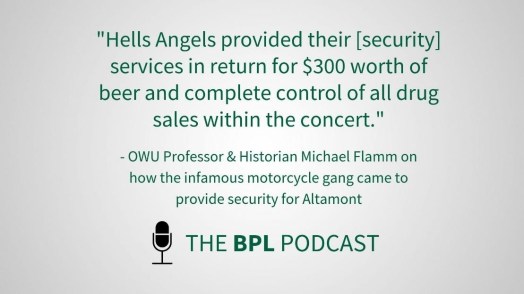
Marketing your podcast on a limited budget is challenging but not impossible. Try to utilize your guest’s social media following. Ask them to post (or re-post your content) about the podcast. A pull quote graphics (see below) is an easy way to draw people into any given episode and works well across social media platforms. Try placing an embeddable player in a prominent space on your library website to allow for spontaneous discovery and easy listening.
Go for It!
Now that you have an idea of the basics, give it a shot! If you’re looking for inspiration, check out the podcasts I linked above, or perhaps some library related podcasts such as The Librarian Is In, Lost in the Stacks, Book Squad Podcast, or (of course) The BPL Podcast. Hosting a podcast is truly one of the most unique and rewarding things I’ve done in my professional career, and it could be for you too!
For more help with your library marketing, email me at ahursh@ebsco.com. Subscribe to this blog and you’ll receive an email every time I post. To do that, click on the “Follow” button in the bottom left-hand corner of the page. Connect with me on YouTube, Twitter,Instagram, and LinkedIn.
In this episode, we answer a question from Tiffani from the St. Charles City-County Library. She asked, “What analytics are the most helpful to determine if social media is working?”
Angela shares the three big measures of success and ONE metric that doesn’t mean much anymore!
Also kudos go out to libraries taking part in the Dolly Parton meme. Find out why this fun project is so important to library marketing.
If you have a topic for the show, kudos to share, or want to talk to me more about library marketing, email me at ahursh@ebsco.com.
Check the Upcoming Events page to see where I’ll be soon. Let’s connect!
Subscribe to this blog and you’ll receive an email every time I post. To do that, click on “Follow” button in the bottom left-hand corner of the page. Connect with me on Twitter,Instagram, and LinkedIn.
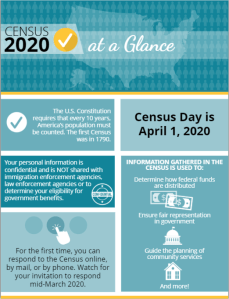
Infographics are visual marketing pieces that help explain facts and figures or lay out a complex set of information in a way that is easy to understand. They’re an incredibly effective marketing tactic.
Until recently, I thought infographics were a relatively new marketing tactic. I remember deciding in 2013 to create an infographic, the first for my library, to promote a readalikes list. I thought I was so innovative!
Turns out, infographics have been around for hundreds of years. Fun fact: The first known instance of infographics as we know them today dates to the late 1700s with a chart of wheat process and labor wages.
Frankly, I love infographics. They appeal to my visual and creative nature. They work well on social media. But they take a lot of time and planning. So, for libraries with a limited marketing staff, it can seem daunting to create one. But it’s worth it.
Why use infographics in library marketing?
Infographics grab attention. Our brains are hard wired for visuals. The human eye can process 36,000 visual messages per hour. That’s 60,000 times faster than the brain can process text. 60,000 times. Whoa.
A good infographic will trigger a reaction in the human brain, sometimes even before the person consciously realizes and processes that reaction.
Think about what happens to you when you see a photograph of a beloved family member or friend. The photo instantly makes you cry, laugh, or long for that person to return to your life. An infographic can trigger the same kind of emotional response. And emotional responses are the best kind of marketing, because they are memorable.
Infographics can explain complex ideas and convey a lot of information in a simple way that is accessible to many audiences. Libraries deal with a lot of data. Our products and services are sometimes difficult to break down into steps. A good infographic will take facts and figures, difficult instructions, or confusing concepts and present them in a way that everyone can understand.
Infographics will position your library as an expert in a way that words can’t. A good visual will demonstrate your library’s subject-matter expertise. It can boost your credibility. It shows that you care about effective communication with your community. And that builds trust with your visitors, community members, and stakeholders in a way that feels more genuine that fancy words.
Three ways to use infographics in your library marketing
Promote your collection. Use infographics to promote a themed collection series, such as new dystopian fiction, the best book club reads, or mystery authors.
You can recruit your collection development department to come up with a list or, if your library is a NoveList client, you can use the NoveList database to find books within a theme. Use the infographic to drive traffic to those titles in your catalog. This works really well on social media.
Explain difficult information. Create an infographic to help you explain something to your cardholders, like how to download an eBook, how to pay a fine, how your library uses taxpayer funding, or why summer reading is vital to childhood literacy.
Infographic template from LibraryAware
Show that your library is fun! Have your content team come up with a great idea for a fun promotion, like 20 signs that you might be a bookworm or how to make a bookmark out of an old book.
How to design a library marketing infographic
Create an outline. An outline can help you to lay out the pieces of the infographic and cut your ideas down to the essential elements.
Decide which points are essential for getting your message across. Is there a story to be told in the data or concept you are trying to convey? Is there a beginning, a middle, and an end to that story?
Once your outline is set, your other design elements will become clear to you. What is your theme? Will you use charts or graphics, lists or numbered elements, photos, shapes, or icons? Write those decisions down next to each section in the outline to help you organize your thoughts.
Plan your layout. You’ll want to make sure all the elements of your infographic are balanced. But that doesn’t mean everything has to be symmetrical!
For instance, if your infographic is explaining something that has a lot of considerations at the beginning of the process and works toward one end result, you could consider a funnel-design: making the number of visuals heavy at the top and lighter as the eye moves down.
If you are explaining something on a timeline, you can arrange your elements evenly from top to bottom but not directly across from one another.
It’s good to sketch your layout out before you go into a design program. This saves time in the actual process of creation and gives you space to make changes at a stage where it’s easy to fix.
You will also want to plan out any places in your infographic where you might need a visual break, like a solid block of color or a line or shape. Finally, be sure to leave white space. You want your infographic to look uncluttered.
Decide your color scheme. A good rule of thumb is to design your infographic with two or three main colors. Then choose a few minor color accents.
The subject of your infographic will have a bearing on your color decision. Some colors work better for explaining data, and some work better for explaining processes.
Infographic template in LibraryAware
Take your branding into consideration when you decide on your color scheme, to avoid clashing with your logo.
Pick your fonts. You’ll want to make sure your type is accessible to all audiences. Avoid script-type fonts. Keep in mind that an infographic is visual, and the amount of text will be minimal, so the font you choose must compliment the design elements of the infographics.
Limit your use of fonts to just two or three types. It’s good design to pick a font for the header, one for the main body text, and a third for the complimentary or subtext.
Write a headline that hooks your target audience. As you would with emails or blog articles, the headline or title of your infographic will need to convey the general theme of your visual and catch the attention of your potential audience. Be descriptive and catchy. The title should be shorter than a headline you may use for other content—only a few words long.
Subscribe to this blog and you’ll receive an email every time I post. To do that, click on the “Follow” button in the bottom left-hand corner of the page. Connect with me on YouTube, Twitter,Instagram, and LinkedIn.
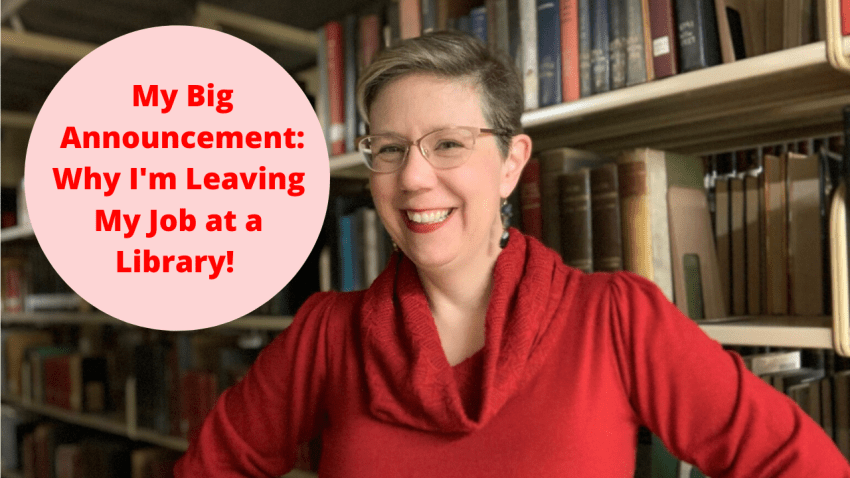
I have a huge announcement for readers of SuperLibraryMarketing.com and viewers of The Library Marketing Show! In this episode, I share why I’m making a big change in my career and what it means for the future of Super Library Marketing and the Library Marketing Show.
Also Kudos to the Oklahoma City Metro Library System! Their customers checked out more than 2 million eBooks in 2019, which is a huge number! It shows that collection marketing is important and effective. It also makes it clear that public libraries need to keep fighting for fair pricing models from publishers and digital vendors.
Want more Library Marketing Show or want to suggest a topic for a future episode? Watch previous episodes!
Check the Upcoming Events page to see where I’ll be soon. Let’s connect!
Subscribe to this blog and you’ll receive an email every time I post. To do that, click on “Follow” button in the bottom left-hand corner of the page. Connect with me on Twitter,Instagram, and LinkedIn.





 Super Library Marketing: Practical Tips and Ideas for Library Promotion