Search

Super Library Marketing: Practical Tips and Ideas for Library Promotion

Category

Newsletters

Libraryโ€™s Print Magazine Is a Community Must-Read! Here Is Their Secret Formula.

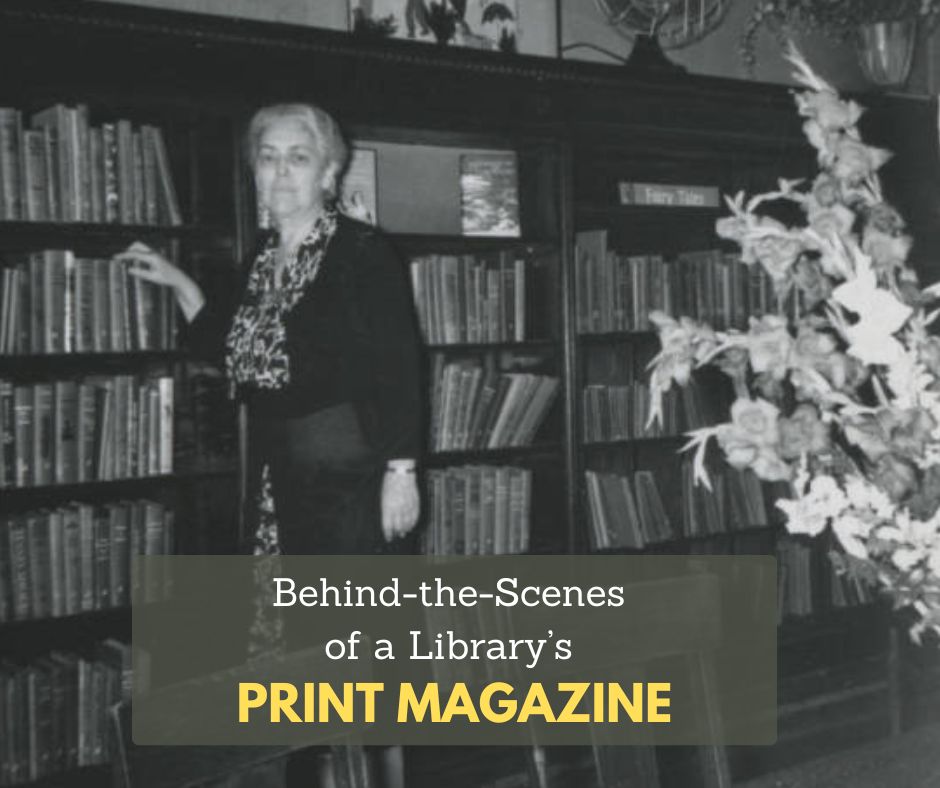
Photo courtesy Cincinnati and Hamilton County Public Library

I’ve signed up for a lot of emails from libraries. A few weeks ago, an email hit my inboxโ€ฆ my first from this libraryโ€ฆ that made me sit up.

It was a link to a print news magazine called Words from Marion County Public Library System in Ocala, Florida.

Itโ€™s been a while since Iโ€™ve seen a print news magazine from a library. And this one was so good, I had to reach out to the editor, Karen Jensen, the libraryโ€™s Community Liaison. She and several other employees manage all the marketing and public relations for the library. Karen also oversees grants and volunteers and is the liaison for all six of the libraryโ€™s Friends groups.

A native of Valparaiso, Indiana, Karen graduated from Ball State University with a liberal arts degree. After college, she worked for a large radio station in the Midwest as a copywriter. She also took on a variety of jobs within the equine industry. Her love of horses was fed by her childhood library trips.

โ€œI was a horse-crazy little girl (who grew to be a horse-crazy adult) and was so completely drawn to Marguerite Henryโ€™s Misty of Chincoteague, King of the Wind, and Walter Farleyโ€™s books, The Black Stallion,โ€ remembers Karen. โ€œBooks were some of my favorite gifts as a child and adolescent and my nose was buried beneath the pages much of the time. The rest of my leisure time was spent in the barn with my beloved horses!

Her passion for horses and a business prospect brought her to Ocala, Florida where she worked primarily within the public and nonprofit sectors before joining the library in 2009.

โ€œThe first issue of our quarterly WORDS magazine was in the spring of 2009 before I joined the library system,โ€ recalls Karen. โ€œI arrived in time to spearhead the fall issue and have served as the magazineโ€™s editor since that time.โ€

โ€œThe magazine provides a central information source for all events, and updates on library information and resources, in both print and digital formats. It offers a professional means for sharing information with elected officials, community partners, and a myriad of other groups and individuals with whom we all come in contact.

-Karen Jensen

“Although by no means our only method of communicating with the public, it is a key reference point for all staff when working within our community.โ€

Words has evolved from its original eight pages to its current 20 pages and is funded entirely by the Friends of the Ocala Public Library. Work on each issue starts six months before the publishing date.

โ€œThere is a creative meeting with managers and supervisors quarterly where we establish the theme and content for the next issue,โ€ explains Karen. โ€œUpon the selection of the theme and content, I will seek volunteer writers from within our library staff, as well as within the community.โ€

Words is unlike other library newsletters, in that itโ€™s a balanced mix of in-depth stories and library promotion. The issue I received included a patron interview on fall traditions, a piece on a historic tourist destination, and a preview of an upcoming library program featuring a chef from the World Equestrian Center. Itโ€™s informative, educational, entertaining, and beautifully designed.

โ€œThe number of print copies has always been small, with a current print quantity of 4,500 for three issues and 5,000 for the summer issue for nine library locations,โ€ says Karen. โ€œIn addition to the small print quantity, the library system uses a mail management system (LibraryAware) to disseminate monthly updates to more than 80,000 patrons in Marion County.โ€

Iโ€™m not surprised to learn that Words is a hot commodity for patrons.

โ€œWe hear from patrons and community members asking, โ€˜When is the next issue coming out?โ€™โ€ explains Karen. โ€œAnd, as with many print magazines, there are always special favorites that really resonate within our community. Typically, it is themes about natural resources in our county or other highlights. People really love learning about their community and we certainly want that to include their public library!โ€

โ€œWe now have very few remaining print copies at the end of each quarter and typically run out before the end of the quarter at our larger branch locations. We do, as supplies allow, take print copies to outreach events, but more than likely have a flyer with the QR code and how to sign up to receive a copy available at tabling events.โ€

โ€œOur library system administration and staff love the magazine and even when it is an add-on to workloads, are so very proud of the final result. And there is really nothing to compare with receiving an email from a community partner, an elected official, or a mom of three who says, โ€˜I just love Words!โ€™โ€   

Karen’s advice for any library looking to start a news magazine

Tip #1: Start with a plan.

  • Establish goals, audiences, what is to be accomplished, and by whom, early on.
  • Factor in how you will measure your outcomes. This is really such an important part of any public relations/communication efforts. How will you know if this is a cost-effective endeavor? What is the ROI?
  • How often will the newsletter be published?
  • Who will the editor be?
  • Who will manage the production?
  • What are the costs associated with the news magazine production and how will the costs be covered?

Tip #2: Determine what combination of formats is going to work best for your audiences.

  • If cost is a factor, digital format will be the most realistic.
  • Explore a mail management platform that will work for your community of patrons. We selected LibraryAware and it has really helped to expand the footprint far beyond the print or website reach.

P.S. You might also find this helpful

Library Cracks the Code on How To Tell Stories to Stakeholders: They Use Email! Hereโ€™s How Their Targeted Newsletter Works

Subscribe to this blog and youโ€™ll receive an email whenever I post. To do that, enter your email address and click on the โ€œFollowโ€ button in the lower left-hand corner of the page. You can also follow me on the following social media platforms:

Automated Email Marketing Is a Time Saver for Your Library but It May Also Be a Terrible Experience for Your Patrons! Here Are the Pros and Cons.

Photo courtesy Cincinnati and Hamilton County Public Library

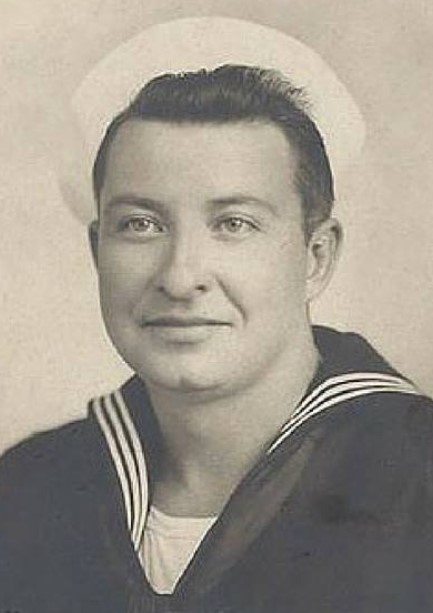
My maternal grandfather was small (he stood about 5 feet 3 inches tall) but mighty.

He returned from World War Two to a wife and four children. He made ends meet by farming, driving a milk delivery truck, and working on a road construction crew. He taught me to build fences, crack walnuts with a vise, and drive a tractor and a car.

My grandfather

When he died in 2016, I decided I wanted a bouquet of flowers at the funeral as a symbol of all that he meant to me. I ordered an arrangement online.

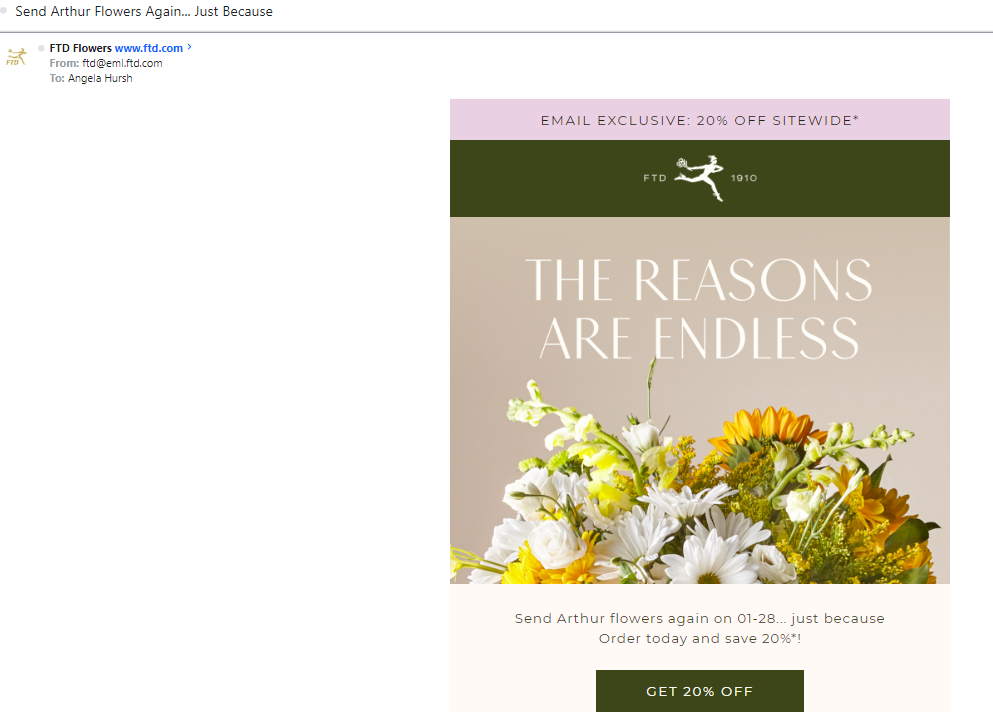
Imagine my surprise when a few months ago, I received this email.

A screenshot of an email showing a photo of flowers and the tagline, "The reasons are endless" urging me to send flowers to my grandfather again, "just because."

I admit, at first, I was shocked and baffled. But I work in marketing, so I understand this email was created using automation. And then, this email made me think about the pros and cons of automation for library email marketing.

The advantages of email automation

Automated email has one big advantage for library staff: It saves time.

Automated onboarding emails, reading suggestions, and program announcements will free up your time for other work. You can create a campaign, set it, and forget it.

Experts also say that open and click rates are higher for automated emails because they are more relevant to the recipient. 

The disadvantage of email automation

There is one big problem with automated emails, in my opinion. The personalization isnโ€™t personal. Itโ€™s inauthentic. And there’s a chance it can go very, very wrong.

The email from the flower company is a perfect example. It has negatively impacted my feelings toward the flower company. If they really cared about me, and not just my business, they would have looked to see that I’d sent flowers to a funeral home. And they wouldn’t have tried to sell me another bouquet to send to my dead grandfather.

Here’s how this snafu relates to library marketing: Most automated email programs created for libraries automatically segment your audience into groups based on factors like previous card use. Those programs use algorithms that look at past card usage or reading history to predict future behavior.

But, as happened with the flower company, those algorithms are not always correct. They donโ€™t allow for changing tastes or lived experiences. And they wonโ€™t expand a cardholderโ€™s use of the library by introducing them to new services.

The bottom line is that past library card usage does not always predict future library card use.

For example, in the last year, my library card use has changed drastically. Iโ€™ve switched from mainly print fiction books to audiobooks. Iโ€™m now a heavy user of downloadable magazines. Iโ€™ve also recently discovered the joy of using my library card to read newspapers online (goodbye paywall!). And Iโ€™ve used my libraryโ€™s Makerspace several times this year.

My life and my habits have changed. But, my home library, which uses automated email, has not sent me any emails that show theyโ€™ve noticed my changing habits. They send emails based on my pre-pandemic use of the library.

What do libraries do best? Personalized service!

Libraries donโ€™t focus on transactions. We donโ€™t rush our visitors. We listen and work until we get them the answer or the service that best solves their problem.

This is particularly true when it comes to book recommendations.

A readerโ€™s interests are never set for life. And the things that are interesting about a bookโ€”the tone, pace, setting, and characters, cannot be managed by an algorithm. Reading suggestions and collection marketing canโ€™t be replicated by robots.

So, as library marketers, we must be cautious to balance our need to save time, with the need to create a connection with our readers. And that means, if you use automated email marketing, you must always be evaluating the emails your library sends.

Ask yourself: Is this email serving my recipient with the content they want and need?

Two more potential pitfalls of automated email marketing

Irrelevant automated emails may be marked as spam by your recipients, hurting your sender reputation. Read more about how that can impact whether your email gets delivered to your recipients here.

Many programs that offer automated emails donโ€™t allow you to add design elements that are specific to libraries. And that can be detrimental to your library’s brand. You want your community to recognize the promotional materials you make, including emails.

The advantages of manual email marketing

Good patron experience means that you encourage your email recipients to choose the content they want to receive from the library.

Your library should make your emails opt-in. This ensures your emails go to community members who want your content, which protects your sender reputation.

The opt-in model allows you to add the content to your emails your audiences have indicated they are interested in, giving your recipients control over what they receive. It also allows for flexibility to account for changing use and taste.

Finally, opt-in emails allow you to send when itโ€™s best for your users, not for your library. All email programs offer scheduling. When you schedule your own emails, you can look at reports to see when your target audience responds best to your emails. You can adjust accordingly.

The disadvantage of manual email marketing

Time is the number one disadvantage of programs that require you to create emails manually. It takes precious time to write copy, choose images, and schedule your emails.

So, next week on Super Library Marketing: Time-saving techniques for creating library marketing emails. These tips will work whether your library chooses automated or manual email marketing!


P.S. You might also find this helpful

4 Simple Ways You Probably Havenโ€™t Thought of To Boost Signups to Your Libraryโ€™s Email Newsletter 

Subscribe to this blog and youโ€™ll receive an email whenever I post. To do that, enter your email address and click on the โ€œFollowโ€ button in the lower left-hand corner of the page. You can also follow me on the following social media platforms:
Your Library Might Be Making a HUGE Mistake With Your Email Promotions butโ€ฆ It Can Be Fixed! Hereโ€™s How.

The #LibraryMarketing Show, Episode 189

Your library may be making a gigantic mistake when it comes to email marketing!

But don’t worry, it’s not too late to fix it. ๐Ÿ˜Š I’m going to talk about how to make sure your emails are exactly what your community needs in this episode.

Plus we give away kudos! Watch the video to find out which library is being recognized.

Do you have a suggestion for a topic for a future episode? Want to nominate someone for kudos? Let me know in the comments. Thanks for watching!


Subscribe to this blog and youโ€™ll receive an email whenever I post. To do that, enter your email address and click on the โ€œFollowโ€ button in the lower left-hand corner of the page. You can also follow me on the following social media platforms:

The Complete List of the Most Ideal Length for Each of Your Library Promotional Tactics

Photo courtesy Cincinnati and Hamilton County Public Library

For many of us, a hamburger is a delicious sandwich, no matter where you get it. No one can mess them up.

But there are things you can do to make your hamburger exceptional. For me, that means the addition of bacon, cheese, and avocado. I’ll still eat and thoroughly enjoy the hamburger if those ingredients aren’t available. But they make the hamburger go from good, to memorable.

Hamburgers are like marketing. Much of the work you do to promote your library is already good (because I know you’re doing good work!) Now, you’re on the path to maximizing the effectiveness of your marketing.

One of the ways you can ensure success is to make certain your marketing content is the perfect length. It may seem insignificant. But the right number of characters or words for a piece of content can make all the difference.

How do you know how long your tactics should be? I did the research, so you donโ€™t have to.

Ideal length of a Facebook post: 100-259 characters

Research from experts on this one is mixed. Some studies suggest you keep captions at 50 characters or less.

But in my work with libraries, I try to pay attention to engagement rates and post length. And I personally think 50 characters is too short. So, I would suggest you try to write between 100 and 259 characters.

Ideal length of a Tweet: 240-259 characters

Most experts agree that using slightly less than 280 character limit on Twitter is ideal. That gives people the room to quote Tweet your library.

But you can do two other things to improve your library’s Twitter engagement.

  • Include rich media in your post, like photos, graphics, and video. In fact, multiple photos or a mix of photos and a video will help your Tweet get more engagement.
  • Use emojis at the beginning of your Tweet to capture attention and stop people from scrolling past your messages.

Ideal length of an Instagram post: 138-150 characters

Fun posts should have shorter captions. Information or educational posts should have longer captions.

There are other caption tricks that help with Instagram post engagement.

  • Add spaces between your sentences, so they look like paragraphs. Here’s an example from Amherst Town Library.
  • Weave in plenty of emojis. You can even substitute emojis for words to add character to your post.
  • Include multiple kinds of rich media, like photos and videos all in the same post, to increase the value. ย ย 

Ideal length of a TikTok video or Instagram Reel:  between 7 and 34 seconds

There is not a lot of data or research surrounding TikTok videos or Instagram Reels. It does appear that, even though the platforms allow you to create videos that are several minutes long, shorter videos lead to maximum engagement.

Ideal length of a LinkedIn post: Less than 210 characters

There is lots of dispute around this recommendation. Iโ€™ve picked the median number. And to help with engagement, I have a formula thatโ€™s worked well for me.

Construct a good, first teaser sentence, and then put a space between it and the rest of your post caption. This will cause your reader to have to click on โ€œsee more.โ€ It works!

Good content on LinkedIn is also important. Videos natively uploaded to the platform get lots of engagement. Also, try polls to increase engagement.

Ideal length of an email: 100 words

Different types of emails should have different lengths. If youโ€™re sending someone an onboarding email, youโ€™re going to need to write more than if youโ€™re sending an email promoting an upcoming event.

There are some scenarios where a couple of sentences is plenty to capture your cardholderโ€™s attention and others where youโ€™ll need several paragraphs to get your full point across.

In general, keep your email text as simple as possible. Be straightforward about the benefit of your library service or collection item or event. And drive recipients to your website for more information.

Ideal length of an email newsletter: 3-4 pieces of information

In my experience advising libraries, email newsletter recipients never click anything past the first 3-4 pieces of content in an email. I always recommend sending shorter, more frequent email newsletters rather than one long monthly version.

If you donโ€™t have control over how long your email newsletter is, you can help engagement by placing the 3-4 most important things at the beginning of the email. If your email provider has a table of contents feature, use that to drive interest to content further down in the email.  

Ideal length of an email subject line: either very short (30 characters) or very long (90 characters or more)

It appears that the extreme ends of length catch the attention of the inbox scroller.

Longer subject lines boost response rates, according to Adestra, a U.K.-based email service provider. Its analysis of more than one billion emails showed that subject lines of 90 characters and more produced the highest response rates. They theorize the added characters increase engagement because they can communicate more value to the recipient.

But their research also found that subject lines at 30 characters or less performed well. That’s because the full subject line can usually be seen by the recipient, both in desktop and mobile versions of mail provider apps.

Experiment with both ends of the length spectrum to see which your audience responds to. And keep in mind the other factors that can impact subject line effectiveness.

Ideal length of a YouTube video: Between 7 and 15 minutes

This stat comes from several sources, including Social Media Examiner.

It’s important to let your content dictate video length. A how-to video may need five minutes or more to show the process. An unboxing video can be shorter. If your video is interesting to watch, the length won’t really matter. 

Ideal length of a podcast: 22 minutes

Your target audience will really dictate the perfect length for your library. Most research I found recommended 20 minutes for podcasts aimed at listeners who are doing chores or taking short walks, 40 minutes for people commuting or doing longer chores, or 60 minutes for those who want an extended listen.

Ideal blog post length:  2,000 words

Thatโ€™s a lot of words! For context, the Monday articles here on Super Library Marketing run between 1,000 and 1,500 words each.

So, before you get anxious about word length, remember that quality blog posts will always do well, no matter how long.  If your post contains valuable or interesting information that your reader wants and needs, it will do well.

If your blog is less than 2,000 words, there are some things you can do to make it feel meaty to the reader. You may have noticed these tricks in my blog posts.

  • Present information using bullet points or lists.
  • Write longer paragraphs at beginning of the article.
  • Insert scannable headlines.
  • Include images, especially those that explain concepts or demonstrate your point.

Finally, itโ€™s important to include keywords in your title and frequently within your post. You may notice I use the terms library marketing and library promotion in almost every title and throughout my articles. Thatโ€™s because I know those are used by library staff searching for help with their marketing.

The most important thing to remember

Pay attention to your metrics. Your audience will tell you about the perfect length for any one of your tactics.


Related Posts

Maybe the Biggest Lesson for Libraries from Content Marketing World: Why Broad is Flawed!

The Top Four Reasons To Use Content Marketing To Promote Your Library on Every Platform

Subscribe to this blog and youโ€™ll receive an email every time I post. To do that, enter your email address and click on the โ€œFollowโ€ button in the lower left-hand corner of the page.

5 Surprisingly Easy Ways to Write Email Subject Lines That People Actually WANT to Read

Courtesy Cincinnati Public Library

First impressions are important.

The subject line of your library marketing email is your first chance to communicate the value of your email to the person receiving it. It may be your ONLY chance to get someone’s attention to engage with the promotional content you’ve worked so hard to create.

A good subject line will drive people to open the email, read whatโ€™s inside, and take action. That will lead to an increase in the use of your library. And that’s the whole point, right??ย  ย 

A bad subject line can lead your email to be marked as spam, which will affect your sender reputation. In fact,ย according to the marketing agency Convince and Convert, 69 percent of email recipientsย report email as spam based solely on the subject line.

Thatโ€™s why I think your subject line might be the most important part of your library marketing email.

I want you to spend the most time thinking about that section. Be very intentional about what you say in the subject line.

There are five best practices to help you create engaging subject lines. Scroll down for some more free tools to help you to test your subject line before you hit “send”.

Tip #1: Use brackets or parentheses in your subject line.

You want your emails to stand out in the inbox. The easiest way is to use these two punctuation symbols as part of your email subject line.

Worldata is a company that analyzes email marketing campaigns and provides free industry metrics based on that data. Their data shows using either brackets or parentheses in your subject line boosts open rates by 31 percent.

That’s because these punctuation marks subconsciously draw the eye to whatever is within the brackets.ย And that small detail can be enough to entice them to open the email.

Some examples are:

  • “Welcome back to the library! (We missed you.)”
  • “Your Library Giving Day donation will be doubled with a matching gift. (Today only!)”
  • “Homework is hard. We can help. [FREE VIDEO].”

Tip #2: Try using all caps on important words in your subject line.

World Data says that including words in all caps in your subject line can increase your open rate by as much as 14 percent.

You should, however, make sure that you use this technique sparingly. Pick one important word to capitalize. It should be a word that you know will call attention to your email when someone is scrolling through their inbox.

Some examples are:

  • “Fans of James Patterson have the chance to talk to the author IN PERSON next Thursday.”
  • “Your resume needs some SERIOUS help. Let your library make it irresistible.”
  • “Being stuck inside on a rainy day with the kids is TORTURE. Get some museum passes from the library and go exploring!

Don’t capitalize your entire headline. You’ll risk making your email recipients feel like you’re yelling at them.

Tip #3: Don’t spell out numbers. 

Yesware, a business communication company, analyzed 115 million emails and found that email open and reply rates are higher when a number is present in the subject line. (For example, “5” instead of “Five”.)

World Dataโ€™s surveys back up that claim. They found that putting a number in the subject line can increase your open rate by as much as 21 percent.

Numerals in your subject line will get your emails noticed. It also saves you in the character count.

For more of a boost, start your subject line with a number. (Example: “5 Great Ways to Get Free Homework Help from Your Library”). Doing that can increase open rates by as much as 18 percent, according to World Data.

Tip #4: Use the “F” word (I meanโ€ฆ Free!) and other power words. 

World Data says spam filters no longer filter out emails with the word free in the subject line.

Their study shows that including the word in the subject line can increase open rates by 37 percent. Plus, there is data to suggest that “free” produces an emotional charge in us.ย 

Speaking of emotion, there are lots of other words you can use in your subject line to get a response. Data shows email recipients respond to subject lines that convey urgency, curiosity, excitement, and joy.

Here is a starter list of words that World Data says are proven to do well in email marketing. Challenge yourself to add one of these words to the emails you send to your library community.

  • Amazing
  • Ultimate
  • Important
  • Challenging
  • Surprising
  • Best
  • Secret
  • Exact
  • Last Chance
  • Now
  • Final
  • Official
  • Free

Tip #5: Use words your audience will understand. 

Drop the acronyms and library industry jargon like periodicals, database, interlibrary loan, reference, serial, audiovisual, abstract, or resource. Use words that regular people understand–magazines, music, online classes, and helpful information.

Avoid reference to a vendor service like Overdrive, Hoopla, Freegal, BookFlix, Zinio, etc. As far as your cardholders are concerned, all material comes from the library.  

If you are using email to promote one of these services, like Overdrive, your subject line could say, “Free e-books are now available at your library!” You can mention the vendor in the body text of the email.

Free tools to make your headlines irresistible

When I craft an email, I spend a lot of time thinking about the subject line. Sometimes I think about it for days.

I use a couple of online headline analyzers. These free online tools all work pretty much the same way. You put your headline in and you get a score, plus tips on how to improve them. My favorites are:

The higher the score, the better your chances of getting people to open the email. I always shoot for a score above 70

I ran the headline for this post through the three analyzers, as if it were an email subject line. Sharethrough gave me a 71, Advanced Marketing Institute gave me a 73.3, and Subject Line gave me a 75. Those are good scores, so I would likely use this headline as a subject line in an email.


You Might Also Want to Read These Posts

Attention! Hereโ€™s How to Write Headlines That People Simply Canโ€™t Ignore for Any Piece of Content

6 Super Easy Tricks to Make Your Library Emails Stand Out in the Inbox AND Get Great Results

Latest Book Review

“You Can’t Be Serious” by Kal Penn

Viewer Question Answered: Should My Library Use Twitter’s Revue Newsletter Service?

Watch Now

The Library Marketingโ€‹โ€‹โ€‹โ€‹โ€‹โ€‹โ€‹โ€‹ Show, Episode 101

In this episode, I answer a viewer question from Natasha Buran of Thousand Oaks Library. She asked, “I was curious if you’ve seen other libraries use ‘Revue’ – Twitterโ€™s newsletter tool for writers and publishers. I thought it would be interesting to add monthly programs or resources and pin it to our profile. I haven’t seen libraries use this feature before and thought I’d ask.”

I gave my answer in the video. This is just my opinion of course!

Kudos in this episode go to the Topeka-Shawnee County Public Library. They recently opened a resource center for community members without a computer or internet access.

Do you have a suggestion for a topic for a future episode? Want to nominate someone for kudos? Let me know by clicking on the feedback button. And subscribe to this series to get a new video tip for libraries each week.

Thanks for watching!

A WordPress.com Website.

Up ↑