Search

Super Library Marketing: Practical Tips and Ideas for Library Promotion

Category

Outreach

Big, Bold Billboards: Are They Worth the Money for Library Marketing? Some Things To Consider Before You Buy

Watch this video now

#LibraryMarketing Show, episode 225

They’re big and bold. They promise your library continuous exposure to a diverse audience. And… they’re expensive. Are billboards actually a good use of your limited library marketing budget?

I’ll lay out the pros and cons of billboard advertising for libraries in this episode.โ€‚

Plus, kudos go to a library that received media coverage for bringing back a popular program.

Do you have a suggestion for a topic for a future episode? Want to nominate someone for kudos? Or do you want me to come and speak at your event? Let me know here. And thanks for watching!โ€‚


Miss the last episode? No worries!

Will I see you soon?

Subscribe to this blog and youโ€™ll receive an email whenever I post. To do that, enter your email address and click on the โ€œFollowโ€ button in the lower left-hand corner of the page. You can also follow me on the following social media platforms:

The 7 Important Things You Need To Consider Before You Buy a Radio Ad for Your Library

Watch this video now

#LibraryMarketing Show, episode 224

Morning drive time. Evening drive time. Afternoon talk show. Radio stations, their formats, their audiences, and their ad prices vary greatly.

You might be wondering if an ad on a radio station is an effective use of your limited library marketing budget.

I’ll break down the list of things you’ll need to consider if you want to buy a library radio ad in this episode.

Plus, kudos go to a library for media coverage of a new service at their organization.

Do you have a suggestion for a topic for a future episode? Want to nominate someone for kudos? Or do you want me to come and speak at your event? Let me know here. And thanks for watching!โ€‚


Miss the last episode? No worries!

Will I see you soon?

Subscribe to this blog and youโ€™ll receive an email whenever I post. To do that, enter your email address and click on the โ€œFollowโ€ button in the lower left-hand corner of the page. You can also follow me on the following social media platforms:

Marketing Your Libraryโ€™s Annual Report: How to Get Staff to Help and Make Sure Everyone in Your Community Understands Your Value

Photo courtesy Cincinnati and Hamilton County Public Library

Barbara Swinn knows what sheโ€™s doing.

Sheโ€™s worked with libraries for 40 years, most recently as manager of the flagship library for Explore York Libraries and Archives ย Sheโ€™s been awarded the British Empire Medal for her work with the library.

You may remember her from this interview last year. I spoke to Barbara about her work turning a stodgy, boring annual report into a storytelling masterpiece.

One thing I love about Barbara: she is always looking for ways to improve.

Hear about Barbara’s approach to the annual report this year

A few months ago, she sent me an email with a link to her current annual report. It is also amazing.

And this year, Barbara decided to take it a step further and promote her report, activating staff to help. So of course, I wanted to know how she did it.

Barbara told me she first spent time thinking about the emotional impact she wanted her annual report to have on the community.

โ€œWhat do we want our audience to think, feel, and do,โ€ said Barbara. โ€œWe wanted to make sure that people can see that we were relevant to their lives, and the lives of the communities. So that’s how we want them to feel this is for them. This is something they are excited about and want to be involved with.โ€

โ€œWe want them to actually reach out and be involved in what we’re doing, to become a volunteer, to become a community member, to bring their skills to work with us, or to actually just come in and enjoy what we do. and just participate and get the value of for them in their lives of what libraries can bring.โ€

Hear Barbara talk about the goal of this year’s annual report.

Barbaraโ€™s first step in this new mission was to focus on the many target audiences for her annual report.

โ€œThe audience could be people who are library users but they’re probably people who aren’t library users,” explained Barbara. “They may be potential funders or sponsors, local government officers, and the people who provide our funding. We needed to advocate the value that we have, and that we bring to the city.โ€

Barbaraโ€™s team tried something new this year: a social media campaign to expand the reach of the stories her library is telling. And if you think people arenโ€™t interested in social media posts about an annual review, you would be wrong.

โ€œWe had a series of five posts over five days, which were highlighting those key details from the annual review,โ€ explained Barbara. โ€œOn Twitter, we had a 4.9 percent engagement rate compared to 2.5 percent, which is the average for the month.โ€

โ€œThere was a particular post that had a 6.5 percent engagement rate on Facebook. That usually averaged 2.5 percent for the month. So, it did engage with people. People were commenting on it, people were sharing it, and the engagement rate was higher than the normal engagement rate. We’re really pleased with that.โ€

And this year, Barbara and her staff got the rest of the library staff involved. Staff linked to the annual report in their email signature.

โ€œWe really emphasize the fact that this was an opportunity for them to not necessarily have a conversation, but through their email, they’re connecting with people, and people can see that annual review,” said Barbara.

The library has one main organizational social media account and branch accounts. Barbara and her staff worked to get all the administrators of the branch accounts to help in the social media promotion of the annual report. Her team provided context and made the ask very simple.

 โ€œWe talked about what we’re trying to achieve,โ€ said Barbara. “‘We really want you to share those posts through your social media.’ And that’s what they did.โ€

The plan to involve staff to help spread the message worked so well, Barbaraโ€™s team now uses it for every major campaign. She explains the impact her library hopes to have by marketing and shares examples of posts with high engagement garnered with staff support.

โ€œWe give examples of the posts that really made a difference because they got behind it,โ€ revealed Barbara. โ€œFor example, our summer reading challenge that we do for children every summer, that absolutely by staff getting behind that campaign really made a difference. We’re starting to build that. It’s gaining momentum. And the staff are seeing the value of that engagement, they’re seeing the value of the fact that they can amplify the message and by amplifying influencers as well. โ€œ

Barbara hopes her annual report does more than inspire her community to act and support her library. She hopes it inspires you, her fellow library marketers.

“You’ve got your story,” said Barbara. “The people use your libraries, your volunteers, your staff, they know the story too. And there are so many nuggets to choose from. Think about the beginning, the middle, the end, what you’re trying to do, and what you want people to do. It really, really works. It’s the story of the people that’s really important.โ€

Hear Barbara’s advice for your library’s annual report

More Advice

An Academic Library Increased Their Instagram Reach by 1149% in a Year! Learn Their Secrets for Success

Subscribe to this blog and youโ€™ll receive an email whenever I post. To do that, enter your email address and click on the โ€œFollowโ€ button in the lower left-hand corner of the page. You can also follow me on the following social media platforms:

Libraries Have a Huge Competitive Advantage: Customer Service! Here Are 3 Promotional Tips To Drive Home That Message

Photo courtesy Cincinnati and Hamilton County Public Library

The best customer service experience I ever had was with a cell phone provider. No kidding.

I was having issues getting my contacts to transfer to a new phone. The providerโ€™s website offered no solutions. So, with great trepidation, I called the customer service line.

The woman who answered was a delight to work with. She welcomed me in a friendly manner and assured me she wouldnโ€™t hang up until sheโ€™d solved my problem. She was patient with me as I explained my issue. She was friendly, asking me questions about my day as she worked. And she thanked me with sincerity when our call is over.

A successful and delightful customer service interaction is rare. And itโ€™s increasingly difficult for people to contact a human customer service agent. Earlier this year, Vox published a story about the death of customer service lines. Companies like Frontier Airlines, Facebook, and Amazon are cutting costs by eliminating their phone-based customer service lines in favor of email forms and chatbots.

When I read that, I thought, โ€œThatโ€™s a huge opportunity for libraries!โ€

Our community is our customers. And our unique value proposition is that we offer personalized service provided by a real-life person, always.

Library staff is not chatbots. Weโ€™re not email forms.

We listen, and we help solve problems. In fact, weโ€™re proud of our problem-solving skills.

So why donโ€™t we spend more time marketing our unique, valuable customer service experience?  

Good customer service is a competitive edge for libraries. We can build a reputation as a warm and inviting space. When was the last time you heard Amazon or Best Buy described in those terms?

Building your library’s reputation for customer service will increase visits and use of your library. And for many of you, that can be valuable in budget and funding discussions.

And delighted community members are more likely to spread the word to their friends and family about our system and the services we provide. They are compelled to talk about us positively on social media, give us great reviews on Google Business, and support our work through donations or volunteerism.  

Here are 3 ways to use your libraryโ€™s customer service as a marketing tool. Scroll to the bottom of the post for a great real-world example of customer service guidelines for staff from the University of Illinois.

Make it incredibly easy for people to contact you.

Your libraryโ€™s address, phone number, and email address should be easy to find on our website. Iโ€™d recommend adding it to your pageโ€™s footer, as well as your โ€œaboutโ€ section. You might also add a โ€œContact usโ€ page to your website.

Itโ€™s okay to have your contact information in more than one location! Don’t make your community members jump through hurdles to reach you. Remember, your competitive advantage is the ease of using the library.

You must also keep your libraryโ€™s information updated on Google. And add your contact information to your bio or โ€œaboutโ€ page on all your social media accounts.

Finally, consider sharing your contact information at the top of your email newsletters, at the beginning of each video you produce, and even at the beginning of each program you hold. A simple statement like, “Our library is here to help you! Ask us any question, anytime by calling 555-5555 or emailing us at questions@mylibrary.org” is sufficient.

And if you do this anytime you interact with a group of community members, over time your concerted and consistent effort to share your contact information will convey the message that your library is a place where community members can seek help.

Promote your library as a place that helps people solve problems.

In your marketing, emphasize that your library is on the communityโ€™s side.  

Your promotions should drive the following messages:

  • That your staff works collaboratively with users.
  • That you take your time to listen to problems and find the best solutions.
  • That your community members’ problems are your problems!
  • That you care about the outcome of your interactions. 

One way to do this is to collect stories of the library solving patron problems. You might have to get out of your comfort zone to ask after a casual conversation but itโ€™s worth it. Most people will be more than happy to allow you to use their feedback as a jumping-off point for a story. People love to talk about themselves. Use that to your advantage! 

Youโ€™ll likely need to train your staff on how to do this. It sounds complicated, but here is an easy framework for staff to keep in mind.

If you think there is an opportunity for a patron to share a story with you, donโ€™t wait until the end of your interaction to ask. Ask questions when the moment presents itself, even if thatโ€™s toward the beginning of your interaction. Listen for the community member to say something like, “Oh that was helpful!” That’s your cue to ask permission from the community member to share the story of your interaction.

Avoid broad questions that can be answered with a simple yes or no, like โ€œWould you recommend the library to friends and family?โ€ or โ€œDid you benefit from our work together?โ€

Instead, ask the patron specific questions that require a bit of engaging explanation.

  • โ€œWhat are some reasons youโ€™d recommend the library to your friends and family?”
  • โ€œHow is your life different now that youโ€™ve received help from the library?โ€

When you ask these more specific questions, youโ€™re setting up your patron to offer a bit of narrative and a back story. Remember that hearing more about another personโ€™s journey can help a potential library user visualize the difference their life could have if came to the library for help. 

Look for stories everywhereโ€ฆ in emails to your library, in social media comments or messages, and of course, in person. When you actively look for stories, it will get easier and become second nature.  

Finally, create a story bank. Collected stories have little value if they canโ€™t be molded into something you can. Use whatever technology your budget will allow.

You can keep track of all the major details with a simple spreadsheet in Excel or Google Docs. Some libraries even use Trello, which is free, to gather and share patron stories. 

Promote your staff as problem solvers

Other companies have employees. Libraries have experts who truly care about the work they are doing and the impact they have on the community.

Thatโ€™s why your staff is one of your most valuable resources. They are what makes your library stand out from your competitors. ย Augusta Public Library did this in a fantastic Facebook post.

And when you highlight specific staff, your community members will begin to feel as if they know the employees. They’ll be more comfortable coming into your physical buildings because they’ll recognize the face at the desk or in the stacks. They’ll feel more open about asking you for help!

Bonus: Here is a great set of customer service guidelines for staff from the University of Illinois.


More Advice

You Donโ€™t Have to Choose Between Print and Digital Books: How to Promote Your Collection to Patrons Who Use BOTHย Formats

6 Simple Steps to Create the Most Important Asset in Your Library Promotional Arsenal: A Powerful Library Brand Style Guideย 

Subscribe to this blog and youโ€™ll receive an email whenever I post. To do that, enter your email address and click on the โ€œFollowโ€ button in the lower left-hand corner of the page. You can also follow me on the following social media platforms:

The Library Marketing Lesson You Can Learn From the Greatest Out-of-Office Message Ever!

Watch this video

The Library Marketing Show, Episode 174: I received the best out-of-office message EVER from a librarian! And part of the reason it was the best was that it contained a marketing message.

Find out how you can promote your library even when you’re not at the library.

Kudos in this episode go to the Long Branch Free Public Library.

Do you have a suggestion for a topic for a future episode? Want to nominate someone for kudos? Let me know in the comments.

Thanks for watching!


Subscribe to this blog and youโ€™ll receive an email whenever I post. To do that, enter your email address and click on the โ€œFollowโ€ button in the lower left-hand corner of the page.

Why Is It So Hard for Libraries To Recruit New Cardholders? Early Research Results May Hold Answers Just in Time for National Library Card Sign-Up Month

Watch This Video

The Library Marketingโ€‹โ€‹โ€‹โ€‹โ€‹โ€‹โ€‹โ€‹ Show, Episode 155: In this episode, I want to share the early results of ongoing research in Poland about how non-library users view the library.

This research is being conducted with the help of mystery shoppers, who are asked to go into a library and perform a specific task. After their experience, they are interviewed.

The results are fascinating. I’ll share some topline findings and ideas for how to counter these results with smart library promotions.

Kudos in this episode go to San Rafael Library.

Do you have a suggestion for a topic for a future episode? Want to nominate someone for kudos? Let me know in the comments. And subscribe to this series to get a new weekly video tip for libraries.

Thanks for watching!


Subscribe to this blog and youโ€™ll receive an email every time I post. To do that, enter your email address and click on the โ€œFollowโ€ button in the lower left-hand corner of the page.

Your Library Has a Chat Service–Now, How Do You Get People to Use It? Here Are 6 Promotional Tips! [VIDEO]

Watch The Video Now

The Library Marketingโ€‹โ€‹โ€‹โ€‹โ€‹โ€‹โ€‹โ€‹ Show, Episode 143: In this episode, we’ll answer a viewer’s question.

Sara of the Washington State Library asked for help promoting library chat services. I have six suggestions that will work for any size library.

Kudos in this episode go to the Greenwich Library. Watch the video to find out why they’re being recognized.

Do you have a suggestion for a topic for a future episode? Want to nominate someone for kudos? Let me know in the comments. And subscribe to this series to get a new video tip for libraries each week.

Thanks for watching!


Subscribe to this blog and youโ€™ll receive an email every time I post. To do that, enter your email address and click on the โ€œFollowโ€ button in the lower left-hand corner of the page.

Ditch the Formal Document! How One Library Turned Their Ordinary Annual Report Into a Storytelling Masterpiece That Connected With Their Community

Image courtesy Cincinnati and Hamilton County Public Library

Here is a question that has been the source of many an existential crisis for library staff. What is the value of your work?

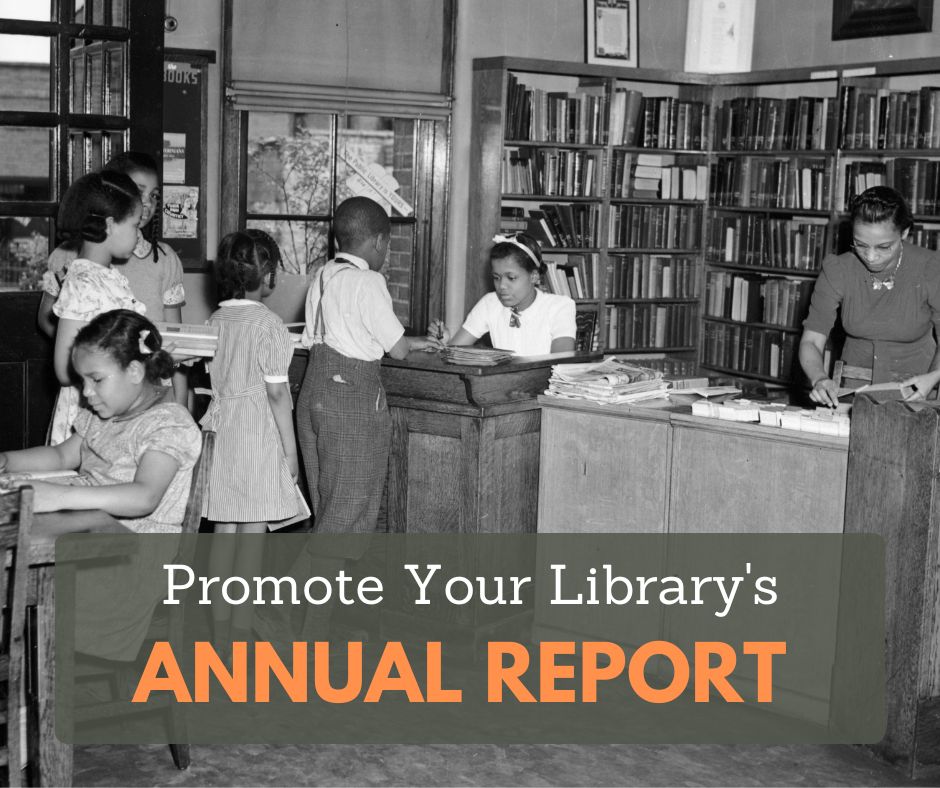
That proposition is at the heart of a major project every library undertakes once a year–the creation of the annual report. In its most basic form, the annual report summarizes the work conducted by a library during the preceding year.

But what if the annual report was more than a formal document? What if it truly told the story of the impact a library had on its community, beyond numbers and statistics?

Thatโ€™s what Explore York Libraries and Archives in the United Kingdom, led by Barbara Swinn who is Head of Strategy and Engagement, set out to do this year with their annual report.

Explore York provides library service for a city founded in 71 AD by the Romans. The flagship library sits within Roman-era medieval walls and has the remains of St Leonards, the largest hospital in medieval Europe, within its grounds.

The library serves more than 211,000 residents. It is an affluent city but there is also need in the community. 13 percent of children in York live in low-income families.

Putting together an annual report that connects with a varied audience and also demonstrates the vast but important work of Explore York is daunting. Barbara has a small team at her disposal: herself, a co-worker, and an outsourced graphic designer. But these three visionaries wanted to do more than report facts and figures. So, they took a storytelling approach to their annual report.

โ€œNot everyone who reads our Annual Review will necessarily be a library user. This is our chance to intrigue, delight, and create that โ€˜wow, I didnโ€™t know my library did thatโ€™ moment.โ€     

Barbara Swinn

Barbara begins work on her next annual report as soon as sheโ€™s released the latest version. โ€œWe already produce quarterly reports for our Board of Directors, and for the City Council,โ€ explains Barbara. โ€œHowever, these reports are focused on fairly ‘dry’ information โ€“ statistics, evidence that we have met contract requirements, etc. We recognized that our Annual Review needed to be more than a reiteration of the yearโ€™s quarterly reviews. We knew, at the end of an extraordinary year, that our pandemic story made a powerful case for the enduring value of public libraries not only in our city but everywhere.โ€

So Barbara and her team decided to take a different approach. โ€œTo start off our planning we read Angelaโ€™s article on โ€œThe Dreaded Annual Library reportโ€ (!) and used it as a basis for our approach,โ€ Barbara recalled. โ€œWe read the example Reviews cited in the article, we chose our favorites, and decided which bits we were going to steal from them! We also looked at the Reviews some of our local cultural organizations had produced. We shared our thoughts with our graphic designer early on too, so she could start to think about how some of our preferred visual elements could be incorporated using our branding and style.โ€

Next, Barbara and her team set goals for their annual review. They had to connect with a variety of audiences, from politicians to donors to volunteers to library users. โ€œWe kept in our mind what we wanted our audiences to think, feel, and do as they read our Review,โ€ remembers Barbara. โ€œWe wanted them to understand the breadth and depth of what we had provided, feel reassured and proud of their libraries, and to support us in future years whether financially or through advocacy or practical support such as volunteering.โ€

“We wanted it to be a powerful advocacy tool and something that would tell our story through its imagery and design as well as through words and numbers.”

With all that in mind, Barbara and her team began to plan and gather content for each section. But she recalls that, with so much worthy and valuable work happening at her library, the focus was tricky. โ€œOur aim was to hold up some diamonds from our daily work and from our special projects, so they could shed light over all the work we do day by day, in every library and Reading Cafรฉ across the City of York,โ€ explained Barbara.

The team did a lot of groundwork gathering feedback and testimonials from the community. โ€œSome of the feedback we had gathered specifically with documenting our pandemic story, some arrived through the ordinary feedback channels and through conversations with our library staff,โ€ said Barbara. โ€œWe gave equal weight to facts and figures, quotations from people, and imagery. We edited and edited to keep the words brief and to the point.โ€

โ€œTelling the story was key for us,โ€ continued Barbara. โ€œWe wanted to create a connection with the reader and us, to demonstrate our values that would hopefully resonate with the reader and encourage them to find out more, to become more involved perhaps as a volunteer or potential funder. Angela described this as a call to action for readers, that by the end of the review they would know what help we need for the following year.โ€

The final product is extraordinary. Read it here.

Barbara has some advice for libraries in putting together their annual report or review. โ€œRemember we are all about stories, we hear them every day and we see the impact we have on the lives of people in our communities every day,” she explains. “Use that rich resource to shine a light on the value of our community activities, programs, and events to stir emotion and build a connection to our organization. Inspire future donors and volunteers to be involved, to want to be part of our story.โ€

Barbara Swinn joined Explore in 2015 as manager of the city centre flagship library York Explore and has worked in the libraries sector for 40 years. She’s been awarded the British Empire Medal in The Queenโ€™s Birthday Honours for her work with the library. She is a passionate advocate for public libraries and a gifted leader. Committed to improving the customer experience, Barbara is skilled at creating spaces and environments where people can learn and grow, connect with others, and contribute to their community. In particular, her work with the award-winning Explore Labs project shows Barbaraโ€™s exceptional talent for development and innovation. Her work and encouragement have helped Explore grow and develop as a cultural business, and she is always looking at new ways for people to engage with the riches of Yorkโ€™s libraries and archives.


You May Also Want to Read These Articles

Help Your Community Understand a Crisis: 3 Tips To Thoughtfully Address World Events With Library Promotions

Does Your Community Feel Welcome At Your Library? Why Inclusive Language Is a Critical Part of Your Promotions.

Latest Book Review

To Sir, with Love by Lauren Layne

Subscribe to this blog and youโ€™ll receive an email every time I post. To do that, enter your email address and click on the โ€œFollowโ€ button in the lower left-hand corner of the page.

A WordPress.com Website.

Up ↑