Search

Super Library Marketing: Practical Tips and Ideas for Library Promotion

Category

Print Marketing

Why NOW Is the Time To Experiment With Your Library Marketing and Promotions!

WATCH NOW

The Library Marketingโ€‹โ€‹โ€‹โ€‹โ€‹โ€‹โ€‹โ€‹ Show, Episode 95

In this episode, I want to inspire you to experiment with your library marketing and promotions this summer. I’ll give you some ideas to help you do this, and I’ll explain why right now is the perfect time to try things you’ve never tried before.

Kudos go to the Iowa Library for the Blind and Print Disabled. They were honored by the Library of Congress for their work during the pandemic.

Do you have a suggestion for a topic for a future episode? Want to nominate someone for kudos? Let me know in the comments. And subscribe to this series to get a new video tip for libraries each week.

Thanks for watching!

The Quest for Perfection May Spoil Your Library Promotions! How To Walk the Line During the Revision Process and Still Create Authentic Messages

I learned a skill as a journalist which has been invaluable to me as a marketer.

As a journalist, I was an expert at knowingย when to let go of a piece of contentย and send it out into space, even though it was imperfect.

It’s the nature of the news business. You have a deadline and when the deadline arrives, you go to air or to print with as much information as you have. You know that youย can revisit the story later to add new details. And that must be enough.

One of the hardest adjustments I had to make when I left the newsroom and went to the library was the constant reshaping of promotional messages and campaigns.

The good and bad of the revision process

When I worked in a library, each blog post, print piece, email, social media post, or video would go through rounds of review by several departments. The record was held by our content marketing magazine, which sometimes went through upwards of 15 edits per issue.

All the scrutiny had its advantages. More edits meant grammatical, punctuation, and spelling errors were found and fixed. The revision process also gave me the chance to see how each message was perceived by different people with different perspectives.

I purposefully chose reviewers who worked with different target cardholder audiences. They told me whether they thought their patron base would respond to the message. I trusted their opinions and took their advice when they told me a phrasing or image change would increase my message’s effectiveness.

But there were also pitfalls to revision process. The message was sometimes reshaped by people who pressured me to add words or phrases that weren’t customer friendly. They might also wish to dilute or change the message altogether, depending on their department’s own goals or agenda.ย 

The point at which your library’s revision process goes from helpful to over-examined is the space I want to focus on in this post.

It’s very easy to start over-thinking text, images, and graphics. The message you’ve carefully crafted may not connect with your audience because it disappears in the search for perfection. It can be crippling.

There is a very thin line between authenticity and perfection. It takes practice to walk that line. Here’s the advice I have for you.

Constant improvement is better than perfection

The best content isn’t perfect. That is what makes it good.

Imperfection shows your library’s human side. When you write from the heart, your message feels more authentic. 

Don’t sabotage your own marketing efforts by waiting for the moment when every single detail is right.ย Give yourself permission to release a piece of marketing content when the time is right, not when it’s perfect.

Creative, honest messaging will be the doorway for your library to connect with consumers in the moment when they are genuinely searching for answers from your library.

I’m a fan of author, speaker, and showrunner Jay Acunzo. I highly recommend his newsletter. His niche is creativity. He inspires others by talking about how creativity intersects with work in the real world.

In this blog post, Jay makes a great point that I think about all the time. He says, “How can we aspire to perfection (even if it’s never something we reach) while still moving forward without delay (even if we aren’t creating amazing work yet)? Well, I think the key is to place perfection where it belongs: away in the distance. Then, we can busy ourselves with marching towards it.”

In the library, that means we must do the work and ship it when it needs to be shipped. But we also must commit to revising it, molding it, and realizing that it is a work in progress.

In your library promotional work, your goal must not be perfection. It must be constant improvement.

But I have a deadline!

You work in a real library with real goals and strategies. And the quest for perfection will sometimes seem like a lofty goal that you don’t have the luxury of achieving.

So how do you know when a piece of content is ready for release, even if it’s not perfect? Ask yourself these three questions.

1. Is your promotion as compelling and authentic as it can be in this moment?

2. Is your promotional piece free of grammatical, punctuation, and spelling errors?

3. Is the information in your promotional piece correct?

If the answer is yet to these three questions, it’s time to let go.

Marketing is one giant experiment. Even when you release a promotion that isn’t perfect, you will still learn plenty from it. Measure and record the results of your promotion. Then use that data to adjust and reconfigure your attempts on the next go-around.

Don’t get bogged down in the quest for perfection. Be human. Be authentic. Be true to your library voice.

And get the message out there! Your imperfect message may lead to some perfect insight into your community.


Do you have an example of a time when an imperfect message brought you some perfect insight into your customers? Share your thoughts in the comments!

You may also like these posts

Hereโ€™s When Itโ€™s Okay for Your Library To Forget Perfection and Just Push Send!

You Donโ€™t Have To Be Cool To Promote Your Library to Teens! Here Are Seven Seriously Easy Ways To Connect With Gen Z

Latest Book Review

The Only Good Indians by Stephen Graham Jones

Subscribe to this blog and youโ€™ll receive an email every time I post. To do that, click on the โ€œFollowโ€ button in the bottom left-hand corner of the page. Connect with me on YouTube, Twitter, Instagram, Goodreads, and LinkedIn.

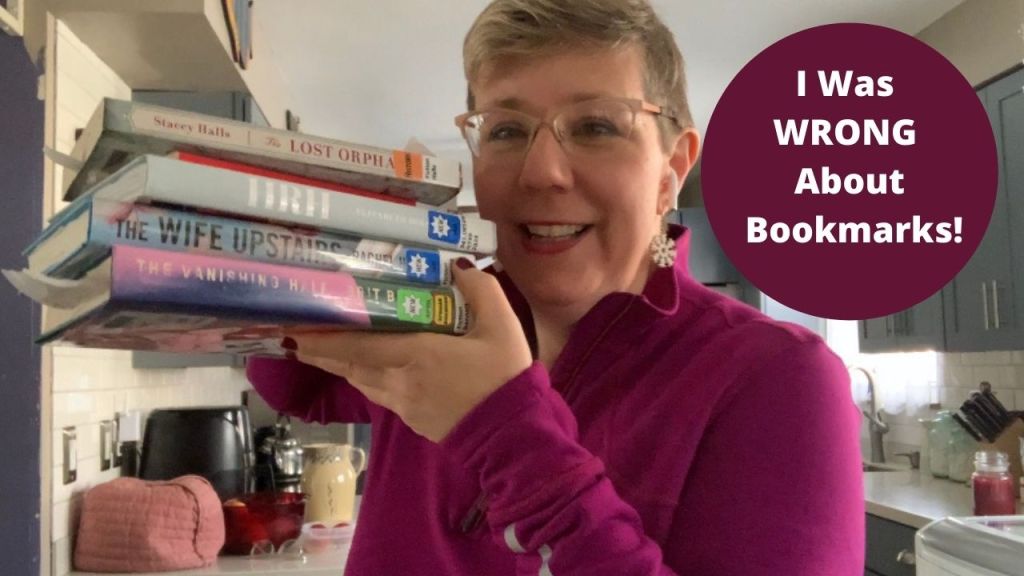
๐Ÿ“šI Was Wrong About Bookmarks! How to Use Print to Keep People Coming Back to the Library.

Watch Now

The Library Marketing Show, Episode 81

When I worked at a large public library, I thought bookmarks were worthless in terms of library marketing. I was wrong! In this episode, I’ll explain why I changed my mind. Plus I’ll show you how to use bookmarks to engage with readers.

Kudos in this episode go to the King County Library System for their Virtual Welcoming Center.

Do you have a suggestion for a topic for a future episode? Want to nominate someone for kudos? Let me know in the comments. And subscribe to this series to get a new video tip for libraries each week. Thanks for watching!

Seven Cheap and Clever Ways to Bridge the Digital Divide and Promote Your Library to People Who Don’t Have Internet Access

ย 

If I had a nickel for every time I was asked, how do we promote our library to people who don’t have internet access or who choose to live offline?, I’d be a rich woman.

This problem has always plagued libraries. By nature, our services are needed most by those who struggle with economic disadvantage. And it’s a huge concern of many librarians right now. Some libraries in the United States are reopening their physical buildings and returning to services involving in-person interaction with patrons, like curbside pickup or drive-thru windows. But there seems to be no way to make sure our offline community members know we have returned to service.

I’ve always been a fan of digital marketing because it’s targeted, effective, and easy. The problem of reaching people who don’t have access to Wi-Fi and will never see those messages has always bothered me.

What’s a library to do?

I decided to stop letting it bother me. It’s time to solve the problem.ย 

Prepping for promotion

First, concentrate on your core message. If you only had 10 seconds to tell someone about your library’s reopening, what would you say? Boil your message down to the most important points. Then create a few, highly focused and easy-to-deliver print pieces to carry that message. Good choices are a bookmark, a quarter-sheet flier, and a postcard. These will be your library’s main promotional vehicles for non-digital marketing efforts.

Second, adopt an outreach attitude. Many libraries are hesitant to market themselves. They worry they are intruding. They don’t want to seem pushy or salesy. They are convinced their promotional efforts will be viewed as “spam”.

You are not spam. You are not intruding. You are not selling a product. You are promoting a service that is free and necessary.ย 

Your community is already paying for library services in some form or fashion. They need to know what they’re paying for. They need to know how you can help them. They are grateful to learn how to access the services they are funding.

It’s more important than ever to promote your library. We need to make sure, at the very least, that our community understands what we do and why our work is important. So, make a commitment to banish humility! Don’t be timid!

Now, here are seven relatively cheap, yet clever ideas for promoting your library. And they all have nothing to do with the internet.

Non-digital promotional tactics

Mail your postcard. If you have the budget, now is a good time to try mailing your postcard to people in your community. Start with your patrons. And if you have leftover money, a mailing house can help your library secure addresses for people who are not patrons.

In some U.S. states, your library can request a list of voter addresses from the Board of Elections for free. You can reach people who aren’t library patrons but who are registered voters, legally and cheaply.ย ย 

Canvass. Adapt this political campaign strategy for library awareness! Distribute your printed piece door-to-door.

Now, I know it’s time-consuming but it’s also effective. In my former job at a large metropolitan library, our outreach librarians went to apartment complexes and hung door hangers with information about the library. Door hangers are relatively cheap. If you can’t spring for them,ย  slip your postcard into screen doors. This is a great job for libraries looking for ways to keep their staff busy. And, of course, you will reach people who have forgotten the library or who have never interacted with the library.

Buy a print ad. Many newspapers will give your library a discount on ad space. Try to use your limited space to the full advantage. Use a catchy graphic to draw the eye.

Put your partnerships with local businesses and other non-profit organizations to use. Ask partner organizations to distribute a bookmark or some other kind of small print promotional piece to their visitors. Ask local businesses, like restaurants, to include a small promotional piece in their takeout bags. Ask local realtors and rental agencies to give your promotional piece to prospective homeowners or new renters. Give some of your print pieces to day care providers, teachers, summer camps, and recreational centers. Seek the help of any business or organization with a physical location that is open in some capacity and ask them to distribute your material to people who use their services.

Place signs outside your building. A banner in your front yard or a sidewalk sign can help spread the word to people in the neighborhood. There are lots of online stores that will sell you weather-proof signage for a reasonably cheap price.

Pitch to the media. Despite what you may see on the news right now, journalists are always looking for good news stories. And your library offering services is good news. Try pitching to individual reporters. Keep THEIR audience in mind and make sure you point out how a story about your library will be beneficial to their audience.

And be helpful. If they need photos but can’t make it over to your branch, offer to provide some. Have staff members who are comfortable on camera at the ready to deliver soundbites to local TV news crews. You might even offer to write a piece for your community paper. Free press is a great form of marketing.

Call patrons. I spoke to some librarians this week who called people to let them know that their library had reopened. They clearly identified themselves at the beginning of the call and asked permission to proceed with the call. If the receiver said “yes”, the library staffer proceeded to relay the information about their library’s new hours and service requirements and asked the receiver if they had any questions. Like canvassing, this is a time-consuming tactic, but it may be necessary in a community without internet access.

Related Help

Email vs. Social Media: Which is Better for #LibraryMarketing Right Now?โš”๏ธ

Marketing is Not a Dirty Word! Why Libraries Need to Promote Themselves Now, More Than Ever

Latest Book Reviews

You Don’t Look Your Age and Other Fairy Tales by Sheila Nevins.

Postscript by Cecelia Ahern.

The Familiars by Stacey Halls.

Find more 60-second Book Reviews here.

Subscribe to this blog and youโ€™ll receive an email every time I post. To do that, click on the โ€œFollowโ€ button in the bottom left-hand corner of the page. Connect with me on YouTube, Twitter,ย Instagram, and LinkedIn.ย ย 

The Nine Things You Need to Look for to Hire the Best Graphic Artist for Your Library Marketing

Confession: When I took this job in library marketing, I knew nothing about graphic design. And I mean LITERALLY NOTHING.

I came from the world of TV news. There is no print element to that. All the graphics are done by a mysterious department located on the second floor of our station, where artists work in a dimly lit room surrounded by monitors. And their ability to get creative is limited by the fast pace of the workplace.

My first week in the library was a lesson in paper weight (text vs. cover?? What??), labels, printing terms, and equipment that I had never seen before, like a Baum Cutter that look a small tank with a blade like a guillotine. I was scared.

And I bet a lot of library marketers can relate. We have degrees in library science and communications, not design. Most of us do not have any training or background in graphic art. I don’t know about you, but I find it difficult and intimidating to manage an employee when I have no idea what their job is, how they do it, or how I could help them to improve.

I’m lucky to have two graphic artists at my library, serving a system of 41 locations and 600,000 cardholders. I can count on my artists to beย a touchstone for all projects. They keep my library branches on brand. They help me turn ideas that seem stuck in my head into something clear and understandable to our cardholders.

Visuals are a key part of marketing. Your graphic designer is an invaluable member of your library marketing team. So it’s an important hire to make.

A great artist can create a consistent look and feel to everything surrounding your libraryโ€™s brand. You want your customers to be able to recognize your visuals as being part of your brand, even before they spot your name or logo on the material.

A good artist can convey the message of your library without actually using your libraryโ€™s name. They can listen to you explain a vague idea and create something visually stunning which helps enhance the customer experience.

When you’re in the market to add a graphic artist to your team, you may be dazzled by stunning portfolios and creative resumes (graphic artists create some of the best resumes I’ve ever seen!) But there are nine important qualities your candidates must have.

Someone with good customer service. Your artists will be working with multiple departments, branches, customers, and outside partner agencies. You need someone who can listen to whoever they are working with, understand their needs, and translate their vision.

Someone who can communicate with your customers. Ask your candidates how they will create pieces for different age groups, ethnic backgrounds, and interests. Make sure your artist can switch viewpoints and create visuals that speak to many different library audience segments.

Someone who can translate your library strategy and goals into visuals. These are complex concepts. A good artist will take big ideas and turn them into a visual the audience can understand. Ask for examples of infographics and annual reports from previous employers or internships. Can you understand what the message is? Are the statistics presented in a clear and interesting way?

Someone who can work with multiple formats. Youโ€™ll be asking your artist to create print and digital graphics, so they should be comfortable working with both. Ideally, you should also look with experience in web design, video production, and animation.

Someone with a vision. Youโ€™ll want to make sure your graphic designer will stay on top of the latest trends in design so your marketing material doesn’t look dated.

Someone with whom you can collaborate. Your work with design will be a back and forth, give and take, and you will need someone who can walk through that messy process with you. A good designer will be able to defend their design as well as adapt to ideas that aren’t expressly theirs.

Someone who seeks inspiration. My two designers have a common belief that their work gets better as they learn more. They both have a desire to attend creative sessions and try new mediums. They both work on creative endeavors outside of the library.

You don’t want a designer who simple comes into the office, does what you tell them, and then goes home for the day. Ask potential hires if they do anything artistic outside of the workplace to fuel their own creativity.

Someone who can think on their feet. Ask your candidates to critique a design piece and explain what they would have done differently. Their answer will tell you a lot about their creative process, their ability to articulate their vision, and how they think when they’re asked to do a project on the fly.

Someone who can handle criticism. This is true of every hire you make, but graphic artists are creatives and in my experience, creatives take their work seriously. They may feel precious about their designs and may be resistant to your opinions about them. Make sure you can give positive and constructive feedback to your potential hire without worrying that they’ll refuse to take your suggestions.

Subscribe to this blog and youโ€™ll receive an email every time I post. To do that, click on โ€œFollowโ€ button in the bottom left-hand corner of the page. Connect with me on YouTube, Twitter,ย Instagram, and LinkedIn. ย And check my list of upcoming events so we can connect.

The Library Marketing Show Episode 12: How to Convince People that Flyers ARE NOT the Be All, End All of Library Marketing!!

Watch Now

In this episode, we’ll answer a reader question from Jenny at the Redwood City Public Library about how to address that age-old complaint: WHY CAN’T I HAVE MORE FLYERS? FLYERS ARE AMAZING! from your fellow library staff and how to convince them that digital promotions are worth time and effort. Thanks for the question, Jenny!

You can submit a question or a discussion topic by going to this page and filling out the form.

Also Kudos to Stark County Library in Canton, OH –find out why I think they’re amazing.

And a book review of “Calypso” by David Sedaris PLUS find out which book I couldn’t finish and why!

Stay in Touch

Iโ€™m speaking at two conferences this fall and you can register for both on theย Upcoming Eventsย page. I just finished the slides for OLC! I’m really excited about that one. Details about the talks at both conferences are on the page and more events are coming soon!

Have an idea for the next Library Marketing Live Show?ย Submit it now.

Subscribe to this blog and youโ€™llย receiveย an emailย every time I post. To do that, click on โ€œFollowโ€ button in the bottom left-hand corner of the page. Connect with me onย Twitter,ย Instagram, andย LinkedIn.ย ย 

Frustrated with Your Library Marketing Newsletter? Here’s Why You’re Not Getting the Results You Want AND How to Fix It

I hold a controversial opinion. Newsletters are an ineffective tool for library marketing.

I totally understand why libraries create them. Our customers are a wide and diverse audience and our budget is limited. Newsletters are an easy and efficient way to get information to our audience.

But many libraries are frustrated by the lack of demonstrable results from their newsletters, both the print and email versions. And there’s a reason you can’t get good results from a newsletter.

The mistake is: You’re sending the same message to all of your cardholders.

It’s understandable. It feels like the natural thing to do. Your library has great stuff and you want everyone to know about everything.

The problem with that approach is that your cardholders are individuals. One message never fits them all. The needs and interests of your cardholders vary greatly.

I’m not suggesting you ditch your newsletter. By transforming the way you approach your current print and e-newsletter, you can make it actually work! The trick is to make changes that increase your newsletter’s value by refining the message.

Tips that work for both print and e-newsletters

Give your cardholders LOTS more of what THEY want. I know you’ve been keeping track of attendance at events and holds or checkouts of books you promoted in your previous newsletters. If you notice that your newsletter audience turns out for a particular type of event or that they like a particular genre of books or collection items, put MORE of those in your newsletters.

Library marketers are often pressured to promote what their co-workers or bosses think is interesting. Or worse, what their co-workers think the audience NEEDS to hear.

I’ve actually had to gently explain to my colleagues that, while reading classic authors like Ernest Hemingway and Jane Austen are good for the brain, most people are not looking for an intellectual challenge when they reach for a book. It’s like getting kids to eat their vegetables. Veggies are healthy, but if your child doesn’t like them, they’ll clamp their mouth shut and refuse to take a bite.

The newsletter audience is the same. You can’t make people attend events or read books because they’re healthy or intellectual. Library marketers sometimes have to be an advocate for their audience; you have to be persistent in your defense of what your cardholders want.

At my library, we pivoted our newsletter to focus more on our the parts of our collection that our cardholders like. We had the data to back it up. We know that our cardholders really love content about coding and coding classes. We know they love mystery books. We know they love workshops about writing and publishing their own books. We learned all of these nuanced preferences by carefully measuring our audience’s response to marketing in all areas. Patterns emerge. And now, we do a lot of promotion around these areas because we know, for a fact, that our cardholders love this kind of content.

Make your content helpful, not promotional. Your cardholders are regularly bombarded with offers, sales, and promotions, both in their inbox and in your mailbox. To get people to read your newsletter, the content needs to be interesting, useful, or helpful.

Hundreds of studies and surveys about consumer behavior show us that content that is educational or entertaining gets better results that content that is promotional. So how can you promote something while being entertaining or informative? Content marketing in the answer.

Content marketing is a strategic approach focused on creating and distributing valuable, relevant, and consistent content to attract and retain a clearly defined audienceโ€“ultimately, to drive profitable consumer action.

Content marketing breaks through the noise and the clutter by providing compelling, useful information for your cardholderโ€“any type of information. It addresses whatever pain points your cardholders have. It positions your library as the go-to place for information. It builds trust.

And through content marketing, your library gets a better and deeper understanding of your cardholders. You can use that understanding to do a better job of addressing your cardholders’ needs. Itโ€™s a constant circle of giving and it carries more weight for a longer period than a traditional newsletter promotion.

Stop thinking of your publication as a newsletter. Start creating news magazines. Most library newsletters that come to my inbox or mailbox are long and contain a ton of text and images. There isn’t much white space and scanning them is difficult, because there is so much to scan.

At my library, we increased the effectiveness of our print newsletter by transforming it into a magazine. We trimmed it from 16 to 12 pages. My graphic artists started to give the publication a magazine feel in layout, using bolder visuals and shorter, more engaging articles. We left some white space. We changed the balance of the articles from 100 percent promotional to 50 percent informational and 50 percent promotional (even I have to fight the battle with my library to be less overtly promotional!).

What happened when we made these changes? Our news magazine became a must-read. People started asking when the next issue would be out. We had to order more copies. Library staff and outside partners vie for space in the publication. The news magazine is popular!

Tips specific to e-newsletters

Keep the text short and scannable. Your e-newsletter is a touch point, not the end of a conversation. Readers should get enough to be left with the feeling of wanting to know more about a particular subject. Drive your recipients to your website or another platform where they can get more information with compelling text and enticing calls to action.

Make it easy to share your e-newsletter. Include social share buttons that link directly to your library’s social pages.

Segment your e-newsletters. You can segment your e-newsletter in a number of ways… by age, by interest, and by location. This means you’ll need to create more than one e-newsletter. But each one will be targeted to a specific audience, which increases effectiveness. This step will be more work for you but it’s worth it for better results.

By targeting your message, you are more likely to say something that matters significantly to your cardholders. That individualized message makes them more likely to take an action, which makes it more likely that your newsletter will be successful.

More help for library marketers

How the Best Newsletters Get-and Keep-Reader’s Attention from Content Marketing Institute

NoveList’s Guide to Best Practices for Library Newsletters

7 Tips for Creating Engaging Newsletters from Mailjet

Great examples of targeted library newsletters

Dallas Public Library’s Young Black Readers Newsletter

Indian Prairie Public Library’s DVD Preview

Subscribe to this blog and youโ€™llย receiveย an emailย every time I post. To do that, click on โ€œFollowโ€ button in the bottom left-hand corner of the page. Connect with me on Twitter,ย Instagram, and LinkedIn.


A WordPress.com Website.

Up ↑